
Review · JAPAN
Tokyo: Edo Castle and Imperial Palace Guided Walking Tour
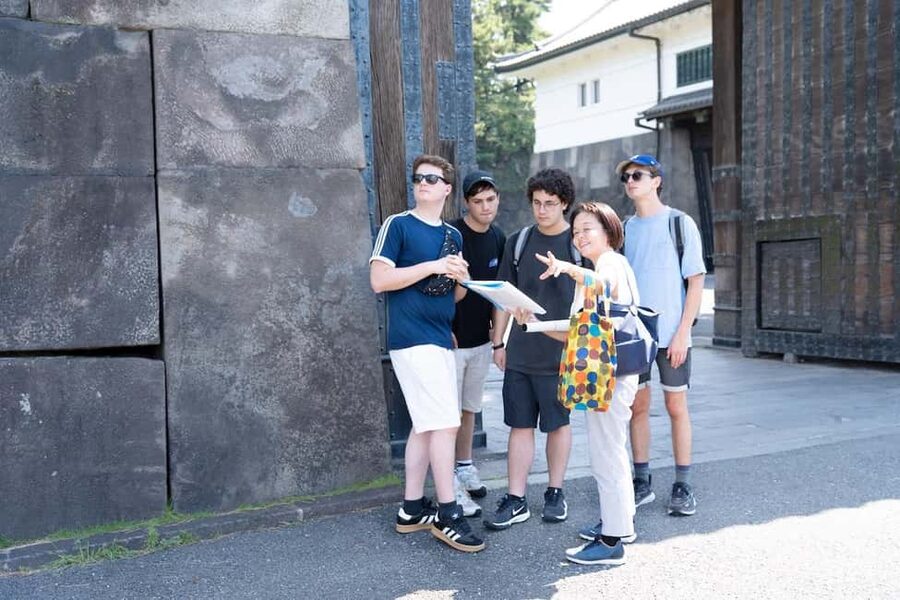
Tokyo’s past is written in stone. This 150-minute walk turns the Imperial Palace grounds and former Edo Castle into a readable map of power, fire, and daily life. I especially like the small group of eight and the way the tour links grand events to physical details such as moats, guardhouses, and mismatched masonry. The $3.22 price is remarkably low for a guided history walk, though you should confirm the current rate before booking.
I also like the clear route from Tokyo Station to Hirakawa Bridge, which gives you a useful introduction to central Tokyo rather than dropping you at one isolated monument. The main consideration is pace: this is a walking tour with many short stops, so comfortable shoes matter, and the experience may feel less satisfying if you want to enter palace buildings rather than study the grounds from outside.
Key details that shape the experience
- A 150-minute history walk: The route covers former castle gates, moats, guard posts, stone walls, and the site of the Edo Castle main hall.
- Tokyo Station meeting point: Begin beneath the historic yellow dome at the Marunouchi South Gate.
- Tokugawa power in plain view: Learn how Edo Castle served as the shogun’s home and the center of government for 260 years.
- Stonework with a story: Compare different masonry methods used by regional lords during castle construction.
- A small English-speaking group: The tour is limited to eight people, making it easier to ask questions.
- A one-way finish: The walk ends at Hirakawa Bridge, not back at Tokyo Station, so plan your next stop accordingly.
From Tokyo Station to the former Edo Castle
The meeting point is on the ground floor of Tokyo Station’s Marunouchi South Exit. Look for the western-style historic dome, with its yellow exterior and distinctive shape. This is a practical meeting place because Tokyo Station is easy to identify, but it is also a busy transport hub. Give yourself enough time to find the correct exit before the tour begins.
The first stop is the Mitsubishi Ichigokan Museum, reached after about five minutes on foot. The guided explanation here lasts around ten minutes. It provides an early sense of how modern Marunouchi sits beside the old castle grounds, even though this is not a museum visit focused on Edo Castle itself.
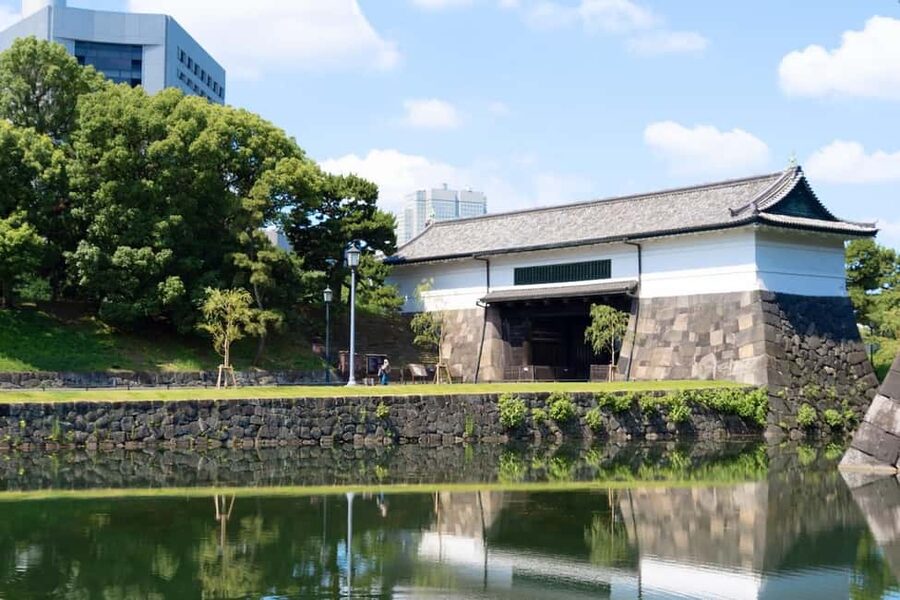
From here, you walk toward Sakurada-mon Gate. This takes about seven minutes, followed by another ten-minute explanation. Sakurada-mon is one of the most useful places to begin understanding the castle as a defensive complex. You are not simply looking at an attractive old gate. You are seeing how access into the shogun’s seat of power was controlled.
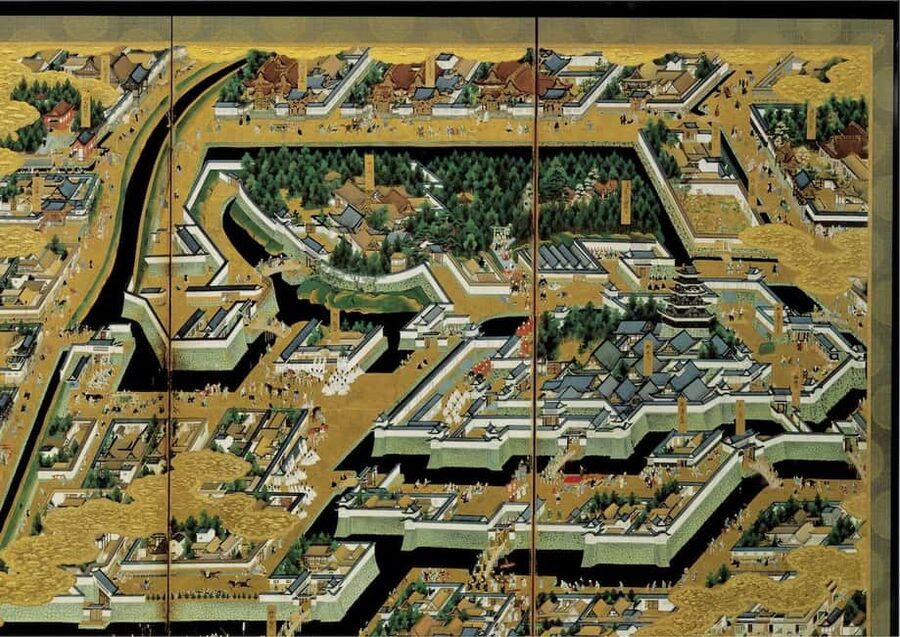
The guide uses a map of Edo from the 1650s to help place the surviving walls and moats in their original setting. I like this approach because modern Tokyo can make the old castle difficult to picture. A map gives the route a clear before-and-after comparison.
More Castle Walking Tours in Japan
- Tokyo Castle & Imperial PalaceーShogun Walking Tour
★ 4.7 · 1,068 reviews - Ultimate Osaka Walking Tour: Castle, Dotonbori & Hidden Gems
★ 5.0 · 862 reviews - Tokyo Castle & Imperial PalaceーShogun Walking Tour
★ 5.0 · 724 reviews
Sakurada-mon, moats, and the castle’s outer defenses
After Sakurada-mon, the route continues through several short stops, each separated by roughly five minutes of walking. One stop at MQH4+V6 in Chiyoda City receives about five minutes of explanation. The location code is not a memorable sightseeing name, so it is best understood as a point along the historic route rather than a major attraction in its own right.
The walk then reaches the area near the Sakashita Gate guard post of the Imperial Guard. The official location name is long, but the purpose is simple: it marks another controlled approach to the palace area. You receive about five minutes of commentary here.
Kikyo-mon Gate follows, again with a short explanation. These quick stops may sound modest on paper, but they help you read the grounds as a working fortress. Gates were not decoration. Their placement, angles, moats, and guard positions shaped who could approach and how quickly.
The route then reaches Sakurada Tatsumi Yagura, with six minutes of guided attention. A yagura is a corner or watchtower structure, and this stop gives you a chance to connect the high stone foundations with the castle’s defensive purpose. The tour does not rely on a large surviving keep to make the castle interesting. Instead, it shows how much remains in the walls, water channels, gates, and elevated positions.
This part of the walk is especially good for people who like to understand how a place worked. You will not be stopping for long periods at each point, and the route has no promise of interior access to palace buildings. The reward comes from assembling the pieces.
Ote-mon Gate and the people behind the walls
Ote-mon Gate is one of the route’s central stops. After about five minutes of walking, you spend roughly five minutes with the guide here. The gate marked an important entrance into the castle, and the nearby Ote-San’no Gate ruins add another layer to the story of controlled movement.
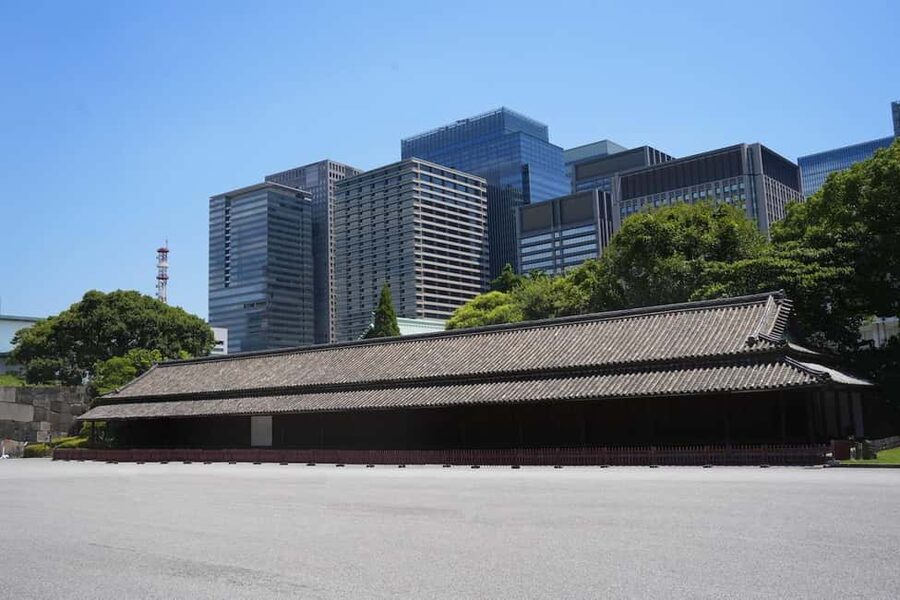
The next stop, the Hyakunin Bansho Guardhouse, receives around seven minutes. The name refers to a guardhouse associated with one hundred guards. This is where the tour can move beyond famous rulers and explain the people who kept the castle functioning.
That human focus is one of the strongest parts of the experience. The castle was not only the residence of the shogun. It required guards, servants, officials, and systems of access. A guide can point out how these spaces supported the Tokugawa government, something a self-guided walk may not make clear.
The route covers several short stretches on foot, including about four minutes before reaching the main-hall site. If you need frequent rest stops, the steady sequence of walking and standing may require some planning. The tour is listed as wheelchair accessible, but the supplied information does not describe the exact ground conditions at each stop, so you may want to confirm route details directly if you have specific mobility needs.
The Honmaru site and the Tokugawa Shogunate
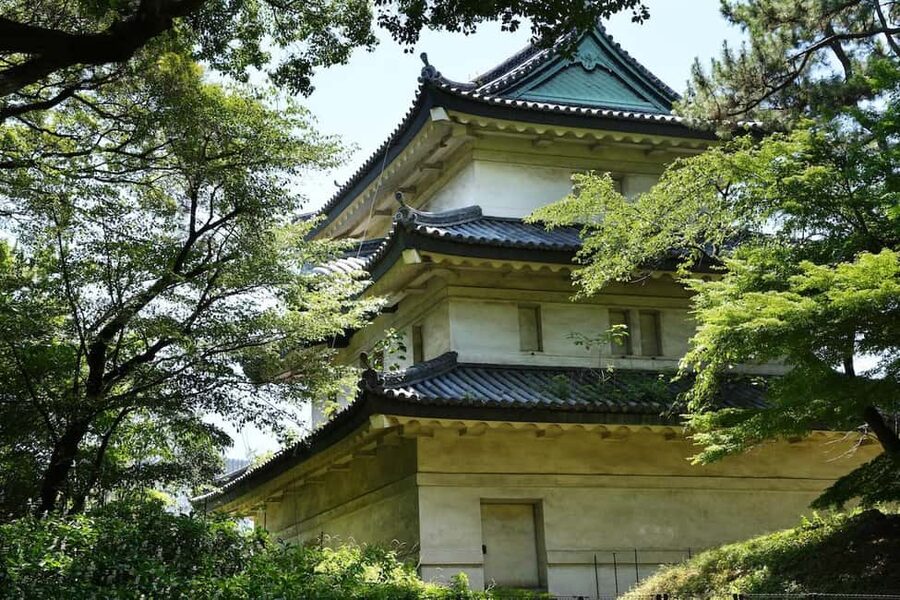
The longest stop is the site of Edo Castle’s Honmaru, or main compound. The guided explanation lasts about 30 minutes. This is the heart of the tour, and the extra time makes sense. Here the guide can explain the castle as both a residence and the administrative center of the Tokugawa Shogunate.
For 260 years, Edo Castle was tied to the government run by the Tokugawa family. The tour also covers the Meiji Restoration, the political change that ended the shogunate and led to the site becoming the Imperial Palace.
The most useful historical point is that the castle’s story did not stop when the Tokugawa government ended. The role of the site changed. What had been the shogun’s residence became the home of the Emperor, linking two major periods of Japanese history in one place.
A particularly memorable detail concerns the Great Fire of Meireki, also called the Meireki Fire. After the fire, work reached the point of creating a new base for the castle keep, yet the decision was made not to rebuild the keep. Resources were directed toward restoring Edo instead.
That choice gives you a sharper view of government priorities. The tallest building would have made a powerful symbol, but rebuilding the city mattered more. When you see the castle grounds with this decision in mind, the remaining foundations and walls become evidence of practical politics, not just ruins.
The explanation also includes the political side of the Ooku, the women’s quarters of the shogun’s household. This is a valuable detail because the Ooku is often treated as a colorful side story, while the tour presents its connection to power and court life. It also touches on restricted gates, including the Fijo-mon and the Obikuru area mentioned in the Japanese-language assessment of the tour. These less familiar locations help show that the castle had private, public, ceremonial, and guarded spaces.
More Guided Castle Tours in Japan
- Kyoto: Nijo-jo Castle and Ninomaru Palace Guided Tour
★ 4.7 · 1,020 reviews - Kyoto: Nijo Castle, Kiyomizu & Fushimi Inari Guided Tour
★ 4.7 · 700 reviews - Kyoto: Imperial Palace & Nijo Castle Guided Walking Tour
★ 4.7 · 453 reviews - Osaka Castle Guided Tour
★ 4.7 · 249 reviews
Stone walls that reveal who built them
One of the best reasons to choose a guide is the chance to look closely at construction details. The castle was built through tenka fushin, a system in which feudal lords were required to contribute to major building works.
The result is not one perfectly uniform wall. You may notice differences in the stonework, including cut-stone construction and rougher fitted styles. The masonry can vary from one section to another, reflecting the groups responsible for the work.
A guide can point out these changes instead of letting them pass as background scenery. I like this kind of observation because it connects architecture to politics. The wall is not just a barrier. It records the obligations and resources of the lords who helped build it.
The tour’s strongest historical explanations appear to come when it connects large events with small evidence: the fire and the unbuilt keep, the shogun’s government and the guardhouse, the feudal system and the different wall styles. That is a good fit for you if you enjoy asking why a structure looks the way it does.
Kita-Hanebashi, Takebashi, and Hirakawa Bridge
After the main-hall site, the route continues to Kita-Hanebashi Gate, with about five minutes of explanation. You then walk toward Takebashi, a further five-minute segment followed by another short guided stop.
These locations keep the focus on the castle’s edges and entrances. They are not presented as separate headline attractions. Their value comes from showing how the route moved through the wider defensive system.
The final major stop is Hirakawa Bridge, reached after about five more minutes of walking. The guide spends around seven minutes here before the tour ends at Hirakawa-mon, or Hirakawa Gate.
Finishing at Hirakawa Bridge makes the walk feel like a historical crossing of the old castle grounds rather than a loop from the station. The practical downside is that you need to plan what comes next. You will not automatically be returned to the Marunouchi South Exit, and transportation from the meeting point is not included.
What the small group and low price mean
The group is limited to eight participants, and the tour includes an English-speaking live guide plus a small gift. A group this size should make it easier to hear explanations and ask about details such as the walls, palace areas, and Tokugawa politics.
At $3.22 per person, the listed price is unusually low for 150 minutes with a guide. Even if the current price changes, the value is strong when measured against the amount of historical ground covered. You are paying for interpretation, not admission to a major indoor attraction, and that distinction matters.
Meals, drinks, and transportation to Tokyo Station are not included. You also should not expect a private visit inside the Emperor’s residence. The experience is an outdoor walking tour around the former castle and Imperial Palace area.
Free cancellation up to 24 hours before the start and a reserve-now, pay-later option make it easier to fit into a changing Tokyo schedule. Check the available start times before committing, since the total duration is fixed at 150 minutes.
Who will enjoy this Tokyo history walk
I would recommend this tour most strongly to you if you enjoy:
- Japanese political history, especially the Tokugawa Shogunate and Meiji Restoration
- Castles, fortifications, gates, and stone construction
- A guide who explains why a site matters rather than only naming what you see
- Small groups and opportunities to ask questions
- Outdoor sightseeing close to Tokyo Station
It is also a smart first-day activity if you want to understand the center of Tokyo before visiting other parts of the city. The map of Edo in the 1650s gives you a useful frame for seeing how old Edo relates to present-day Chiyoda.
You may want a different experience if your priority is entering palace rooms, seeing a fully rebuilt castle tower, or spending a long time at one monument. This walk moves steadily, with many five- to ten-minute stops and one longer 30-minute explanation.
Wear comfortable shoes. That advice is basic but important here. You will walk between many sites, and the tour is built around seeing the grounds on foot.
Should you book the Edo Castle walking tour?
I would book it if you want clear historical context at a very low price, especially in a small group. The best parts are the links between the stones and the story: the Meireki Fire, the choice not to rebuild the keep, the political role of the Ooku, and the different masonry styles created through feudal labor.
I would skip it only if you want an indoor palace visit or dislike a steady outdoor walk. For everyone else, this is a practical way to see the Imperial Palace area as the former center of Japanese government, not simply as a formal green space in central Tokyo.
FAQ
Where does the tour begin?
It begins on the ground floor at the Marunouchi South Exit of Tokyo Station, beneath the western-style historic yellow dome.
Where does the tour finish?
The tour finishes at Hirakawa-mon, near Hirakawa Bridge.
How long does the experience last?
The walking tour lasts 150 minutes.
What language is the tour conducted in?
The tour is conducted in English by a live guide.
How large is the group?
The group is limited to eight participants.
Is transportation included?
No. Transportation to the starting point is not included, and the tour does not state that transportation back to Tokyo Station is provided.
What should I wear?
Wear comfortable shoes because the experience includes walking between numerous gates, walls, moats, guardhouses, and castle sites.
More Palace Tours in Japan
- Imperial Palace East Garden and Edo Castle Walking Tour in Tokyo
★ 5.0 · 510 reviews - Kyoto: Nijo Castle and Kyoto Imperial Palace Guided Tour
★ 4.6 · 98 reviews - Tokyo: Edo Castle Ruins & Imperial Palace East Garden Tour
★ 4.4 · 13 reviews
Just added around Japan
- (Ticket Included) Explore Osaka Castle & Museum of History★ 4.8 · 21 reviews
- Peace Memorial Park, Hiroshima Castle, & Garden Private Tour★ 4.8 · 7 reviews
- Osaka: Explore Every Bit of Osaka Castle in 3 Hours★ 5.0 · 5 reviews
- Osaka/kyoto: Himeji Castle, Kobe. Luxury Day Trip with Guide★ 5.0 · 2 reviews
- Osaka: Early Morning Osaka Castle Guided Tour, Avoid Crowds★ 4.9 · 12 reviews
- Osaka: Osaka Castle 3 hours Historical Walking Tour★ 4.6 · 14 reviews
- Osaka: Osaka Castle – Tsuruhashi – Tennoji (Spanish Guide)★ 4.7 · 10 reviews
- Osaka: Castle, Tea Ceremony, Calligraphy, and Samurai Armor!★ 5.0 · 4 reviews
Castle Walking Tours, compared.

Edinburgh Castle: Guided Walking Tour with Entry Ticket
Read our review →
3-Hour Walking Tour of Old Town & Prague Castle
Read our review →Edinburgh Castle: Guided Walking Tour with Entry Ticket
Read our review →
Edinburgh Castle Guided Walking Tour in English
Read our review →

Prague 3-hour Afternoon Walking Tour including Prague Castle
Read our review →
Royal Mile and Edinburgh Castle – Small Group Walking Tour
Read our review →Browse the lists this tour appears in