

Review · JAPAN
Tokyo Castle & Imperial PalaceーShogun Walking Tour
Castles can hide in plain sight. This two-hour walk turns central Tokyo’s Imperial Palace grounds into a lesson in samurai strategy, imperial tradition, and vanished Edo Castle. I especially like the small-group format, capped at 10 people for the main experience, and the guides’ use of old plans and picture cards to make ruined walls easier to understand. The main drawback is that the Emperor’s residence is closed to the public, so this is an exterior history walk, not an inside palace visit.
I also like the gentle change of mood along the route. You move from heavy gates and guardhouses to the quiet Ninomaru Garden, with koi, seasonal plants, and a pond. The walking is not difficult for most people, but steep slopes, stairs, heat, and exposed paths can make the two hours feel longer than the price suggests.
Key points at a glance
- See the defensive logic of Edo Castle: Massive gates, stone walls, guardhouses, and watchtowers reveal how the shogun protected the castle.
- A useful introduction to Japanese history: The tour connects samurai life, the shogunate, and Japan’s 2,600-year imperial system.
- Small-group attention: The tour is designed for up to 10 people, allowing time for questions and conversation.
- A peaceful finish: Ninomaru Garden offers koi, seasonal greenery, and a welcome break from military history.
- Good value at $23.88: You pay for interpretation rather than entry tickets, since the stops listed are free.
- English only: Japanese-language support is not available, and the quality of the experience depends heavily on your guide’s English and presentation.
Why this palace walk is worth your time
Tokyo’s Imperial Palace can seem frustratingly closed off. You see broad moats, clipped trees, stone walls, and carefully guarded gates, but much of the historic center remains out of reach. Without context, it is easy to take a few photos and move on.
This tour gives those quiet spaces a story. You learn why the gates were arranged as they were, where different ranks of samurai worked, and what happened to the great castle that once dominated the site. The guide also explains the difference between the imperial system and the military rule of the shoguns.
At $23.88 per person, the price is modest for a two-hour guided walk in central Tokyo. There are no admission charges at the listed stops, so the value comes from the explanations, questions, and historical connections. If you already know the Edo period well, you may find the tour basic. If Japanese history is still a blur of emperors, samurai, and shoguns, it can give your sightseeing a useful framework.
The experience is conducted in English only. That matters here because much of the interest lies in spoken explanation. The gardens and walls are pleasant on their own, but the tour earns its fee by explaining what you are looking at.
More Castle Walking Tours in Japan
- Tokyo Castle & Imperial PalaceーShogun Walking Tour
★ 4.7 · 1,068 reviews - Ultimate Osaka Walking Tour: Castle, Dotonbori & Hidden Gems
★ 5.0 · 862 reviews - Osaka Castle Walking Tour and Castle Tower Admission
★ 5.0 · 561 reviews
Starting beside the Wadakura Fountain Park
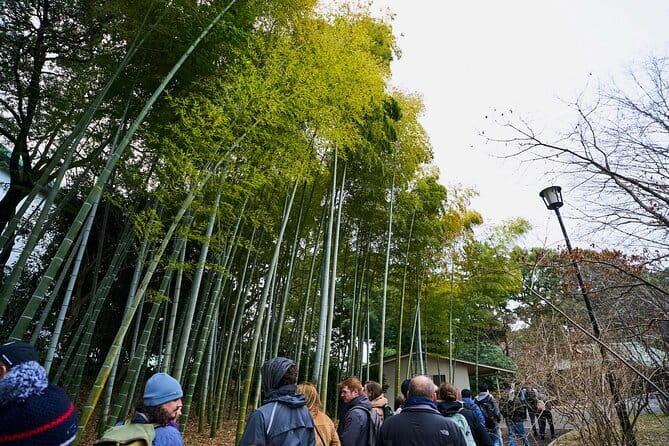
The meeting point is Starbucks Coffee at Kokyo Gaien Wadakura Fountain Park, 3-1 Kōkyogaien, Chiyoda City. This puts you near the open outer grounds south of the palace complex and close to public transportation.
Arrive ready to walk. The tour lasts about two hours and returns to the meeting point at the end. The route includes outdoor paths, slopes, and stairs, with little indication of indoor shelter along the way. On a hot day, bring water and use a hat or umbrella. One particularly practical account of the walk recommends comfortable footwear and sun protection, advice worth taking seriously.
There is a security check before entering the Imperial Palace grounds. Do not bring knives or alcohol. The route is designed so that most people can take part, but the listed slopes and stairs may be tiring if you have trouble walking for extended periods.
Sakurada Tatsumi Yagura and the castle’s first clues
The first stop is Sakurada Tatsumi Yagura, a surviving Edo-period turret. It is a good opening point because the building gives you something concrete to study before the tour moves into broader history.
The guide explains the security systems that still protect the Imperial Palace today and how a turret helped watch approaches to the castle. You begin to see that Edo Castle was not simply a grand residence. It was a controlled military complex, built to slow, confuse, and expose anyone trying to reach the shogun.
Allow about 20 minutes here. That is longer than at most later stops, giving your guide room to establish the main ideas. If your guide carries historical pictures or plans, this is where they can help you picture the original layout.
Otemon Gate and the logic of a fortress
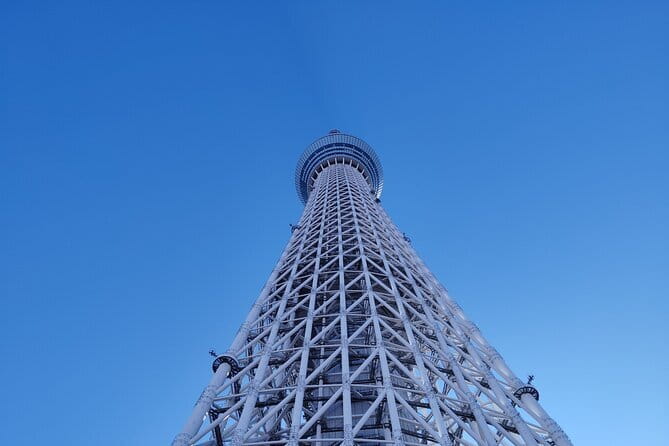
At Kokyo Otemon Gate, the focus shifts to two huge gates and the stone walls from the original castle. This is one of the most useful parts of the walk because the defensive design is visible in front of you.
The tour explains how the arrangement protected the shogun. A gate was not just an entrance. It could control movement, slow an attacker, and create a narrow passage where guards had the advantage. The stonework also helps you understand the scale of Edo Castle, which was Japan’s largest fortress and was never breached.
You have roughly 10 minutes here. That is enough for an explanation and photographs, but not enough for an extended architectural study. The value comes from having the design pointed out rather than simply walking past it.
Same region, a different set of walls:
- Osaka Castle: Museum and Tower Entry Ticket
★ 4.5 · 2,380 reviews - Kyoto: Nijo-jo Castle and Ninomaru Palace Guided Tour
★ 4.7 · 1,020 reviews - Kyoto: Nijo Castle, Kiyomizu & Fushimi Inari Guided Tour
★ 4.7 · 700 reviews - Imperial Palace East Garden and Edo Castle Walking Tour in Tokyo
★ 5.0 · 510 reviews
Three guardhouses, three levels of samurai duty
The itinerary then brings you to three guardhouses: the Constable Guardhouse, Hyakunin Bansho, and Obansho. Taken together, they provide one of the clearest lessons of the walk.
At the Constable Guardhouse, you hear about lower-ranking samurai and the work they performed. This stop adds social detail to a story that can otherwise focus only on famous rulers and battles.
Hyakunin Bansho was a larger guardhouse where many samurai were stationed. The guide discusses their role in castle security and helps you imagine the daily organization needed to protect such a large compound.
At Obansho, near the inner gate, the focus turns to higher-ranking samurai and their duties. The three stops are close enough in theme that the information can feel repetitive if the guide does not vary the storytelling. A strong guide will use them to show the castle’s chain of command, from ordinary guards to trusted officials.
Each guardhouse receives about 10 minutes. The buildings are not presented as fully furnished interiors, so your interest will depend on the explanation. This is also where guide quality matters most. Guides such as Keiko, K, Ai, Shin, Nana, Yuuko, and Mako have been praised for clear explanations, humor, patience, and the use of visual aids. You should still remember that individual guide assignments can vary.
Fujimi-yagura and the vanished castle tower

Fujimi-yagura is an old watchtower overlooking the grounds. The tour explains its former role and what made it important.
This stop works well after the guardhouses because you have already learned how the castle was staffed. Now you can consider the larger view: watchtowers, walls, gates, and guards formed a layered system rather than a single defensive barrier.
The route allows about 10 minutes. Do not expect a long visit inside the tower or a broad sightseeing stop. The point is to understand its place in the old castle system and to see how much of Edo Castle survives in fragments.
Models, maps, and a clearer picture of Edo Castle
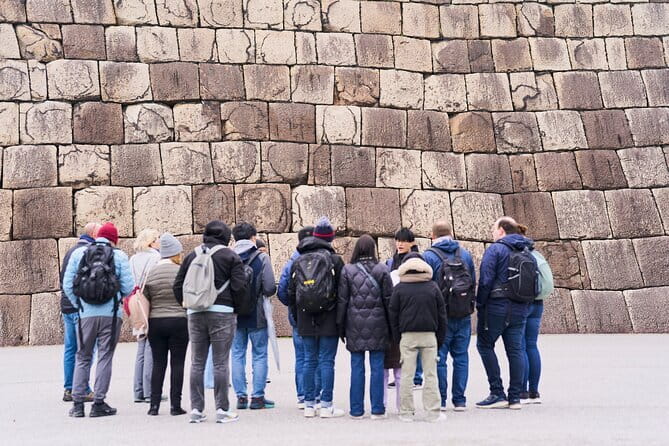
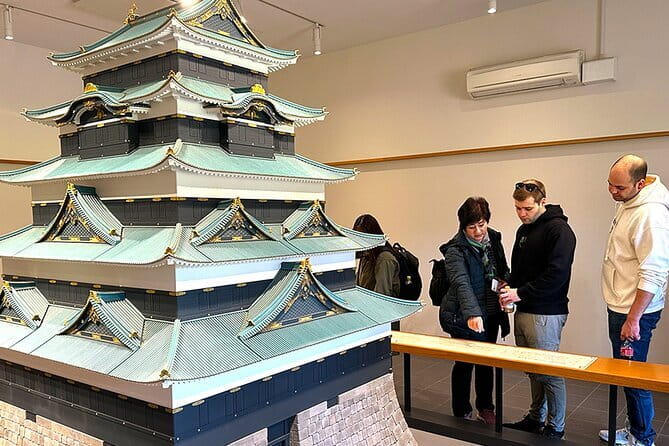
At Kokyo Sannomaru Shozokan, you can see a scale model of the former Edo Castle and visit a shop selling palace-related goods. This may be the most helpful stop for anyone who struggles to reconstruct the original castle from scattered walls and foundations.
A model makes the scale and arrangement easier to grasp. It also gives your guide a chance to connect the earlier gates, turrets, and guardhouses. Some guides use laminated images showing past layouts, guard towers, and members of the imperial family. Those visual references have been singled out as especially helpful during the walk.
The visit is brief, about 10 minutes. You will not have time for a long museum session, and the shop is a small part of the route rather than the main purpose. Still, the model can make the rest of the tour click into place.
The Edo Castle tower ruins
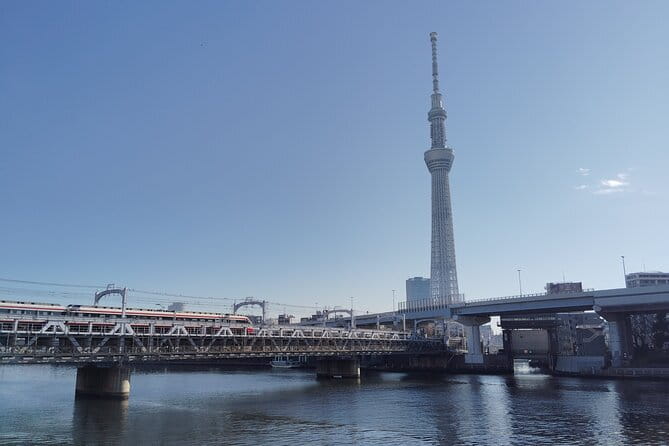
The East Gardens of the Imperial Palace include the former site of Edo Castle’s main tower. Here, the guide explains why the tower no longer stands and what remains today.
This is an important moment because it corrects a common expectation. You are not walking toward a restored Japanese castle with a tall wooden keep. You are looking at a historic site where foundations, stonework, gardens, and surviving structures carry the story.
The stop lasts about 15 minutes. It is a good place to ask questions about the castle’s destruction and the change from shogunal rule to the imperial capital of modern Tokyo. Your guide can also connect the physical remains to the larger story of how power shifted in Japan.
Ninomaru Garden brings a quieter ending
After gates, sentries, and military planning, Ninomaru Garden offers a welcome change. It is a traditional Japanese garden with seasonal plants and a pond filled with koi.
I like this part because it keeps the experience from becoming a pure history lecture. You get time to slow down, notice the planting and water, and see how the former castle grounds now function as a calm public setting. The garden also gives you a more personal sense of the site. This was once a center of political and military power, but today parts of it invite quiet observation.
The scheduled visit is about 15 minutes. That is enough to enjoy the setting, though you should not expect a long garden tour or extensive free time. If gardens are your main interest, you may want to return independently after the guided walk.
The walk back toward Tokyo Station
The tour concludes in front of the ginkgo-lined avenue stretching toward Tokyo Station, then returns to the meeting point according to the supplied details. This final urban view links the old castle grounds with present-day Tokyo.
It is a fitting finish. You have spent two hours tracing the defenses of a shogun’s castle, then emerge near one of the city’s major modern landmarks. The contrast helps show how completely Tokyo has changed while retaining the old palace core.
The walk is often described as short and sweet, and that is accurate. You cover a lot of history without committing to a half-day excursion. The trade-off is that individual stops receive limited time. If you want detailed architecture, long garden photography sessions, or a museum visit, this tour may feel brisk.
Guide quality makes the difference
The strongest part of this experience is the human explanation. Several guides have been praised for bringing energy and humor to the subject, answering questions clearly, and adding historical images to the walk.
K is noted for detailed explanations, strong English, humor, and enthusiasm. Keiko has used flashcards and stories about Edo, the shoguns, and the palace to keep the group involved. Shin has been praised for answering questions with ease, while Nana is noted for patience with a family group. Guides named Ai, Tomo, Anju, Yuuki, Yuta, Franky, Mayuko, and Mako have also received warm feedback for their presentations.
That said, one dissatisfied participant found the guide’s English difficult to follow and left early. This is worth keeping in mind. The tour’s subject is not self-explanatory, and a guide who cannot communicate clearly reduces the value. The overall rating is very high at 4.9 from 725 ratings, with 99 percent recommending it, but no guided activity is identical from one departure to the next.
Who should book this $23.88 walk?
I would choose this tour if you:
- Want a clear introduction to Edo Castle and the shogun period
- Prefer a two-hour activity rather than a full-day history tour
- Enjoy asking questions during a small-group walk
- Want gardens and old structures in the same outing
- Are visiting Tokyo early in your trip and want historical context
- Can manage stairs, slopes, and outdoor walking
I would think twice if you want to enter the Emperor’s residence, explore a reconstructed castle interior, or spend most of your time in gardens. The residence is not open to the public, and the listed sites are outdoor palace grounds and ruins.
The group-size information deserves a quick note. The experience is presented as a small group of up to 10, but the additional activity information gives a maximum of 60. Confirm the expected group size if that point matters to you.
Free cancellation is available if you cancel at least 24 hours before the start time. Cancellations or changes made later are not refunded or accepted.
Final verdict: book it for context, not access
This is a good-value introduction to one of Tokyo’s most important historic areas. You get samurai defenses, guardhouses, castle ruins, a scale model, and a traditional garden in a manageable two-hour route. The guides are the key reason to pay rather than simply walk through the free grounds alone.
Book it if you want the palace complex to make sense. Skip it if you mainly want interior access or a relaxed garden stroll. For most first-time visitors who want history without giving up half a day, the combination of price, length, and strong guide feedback makes this a sensible choice.
FAQ
How long does the Tokyo Castle and Imperial Palace walking tour last?
The tour lasts approximately two hours.
Is the tour conducted in English?
Yes. The tour is conducted in English only, and Japanese-language support is not available.
What is the price?
The listed price is $23.88 per person.
Is the Emperor’s residence open to the public?
No. The Emperor’s residence is not open to the public as part of this experience.
Are there security rules for entering the Imperial Palace grounds?
Yes. You will pass through a security check. Do not bring knives or alcohol.
Does the tour include steep slopes and stairs?
Yes. The route includes steep slopes and stairs. Most people can participate, but comfortable shoes are important.
Where does the tour start and end?
It starts at Starbucks Coffee in Kokyo Gaien Wadakura Fountain Park, 3-1 Kōkyogaien, Chiyoda City. The activity ends back at the meeting point.
Just added around Japan
- Tokyo: Edo Castle and Imperial Palace Guided Walking Tour★ 5.0 · 6 reviews
- (Ticket Included) Explore Osaka Castle & Museum of History★ 4.8 · 21 reviews
- Peace Memorial Park, Hiroshima Castle, & Garden Private Tour★ 4.8 · 7 reviews
- Osaka: Explore Every Bit of Osaka Castle in 3 Hours★ 5.0 · 5 reviews
- Osaka/kyoto: Himeji Castle, Kobe. Luxury Day Trip with Guide★ 5.0 · 2 reviews
- Osaka: Early Morning Osaka Castle Guided Tour, Avoid Crowds★ 4.9 · 12 reviews
- Osaka: Osaka Castle 3 hours Historical Walking Tour★ 4.6 · 14 reviews
- Osaka: Osaka Castle – Tsuruhashi – Tennoji (Spanish Guide)★ 4.7 · 10 reviews
Castle Walking Tours, compared.

Edinburgh Castle: Guided Walking Tour with Entry Ticket
Read our review →
3-Hour Walking Tour of Old Town & Prague Castle
Read our review →Edinburgh Castle: Guided Walking Tour with Entry Ticket
Read our review →
Edinburgh Castle Guided Walking Tour in English
Read our review →

Prague 3-hour Afternoon Walking Tour including Prague Castle
Read our review →
Royal Mile and Edinburgh Castle – Small Group Walking Tour
Read our review →Browse the lists this tour appears in