Review · JAPAN
Imperial Palace East Garden and Edo Castle Walking Tour in Tokyo
Tokyo’s old castle still shapes the city. This 2.5-hour walk gives you two things I value: a clear introduction to Edo-era Japan and a small group capped at 12 people. I also like that guides such as Kenta, Glenda, Miko, Sato, and Kei use stories, photos, and humor to make the ruins easier to understand.
The main drawback is simple: you do not enter the Imperial Palace buildings. You explore the East Gardens and surrounding grounds instead. The gardens can be peaceful and attractive, but they may not satisfy you if you expect grand palace rooms, lavish interiors, or flowers in every season.
Key points to know before booking
- Wadakura Fountain Park begins the tour, offering an easy meeting point and a calm introduction near the palace.
- Edo Castle ruins provide the historical focus, with stories about shoguns, samurai, emperors, castle defenses, and palace life.
- The tour lasts about 2 hours and 30 minutes, so do not schedule a tight appointment immediately afterward.
- Groups are limited to 12 people, giving you a better chance to hear the guide and ask questions.
- Comfortable shoes matter, since this is a walking tour with some hills and occasional steep paths.
- The $25 price is good value if you want context and company, but less so if you only want to stroll through gardens on your own.
Why this part of Tokyo is worth your time
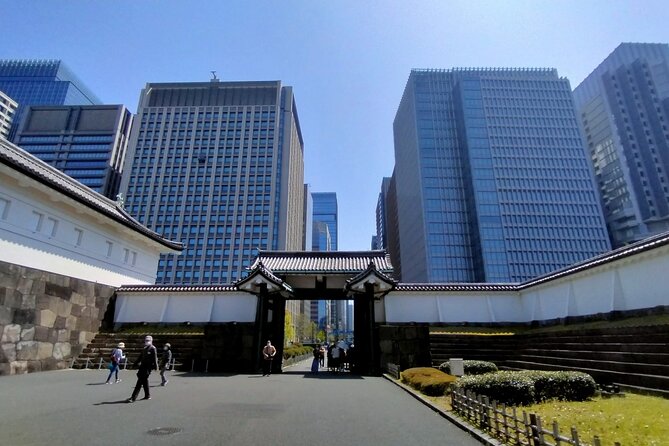
The Imperial Palace area can feel confusing at first. Tokyo gives you broad plazas, busy roads, formal gates, greenery, and scattered castle remains, but not a single obvious building that explains the whole site. A guide helps connect the pieces.
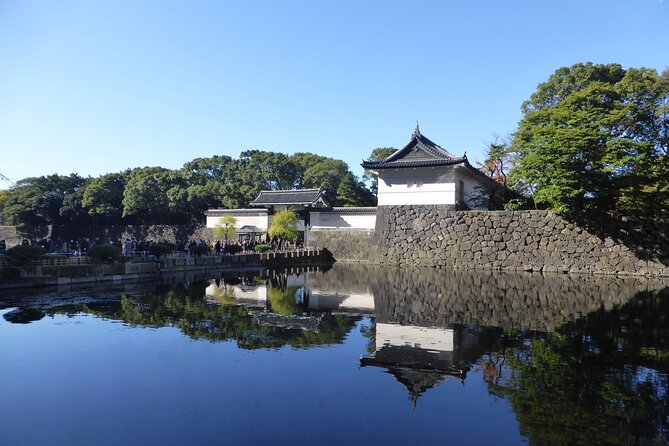
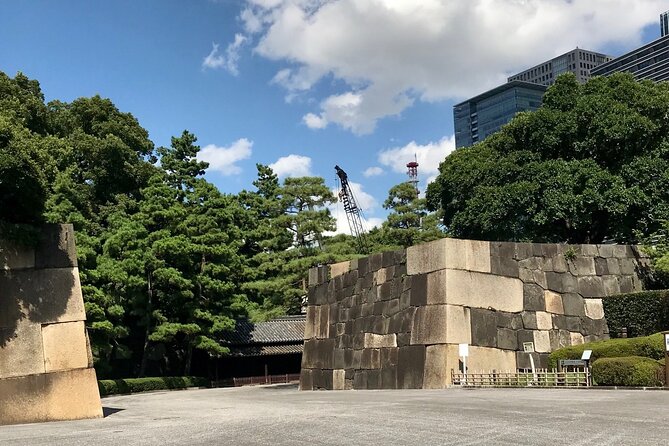
Edo Castle was once the seat of the Tokugawa shoguns, who ruled Japan for more than two and a half centuries. Today, much of the castle has disappeared, yet its stone walls, foundations, gardens, ponds, and open spaces still show the scale and importance of the former stronghold.
That makes this experience less about admiring one perfect monument and more about learning how to read the ground beneath you. You may see a garden, a wall, or a broad lawn. Your guide explains what occupied that space, who used it, and how the imperial grounds developed after the end of the shogunate.
I especially like this kind of tour early in a Tokyo visit. It gives you a useful framework for later sights, including other samurai-era districts, museums, shrines, and imperial sites.
More Castle Gardens and Grounds in Japan
- Himeji: Himeji Castle & Kokoen Garden 3.5-Hour Guided Tour
★ 4.9 · 30 reviews - Tokyo: Edo Castle Ruins & Imperial Palace East Garden Tour
★ 4.4 · 13 reviews - Kanazawa: Half-Day Private Tour – Garden, Castle, Geisha
★ 5.0 · 10 reviews
Meeting at Wadakura Fountain Park
The tour starts at the Starbucks Coffee near Wadakura Fountain Park, at 3-1 Kōkyogaien in Chiyoda City. This is a practical meeting point near the Imperial Palace, though you should still allow enough time to find the correct Starbucks and guide.
Wadakura Fountain Park is more than a place to wait. It has broad paths, carefully designed water features, and a calm setting close to the palace grounds. The original park was built in 1961 to mark the wedding of Emperor Akihito and Empress Michiko. It was redesigned and reopened in 1995 for the wedding of Crown Prince Naruhito and Crown Princess Masako.
The stop lasts about 30 minutes, and admission is free. It gives you an easy start before the longer garden walk. The fountain setting also provides a useful first look at how modern imperial landmarks sit beside older castle remains.
Your guide will usually use this opening time to introduce the area and explain what you are about to see. Previous guide names associated with this experience include Kenta, Glenda, Miko, Sato, Kei, Kaz, Midori, Miki, Miyu, and Satoko. The specific guide is not guaranteed, but the strongest pattern is clear: the tour depends heavily on an individual guide’s storytelling and ability to answer questions.
Walking through the East Gardens and Edo Castle ruins
The main portion lasts about two hours. The East Gardens are free to enter, and the route takes you through a mix of clipped plantings, open lawns, ponds, castle remnants, and historic foundations.
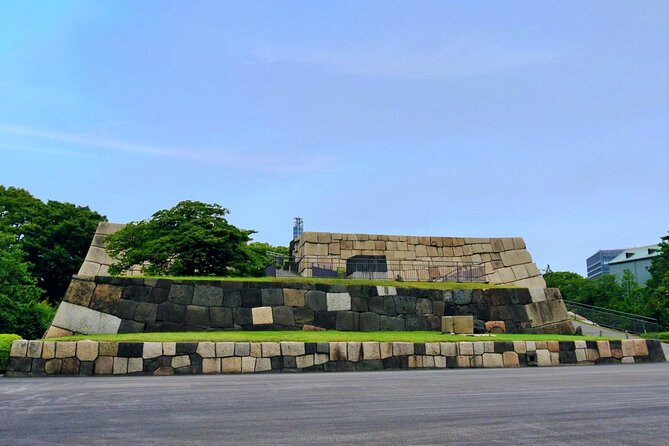
The Honmaru area is one of the important sections. It was once part of the castle’s main compound, and the remaining stonework helps you picture the former center of power. You will not see a complete castle rising above the trees. Instead, you see traces of a much larger complex and learn how the site functioned.
The former castle tower is another major point of interest. The tower itself no longer survives, but the base and surrounding area help show its former size. Guides often use visual material to explain what stood there. Miko, for example, was praised for bringing photos that helped explain the gardens, castle grounds, and former tower.
That is useful because ruins can be hard to understand from stones alone. A guide who carries images or diagrams can turn an empty foundation into something you can picture.
The Ninomaru Garden offers a different mood. Here, traditional Japanese garden design replaces the harder lines of castle defenses. Ponds, plantings, and winding paths create a quieter section of the walk. You may see koi in the water, and one guide described the fish appearing to glow in the sunlight.
The garden changes with the season, but you should keep your expectations measured. Spring can bring cherry blossoms, while autumn may bring colored foliage. Still, seasonal display is not guaranteed. An October visit may offer neat greenery without much fall color, and a garden-focused outing may feel less impressive if few flowers are blooming.
I see this as a strength and a weakness. The gardens are carefully kept and peaceful, but they are not always filled with dramatic color. Their appeal often comes from shape, balance, open space, water, and the story behind the grounds.
What the guides add to the walk

The best reason to book this tour is the guide. The gardens are free, so you are paying mainly for interpretation, company, and a route through a large historic site.
The strongest guide experiences combine clear English, visual aids, humor, and a good sense of pace. Kenta received repeated praise for his energy, storytelling, preparation, and ability to explain complicated subjects without losing the group. Glenda was valued for speaking clearly and slowly while explaining emperors, shoguns, samurai, and palace life.
Kei handled wet weather thoughtfully by moving the group toward places where the discussion could continue with less exposure. Kaz kept a steady pace during rain. Sato was praised for giving just the right amount of information and answering questions without turning the walk into a lecture.
These details matter. A two-hour history walk can drag if the guide talks at you nonstop. It can also feel thin if the guide only points out buildings. The better examples here seem to connect political history with daily life, family background, language, and modern Japan.
The tour can also work well for families. One guide was especially patient with children, and another helped arrange a wheelchair when a participant became tired and dizzy. That does not mean every route or day will be identical, but it suggests a helpful attitude toward different needs.
More Castle Walking Tours in Japan
- Tokyo Castle & Imperial PalaceーShogun Walking Tour
★ 4.7 · 1,068 reviews - Ultimate Osaka Walking Tour: Castle, Dotonbori & Hidden Gems
★ 5.0 · 862 reviews - Tokyo Castle & Imperial PalaceーShogun Walking Tour
★ 5.0 · 724 reviews - Osaka Castle Walking Tour and Castle Tower Admission
★ 5.0 · 561 reviews
How difficult is the walking?
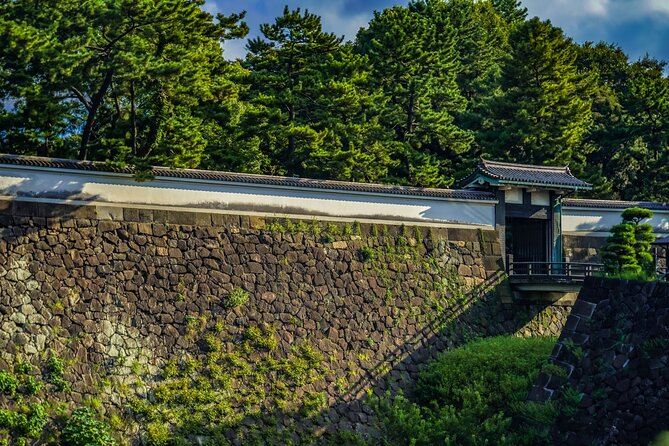
This is not a strenuous hike, but you should treat it as an active sightseeing experience. The walk includes hills, and some sections can feel steep. One useful detail is that the route was described as having hills but no stairs.
Wear shoes with good support. The most common mistake would be to arrive in dress shoes or thin sandals and then spend two and a half hours on paths and uneven historic ground.
Rain can make the experience less comfortable, and the activity requires good weather. If poor weather forces a cancellation, you can choose another date or receive a full refund.
Most people can take part, and service animals are allowed. Still, anyone who tires easily should think about the duration and hills before booking. If you have mobility concerns, contact the provider before the tour rather than assuming the route will suit you.
Is $25 a fair price?
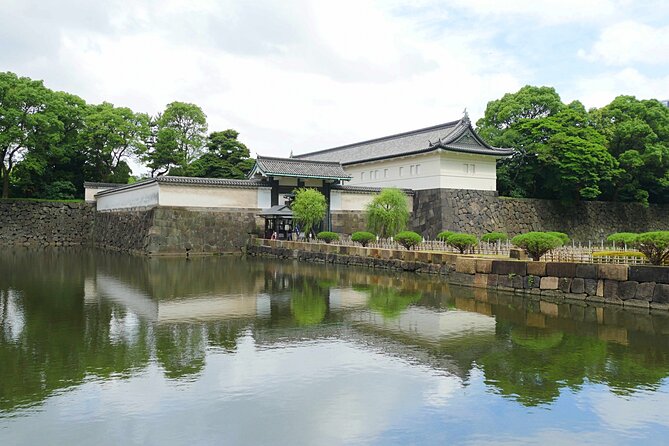
At $25 per person, this is a modestly priced guided walk in central Tokyo. There is no separate entry charge for the two main stops, so the cost pays for the English-speaking local guide and the structure of the experience.
The value is strongest if you want historical context. You could walk through the East Gardens alone for free, but you would need to research the castle layout and identify the significance of the ruins yourself. A good guide saves that effort and helps you notice details you might otherwise pass without a second thought.
The value is weaker if your main goal is a grand palace interior. You will not enter the Imperial Palace buildings, and the tour cannot provide that experience. You are seeing the grounds, gardens, ruins, and surrounding spaces only.
For a first visit to Tokyo, I consider the price reasonable. The group size of up to 12 is small enough to keep the walk personal without the cost of a private tour. Just remember that snacks are not included, so eat beforehand or plan to buy something later.
Timing, group size, and planning advice
Plan on the full 2 hours and 30 minutes. One past participant expected a much shorter walk and found that the actual duration affected the rest of the day. The stated time is clear, so build your schedule around a full morning or afternoon rather than treating this as a quick one-hour stop.
The activity ends back at the meeting point. That makes it easier to continue sightseeing from the palace area, return to your hotel, or arrange lunch nearby. You should still avoid booking a timed attraction immediately afterward, since walking pace, questions, weather, and group needs can affect the finish.
A maximum of 12 people is a useful limit. You are more likely to hear the guide clearly and get answers than on a large bus tour. It also makes it easier for the group to pause near a wall, garden feature, or viewpoint without blocking the whole site.
The mobile ticket is convenient, and confirmation arrives at booking. Free cancellation is available if you cancel at least 24 hours before the local start time. Changes or cancellations inside that window are not accepted for a refund.
Who should book this experience?
I would recommend it to first-time Tokyo visitors who want an understandable introduction to the city’s political and imperial past. It suits you especially well if you enjoy learning why a place matters, not just taking photos of it.
It is also a good match for solo visitors and couples who like meeting a few other people without joining a huge group. The small format can make it easier to ask about restaurants, nearby sights, language, or other parts of Tokyo. Several guides have also shared practical suggestions for additional places to visit.
Families can benefit from the mix of stories, open spaces, and manageable walking. Older visitors should consider the hills and duration, but the guide’s willingness to adjust pace and help when needed is encouraging.
You may want to skip it if you have already studied Edo Castle in detail, dislike guided walks, or want access to palace interiors. You may also be disappointed if you expect flower displays or dramatic autumn color at any time of year.
Should you book the Imperial Palace East Garden tour?
Yes, if you want a well-priced introduction to Edo Castle, the East Gardens, and Japan’s imperial story. The strongest part is not a single spectacular building. It is the way a good guide explains the ruins, gardens, emperors, shoguns, and modern palace grounds as one connected story.
Book with realistic expectations: this is an outdoor history walk, not a palace interior tour. Allow the full two and a half hours, wear comfortable shoes, and choose it for the guide’s insight rather than for guaranteed flowers or fall color. With a 4.9 rating from 510 ratings and a 98 percent recommendation rate, it has a strong record, but your experience will still depend on the weather, season, and guide assigned that day.
FAQ
Does the tour enter the Imperial Palace buildings?
No. Public entry to the palace buildings is not permitted. The experience visits the East Gardens and surrounding grounds, with historical explanations and photo opportunities.
How long does the walking tour last?
The tour lasts approximately 2 hours and 30 minutes. Plan for the full period when arranging the rest of your day.
Where does the tour start and finish?
It starts at Starbucks Coffee near Wadakura Fountain Park, at 3-1 Kōkyogaien, Chiyoda City, Tokyo. The activity ends back at the same meeting point.
What is included in the price?
The price includes all fees and taxes plus an English-speaking local guide. Snacks are not included.
How many people can join the tour?
The maximum group size is 12 people.
Is the tour suitable for people with limited mobility?
Most people can participate, but the walk includes hills and some steep paths. Service animals are allowed. The route has been described as having hills but no stairs, and guide assistance may be available when someone needs help.
What happens if the weather is poor?
The experience requires good weather. If it is canceled because of poor weather, you can receive a full refund or choose a different date. You can also cancel for a full refund if you do so at least 24 hours before the start time.
More Palace Tours in Japan
- Kyoto: Nijo-jo Castle and Ninomaru Palace Guided Tour
★ 4.7 · 1,020 reviews - Kyoto: Imperial Palace & Nijo Castle Guided Walking Tour
★ 4.7 · 453 reviews - Kyoto: Nijo Castle and Kyoto Imperial Palace Guided Tour
★ 4.6 · 98 reviews - Tokyo: Edo Castle and Imperial Palace Guided Walking Tour
★ 5.0 · 6 reviews
Just added around Japan
- Tokyo: Edo Castle and Imperial Palace Guided Walking Tour★ 5.0 · 6 reviews
- (Ticket Included) Explore Osaka Castle & Museum of History★ 4.8 · 21 reviews
- Peace Memorial Park, Hiroshima Castle, & Garden Private Tour★ 4.8 · 7 reviews
- Osaka: Explore Every Bit of Osaka Castle in 3 Hours★ 5.0 · 5 reviews
- Osaka/kyoto: Himeji Castle, Kobe. Luxury Day Trip with Guide★ 5.0 · 2 reviews
- Osaka: Early Morning Osaka Castle Guided Tour, Avoid Crowds★ 4.9 · 12 reviews
- Osaka: Osaka Castle 3 hours Historical Walking Tour★ 4.6 · 14 reviews
- Osaka: Osaka Castle – Tsuruhashi – Tennoji (Spanish Guide)★ 4.7 · 10 reviews
Castle Gardens & Grounds, compared.


Versailles Château and Gardens Walking Tour from Paris by Train
Read our review →
Cordóba: Gardens & Fortress of Catholic Monarchs Guided Tour
Read our review →
De Haar Castle Gardens and Park Only Entry Ticket
Read our review →
Kenilworth Castle and Elizabethan Garden Entry Ticket
Read our review →