
Review · KYOTO
Kyoto: Nijo Castle, Kiyomizu & Fushimi Inari Guided Tour
Kyoto rewards early risers. This 11-hour bus tour links Arashiyama, Kinkaku-ji, Nijo Castle, Kiyomizu-dera, and Fushimi Inari, giving you a practical way to see the city’s major sights without working out a complicated train-and-bus plan. I especially like the early visit to the Bamboo Grove and the generous 2.5 hours around Kiyomizu-dera, where you have time for lunch, temple visits, shops, and photos.
I also like the guides’ ability to work in English and Spanish, with several guides praised for clear explanations and careful timekeeping. Cesar, Angeles, Paula, and other guides have earned warm approval for answering questions and keeping groups together. The main drawback is the pace: five major sites in one day means a long, walking-heavy outing, and popular places can be very crowded.
Key points to know before booking
- Five famous Kyoto sights in one day: The route covers Arashiyama, Kinkaku-ji, Nijo Castle, Kiyomizu-dera, and Fushimi Inari.
- Early Arashiyama stop: The Bamboo Grove is scheduled first, when it may feel calmer than later in the day.
- Ticket choice matters: Admission to Kinkaku-ji, Nijo Castle, and Kiyomizu-dera is included only with the ticket option.
- Two-language guiding: The tour operates in English and Spanish, with guides switching between languages during the day.
- Long but well-balanced schedule: Bus rides offer brief rests between walks, while each stop includes free time.
- Strong transport feedback: The bus and driver receive particularly good marks for comfort, punctuality, and smooth driving.
Why this tour works for a first day in Kyoto

Kyoto is not difficult to visit, but its sights are spread across the city. Arashiyama sits to the west, Fushimi Inari lies far to the south, and the central and eastern temples each require their own transport plan. Doing all five independently in one day would mean watching the clock, changing routes, and allowing for possible delays.
This tour takes care of the long hops by coach. The listed travel times range from about 30 to 40 minutes, giving you a place to sit between walks. Several people especially appreciated having 15 to 20 minutes to rest on the bus. That matters in Kyoto, where heat, hills, stone paths, and crowds can wear you down.
The cost is $54 per person, though you need to check which booking option you select. The basic price can be good value if you want transport and a guide through five of Kyoto’s best-known sights. The entrance fees for Kinkaku-ji, Nijo Castle, and Kiyomizu-dera are included only when you purchase the option with tickets. Food and drinks are not included, so bring water and budget for lunch.
This is not a slow temple tour. You will get orientation, historical background, free time, and transport, but you will not have hours to sit quietly at every site. I see it as a strong introduction for a first visit, especially if your Kyoto schedule is short.
More Guided Castle Tours in Japan
- Kyoto: Nijo-jo Castle and Ninomaru Palace Guided Tour
★ 4.7 · 1,020 reviews - Kyoto: Imperial Palace & Nijo Castle Guided Walking Tour
★ 4.7 · 453 reviews - Osaka Castle Guided Tour
★ 4.7 · 249 reviews
Arashiyama Bamboo Grove before the crowds
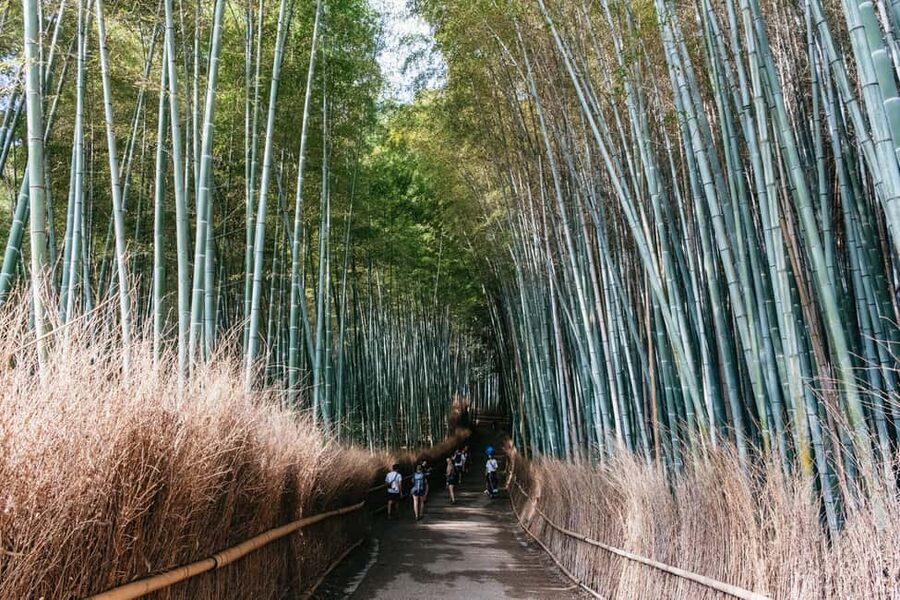
The day begins outside Hotel Keihan Kyoto Grande, with check-in at least 10 minutes before departure. From there, the coach takes roughly 40 minutes to Arashiyama.
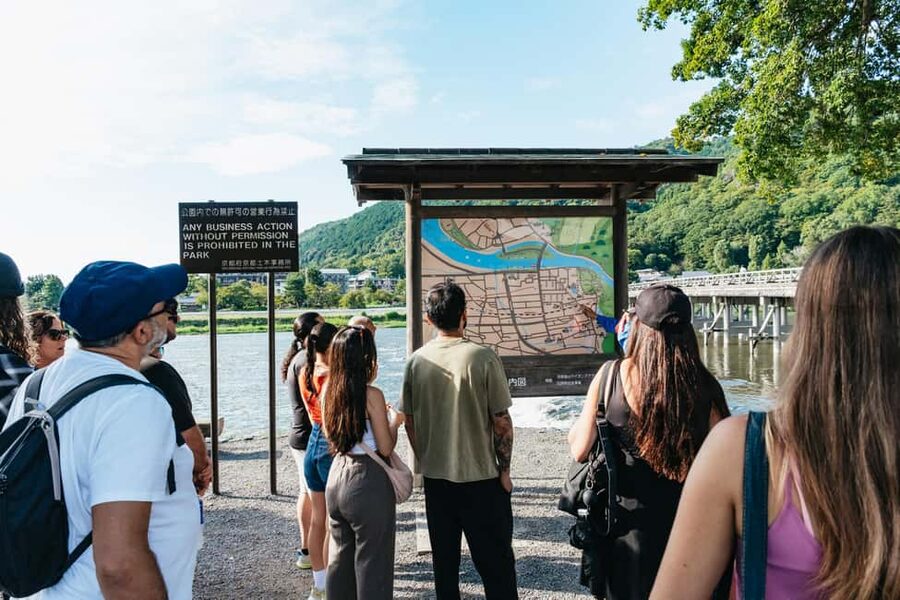
You have about 70 minutes in the area, centered on the famous Bamboo Grove. Tall bamboo rises on both sides of the path, and the soft movement of the stalks gives this stop a different mood from Kyoto’s ornate temples. The morning timing is one of the best parts of the plan. Early access does not promise an empty path, but starting here gives you a better chance of seeing the grove before the busiest part of the day.
The time allowance is enough for a walk, photographs, and a little orientation. It is not enough for a broad exploration of every corner of Arashiyama, so keep your priorities simple. If the Bamboo Grove is your main goal, walk directly there rather than browsing shops first.
This stop also sets the physical tone for the day. You will be walking on paths and standing for photographs from the beginning, so comfortable shoes are essential. A hat, sunscreen, and water are sensible in warm weather.
Kinkaku-ji and the famous Golden Pavilion
After another bus ride of about 30 minutes, the group reaches Kinkaku-ji, better known as the Golden Pavilion. You have around 45 minutes here.
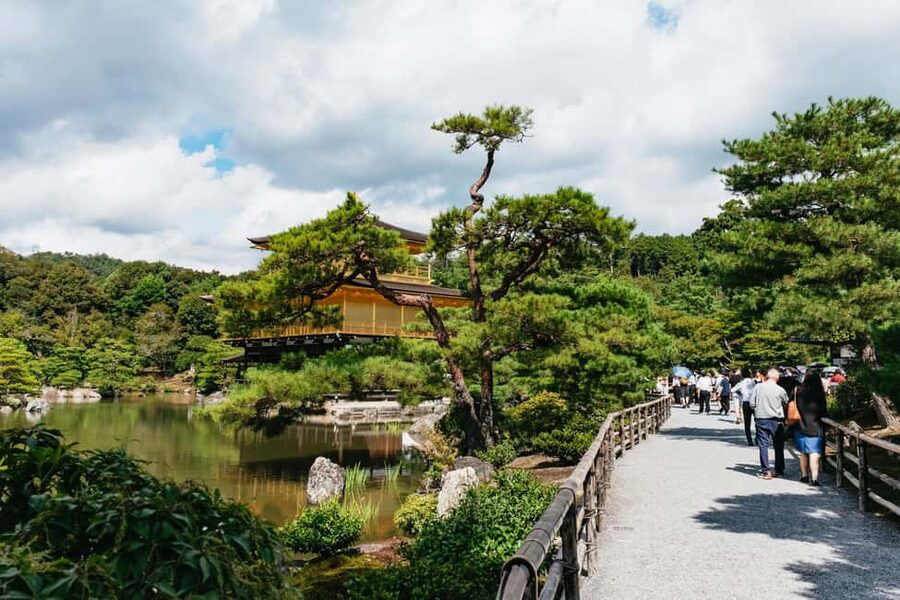
The pavilion’s gold-covered exterior reflects against the pond, creating the classic Kyoto image found in guidebooks and photographs. The appeal is not only the building itself. The surrounding garden and water give the stop a calm visual balance, even when the grounds are busy.
Forty-five minutes is a reasonable amount of time for the main route, photographs, and a quick look at the garden. It is less generous if you want to stop often or move at a very slow pace. Since Kinkaku-ji is one of Kyoto’s most popular sites, expect other people in your photographs, particularly during busy seasons.
Admission is included only if you purchase the ticket option in advance. This point is easy to miss because the tour description presents the pavilion as part of the route, while entry depends on your chosen package. Check your booking carefully before departure. If you select a transport-only option, you may need to arrange admission separately, if allowed by the operator.
Nijo Castle and the shogun’s former residence
The next 30-minute coach ride leads to Nijo Castle, with about 90 minutes to explore. This is a useful contrast to the temples because it focuses on political power, court life, and traditional interiors.
Inside the castle grounds, you can see spacious gardens and tatami rooms connected with the shogun’s residence. The famous nightingale floors are a memorable detail. Their deliberate squeaks were designed as a security measure, warning occupants when someone walked through the corridors.
Ninety minutes gives this stop more breathing room than Kinkaku-ji. You can take in the rooms, walk through the grounds, and listen to the guide’s explanation without racing from one point to the next. The castle is also a good place to understand that Kyoto’s story is not only about shrines and scenic views. It was also a center of government and elite life.
Admission is again tied to the ticket option. There is also an important contingency: circumstances outside the operator’s control can make Nijo Castle inaccessible. If that happens, the replacement stop is Sanjusangen-do Temple. Since traffic, closures, weather, and local conditions can alter the plan, treat the exact sequence as flexible.
More Japanese Castle Tours in Japan:
- Osaka Castle: Museum and Tower Entry Ticket
★ 4.5 · 2,380 reviews - Osaka Castle Walking Tour and Castle Tower Admission
★ 5.0 · 561 reviews - From Osaka: Himeji Castle, Arima Onsen & Mt. Rokko Day Tour
★ 4.6 · 339 reviews - 5-Hour Osaka Bike Tour to the Neighborhood of Osaka Castle
★ 5.0 · 319 reviews
Kiyomizu-dera, lunch, and eastern Kyoto
After another ride of about 30 minutes, the tour reaches Kiyomizu-dera. This is the longest stop, with 2.5 hours for the temple, lunch, and free time.
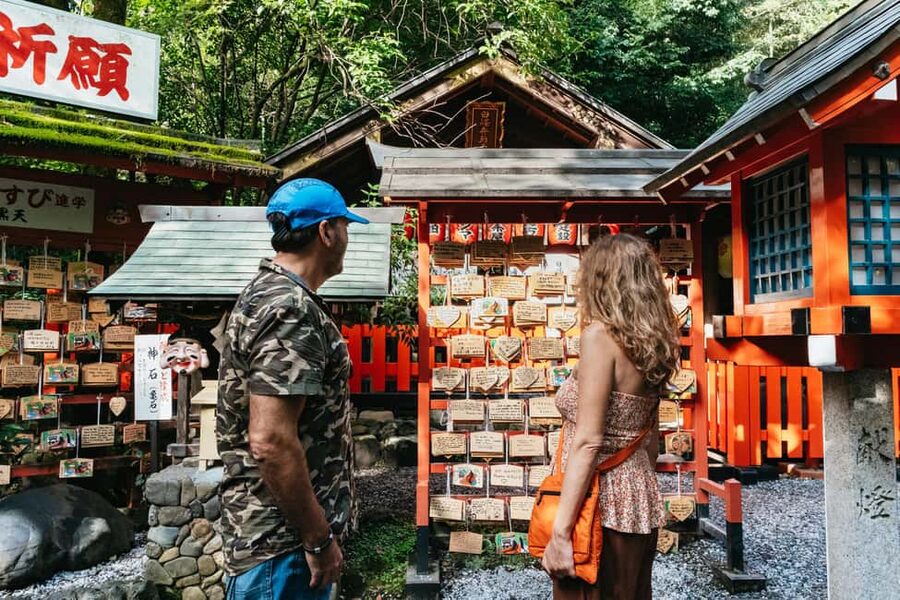
Kiyomizu-dera is famous for its large wooden stage, which looks over the valley and offers broad views across Kyoto. The temple complex also sits near a lively approach lined with traditional sweets, souvenirs, and craft shops. This is the stop where you have the best chance to choose a meal, browse at your own speed, and pause for a drink.
The long time allowance is a real strength. You are not forced to choose between seeing the temple and eating lunch. You can follow the guide for an introduction, then separate for personal exploration before returning at the agreed meeting point.
There is a practical catch. The approach to Kiyomizu-dera includes slopes, steps, and crowded paths. The tour is not suitable for people with mobility impairments or wheelchair users. Even if you walk regularly, hot weather can make the climb feel harder. The advice from the tour team is sound: wear comfortable shoes, carry water, and use sunscreen and a hat.
Admission to Kiyomizu-dera is included only with the ticket package. As with Kinkaku-ji and Nijo Castle, confirm this before paying. The area around the temple can also become very crowded. The crowds are part of the setting, not a sign that the tour has lost control of its timing.
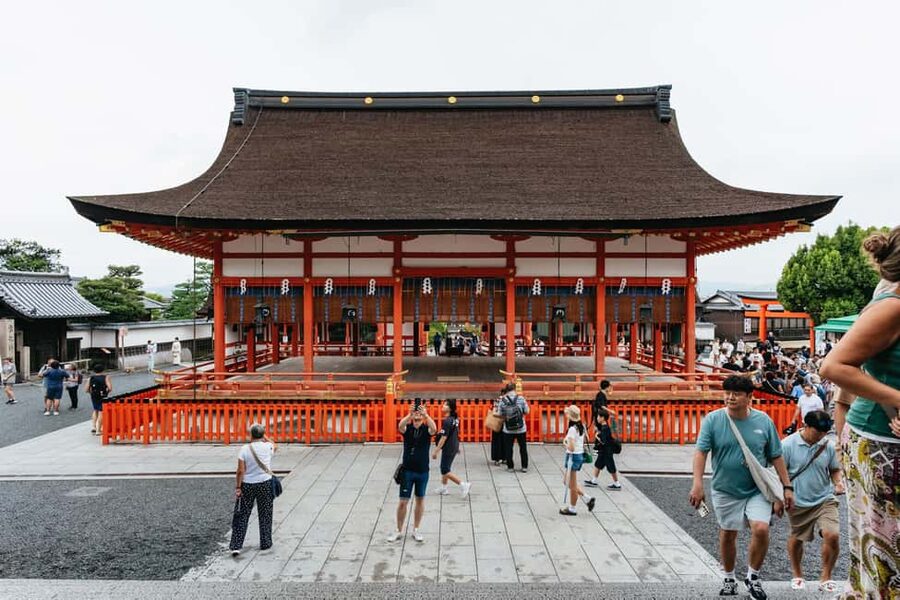
Fushimi Inari and the red torii gates
The final major stop comes after a 30-minute drive. Fushimi Inari Taisha receives about 1.5 hours, with free time to explore.
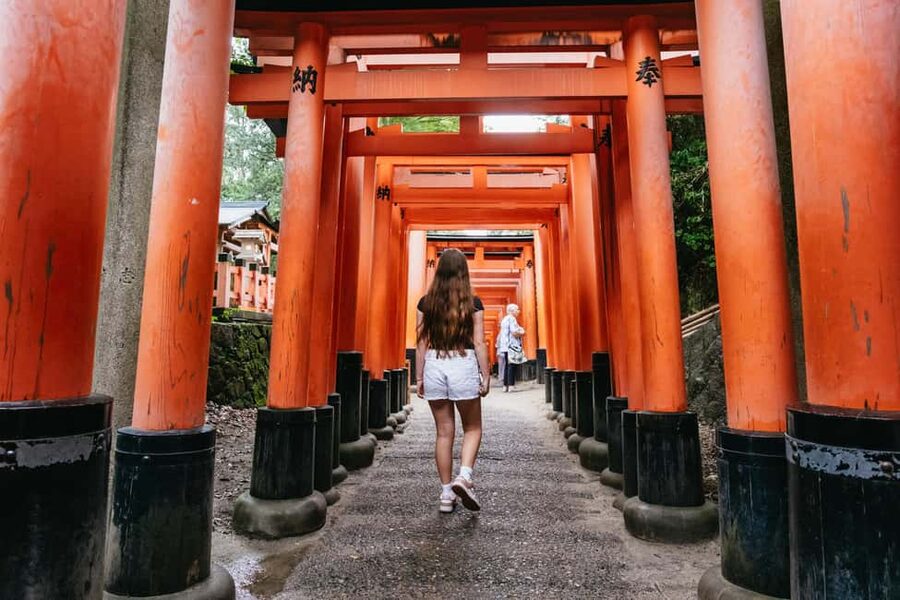
The shrine is known for its thousands of bright red torii gates, which form covered paths up the wooded mountainside. Each section gives you a different view of the repeating gates, and the mood changes as you move away from the entrance.
An hour and a half is enough to experience the opening paths and walk at a comfortable pace. It is not enough to explore every mountain trail. You should not feel pressured to reach the highest point. Choose a turnaround point that suits your energy, especially after a full day of temples and walking.
The timing may also affect what you see. One person noted that the last stop was shorter in feel because darkness arrived, though the late hour also meant there was less need to linger. If you want clear photographs, use your free time promptly and do not spend the entire stop near the entrance.
The official drop-off choices are Fushimi Inari Taisha and Kyoto Station. That gives you a useful choice at the end of the day. You can remain near the shrine or return toward the city center, depending on your evening plans.
The guides and the bilingual format
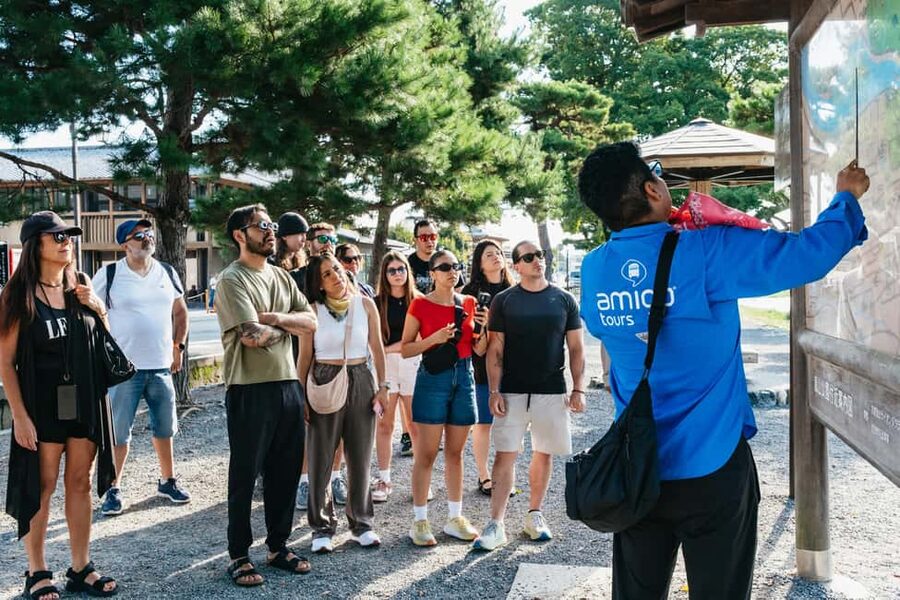
The guide can make or break a packed sightseeing day. The strongest praise has gone to guides such as Cesar and Angeles, who explained Japanese history and culture, answered questions, and kept people aware of meeting times. Paula, Alex, Andrea, Pastor, and others have also been praised for friendly delivery and clear organization.
The tour runs in English and Spanish. In a bilingual group, explanations naturally take longer than in a single-language tour, but the guides are expected to give both groups the same information. Several guide reports specifically praised fast switching between English and Spanish, and one guide was also able to move into Japanese when needed.
You should stay close enough to hear. At crowded sites, the guide may be difficult to hear from the back of the group. One useful improvement would be audio headsets, especially at Kiyomizu-dera or Fushimi Inari when many groups are nearby. If hearing every detail matters to you, stand near the guide during the walking explanations.
The guide is not simply there to point out buildings. Good explanations help you connect the nightingale floors with shogun-era security, the torii gates with shrine worship, and Kiyomizu-dera with Kyoto’s broader temple culture. That context is a major part of the tour’s value.
The coach, timing, and physical effort
The coach is the practical backbone of the day. Several accounts describe it as clean, comfortable, cool, and punctual, with drivers such as Ken, Hamada, Kobashi, and Ikeda praised for safe driving. The bus rides are not wasted time. They provide short breaks, which you will appreciate after walking through temple grounds.
The schedule usually runs from roughly morning until early evening, though the exact start time depends on availability and conditions. Traffic, road closures, weather, or site restrictions can change the order. You should keep evening plans flexible rather than booking a tight connection immediately after the stated end time.
This is a long day with substantial walking. The tour is not suitable for wheelchair users or people with mobility impairments, and it is a poor match if you dislike steps, crowds, or fixed meeting times. Families with older children may find the mix of coach rides and sightseeing manageable, but everyone should be ready for a full day outdoors.
Summer requires extra care. Several people praised the air conditioning and the chance to cool down on the bus, but hot weather still makes the walking demanding. In cooler months, the same schedule may feel much easier.
Who should book this Kyoto tour?
I would choose this tour if you are visiting Kyoto for the first time, have only one open day, or want a clear introduction before exploring independently. It is also useful if you are uneasy about navigating multiple Kyoto bus and train routes.
The tour suits people who want the major sights, historical explanations, and free time in one package. It also works well for solo visitors who prefer a structured day, since the guide keeps the group informed and helps prevent missed meeting times.
I would hesitate if you want quiet temple visits, long photography sessions, or a flexible schedule. Kyoto’s most famous sites are busy, and this route visits five of them in succession. You will see a great deal, but you will not have the freedom to linger whenever a place captures your attention.
At $54 per person, the value is strongest when your selected package includes the three main admission fees. Add the convenience of a coach, bilingual guiding, and a driver who handles the city traffic, and the price is reasonable for a single, tightly planned day. Food is extra, and the ticket option must be checked before booking.
Should you book it?
Book this tour if your goal is to cover Kyoto’s essential sights efficiently and learn what you are seeing along the way. The early Bamboo Grove visit, long Kiyomizu-dera stop, and well-regarded guides make the packed schedule more manageable.
Skip it if you want a slow, deeply personal day at two or three sites. For most first-time visitors with limited time, though, this is a practical way to get your Kyoto bearings, see the city’s defining places, and save the more leisurely temple wandering for a future visit.
FAQ
How long does the Kyoto tour last?
The tour lasts 11 hours. The schedule begins at Hotel Keihan Kyoto Grande and ends with drop-off at either Fushimi Inari Taisha or Kyoto Station.
Where is the meeting point?
Meet outside Hotel Keihan Kyoto Grande. The guide will be holding an Amigo Tours sign. You should arrive at least 10 minutes before departure for check-in.
Is admission to all attractions included?
Admission to Kinkaku-ji, Nijo Castle, and Kiyomizu-dera is included only if you purchase the ticket option in advance. Food and drinks are not included.
What languages are available?
Live guiding is available in English and Spanish. The guide provides information to both language groups during the day.
What happens if Nijo Castle cannot be visited?
If Nijo Castle is inaccessible due to circumstances outside the operator’s control, the tour may visit Sanjusangen-do Temple instead.
Is the tour suitable for wheelchair users?
No. The tour is not suitable for people with mobility impairments or wheelchair users. It includes considerable walking and some areas with slopes and steps.
Just added around Japan
- Tokyo: Edo Castle and Imperial Palace Guided Walking Tour★ 5.0 · 6 reviews
- (Ticket Included) Explore Osaka Castle & Museum of History★ 4.8 · 21 reviews
- Peace Memorial Park, Hiroshima Castle, & Garden Private Tour★ 4.8 · 7 reviews
- Osaka: Explore Every Bit of Osaka Castle in 3 Hours★ 5.0 · 5 reviews
- Osaka/kyoto: Himeji Castle, Kobe. Luxury Day Trip with Guide★ 5.0 · 2 reviews
- Osaka: Early Morning Osaka Castle Guided Tour, Avoid Crowds★ 4.9 · 12 reviews
- Osaka: Osaka Castle 3 hours Historical Walking Tour★ 4.6 · 14 reviews
- Osaka: Osaka Castle – Tsuruhashi – Tennoji (Spanish Guide)★ 4.7 · 10 reviews
Japanese Castle Tours, compared.
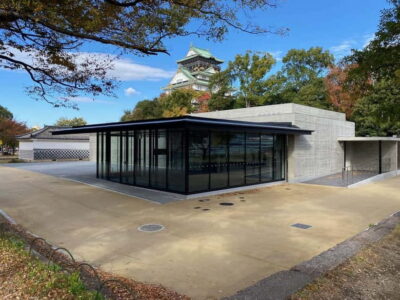
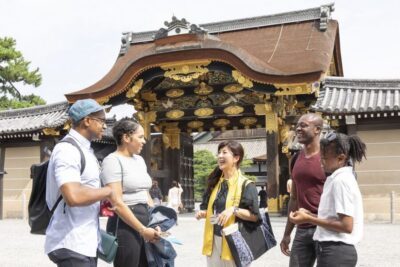
Nijo-jo Castle and Ninomaru Palace Guided Tour
Read our review →
Osaka Castle Walking Tour and Castle Tower Admission
Read our review →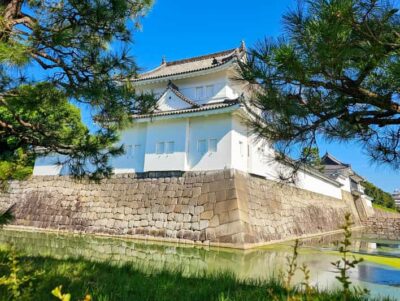
Imperial Palace & Nijo Castle Guided Walking Tour
Read our review →
Himeji Castle, Arima Onsen & Mt. Rokko Day Tour
Read our review →
5-Hour Osaka Bike Tour to the Neighborhood of Osaka Castle
Read our review →
Best of Himeji Castle: 3hr Tour with Licensed Guide
Read our review →Browse the lists this tour appears in