
Review · ITALY
San Leo: Fortress Entry Ticket and Cagliostro’s Prison
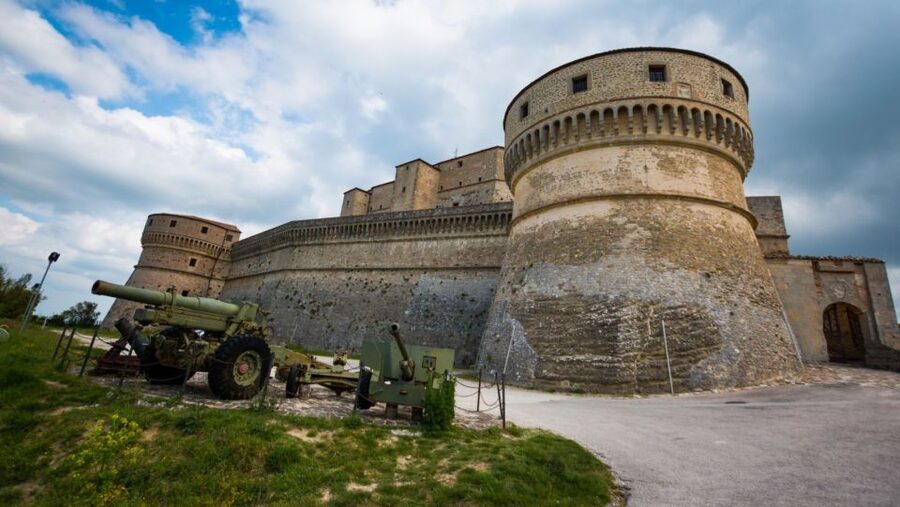
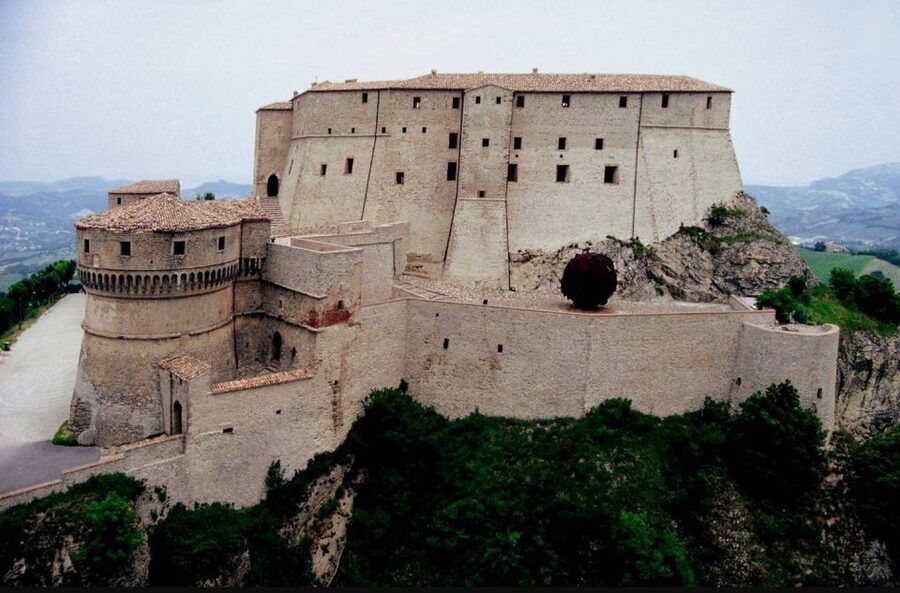
History sits high above Romagna. San Leo Fortress gives you a close look at one of Italy’s oldest strongholds, with ancient walls, military collections, torture instruments, and the cell where the alchemist Count Cagliostro spent his final years. I like the mix of grand fortifications and small, memorable details, especially Cagliostro’s prison cell and the wide range of weapons on display. At $11, the ticket is also an easy addition to a day in San Leo.
The main drawback is that some signs are in Italian, so you may need to rely on the objects, the architecture, and your own research to fill in the story. The fortress is also built for defense, not comfort, with towers, rooms, and fortifications that may require plenty of walking and standing.
What makes San Leo Fortress worth your time
- Cagliostro’s final prison: See the cell linked to the famous alchemist and magician Count Cagliostro.
- Weapons from several eras: The collection reaches from 16th-century arms to military objects from the First and Second World Wars.
- A fortress with Roman roots: San Leo connects its modern military form with much older origins in the Roman period.
- Torture instruments and fortifications: The displays offer a darker look at justice and punishment inside a military stronghold.
- MusLEO virtual ecomuseum: Use the virtual museum to learn more about San Leo and its surrounding area.
- A low-cost independent visit: The $11 admission is valid for one day and includes the fortress rooms, exhibitions, towers, and prison.
Arriving at a fortress above a small Romagna village
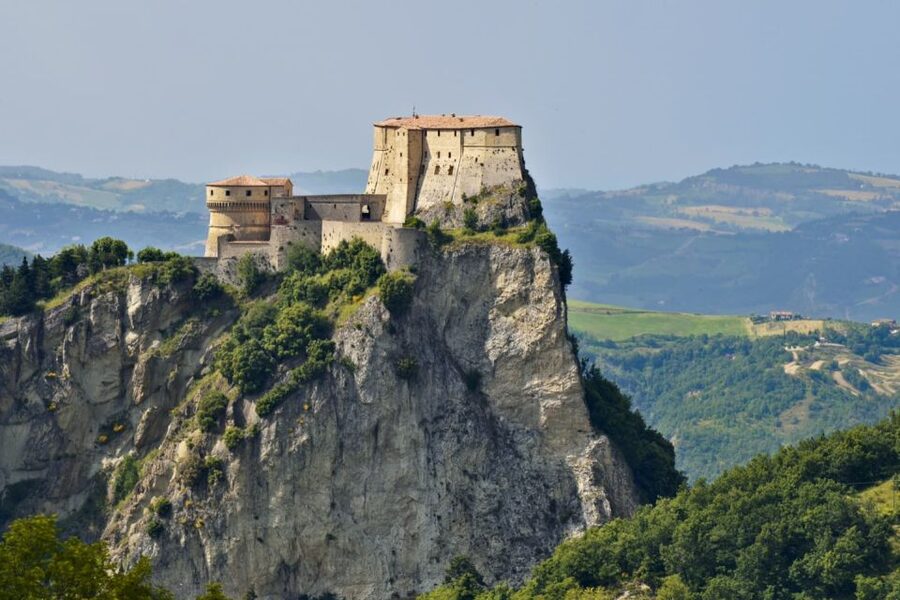
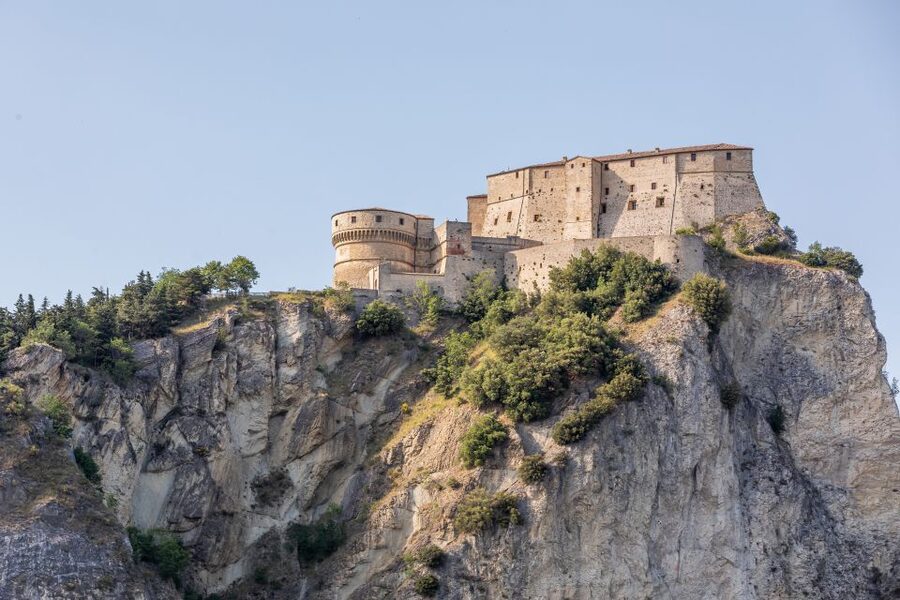
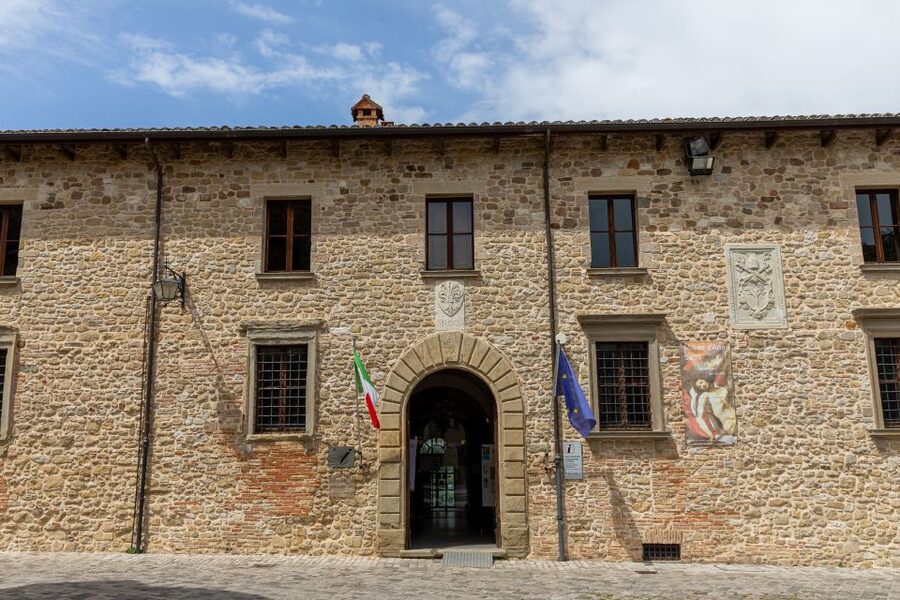
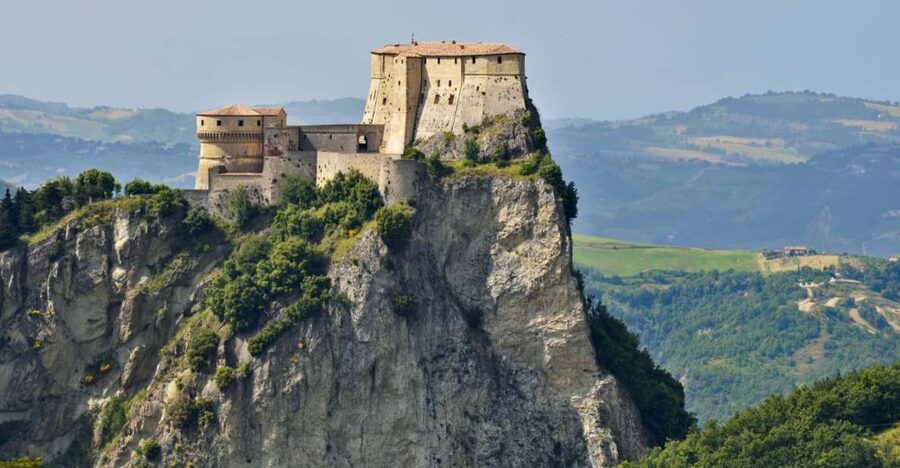
San Leo Fortress crowns a village of fewer than 3,000 inhabitants in the hinterland of Rimini. That setting matters. You are not visiting an isolated museum built only for tourists. The fortress forms the high point of a historic town, and its position explains why the site mattered so much for defense.
The first impression is architectural. Walls, towers, and steep defensive lines make the fortress feel like a working military structure rather than a decorative palace. Its setting also gives the visit a strong sense of place, with San Leo and the wider Romagna area spread below.
I would allow more time than the $11 price might suggest. The ticket is valid for one day, so you do not need to rush through every room in a single short circuit. If you are already visiting San Leo, the fortress is the natural centerpiece of your visit. If you are coming only for the fortress, the village adds useful context before or after your entry.
The attraction is self-guided in the information provided. That gives you freedom to move at your own pace, but it also means you should not expect a guided narrative at every turn. Since one visitor found all signs in Italian, an English-speaking reader may want to read about Cagliostro and the fortress before arriving.
More Castle Entry Tickets in Italy
- Milan: Sforza Castle Entry Ticket with Digital Audio Guide
★ 4.0 · 2,675 reviews - Trieste: Miramare Castle & Museum Entry Ticket & Audio App
★ 4.2 · 213 reviews - Miramare Castle Entrance Ticket in Trieste
★ 3.5 · 37 reviews
Inside the military rooms and weapon collections
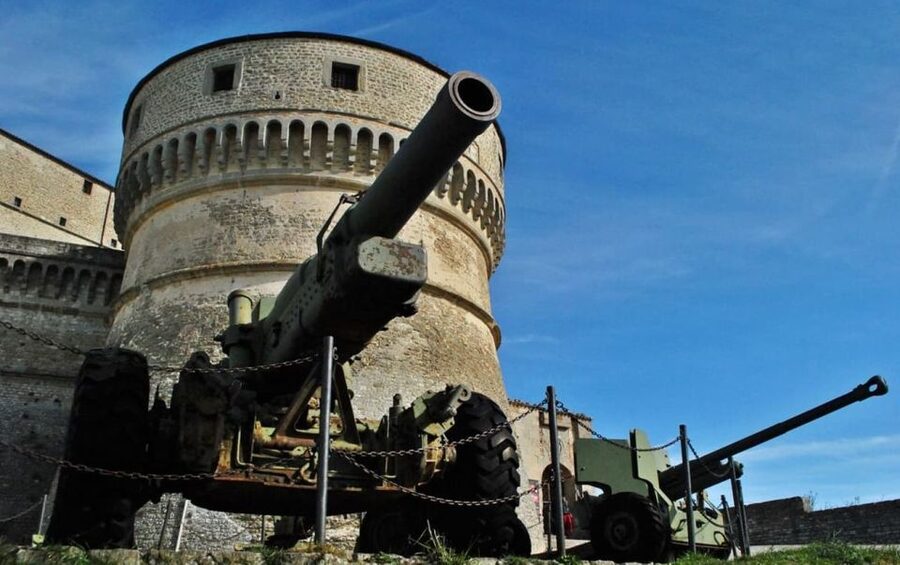
The fortress contains several rooms with exhibits connected to its military past. The oldest weapons date to the 1500s, while other objects relate to the First and Second World Wars. This broad time span is one of the strongest parts of the visit because it lets you see how weapons and military needs changed over the centuries.
I like this kind of collection best when it remains tied to the building around it. In San Leo, the weapons are not displayed in a plain modern gallery detached from the story. They are housed inside a fortress whose towers and defenses explain why such objects were kept and used.
You might find some rooms more immediately striking than others. The weapons collection will appeal most if you enjoy military history, old arms, or castle architecture. If those subjects do not interest you, the scale of the fortress itself still gives the rooms value. Look beyond the display cases and pay attention to thick walls, narrow spaces, towers, and the practical layout of a stronghold designed to resist attack.
The collection also avoids limiting San Leo to one period. Roman origins, Renaissance weapons, modern military objects, and later exhibitions all form part of the visit. You get a long view of the site rather than a single snapshot.
Cagliostro’s prison cell and the darker side of the fortress
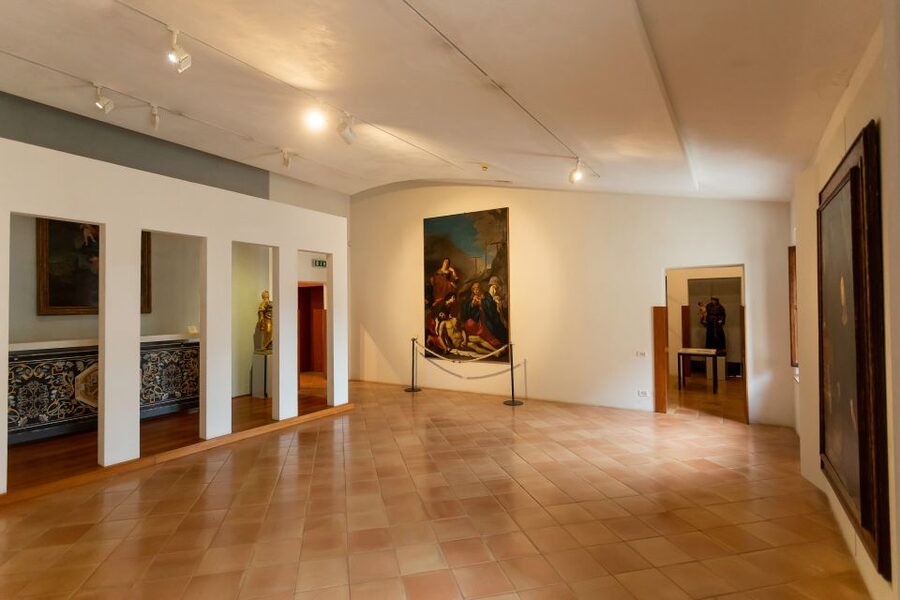
The most famous room is the prison associated with Count Cagliostro, described here as an alchemist and magician. His cell adds a personal story to an otherwise large and imposing building. Instead of seeing only walls and weapons, you can stand in the small space connected with a controversial historical figure.
This part of the experience is especially useful for visitors who prefer a clear human story. Cagliostro’s name gives the fortress a memorable focus, and the cell helps explain how San Leo was used not just to defend territory but also to confine prisoners.
The fortress also includes an exhibition of torture instruments. This is a darker display, and it may not suit every visitor. It is relevant to the building’s role as a prison and military institution, but you should expect a more unsettling part of the visit rather than a lighthearted castle tour.
I would treat the torture collection as historical evidence, not entertainment. The objects show how authority was enforced in earlier periods, and their presence helps you understand the harsh conditions that could exist within a fortress. If you are visiting with children or anyone sensitive to this subject, keep that in mind when planning your route.
The Vasari fresco replica and Medici history
One of the more unusual features is a replica of a fresco by Vasari showing the Medici family’s taking of San Leo. This connects the fortress to the political struggles that shaped central and northern Italy.
The replica is important because it gives you a visual account of a major change in control. Weapons and walls tell you how the fortress functioned physically, while the fresco helps show how power changed hands.
You may not find every part of this display easy to understand if the written material is only in Italian. Still, the artwork provides another way to read the building. It shows that San Leo was not simply a remote defensive position. It was part of larger contests between ruling families and states.
More Fortress and Citadel Tours in Italy
- Fortress: Prisons, Museum of Fortifications and Alps Museum
★ 4.5 · 125 reviews - Bard: Fortress Exhibitions and Museums Entrance
★ 4.3 · 29 reviews - Castel Sant’ Angelo: The most famous Fortress of Rome
★ 4.0 · 13 reviews - Savona: Guided visit to the Priamàr Fortress
★ 4.4 · 10 reviews
MusLEO and the contemporary exhibitions
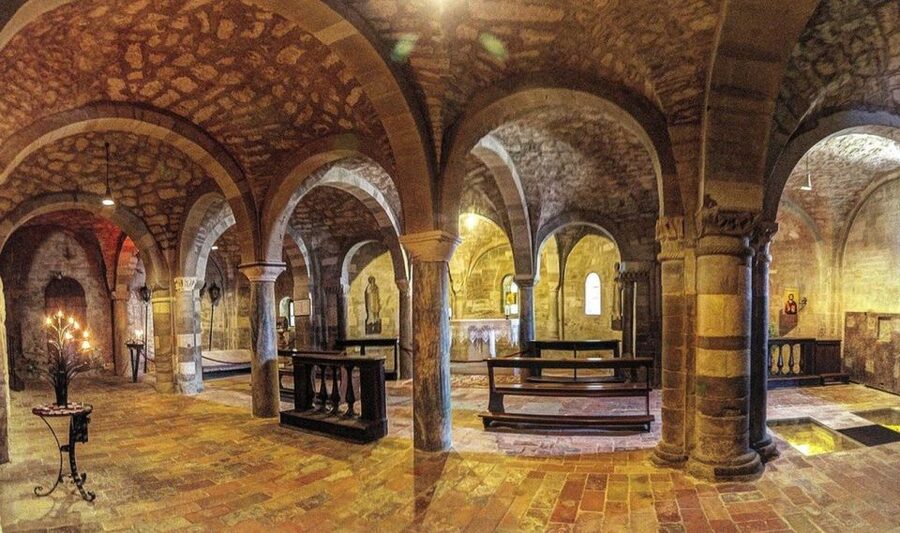
The visit includes MusLEO, a virtual ecomuseum of San Leo. This adds a modern layer to a very old site. Instead of focusing only on objects inside the fortress, the virtual museum can help connect the stronghold with the town and its wider setting.
There are also exhibitions of contemporary works. This mix may seem unexpected, but it keeps the fortress from becoming a static collection of old weapons. You move from medieval and Renaissance military history to modern interpretations and digital material.
I find that contrast useful. Ancient buildings can become hard to read when everything inside them belongs to the past. Contemporary displays give you a different way to think about the site and may appeal to visitors who are less interested in weapons or prison history.
Still, the fortress is strongest when the exhibits support the building. Do not expect a large modern museum with a huge number of interactive installations. MusLEO is described as a virtual ecomuseum, while the main attraction remains the rooms, towers, fortifications, and historic collections.
How long to allow and when to visit
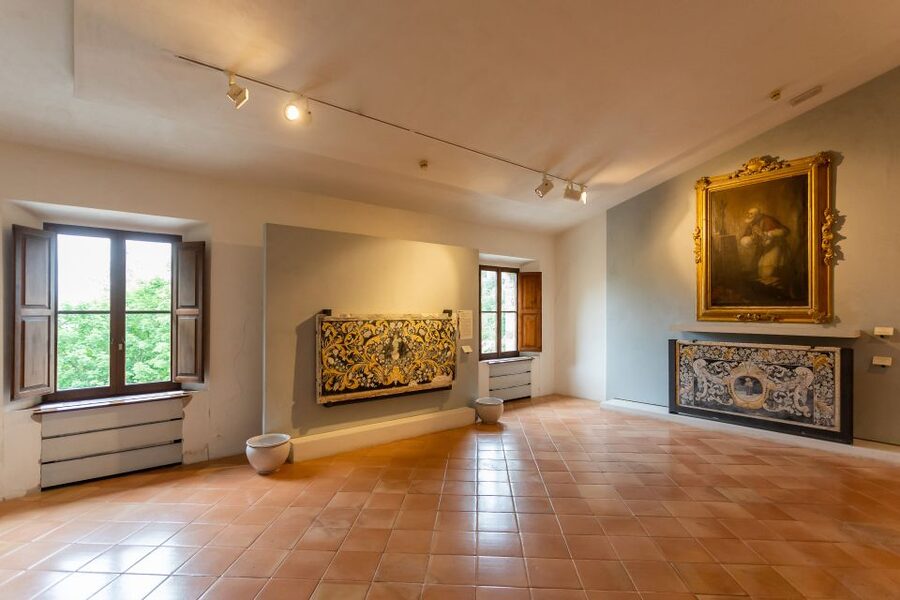
The ticket is valid for one day, rather than for a fixed tour lasting a set number of hours. That is helpful if you want to combine the fortress with time in San Leo. You can visit at a relaxed pace and choose how much attention to give each collection.
Opening hours change by season, so check your date carefully. From March 31 through June 29, the fortress opens from 10:30 a.m. to 6 p.m. on weekdays and from 10 a.m. to 7 p.m. on Saturdays, Sundays, and public holidays.
October hours are shorter. The fortress opens from 10:30 a.m. to 5:45 p.m. Monday through Friday, with last entry at 5 p.m. On weekends and holidays, it opens from 10:30 a.m. to 6:45 p.m., with last entry at 6 p.m.
In November, weekday hours are 10:30 a.m. to 5 p.m., with last entry at 4:15 p.m. Weekend and holiday hours are 10 a.m. to 5:45 p.m., with last entry at 5 p.m. The fortress is closed on Tuesdays during this period.
December and January use similar hours. Weekdays run from 10:30 a.m. to 5 p.m., with last entry at 4:15 p.m. Saturdays, Sundays, and holidays run from 10 a.m. to 5:45 p.m., with last entry at 5 p.m. There are special closures on some Tuesdays in December, while December 25 opens only from 2 p.m. to 5 p.m.
The published schedule does not provide a single year-round timetable for every month, so you should check availability before setting out. Last entry is important. Arriving near closing time can leave too little room for the collections and the fortress rooms.
What the $11 ticket really buys you
At $11 per person, this is a strong-value admission if you have an interest in fortresses, military objects, Italian political history, or unusual prison stories. The price covers the fortress itself, Cagliostro’s cell, MusLEO, the exhibition rooms, weapons, torture instruments, towers, and fortifications.
That is more than a quick look at an exterior wall. You get access to a full historic complex with several subjects to follow. The value is especially good if you take your time rather than treating the fortress as a brief photo stop.
The ticket does not appear to include transportation, a guide, or a separate meal. The bookshop is available on site, which is useful if you want to take home a book or additional reading. Since signs may be in Italian, the bookshop could also be a place to look for material that gives more background, though the available languages are not specified.
You can reserve now and pay later, which helps if your plans around Rimini and Romagna are still changing. Free cancellation is available up to 24 hours in advance for a full refund. These terms make the ticket less risky, especially when weather or transport plans are uncertain.
Who will enjoy San Leo Fortress most
I would recommend this experience to you if you enjoy historic buildings that still feel severe and practical. The fortress suits people who like military collections, old prisons, Italian history, and strong architectural settings.
It also works well for a day focused on San Leo rather than a guided tour with a packed schedule. You have one day of validity, and the village has fewer than 3,000 inhabitants, so the visit can form part of a slower stop in the Romagna hinterland.
Families may find the weapons, towers, and Cagliostro story engaging, but the torture instruments deserve some thought before you go. Visitors with limited mobility should also consider the nature of the site. The information does not give detailed accessibility guidance, but a fortress with towers, fortifications, and historic rooms may involve uneven or demanding movement.
The activity is listed as not suitable for people over 95 years old. That is a specific restriction to note when booking.
Practical tips for a better visit
Check the opening hours for your exact date, especially from October through January. The fortress has seasonal schedules, Tuesday closures in some periods, special holiday hours, and firm last-entry times.
Read a little about Cagliostro before you go. That will make the prison cell more meaningful, particularly if the on-site explanations are in Italian. You can also prepare by learning a few basics about the Medici capture of San Leo, which will help you understand the Vasari fresco replica.
Give yourself time for both the displays and the building. It is easy to focus on the weapons and miss the towers, walls, and defensive design that make the fortress special.
Finally, do not judge the visit only by the number of objects in the cases. The strongest experience comes from seeing how the collections fit inside a fortress that was built for control, defense, and confinement.
Should you book the San Leo Fortress ticket?
I would book it if you are visiting San Leo or looking for a worthwhile historical stop near Rimini. The $11 price is modest, and the ticket covers far more than a single room: weapons from several periods, Cagliostro’s prison, torture instruments, the Vasari fresco replica, MusLEO, towers, and fortifications.
I would hesitate only if you need extensive English interpretation, dislike military or prison history, or have difficulty moving through an old fortress. For everyone else, this is a reasonably priced, self-paced visit with a clear sense of place and enough variety to keep the experience from feeling repetitive.
FAQ
Where is San Leo Fortress located?
San Leo Fortress is in San Leo, in the hinterland of Rimini in Italy’s Emilia-Romagna region.
How much does entry to San Leo Fortress cost?
The entry ticket costs $11 per person.
How long is the ticket valid?
The ticket is valid for one day.
What is included with admission?
Admission includes entry to San Leo Fortress, Cagliostro’s cell, the MusLEO virtual ecomuseum, the fortress rooms, weapons collections, torture instruments, towers, and fortifications.
Can I see Cagliostro’s prison cell?
Yes. The famous cell of the alchemist and magician Count Cagliostro is included with admission.
Does the fortress have a weapons collection?
Yes. The exhibitions include weapons dating from the 1500s as well as objects connected with the First and Second World Wars.
Are the signs available in English?
The information provided does not confirm English signage. One visitor found the signs in Italian, so you should be prepared for that possibility.
Can I cancel the ticket for a refund?
Yes. You can cancel up to 24 hours in advance for a full refund.
Can I reserve now and pay later?
Yes. You can reserve your place and pay later, keeping your plans flexible.
Just added around Italy
- HIKING TOUR: VARENNA, Castle of VEZIO Villa MONASTERO, FIUMELATTE★ 5.0 · 48 reviews
- Castles of Puglia Day Trip from Bari★ 4.5 · 7 reviews
- Enchanted Castle of Sciacca – Museum Tickets★ 3.5 · 63 reviews
- Taormina; Taormina Castle Tour★ 3.8 · 11 reviews
- St. Angel’s Castle: 2-Hour Private Tour★ 5.0 · 9 reviews
- Milan: Skip-the-line Sforza Castle and Museums Private Tour★ 4.7 · 7 reviews
- Siena: Tour and Wine Tasting in a Tuscan Private Castle★ 4.9 · 50 reviews
- Sforza Castle & Michelangelo’s Pietà Rondanini Guided Tour★ 4.7 · 3 reviews
Castle Entry Tickets, compared.


Edinburgh Castle: Guided Walking Tour with Entry Ticket
Read our review →
Castle Tour with Local Guide and Entry Ticket
Read our review →
Prague Castle 2.5-Hour Tour Including Admission Ticket
Read our review →
Edinburgh Castle: Guided Walking Tour with Entry Ticket
Read our review →
Prague Castle and Lobkowicz Palace Entry Tickets
Read our review →
Alcázar and Cathedral Entry Ticket and Guided Tour
Read our review →Browse the lists this tour appears in