
Review · ROME
St. Angel’s Castle: 2-Hour Private Tour
Rome keeps its best stories behind thick walls. St. Angel’s Castle gives you emperors, popes, prisons, secret passages, and some of the city’s finest views in one compact visit. I like the private English-speaking guide, which lets you ask questions and spend more time on the subjects that interest you. I also like the chance to see Pope Paul III’s apartment and the famous Passetto, details that can be easy to miss on your own.
The main drawback is the two-hour limit. The castle holds centuries of art, rooms, weapons, and political drama, so this tour gives you a guided introduction rather than a complete examination. You should also arrive ready to walk and climb, since the visit is not suitable for wheelchair users or people with limited mobility.
Key points to know before booking
- A mausoleum turned fortress: You follow the building from Emperor Hadrian’s tomb in the 3rd century A.D. to a medieval stronghold, papal residence, prison, and Vatican administrative site.
- Private attention from a live guide: Tours are offered in English or Italian, with guides such as Vincenzo praised for making complex stories clear and engaging.
- The Passetto adds real drama: You learn how popes used the covered route to escape from the Vatican during attacks.
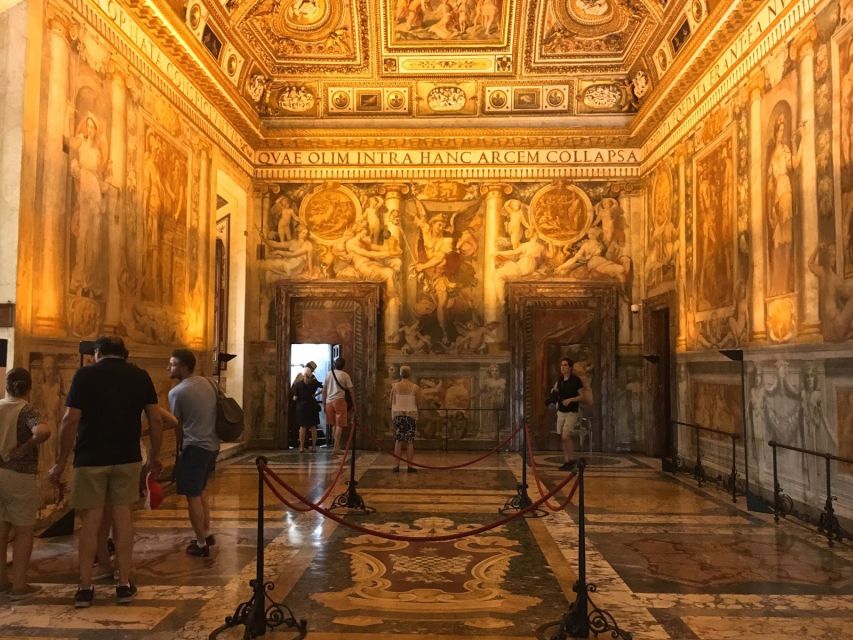
- Papal rooms and art collections: The tour includes Pope Paul III’s apartment, the Hall of Paolina, the Hall of Persus, ancient arms, ceramics, marbles, sculptures, and paintings.
- Terrace views are part of the payoff: From above, you look across Rome’s historic center and gain a useful sense of the city’s layout.
- You may continue alone afterward: After the guided portion, you have the option to remain inside and explore at your own pace.
Why St. Angel’s Castle is worth your time
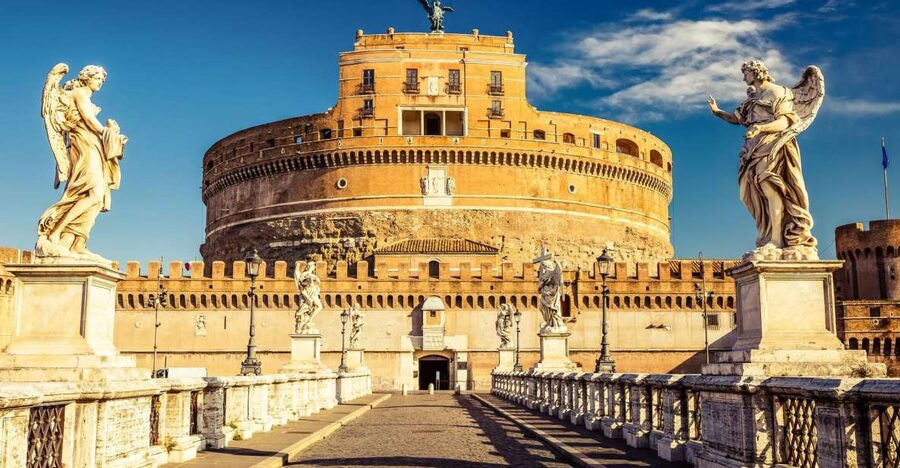
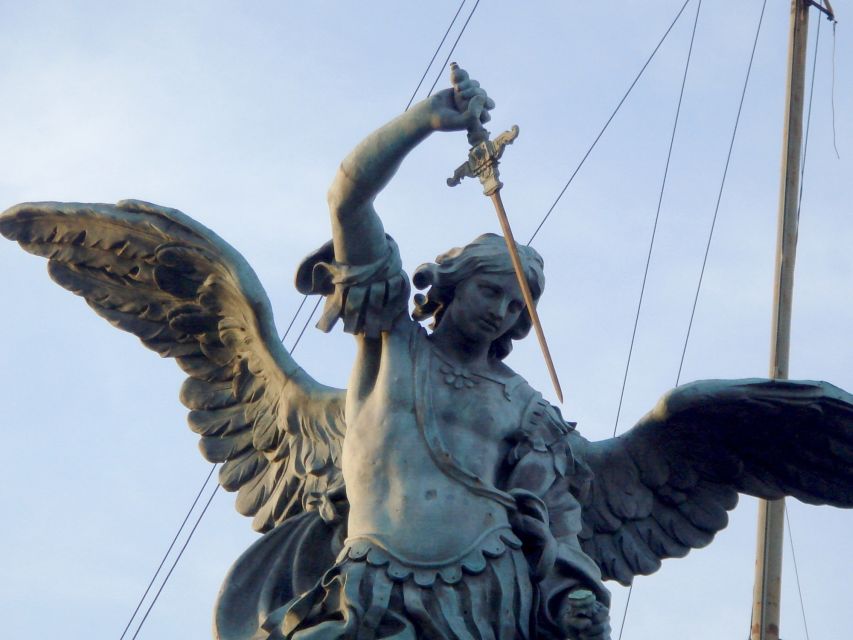
St. Angel’s Castle is not simply a medieval castle placed beside the Tiber. It began as the mausoleum of Emperor Hadrian in the 3rd century A.D., then changed roles again and again as Rome changed around it.
That layered past is what makes a guided visit useful. Without help, the building can feel like a sequence of corridors, courtyards, ramps, and decorated rooms. With a guide, each section connects to a different period of Roman life. You see how a tomb became a fortress, how the fortress became a prison, and how popes used it as both a residence and a refuge.
I especially like the way this tour combines grand political stories with practical details. You are not only looking at a famous monument. You are learning why it was built, who controlled it, how it protected people, and how it functioned from one century to the next.
More Private Castle Tours in Italy
- Private Tour – St. Angel’s Castle
★ 5.0 · 42 reviews - Milan Private Tour – Duomo, Sforza Castle & Gelato Tasting
★ 5.0 · 40 reviews - Milan: Duomo, Scala, Sforza Castle and Last Supper Private Tour
★ 5.0 · 38 reviews
Meeting your guide at the castle entrance
You meet your guide in front of the castle entrance. Arrive 15 minutes before the scheduled starting time, and look for the guide holding a sign with the tour name.
This is a simple meeting arrangement, but it matters in central Rome. You do not receive hotel pickup, private transportation, or a transfer to the site, so you need to make your own way to St. Angel’s Castle. The price includes entry tickets, which saves you from arranging admission separately.
Because this is a private group, you are not joining a large mixed party. That gives the guide room to adjust the pace and explain a subject in more detail. If you have a strong interest in papal politics, prison history, Renaissance art, or military architecture, say so early.
The available feedback praises guides for their warmth, culture, and enthusiasm. One guide, Vincenzo, was singled out for making subjects that might feel academic both clear and compelling. Another guide gave extra attention to the Borgia pope when asked, which shows the value of a private format.
From Hadrian’s tomb to a fortress
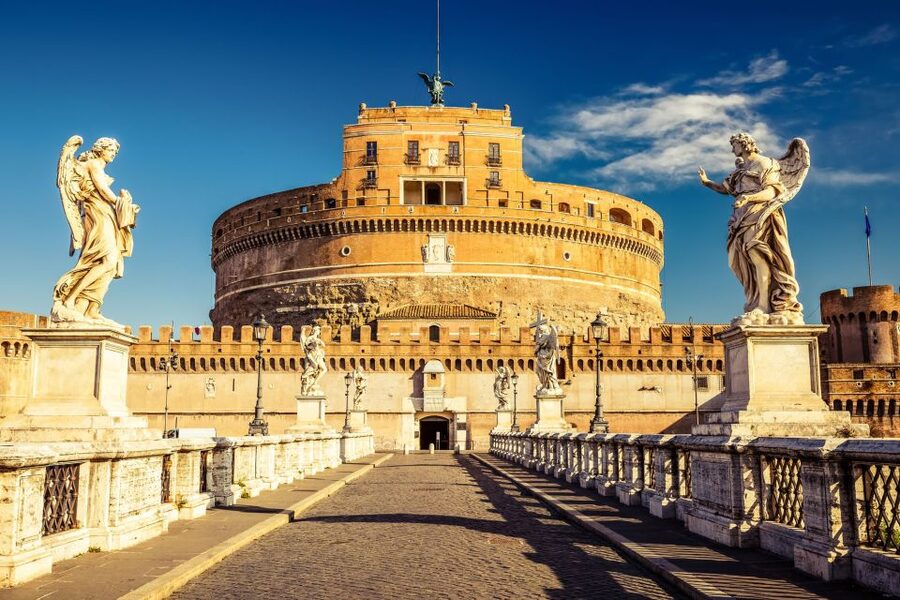
The first part of the tour sets up the whole visit. You begin with the building as a mausoleum for Emperor Hadrian, constructed in the 3rd century A.D. That original purpose helps you understand the castle’s shape and massive structure.
The site later became a fortress during the Middle Ages. Rome was often a place of conflict and shifting power, so a strong building near the Vatican had clear military value. Your guide explains this change through stories and facts, helping you see the castle as a working defensive site rather than a decorative monument.
The conversion did not end there. St. Angel’s Castle later held prison levels, offices connected to the Vatican Treasury and Archive, and papal living quarters. This is a useful reminder that famous buildings are rarely built for one purpose only. The castle is a record of Rome’s changing priorities, from imperial commemoration to military defense, church administration, and papal security.
The prison history adds a darker tone. You learn about the levels used to confine prisoners, alongside the more polished spaces associated with the popes. That contrast is one of the visit’s strongest features. The same complex could offer magnificent rooms to a pope and grim confinement to a prisoner.
The Hall of Paolina and the Hall of Persus
The route includes the Hall of Paolina and the Hall of Persus, two rooms tied to classical stories and Renaissance decoration.
In the Hall of Paolina, you learn about Alexander the Great. The room gives your guide a chance to connect ancient figures with the image and authority that Renaissance popes wanted to project. The Hall of Persus brings in the Greek hero Perseus and the myths connected to him.
These rooms are easier to appreciate when someone explains the stories behind the paintings and decoration. Otherwise, you may notice impressive surfaces without understanding the message. The guide helps turn the rooms into political and cultural statements, not just beautiful interiors.
The castle also contains ancient arms, marbles, ceramics, and sculptures. There is a painting gallery with works by Carlo Crivelli, Luca Signorelli, and Dosso Dossi. Art lovers will find plenty to pause over, but the two-hour schedule means you should not expect a long, museum-style examination of every piece.
I would treat this part as a guided selection. Your guide can point out the most important objects and explain why they matter. If you want to study the collection in detail, staying after the formal tour is valuable.
Same region, a different set of walls:
- Milan: Sforza Castle Entry Ticket with Digital Audio Guide
★ 4.0 · 2,675 reviews - Milan: Sforza Castle and Michelangelo’s Pietà Rondanini Tour
★ 4.7 · 1,119 reviews - From Siena: Chianti and Castles Tour with Wine Tastings
★ 4.6 · 631 reviews - Milan: The Last Supper & Sforza Castle Guided Tour
★ 4.6 · 610 reviews
Pope Paul III’s apartment and the papal side of the castle
The visit includes the apartment of Pope Paul III. This is one of the clearest ways to understand the castle’s Renaissance role as a residence for the popes.
The apartment offers a sharp contrast with the prison areas and military parts of the building. You move from the castle’s defensive function to the private and ceremonial world of papal life. The setting helps explain why St. Angel’s Castle was more than a refuge. It also served as a place where papal authority could be displayed and maintained.
A private guide can make this section more meaningful by explaining how the rooms fit into the larger story of the castle. I would ask questions here if the Renaissance period interests you, especially since the guide can adjust the amount of detail instead of following a fixed speech for a large crowd.
The Passetto and the castle’s escape route
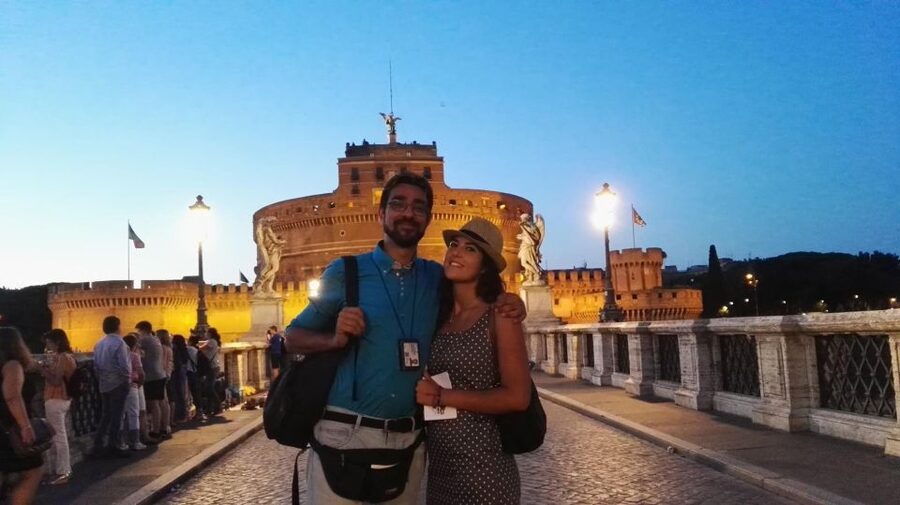
The Passetto is one of the most memorable subjects on the tour. This covered route connected the castle with the Vatican and gave popes a way to escape when the Vatican was under attack.
Even without adding extra legend, the idea is striking. You are looking at a practical link between church power and military protection. The passage shows how closely the castle was tied to the Vatican, both physically and politically.
The Passetto also gives the tour a strong sense of place. Instead of hearing only about battles and danger in the abstract, you learn about the route used to move a pope to safety. Ask your guide how the passage worked and how it fit into the castle’s defensive role.
Access to historic passages can vary by operation and conditions, so the tour’s confirmed route matters. The supplied details promise an explanation of the Passetto, but they do not clearly state that every section of the passage is entered. If walking through it is essential for you, confirm that point before booking.
Rome from the castle terrace
The terrace is the visual reward near the end of the visit. From here, you get panoramic views across Rome’s historic center.
This view is more than a photo stop. After hearing about the castle’s connection to the Vatican and the Passetto, you can look out and understand the relationship between the major sites around you. The elevated position also gives you a useful orientation before continuing through central Rome.
Bring comfortable shoes, since the castle involves walking through an old complex rather than moving along a flat modern museum floor. The tour is not recommended for people with limited mobility and is not suitable for wheelchair users. Large bags and luggage are not allowed, so travel light.
The terrace may also be the place where the castle’s film connections come up. The guide discusses the role of the building in famous movies, adding a modern cultural layer to its imperial, medieval, and papal past.
Finishing near Piazza Navona
The planned final part of the stroll takes you toward Piazza Navona, one of Rome’s best-known Baroque spaces. Ending there gives the tour a satisfying change of mood: from a fortress and papal refuge to an open urban square shaped by Baroque design.
Piazza Navona is a useful place to continue your day because it sits in the heart of Rome’s historic center. The castle visit gives you the political and military story of the area, while the square presents a later artistic vision of Rome.
There is one practical point to clarify. The tour details describe Piazza Navona as the end of the stroll, while the meeting information also says the activity ends back at the meeting point. These descriptions may refer to different parts of the route, so ask for the exact ending location if you have a restaurant booking or another timed visit afterward.
After the guided portion, you may have the option to stay inside St. Angel’s Castle and continue exploring independently. That flexibility improves the value, especially if you want more time with the paintings, sculptures, rooms, or terrace.
Is $135.94 per person good value?
At $135.94 per person, this is not a budget sightseeing stop. The price needs to be judged against what you receive: entry tickets, a private guide, and two hours focused on one of Rome’s most complex monuments.
For a couple, family, or small private group, the cost can make sense if you want personal attention. You are paying for interpretation and flexibility, not simply admission. A large public tour may cost less, but it may also move at a fixed pace and leave little time for your questions.
The strongest value comes when you prepare a few interests in advance. Tell the guide if you care most about the Borgia pope, the prison levels, the Passetto, Renaissance art, or the castle’s military role. A private format is most useful when you take advantage of that flexibility.
The tour also offers reserve-now, pay-later booking and free cancellation up to 24 hours before the start time. Those terms help if your Rome schedule is still changing, but the main value remains the guide’s ability to make the castle understandable in a short period.
Who should book this private visit?
I would recommend this tour to first-time visitors who want context instead of a quick walk through the castle. It also suits families, since stories about escape routes, prisons, popes, and ancient heroes can hold attention better than a room-by-room description.
It is a good choice for anyone with a special interest in Renaissance Rome or papal history. The private setup lets you ask about the Borgia pope or request more attention to the prison levels, as one highly praised guide did for a guest.
Art lovers will appreciate the named painters and collections, though the short duration limits the time available for close study. If you want a slow museum visit, use the option to stay afterward, assuming that option is available on your date.
I would not choose it if you want a flat, effortless visit, need wheelchair access, or plan to carry luggage. The castle is an old historic structure, and the activity specifically advises comfortable shoes and warns that it is not suitable for people with mobility impairments.
Should you book St. Angel’s Castle?
Book it if you want the castle to make sense, not just look impressive. The private guide, papal apartment, Passetto story, terrace views, and prison history create a well-rounded two-hour introduction to one of Rome’s most layered monuments.
The strongest reason to go is the quality of the guiding. The praise for guides such as Vincenzo centers on kindness, culture, passion, and the ability to make unfamiliar material engaging. That matters here because St. Angel’s Castle can feel confusing without a clear thread.
Skip it if your budget is tight, you dislike guided visits, or you need step-free access. For everyone else, especially families and curious first-time visitors, the tour offers a focused way to connect imperial Rome, medieval power, the Vatican, and the Baroque city beyond the walls.
FAQ
How long does the St. Angel’s Castle tour last?
The tour lasts two hours. Check the available dates for the starting times.
Is the tour private?
Yes. It is offered as a private group experience.
Which languages are available?
The live guide can conduct the tour in English or Italian.
Are entry tickets included?
Yes. Entry tickets are included in the price.
Where do I meet the guide?
Meet your guide in front of the castle entrance. Arrive 15 minutes early and look for a sign with the tour name.
Is hotel pickup included?
No. Hotel pickup, hotel drop-off, and private transportation are not included.
Can I stay in the castle after the guided tour?
You may have the option to remain inside and continue exploring on your own after the guided portion.
Is the tour suitable for wheelchair users?
No. The activity is not suitable for wheelchair users or people with mobility impairments. Comfortable shoes are recommended, and large bags or luggage are not allowed.
More 2-Hour Experiences in Italy
- Private 2-Hour Tour of the Medieval Castle over Lake Como
★ 5.0 · 9 reviews - Prague Castle & Castle District: 2-Hour Guided Tour
★ 4.6 · 622 reviews - From Ivy Lea: 2-Hour Two Castle 1000 Islands Scenic Cruise
★ 4.5 · 142 reviews - Córdoba: Alcázar and Jewish Quarter 2-Hour Guided Tour
★ 4.2 · 50 reviews
Just added around Italy
- HIKING TOUR: VARENNA, Castle of VEZIO Villa MONASTERO, FIUMELATTE★ 5.0 · 48 reviews
- Castles of Puglia Day Trip from Bari★ 4.5 · 7 reviews
- Enchanted Castle of Sciacca – Museum Tickets★ 3.5 · 63 reviews
- Taormina; Taormina Castle Tour★ 3.8 · 11 reviews
- Milan: Skip-the-line Sforza Castle and Museums Private Tour★ 4.7 · 7 reviews
- Siena: Tour and Wine Tasting in a Tuscan Private Castle★ 4.9 · 50 reviews
- Sforza Castle & Michelangelo’s Pietà Rondanini Guided Tour★ 4.7 · 3 reviews
- Sarzana: pesto experience at Sarzanello Fortress★ 5.0 · 4 reviews
Private Castle Tours, compared.

Cairo Citadel, Old Cairo and Khan El Khalili: Private Tour
Read our review →
Seville Private Walking Tour with Alcazar & Cathedral Tickets
Read our review →
Sintra Cascais Private Tour with Pena Palace and Mouros Castle
Read our review →
Skip-the-Line Wawel Castle Chambers Private Tour
Read our review →
Castles of Transylvania: Private Day Trip from Bucharest
Read our review →
Dracula’s Castle, Peles Castle and Brasov – Private Day Trip from Bucharest
Read our review →
Private Walking Tour Alcazar and Cathedral in Sevilla
Read our review →Browse the lists this tour appears in