
Review · ITALY
Fortress: Prisons, Museum of Fortifications and Alps Museum
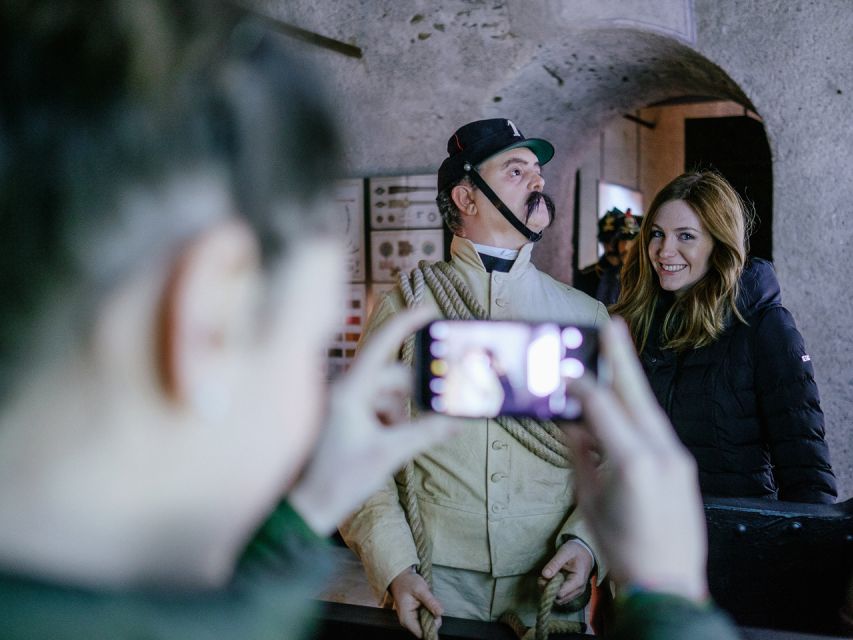
Stone walls tell the story here. Fort Bard gives you a clear look at how the Alps shaped military strategy, with original fortress spaces, small prison cells, panoramic lifts, and three museum choices included in the $17 ticket. I especially like the way the museums connect weapons and defence systems to the wider question of whether the Alps divide people or bring them together. The mountain views from the fort add real value, too.
The main drawback is that this is a self-guided visit. Your ticket includes the Museon audio guide through a smartphone app, but not a live guide. You should also know that the ticket is valid for 90 days rather than tied to one short visit, so check the available starting times and plan enough time to see the fort properly.
The experience has earned a strong 4.5 out of 5 rating from 125 bookings. Recent feedback ranges from everything very interesting to praise for the excellent organization. One visitor was disappointed that there was no Marvel display connected to Avengers: Age of Ultron, which filmed part of the movie at Fort Bard. That is a useful warning: come for the fortress, museums, and Alps, not for a dedicated film exhibition.
Key points before you go
- Fort Bard’s prison has 24 tiny cells: Each measures about 1.3 by 2 metres, arranged in four sections behind an entrance gallery.
- You choose three exhibition spaces: The ticket covers three spaces from the permanent museums and any art exhibitions open during your visit.
- The Fortifications Museum follows military change: Models, film footage, weapons, and reconstructions show how defence methods developed in the Western Alps.
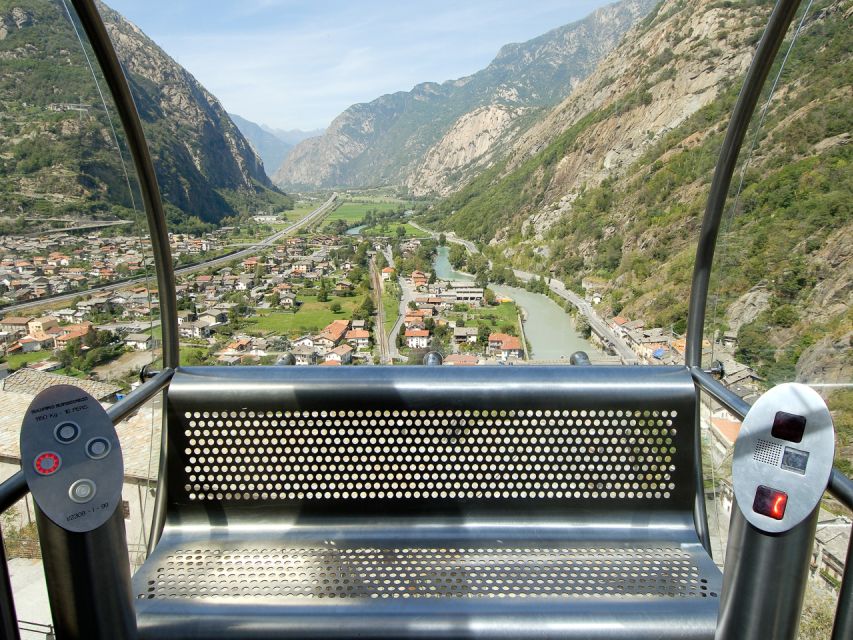
- Panoramic lifts save your legs: They connect the approach to the fort’s higher areas and open views across the Aosta Valley.
- The Alps Museum changes the focus: Its three sections move from nature and human life to Alpine civilization and modern change.
- The audio guide is app-based: Download the Museon app and collect a QR code at the ticket counter.
Why Fort Bard mattered in the Alps
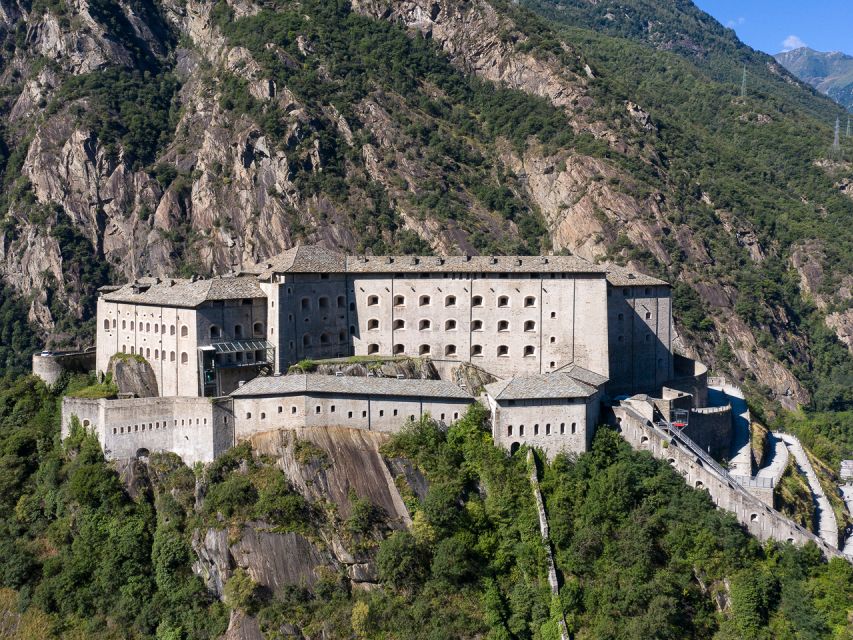
Fort Bard occupies a strategic position in the Aosta Valley, where routes through the Alps made control of the area important. Its heavy walls and elevated position are not just dramatic scenery. They show how geography shaped politics, trade, and warfare.
I like that the visit does not treat the fort as a single frozen monument. The museums explain how defence changed as weapons and military tactics developed. That makes the walls easier to understand. You are not simply looking at thick masonry. You are seeing the answer to a problem: how do you protect a route through the mountains as technology improves?
The fortress also raises a wider question about borders. The Alps can act as a boundary, barrier, obstacle, or meeting point. The final part of the Fortifications Museum asks you to think about these different meanings. That gives the visit more purpose than a quick walk through old military rooms.
Fort Bard also has a modern cultural role. Part of Avengers: Age of Ultron was filmed here, but there is no Marvel exhibition included in this experience. If you recognize the fort from the film, enjoy the connection as a bonus rather than the main reason to come.
More Fortress and Citadel Tours in Italy
- San Leo: Fortress Entry Ticket and Cagliostro’s Prison
★ 4.2 · 38 reviews - Bard: Fortress Exhibitions and Museums Entrance
★ 4.3 · 29 reviews - Castel Sant’ Angelo: The most famous Fortress of Rome
★ 4.0 · 13 reviews
Getting inside and finding your way upward
You must exchange your voucher for a ticket at the counter. One counter is at the beginning of the first panoramic lift. The other is at the top of the medieval village, behind the Church of Bard.
That detail matters because you have two practical ways to begin. If you are approaching from below, the first counter is the natural starting point. If you are already in the village, the upper counter may be more convenient. The information provided does not specify how long the lift ride takes or the exact walking distance between each area, so allow flexible time rather than trying to rush between exhibitions.
The panoramic lifts are included in the ticket. They make the fort easier to reach and turn the ascent into part of the visit, with Alpine views along the way. You also get access to the chapel, parade grounds, courtyards, walkways, and the fortress architecture itself.
These open areas are important. Museums explain the fort, but the courtyards and walkways let you see its scale. Look up at the walls and across the valley. The defensive design makes more sense when you can view the fort as a complete structure rather than as a series of indoor rooms.
The site is wheelchair accessible. Since the experience includes lifts and several outdoor areas, accessibility is a useful part of the design. The available information does not give detailed route notes for every museum room or walkway, so you may want to confirm specific access needs at the ticket office.
The Fortifications Museum, from weapons to changing borders
The Fortifications Museum is the best choice if you want the clearest military story. Its first section presents historical settings with models, film footage, and authentic weapons. The subject is the development of fortresses in the Western Alps, linked to changes in weapons and military planning.
That link is the museum’s strength. A weapon is not displayed as an isolated object. You see how improved firepower forced fortresses to change. Models help you compare designs, while film footage adds movement and context to what could otherwise be a fairly technical subject.
The second section moves into the late 19th and early 20th centuries. It places Fort Bard within the wider system of 19th-century fortresses. Scale models and large reconstructions show how military planning operated across the region.
I would give this museum plenty of attention if you enjoy architecture, engineering, or European history. It is also a good choice if you want to understand why Fort Bard looks so imposing. You may find the material less engaging if you prefer art or personal stories, since the emphasis is on systems, structures, weapons, and strategy.
The final section asks, The Alps, a boundary? It shifts from military facts to interpretation. Is a mountain pass a border or a barrier? Is it an obstacle or a line of union? These questions connect Fort Bard to the way people still think about national borders and mountain regions.
The museum’s three-part structure gives you a useful order: first the evolution of defence, then Fort Bard’s place in later military networks, and finally the wider meaning of an Alpine boundary.
The Prisons and their unusually small cells
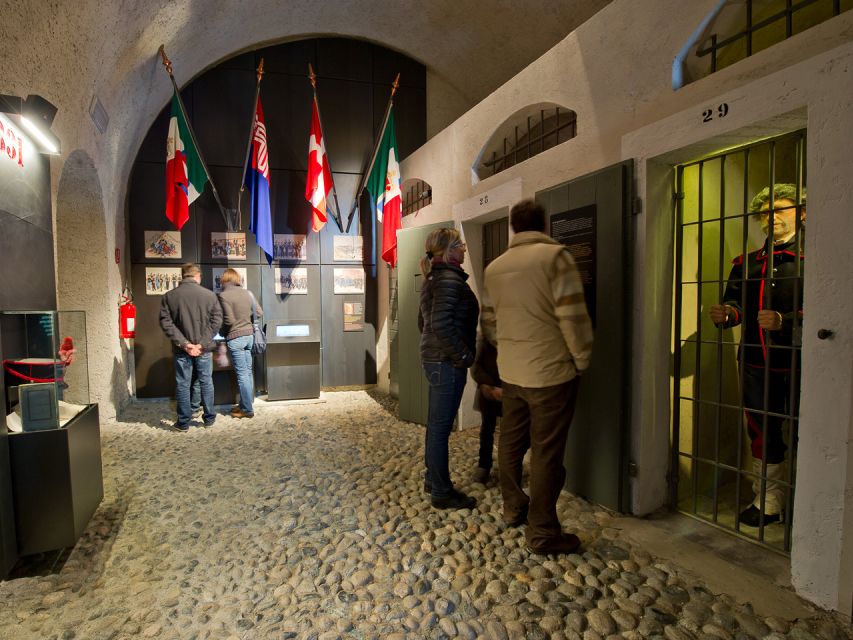
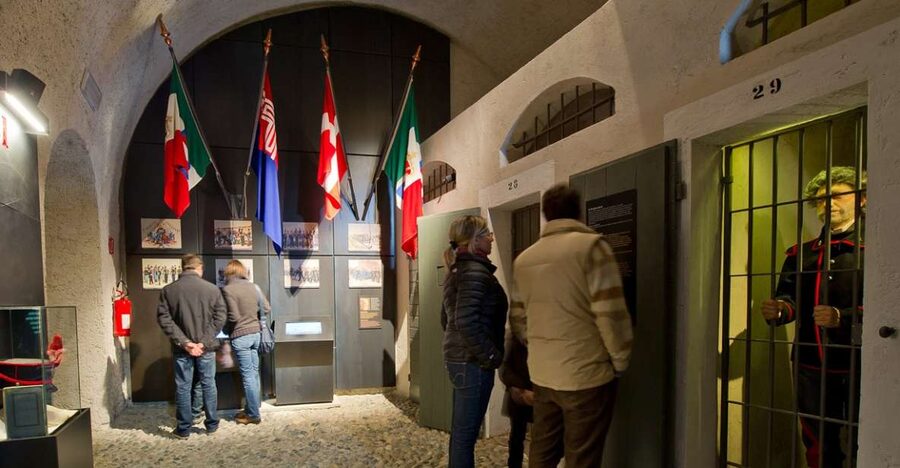
The Prisons are among the most memorable parts of Fort Bard because the scale is so stark. There are 24 cells, each approximately 1.3 by 2 metres. They are arranged along four sections, with an entrance gallery devoted to images of the fortress.
These are very small spaces. You can understand the conditions more clearly here than through a written description alone. The tight layout gives the visit a serious tone, even though the prison route is relatively compact.
The entrance gallery helps set the scene before you reach the cells. It focuses on the fortress through images, then leads you into the prison sections. The route gives you a direct sense of how the building was used, not just how it looked from outside.
The Prisons are a good pick if you have limited time or want the most atmospheric museum space. They are less useful if you are looking for a broad military overview, since the route focuses on the cells and the fortress’s prison function.
Because the cells are small, the experience may feel confined. That is part of its value, but it can also make this section uncomfortable for some people. Move at your own pace and use the wider courtyards and walkways afterward for a change of space.
Same region, a different set of walls:
- Milan: Sforza Castle Entry Ticket with Digital Audio Guide
★ 4.0 · 2,675 reviews - Milan: Sforza Castle and Michelangelo’s Pietà Rondanini Tour
★ 4.7 · 1,119 reviews - From Siena: Chianti and Castles Tour with Wine Tastings
★ 4.6 · 631 reviews - Milan: The Last Supper & Sforza Castle Guided Tour
★ 4.6 · 610 reviews
The Alps Museum, from mountain nature to modern life
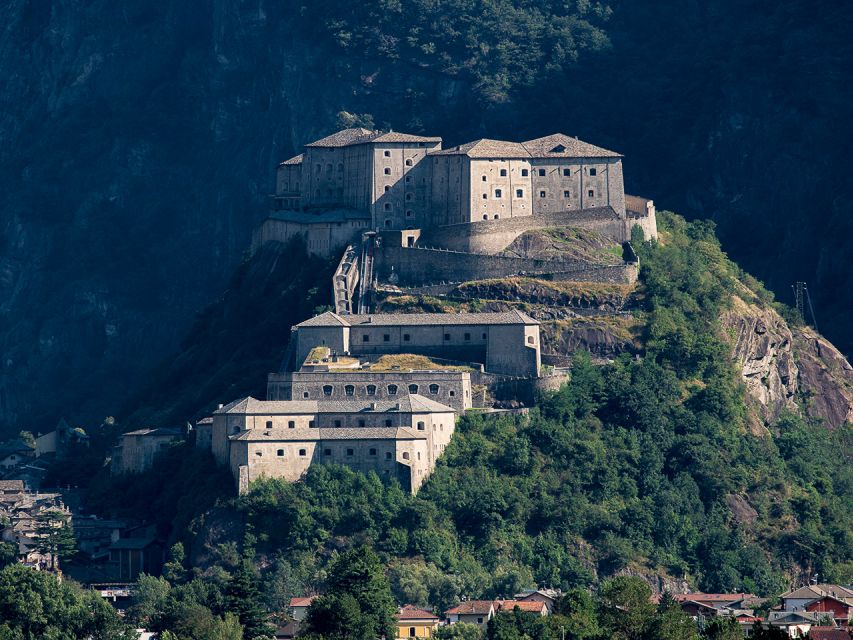
The Alps Museum takes the experience beyond fortifications. Its first section examines the natural and human parts of the mountain environment. This gives you a basic framework for understanding how people live in highland regions and how the natural setting affects daily life.
The second section presents Alpine civilization. Here, the focus shifts to the people, traditions, and ways of life connected with the mountains. The museum helps explain that the Alps are not only dramatic peaks. They are also lived-in places shaped by work, culture, and long-term adaptation.
The final section examines the changes brought by modernity. That makes the museum a useful companion to the Fortifications Museum. One explains military and political change; the other looks at how the mountain world itself has changed over time.
I like this museum because it broadens the visit. You can begin with walls and weapons, then move toward nature, communities, and modern life. The subject is less narrow than a standard fortress tour, and it gives the surrounding valley more meaning.
If your main interest is military architecture, you may prefer the Fortifications Museum and Prisons. If you want a fuller picture of mountain life, the Alps Museum is likely the stronger choice.
Choosing your three exhibition spaces
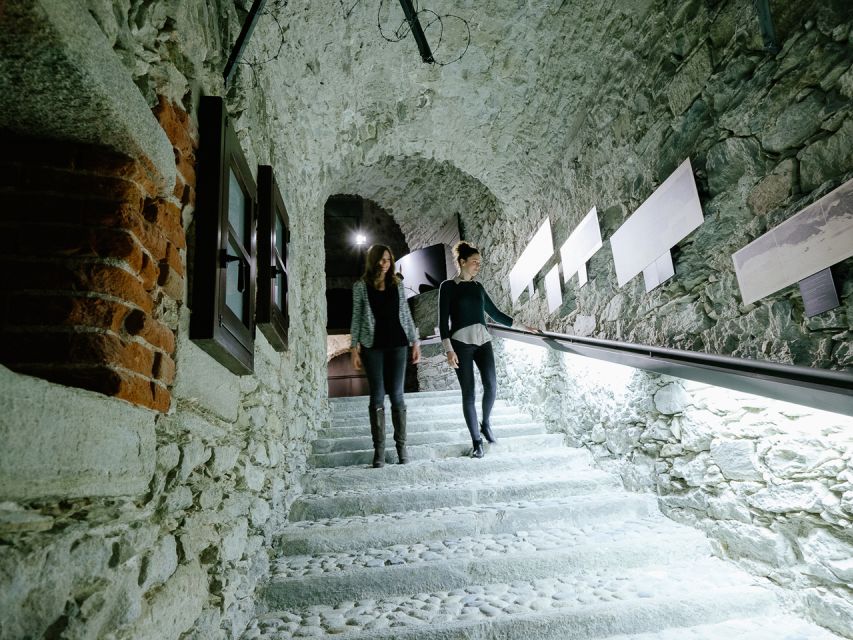
Your ticket includes access to three exhibition spaces of your choice from the permanent museums, along with art exhibitions open during your visit. The named permanent options are the Museum of the Alps, the Prisons, and the Museum of Fortifications and Frontiers.
That wording means you should pay attention to what is open when you arrive. The experience does not promise access to every possible temporary exhibition, and the exact art displays can change. The three main museum choices give you a dependable base, while current exhibitions may add another option.
For a first visit, I would choose:
- The Prisons for the fortress’s most direct and atmospheric interior.
- The Museum of Fortifications and Frontiers for military history and models.
- The Museum of the Alps for nature, culture, and modern change.
This combination gives you the broadest range. You see the structure, its military role, and its mountain setting. If you care more about defence than cultural history, choose the Prisons and Fortifications Museum first, then use your third space for whichever temporary exhibition interests you most.
The included audio guide can help you decide how much time to give each room. You need to download the Museon app on your smartphone and receive a QR code at the ticket office. Bring a charged phone and headphones if you prefer listening privately. A live guided tour is not included, so the app is the main built-in way to receive extra explanation.
What the $17 price really gives you
At $17 per person, this is a solid-value visit if you plan to use the included access. The ticket covers the fortress, three exhibition spaces, panoramic lifts, the chapel, parade grounds, courtyards, walkways, and an audio guide.
The value comes from the combination. You are not paying only to enter a museum or only to see a view. You get the architecture, the outdoor route, the lifts, and a choice of indoor exhibitions. The 10 percent bookshop discount adds a small extra benefit, especially if you want a book about the fort or the Alps.
The price is less appealing if you plan only a brief photo stop or intend to see one room and leave. The ticket is designed for a fuller visit. Since it is valid for 90 days, you have some flexibility, but availability and starting times still need checking.
The experience offers free cancellation up to 24 hours before the visit, and you can reserve now and pay later. Those terms help if your Aosta Valley plans are still shifting.
Who should book Fort Bard?
I would recommend this experience to you if you enjoy historic buildings, military design, museums, mountain scenery, or places that connect local history to wider European questions. Families with older children may also find the models, weapons, lifts, and prison cells easier to follow than a purely text-based museum.
It is especially good for independent visitors. You can choose your three exhibition spaces, use the app audio guide, and move through the fort at your own pace. The strong organization praised in recent feedback fits this self-guided format.
You may want to reconsider if you need a live guide to explain every room. That service is not included. Also, do not book it mainly because of the Marvel connection. There is no dedicated Marvel display included, despite filming at the fort.
Should you book it?
Yes, if you want more than a quick view of a famous fortress. For $17, you get a well-rounded visit with military history, prison architecture, Alpine culture, panoramic lifts, and access to the fort’s key outdoor spaces.
Choose the Fortifications Museum for weapons and strategy, the Prisons for a compact but powerful look at confinement, and the Alps Museum for the human and natural story of the mountains. Download the Museon app before or during your ticket exchange, and allow enough time to use all three choices.
Skip it only if you want a live-led tour, a dedicated film exhibit, or a very short stop. For everyone else, Fort Bard offers a practical mix of views, architecture, and clear historical context.
FAQ
How much does entry to Fort Bard cost?
The listed price is $17 per person.
How long is the ticket valid?
The ticket is valid for 90 days. You should still check availability and starting times before visiting.
What does the ticket include?
It includes fortress entry, three exhibition spaces of your choice, panoramic lifts, the chapel, parade grounds, courtyards, walkways, an audio guide, and a 10 percent discount at the Fort bookshop.
Which museums can I visit?
The available permanent museums include the Museum of the Alps, the Prisons, and the Museum of Fortifications and Frontiers. You can also choose art exhibitions that are open during your visit.
Is a live guide included?
No. A guided tour with a live guide is not included.
How do I use the audio guide?
Download the Museon app on your smartphone. You will receive a QR code at the ticket counter to use the included audio guide service.
Where do I exchange my voucher?
You can exchange it at the counter at the start of the first panoramic lift or at the counter behind the Church of Bard, at the top of the medieval village.
Is Fort Bard wheelchair accessible?
Yes, the experience is listed as wheelchair accessible.
More Museum Visits in Italy
- Trieste: Miramare Castle & Museum Entry Ticket & Audio App
★ 4.2 · 213 reviews - Enchanted Castle of Sciacca – Museum Tickets
★ 3.5 · 63 reviews - Milan: Skip-the-line Sforza Castle and Museums Private Tour
★ 4.7 · 7 reviews - Osaka Castle: Museum and Tower Entry Ticket
★ 4.5 · 2,380 reviews
Just added around Italy
- HIKING TOUR: VARENNA, Castle of VEZIO Villa MONASTERO, FIUMELATTE★ 5.0 · 48 reviews
- Castles of Puglia Day Trip from Bari★ 4.5 · 7 reviews
- Enchanted Castle of Sciacca – Museum Tickets★ 3.5 · 63 reviews
- Taormina; Taormina Castle Tour★ 3.8 · 11 reviews
- St. Angel’s Castle: 2-Hour Private Tour★ 5.0 · 9 reviews
- Milan: Skip-the-line Sforza Castle and Museums Private Tour★ 4.7 · 7 reviews
- Siena: Tour and Wine Tasting in a Tuscan Private Castle★ 4.9 · 50 reviews
- Sforza Castle & Michelangelo’s Pietà Rondanini Guided Tour★ 4.7 · 3 reviews
Fortress & Citadel Tours, compared.
Carcassonne: Castle and Ramparts Entry Ticket
Read our review →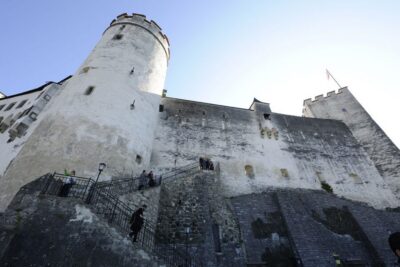
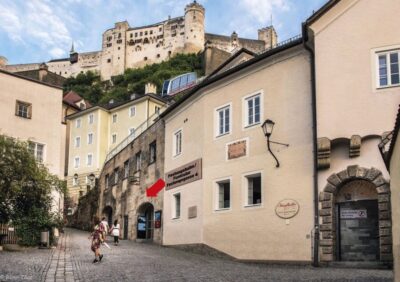
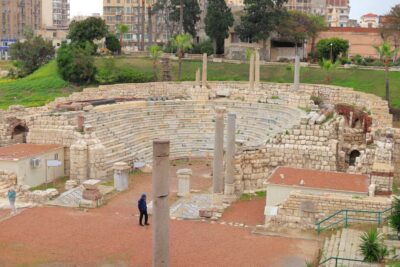
From Cairo Alexandria Catacombs, Citadel Day Trip with Lunch
Read our review →
Charleston historical walking tour with a Professor of History at The Citadel
Read our review →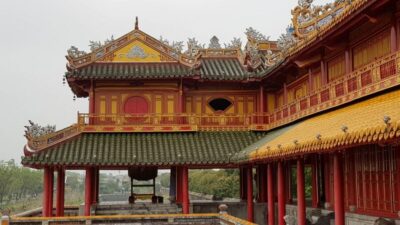
Hue Customizable Tour with Imperial Citadel & Forbidden City
Read our review →
Desert Safari: Luxury Fortress Dinner, Camel Ride & Dune Bashing
Read our review →
Egyptian Museum, Citadel, and Old Cairo Guided Tour
Read our review →Browse the lists this tour appears in