

Review · ROME
Castel Sant’ Angelo: The most famous Fortress of Rome
Rome keeps its best stories behind thick walls. Castel Sant’Angelo is one of them. This huge cylindrical fortress began as Emperor Hadrian’s tomb, later became a papal refuge, and now gives you a close look at Rome’s imperial, religious, and military past. I like the freedom to explore at your own pace, and I especially like the chance to reach the Angel’s Terrace, one of the city’s finest viewpoints.
I also like the choice between a basic entrance ticket and an option with an audio guide in six languages. The main caution is that this is not a guided tour, and the audio guide requires your own smartphone and headphones. A small number of bookings have also had trouble with missing QR codes or only one audio guide being supplied for two tickets, so check your documents before heading across Rome.
Key Things to Know Before You Go
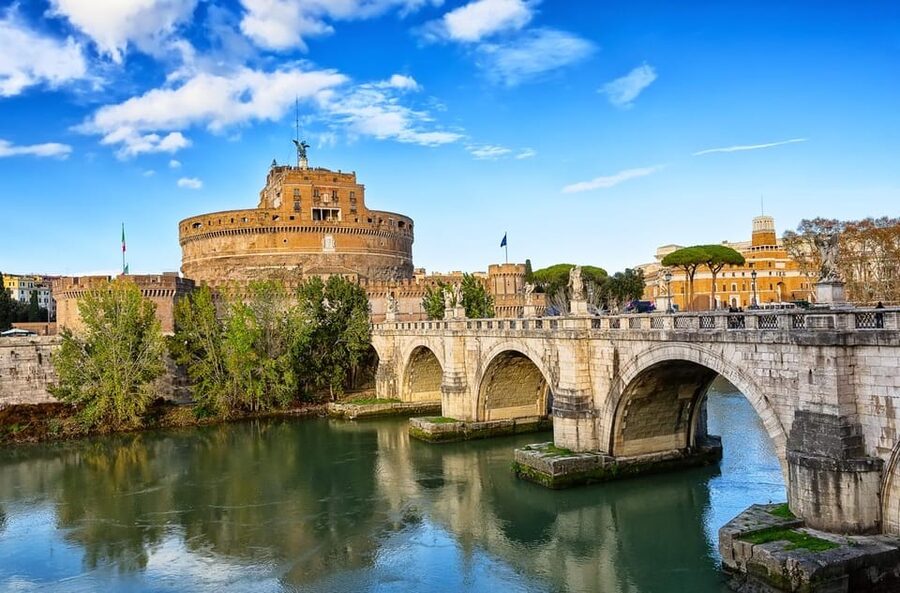
- Hadrian’s tomb became a fortress: You are walking through a building that changed from an imperial mausoleum into a papal stronghold, prison, and place of execution.
- The Angel’s Terrace is the payoff: From the upper terrace, you get broad views across Rome, including a memorable look toward the Vatican area.
- You can explore at your own pace: The visit is valid for two hours, with no live guide pressing you from room to room.
- Fast-track entry uses a separate entrance: This can save time, but tickets must be booked at least one day before your visit.
- The audio guide is optional: It is offered in English, Spanish, French, Italian, German, and Chinese, but you must download it on Wi-Fi first.
- The price includes more than admission: The entrance ticket itself costs €16 per person, while the advertised price also covers service and processing charges.
Why Castel Sant’Angelo Matters in Rome
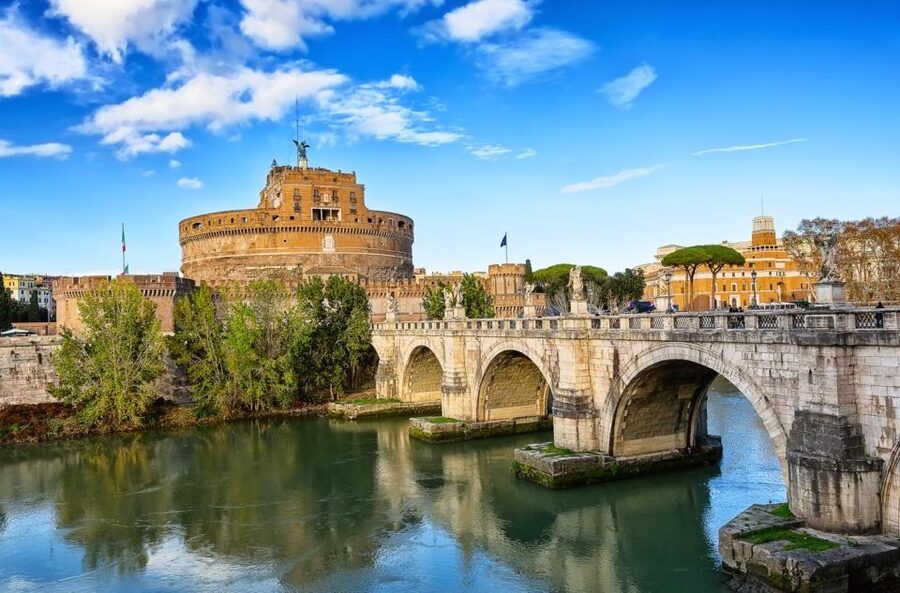
Castel Sant’Angelo is not just another grand building to photograph from the street. Its appeal comes from the way several chapters of Rome sit on top of one another.
The monument was built in Roman times as the tomb of Emperor Hadrian. That original purpose gives the building a solemn beginning. It was meant to preserve the emperor’s memory after death, but the structure did not remain a quiet burial place for long.
During the early Renaissance, the tomb was converted into a papal fortress. Popes needed protection in a city often threatened by political conflict, invasion, and unrest. Castel Sant’Angelo’s heavy walls and strategic position made it a useful refuge.
The fortress was connected to the Vatican Palace by an elevated walkway. In an emergency, a pope could leave the Vatican and reach the castle without walking through exposed city streets. That link helps explain why this place mattered so much to Rome’s rulers.
The building also held a prison and served as a place of execution. Its cells housed notable prisoners, including the goldsmith and sculptor Benvenuto Cellini and the mysterious Cagliostro. You should not expect a single, tidy story here. Castel Sant’Angelo is a record of changing power, with tombs, apartments, passageways, prisons, and military defenses all sharing one structure.
More Fortress and Citadel Tours in Italy
- Fortress: Prisons, Museum of Fortifications and Alps Museum
★ 4.5 · 125 reviews - San Leo: Fortress Entry Ticket and Cagliostro’s Prison
★ 4.2 · 38 reviews - Bard: Fortress Exhibitions and Museums Entrance
★ 4.3 · 29 reviews
The First Look at the Fortress
As you approach, the castle’s shape is hard to miss. Its massive round body has a very different feel from Rome’s churches and palace facades. You are looking at a structure designed to resist attack, not simply impress the eye.
The visit uses a separate entrance for fast-track ticket holders. Your meeting point can vary according to the ticket option you select, so read the instructions carefully before setting out. Bring the passport or identity card used for the booking. This matters because the ticket is nominative, and every participant’s full name must be provided.
The entrance process should be simple if your QR code is present and readable. One booking problem reported missing QR codes for both admission and the audio guide, though the refund request was accepted. That is an avoidable hassle, so I would check the ticket as soon as it arrives rather than waiting until you reach the castle.
Large bags, luggage, baby strollers, weapons, sharp objects, alcohol, and drugs are not allowed. Assistance dogs are permitted, but other pets are not. Pack light. The rules are not unusual for a major historic site, but they can catch you off guard if you are moving around Rome with a day bag full of shopping.
The Spiral Staircase and Hadrian’s Tomb
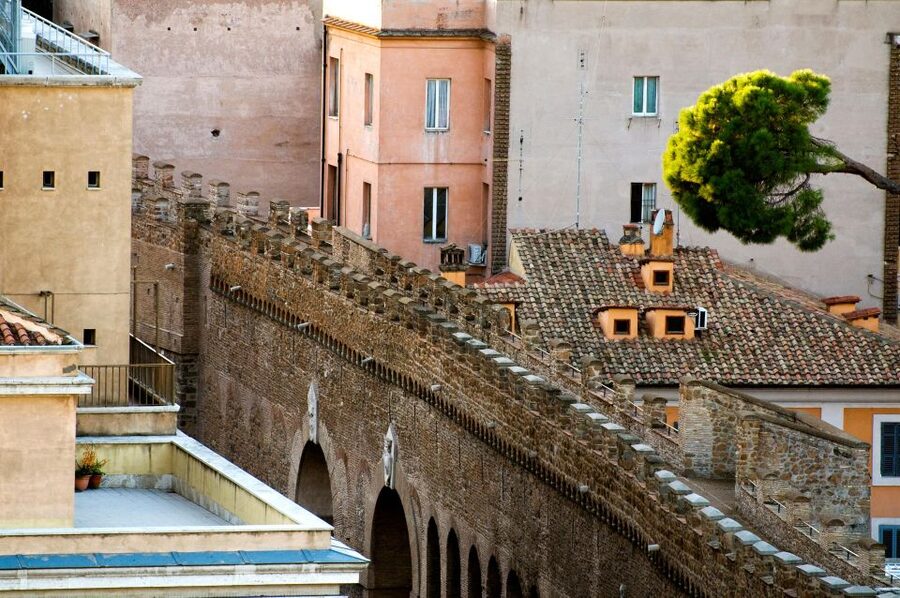
Inside, the spiral staircase gives you your first strong sense of the building’s age and design. It is one of the key parts of the visit because it connects the fortress’s different levels while showing how the original tomb was arranged.
You will also see the Hall of Emperor Hadrian’s Ashes. This is the clearest link to the monument’s first life as an imperial mausoleum. The room offers a useful pause from the later papal story. Instead of seeing Castel Sant’Angelo only as a medieval or Renaissance fortress, you are reminded that its story began under the Roman Empire.
The visit does not provide a live guide. That is a drawback if you want a historian to explain the building as you move through it. On the other hand, self-guided access gives you room to stop, look, and move on when you are ready. The two-hour validity suits people who prefer a calm visit without being tied to a group schedule.
If you choose the audio guide, download it before arriving while you have Wi-Fi. Once downloaded, it works without Wi-Fi, which is useful inside a thick-walled monument. You will need a smartphone and headphones. The guide is available in English, Spanish, French, Italian, German, and Chinese.
I would choose the audio guide if you want basic context for the different rooms and historical changes. I would skip it if you already plan to read about Castel Sant’Angelo beforehand or if you prefer to explore in silence. One practical warning is worth noting: a January 2026 booking for two audio guides reportedly received only one. If you are booking more than one, confirm that each person has the correct access before entering.
The Papal Rooms and Life Above the Tomb
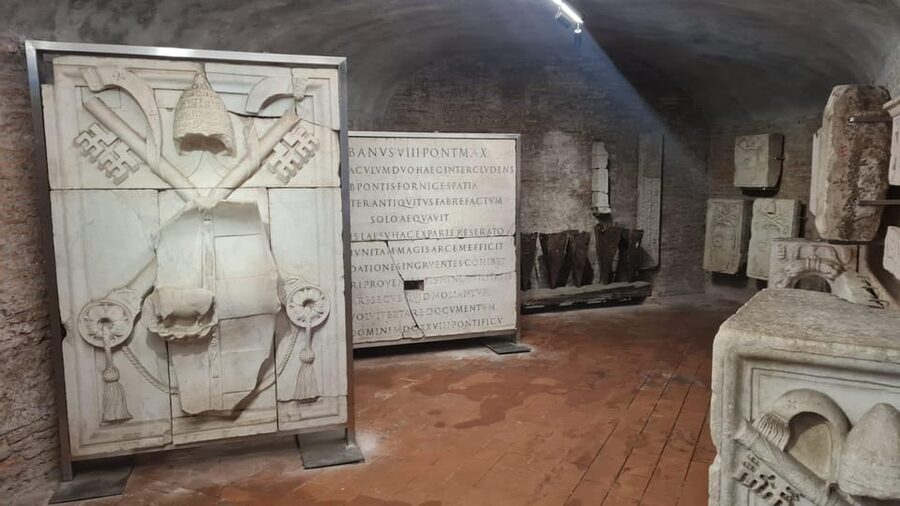
The Papal Rooms show how the fortress became more than a defensive shell. These interiors connect the castle with the popes who used it as a refuge and residence during dangerous periods.
The rooms are important because they show the contrast between protection and comfort. Castel Sant’Angelo could hold prisoners and executions, yet it also contained spaces for powerful people who needed security without giving up the privileges of court life.
You should take your time here. The attraction is not built around a single spectacular hall. Its value comes from following the building’s changes from level to level. A tomb became a stronghold. A stronghold became a papal refuge. The same walls later carried memories of imprisonment and punishment.
This is where the audio guide can add the most value. Without a live guide, you may need to connect the rooms yourself. The optional commentary can help explain why one section feels like a palace while another feels hard, narrow, and defensive.
Still, keep your expectations in check. The experience is not a fully guided historical tour with personal stories from a specialist. It is a flexible monument visit, and the quality of the experience depends partly on how much time you give the rooms.
Same region, a different set of walls:
- Milan: Sforza Castle Entry Ticket with Digital Audio Guide
★ 4.0 · 2,675 reviews - Milan: Sforza Castle and Michelangelo’s Pietà Rondanini Tour
★ 4.7 · 1,119 reviews - From Siena: Chianti and Castles Tour with Wine Tastings
★ 4.6 · 631 reviews - Milan: The Last Supper & Sforza Castle Guided Tour
★ 4.6 · 610 reviews
The Prison Stories: Cellini and Cagliostro
Castel Sant’Angelo’s prison history gives the fortress a darker edge. Among its famous prisoners were Benvenuto Cellini, the celebrated goldsmith, and Cagliostro, a figure associated with mystery and controversy.
These stories help you see the castle as a working institution rather than an empty monument. People were confined here, and the fortress also served as a place of execution. That fact adds weight to the grand views and decorated rooms above.
The available information does not promise access to every cell or provide a detailed prison itinerary, so you should not assume that the visit focuses mainly on dungeon spaces. Instead, treat the prison history as one important strand in the larger story of the building.
I find that this context changes the way you look at the fortress. A beautiful room is not just beautiful. A corridor is not merely a passage to the next view. The castle’s past includes fear, authority, and confinement as well as art and protection.
Reaching the Angel’s Terrace
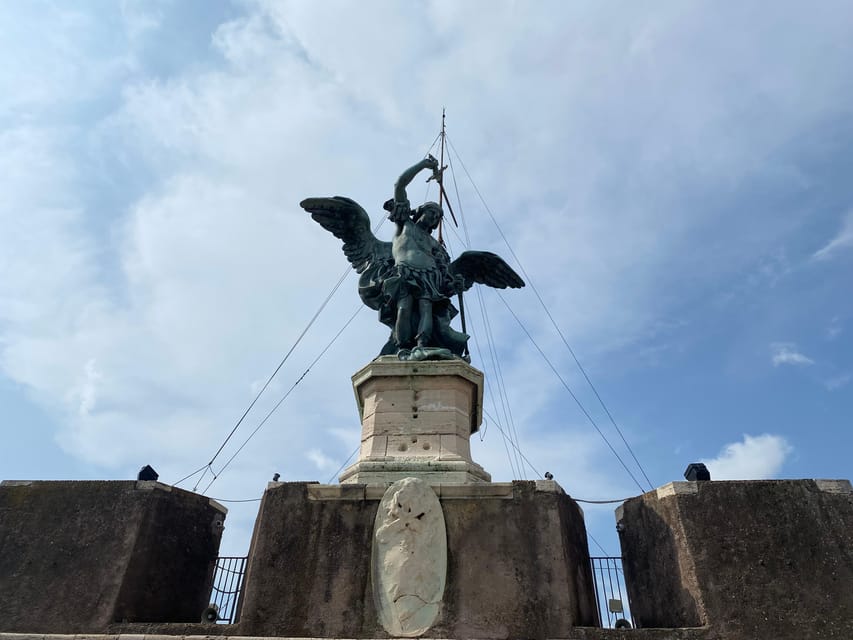
The Angel’s Terrace is the clear high point of the visit. Here, the fortress opens to one of Rome’s broadest city views. You can look across the rooftops and see the capital from a strong, central vantage point.
The terrace also explains the monument’s name and visual identity. The statue of an angel crowns the fortress, and the upper level gives you the classic image that appears in countless Rome photographs.
Give yourself time here. The terrace is not a quick checkpoint before you leave. It is the place to stop and understand how the castle sits within the city. The views are especially valuable because the rest of the visit takes place inside thick walls and enclosed rooms.
The terrace is also a practical reason to choose this attraction if you have already seen Rome’s churches and museums. It offers a different experience, one based on height, space, and orientation. You can use it to get your bearings across the city, though no specific landmarks beyond the Rome and Vatican views are guaranteed by the ticket.
Crowds and timing can affect how relaxed the terrace feels. The visit is valid for two hours, so avoid rushing through the lower sections just to reach the top. If you have an audio guide, pause it when you arrive outside and enjoy the view without constant commentary.
Is Two Hours Enough?
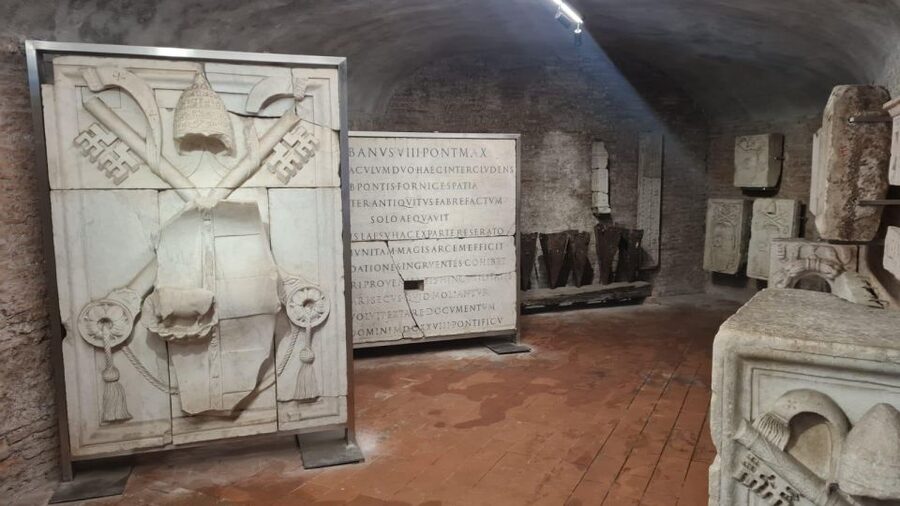
Two hours is a sensible amount of time for this visit. It gives you room to see the Papal Rooms, follow the spiral staircase, visit the Hall of Hadrian’s Ashes, consider the prison history, and spend time on the Angel’s Terrace.
You can move faster if you mainly want the view and the major rooms. You can also use the full period if you like reading and listening to historical details. The lack of a live guide means you control the pace.
The two-hour limit is worth noting for anyone who likes a very slow museum visit. You may need to make choices rather than examine every corner. I would set aside the full time, especially if you want to use the audio guide and take photographs from the terrace.
Transportation is not included, so plan your own way to the meeting point. The exact meeting point may change with the ticket option. Build in time to find the correct entrance, particularly if you are combining the castle with a Vatican visit or another timed attraction.
Ticket Choices and What You Get for $39

The advertised cost is $39 per person. The actual entrance fee for Castel Sant’Angelo is €16 per person, with additional charges covering service and processing. That makes the value depend on what you want from the booking.
If you only need admission, you are paying a noticeable premium over the entrance price for the convenience of advance handling and the fast-track arrangement. That may be worthwhile during a busy Rome itinerary, especially when your schedule includes several timed visits.
The audio guide option can make the price easier to justify if you want historical explanation but do not want to join a live group. Just remember that you supply the smartphone and headphones, and the guide must be downloaded before the visit.
Different ticket options are available, so read the details rather than selecting the first one you see. Check whether your choice includes the Castel Sant’Angelo ticket, the audio guide, or both. The wording makes clear that the ticket and audio guide are included only if the selected option says they are.
Fast-track tickets must be booked at least one day before the visit. That requirement matters for last-minute plans. If you are still deciding on the morning of your visit, the fast-track option may not be available to you.
What the Ratings Suggest About Reliability
The overall score is 4 out of 5 from 13 reviews, which points to a generally positive but not flawless booking experience.
The strongest praise is simple: the visit can be uncomplicated when the ticket works as intended. A German booking from October 2025 received a top rating for being easy and trouble-free. A Czech booking from May 2024 gave four stars and found the castle itself very enjoyable.
The weaker experiences focus on ticket handling rather than the monument. One Italian booking received a one-star rating because the QR codes were missing for both entrance and audio guide. Another booking for two audio guides received only one, and an attempted phone call did not get an answer.
I would not treat those problems as a reason to avoid Castel Sant’Angelo. They are a reason to check your confirmation carefully, keep the provider’s contact details available, and confirm that every paid add-on appears in your documents. The monument itself remains the main attraction, while the booking service adds convenience with some room for error.
Who Should Choose This Experience?
I would recommend it to you if you want to explore independently and enjoy historic buildings with several layers of use. It suits visitors who like a mix of ancient Rome, papal history, prison stories, and city views.
It is also a good fit if you want flexibility. You are not tied to a live guide, and the two-hour visit lets you choose where to spend your attention. The audio guide gives you more context without putting you into a group.
Families should check the restrictions before booking, especially the ban on baby strollers and large bags. The experience may be less convenient if you need to carry substantial equipment or if a stroller is essential.
I would think twice if you want a personal guide, detailed commentary at every stop, or transportation included. None of those services comes with this experience. You are buying access and, if selected, an audio guide, not a fully escorted tour.
Should You Book Castel Sant’Angelo?
Yes, if the terrace, fortress setting, and layered Roman story appeal to you. The Angel’s Terrace gives the visit a clear reward, while the Papal Rooms, spiral staircase, Hadrian’s burial hall, and prison history make the interior worth your time.
I would book the audio guide only if you can use your own smartphone and headphones and remember to download it on Wi-Fi. Before leaving for the castle, confirm the names, QR code, selected ticket type, and number of audio guides.
For a $39 booking, the value is strongest when you want fast-track handling and self-guided flexibility. If you only want basic admission and do not mind arranging it another way, the service charges may feel high. For an easy two-hour stop with a memorable view and plenty of Roman history packed into one fortress, it remains a solid choice.
FAQ
How long is the Castel Sant’Angelo experience?
The visit is valid for two hours. You can use that time to see the Papal Rooms, Spiral Staircase, Hall of Emperor Hadrian’s Ashes, prison-related areas, and Angel’s Terrace.
Is a live guide included?
No. A live guide is not included. You can select an optional audio guide instead.
Which languages are available for the audio guide?
The audio guide is available in English, Spanish, French, Italian, German, and Chinese.
Do I need a smartphone and headphones?
Yes. You need both to use the audio guide. Download the guide before the visit while connected to Wi-Fi. After downloading, it works without Wi-Fi.
Do I need identification?
Yes. Bring your passport or ID card. The ticket is nominative, so you must provide the full names of all participants when booking.
Can I cancel for a full refund?
Yes. You can cancel up to 24 hours in advance for a full refund. You can also reserve now and pay later if that option is available for your selected booking.
Just added around Italy
- HIKING TOUR: VARENNA, Castle of VEZIO Villa MONASTERO, FIUMELATTE★ 5.0 · 48 reviews
- Castles of Puglia Day Trip from Bari★ 4.5 · 7 reviews
- Enchanted Castle of Sciacca – Museum Tickets★ 3.5 · 63 reviews
- Taormina; Taormina Castle Tour★ 3.8 · 11 reviews
- St. Angel’s Castle: 2-Hour Private Tour★ 5.0 · 9 reviews
- Milan: Skip-the-line Sforza Castle and Museums Private Tour★ 4.7 · 7 reviews
- Siena: Tour and Wine Tasting in a Tuscan Private Castle★ 4.9 · 50 reviews
- Sforza Castle & Michelangelo’s Pietà Rondanini Guided Tour★ 4.7 · 3 reviews
Fortress & Citadel Tours, compared.

Carcassonne: Castle and Ramparts Entry Ticket
Read our review →

From Cairo Alexandria Catacombs, Citadel Day Trip with Lunch
Read our review →
Charleston historical walking tour with a Professor of History at The Citadel
Read our review →
Hue Customizable Tour with Imperial Citadel & Forbidden City
Read our review →
Desert Safari: Luxury Fortress Dinner, Camel Ride & Dune Bashing
Read our review →
Egyptian Museum, Citadel, and Old Cairo Guided Tour
Read our review →Browse the lists this tour appears in