
Review · JAPAN
Hiroshima; Hiroshima Peace Memorial Museum and Castle Tour
Hiroshima asks you to remember. This three-hour walking tour pairs the Peace Memorial Museum with a local guide who can explain the difficult details, then adds Peace Park, the Atomic Bomb Dome, the hypocenter, and Hiroshima Castle. I like the clear mix of wartime history and living local culture, and I especially like that guides such as Maria, Ihsan, Mehak, and Leo have adjusted the pace and discussion to suit families, older guests, and curious first-time visitors. The main drawback is time: three hours is enough for an introduction, but not enough for a slow museum visit and every castle display.
I also like the smaller, personal feel described by many guests, including stops at less-visited bombed buildings such as a school, bank, and hospital. That extra context helps you picture daily life in Hiroshima before and after August 6, 1945. Still, the museum can be emotionally shocking, and the castle portion is brief. One guest felt there was little of interest at the castle itself, so consider this tour mainly for Hiroshima’s peace sites, not as a full castle visit.
Key points at a glance
- One tour links four powerful sites: The museum, Peace Memorial Park, Atomic Bomb Dome, and Hiroshima Castle fit into a single three-hour route.
- The guide adds meaning to the monuments: You learn why the memorials exist, not just where to take photographs.
- The hypocenter puts the history on a real street: This is where the bomb exploded, giving the museum exhibits a physical setting.
- Less-visited buildings may be included: Depending on your guide and interests, you might see a surviving bank, school, or hospital connected to the bombing.
- The price includes the museum ticket: At $67 per person, the main value is the live explanation and guided route, not just admission.
- The subject is heavy: Expect graphic displays and allow yourself quiet time afterward.
Why this Hiroshima tour works
Hiroshima is easy to visit on your own, but it is not always easy to understand. The Peace Memorial Museum presents photographs, objects, survivor accounts, and explanations of the atomic bombing. A guide helps you connect those displays to the streets outside, the memorials in the park, and the city that rebuilt itself.
That connection is the heart of the experience. You are not simply moving from one sightseeing stop to another. You are looking at a city through two lenses: the destruction of 1945 and the life of Hiroshima today.
The tour costs $67 per person and lasts three hours. The museum ticket, walking tour, guide, and traditional Hiroshima snacks are included. You pay separately for food and drinks, the museum’s optional audio guide, and castle tickets. I consider the cost reasonable if you want context and conversation. If you prefer to read every museum panel at your own speed, you may get better value from visiting independently and spending longer inside.
The route begins at the taxi stand near the Peace Memorial Museum, at 1-2 Nakajimacho. That starting point is practical because the first major stop is the museum, where the tour spends about an hour.
More Museum Visits in Japan:
- Osaka Castle: Museum and Tower Entry Ticket
★ 4.5 · 2,380 reviews - Osaka: Osaka Castle & Historical Museum Guided Tour
★ 4.8 · 28 reviews - (Ticket Included) Explore Osaka Castle & Museum of History
★ 4.8 · 21 reviews
One hour inside the Peace Memorial Museum
The museum is the emotional center of the tour. You can expect exhibits that show the human cost of the atomic bomb, including images and objects depicting severe suffering. The activity warns that some displays are shocking, so this is not a light sightseeing stop.
Your guide accompanies you and explains important parts of the collection, while also allowing time for you to look on your own. That balance matters. A guide can point out details you might miss, but you should not feel hurried through material that deserves quiet attention.
Several guests especially valued guides who made the history easier to understand. Maria was praised for giving detailed explanations while allowing extra time for reading. Other guides, including Bilal and Ihsan, were described as careful and respectful when discussing the bombing and its aftermath.
You should arrive ready for a serious hour. Parents may want to explain the nature of the exhibits before entering, particularly for younger children. One family found that Maria adjusted the content for children aged 8, 13, and 16, which suggests that a good guide can make the subject understandable without treating it casually.
The included museum ticket is useful because it removes one small task from the visit. The optional audio guide costs extra, but you may not need it if your live guide is providing clear commentary. If you want to study every display, tell your guide at the start. The schedule can be flexible, but the tour still has several stops to cover.
Peace Memorial Park and the meaning behind the monuments
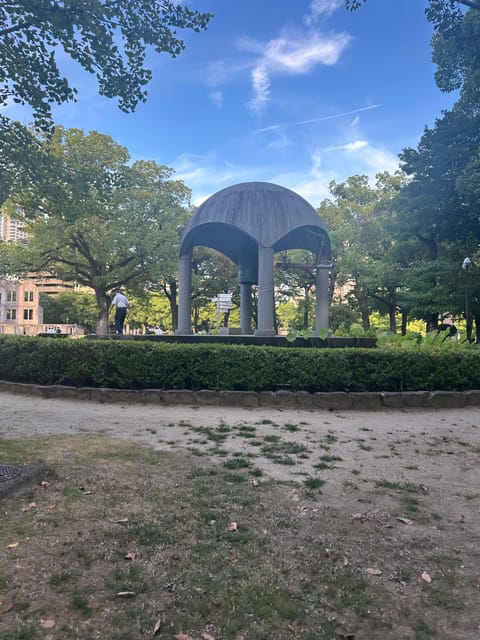
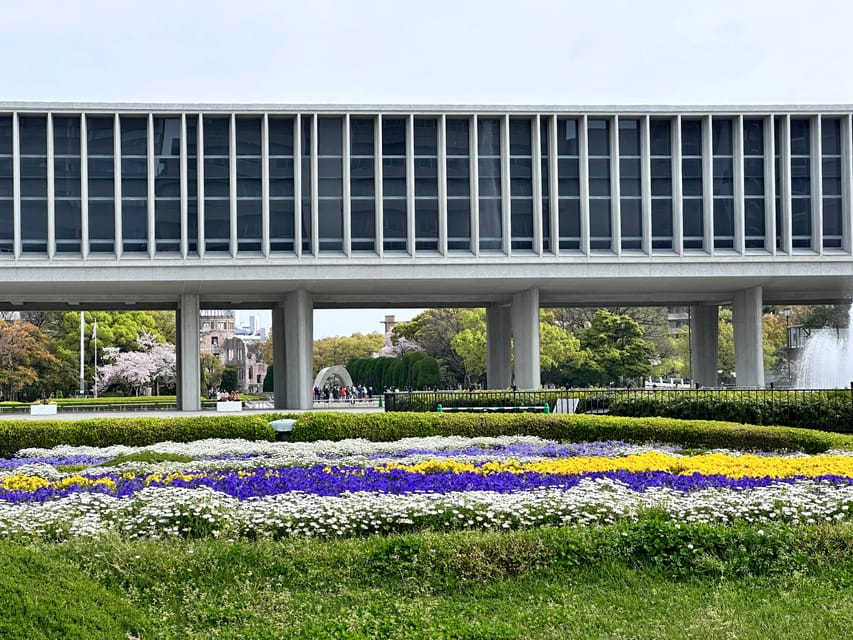
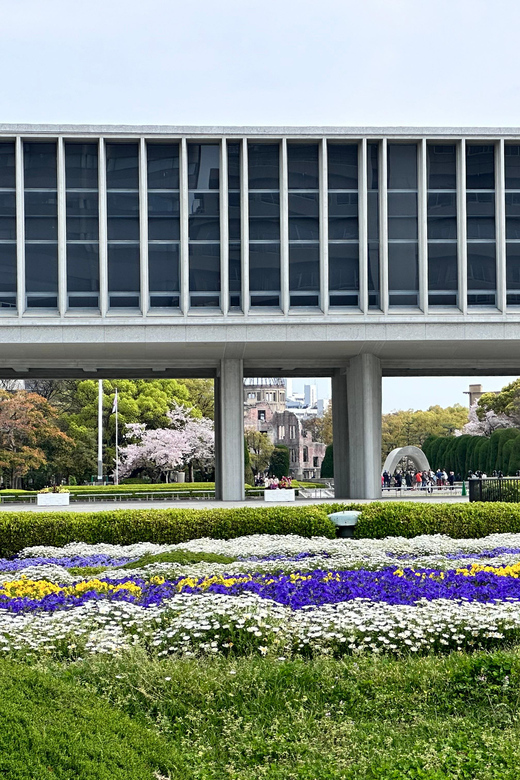
After the museum, the tour spends roughly an hour in Peace Memorial Park. This is where the indoor exhibits become part of the actual city. You walk among memorials, monuments, and open spaces while your guide explains their purpose and the ideas connected with peace.
The park rewards a slower pace. You will have photo opportunities, but the main reason to linger is to understand the symbolism behind the memorials. Guides have explained the park’s cenotaphs, the thoughts behind the memorial monument, and the way Hiroshima presents its message to the world.
I like this part because it gives the museum breathing room. The museum shows evidence and personal suffering. The park asks you to think about memory, responsibility, and the hope that such an event never happens again.
Guides also bring local details into the walk. Maria has suggested places to eat and foods to try, while other guides have added cultural background about Hiroshima and Japan. That makes the park more than a history lecture. You begin to see how the city carries its past while functioning as a normal modern community.
Expect a thoughtful walk rather than a fast checklist. The open park can be hot in summer or uncomfortable in poor weather, and comfortable shoes are strongly advised. The tour is on foot, with about ten minutes of walking between some stops.
The Atomic Bomb Dome and the hypocenter
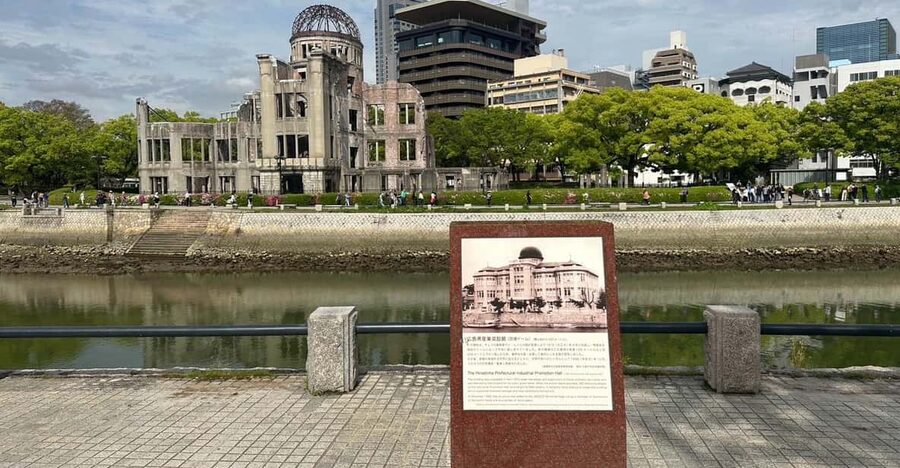
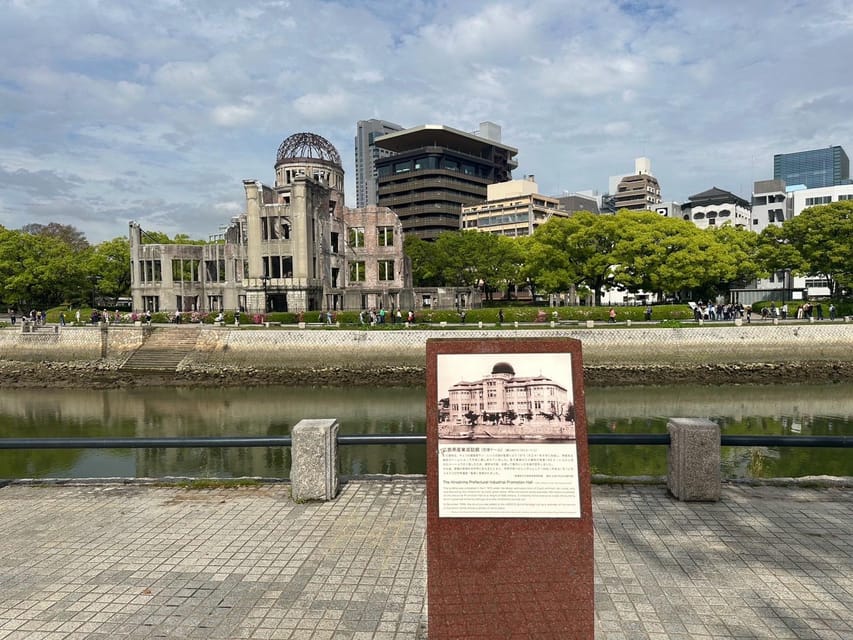
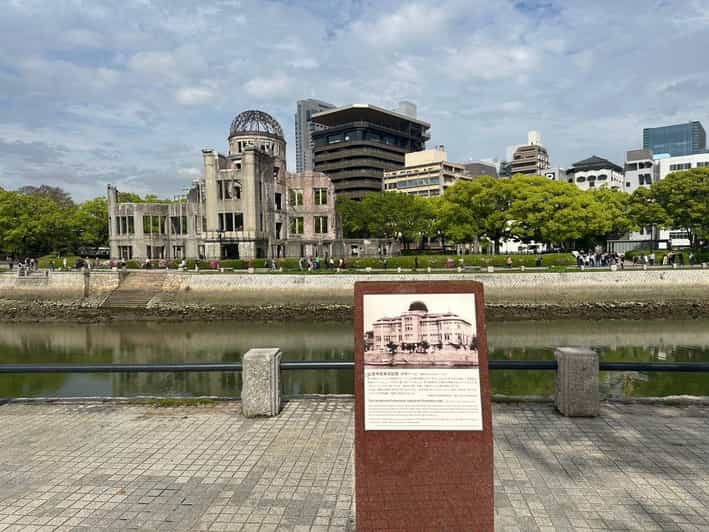
The Atomic Bomb Dome receives about ten minutes on the planned route. That may sound short, but the building needs little introduction. Its damaged frame is one of Hiroshima’s most recognized reminders of the bombing, and the guide explains why it remains preserved.
This is mainly a photo stop and short guided visit. You will not have a long interior tour, so keep your expectations clear. The value comes from seeing the structure in relation to the park and understanding its place in the city’s memory.
The tour also explores the hypocenter, the location directly connected with the bomb’s explosion. That stop gives physical meaning to the museum’s accounts. Instead of thinking only in terms of dates and statistics, you are standing in the city where the event occurred.
The precise order and length of the hypocenter discussion may vary with the guide and the group. Some guides, including Maria, have taken guests to additional buildings linked to the bombing. A bank where only one employee survived and a nearly destroyed school were mentioned as particularly affecting stops. A hospital has also been included on some tours.
These locations are valuable because they show ordinary life. A museum can tell you about the scale of destruction, but a school, workplace, or hospital helps you picture the people who were there. Ask your guide if time allows for these extra sites. They may not form a guaranteed part of every three-hour route.
A few more castle visits around Japan worth a look
- Tokyo Castle & Imperial PalaceーShogun Walking Tour
★ 4.7 · 1,068 reviews - Kyoto: Nijo-jo Castle and Ninomaru Palace Guided Tour
★ 4.7 · 1,020 reviews - Ultimate Osaka Walking Tour: Castle, Dotonbori & Hidden Gems
★ 5.0 · 862 reviews - Tokyo Castle & Imperial PalaceーShogun Walking Tour
★ 5.0 · 724 reviews
Hiroshima Castle and the samurai chapter
The final major stop is Hiroshima Castle, with about 40 minutes for a guided visit and sightseeing. This changes the subject from wartime memory to the city’s older culture and samurai heritage.
Inside or around the castle, you can learn about samurai life and see items such as swords and helmets. The stop helps place Hiroshima in a longer story than the events of the 20th century. It also gives the tour a different mood after the intensity of the museum and park.
There is one practical caution. Castle admission is not included, so budget for that separately. Also, the castle segment is short. One guest felt the castle had less to offer than the peace sites, while other guests appreciated the contrast and the chance to learn about samurai culture.
I would treat Hiroshima Castle as an added chapter, not the reason to book this tour. If the castle is a major priority, plan a separate visit with more time. If you want a compact introduction to Hiroshima’s past and present, the 40-minute stop fits well.
The route also includes Hiroshima Gokoku Shrine. The supplied schedule gives more time to the museum, park, dome, and castle, so the exact length of the shrine visit may depend on the day and the group. It adds another cultural stop to the route and helps broaden the experience beyond the atomic bombing.
The guides make the biggest difference
The strongest feature of this experience is the guide. The tour is offered in English, Hindi, Malay, and Urdu, and the guides named by guests include Maria, Ihsan, Leo, Mehak, Bilal, Ali, Waleed, and James, also called Baba Voss by one family.
Maria receives especially frequent praise for her calm pace, clear English, historical detail, and ability to tailor the walk. She has adjusted visits for families, allowed extra reading time in the museum, suggested restaurants, and shown less familiar sites connected with the bombing.
Ihsan is described as friendly, engaging, and able to adjust his explanations to the group’s questions. Leo has been praised for learning about the interests of the people he was guiding. Mehak has been noted for her warmth and lively explanations, while Bilal has been valued for treating painful material with care.
That personal approach matters in Hiroshima. You may want dates and military context. Someone else in your group may care more about survivor stories, Japanese culture, architecture, or how the city rebuilt. A good guide can shift the emphasis without losing the main thread.
Do not expect every guide to create the same experience. The route is set, but the amount of detail, extra stops, and time at each site can change. Tell the guide early if you have mobility concerns, children in the group, strong interests, or a need to pause after the museum.
Is three hours enough?
Three hours gives you a useful first look, but it is a brisk schedule. The museum and Peace Memorial Park receive the most time, while the Atomic Bomb Dome and castle are shorter stops. Walking between locations adds up, especially in warm weather.
I would book this tour early in your Hiroshima stay. It gives you a framework for returning to the museum or park on your own later. If you have only one day in the city, the tour covers the most important peace sites and adds a short look at the castle.
If you want long, unhurried museum reading time, this may feel compressed. The museum alone can absorb more than an hour for visitors who read every panel. You can ask to spend less time at the castle or skip extra stops, but the tour’s value depends partly on accepting its broad coverage.
Wear comfortable clothes and walking shoes. Bring water, though food and drink are not included in the price. Traditional Hiroshima snacks are included, which is a pleasant local touch, but this is not a meal tour.
The booking terms are flexible: you can cancel up to 24 hours before the start for a full refund, and you can reserve without paying immediately. Availability determines the starting time. The activity says it is wheelchair accessible, but the same information also says it is not suitable for wheelchair users. Contact the provider before booking if you use a wheelchair, since the walking route and site access need clarification.
The stated age restriction is people over 95. That is unusual, so older guests should check before reserving. The walking demands and emotional weight may matter more than age alone.
Who should book it?
I recommend this tour if you want a guide to help you process Hiroshima’s difficult history and connect the museum with the city outside. It is especially useful for first-time visitors, families wanting an age-appropriate explanation, and anyone who prefers conversation over reading every sign alone.
It also suits people who want extra local detail. The possible visits to a surviving bank, school, hospital, and other bombed buildings add a human scale that a standard museum visit may not provide.
I would hesitate if your main goal is a long castle visit, independent museum study, or a relaxed day with little walking. The experience is serious, scheduled, and emotionally demanding. You should also confirm accessibility before paying because the information is inconsistent.
For $67, you are paying mainly for the guide’s interpretation and the smooth link between major sites. If Maria, Ihsan, Leo, Mehak, Bilal, or another similarly engaged guide leads your tour, the personal explanations can make the price worthwhile. Book it when you want Hiroshima to be more than a list of monuments, and allow yourself time afterward to reflect.
FAQ
How long does the Hiroshima tour last?
The tour lasts three hours. The planned schedule includes about one hour at the Peace Memorial Museum, one hour in Peace Memorial Park, ten minutes at the Atomic Bomb Dome, and about 40 minutes at Hiroshima Castle.
What does the $67 price include?
The price includes the walking tour, Peace Memorial Museum admission, a tour guide, and traditional Hiroshima snacks.
Are castle tickets included?
No. Castle admission is not included, so you need to pay for that separately.
Is the Peace Memorial Museum audio guide included?
No. The optional museum audio guide is not included in the tour price.
Where does the tour meet?
The meeting point is the taxi stand near the Peace Memorial Museum, at 1-2 Nakajimacho.
Which languages are available?
The live tour guide is available in English, Hindi, Malay, and Urdu.
Will the tour visit the Atomic Bomb Dome and hypocenter?
Yes. The route includes a guided visit to the Atomic Bomb Dome and an exploration of the hypocenter.
Are graphic exhibits part of the museum visit?
Yes. Some museum exhibits depict the shocking effects of the atomic bomb. Ask about the content beforehand if you or someone in your group may find this difficult.
Just added around Japan
- Tokyo: Edo Castle and Imperial Palace Guided Walking Tour★ 5.0 · 6 reviews
- (Ticket Included) Explore Osaka Castle & Museum of History★ 4.8 · 21 reviews
- Peace Memorial Park, Hiroshima Castle, & Garden Private Tour★ 4.8 · 7 reviews
- Osaka: Explore Every Bit of Osaka Castle in 3 Hours★ 5.0 · 5 reviews
- Osaka/kyoto: Himeji Castle, Kobe. Luxury Day Trip with Guide★ 5.0 · 2 reviews
- Osaka: Early Morning Osaka Castle Guided Tour, Avoid Crowds★ 4.9 · 12 reviews
- Osaka: Osaka Castle 3 hours Historical Walking Tour★ 4.6 · 14 reviews
- Osaka: Osaka Castle – Tsuruhashi – Tennoji (Spanish Guide)★ 4.7 · 10 reviews
Japan Castle Tours, compared.
Tokyo Castle & Imperial PalaceーShogun Walking Tour
Read our review →
Nijo-jo Castle and Ninomaru Palace Guided Tour
Read our review →
Ultimate Osaka Walking Tour: Castle, Dotonbori & Hidden Gems
Read our review →Tokyo Castle & Imperial PalaceーShogun Walking Tour
Read our review →
Nijo Castle, Kiyomizu & Fushimi Inari Guided Tour
Read our review →
Osaka Castle Walking Tour and Castle Tower Admission
Read our review →
Imperial Palace East Garden and Edo Castle Walking Tour in Tokyo
Read our review →Browse the lists this tour appears in