
Review · JAPAN
From Kanazawa: Eiheiji Buddhist Temple & Fukui Castle Town
Fukui rewards curious detours. This full-day trip from Kanazawa combines castle ruins, a small historic temple, mountain views, and one of Japan’s major Zen temples. I especially like the chance to enter two rooms rescued from Fukui Castle, then spend time at Eiheiji Temple, where the setting and daily monastic life make the visit feel far more meaningful than a quick photo stop.
The tour also has a human touch. Guides such as Garrett and Mike have been praised for their warmth, clear explanations, and care with older participants. The main drawback is the tight schedule: Eiheiji deserves more time, and the return buses may leave before you feel finished.
Key points to know before you book
- Fukui begins with dinosaurs: The city station is lined with playful dinosaur statues, a nod to Fukui Prefecture’s major archaeological finds.
- The castle ruins are still part of city life: Original stone walls and a moat sit beside the prefectural office and police headquarters.
- Zuigenji gives you rare access to castle interiors: Two rooms used by the daimyo were moved from Fukui Castle and preserved inside the temple.
- Atagozaka brings the best city view: The short climb leads to old shrines and a broad look over modern Fukui.
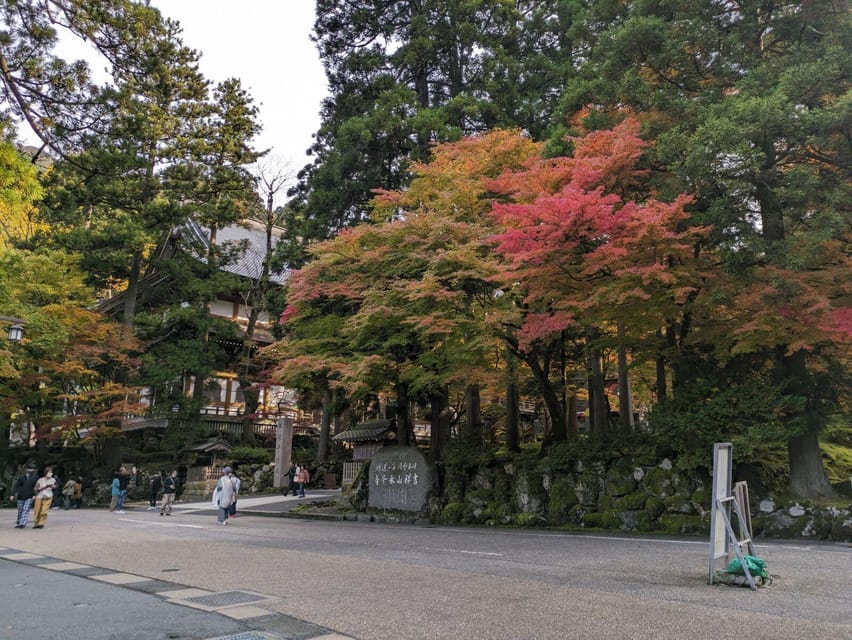
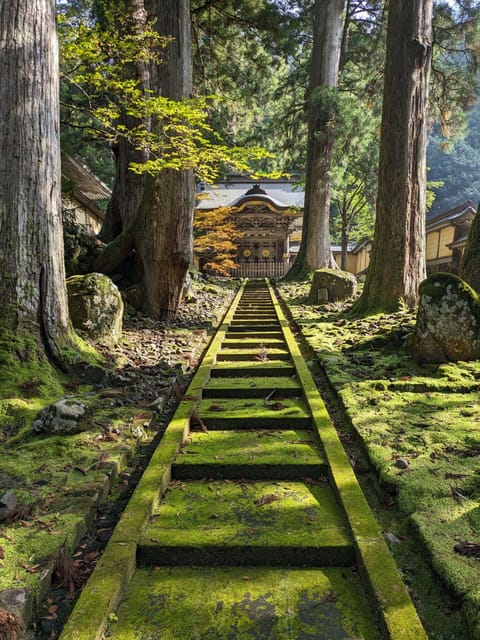
- Eiheiji is the day’s grand finish: Cedar trees, old buildings, active monks, and mountain scenery create a powerful sense of place.
- The price includes the moving parts: At $143 per person, you get the guide, trains and buses between the main stops, and entry to Zuigenji and Eiheiji.
Why Fukui makes a good change from Kanazawa
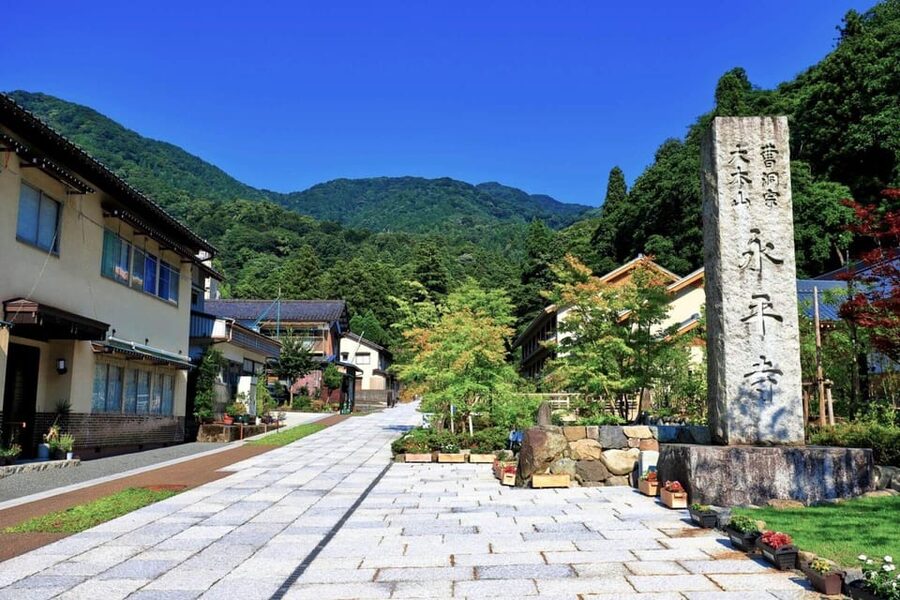
Kanazawa gets much of the attention in this part of Japan, and deservedly so. Yet Fukui offers a different kind of day. Instead of polished districts and famous gardens, you see a working regional capital shaped by castle history, Buddhist practice, and the mountains to the west.
The morning train from Kanazawa takes roughly 30 to 40 minutes. That short ride matters. You are not losing half a day in transit, and the view opens toward the mountains as you leave Kanazawa behind. The tour starts at 8:30 a.m. at Kanazawa Station, near the Information Center by the Shinkansen ticket gates.
A Fukui start is also possible. In that case, the meeting point and transport plan will differ, so check the option you select when booking. The Kanazawa version is the more useful choice if you are based there and want to return the same evening.
A few more castle visits around Japan worth a look
- Osaka Castle: Museum and Tower Entry Ticket
★ 4.5 · 2,380 reviews - Tokyo Castle & Imperial PalaceーShogun Walking Tour
★ 4.7 · 1,068 reviews - Kyoto: Nijo-jo Castle and Ninomaru Palace Guided Tour
★ 4.7 · 1,020 reviews
Dinosaur Square gives Fukui an easygoing welcome
Fukui Station has an unusual first impression: dinosaurs. Statues fill the area around Dinosaur Square, and some are designed with a comic touch. Fukui Prefecture is home to Japan’s largest archaeological dig, and several dinosaur species have been named after the area.
You have about 10 minutes here. That is enough to walk around, take a few photographs, and get your bearings. It is not a museum visit, so do not expect a detailed fossil presentation. Think of it as a cheerful introduction to the prefecture and a reminder that Fukui’s identity reaches well beyond temples and castles.
The stop works especially well for families and anyone who likes a little local character at the start of the day. If dinosaurs are not your interest, it is brief enough not to feel like wasted time.
Fukui Castle shows how a city lives with its past
From the station, you walk toward Fukui Castle’s remaining walls and moat. The stonework is original to the castle’s construction, while a nearby bridge has been rebuilt to match its Edo-period appearance.
There is no reconstructed castle keep here. That absence is part of the story. For many years, Fukui Castle relied on heavily reinforced gates rather than a central keep as its last line of defense. The arrangement gives the site a different feel from Japan’s more familiar reconstructed castles.
The most striking detail is how ordinary modern life continues inside the old boundaries. The prefectural office and police headquarters occupy the castle grounds. You are not looking at an isolated historic park. You are seeing old walls beside government buildings, traffic, and daily business.
That contrast is useful. It shows how historic places survive in Japanese cities, sometimes not as perfect museum pieces but as parts of the urban fabric. The castle stop lasts about an hour, giving your guide time to explain the site rather than rushing you through a single viewpoint.
The crane-filled shrine offers a quiet message
A short walk from the castle is a shrine that has become known for origami cranes hanging at its entrance. The colorful display creates the rainbow-like effect described in the tour highlights, but its meaning is more important than its appearance. The cranes express hope for a better future.
This is a small stop, not a major shrine complex. That is precisely why it fits the morning well. You get a brief moment of reflection after the castle walls and before the more intimate temple visit.
Your guide can also connect this part of Fukui to the city’s long recorded past, which reaches back before the 700s. The area around the shrine and temple is shaped by old hills and religious sites, even though modern Fukui is close by.
Same region, a different set of walls:
- Ultimate Osaka Walking Tour: Castle, Dotonbori & Hidden Gems
★ 5.0 · 862 reviews - Tokyo Castle & Imperial PalaceーShogun Walking Tour
★ 5.0 · 724 reviews - Kyoto: Nijo Castle, Kiyomizu & Fushimi Inari Guided Tour
★ 4.7 · 700 reviews - Osaka Castle Walking Tour and Castle Tower Admission
★ 5.0 · 561 reviews
Zuigenji preserves private rooms from the daimyo’s castle
Zuigenji is the most unusual stop before lunch. The temple contains two rooms transferred from Fukui Castle. These were private rooms where the daimyo conducted personal business and often slept.
One room has been preserved in its period condition. Look closely at the colors, decorative details, and construction. The rooms give you a rare sense of how the upper levels of castle society lived away from the military image of towers, gates, and warriors.
This is where a good guide adds real value. The physical rooms are not large, and without context you could walk through them quickly. The explanation of how the rooms were used, why they were moved, and how the temple came to care for them makes the visit much more memorable.
A monk may also speak with the group about the temple and its history. That direct conversation has been one of the most praised parts of the experience. It is a chance to hear from someone who practices and manages temple life, rather than only receiving a standard sightseeing talk.
The temple entry fee is included. Allow about 30 minutes for the guided visit, though the pace may vary depending on the monk’s availability and the day’s schedule.
Atagozaka earns its view one staircase at a time
The Atagozaka section involves a short climb up a series of staircases. It is not described as a major hike, but you should still expect uneven effort after a morning of walking.
At the top are some of Fukui Prefecture’s oldest shrines and, according to the tour description, likely the best view of the city’s modern skyline. The scene is a useful contrast to Zuigenji’s quiet rooms and the castle’s stone defenses. From above, you can see how the old hills, city streets, and newer buildings fit together.
This stop is best for you if you enjoy understanding a city spatially. A view from above can make the morning’s sites easier to place in your mind. If stairs are difficult for you, ask the guide about the pace before setting out. The tour provides a 30-minute walking segment, so sensible shoes are a good idea.
Lunch is flexible, not included
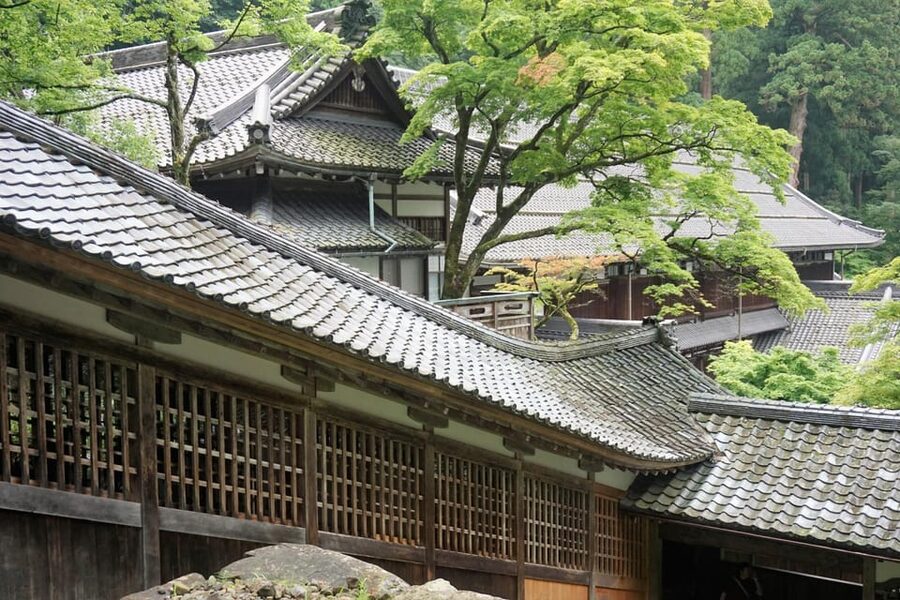
Lunch comes in Fukui, with about an hour of free time. Food is not included in the $143 price, so you pay for your own meal.
That arrangement gives you some freedom, but it also means the exact choice depends on the group, location, and available time. The supplied details do not specify a restaurant or set menu. You should treat this as a practical midday break rather than a planned food experience.
An hour is enough for a straightforward meal, but not for a long, leisurely lunch. Keep an eye on the meeting time. The afternoon includes a direct bus to Eiheiji, and the rest of the day follows a fixed transport schedule.
Eiheiji is more than a beautiful temple stop
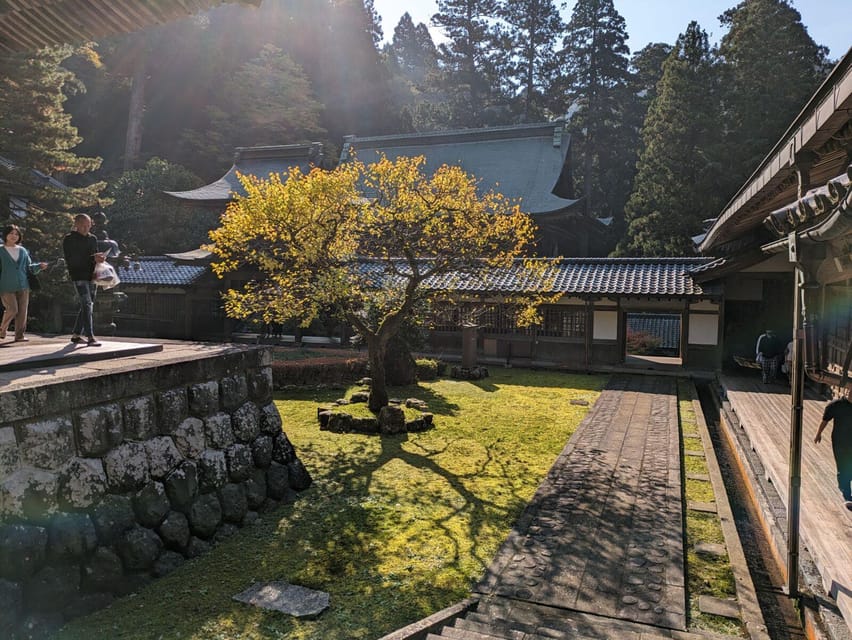
After lunch, a direct bus takes you to Eiheiji in about 30 minutes. This is the emotional center of the tour.
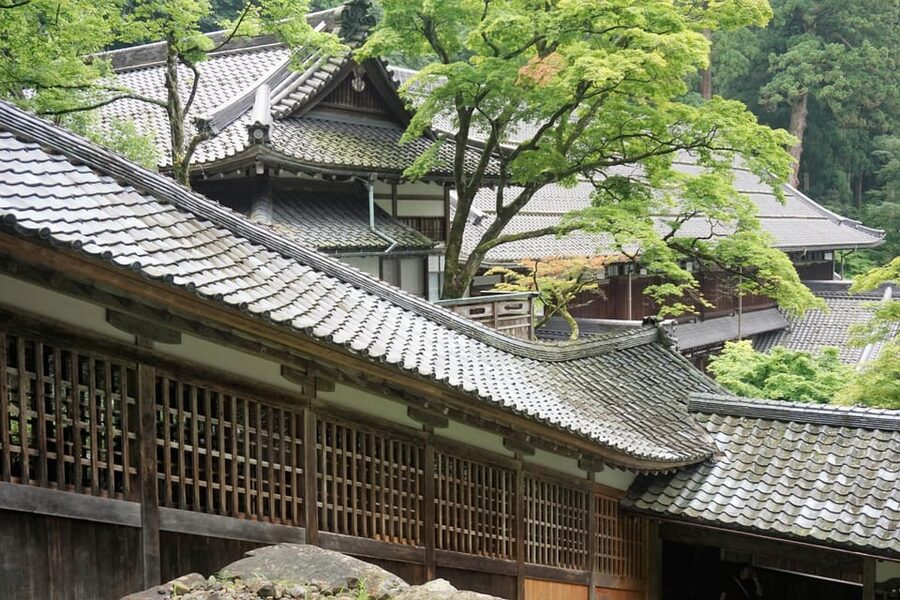
Eiheiji was founded in the 1200s and is one of the main temples of Japanese Zen Buddhism. Its buildings and cedar trees create a powerful setting, with traditional architecture framed by steep mountain country. Some structures and trees are described as dating from around the founding period, roughly 680 years ago, though the complex has also changed over time.
You have about 110 minutes at Eiheiji, including guided time and free time. That is generous compared with the earlier stops, but it can still feel short. The temple grounds offer many views where timber buildings, rooflines, stone paths, and tall cedars meet. Give yourself permission to slow down.
The guide explains the background of Zen Buddhism, the importance of Eiheiji, and its place in Japanese history. You may also see novice monks carrying out daily duties or monks at prayer. Those moments help distinguish Eiheiji from a silent historic building. It remains a working religious institution.
Snow can make the grounds especially striking, as one winter visit showed, but each season changes the mood. The tour data does not promise a particular seasonal display, so go for the architecture, religious setting, and mountain atmosphere rather than a specific type of scenery.
The best approach is to balance the guide’s explanation with your own quiet time. Listen first, then use the free period to revisit a building, observe the grounds, or simply sit with the setting.
The return journey keeps the day efficient
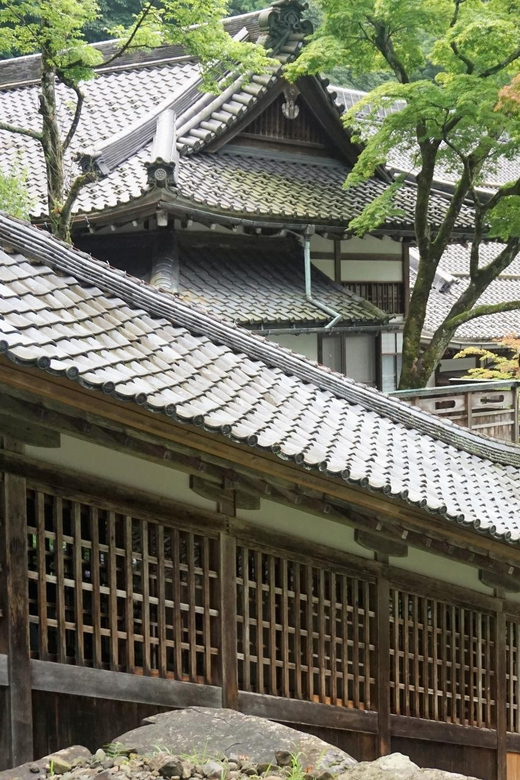
A direct bus returns you to Fukui Station in just under 30 minutes. The group then separates if some people are staying in Fukui, while the Kanazawa group boards the train back.
The expected return to Kanazawa is around 6:00 p.m. That makes this a full day, but not an unnecessarily late one. You still have the evening available in Kanazawa, though you may want a quieter dinner after the steady walking and stair climb.
The transport plan is one of the tour’s strongest practical features. You are not left to work out the local bus to Eiheiji or worry about missing the best connection. At the same time, public transport means the schedule cannot bend much. If you want to stay at Eiheiji until closing or linger over lunch, this is not the right format.
Is $143 a fair price?
At $143 per person, the value depends on how much planning you want removed from your day. The fee includes an English-speaking guide, transportation to and from Fukui Station on the Kanazawa route, the local Fukui bus, the bus to Eiheiji, and admission to both Eiheiji and Zuigenji.
You are paying for access and interpretation, not just tickets. The rooms at Zuigenji need explanation, and Eiheiji is large enough that a guide helps you understand what you are seeing. The direct transport also saves you from piecing together train and bus connections.
Lunch is extra, and the day is tightly scheduled. If you prefer to wander independently, eat slowly, and spend several hours at one temple, buying transport and entry tickets yourself may suit you better. If you want a well-organized day with historical context and no complicated route planning, the price is reasonable.
Who will enjoy this day most?
I would recommend it to you if you want more than Kanazawa’s familiar sights and have one full day available. It suits people interested in Japanese castles, Zen Buddhism, regional history, architecture, and working religious sites.
It is also a strong choice for older participants who appreciate help with transport and clear pacing. One guide was specifically praised for taking good care of retirees, and the combination of train, bus, and walking is easier with someone managing the route.
You should think twice if you dislike fixed schedules or uphill walking. Atagozaka includes stairs, Eiheiji involves substantial walking, and the return bus may feel early once you begin exploring the temple grounds.
The English-speaking guides are a major part of the experience. Garrett and Mike were praised for their friendly manner, local passion, and ability to explain Fukui and Buddhist practice in an approachable way. Guide quality can vary from day to day, but the tour is clearly built around personal interpretation rather than simply moving from one ticketed site to another.
Should you book the Fukui and Eiheiji day trip?
Book it if you want a balanced day that connects castle power, Buddhist life, and modern Fukui. The standout moments are the private daimyo rooms at Zuigenji, the conversation with a monk when available, and Eiheiji’s cedar-lined grounds with monks still carrying out their duties.
Skip it if you need a slow day or want a long, unstructured visit to Eiheiji. The schedule is full, and the final temple deserves more time than the transport timetable may allow.
For most visitors based in Kanazawa, though, this is a worthwhile regional excursion. It gives you a clear look at a less familiar part of Honshu, with enough guidance to make the history understandable and enough free time to enjoy the places at your own pace.
FAQ
Where does the tour begin?
The Kanazawa option begins at Kanazawa Station at 8:30 a.m., near the Information Center by the Shinkansen ticket gates. A Fukui Station starting option is also available.
How long is the tour?
It is a full-day experience, with the Kanazawa group expected to return around 6:00 p.m.
How much does the tour cost?
The listed price is $143 per person.
Is lunch included?
No. Lunch is not included, and you have about one hour of free time in Fukui to arrange your own meal.
Is the tour conducted in English?
Yes. The tour includes a live English-speaking guide.
What transport is included?
The Kanazawa option includes transportation to and from Fukui Station, the local Fukui bus, and transport between Fukui and Eiheiji.
Are temple admission fees included?
Yes. Entry to Eiheiji Temple and Zuigenji Temple is included.
What can I see at Fukui Castle?
You can see original castle walls, a moat, and a bridge reconstructed to reflect its Edo-period appearance. The prefectural office and police headquarters are also located within the former castle area.
What is special about Zuigenji?
Zuigenji contains two rooms moved from Fukui Castle. They were used by the daimyo for private business and sleeping, and one room has been preserved in its period condition.
How much time is spent at Eiheiji?
The planned visit lasts about 110 minutes, including guided time and free time. You then return by direct bus to Fukui Station.
Just added around Japan
- Tokyo: Edo Castle and Imperial Palace Guided Walking Tour★ 5.0 · 6 reviews
- (Ticket Included) Explore Osaka Castle & Museum of History★ 4.8 · 21 reviews
- Peace Memorial Park, Hiroshima Castle, & Garden Private Tour★ 4.8 · 7 reviews
- Osaka: Explore Every Bit of Osaka Castle in 3 Hours★ 5.0 · 5 reviews
- Osaka/kyoto: Himeji Castle, Kobe. Luxury Day Trip with Guide★ 5.0 · 2 reviews
- Osaka: Early Morning Osaka Castle Guided Tour, Avoid Crowds★ 4.9 · 12 reviews
- Osaka: Osaka Castle 3 hours Historical Walking Tour★ 4.6 · 14 reviews
- Osaka: Osaka Castle – Tsuruhashi – Tennoji (Spanish Guide)★ 4.7 · 10 reviews
Japan Castle Tours, compared.
Tokyo Castle & Imperial PalaceーShogun Walking Tour
Read our review →
Nijo-jo Castle and Ninomaru Palace Guided Tour
Read our review →
Ultimate Osaka Walking Tour: Castle, Dotonbori & Hidden Gems
Read our review →Tokyo Castle & Imperial PalaceーShogun Walking Tour
Read our review →
Nijo Castle, Kiyomizu & Fushimi Inari Guided Tour
Read our review →
Osaka Castle Walking Tour and Castle Tower Admission
Read our review →
Imperial Palace East Garden and Edo Castle Walking Tour in Tokyo
Read our review →Browse the lists this tour appears in