
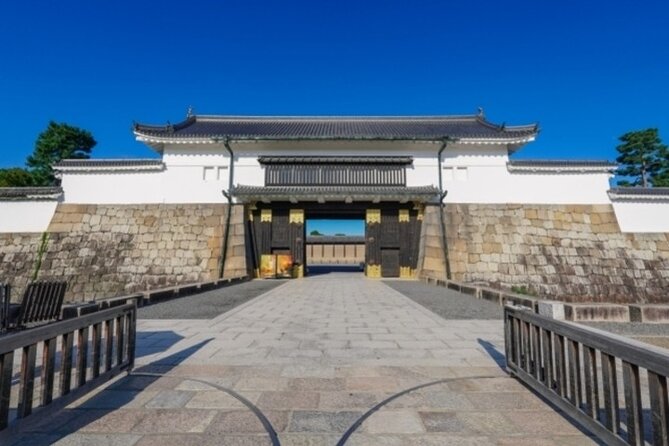
Review · KYOTO
Kyoto: Nijo Castle World Heritage Guided Tour with Admission
History comes alive inside Nijo Castle. This 90-minute guided visit gives you included admission, a small group capped at 10 people, and a clear way to see one of Kyoto’s most important sights without puzzling over where to go. I especially like the prebooked entry, which removes the worry of arriving on your chosen day and facing a ticket line. I also like the personal touch of a live guide, since the castle’s political story is far more interesting when someone explains the rivalry between shoguns and emperors.
The main consideration is time. Ninety minutes is enough for a focused introduction, but not a slow, every-corner exploration of the gardens and buildings. You should also wear good socks, especially in winter, because shoes must be removed inside the palace.
Key points at a glance
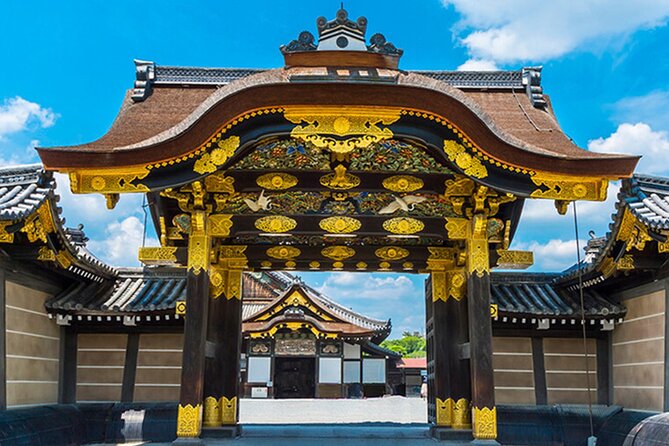
- Built by Tokugawa Ieyasu: Learn how the founder of the Tokugawa shogunate shaped a samurai government that lasted about 260 years.
- Admission is included: Your booking covers entry to Nijo Castle, helping you avoid the uncertainty of buying a separate ticket.
- Small group, maximum 10 people: The limited size gives you a better chance to hear the guide and ask questions.
- A 90-minute introduction: The visit covers the main historical and visual highlights without taking up your whole day.
- Guides praised for clear English: Alex, Nao, Naoya, Noe, and Benjamin are named in especially warm feedback, with praise for their humor, friendliness, and ability to answer questions.
- Easy meeting point: You meet at Nijojo-mae Station by Nijo Castle and return to that same area when the activity ends.
Why Nijo Castle matters in Kyoto
Nijo Castle is not simply an old fortress with attractive gardens. It represents the power of Tokugawa Ieyasu, the shogun who established the political order that governed Japan for roughly 260 years. A visit here helps you understand the samurai era as a system of authority, ceremony, and control, not just as a collection of armor and battle stories.
The castle is also a UNESCO World Heritage Site. That designation matters because the place links grand architecture, Japanese garden design, and a major turning point in the country’s political past. You can see where military power met court culture, and where the shogun’s authority was displayed through buildings, gates, and formal spaces.
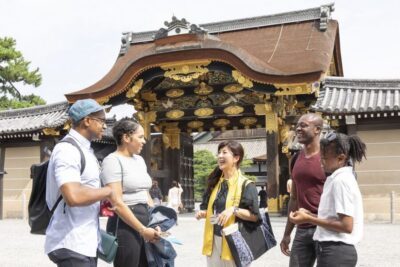
On your own, you can certainly walk through Nijo Castle. The trouble is that a large historic complex can become a procession of attractive views without much sense of what happened there. This tour gives those views a storyline. The guide explains the shogun and emperor rivalry, points out places worth photographing, and connects the grounds to the larger history of Japan.
That added explanation is the real reason to consider the tour. The admission ticket gets you through the gate. The guide helps you understand why the gate, palace, and gardens deserve your attention.
More Guided Castle Tours in Japan
- Kyoto: Nijo-jo Castle and Ninomaru Palace Guided Tour
★ 4.7 · 1,020 reviews - Kyoto: Nijo Castle, Kiyomizu & Fushimi Inari Guided Tour
★ 4.7 · 700 reviews - Kyoto: Imperial Palace & Nijo Castle Guided Walking Tour
★ 4.7 · 453 reviews
Starting at Nijojo-mae Station
The meeting point is at Nijojo-mae Station, listed as Nijo-jo Castle, in Nakagyo Ward. This is practical for a first visit because you do not need to navigate a distant neighborhood or find a hotel lobby. You meet near the attraction itself, and the tour finishes back at the same general meeting point.
A mobile ticket makes the arrival process simpler. Keep your booking confirmation ready on your phone and allow enough time to locate the guide. The exact meeting instructions matter in any busy sightseeing area, so read the confirmation carefully before leaving your hotel.
The activity is close to public transportation, and most people can take part. Since the group can include up to 10 people, the experience should feel more manageable than a large coach tour. A smaller group also gives you a reasonable chance to ask about details that catch your eye.
The maximum of 10 is not the same as a private tour. You will still be sharing the guide’s attention, and the experience depends partly on the group’s pace and questions. Still, this is a useful middle ground between walking alone and joining a much larger crowd.
Inside the castle and across the grounds
The visit lasts about one hour and 30 minutes, with Nijo Castle admission included. The focus is on the castle’s key areas, its gardens, and the stories attached to the site.
You can expect the guide to lead rather than simply hand you a map and point toward the entrance. That matters at a place where signs may not explain every political connection or architectural detail in a way that makes sense to a first-time visitor.
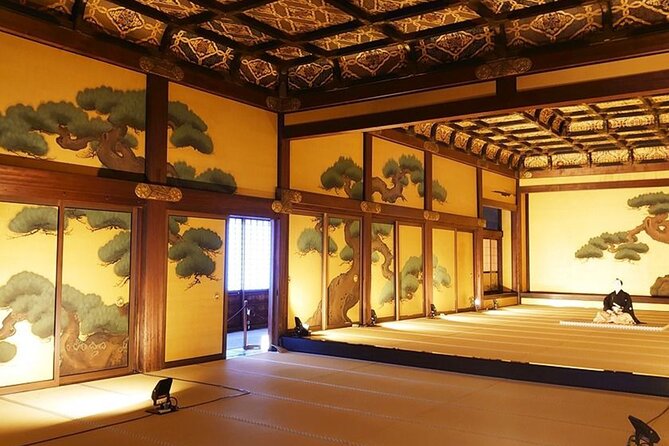
The palace interior is one of the most memorable parts of the visit. You remove your shoes before entering, so thick socks are a smart winter choice. This is a small practical detail, but it can affect your comfort during the tour. Cold floors and thin socks are not a great pairing when you are trying to listen to a history lesson.
Inside, the atmosphere is different from the open gardens. You move through formal rooms associated with shogunal authority and ceremony. The guide’s explanation helps you picture how power was presented through space, movement, and protocol. The point is not merely that the rooms are old. It is that the building was designed to make status visible.
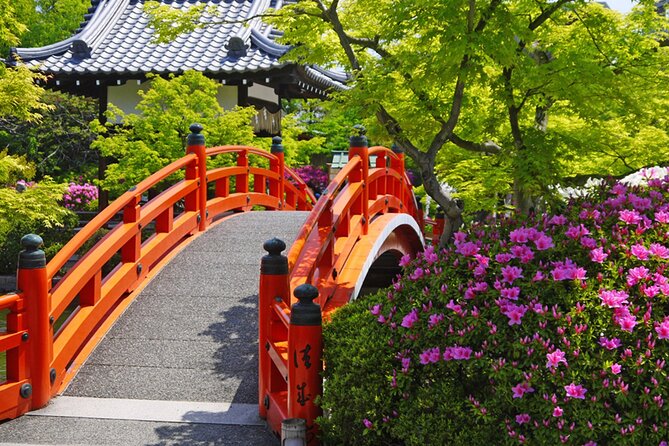
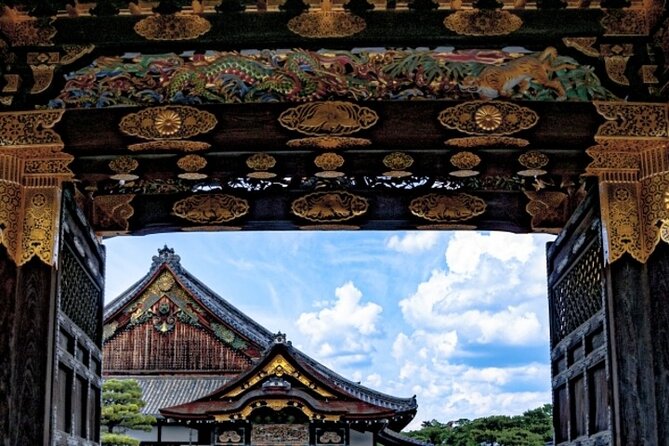
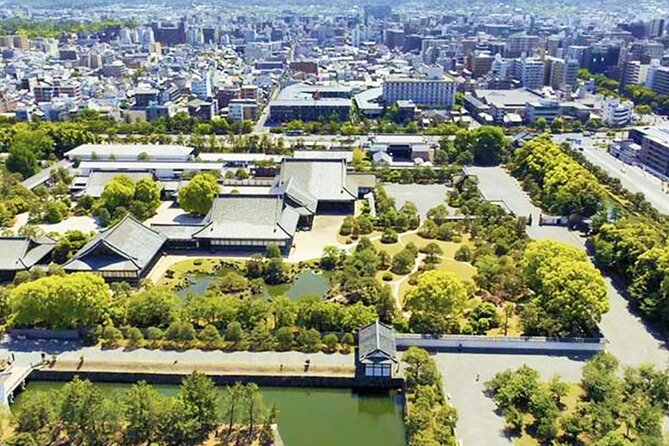
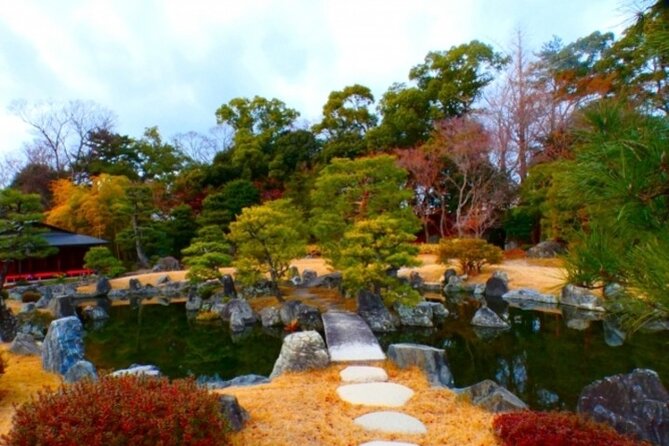
The grounds provide a change of pace. You can stroll among the Japanese gardens and look closely at the gates and other defensive features. These areas are especially useful for photographs, and the guide can direct you toward the most photogenic views rather than leaving you to guess which paths are worth following.
The castle is a place where beauty and political strength sit side by side. The gardens are calm and carefully arranged, while the gates and castle structures remind you that this was also a place of authority. A good guide brings those two sides together.
What the guides add
The strongest part of this experience is the guiding. The feedback names several guides, so you should not assume that one particular person will lead every departure. Alex is praised for his good humor, easygoing manner, strong command of the subject, and willingness to answer a steady stream of questions.
Nao and Naoya receive similar praise. Their explanations are described as clear and friendly, with useful facts that you might miss when walking alone. Naoya’s English is specifically described as easy to understand, which is important when a tour covers unfamiliar names, political titles, and long stretches of Japanese history.
Noe is praised for filling the castle and garden visit with information, while Benjamin is singled out for being informative, accommodating, and personable. These comments suggest a consistent strength in the guiding style: the tour is not just a memorized speech delivered at fixed points.
That personal approach is valuable if you like to ask questions. You can raise points about the Tokugawa family, the castle’s purpose, or the relationship between the shogun and emperor. A guide who responds well can turn a short tour into a conversation rather than a lecture.
The exact quality of your departure will still depend on who leads it and how the group interacts. No guide can cover every part of Nijo Castle in 90 minutes. But the repeated praise for clarity, humor, and personal attention makes the guiding service the clearest reason to choose this option.
More Japanese Castle Tours in Japan:
- Osaka Castle: Museum and Tower Entry Ticket
★ 4.5 · 2,380 reviews - Osaka Castle Walking Tour and Castle Tower Admission
★ 5.0 · 561 reviews - From Osaka: Himeji Castle, Arima Onsen & Mt. Rokko Day Tour
★ 4.6 · 339 reviews - 5-Hour Osaka Bike Tour to the Neighborhood of Osaka Castle
★ 5.0 · 319 reviews
The history you will take away
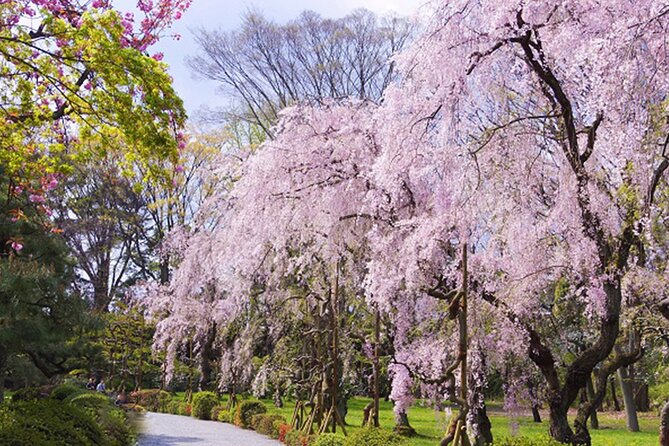
Tokugawa Ieyasu built Nijo Castle, and the site connects directly to the beginning of the Tokugawa shogunate. That era shaped Japan for about 260 years, making the castle an excellent place to frame the long samurai period.
The tour also addresses the tension between shogun and emperor. This is an important distinction for anyone who has encountered Japanese history as a blur of warriors, temples, and dynasties. The shogun held practical political power, while the emperor represented a different source of authority. Nijo Castle helps you see how those powers existed in relation to one another.
A guide can also explain why the castle is more than a defensive structure. Ceremonial routes, formal rooms, gates, and garden views all contributed to the message the shogun wanted to send. The architecture was part of the political language.
You should not expect a university seminar. The tour is short and designed for sightseeing, not specialist study. But it gives you a useful framework for the rest of your time in Kyoto. Afterward, temples, imperial sites, and samurai-related attractions can make more sense because you have a clearer picture of how authority worked.
Is $39.24 a fair price?
The listed cost is $39.24 per person. That is not the cheapest way to enter Nijo Castle, since you are paying for both admission and the guide’s time. The right question is how much explanation you want during the visit.
If you are comfortable reading signs, following a map, and researching the castle afterward, a self-guided visit may cost less. You would also control the pace and could spend longer in the gardens or return to a favorite view.
If you want someone to handle the route and explain the main story as you go, the price is easier to justify. The admission is already included, the group is limited to 10 people, and the tour is short enough to fit around other Kyoto plans. You are paying for structure and interpretation, not just entry.
The value is strongest for a first visit. You get a compact introduction and can then decide how much additional time you want to spend at the castle. It is also useful for people who do not want to do historical research before arriving.
The value is weaker if you prefer long, quiet visits. Ninety minutes may feel too brief if your main goal is garden photography or careful architectural study. In that case, admission alone and a self-paced schedule could suit you better.
The booking record also suggests steady demand, with the experience booked five or more times in the previous week. That does not guarantee a perfect departure, but it indicates that the combination of entry and guiding appeals to many people planning a Kyoto visit.
Who should book this experience?
I would recommend it most strongly to first-time visitors to Kyoto, anyone interested in samurai-era politics, and people who want a compact cultural activity between other sightseeing stops.
It suits you if you prefer a guide who can explain what you are seeing in plain terms. It is also a good fit if you worry about getting lost in a large historic site or dislike arriving without a clear plan.
Families and mixed-interest groups may also find the format useful. The gardens provide visual appeal, while the stories give the site meaning. A guide who uses humor and answers questions can keep the visit from feeling like a string of dates and names.
History specialists may want more time than this tour allows. Photographers may also find the fixed group pace limiting. If you already know the Tokugawa story well, the main benefit will be convenience and access rather than new academic detail.
The experience is not described as private, so you should expect to share the visit with other people. The maximum group size of 10 keeps it personal by standard tour terms, but it does not provide complete control over stops or timing.
Practical tips before you go
Wear shoes that are easy to remove and put back on. Since the palace interior requires you to take off your shoes, thick socks are especially helpful in winter.
Keep your mobile ticket accessible and meet at Nijojo-mae Station, near Nijo Castle. The activity ends at the meeting point, which makes it easier to plan a nearby lunch, another attraction, or a return to your accommodation.
Allow the full 90 minutes even though the visit is short. A guide needs time to gather the group, move through the site, explain the historical setting, and cover both the interior and grounds.
If you want the guide to focus on a particular subject, ask early. The tour is small enough that questions can shape parts of the experience, and the guide names associated with this activity are praised for responding to individual interests.
The cancellation terms are flexible if your plans are uncertain. You can receive a full refund when you cancel at least 24 hours before the start time. Cancellations or changes made less than 24 hours before the start are not accepted for a refund, and the cut-off uses Kyoto local time.
Final booking advice
Book this tour if you want Nijo Castle to make historical sense, not just look attractive in photographs. The included admission, clear meeting point, small group, and strong praise for guides such as Alex, Nao, Naoya, Noe, and Benjamin make it a sensible choice for a first visit.
Skip it if you prefer to wander alone, spend extra time in the gardens, or already know the Tokugawa period well. For most people, though, $39.24 buys a useful 90-minute introduction to one of Kyoto’s most important sites, with far more context than an unaccompanied walk.
FAQ
How long does the Nijo Castle tour last?
The tour lasts approximately one hour and 30 minutes.
Is admission to Nijo Castle included?
Yes. The admission fee to Nijo Castle is included in the tour price.
Where does the tour begin?
The meeting point is Nijojo-mae Station, near Nijo Castle, in Nakagyo Ward, Kyoto.
Where does the activity end?
The activity ends back at the meeting point.
How many people can join the tour?
The tour has a maximum group size of 10 people.
Is the tour available with a mobile ticket?
Yes. The experience includes a mobile ticket.
Do you need to remove your shoes inside the castle?
Yes. The palace interior requires you to remove your shoes. Thick socks are recommended during winter.
Can you cancel for a full refund?
Yes. You can cancel for a full refund at least 24 hours before the experience start time. Cancellations or changes made less than 24 hours before the start time are not accepted for a refund.
More History Tours in Japan
- Osaka: Castle History Walking Tour / Castle Tower Admission
★ 4.9 · 230 reviews - 2.5 Hour Private History and Culture Tour in Himeji Castle
★ 5.0 · 185 reviews - Himeji: Himeji Castle Guided Tour – UNESCO Heritage
★ 4.7 · 115 reviews - Kyoto: Nijo Castle World Heritage Guided Tour with Admission
★ 4.9 · 37 reviews
Just added around Japan
- Tokyo: Edo Castle and Imperial Palace Guided Walking Tour★ 5.0 · 6 reviews
- (Ticket Included) Explore Osaka Castle & Museum of History★ 4.8 · 21 reviews
- Peace Memorial Park, Hiroshima Castle, & Garden Private Tour★ 4.8 · 7 reviews
- Osaka: Explore Every Bit of Osaka Castle in 3 Hours★ 5.0 · 5 reviews
- Osaka/kyoto: Himeji Castle, Kobe. Luxury Day Trip with Guide★ 5.0 · 2 reviews
- Osaka: Early Morning Osaka Castle Guided Tour, Avoid Crowds★ 4.9 · 12 reviews
- Osaka: Osaka Castle 3 hours Historical Walking Tour★ 4.6 · 14 reviews
- Osaka: Osaka Castle – Tsuruhashi – Tennoji (Spanish Guide)★ 4.7 · 10 reviews
Japanese Castle Tours, compared.
Nijo-jo Castle and Ninomaru Palace Guided Tour
Read our review →
Nijo Castle, Kiyomizu & Fushimi Inari Guided Tour
Read our review →
Osaka Castle Walking Tour and Castle Tower Admission
Read our review →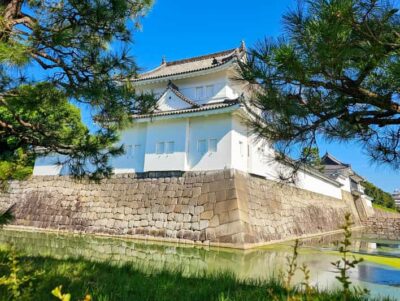
Imperial Palace & Nijo Castle Guided Walking Tour
Read our review →
Himeji Castle, Arima Onsen & Mt. Rokko Day Tour
Read our review →
5-Hour Osaka Bike Tour to the Neighborhood of Osaka Castle
Read our review →
Browse the lists this tour appears in