
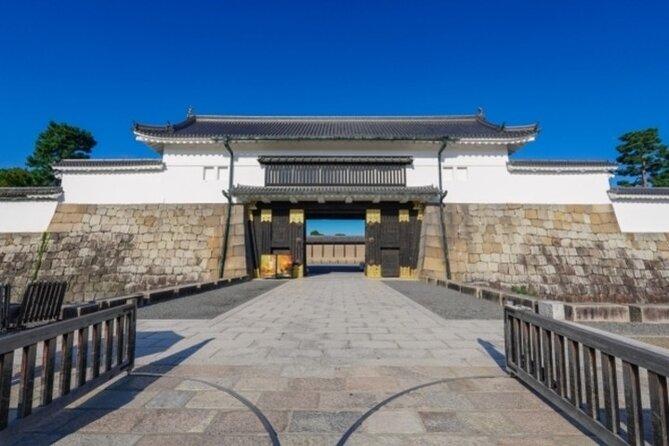
Review · JAPAN
Kyoto: Nijo Castle World Heritage Guided Tour with Admission
Power was performed here, not fought. That idea makes Kyoto’s Nijo Castle more than a pretty stop. This 90-minute tour explains how the Tokugawa shoguns used lavish rooms, towering gates, careful corridors, and even squeaky floorboards to control visitors and display authority. I especially like the small group, limited to 10 people, and the way the tour connects castle design to the rivalry between the shogun and the Emperor.
I also like that admission is included, so you can focus on the palace rather than sorting out tickets at the gate. The price is $40 per person, which is fair if you want the palace to make sense instead of simply walking through it and admiring the paintings. The main drawback is time: 90 minutes gives you a strong introduction, but not a leisurely look at every corner of the castle grounds.
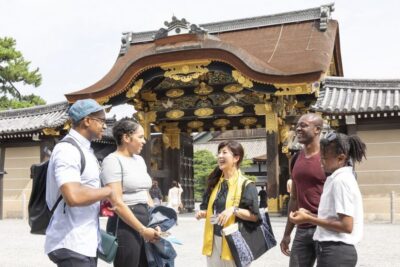
The tour begins outside Exit 1 of Nijōjō-mae Station, where a guide holds a Local Guide Stars sign. English-speaking guides including Nao, Naoya, Uta, Benjamin, and Alexander have earned praise for clear explanations, humor, patience, and useful Kyoto advice. If you are lucky enough to have a very small group, the experience can feel almost private.
Key points to know before booking
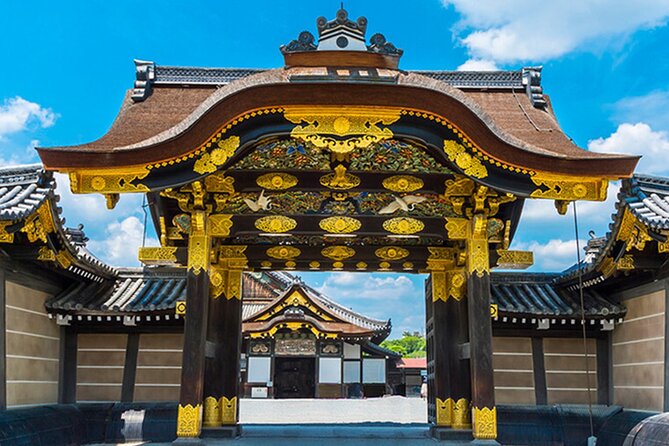
- The nightingale floors are the star attraction: Walk through Ninomaru Palace and hear floorboards chirp under your feet, a clever warning system designed to expose intruders.
- The castle tells a political story: You will learn why the Tokugawa shoguns built a grand palace near the Emperor’s residence in Kyoto.
- The final shogun’s surrender happened here: The tour points out the room where Tokugawa Yoshinobu returned authority to the Emperor in 1867.
- Small groups make questions easy: With no more than 10 people, you get more room to ask about architecture, customs, and Japanese history.
- The gardens provide a quieter counterpoint: Moats, ponds, and colorful koi carp make the grounds especially photogenic after the palace interiors.
- You must remove your shoes: The palace is entered without footwear, and most of the route is on mostly flat ground.
Why Nijo Castle is worth your Kyoto time
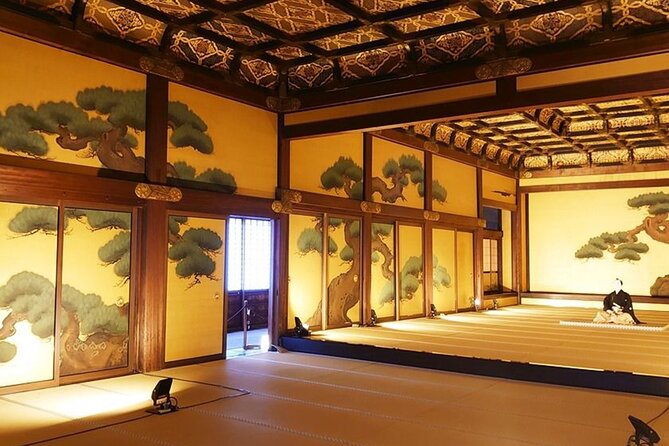
Kyoto has temples, shrines, imperial sites, and old streets at nearly every turn. Nijo Castle offers something different. It shows you how political authority looked and felt inside a formal palace.
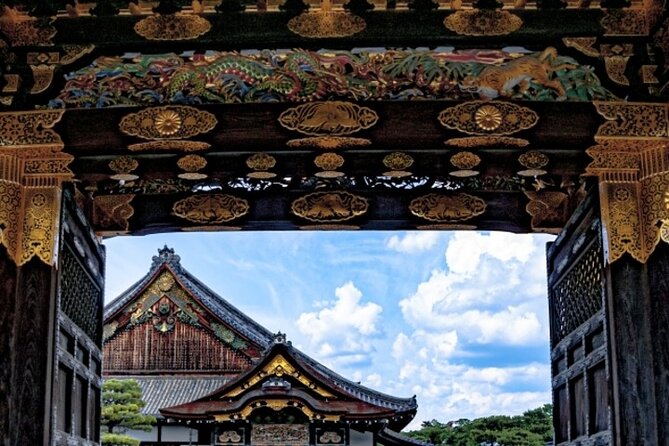
The Tokugawa shoguns ruled from Edo, now Tokyo, but Kyoto remained the Emperor’s city and the symbolic heart of Japan. Building a lavish residence beside the Emperor’s home was a bold statement. The shogun did not need to shout. The castle’s gates, walls, room arrangements, and decoration made the point for him.
That is the useful lens for this tour. You are not simply looking at old wood and painted screens. You are seeing a carefully planned setting where rank was built into the architecture. The size of a room, the height of a floor, and the amount of decoration helped show who mattered most.
I find this kind of explanation more useful than a list of dates. Once you understand the purpose behind the design, the castle becomes easier to read. A large gate feels less like an entrance and more like a warning. A long corridor feels less like a passage and more like a controlled approach to power.
More Guided Castle Tours in Japan
- Kyoto: Nijo-jo Castle and Ninomaru Palace Guided Tour
★ 4.7 · 1,020 reviews - Kyoto: Nijo Castle, Kiyomizu & Fushimi Inari Guided Tour
★ 4.7 · 700 reviews - Kyoto: Imperial Palace & Nijo Castle Guided Walking Tour
★ 4.7 · 453 reviews
Meeting at Nijōjō-mae Station
The starting point is straightforward. Meet outside Exit 1 of Nijōjō-mae Station, with the guide holding a Local Guide Stars sign. Since the tour returns to the same area, it fits neatly into a day of sightseeing in central Kyoto.
The station meeting point is also helpful if you are not familiar with the castle entrance. You do not need to guess where to go inside the grounds or worry about finding the correct guide among other visitors.
The group can include up to 10 people. That limit matters at a site where questions often improve the experience. You can ask why one room is larger than another, how the floorboards work, or what a particular gate meant without having to speak over a large crowd.
The guides receive repeated praise for their English and their manner. Nao is described as a strong storyteller who explains both the castle and wider Japanese history. Naoya is praised for answering questions, adjusting to different ages, and pointing out less obvious parts of the site. Uta has been noted for discussing local customs as well as the castle. Benjamin brings a friendly style and a good mix of facts and humor.
Those details matter because a historic building can feel quiet but confusing without help. A good guide gives you a thread to follow.
Entering a palace built to intimidate
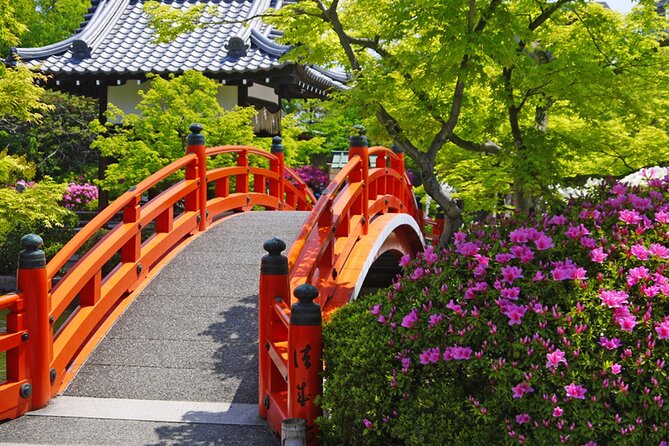
The first major part of the visit takes you into Nijo Castle’s formal spaces. These rooms were not designed as cozy family quarters. They were built for ceremony, rank, and control.
Pay attention to how the palace manages movement. You pass through gates and corridors in a sequence that gradually brings you closer to the most important rooms. The arrangement helped visitors understand their place before they ever met the shogun.
Inside Ninomaru Palace, room size and decoration reflected social position. The higher the rank, the more impressive the setting. This is a useful detail to watch for because the rooms may appear similar at first glance. The guide helps you notice differences that are easy to miss on your own.
The paintings and ornament are attractive, but the political message is just as important. The palace was meant to impress and unsettle. It showed that the shogun possessed wealth, order, and authority, even while ruling from far away.
You will also hear about the different floor heights. Small changes in level helped separate ranks and guide behavior. These are not dramatic features, but they reveal how much thought went into controlling a formal visit.
Hearing the famous nightingale floors
The nightingale floors are the most playful part of the palace, and they are also practical. As you walk, the boards produce a chirping sound. The design helped alert occupants if someone entered the palace without permission.
This is one of those features that makes the visit memorable because you experience it with your own feet. The sound turns security into a small performance. You are not just told that the palace protected the shogun. You hear the warning system in action.
The floors also fit the larger message of Nijo Castle. The palace was built for display, but it was never careless. Beauty, ceremony, and security worked together.
You should plan to remove your shoes before entering the palace. That is an important practical point, especially if you are wearing footwear that is slow to take off or uncomfortable to carry. The route is mostly flat, but the shoe removal is part of the palace visit and cannot be skipped.
More Japanese Castle Tours in Japan:
- Osaka Castle: Museum and Tower Entry Ticket
★ 4.5 · 2,380 reviews - Osaka Castle Walking Tour and Castle Tower Admission
★ 5.0 · 561 reviews - From Osaka: Himeji Castle, Arima Onsen & Mt. Rokko Day Tour
★ 4.6 · 339 reviews - 5-Hour Osaka Bike Tour to the Neighborhood of Osaka Castle
★ 5.0 · 319 reviews
The room where the shogunate ended
The strongest historical moment comes near the end of the political story. In 1867, Tokugawa Yoshinobu returned authority to the Emperor at Nijo Castle. That act ended more than 260 years of Tokugawa shogunate rule and helped bring about the Meiji Restoration.
Standing in the room connected with that decision gives the castle more weight. The building was not only a place where the shogun displayed power. It was also where that system gave way.
The tour’s focus on the shogun and Emperor rivalry helps you understand why this moment mattered. Kyoto was the imperial city, while the shoguns held practical control from Edo. Nijo Castle sat close to the Emperor’s residence, making its presence politically charged from the beginning.
I appreciate that the tour links architecture with this turning point. You see the palace first as a symbol of shogunal authority, then as the setting for the authority’s return. That gives the visit a clear beginning, middle, and end instead of leaving you with disconnected facts.
Gardens, moats, and koi carp
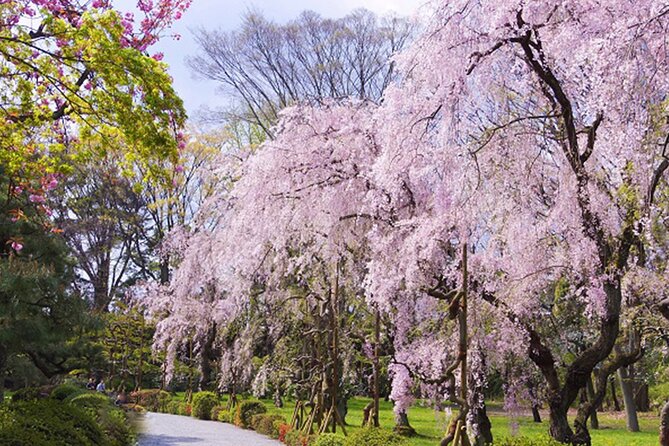
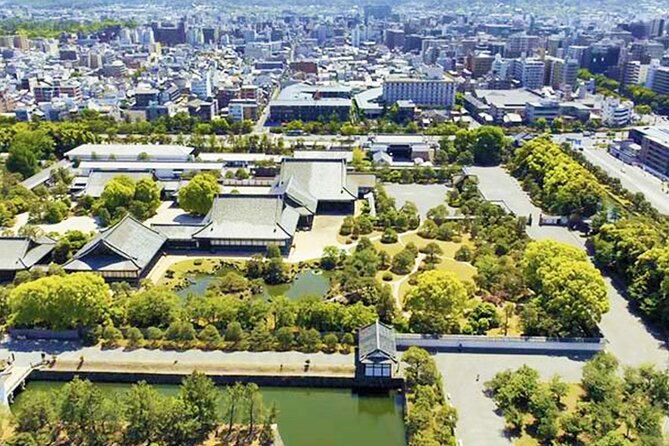
After the palace interiors, the grounds offer a change of pace. The gardens include moats and ponds where colorful koi carp swim through the water. These areas are especially good for photographs and give you a chance to slow down after the more concentrated palace walk.
The gardens are also useful for seeing how the castle balances force with beauty. Moats suggest defense and separation, while carefully arranged plantings and water features soften the setting. The castle never loses its sense of control, but the mood outside is less formal.
The guide-led portion lasts about 90 minutes, so you should not expect a long, unhurried garden study. If gardens are your main reason for visiting, you may want to allow additional time beyond the tour. The guided walk gives you context, then you can decide how long to linger.
That is one of the tour’s better features. You get a clear explanation of the key areas, but the visit does not trap you in a fixed, all-day schedule.
How the 90-minute format works
The stated duration is 90 minutes, with about an hour identified for the castle visit itself. In practical terms, this is a focused orientation rather than an exhaustive examination of every building and garden path.
That format suits you if you have a busy Kyoto schedule or want help with the main sights before exploring independently. It also works well for families and mixed-age groups. One family with children and older adults praised Naoya for matching the group’s pace, answering questions, and offering suggestions for the rest of their trip.
The short length has a tradeoff. You will hear the central story and see the important palace features, but you may not have time for every corner or a slow photographic session. The tour is best for structure and meaning, not for complete solitude.
A small group improves the time you do have. With 10 people or fewer, the guide can keep the walk moving while still stopping for questions. If fewer people book, the tour may feel close to a private visit. Several people had that experience, including one person who was the only participant.
Is $40 a good value?
At $40 per person, this is not the cheapest way to enter Nijo Castle. Admission is included, though, and the value depends on how much explanation you want.
If you already know the Tokugawa period, understand the palace layout, and prefer to read signs at your own pace, a self-guided visit may be enough. You would have more freedom to linger and may spend less.
If the shogun and Emperor rivalry is new to you, the guided price makes more sense. The guide explains why the palace was built where it was, how the rooms enforced rank, what the nightingale floors did, and why the 1867 event changed Japan. Those connections are difficult to gather from the building alone during a first visit.
The strongest value comes from the small group. Large tours can make a palace feel like a moving line. Here, you have a better chance to hear the guide, ask about details, and adjust the conversation to your interests.
The 4.9 rating from 37 reviews also fits the pattern of praise. The most common strengths are guide quality, clear English, personal attention, and storytelling. That is more useful than a high score by itself because it tells you what you are paying for.
Who will enjoy this castle tour most?
I would recommend it to first-time visitors who want Nijo Castle to make historical sense. It is especially useful if you enjoy learning why a building looks the way it does rather than simply collecting photographs.
Families should consider it too. The nightingale floors give children a feature they can hear and understand, while the guide can adapt the pace. The tour has also worked well for groups that include older adults, since the terrain is mostly flat.
It suits fans of Tokugawa history and anyone interested in the end of the shogunate. The 1867 handover is not a side note here. It is one of the main reasons this castle matters.
You may prefer to visit without a guide if your priority is a long, quiet garden walk, detailed photography, or total control over your timing. The 90-minute schedule gives you a strong framework, but it is not designed as a full day at the castle.
Practical tips for a smoother visit
Arrive at Exit 1 of Nijōjō-mae Station with enough time to find the sign and settle in. The guide should be holding a Local Guide Stars sign, which makes the meeting point easier to identify.
Wear shoes that are easy to remove. You must take them off before entering the palace, and you will want to avoid turning that simple step into a daily Kyoto wrestling match.
Keep your questions ready. Ask about the room hierarchy, the shogun’s relationship with the Emperor, or the nightingale floors. The small group format is most valuable when you use it.
Give yourself extra time if you want to enjoy the koi, moats, and gardens at a relaxed pace. The guided visit covers the main story, while the grounds reward a little additional wandering.
The tour is offered in English and is wheelchair accessible. Most of the route is flat, though palace entry still requires shoe removal.
Should you book Nijo Castle World Heritage Guided Tour?
Book it if you want a compact, personal introduction to one of Kyoto’s most important political sites. The best reasons are the small group, included admission, strong English-speaking guides, and the clear connection between the palace design and the end of the shogunate.
I would be especially happy to choose it for a first visit, a family outing, or a day when you want history explained without committing to a long tour. Nao, Naoya, Uta, and Benjamin have all been praised for warmth, clarity, and useful conversation, so the guide can make a real difference.
Skip it if you want to explore entirely alone or spend most of your time in the gardens. For everyone else, $40 buys more than entry. It gives you the story that turns Nijo Castle from an impressive building into a place where power was displayed, guarded, and finally surrendered.
FAQ
Where does the Nijo Castle tour meet?
Meet outside Exit 1 of Nijōjō-mae Station. The guide will be holding a sign that says Local Guide Stars.
How long does the tour last?
The guided experience lasts 90 minutes. The castle visit itself is listed as about one hour within the itinerary.
Is admission to Nijo Castle included?
Yes. The price includes admission to Nijo Castle and the guided tour.
What language is the tour offered in?
The tour is offered in English with a live guide.
How large is the group?
The group is limited to 10 participants. If fewer people book, the experience can feel much more personal.
Do visitors need to remove their shoes?
Yes. All visitors must remove their shoes when entering the palace.
Is the tour suitable for wheelchair users?
Yes. The activity is listed as wheelchair accessible, and the terrain is mostly flat.
More History Tours in Japan
- Osaka: Castle History Walking Tour / Castle Tower Admission
★ 4.9 · 230 reviews - 2.5 Hour Private History and Culture Tour in Himeji Castle
★ 5.0 · 185 reviews - Kyoto: Nijo Castle World Heritage Guided Tour with Admission
★ 5.0 · 128 reviews - Himeji: Himeji Castle Guided Tour – UNESCO Heritage
★ 4.7 · 115 reviews
Just added around Japan
- Tokyo: Edo Castle and Imperial Palace Guided Walking Tour★ 5.0 · 6 reviews
- (Ticket Included) Explore Osaka Castle & Museum of History★ 4.8 · 21 reviews
- Peace Memorial Park, Hiroshima Castle, & Garden Private Tour★ 4.8 · 7 reviews
- Osaka: Explore Every Bit of Osaka Castle in 3 Hours★ 5.0 · 5 reviews
- Osaka/kyoto: Himeji Castle, Kobe. Luxury Day Trip with Guide★ 5.0 · 2 reviews
- Osaka: Early Morning Osaka Castle Guided Tour, Avoid Crowds★ 4.9 · 12 reviews
- Osaka: Osaka Castle 3 hours Historical Walking Tour★ 4.6 · 14 reviews
- Osaka: Osaka Castle – Tsuruhashi – Tennoji (Spanish Guide)★ 4.7 · 10 reviews
Japanese Castle Tours, compared.
Nijo-jo Castle and Ninomaru Palace Guided Tour
Read our review →
Nijo Castle, Kiyomizu & Fushimi Inari Guided Tour
Read our review →
Osaka Castle Walking Tour and Castle Tower Admission
Read our review →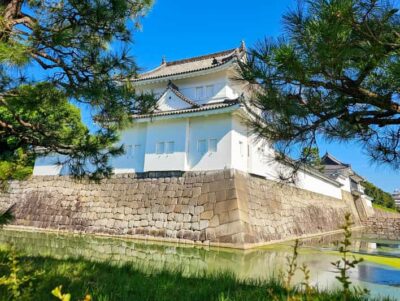
Imperial Palace & Nijo Castle Guided Walking Tour
Read our review →
Himeji Castle, Arima Onsen & Mt. Rokko Day Tour
Read our review →
5-Hour Osaka Bike Tour to the Neighborhood of Osaka Castle
Read our review →
Browse the lists this tour appears in