

Review · OSAKA
Osaka: Castle History Walking Tour / Castle Tower Admission
History gets practical here. This 90-minute Osaka Castle tour shows you how moats, gates, stone walls, and sharp turns worked together to stop an army. I like the focus on military design, and I like that your castle admission and separate entrance are included. The main drawback is that the castle interior is not guided floor by floor, so you will need to explore the museum displays on your own.
This is a good choice if you want more than a quick photo of the famous golden tower. Guides such as Mao, Spike, Kaz, Yuta, Saya, and Ken have been praised for clear English, warmth, and answers to detailed questions. I would aim for the 9 AM departure, since one visitor found the castle and elevator lines much longer by late morning.
Key points to know before booking
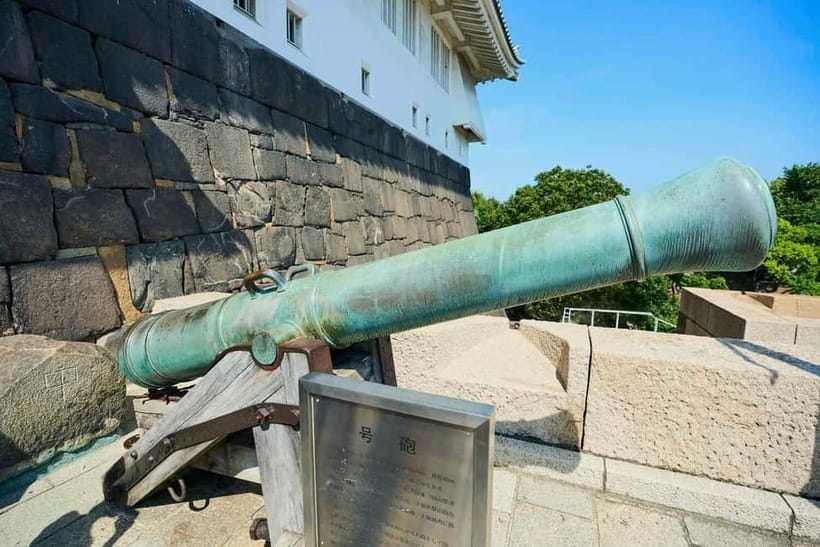
- See the castle as a fortress first: The tour explains how moats, gates, walls, and zigzag paths slowed attackers.
- Reach the tower without the usual ticket queue: Admission is included, with access through a separate entrance.
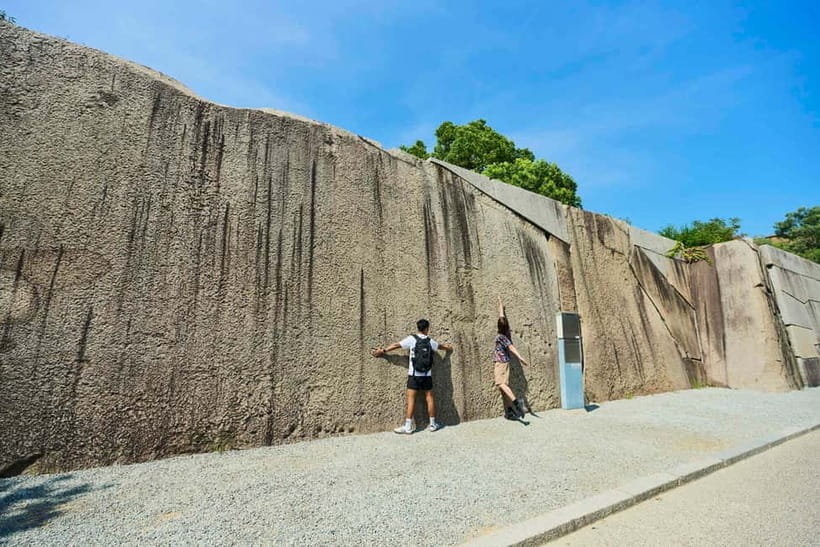
- Learn the story behind the biggest stone: You will hear how enormous stones were moved in the 16th century.
- Finish with Osaka views: The castle tower’s upper levels give you a useful look across the city.
- Visit Hokoku Shrine: This adds context about Toyotomi Hideyoshi and the legacy tied to Osaka Castle.
- Bring proper shoes: You will walk through outdoor historical areas, and the route is more interesting when you can stop, look, and listen.
Why Osaka Castle makes a better guided visit
Osaka Castle is easy to recognize and surprisingly easy to misunderstand. The bright tower is the main attraction in most photographs, but the real story is spread across the broad grounds, stone walls, moats, gates, and carefully planned approaches.
I like this tour because it starts with the parts many people rush past. Instead of treating the castle as a single building, your guide explains it as a military machine. That changes how you read the site. A wall is no longer just an impressive wall. A gate is not simply an entrance. Each feature had a job.
The focus is especially useful if you enjoy military history, architecture, or strategy. You will learn how defenders used water, height, distance, narrow passages, and confusing turns to break up an attacking force. The route also connects the castle to the struggle between Toyotomi Hideyoshi’s heirs and Tokugawa Ieyasu, which led to the sieges of 1614 and 1615.
That historical frame gives the visit some weight. Osaka Castle is often presented as a symbol of Osaka, but its story also involves ambition, succession, betrayal, siege warfare, and the final defeat of the Toyotomi side.
More Castle Walking Tours in Japan
- Ultimate Osaka Walking Tour: Castle, Dotonbori & Hidden Gems
★ 5.0 · 862 reviews - Osaka Castle Walking Tour and Castle Tower Admission
★ 5.0 · 561 reviews - Osaka Highlights: 4-Hour Walking Tour with Castle
★ 5.0 · 152 reviews
Meeting at Lawson S Otemae Rest House Store
The meeting point is in front of Lawson S Otemae Rest House Store. This detail matters because there are several Lawson convenience stores in the area. Use the supplied Google Maps location rather than searching only for the Lawson name, and look for the Local Guide Stars sign.
I would arrive early. A missed meeting point could be frustrating in a large park, especially if you are not familiar with the castle grounds. The guide then leads you toward the main historical areas, giving you background before the tower visit.
English is the tour language. The guide team includes people such as Mao, Spike, Kaz, Yuta, Saya, Ken, Yu, Ami, and others. The strongest praise centers on friendly communication, clear explanations, patience, and the ability to answer questions. One guide even adjusted the pace for a family member with an injury, while another waited for a group delayed by public transportation.
That suggests a human, flexible style rather than a rigid speech delivered at every stop. Still, the exact guide depends on the date and availability, so book this for the subject and format, not for one particular person.
Reading the outer moats and defensive layers
The opening part of the walk explains the castle’s outer defenses. You will see the moats and learn how they created distance between the attackers and the walls. The design was not meant to stop every enemy forever. Its purpose was to delay an army, force it into exposed positions, and give defenders time to respond.
The castle’s multiple defensive layers are the most useful part of the tour for anyone who might otherwise see only large stones and water. Your guide points out the triple moats, layered gates, and routes that forced attackers to keep changing direction.
The entrances called masugata are especially interesting. These squared-off gate areas created enclosed spaces where an invading force could become trapped or divided. Attackers could not simply rush through in a straight line. They had to turn, slow down, and expose themselves to defenders above.
I like the way this turns a pleasant walk into a lesson in planning. You may notice that many paths feel indirect. That was the point. A straight road helps an army. A broken route helps the people defending the castle.
The walking is manageable for most people who are comfortable on foot, but you should wear shoes that can handle a historical site. The tour involves outdoor paths, stops, and movement between the grounds and tower. Weather-appropriate clothing is also important because much of the explanation takes place outside.
The giant stone and the craft behind the walls
One of the most memorable stops is the castle’s largest stone. The guide explains how builders moved huge blocks in the 16th century, when there were no modern cranes or trucks to do the work.
The point is not only the stone’s size. It shows the scale of labor, organization, and technical skill involved in building a fortress of this kind. You also learn to look for marks left by the master craftsmen who worked on the walls.
These marks are easy to miss without help. They connect the stonework to the people and teams who shaped it. I appreciate this kind of detail because it takes the story away from famous leaders and puts some attention on the builders.
The walls themselves receive careful treatment. Your guide explains how the angles and arrangement of the stones made them difficult to climb. The construction was not only strong. It was designed to give an attacker very little useful grip.
You will also see turrets and other defensive features. Several people have singled out the stone walls and turrets as particularly interesting, which makes sense. They are the physical remains that best show how the castle worked before you enter the modern tower.
More Castle Walking Tours in Osaka
- Osaka: Half-day Ultimate Highlights Guided Walking Tour
★ 5.0 · 59 reviews - Osaka: Osaka Castle 3 hours Historical Walking Tour
★ 4.6 · 14 reviews - 1-Day walking tour in Osaka:Castle, temples and Ukiyoe
★ 5.0 · 4 reviews
Hokoku Shrine and the Toyotomi connection
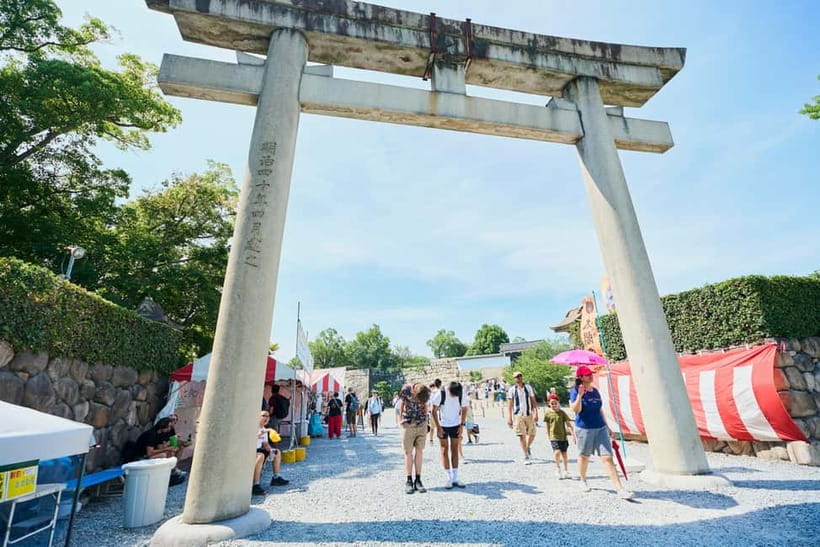
The itinerary includes about 20 minutes at Hokoku Shrine. This stop adds a cultural and historical layer to the castle visit, especially because the shrine is connected with Toyotomi Hideyoshi.
The guide uses the shrine to explain the people and political forces behind Osaka Castle. That helps you understand why the castle mattered beyond its military role. It was also a statement of power and a center of Toyotomi identity.
The stop may be especially appealing if you want some local culture alongside architecture. One visitor happened to see a traditional Japanese wedding ceremony at the shrine, though that is not something you should expect on every visit. The important point is that the shrine can feel less like a spare historical marker and more like an active cultural place.
Your guide may also explain elements of Japanese culture beyond the castle itself. Several people valued these broader connections, particularly when the guide linked the site to Osaka and Japanese history rather than treating the building as an isolated attraction.
Entering the tower and looking across Osaka
The tour includes admission to Osaka Castle Tower. The separate entrance is one of the clearest practical benefits. At busy times, avoiding the regular ticket line can save time and reduce the uncertainty of arriving at the most popular part of the visit.
One visitor who took a 9 AM tour reported that the line was much longer around 11 AM, including a wait connected with the elevator. That makes an early start a sensible choice if your schedule allows it. It also lets you reach the tower before the grounds become more crowded.
The tower is both a museum and a viewing point. This experience takes you through the castle visit with the guide and then allows time for you to look around on your own. The upper-level city view is the reward at the end of the route. From above, the large grounds and surrounding city help you understand the castle’s commanding position.
Look for the features tied to defense: arrow slits and gun ports. They show that the tower was intended as a command post and a last place of resistance, not simply a residence or decorative landmark.
Gold also played a role in the castle’s appearance. Your guide explains how gold was used as psychological warfare, helping project wealth, authority, and power. That contrast is one of the most appealing parts of the visit: the castle combines practical defense with deliberate visual theater.
The museum floors are not guided one by one. You receive the larger story and a guided route through the site, but you should plan to read the tower displays independently if you want every detail. That is not a serious flaw, though it does mean the experience is best for people who want a guided introduction rather than a full museum tour.
How the invincible castle fell
The tour’s most important historical turn comes near the end. Osaka Castle was designed to be extremely difficult to attack, but strong walls do not settle a political conflict by themselves.
Your guide explains how the castle fell during the campaigns of 1614 and 1615. The conflict grew from the rivalry between the Toyotomi legacy and Tokugawa Ieyasu’s drive to secure control of Japan. The fortress had impressive defenses, but leadership, political pressure, military planning, and changing conditions mattered just as much.
This is where the tour moves beyond construction facts. You are not only learning how a gate worked. You are learning why a fortress that seemed nearly impossible to defeat could still lose.
I found this historical framing especially valuable because it prevents the castle from becoming a simple story of Japanese engineering. The walls were formidable, but castles exist within human conflicts. Strategy outside the walls can matter as much as stonework inside them.
Timing, pace, and what the 90 minutes means
The experience is advertised as 90 minutes, with a guided castle portion, a Hokoku Shrine stop, and time connected with the tower visit. The detailed route also lists separate time blocks of 75 minutes at Osaka Castle, 20 minutes at Hokoku Shrine, and 25 minutes at the castle for photos and self-guided exploration.
Because those listed segments add up to more than 90 minutes, I would confirm the exact schedule shown for your chosen departure. The practical takeaway is that the experience includes a guided walk plus some time to explore independently, but the pace and order may vary.
The route is not designed as a long, exhausting day at the castle. It gives you a focused introduction, several outdoor stops, admission to the tower, and a chance to continue on your own afterward.
That format worked well for families in the feedback, including one group whose 3-year-old remained engaged. Teenagers also enjoyed the stops when the guide kept the information connected to the actual walls, paths, and tower. The experience can suit older visitors too, but tell the guide if someone needs a slower pace.
Is $33 a fair price?
At $33 per person, I see reasonable value if you want context and a smoother arrival at the tower. Your payment covers the castle admission and a professional English-speaking guide. The separate entrance may also save time during busy periods.
Going alone costs less in terms of guided-tour fees, but you would need to interpret the defenses yourself. You might see the giant stone, walls, gates, and tower without realizing how they fit together. The guide’s main value is not merely getting you from one point to another. It is helping you notice what matters.
The price is less compelling if you only want photographs or prefer to spend several hours reading every museum display at your own speed. Since the individual floors are not guided, museum-focused visitors may want extra independent time after the tour.
I would book it for a first visit to Osaka Castle, especially if your interests include architecture, warfare, Japanese politics, or cultural history. It is also useful for solo visitors and small groups who want someone to answer questions along the way.
Free cancellation is available up to 24 hours before the activity, and you can reserve now and pay later. Those options help if your Osaka schedule is still shifting.
Who should book the Osaka Castle history walk?
I recommend this tour if you want to understand the castle rather than simply photograph it. It is a good fit for history buffs, families, first-time visitors, and anyone who likes practical explanations tied to what is directly in front of you.
Choose it if you want:
- A clear explanation of moats, gates, walls, and fortress design
- A guide who can point out details you might miss alone
- Included tower admission and a separate entrance
- A city view from the top
- Historical context about Toyotomi Hideyoshi and Tokugawa Ieyasu
- A moderate walking route with time for questions and photos
You may want to skip it if you prefer complete independence, dislike guided pacing, or plan to spend most of your time inside the museum. You will still need to explore the castle displays yourself after the guided portion.
Should you book this Osaka Castle tour?
I would book this experience if Osaka Castle is on your must-see list and you want the stones, gates, and moats to make sense. The strongest feature is the guide’s ability to turn defensive architecture into a story you can follow, with the tower view providing a satisfying finish.
Choose an early departure if possible, wear comfortable shoes, and use the exact Lawson meeting-point map. At $33, the combination of admission, skip-the-line access, English guidance, and military history makes this a solid value for a focused first visit.
FAQ
How long is the Osaka Castle walking tour?
The activity is advertised as lasting 90 minutes. The route details list guided time at Osaka Castle, a visit to Hokoku Shrine, and additional time at the castle for photos and self-guided exploration, so confirm the exact timing for your chosen departure.
Is Osaka Castle Tower admission included?
Yes. Admission to Osaka Castle Tower is included in the price.
Does the guide explain every floor of the castle museum?
No. The guided experience does not include a guided tour of each museum floor. You can explore the displays independently.
Is the tour conducted in English?
Yes. The tour has a live English-speaking guide.
Where does the tour meet?
Meet in front of Lawson S Otemae Rest House Store. Several Lawson stores are nearby, so check the provided Google Maps location and look for the Local Guide Stars sign.
What should I bring?
Wear comfortable shoes and clothing suitable for the weather. The experience includes walking through outdoor historical areas.
More History Tours in Osaka
- Osaka: Osaka Castle & Historical Museum Guided Tour
★ 4.8 · 28 reviews - (Ticket Included) Explore Osaka Castle & Museum of History
★ 4.8 · 21 reviews - Edinburgh: Edinburgh Castle Guided History Tour with Tickets
★ 4.8 · 9,933 reviews - Charleston historical walking tour with a Professor of History at The Citadel
★ 5.0 · 1,284 reviews
Just added around Osaka
- (Ticket Included) Explore Osaka Castle & Museum of History★ 4.8 · 21 reviews
- Osaka: Explore Every Bit of Osaka Castle in 3 Hours★ 5.0 · 5 reviews
- Osaka: Early Morning Osaka Castle Guided Tour, Avoid Crowds★ 4.9 · 12 reviews
- Osaka: Osaka Castle 3 hours Historical Walking Tour★ 4.6 · 14 reviews
- Osaka: Osaka Castle – Tsuruhashi – Tennoji (Spanish Guide)★ 4.7 · 10 reviews
- Samurai Armor & Sword experience with phot near Osaka Castle★ 4.6 · 16 reviews
- Osaka: Castle, Tea Ceremony, Calligraphy, and Samurai Armor!★ 5.0 · 4 reviews
- Osaka: 1-Day Guided Tour – Sky Bldg, Castle, Namba Shinsekai★ 5.0 · 6 reviews
Castle Walking Tours, compared.

Edinburgh Castle: Guided Walking Tour with Entry Ticket
Read our review →
3-Hour Walking Tour of Old Town & Prague Castle
Read our review →Edinburgh Castle: Guided Walking Tour with Entry Ticket
Read our review →
Edinburgh Castle Guided Walking Tour in English
Read our review →

Prague 3-hour Afternoon Walking Tour including Prague Castle
Read our review →
Royal Mile and Edinburgh Castle – Small Group Walking Tour
Read our review →Browse the lists this tour appears in