
Review · JAPAN
Japanesel Archery Experience HIROSHIMA CASTLE SHARAKU
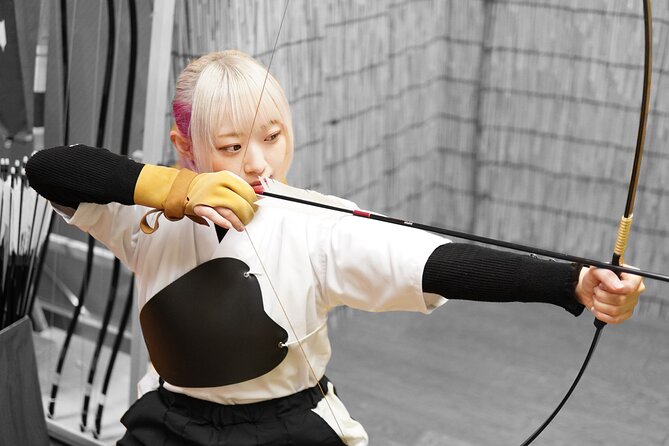
Try a Japanese bow the traditional way. This one-hour kyudo session near Hiroshima Castle gives you far more than a quick photo in costume. You learn the formal steps, dress in dogi and hakama, and shoot real arrows under close instruction. I especially like the small group size and the chance to take part even if you have never held a bow before. The main consideration is that the instructions can feel demanding at first, and communication may rely partly on a translation app.
I also like that this is a focused cultural activity rather than a long sightseeing program. You get a short explanation of kyudo, a demonstration, guided practice, and possibly a friendly competition if your group picks up the technique quickly. The bow is not handled like a Western bow, so you should expect a learning curve, a sore arm or hand if you are new to archery, and a few arrows that do surprising things.
Key points before you book
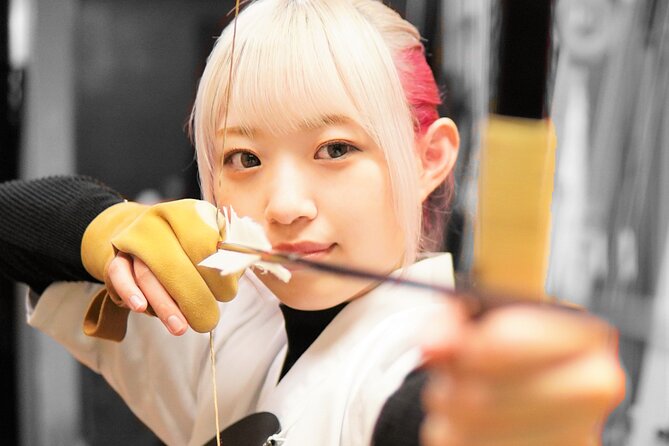
- Traditional clothing is part of the lesson: You wear dogi and hakama, making the activity feel like a real introduction to kyudo rather than a casual shooting game.
- Beginners can shoot: Normal kyudo training requires strong basics before drawing the arrow, but this session is designed to let first-time participants try it safely under instruction.
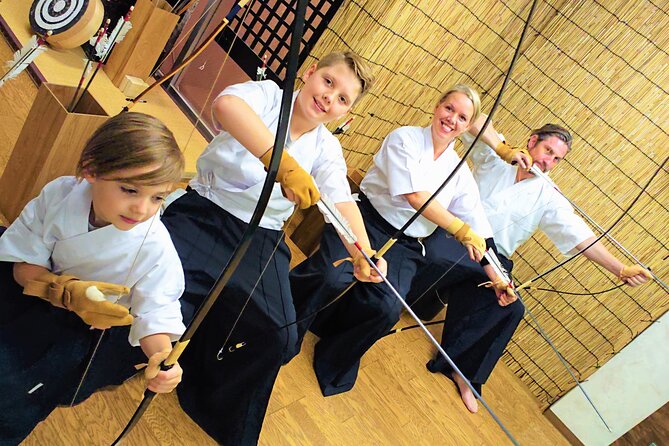
- Groups are limited to four people: That small maximum allows for close coaching and makes the activity suitable for families or a small group of friends.
- The target is not as simple as it looks: The curved Japanese bow and formal shooting method mean your first arrows may travel in unexpected directions.
- You may shoot many arrows: A practice round can be followed by several competition rounds, depending on how quickly your group learns.
- The meeting point is beside Hiroshima Castle: The activity begins and ends at Hiroshima Castle Sannomaru Ruins, making it easy to fit around castle sightseeing.
What kyudo feels like at Hiroshima Castle
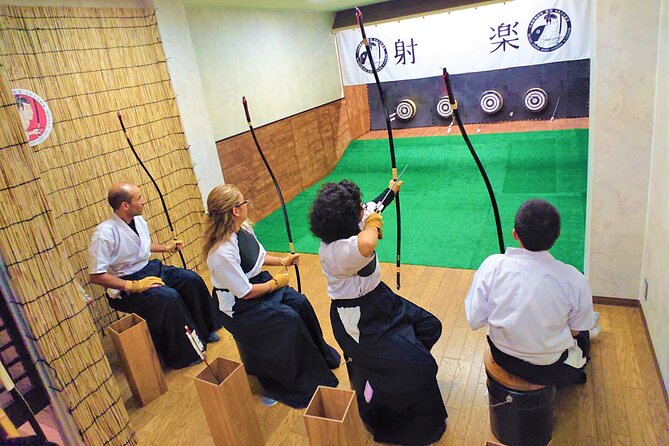
Kyudo is Japanese archery built around concentration, posture, and a set sequence of movements. The aim is not simply to fire an arrow at a target. Each step shows care for the bow, arrow, range, and other people taking part.
That difference becomes clear almost at once. Western archery often focuses on stance, aim, draw, and release. Kyudo adds a formal routine before and after the shot. You learn how to hold the equipment, how to prepare the arrow, and how to move through each stage with control.
I like this because it gives the hour a clear purpose. You are not just trying to hit the target as quickly as possible. You are learning why the process matters, then finding out how hard it is to repeat that process under pressure.
The setting also helps. The meeting point is at the Hiroshima Castle Sannomaru Ruins, 21-7-2 Motomachi, in Naka Ward. You meet there, take part in the session, and finish back at the same point. It is near public transportation and close to major Hiroshima sights, so you can pair it with a visit to the castle area.
A few more castle visits around Japan worth a look
- Osaka Castle: Museum and Tower Entry Ticket
★ 4.5 · 2,380 reviews - Tokyo Castle & Imperial PalaceーShogun Walking Tour
★ 4.7 · 1,068 reviews - Kyoto: Nijo-jo Castle and Ninomaru Palace Guided Tour
★ 4.7 · 1,020 reviews
Getting dressed in dogi and hakama
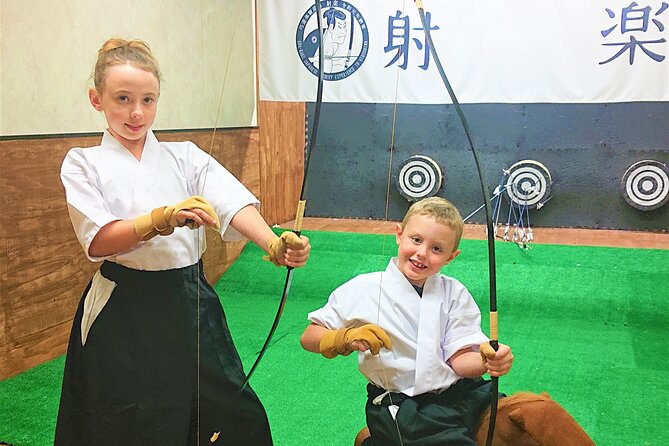
The costume is one of the strongest parts of the experience. You are given an authentic kyudo uniform, including dogi, the upper garment, and hakama, the pleated lower garment.
This is not just a dressing-up photo opportunity. The clothing changes how you move. You become more aware of your posture and the formal rhythm of the lesson. It also makes the photographs and videos feel more connected to the activity itself.
I would wear the uniform if it is offered. Several people who enjoyed the session most singled out the traditional clothing as a highlight, and it helps separate this activity from an ordinary tourist archery lesson.
You should also remember that the equipment is authentic and expensive. Children need close supervision, and you should follow instructions carefully when handling the bow and arrows. One less positive experience came from an instructor being anxious about participants touching the equipment. That concern is understandable, but it means you should wait for clear permission before picking anything up.
The opening lesson and demonstration
The instructor begins with an explanation of kyudo and a demonstration of the basic movements. You learn that the sport depends on more than strength. The order of the steps, the position of your body, and the way you release the arrow all affect the result.
The staff use English when they can, and a translation app may help with longer or more exact explanations. Language does not appear to prevent the basic lesson from working, since the instructor can demonstrate each movement and correct your form directly. Still, the amount of spoken English may vary.
You should pay close attention during this opening section. The arrow is not prepared and released in the same way as a Western archery arrow. The process can seem complicated during the first few attempts, especially when you are also trying to remember your stance and hand position.
A useful point to understand early is that the bow curves differently from the bows many people know. One participant wished this had been explained more clearly. If your first arrow bends or travels away from where you expect, do not assume you have failed. Ask how the bow’s shape affects the line of the shot.
Your first arrows and the learning curve
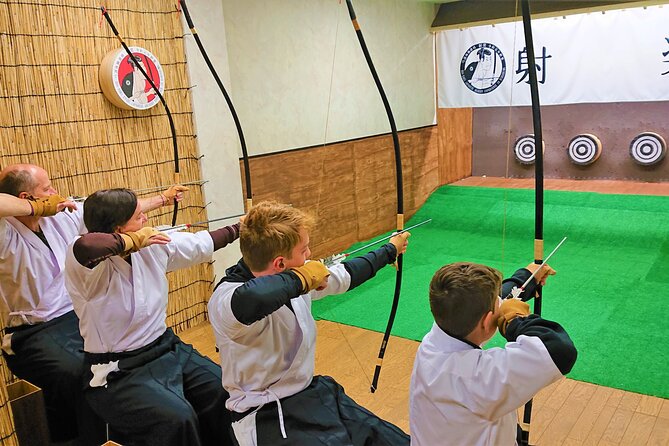
After the demonstration, you get to try the process yourself. The instructor and assistants guide you through the preparation, draw, and release. The exact number of arrows depends on how quickly your group learns, but the session can include a practice round of eight shots.
The first few attempts may feel slow. That is normal. You are managing the costume, the formal sequence, an unfamiliar bow, and the pressure of releasing an arrow toward a target. Your first goal should be to follow the movements correctly, not to score.
The bow can also surprise you. The arrow may curve, and aiming slightly to one side may produce a straighter result. This is part of the challenge. The equipment and technique are different enough from Western archery that previous experience does not always give you an advantage.
That said, an experienced archer may enjoy the session for exactly this reason. You have to set aside familiar habits and learn a new method. Beginners may have an easier time because they are not trying to correct old form at the same time.
The instructors are generally described as patient and encouraging. Some sessions include two instructors for four people, allowing plenty of individual correction. Communication may be less smooth if the staff speak limited English, but demonstrations, gestures, and translation tools can fill much of the gap.
Same region, a different set of walls:
- Ultimate Osaka Walking Tour: Castle, Dotonbori & Hidden Gems
★ 5.0 · 862 reviews - Tokyo Castle & Imperial PalaceーShogun Walking Tour
★ 5.0 · 724 reviews - Kyoto: Nijo Castle, Kiyomizu & Fushimi Inari Guided Tour
★ 4.7 · 700 reviews - Osaka Castle Walking Tour and Castle Tower Admission
★ 5.0 · 561 reviews
Practice rounds, scoring, and the friendly contest
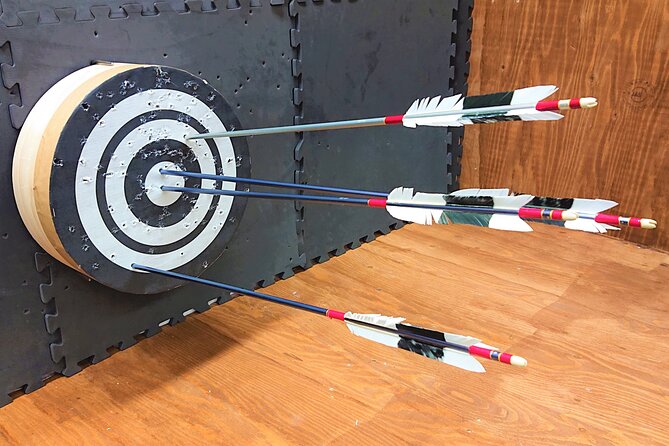
Once everyone understands the basic routine, the session may shift from practice to a small competition. A common format is eight arrows per round, split into two groups of four. If your group learns quickly, you may have time for several competition rounds and shoot more than 40 arrows during the hour.
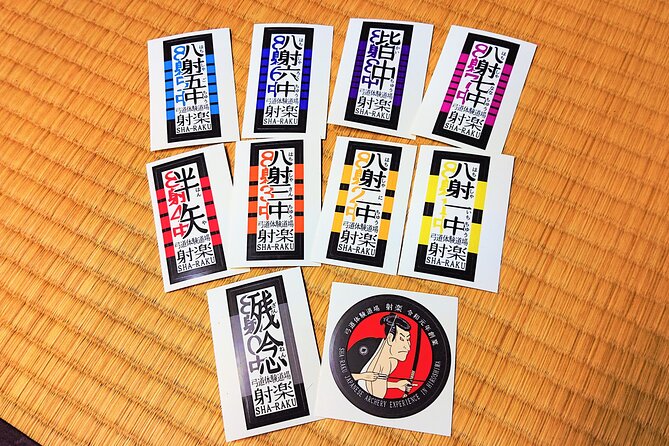
This part gives the lesson energy. You still need to follow the proper form, but now you have a simple reason to focus on the target. A scorecard may be given for a strong result, and one special reward is offered for hitting all eight arrows in a round.
Do not book this expecting a guaranteed competition or a fixed number of arrows. The pace depends on the group. If people need more help with the basics, the instructors may spend more time on practice. That is the right choice, especially for children and complete beginners.
The contest works well for families and friends because it creates a little rivalry without turning the lesson into a serious athletic event. One family group included children aged 11 and 13 and found the activity a good fit. Another family appreciated the way the staff kept younger children engaged while the adults practiced.
What makes the one-hour format useful
At about one hour, this is short enough to fit into a busy Hiroshima day. You can visit the castle area before or after without giving up half a day of sightseeing.
The short duration also keeps the lesson focused. You learn the key movements, shoot enough arrows to feel improvement, and finish before the physical effort becomes too much. If you have never used this type of bow, your hand or arm may feel sore afterward.
The limitation is that one hour cannot teach you the full discipline of kyudo. You get an introduction, not a long course or formal qualification. Still, the session gives you a real sense of the sport’s precision and patience. You leave understanding why experienced practitioners treat each movement as part of the art.
Price and value at $43.11
At $43.11 per person, the price is reasonable if you value active cultural experiences. You are paying for instruction, the use of traditional equipment, the uniform, and a small-group format rather than simply paying for access to a target.
The value improves if you take advantage of the full session. Listen to the explanations, wear the costume, ask about the bow, and use the practice time to correct your form. The activity becomes less worthwhile if you only want a quick photograph and are not interested in learning the sequence.
The maximum of four people matters here. A large group could make a traditional lesson feel rushed or impersonal. With up to four participants, the instructor can watch each person closely and offer corrections. Some sessions may have assistants as well, which gives you more help during the shooting practice.
The price is also easy to justify for families who want something beyond standard sightseeing. It offers a shared challenge, and the scoring gives children a clear goal. Just remember that the archery itself is the main event. The costume adds to it, but this is not only a photo session.
Location, timing, and practical planning
The meeting point is the Japanese Archery Experience HIROSHIMA CASTLE SHARAKU at the Hiroshima Castle Sannomaru Ruins. The activity ends where it begins.
Allow extra time to find the exact meeting point. One person found the directions less clear than expected, and parking near the castle can be difficult. Public transportation is nearby, so driving is not the easiest choice. Arriving early is sensible, especially if you are visiting Hiroshima on a tight schedule.
The mobile ticket is useful because you can keep the booking on your phone. Confirmation is provided at booking. The activity has been booked more than 10 times in a recent week, and its 4.9 rating from 387 ratings, with 98 percent recommending it, suggests that spaces may be worth arranging ahead during busy periods.
Free cancellation is available if you cancel at least 24 hours before the local start time. Changes or cancellations inside that window are not accepted for a refund.
Who should book this experience?
I would recommend this to you if you want an activity that is distinctly Japanese, hands-on, and easy to fit into a sightseeing day. It works especially well for couples, families, and small groups who enjoy trying something unfamiliar together.
It is also a good choice for archers who want to compare Japanese technique with the method they already know. The unfamiliar bow and formal routine create a genuine challenge.
You should think twice if you have an arm, hand, or shoulder injury or disability, since the activity is not recommended in those cases. You should also be comfortable following careful instructions around traditional equipment. The lesson is beginner-friendly, but it is not a casual free-for-all.
Final verdict: book it for a memorable Hiroshima hour
I would book this experience if you want to add one active, cultural hour to a Hiroshima itinerary. The best parts are the small group, the traditional dogi and hakama, the careful instruction, and the chance to shoot enough arrows to see your form improve.
Go in expecting a learning process, not instant accuracy. The bow may send arrows in odd directions, the steps may feel complicated, and the language support may vary. If you stay patient and follow the routine, you get a personal introduction to kyudo, a few good photographs, and a friendly contest that can become one of the most memorable parts of your time near Hiroshima Castle.
FAQ
How long does the Japanese archery experience last?
The experience lasts approximately one hour.
How much does the experience cost?
The listed price is $43.11 per person.
Where does the activity begin and end?
It begins at Japanese Archery Experience HIROSHIMA CASTLE SHARAKU, at Hiroshima Castle Sannomaru Ruins, 21-7-2 Motomachi, Naka Ward, Hiroshima, 730-0011, Japan. It ends back at the meeting point.
Can complete beginners take part?
Yes. The lesson is designed to let complete beginners try shooting arrows while learning the basic kyudo movements.
What clothing is provided?
You wear an authentic kyudo uniform that includes dogi for the upper body and hakama for the lower body.
How many people can join one session?
The activity has a maximum of four participants.
Is cancellation free?
You can cancel for a full refund up to 24 hours before the experience start time. Cancellations or changes made less than 24 hours before the start time are not accepted for a refund.
Just added around Japan
- Tokyo: Edo Castle and Imperial Palace Guided Walking Tour★ 5.0 · 6 reviews
- (Ticket Included) Explore Osaka Castle & Museum of History★ 4.8 · 21 reviews
- Peace Memorial Park, Hiroshima Castle, & Garden Private Tour★ 4.8 · 7 reviews
- Osaka: Explore Every Bit of Osaka Castle in 3 Hours★ 5.0 · 5 reviews
- Osaka/kyoto: Himeji Castle, Kobe. Luxury Day Trip with Guide★ 5.0 · 2 reviews
- Osaka: Early Morning Osaka Castle Guided Tour, Avoid Crowds★ 4.9 · 12 reviews
- Osaka: Osaka Castle 3 hours Historical Walking Tour★ 4.6 · 14 reviews
- Osaka: Osaka Castle – Tsuruhashi – Tennoji (Spanish Guide)★ 4.7 · 10 reviews
Japan Castle Tours, compared.
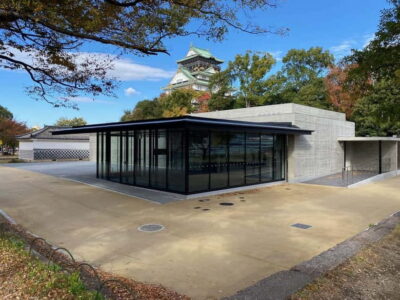
Tokyo Castle & Imperial PalaceーShogun Walking Tour
Read our review →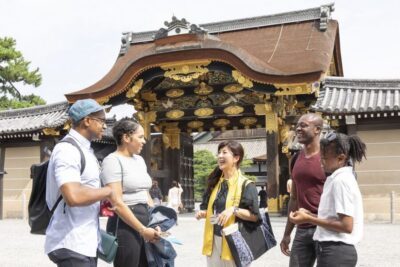
Nijo-jo Castle and Ninomaru Palace Guided Tour
Read our review →
Ultimate Osaka Walking Tour: Castle, Dotonbori & Hidden Gems
Read our review →Tokyo Castle & Imperial PalaceーShogun Walking Tour
Read our review →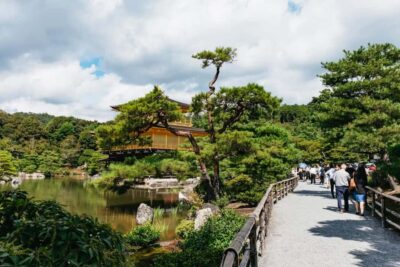
Nijo Castle, Kiyomizu & Fushimi Inari Guided Tour
Read our review →
Osaka Castle Walking Tour and Castle Tower Admission
Read our review →
Imperial Palace East Garden and Edo Castle Walking Tour in Tokyo
Read our review →Browse the lists this tour appears in