
Review · JAPAN
Tokyo: Edo Castle Ruins & Imperial Palace East Garden Tour
Tokyo keeps its castle stories in stone. This two-hour guided walk traces the former Edo Castle through massive gates, guardhouses, moats, ruined walls, and the peaceful East Gardens. I like the clear route from Otemon Gate to the Tenshu-dai, and I like the quiet Ninomaru Garden, where koi move through the pond. The main limitation is simple: you do not enter the Imperial Palace buildings or the palace’s inner grounds.
This is a history walk, not a palace-interior tour. At $37 per person, the price is reasonable if you want context, a guide, and admission handled for you. It is less appealing if you prefer to wander gardens alone or expect a grand European-style castle still standing above Tokyo.
Key things to know before you book
- The tour begins at the Wadakura Free Rest Area, where your English-speaking guide waits outside with a yellow sign.
- Otemon Gate and its guard posts give you the clearest sense of how Edo Castle was protected.
- The Tenshu-dai is a viewpoint, not a surviving tower, since the original keep is gone.
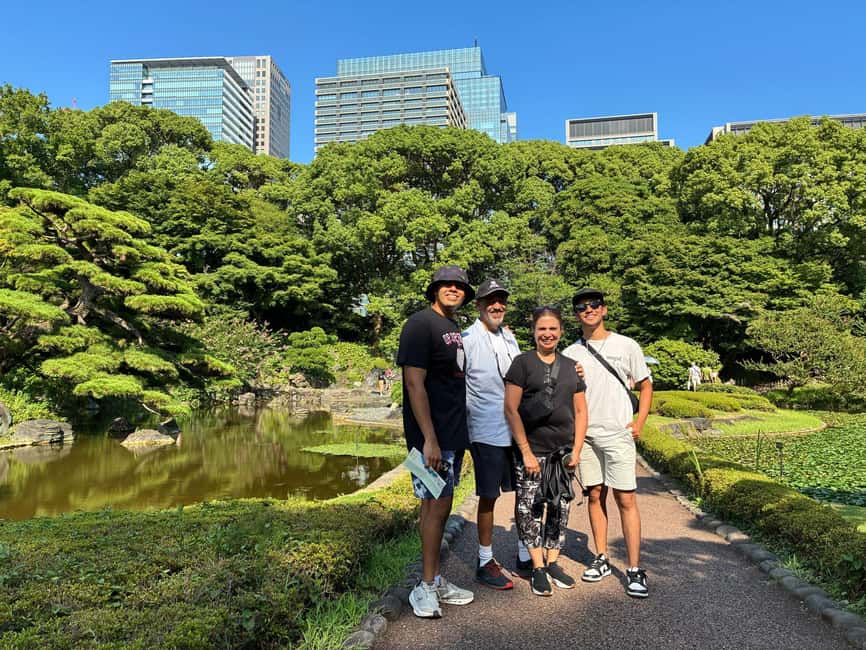
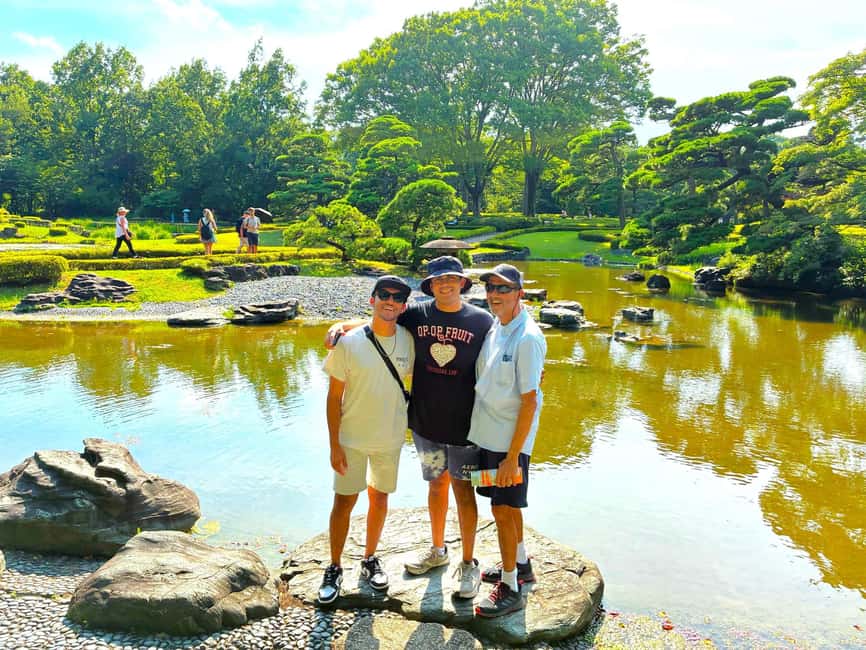
- Ninomaru Garden is the calmest part of the walk, with a pond and koi fish.
- The palace buildings are not open to the public, and the route stays in the gardens and former castle grounds.
- Guide quality matters, with guides such as Mari and Isao praised for warmth, patience, and detailed answers.
What $37 buys you in central Tokyo
The $37 fee includes a live English-speaking guide, admission to Edo Castle and the Imperial Palace East Gardens, and a commemorative photo opportunity. It does not include food, drinks, hotel pickup, or personal expenses.
I think the value depends on how you use your time. The grounds are accessible without this tour, so you are paying mainly for interpretation and a planned route. A good guide can turn a pile of stones and a broad lawn into a readable story about shoguns, samurai guards, imperial power, and the change from Edo to modern Tokyo.
That added context is the whole point. Without it, you may see a large gate, a moat, and a few stone foundations, then keep walking. With a good guide, each checkpoint helps explain how a powerful castle worked and why the Imperial Palace occupies this location today.
The rating is 4.4 from 13 ratings, which suggests a generally strong experience but not a perfectly uniform one. Several participants praised guides for being friendly, patient, and generous with historical information. One three-star account described the walk as mostly an ordinary park stroll because the guide said very little. That is useful advice: this tour succeeds best when your guide is engaged and you ask questions.
More Castle Gardens and Grounds in Japan
- Imperial Palace East Garden and Edo Castle Walking Tour in Tokyo
★ 5.0 · 510 reviews - Himeji: Himeji Castle & Kokoen Garden 3.5-Hour Guided Tour
★ 4.9 · 30 reviews - Kanazawa: Half-Day Private Tour – Garden, Castle, Geisha
★ 5.0 · 10 reviews
Meeting at the Wadakura Fountain
Meet outside the entrance to the Wadakura Free Rest Area. Your guide should be holding a yellow sign, making the starting point easier to identify in a busy central Tokyo area.
The first stop is Wadakura Fountain National Park. The fountain was built to commemorate a royal wedding, and your guide explains its connection to Japan’s modern Imperial family. This opening gives the tour a useful frame: you are not only looking backward to the shoguns, but also forward to the imperial institution that remains connected with the palace.
The fountain stop lasts about ten minutes. It is a gentle beginning, with no major climb or demanding activity. Bring water anyway, especially in warm weather, since the route continues outdoors and includes several stops across open grounds.
You then pause at Wadakura Moat for about five minutes. The moat helps you understand that Edo Castle was designed as a defended seat of power, not simply as a residence. Even a short explanation here can make the later gates and guardhouses easier to read.
Passing through Otemon Gate
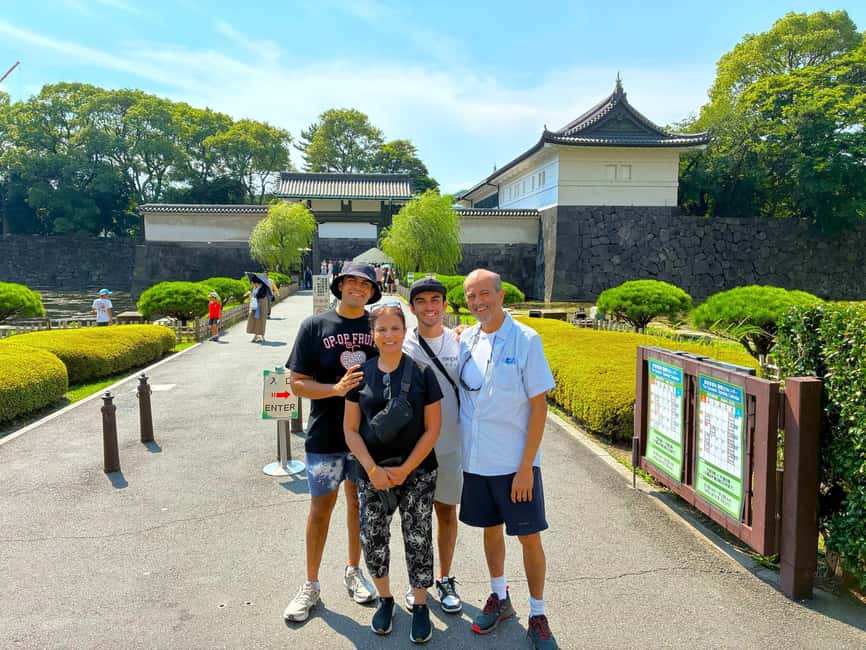
Otemon Gate is one of the most impressive parts of the route. It served as a major entrance to Edo Castle, and its scale immediately shows the importance of the complex.
Your guide spends about ten minutes here. Pay attention to the gate’s defensive character rather than expecting a decorated palace entrance. The stonework, controlled access, and layout point to a place where movement was carefully watched.
From Otemon, the walk reaches the Ote San-no-mon Gate Ruins. This is one of the more useful stops for understanding the castle’s layers of defense. A ruined gateway can look modest until you learn how it fitted into the sequence of barriers that visitors and officials had to pass.
The tour also visits Doshin Bansho, a guardhouse associated with lower-ranking castle guards, and Hyakunin Bansho, another guard post. The names can blur together if you simply follow the group, so I would listen for the differences in role and placement.
Hyakunin Bansho is especially helpful for picturing samurai heritage in practical terms. This was not just a ceremonial compound. Guards watched entrances, checked people, and helped protect the castle’s inner areas. The stop lasts about ten minutes, enough for a short explanation and questions.
Reading the Edo Castle ruins
The Edo Castle Ruins stop lasts about fifteen minutes. Here, the physical remains become the main subject. Do not expect a complete keep or intact palace rooms. You see remnants of the former castle, with the guide supplying the missing structure through explanation.
This is where the tour’s quality can rise or fall. The site itself offers fragments. A strong guide connects those fragments to the shogun-led government that ruled Japan from Edo, now Tokyo, and to the castle’s role as the center of political authority.
You then reach the former Honmaru, or main hall, area. The Honmaru was the central part of the castle, so this stop carries more weight than a casual garden visit. Your guide explains the site and what once occupied it, helping you picture an enormous complex where little of the original wooden architecture remains.
The tour also includes a reconstruction model of the Edo Castle keep. This is important because the surviving stone base alone does not convey the scale of the former tower. The model gives you a visual sense of how the keep may have appeared above the Tenshu-dai.
More Palace Tours in Japan
- Kyoto: Nijo-jo Castle and Ninomaru Palace Guided Tour
★ 4.7 · 1,020 reviews - Kyoto: Imperial Palace & Nijo Castle Guided Walking Tour
★ 4.7 · 453 reviews - Kyoto: Nijo Castle and Kyoto Imperial Palace Guided Tour
★ 4.6 · 98 reviews - Tokyo: Edo Castle and Imperial Palace Guided Walking Tour
★ 5.0 · 6 reviews
The Tenshu-dai and views across Tokyo
At the Tenshu-dai, you can enjoy broad views of the surrounding area. The word can sound as if you are entering a restored tower, but that is not what happens. The original keep is gone, and the Tenshu-dai is the stone base and viewing area connected with its former location.
I like this part because it ties the site to geography. From above the surrounding grounds, you can better understand the castle’s central position in Tokyo and the separation between old defensive spaces and modern city life.
The stop also gives you a natural pause after the gates, guardhouses, and ruins. Comfortable shoes are important, since this is a walking tour over historic outdoor surfaces. The experience is not suitable for wheelchair users or people with mobility impairments, and children under six are not accepted.
A quieter turn through the gardens
After the main castle ruins, the route changes mood. You visit an area identified as the prefectural tree display, followed by Suwa no Chaya, a traditional teahouse setting within the garden grounds.
These stops are less dramatic than Otemon Gate, but they add variety. The tour is not only a sequence of military remains. It also shows how the palace grounds function as formal gardens and public green space.
The Imperial Palace East Gardens take about fifteen minutes. They are the part of the experience most likely to appeal to you if you want a break from Tokyo’s dense streets. The gardens offer space, careful planting, and historic remnants without requiring a separate trip across the city.
Keep your expectations precise. You are visiting the East Gardens, not the private palace residence. The Imperial family still lives at the palace, so the inner grounds and palace buildings are not included. That restriction is not a flaw in this particular tour, but it is the most important point to understand before paying.
Ninomaru Garden and the koi pond
Ninomaru Garden is the final major stop before you return to the meeting area. The guided visit lasts about fifteen minutes, and it is likely to be the most relaxing section of the walk.
The pond, koi fish, planting, and quiet paths offer a sharp contrast with the gates and castle defenses. I would save a little attention for the details here instead of treating it as a quick walk-through. The garden shows another side of former castle life, one built for beauty, reflection, and controlled space rather than military protection.
The route then returns to the Wadakura Free Rest Area. In total, the activity is advertised as two hours, with many short guided stops. Since the listed stops add up to a tightly packed schedule, the pace may feel brisk, especially if you ask questions or stop for photographs. The commemorative photo opportunity is included, but bring your own camera as well if you want more time to frame the gardens or gates.
How much history will you actually hear?
This is the key question. The tour can offer a useful introduction to the shoguns, emperors, castle defenses, and the former Honmaru, but the amount of explanation depends heavily on the guide.
Mari and Isao received particularly strong praise for being friendly, patient, and willing to answer questions. One German-speaking booking described a guide who took extra time to explain the history of the palace and Japan with real enthusiasm. Another assessment praised the guide for providing many historical facts and answering questions patiently.
At the same time, one quiet experience was described as little more than a walk through a park. That does not mean the route lacks historical value. It means you should take an active role. Ask about the function of each guardhouse, the relationship between the shogun and emperor, the former castle keep, and what happened to Edo Castle over time.
If you want a lecture packed with dates and political detail, tell your guide early. If you prefer a light introduction, the short stops should feel manageable. The private or small-group format may also make it easier to ask questions than on a large bus tour.
Who will enjoy this walk most?
I would recommend it to first-time Tokyo visitors who want a clear introduction to the city’s political past without committing half a day. It also suits anyone interested in samurai-era defenses, historic gates, Japanese gardens, and the contrast between shogunal and imperial power.
It is a good choice if you value a human guide over an audio app. A guide can point out details, adjust explanations, and respond to your questions. The tour also works well early in a Tokyo visit, since it gives you useful background for later stops connected with Japanese history.
You may want to skip it if you have already explored the East Gardens carefully on your own and do not need interpretation. One assessment specifically felt the walk could be done independently. That is fair. The grounds are not a locked archaeological site requiring a guided escort.
This is also not the best fit if you want indoor sightseeing, a palace-room visit, or a long rest period. Smoking and flash photography are not allowed. Wear comfortable shoes, carry water, and remember that food and drinks are not included.
Final verdict: book it for context, not palace access
I would book this tour if you want the former Edo Castle to make sense. Otemon Gate, the guardhouses, Honmaru, the Tenshu-dai, and Ninomaru Garden create a varied two-hour route, and the $37 price is fair when the guide provides solid historical explanation.
I would not book it expecting to enter the Imperial Palace buildings or see the inner palace grounds. You will see gardens, ruins, gates, and a keep model instead.
The best reason to choose this experience is its structure. It moves from royal commemoration at Wadakura Fountain to castle defenses, central ruins, a viewing point, and a calm garden. Ask questions, arrive ready to walk, and confirm that you are comfortable with outdoor access requirements. If those conditions suit you, this is a practical way to connect present-day Tokyo with the power center that once ruled Japan.
FAQ
How long does the Edo Castle and Imperial Palace East Garden tour last?
The advertised duration is two hours. It includes multiple short guided stops and returns to the Wadakura Free Rest Area.
What language is the tour offered in?
The live tour guide speaks English.
Where does the tour meet?
Meet outside the Wadakura Free Rest Area, in front of the entrance. The guide will be holding a yellow sign.
Can I enter the Imperial Palace buildings?
No. The Imperial Palace buildings and inner grounds are not open to this tour. The route focuses on the East Gardens and the historic ruins of Edo Castle.
Is admission included in the price?
Yes. Admission to Edo Castle and the Imperial Palace East Gardens is included.
Is the tour suitable for wheelchair users?
No. The experience is not suitable for wheelchair users or people with mobility impairments.
What should I bring?
Bring comfortable shoes, water, and a camera. Smoking and flash photography are not allowed.
Just added around Japan
- Tokyo: Edo Castle and Imperial Palace Guided Walking Tour★ 5.0 · 6 reviews
- (Ticket Included) Explore Osaka Castle & Museum of History★ 4.8 · 21 reviews
- Peace Memorial Park, Hiroshima Castle, & Garden Private Tour★ 4.8 · 7 reviews
- Osaka: Explore Every Bit of Osaka Castle in 3 Hours★ 5.0 · 5 reviews
- Osaka/kyoto: Himeji Castle, Kobe. Luxury Day Trip with Guide★ 5.0 · 2 reviews
- Osaka: Early Morning Osaka Castle Guided Tour, Avoid Crowds★ 4.9 · 12 reviews
- Osaka: Osaka Castle 3 hours Historical Walking Tour★ 4.6 · 14 reviews
- Osaka: Osaka Castle – Tsuruhashi – Tennoji (Spanish Guide)★ 4.7 · 10 reviews
Castle Gardens & Grounds, compared.


Versailles Château and Gardens Walking Tour from Paris by Train
Read our review →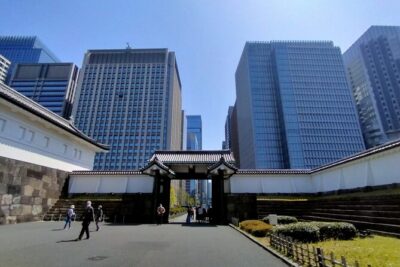
Imperial Palace East Garden and Edo Castle Walking Tour in Tokyo
Read our review →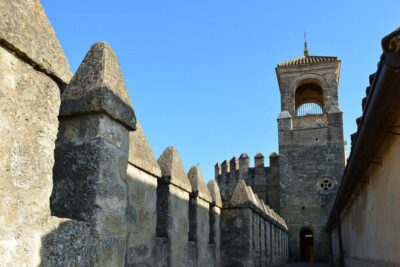
Cordóba: Gardens & Fortress of Catholic Monarchs Guided Tour
Read our review →
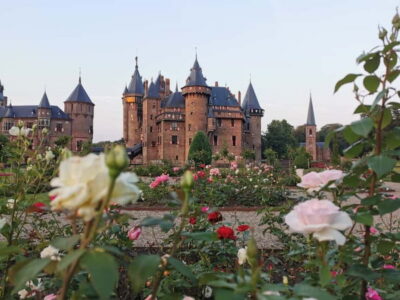
De Haar Castle Gardens and Park Only Entry Ticket
Read our review →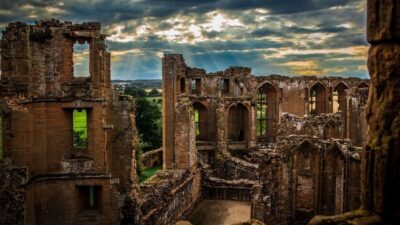
Kenilworth Castle and Elizabethan Garden Entry Ticket
Read our review →Browse the lists this tour appears in