
Review · JAPAN
Okinawa: Urasoe Castle, Royal Tomb & War History Walk
Okinawa’s past is written in stone. This private walk links an ancient pilgrimage road, a royal tomb, castle ruins, and the scarred slopes of Hacksaw Ridge, giving you a much fuller picture of Okinawa than a quick city tour can provide. I especially like the local Okinawan perspective and the way the route joins royal history with the Battle of Okinawa. The sweeping views from Urasoe Castle are another strong point. The main drawback is practical: steep paths, stone roads, and uneven ground make this a poor choice if you have mobility limits.
The tour costs $65 per person and lasts about 90 minutes to two hours. That is a fair price if you want a private guide, museum entry, and a focused history walk rather than a simple sightseeing stop. Guide Koutaro has earned particular praise for his easy manner, local knowledge, and stories about the Okinawan dialect. Still, English explanations may occasionally need clarification, so keep your questions ready.
Key points to know before you book
- The route begins on the Futenma pilgrimage path, an old stone-paved road that gives the walk a strong sense of place from the start.
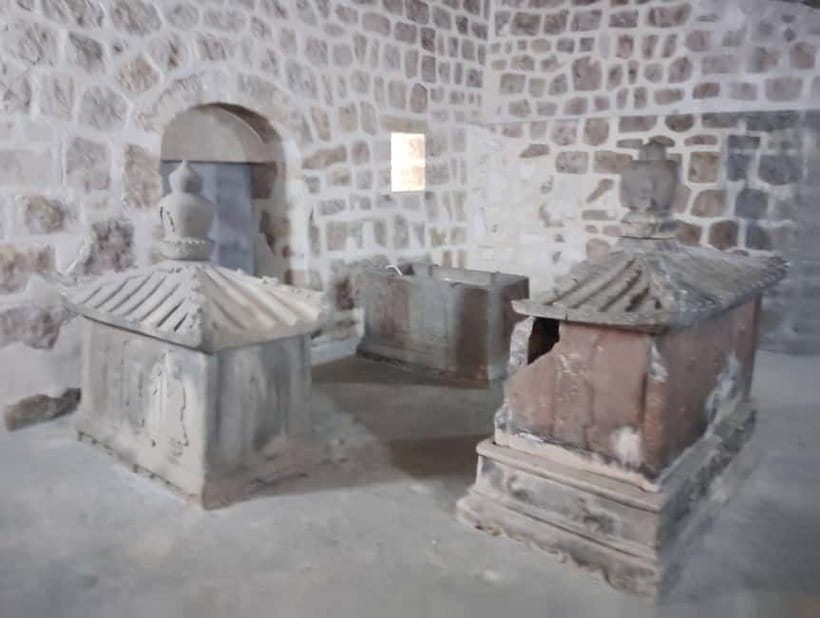
- Youdore is a quiet royal mausoleum, built into a cliffside and far more restrained than the grand tombs found in some other royal traditions.
- Urasoe Castle predates Shuri’s political rise, making the ruins important for understanding the earlier shape of the Ryukyu Kingdom.
- Maeda Escarpment is Okinawa’s Hacksaw Ridge, where peaceful greenery covers tunnels, shelters, and wartime memories.
- The private format helps the history feel personal, with room to ask about King Shō Nei, local customs, and Okinawan language.
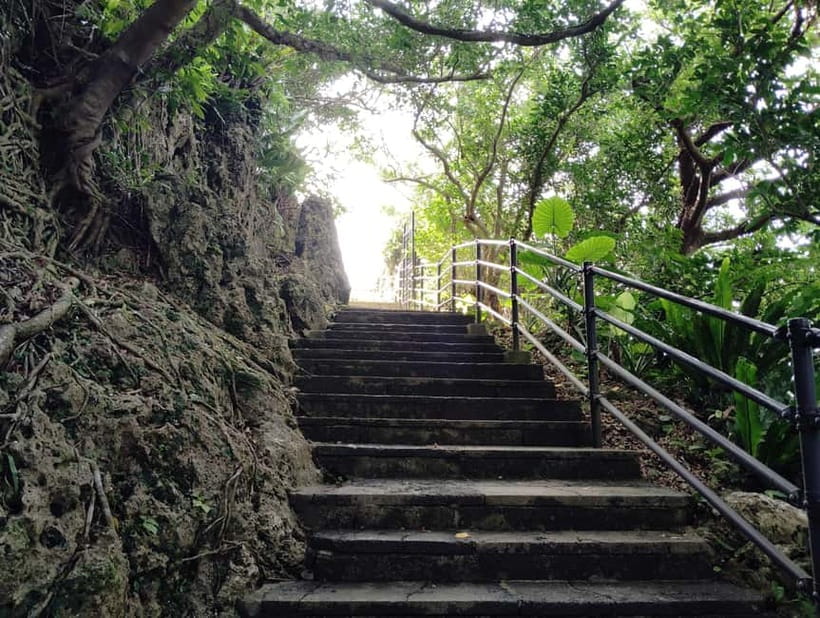
- Comfortable shoes and water matter, since you will climb stone paths and ascending routes.
Why this short walk covers so much ground
The route is compact, but its subject matter is not. In roughly two hours, you move through several layers of Okinawan history: sacred pilgrimage, royal power, castle politics, and the violence of 1945. That combination is what makes the experience worthwhile.
You can begin at Urasoe-Maeda Monorail Station or at 県庁前駅 in central Naha, depending on the option you choose. The central Naha option includes transportation toward the walking area, which is useful if you want the morning or afternoon to begin near Kokusai Street. The walk itself finishes at Urasoe-Maeda Station.
The route is not a bus tour with a few quick photo stops. You walk between the sites, often on old stone-paved roads and rising paths. That takes more effort, but it also lets you notice the shift from city streets to quiet historic ground. Your guide can explain what you are seeing as it appears, rather than asking you to absorb everything from a display panel.
This is a private group experience, so you are not trying to hear a guide over a large crowd. The format should suit couples, families with older children, or small groups with a strong interest in Okinawan culture. It is less suitable if you want a relaxed stroll on flat pavement.
More Castle Walking Tours in Japan
- Tokyo Castle & Imperial PalaceーShogun Walking Tour
★ 4.7 · 1,068 reviews - Ultimate Osaka Walking Tour: Castle, Dotonbori & Hidden Gems
★ 5.0 · 862 reviews - Tokyo Castle & Imperial PalaceーShogun Walking Tour
★ 5.0 · 724 reviews
Following the Futenma pilgrimage path
The opening section sets the tone. Instead of beginning with a modern attraction, you follow the Futenma pilgrimage path, a route shaped by religious movement and local tradition. Its stone surface gives you an immediate physical link with earlier Okinawa.
I like this part because the road itself becomes part of the lesson. You are not simply told that Okinawa had its own traditions before becoming part of modern Japan. You walk through a place where those traditions were practiced and remembered.
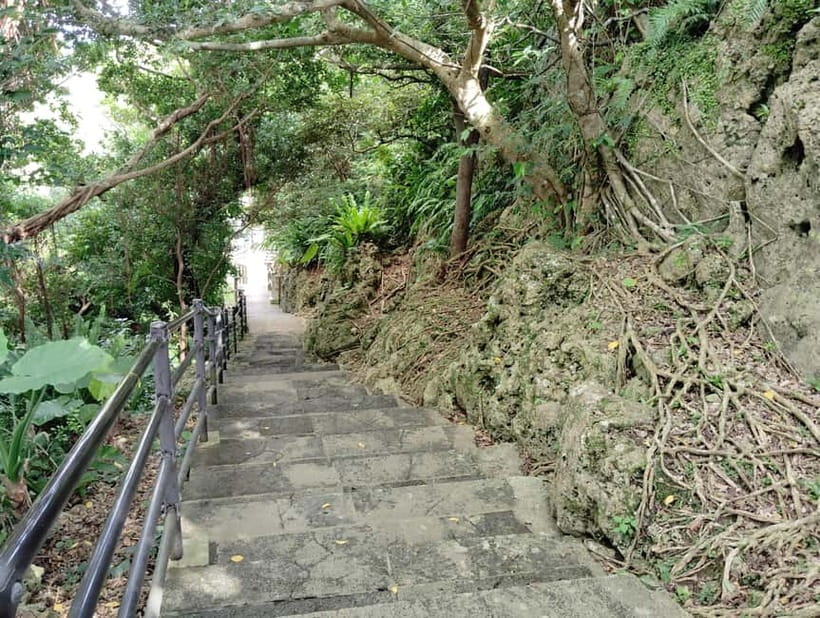
The stones can be uneven, and the route includes climbs. Wear shoes with a firm sole, not fashionable footwear that becomes uncomfortable after half an hour. Bring water, especially in Okinawa’s warm weather. The walk is not described as a long-distance hike, but the repeated climbs can still make it feel active.
This path also gives your guide space to explain the Futenma pilgrimage tradition and the role of local religious sites. The supplied information does not specify every stop along the road, so you should expect interpretation rather than a long list of named monuments. That is a good thing if you prefer context over collecting photographs.
The museum introduction to Urasoe and Youdore
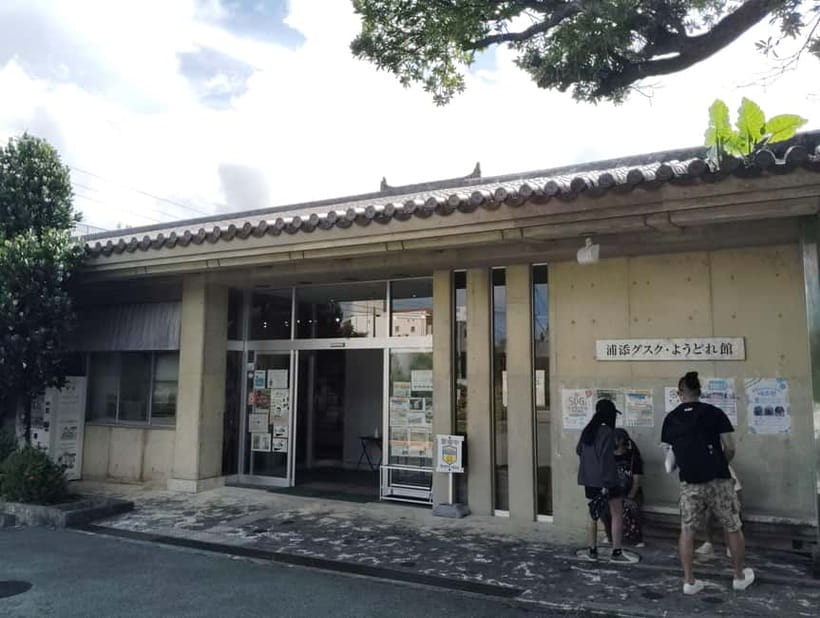
The Urasoe Gusuku and Youdore Museum is the most useful place to begin the history portion of the tour. You visit for about 30 minutes, learning how the royal tomb complex and castle ruins fit together.
The museum helps you read the outdoor sites. Without that preparation, a ruined wall or cliffside chamber can be hard to interpret. With it, you have a better sense of Urasoe Castle as a political and spiritual center, rather than just an archaeological site.
King Shō Nei is an important part of this section. He was the last monarch based at Urasoe, and his story reflects a difficult period of foreign pressure. His effort to use diplomacy, followed by his place in Okinawan memory as a figure of resilience and humility, gives the history a human scale.
I appreciate that the tour does not reduce Okinawa to a footnote between larger powers. The museum visit helps explain that the Ryukyu Kingdom had its own rulers, ceremonies, religious ideas, and political concerns. You get a clearer picture of why Urasoe mattered before Shuri became the better-known center of power.
The museum stop is also a sensible break before the outdoor climb. It gives you a chance to absorb the basic story while standing on level ground. If you are especially interested in archaeology or royal history, you may wish the museum portion lasted longer than 30 minutes, but the short schedule keeps the whole walk manageable.
Entering Youdore through the Kurashin Gate
From the museum, you continue through the Kurashin Gate toward Youdore. This is one of the most memorable portions of the route because the setting changes from museum interpretation to a quiet sacred site.
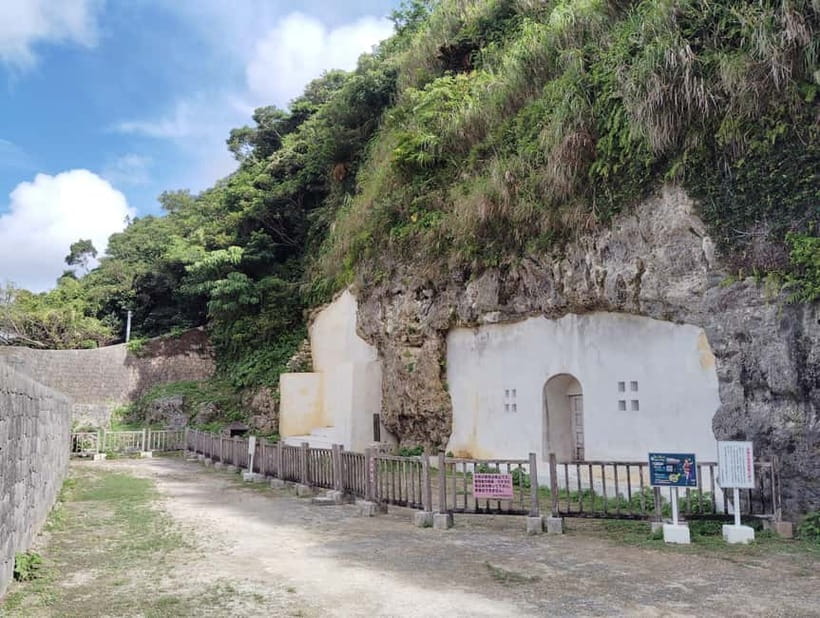
Youdore is a cliffside mausoleum where early Ryukyu kings were laid to rest. Its mood is restrained and solemn. You should not expect the grand scale associated with some imperial burial complexes elsewhere in Asia. The appeal here is the harmony between the tomb, the rock, and the surrounding setting.
That simplicity reflects an Okinawan sense of reverence and a close connection with the earth. The site feels less like a monument designed to impress and more like a place meant to preserve memory. Your guide can help explain why that difference matters.
You will need to show respect here. Keep your voice low, follow your guide’s instructions, and treat the site as a place of remembrance rather than a backdrop for hurried photographs. A camera is welcome, but the atmosphere deserves your attention first.
Youdore also gives the tour emotional balance. The castle section is about political authority and the wartime section about destruction. This stop is quieter. It allows you to pause and consider the people behind the titles and dates.
Same region, a different set of walls:
- Osaka Castle: Museum and Tower Entry Ticket
★ 4.5 · 2,380 reviews - Kyoto: Nijo-jo Castle and Ninomaru Palace Guided Tour
★ 4.7 · 1,020 reviews - Kyoto: Nijo Castle, Kiyomizu & Fushimi Inari Guided Tour
★ 4.7 · 700 reviews - Osaka Castle Walking Tour and Castle Tower Admission
★ 5.0 · 561 reviews
Climbing toward Urasoe Castle’s ruined walls
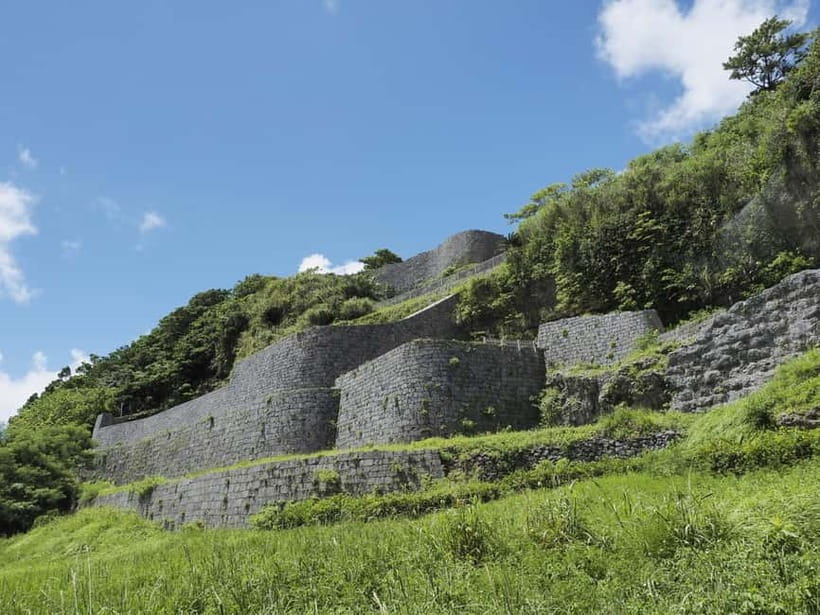
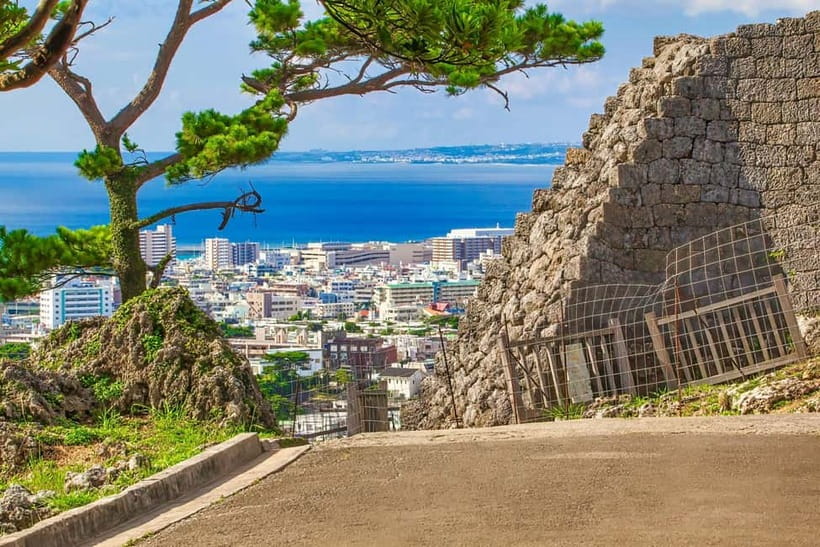
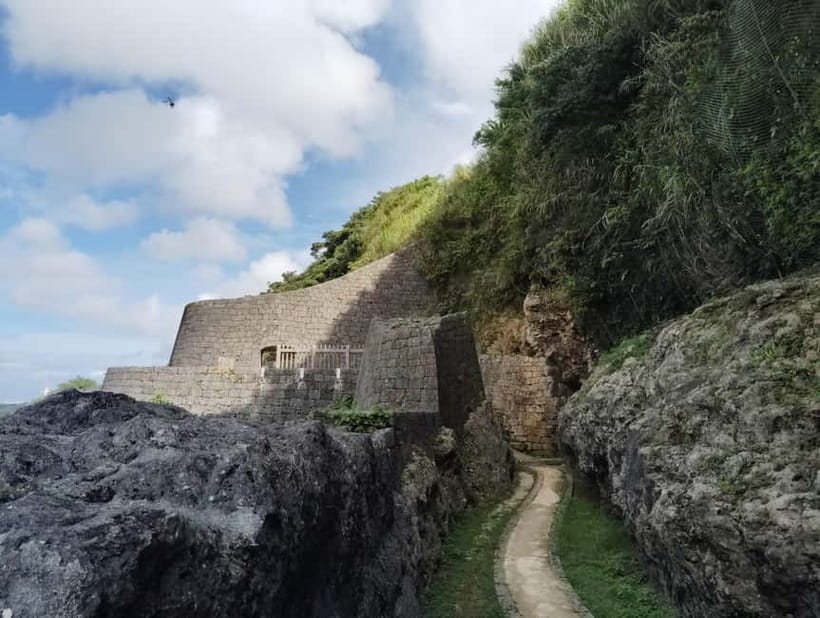
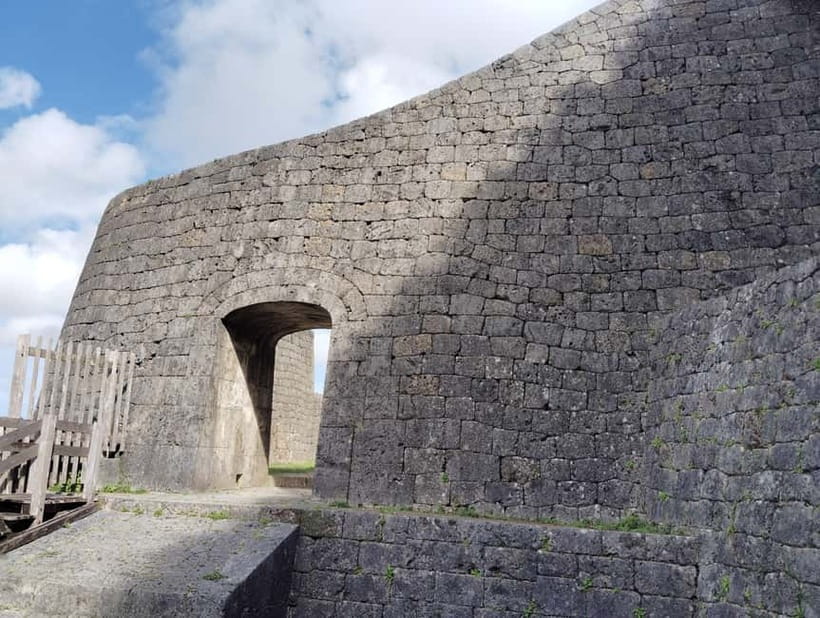
After Youdore, the route rises toward Urasoe Castle. The climb is part of the experience, not simply a way to reach the next point. Urasoe’s position helped make it an important center of Ryukyuan power, and the higher ground now gives you views over the city and coast.
The ruins will not provide the intact halls you might see at a restored castle. What you get instead are walls, foundations, remains, and the chance to picture the site as it once functioned. Your guide explains the structure and meaning of the main hall, or seiden, and why the castle mattered as a political and spiritual center.
This is where the museum information becomes useful. You can connect the displays to the actual site, understand the purpose of the main hall, and see how the castle’s position shaped its importance. The experience asks you to use your imagination, but the guide’s explanation fills in much of the missing structure.
The views are a real reward. From the castle area, you can look across the coast and city below. It is a good pause point, especially after the climb. You may find yourself thinking less about a single historical event and more about continuity: the city has changed, the castle has fallen, but Okinawan culture remains present.
Because the ruins are outdoors, conditions may affect your comfort. The supplied details do not promise shade, seating, or weather protection throughout the route. Plan for a warm, active walk rather than a cool museum visit.
Facing the wartime past at Hacksaw Ridge
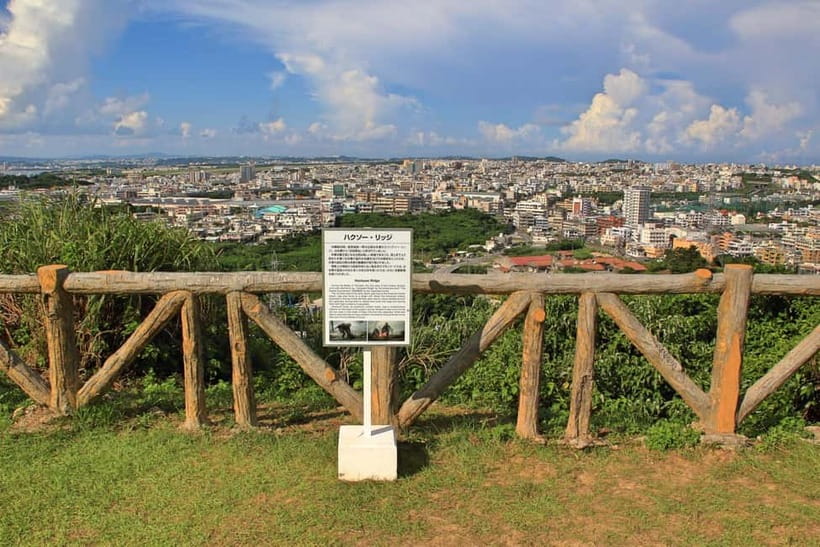
The Maeda Escarpment, also called Maeda Kōchi, is known internationally as Hacksaw Ridge. It was one of the fiercest battlegrounds of the Battle of Okinawa. The area is now green and quiet, but the ground still contains tunnels, shelters, and reminders of the fighting.
This part changes the mood sharply. The royal sites ask you to think about centuries of Okinawan rule and belief. The escarpment brings you into the twentieth century and the destruction experienced by Okinawa during World War II.
The tour explains Okinawa’s role as Japan’s only civilian battlefield during the war. That fact is central to understanding why wartime sites here carry such weight. The history is not presented as distant military drama. It includes the effects of battle on civilians and communities.
You should be prepared for difficult material. The route may be peaceful, but the stories connected to it can be emotionally heavy. I would not choose this walk if you want a purely cheerful introduction to Okinawa. If you are willing to spend time with the harder parts of the island’s past, the section adds depth that a standard castle visit would miss.
The tunnels and shelters are especially important because they make the wartime story physical. You are not only hearing about fighting on a map. You are seeing the kind of defensive spaces and scars that remain on the ground. Do not expect a full military museum or a long battlefield expedition. The available information points to a guided visit and explanation during the broader walk.
What a local guide adds to the experience
A good guide matters here because the sites do not explain themselves. A ruined castle, a small gate, and a quiet tomb can seem disconnected unless someone shows you how they relate.
Koutaro, a local Okinawan guide, has been especially praised for his clear, approachable style and his stories about Okinawan culture. He also discusses the local dialect and his work helping bring it back into wider use. That is a valuable detail because language gives you another way to understand the island’s identity.
The atmosphere should feel unhurried. One strong account describes the walk as enjoyable rather than a forced march, with no sense of panic or pressure to rush between stops. That matters on stone paths, where you need time to look around and listen.
English communication may not always be perfectly smooth. One visitor found that a few explanations needed help from Google Translate. That is not unusual on a history tour dealing with local names and complex events. Ask questions, repeat a point when needed, and use your phone as a backup if a term is unclear.
The private format is a major benefit. You can ask why Shō Nei matters, how Youdore differs from other royal tombs, or what happened at the escarpment without waiting for a large group to move on. If you prefer a guide who talks nonstop, this may feel modest. If you like conversation, it should work well.
Is $65 a fair price?
At $65 per person, this is not the cheapest way to see Urasoe. You are paying for a private guided walk, museum entry, local interpretation, and, with the appropriate option, transportation from the Kokusai Street area.
The value depends on how much context you want. If you only need to photograph the castle ruins, you may find the price high. If you want the royal tomb, museum, pilgrimage route, castle, and wartime ground explained as one connected story, the cost is easier to justify.
The tour also saves you from trying to connect several sites on your own. That is useful in Urasoe, where the meaning of each place is more important than the number of attractions. You are buying interpretation and a planned route, not simply admission.
Free cancellation up to 24 hours before the start and the option to reserve now and pay later add useful flexibility. Meals are not included, so plan to eat before or after the walk. No meal is needed during the short route, but water is essential.
Who should book this walk?
I would recommend it to you if you enjoy history, sacred places, local identity, and walking tours that mix different periods. It is particularly good for someone who has already seen central Naha and wants to understand the wider cultural setting.
You will get the most from it if you are comfortable with stone paths and moderate uphill walking. Bring comfortable shoes, water, and a camera. Give yourself time to listen at the war sites rather than treating them as quick stops.
Families with young children may find the historical themes and climbs demanding. People with mobility impairments should choose another activity. The route is specifically described as unsuitable for them.
This is also a good choice for visitors who want an English-speaking local guide rather than a large commercial group. Koutaro’s interest in Okinawan dialect and local memory adds a personal touch that broadens the tour beyond dates and buildings.
Should you book Urasoe Castle and Hacksaw Ridge?
Book it if you want Okinawa presented as a living culture, not only as a beach destination or a collection of wartime sites. The walk connects the island’s royal past, spiritual traditions, castle politics, and painful modern history in a short but thoughtful route.
Skip it if you need flat paths, a lighthearted outing, or a fully restored castle with grand interiors. The ruins require imagination, the climb takes effort, and the battlefield section can be sobering.
For the right visitor, $65 is a reasonable price for a private, local-led introduction to Urasoe. Wear sensible shoes, ask questions, and allow the sites to take their time. The best moments here come from the connections between places, not from rushing to the next viewpoint.
FAQ
Where does the tour begin?
You can choose between 県庁前駅 in Naha and Urasoe-Maeda Monorail Station, depending on the option booked.
Where does the tour finish?
The walk finishes at Urasoe-Maeda Station.
How long does the experience last?
The tour lasts approximately 90 minutes to two hours.
Is transportation from Naha included?
Transportation from the Kokusai Street area is included with the relevant option. The meeting point varies depending on the option selected.
Is the tour private?
Yes. It is offered as a private group experience.
What language is the tour in?
The live tour guide speaks English.
Is admission to the museum included?
Yes. Entrance to the Urasoe Gusuku and Youdore Museum is included.
Does the tour visit Urasoe Castle?
Yes. The route includes the Urasoe Castle ruins and an explanation of the castle’s main hall and symbolic importance.
Does the tour visit Hacksaw Ridge?
Yes. You visit the Maeda Escarpment, known as Hacksaw Ridge, and learn about its role in the Battle of Okinawa.
What should I bring?
Bring comfortable shoes, water, and a camera. The route includes stone-paved roads and uphill sections.
More History Tours in Japan
- Osaka: Castle History Walking Tour / Castle Tower Admission
★ 4.9 · 230 reviews - 2.5 Hour Private History and Culture Tour in Himeji Castle
★ 5.0 · 185 reviews - Kyoto: Nijo Castle World Heritage Guided Tour with Admission
★ 5.0 · 128 reviews - Himeji: Himeji Castle Guided Tour – UNESCO Heritage
★ 4.7 · 115 reviews
Just added around Japan
- Tokyo: Edo Castle and Imperial Palace Guided Walking Tour★ 5.0 · 6 reviews
- (Ticket Included) Explore Osaka Castle & Museum of History★ 4.8 · 21 reviews
- Peace Memorial Park, Hiroshima Castle, & Garden Private Tour★ 4.8 · 7 reviews
- Osaka: Explore Every Bit of Osaka Castle in 3 Hours★ 5.0 · 5 reviews
- Osaka/kyoto: Himeji Castle, Kobe. Luxury Day Trip with Guide★ 5.0 · 2 reviews
- Osaka: Early Morning Osaka Castle Guided Tour, Avoid Crowds★ 4.9 · 12 reviews
- Osaka: Osaka Castle 3 hours Historical Walking Tour★ 4.6 · 14 reviews
- Osaka: Osaka Castle – Tsuruhashi – Tennoji (Spanish Guide)★ 4.7 · 10 reviews
Castle Walking Tours, compared.

Edinburgh Castle: Guided Walking Tour with Entry Ticket
Read our review →
3-Hour Walking Tour of Old Town & Prague Castle
Read our review →Edinburgh Castle: Guided Walking Tour with Entry Ticket
Read our review →
Edinburgh Castle Guided Walking Tour in English
Read our review →

Prague 3-hour Afternoon Walking Tour including Prague Castle
Read our review →
Royal Mile and Edinburgh Castle – Small Group Walking Tour
Read our review →Browse the lists this tour appears in