
Review · OSAKA
Samurai Armor & Sword experience with phot near Osaka Castle
Honor begins with a bow. This 90-minute private activity lets you change into samurai clothing, learn formal sword manners, practice basic kata, cut with a real samurai sword, and pose in full armor. I like the clear instruction and the chance to handle both training equipment and a live blade under professional supervision. I also like that the experience includes edited? No, photo data sent by email and English-speaking staff. The main drawback is location confusion: the meeting point is not at Osaka Castle, and Apple Maps reportedly shows the wrong address.
You will pay about $106 per person, a fair but not cheap price for a private lesson with an instructor, clothing, armor, sword cutting, and photographs. I would allow extra time for the change of clothes and arrive 30 minutes early. Also note the recent overbooking problem reported in one booking, so it is wise to confirm the appointment before building your day around it.
Key points to know before you book
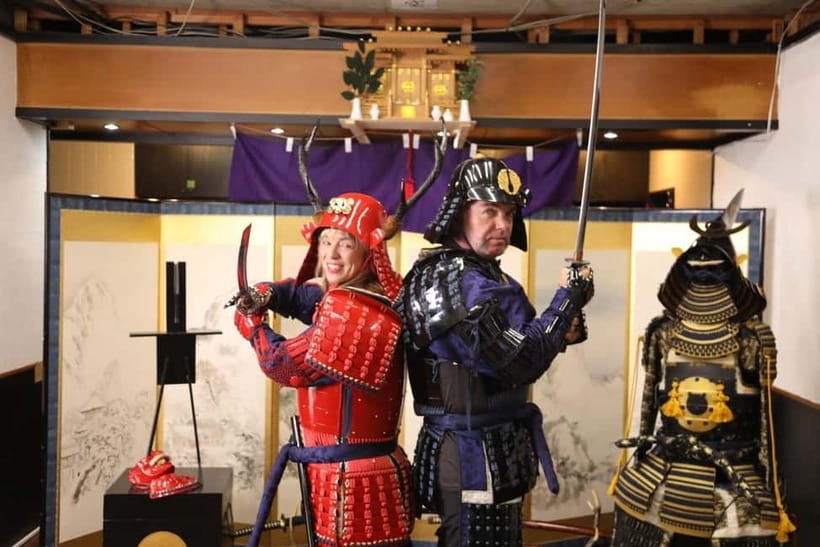
- Real sword cutting is the headline activity: You practice basic movements first, then try cutting with a genuine samurai sword.
- The session follows formal dojo customs: You bow before a shrine at the beginning and end, giving the activity more structure than a simple costume photo stop.
- You wear both samurai clothing and armor: The first outfit is dogi and hakama, followed later by indoor armor and a helmet.
- The group is private: You receive direct instruction in English or Japanese rather than joining a large public class.
- The correct address matters: Use Google Maps for Bushi no Homare, not Apple Maps, and look for the wooden Samurai Honor sign.
- Photos are included: Staff send the samurai armor photographs to your designated email address.
What this Osaka samurai activity really offers
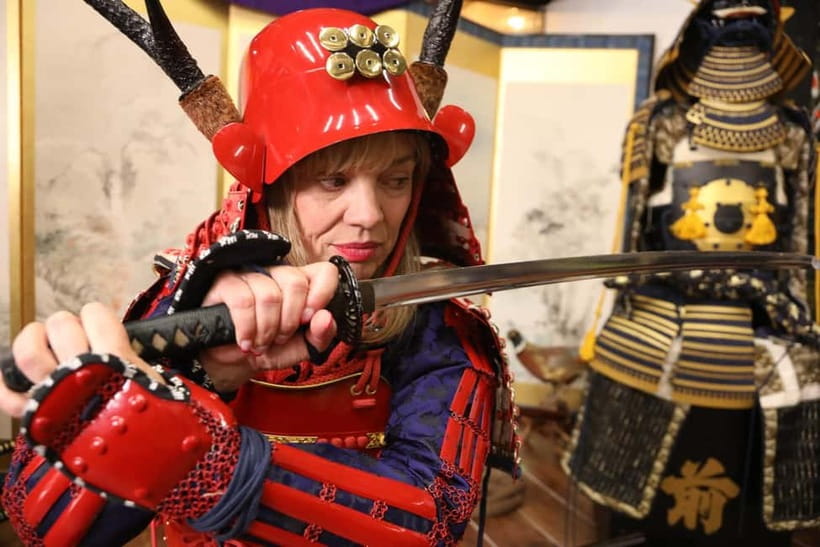
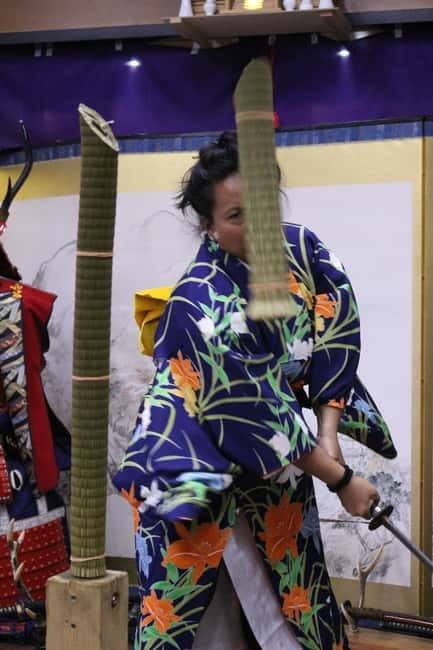
Many Japan activities give you a costume, a camera pose, and little else. This one tries to give you a short lesson in the behavior and discipline connected with the sword. You do not simply put on armor and wave a prop. You bow, learn how a sword is worn, practice drawing and returning it, and work through basic forms before the cutting session.
That structure is the reason I find the activity more worthwhile than a standard dress-up stop. You get a physical souvenir in the photographs, but you also leave with a better sense of how much care went into handling a weapon in samurai culture.
The tone is respectful rather than theatrical. A shrine sits in the dojo, and the class begins and ends with a bow. The activity uses Bushido, the traditional code associated with the samurai, as a way to frame manners, responsibility, and controlled movement.
It is still a short tourist activity, not a full martial arts course. In 90 minutes, you will learn selected customs and techniques, not master swordsmanship. That distinction matters if you are expecting serious long-term training.
More Japanese Castle Tours in Osaka:
- Osaka Castle: Museum and Tower Entry Ticket
★ 4.5 · 2,380 reviews - Osaka Castle Walking Tour and Castle Tower Admission
★ 5.0 · 561 reviews - From Osaka: Himeji Castle, Arima Onsen & Mt. Rokko Day Tour
★ 4.6 · 339 reviews
Finding Bushi no Homare near Osaka Castle
The actual venue is called Bushi no Homare, also described as Samurai Honor. Its address is Excellence Takayama 1F, 2-3-19 Shiginonishi, Joto-ku, Osaka-shi, Osaka 536-0014.
The meeting landmark is a wooden sign reading Honor of the Samurai. A pamphlet rack sits in front of the shop, and you may also see kimonos and hakama hanging to dry. Those details are useful because the address alone may not make the entrance obvious.
Use Google Maps for the location. The supplied directions specifically warn that Apple Maps gives an incorrect address. I would save the Google Maps pin before leaving your hotel and arrive 30 minutes before the reserved start time. That early arrival is for instructions and changing clothes, not wasted waiting.
There is no pickup from a hotel or train station, and transportation is not included. You are responsible for reaching the venue. The activity is described as being near Osaka Castle, so it can fit well with a castle visit, but you should plan the route rather than assume you will simply find the dojo at the castle grounds.
One practical warning deserves attention. A booking was cancelled twice because of overbooking, including once on the morning of the appointment. That appears to be an isolated but serious scheduling problem. I would confirm the booking shortly before the day and avoid placing a nonrefundable restaurant reservation immediately afterward.
Changing into dogi and hakama
The activity starts with preparation. You change into a samurai outfit consisting of dogi and hakama. This is more than a quick robe rental because the clothing sets up the lesson that follows.
The instructor uses the changeover to place you in the role of a samurai before you ever pick up the sword. That helps explain why the session begins with posture, manners, and controlled movements rather than an immediate photo.
You should bring a T-shirt. The activity does not list other clothing requirements, but comfortable clothes under the costume will make changing easier. Food, alcohol, drugs, pets, and baby strollers are not allowed. Assistance dogs are permitted.
The minimum age is 10. The activity is also not suitable for babies under one, people over 80, or people with altitude sickness. The altitude restriction seems unusual for an indoor Osaka activity, but it is part of the stated suitability guidance and should not be ignored if it applies to you.
Bowing before the shrine
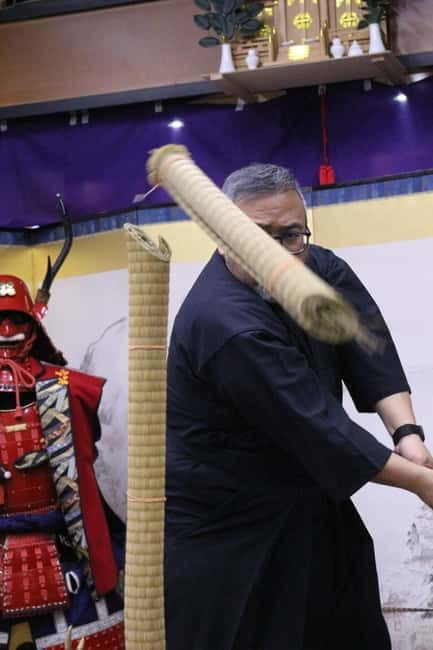
Once dressed, you begin with a bow before a shrine in the dojo. The same custom closes the session. This small detail gives the class a clear rhythm and separates it from a casual sword demonstration.
The shrine is connected to the idea of training with the power of an ancient god of war. You do not need to share that belief to appreciate the point of the ritual. It asks you to slow down, pay attention, and treat the practice space with care.
I like this opening because it gives context to the physical exercises. The sword is presented as something linked with duty and self-control, not just an attractive object for photographs. For children over 10, it may also make the activity feel like a lesson in ceremony and concentration rather than a pretend battle.
A few more castle visits around Osaka worth a look
- Ultimate Osaka Walking Tour: Castle, Dotonbori & Hidden Gems
★ 5.0 · 862 reviews - 5-Hour Osaka Bike Tour to the Neighborhood of Osaka Castle
★ 5.0 · 319 reviews - Osaka Castle Guided Tour
★ 4.7 · 249 reviews - Osaka: Castle History Walking Tour / Castle Tower Admission
★ 4.9 · 230 reviews
Learning the sword and samurai manners
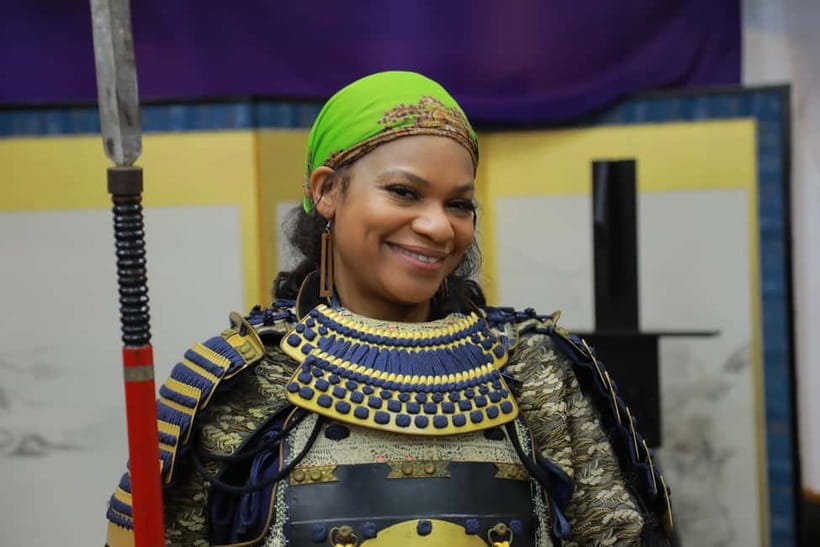
The instructor explains how the sword was worn and why it carried such a strong sense of responsibility. The presentation describes boys from samurai families learning with wooden swords from an early age and being permitted to wear a serious sword at 15.
The key idea is self-respect combined with responsibility. A sword could protect its owner, but it could also injure someone else. That meant the person carrying it had to control both the weapon and himself.
You also learn how closely the sword was kept to the body, even during ordinary domestic life. The explanation describes samurai eating with family and sleeping in positions that allowed quick access to the sword. This is one of the more memorable pieces of context because it makes the sword feel like a constant part of daily life, not only a tool for war.
The historical material is brief and tied to the activity. If you want a long lecture on Japanese military history, this is not the right booking. If you want enough background to understand why each gesture matters, the format works well.
Walking with a sword at your waist
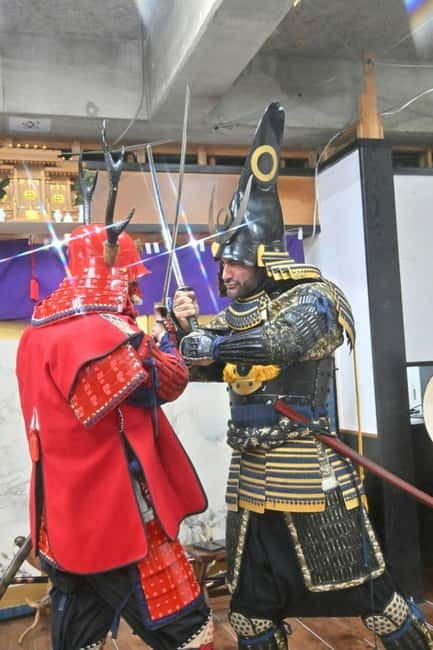
Next comes a practical lesson in wearing the sword. You insert it into the belt with the blade facing upward. You practice walking with the sword at your side and learn why samurai traditionally walked on the left side of the road.
The explanation is wonderfully specific. Keeping to the left helped prevent the scabbards of passing swords from striking each other. The class also addresses the koiguchi, the mouth of the scabbard, which should remain prepared for a quick draw.
This is the kind of small detail that makes the session feel grounded. You begin to notice that ordinary movement changes when a long blade is attached to your waist. Turning, walking, and keeping the scabbard clear all require attention.
There is also a nice touch of humor in learning to move carefully without looking like you are carrying a broom. The point is not speed. It is awareness and control.
Practicing battou, chiburui, and nottou
Before using the real sword, you work with an iai practice sword. This stage is important for safety and for learning the sequence.
You practice:
- Battou: Drawing the sword from its scabbard to cut.
- Chiburui: The symbolic movement used to remove blood from the blade after a cut.
- Nottou: Returning the sword to its scabbard.
These names give you a simple framework for remembering the actions. You are not asked to improvise. The instructor takes you through stance, draw, swing, symbolic cleaning, and resheathing in order.
The activity emphasizes swinging with the sword’s weight rather than relying on arm strength. When the movement is done correctly, you may hear the sword make a hi-nari sound. The lesson is therefore less about muscling the blade and more about posture, timing, and a clean path through the air.
This is a good point to manage expectations. The practice sword section may feel repetitive if you only want photographs, but it is the part that prepares you for the real cutting. Rushing straight to a live blade would be far less responsible.
Learning basic kata from an instructor
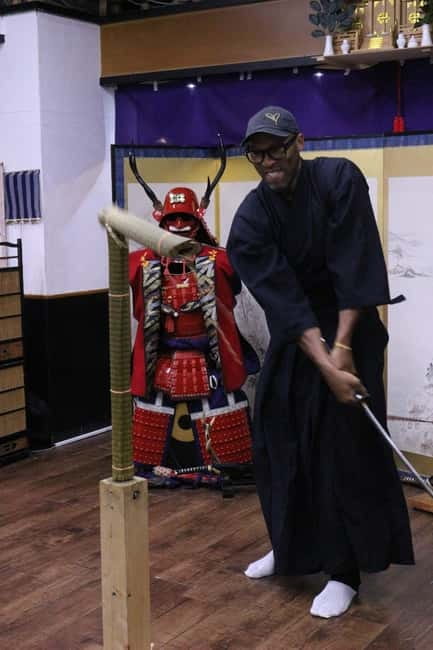
The instructor then demonstrates and guides you through basic kata and stances. You practice sword swings from a set position and receive direct corrections.
The class is led in English and Japanese, with English listed as the default interpretation language. Additional language support may be available in Italian, Spanish, French, Chinese, Thai, or Indonesian, but staff availability is limited. You should ask about the schedule before booking if you need one of those languages.
The experience is private, which is a real advantage here. Sword work is easier to follow when the instructor can focus on your stance and movement rather than managing a large public group. It also makes the activity a better fit for couples, families with older children, or friends who want photographs without strangers in every frame.
The strongest part of the instruction is its clarity. The high praise centers on the easy-to-follow teaching, friendly staff, and safe handling. That combination matters more here than flashy performance. A beautiful sword is not much use if the explanation is rushed.
Cutting with a real samurai sword
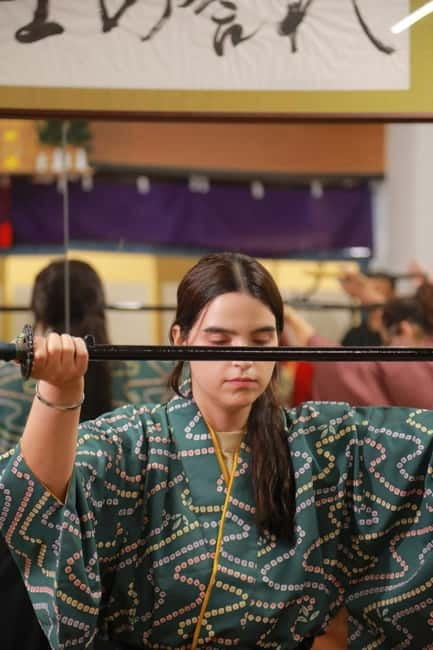
The most anticipated part is the chance to cut with a real samurai sword. You do not start there. You first learn the stance, drawing motion, swing, and follow-through with the practice sword.
The appeal is easy to understand. A real blade responds differently from a costume prop, and the activity presents Japanese swords as highly effective cutting tools. The cutting exercise gives you a direct sense of the control required to use one properly.
Safety depends on following instructions exactly. You should treat this as a supervised martial arts activity, not a chance to perform your own movie scene. Listen to the instructor, keep your movements deliberate, and do not turn the sword into a joke for the camera.
This part also explains the $106 price better than the costume alone does. You are paying for a private session, professional instruction, equipment, clothing, armor, and access to a real sword-cutting exercise. That is a reasonable package for someone who values participation, though it is expensive if your only aim is a quick samurai photograph.
Putting on armor and the helmet
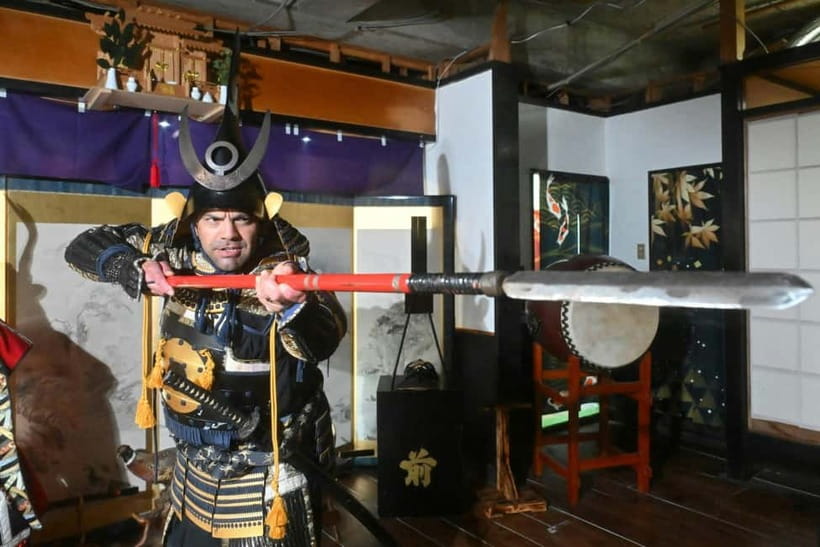
After the sword work, you put on samurai armor and a helmet indoors. The sequence works well because you first learn the role through clothing and movement, then add the protective gear associated with going into battle.
The armor changes the mood. A hakama and dogi give you the basic outline of a samurai, while the armor creates the visual presence most people picture when they hear the word. The sword at your waist and a spear, or naginata, ready nearby complete the scene.
The activity explains that samurai wore armor and drew their swords before battle to show dignity and beauty as well as readiness. That idea adds meaning to the photographs. You are not only putting on heavy-looking equipment for a pose. You are recreating the formal presentation of a warrior preparing to be seen.
The armor is worn indoors, which keeps the session controlled and avoids turning the activity into a long outdoor walk. If you have limited mobility or find layered clothing difficult, remember that the experience involves changing clothes and wearing armor. The supplied restrictions do not list a general mobility policy, so ask the provider directly if you have a specific concern.
The photo session and what you receive
The final photo session records you in samurai armor and helmet. Staff send the photo data to your designated email address, so you do not need to depend on a quick phone snapshot.
This is one of the better-value details. A costume activity can feel fleeting once you leave the venue, but emailed photographs give you a lasting record. The photos also make the experience easy to share with family without asking a stranger to frame the shot.
A movie shoot is not included. It is available only as a paid option. If video matters to you, ask about the extra cost before arrival rather than assuming the photo package includes it.
The photo portion should not be confused with a full professional portrait session. The supplied information confirms photography and delivery of the data, but it does not promise a particular number of images, editing style, or turnaround time. Think of it as a useful included record of the activity.
Is $106 good value?
At $106 per person, this is not a budget attraction. The value depends on how much of the session you use.
I think the price is defensible if you want all of the following in one private booking:
- Samurai clothing and indoor armor
- English-speaking instruction
- A certified professional instructor
- Basic sword forms and manners
- A real sword-cutting attempt
- A private group format
- Included photography
- Taxes and tips
The price is less appealing if you want only to dress up for ten minutes or take a single picture. Osaka offers many lower-cost sightseeing choices, and the activity does not include transportation, hotel pickup, or a tour of Osaka Castle itself.
For a couple or small private group, the direct teaching and included photos make the fee easier to justify. It is also a strong choice for someone who has already seen Osaka Castle and wants a hands-on activity rather than another viewing platform or museum room.
Who should book it?
I would recommend this to adults and children aged 10 or older who enjoy structured cultural activities. It suits people who want to learn the meaning behind the gestures, not just wear armor.
It is particularly good for:
- Couples wanting an unusual Osaka photograph
- Families with older children
- Visitors interested in martial arts
- First-time visitors who want a guided cultural activity
- Anyone who values a private lesson
- People comfortable following careful safety instructions
I would hesitate if you dislike changing clothes, have limited time, or want an outdoor castle activity. The venue is near Osaka Castle, but the class takes place indoors and does not replace visiting the castle itself.
The language setup is another consideration. English and Japanese are the standard options. Other languages may be possible, but you must ask ahead and cannot assume an interpreter will be available.
Booking advice and final verdict
The activity offers free cancellation up to 24 hours before the start time, and you can reserve now while paying later. Those terms provide useful flexibility, especially when your Osaka plans are still moving around.
Still, check the confirmation carefully. Use the Google Maps address, arrive 30 minutes early, bring a T-shirt, and confirm the appointment close to the date because of the reported overbooking cancellation. Those simple steps can prevent the most avoidable problems.
You should book this experience if you want a well-structured, private introduction to samurai manners, sword forms, real cutting, armor, and photography. I especially like the progression from bowing and walking to practice sword movements and then the live blade. That order makes the activity feel respectful and safe.
Skip it if you only want a fast costume photo, if $106 feels too high for a 90-minute indoor session, or if you need guaranteed interpretation in a language other than English or Japanese. For the right visitor, though, this is a memorable way to add some hands-on Bushido to an Osaka Castle day.
FAQ
Where does the samurai armor and sword activity take place?
It takes place at Bushi no Homare, also called Samurai Honor, at Excellence Takayama 1F, 2-3-19 Shiginonishi, Joto-ku, Osaka-shi, Osaka 536-0014.
How do I identify the meeting point?
Look for a wooden sign that reads Honor of the Samurai. A rack with Samurai Honor pamphlets is in front of the shop, and kimonos and hakama may be hanging nearby.
Should I use Google Maps or Apple Maps?
Use Google Maps. The provided directions state that Apple Maps shows an incorrect address.
How early should I arrive?
Arrive 30 minutes before your reserved start time for instructions and changing clothes.
How long does the activity last?
The activity lasts 90 minutes.
What languages are available?
The instructor languages are English and Japanese. Interpreter support for Italian, Spanish, French, Chinese, Thai, and Indonesian may be available, but you must ask about staff schedules before booking.
Is the sword cutting done with a real sword?
Yes. After practicing with an iai practice sword and learning the basic movements, you can try cutting with a real samurai sword under instruction.
Are photographs included?
Yes. The experience includes a photo session in samurai armor, and the photo data is sent to your designated email address.
Just added around Osaka
- (Ticket Included) Explore Osaka Castle & Museum of History★ 4.8 · 21 reviews
- Osaka: Explore Every Bit of Osaka Castle in 3 Hours★ 5.0 · 5 reviews
- Osaka: Early Morning Osaka Castle Guided Tour, Avoid Crowds★ 4.9 · 12 reviews
- Osaka: Osaka Castle 3 hours Historical Walking Tour★ 4.6 · 14 reviews
- Osaka: Osaka Castle – Tsuruhashi – Tennoji (Spanish Guide)★ 4.7 · 10 reviews
- Osaka: Castle, Tea Ceremony, Calligraphy, and Samurai Armor!★ 5.0 · 4 reviews
- Osaka: 1-Day Guided Tour – Sky Bldg, Castle, Namba Shinsekai★ 5.0 · 6 reviews
- Learn Zen in a class of making Matcha tea near Osaka Castle★ 4.8 · 17 reviews
Japanese Castle Tours, compared.
Nijo-jo Castle and Ninomaru Palace Guided Tour
Read our review →
Nijo Castle, Kiyomizu & Fushimi Inari Guided Tour
Read our review →
Osaka Castle Walking Tour and Castle Tower Admission
Read our review →
Imperial Palace & Nijo Castle Guided Walking Tour
Read our review →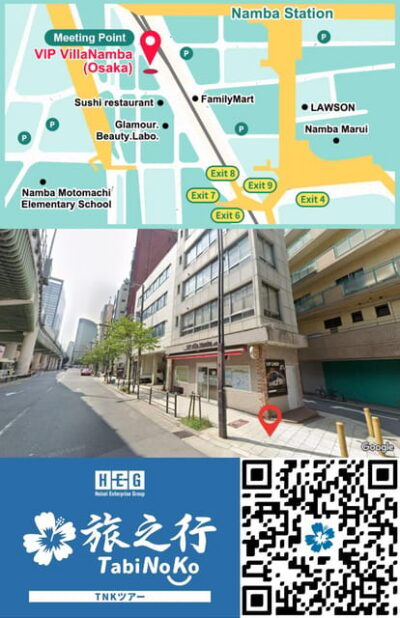
Himeji Castle, Arima Onsen & Mt. Rokko Day Tour
Read our review →
5-Hour Osaka Bike Tour to the Neighborhood of Osaka Castle
Read our review →
Browse the lists this tour appears in