
Review · JAPAN
Okinawa: Shurijo Castle & Tamaudun Guided Tour – UNESCO Site
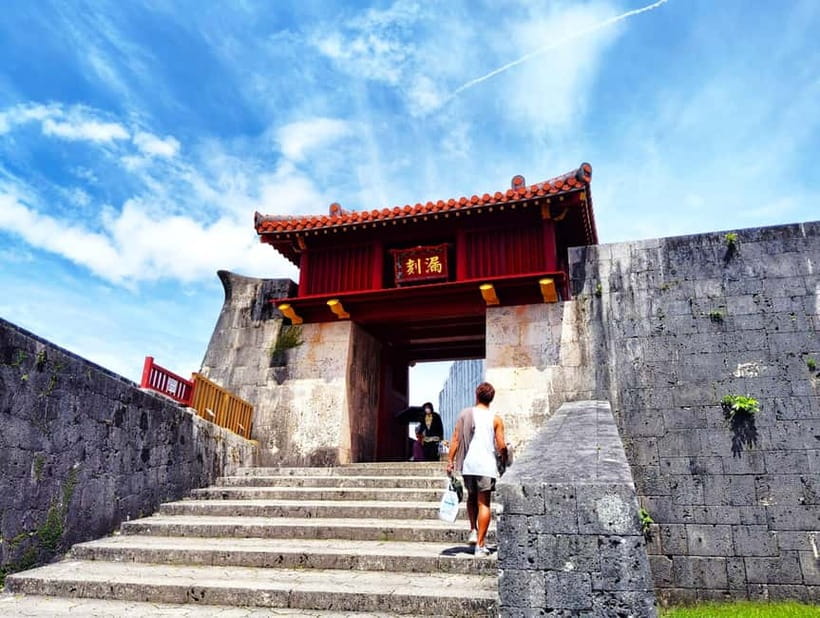
History comes alive on Okinawa’s old royal hill. This private, three to four-hour walking tour links Shurijo Castle, the former seat of the Ryukyu kings, with Tamaudun royal mausoleum and the old Kinjo Stone-Paved Road. I like the way it connects royal power with everyday life, and I like having an English-speaking guide explain the customs and stories that signs alone cannot provide.
The option to begin at Naha Airport is useful if you have just arrived and want to start sightseeing without first checking into your hotel. I also like the early morning choice, which includes the rare Opening Gate Ceremony. The main drawback is clear: Shurijo’s central Seiden, or Main Hall, was destroyed by fire in 2019 and remains under restoration, so you are visiting a historic site in transition rather than a fully restored palace.
Key points to know before booking
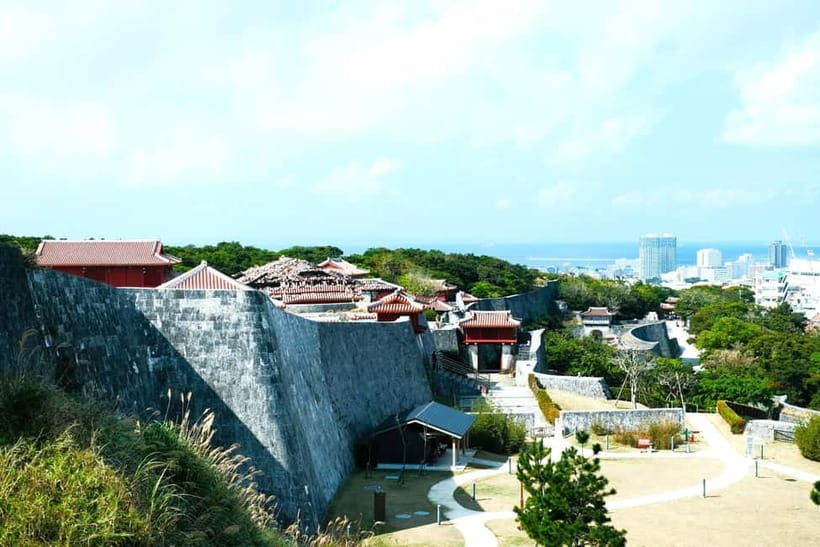
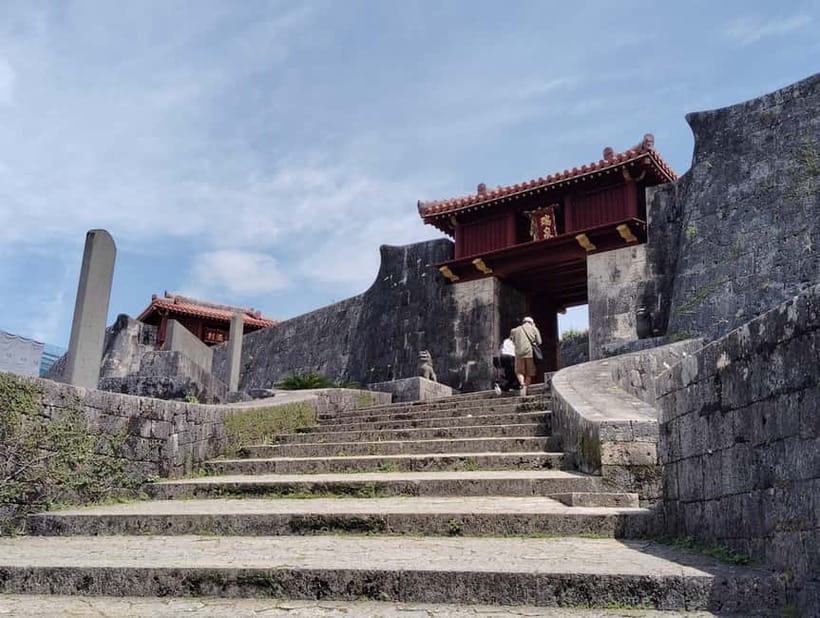
- Shurijo was a palace of diplomacy, not a military fortress: Its vermilion halls, Chinese-influenced details, and curved limestone walls reflect the Ryukyu Kingdom’s role as a center of trade and peaceful international contact.
- Tamaudun adds a solemn second chapter: The royal mausoleum introduces Ryukyuan beliefs about death, ancestors, and the link between royal authority and spiritual lineage.
- The Kinjo Stone-Paved Road brings history down to street level: Old homes, forested paths, and stone walls show how the former capital once felt beyond the palace grounds.
- The sunrise option is genuinely special: The Opening Gate Ceremony takes place only at sunrise, making the early start worthwhile for visitors who enjoy ritual and atmosphere.
- Airport pickup can save time: With the optional airport start, your guide meets you at the monorail station and accompanies you to Shurijo Castle.
- This is a private English-language walk: You get a personal guide rather than a large group, which is especially useful when discussing sensitive subjects such as royal burial customs.
Why Shurijo Castle matters beyond its red gates
Shurijo Castle was the political and spiritual center of the Ryukyu Kingdom from the 15th century onward. King Sho Hashi unified Okinawa’s three regional powers and created a kingdom that favored peace, diplomacy, and international exchange over constant warfare.
That purpose helps explain the castle’s design. You will see vermilion buildings, Chinese-inspired decoration, and curved limestone walls, but the overall feeling is that of a royal court rather than a battlefield. The castle was built to receive envoys, conduct ceremonies, and express authority.
A guide makes a real difference here. Without context, the colors and architecture can seem attractive but disconnected. With an explanation of the Ryukyu Kingdom’s position between Japan, China, and other trading partners, the site becomes easier to read. You begin to understand why Shurijo looks different from many mainland Japanese castles.
The visit lasts about 90 minutes. That gives you time to see the main areas without turning the tour into an all-day historical march. You will also hear about the sacred sites, or Utaki, found within the castle grounds. These places reflect the older spiritual traditions of the islands and show that Shurijo was not simply an administrative complex.
One of the most meaningful points comes from the highest area behind the Seiden. From there, you can look toward Kudaka Island, which Ryukyuan mythology regards as the spiritual birthplace of life. The view gives the castle a wider setting. Royal authority, religious belief, and the sea routes that connected Okinawa all meet in one glance.
More Guided Castle Tours in Japan
- Kyoto: Nijo-jo Castle and Ninomaru Palace Guided Tour
★ 4.7 · 1,020 reviews - Kyoto: Nijo Castle, Kiyomizu & Fushimi Inari Guided Tour
★ 4.7 · 700 reviews - Kyoto: Imperial Palace & Nijo Castle Guided Walking Tour
★ 4.7 · 453 reviews
Visiting Shurijo during restoration
You should set your expectations before arriving. The Main Hall was destroyed by fire in 2019, and restoration is still underway. This is not a minor footnote. The Seiden was the visual and symbolic heart of the castle, so anyone expecting to walk through a fully reconstructed royal interior may feel disappointed.
At the same time, the restoration adds an important layer to the visit. You are seeing a historic place being rebuilt with the help of old records and traditional craftsmanship. The process helps explain how much care is needed to preserve Ryukyuan architecture and identity.
The site still has plenty to offer. The remaining buildings, ceremonial spaces, walls, views, and Utaki provide a strong sense of place. A private guide can also adjust the explanation to your interests, spending more time on architecture, royal ceremonies, religion, or the fire and restoration work.
If the main hall is the only reason you want to come, wait until you confirm the current restoration status. If you want to understand Okinawa’s former kingdom as a whole, the visit remains worthwhile.
Tamaudun and Ryukyuan ideas about death
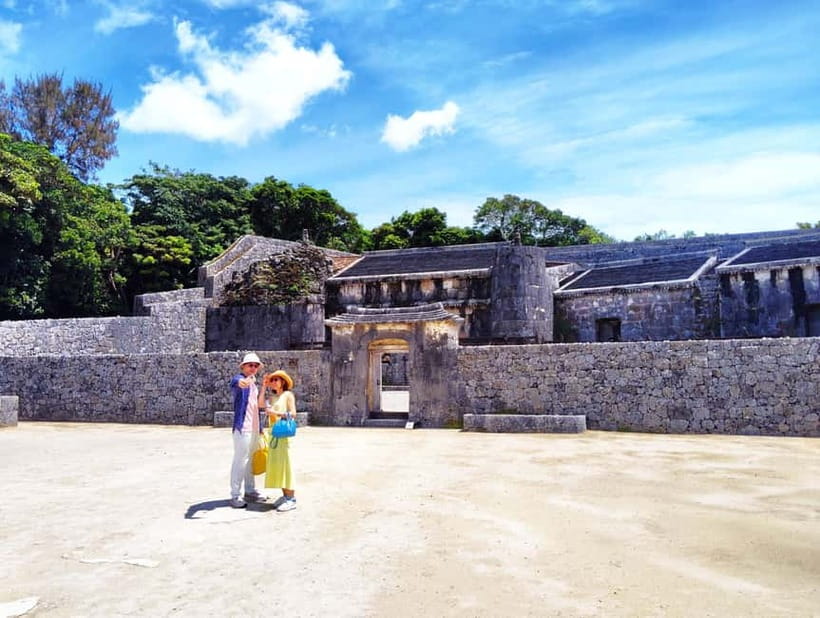
After Shurijo, the tour moves a short distance to Tamaudun, the royal mausoleum built in the early 16th century. The visit takes about 45 minutes, which is enough time to appreciate the site without rushing through its meaning.
Tamaudun was built from Ryukyuan limestone and enclosed by thick stone walls. Its design feels quieter and more restrained than the castle. That change in mood is part of the experience. You move from public power and ceremony to family lineage, remembrance, and death.
The mausoleum held the kings and queens of Ryukyu. A guide can help you understand that the site is not just a royal tomb. It reflects Ryukyuan views on ancestral reverence and the continuing connection between the living and the dead.
Its location near Shurijo is important. The royal court and the royal mausoleum sit close together, linking government with spiritual ancestry. The kings ruled from the castle, but their legitimacy also depended on their place within a royal line.
I find this stop especially valuable for visitors who want more than palace architecture. Tamaudun gives the tour emotional weight. It also shows why Okinawan history cannot be reduced to a simple story of buildings and rulers. Family, ritual, and ancestry remain central to how the old kingdom is understood.
Because Tamaudun is a solemn place, follow your guide’s instructions and keep your attention on the site. This is not a stop to rush through for a few photographs.
Walking the Kinjo Stone-Paved Road
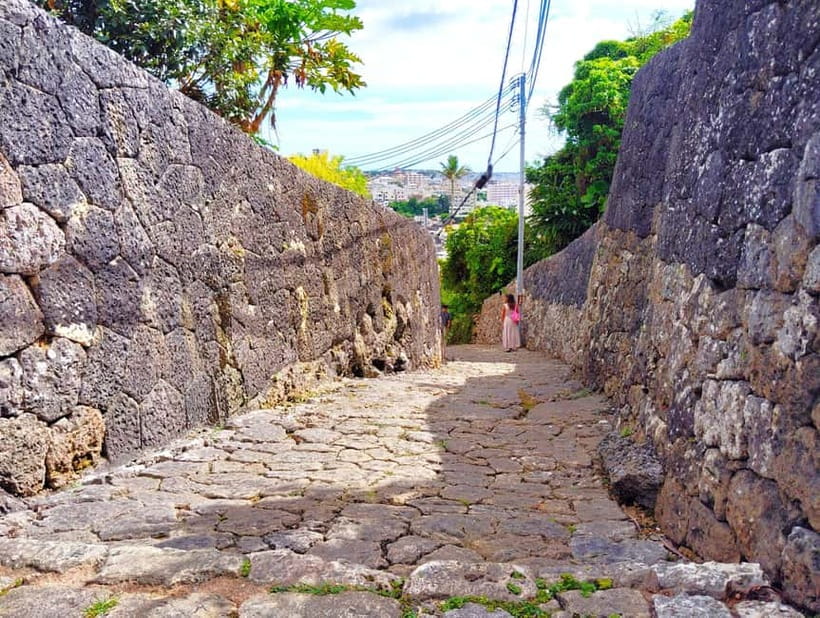
The final major stop is the Kinjo Stone-Paved Road, a 30-minute walk that changes the scale of the tour once again. Instead of royal compounds and burial walls, you follow a sloping road paved with traditional Ryukyuan stone.
The road is lined with forested sections, old homes, and stone walls. It gives you a sense of how people moved through the old capital and lets you notice details that are easy to miss from a vehicle. The stone under your feet is part of the history, not just a background for photographs.
This section is also the most atmospheric part of the outing. Shurijo explains the kingdom from above, through court life and political power. Tamaudun explains the royal family’s spiritual continuity. Kinjo shows the textures of ordinary movement through the old city.
The slope matters. You are walking on an old stone road, not a smooth modern sidewalk, so comfortable shoes are a sensible choice. The walk is short, but the surface and incline may require care. If you prefer a purely indoor or flat sightseeing experience, this tour may feel more physical than expected.
The tour finishes at Kinjo Muraya, written in Japanese as 金城村屋. Since the end point differs from the starting options, check your onward plans before booking. From there, you can continue your day in the Shuri area, but the supplied details do not specify additional transportation.
Same region, a different set of walls:
- Osaka Castle: Museum and Tower Entry Ticket
★ 4.5 · 2,380 reviews - Tokyo Castle & Imperial PalaceーShogun Walking Tour
★ 4.7 · 1,068 reviews - Ultimate Osaka Walking Tour: Castle, Dotonbori & Hidden Gems
★ 5.0 · 862 reviews - Tokyo Castle & Imperial PalaceーShogun Walking Tour
★ 5.0 · 724 reviews
The sunrise Opening Gate Ceremony
The optional morning version is one of the most distinctive choices available. The Opening Gate Ceremony takes place only at sunrise, so this option requires an early start and a willingness to organize your morning around the castle.
The ceremony adds ritual to the visit before the regular sightseeing begins. You are not simply arriving when the doors open and following a standard route. You are seeing the castle at the start of its day, when the opening itself becomes part of the experience.
I would choose this option if you enjoy quiet ceremonies, early light, and a slower beginning to the day. It may be less suitable if you are recovering from a late arrival or want a relaxed morning. Since exact starting times depend on availability, confirm the schedule before committing.
The sunrise version can also make sense for photographers, though the tour’s main value is the cultural setting rather than a guaranteed photo opportunity. The experience is about witnessing a ceremony tied to the castle, not simply arriving early for fewer people.
Starting at Naha Airport
The airport option is practical rather than ceremonial. Your guide meets you at the Naha Airport monorail station and accompanies you to Shurijo Castle. That is useful if you have luggage, limited time, or a short Okinawa stop.
It can also prevent a common first-day problem: spending the morning trying to work out transport, tickets, and directions in an unfamiliar city. You meet the guide at the station, then begin the historical visit with help from someone who knows the route.
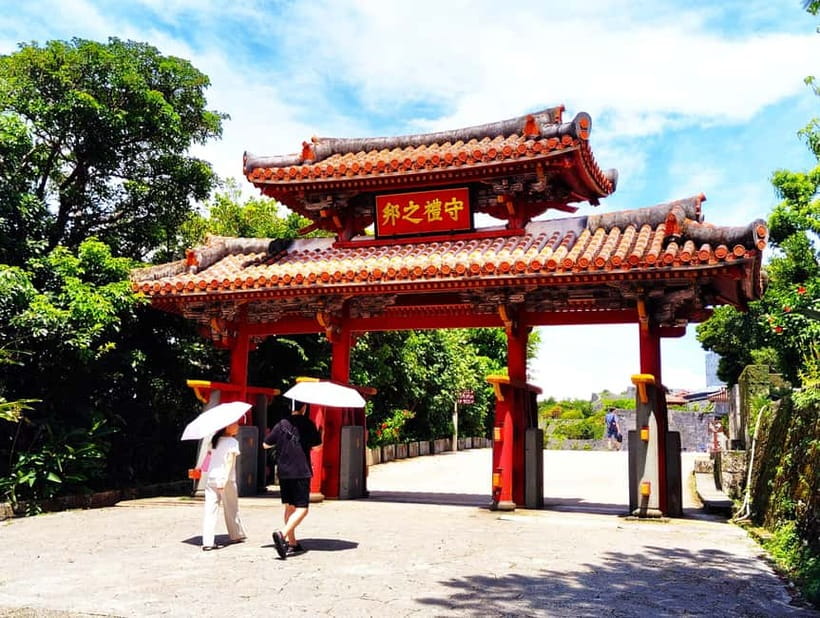
The airport start is optional, not part of every booking. The other starting point is Shureimon, the castle gate, so read the selected option carefully. The meeting point may change depending on which version you choose.
Because the tour ends at Kinjo Muraya rather than returning automatically to the airport, plan the rest of your day. The provided details confirm transportation from the airport to Shurijo for the airport option, but they do not promise a return transfer.
The guide can shape the quality of the visit
This is a private tour in English, and that matters at a site where history and religion overlap. You can ask questions as they come up instead of waiting for a large group to move along.
Sara received particularly strong praise for making the visit engaging, explaining Okinawa’s past through stories, and offering extra suggestions after the scheduled walk. She also took one couple to additional historical spots she thought they would appreciate. That suggests a guide who pays attention to the people in the group rather than delivering a fixed speech.
You should still remember that guide quality can vary by assignment. The experience is sold with a live English-speaking guide, but Sara is not guaranteed unless the booking specifically names her. The important advantage is the private format: your guide can spend more time on the subjects you care about.
For some people, that personal attention is the main reason to pay for a guided tour. For others, especially independent visitors who enjoy reading and exploring alone, the price may be harder to justify.
Is $97 a fair price?
The cost is $97 per person for a three to four-hour private experience. That is not a budget walk, especially because the central Main Hall is still closed for restoration. You are paying for the guide’s time, the private format, the linked route, and the option of airport transportation or the sunrise ceremony.
The value improves if you are new to Okinawa. In one morning or afternoon, you cover the former royal court, the royal mausoleum, and an old residential road. You also receive a historical explanation that connects the three sites instead of treating them as separate attractions.
The price makes more sense for couples, families, and small private groups who want direct access to a guide. It is less compelling for someone who only wants to photograph the castle gate or spend a few minutes at Shurijo.
The optional airport start can add practical value on arrival day. The early ceremony can add cultural value for visitors who specifically seek traditional ritual. Think of those options as reasons to book this tour rather than extra decoration.
Cancellation is flexible up to 24 hours before the start for a full refund, and you can reserve now and pay later. Those terms help if your Okinawa schedule is still shifting, but they should not replace checking the exact meeting point and starting time.
Who should book this Okinawa walk?
I would recommend it to first-time Okinawa visitors who want a clear introduction to the Ryukyu Kingdom. It also suits anyone interested in royal history, sacred places, architecture, and the link between official power and family tradition.
The private format makes it a good choice for couples or families who want to ask questions. The airport start is useful for a short visit, while the sunrise version suits early risers who want to see a ceremony few people arrange on their own.
You may want to skip it if your main goal is to see the completed Seiden interior. You may also prefer a self-guided visit if you are comfortable researching the castle, mausoleum, and stone road separately.
The walk includes a slope and traditional stone paving, so wear sensible shoes. Allow extra thought for the weather and your energy level, particularly with the early morning option.
Should you book it?
Book this tour if you want context, personal guidance, and three connected historical sites in one outing. The best parts are the clear link between Shurijo and Tamaudun, the atmospheric Kinjo road, and the chance to begin at sunrise or from Naha Airport.
Do not book expecting a fully restored castle. The 2019 fire remains an unavoidable part of the visit. But if you can accept the unfinished Seiden and value a thoughtful explanation of Okinawan culture, this is a strong introduction to the old royal capital.
FAQ
How long does the tour last?
The experience lasts three to four hours. The listed sightseeing time is about 1.5 hours at Shurijo Castle, 45 minutes at Tamaudun, and 30 minutes on Kinjo Stone-Paved Road.
Where can the tour begin?
The available starting points are Naha Airport Station and Shureimon, the castle gate. The meeting point depends on the option you book.
Can the tour start at Naha Airport?
Yes. With the optional airport version, the guide meets you at the monorail station and accompanies you to Shurijo Castle.
Is the Opening Gate Ceremony included?
It is included with the optional early morning version. The ceremony takes place only at sunrise.
What language does the guide speak?
The tour is conducted in English with a live guide.
Is this a private tour?
Yes. The experience is offered for a private group.
Is Shurijo Castle’s Main Hall open?
The Main Hall was destroyed by fire in 2019 and is under restoration. The castle grounds still include other buildings, sacred sites, views, and historical areas to explore.
Just added around Japan
- Tokyo: Edo Castle and Imperial Palace Guided Walking Tour★ 5.0 · 6 reviews
- (Ticket Included) Explore Osaka Castle & Museum of History★ 4.8 · 21 reviews
- Peace Memorial Park, Hiroshima Castle, & Garden Private Tour★ 4.8 · 7 reviews
- Osaka: Explore Every Bit of Osaka Castle in 3 Hours★ 5.0 · 5 reviews
- Osaka/kyoto: Himeji Castle, Kobe. Luxury Day Trip with Guide★ 5.0 · 2 reviews
- Osaka: Early Morning Osaka Castle Guided Tour, Avoid Crowds★ 4.9 · 12 reviews
- Osaka: Osaka Castle 3 hours Historical Walking Tour★ 4.6 · 14 reviews
- Osaka: Osaka Castle – Tsuruhashi – Tennoji (Spanish Guide)★ 4.7 · 10 reviews
Guided Castle Tours, compared.

Edinburgh Castle: Guided Walking Tour with Entry Ticket
Read our review →
Cathedral, Giralda & Alcazar Entry With Guided Tour
Read our review →Edinburgh Castle: Guided Walking Tour with Entry Ticket
Read our review →
Stonehenge, Windsor Castle and Bath Full Day Guided Tour
Read our review →
Edinburgh Castle Guided Walking Tour in English
Read our review →
Alcázar and Cathedral Entry Ticket and Guided Tour
Read our review →
Alcázar of Seville Skip-the-Line Tickets and Guided Tour
Read our review →
Dublin Book of Kells, Castle and Molly Malone Statue Guided Tour
Read our review →Browse the lists this tour appears in