

Review · LISBON
Lisbon: Alfama and São Jorge Castle Quarters Walking Tour
Alfama rewards slow footsteps. This 150-minute walk follows Lisbon’s oldest lanes, from the spiky Casa dos Bicos to the castle walls, with Roman ruins, fado lore, and a cathedral visit along the way. I especially like the small-scale feel and the way the route connects ancient stones with ordinary neighborhood life. The main catch is clear: São Jorge Castle itself is not included, only its surrounding quarter and walls.
I also like the Portas do Sol viewpoint, which gives you a fine first look at Lisbon’s hills and rooftops. Guides such as Ricardo, a history teacher, and Agatha have been praised for making the past easy to follow, while Helena and Elena have been noted for flexibility. Bring good shoes, though. This is a hilly walk through stairs, alleys, and uneven paving, not a gentle stroll.
Key points to know before booking

- The castle is not entered: You explore the streets and walls around São Jorge Castle, but castle admission costs extra.
- Casa dos Bicos is the meeting point: Look for the unusual building covered in stone diamonds at Campo das Cebolas.
- Roman Lisbon appears along the route: The Cetária preserves traces of ancient salting tanks from Olisipo.
- Lisbon Cathedral entry is included: The 12th-century church shows several architectural styles.
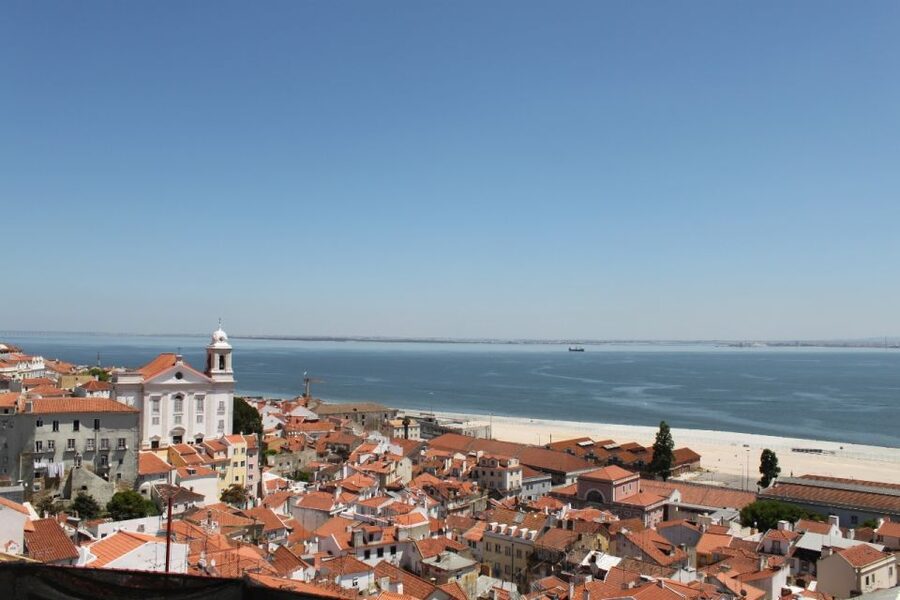
- Portas do Sol provides the payoff: The belvedere offers broad views over Alfama and the Tagus area.
- The route is not suited to limited mobility: Expect steep streets, stairs, and uneven surfaces.
Starting at the House of Spikes
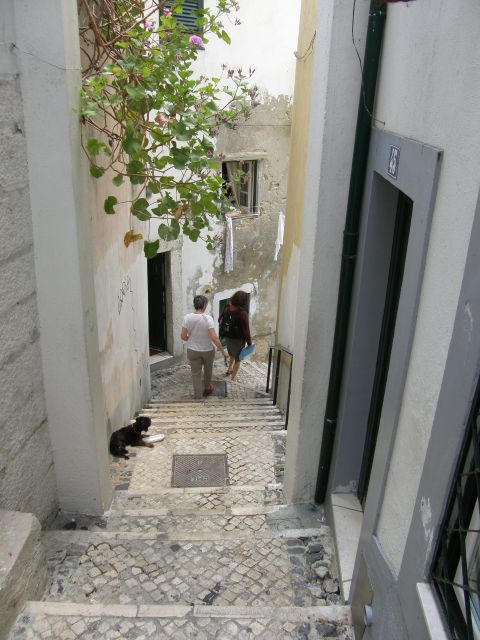
The tour begins at Casa dos Bicos, the remarkable building at Campo das Cebolas. Its name means House of the Spikes, a fitting description for the diamond-shaped stones covering its facade. Built around 1523, it survived the 1755 Lisbon earthquake, which makes it a useful starting point for thinking about what remains and what vanished.
You meet near the house, with the Terreiro do Paço metro station listed as the nearest stop. The guide carries a black bag marked with the Lisboa Autêntica logo. That detail matters in a busy city square, where a clear meeting signal saves time and uncertainty.
The opening location also gives you a useful geographic introduction. From the riverfront, you move uphill into Alfama, following the old defensive side of Lisbon toward the castle. I like this direction because the city’s story unfolds as the streets become older, narrower, and more layered.
The route is conducted in English, Spanish, Portuguese, German, or French. Group size can vary, but several departures have felt almost private, including one booking with only three family members. That is a real benefit if you enjoy asking questions or want the guide to adjust the route slightly. It is not something you should assume every time, but small groups appear to be possible.
More Castle Walking Tours in Portugal
- Walking Tour Small Group Lisbon + S. Jorge Castle Tickets
★ 5.0 · 44 reviews - Sintra: Walking Tour with Palace, Castle, and Old Town Visit
★ 4.9 · 66 reviews - Night Walk: “From the Ghosts of the Castle to the Apparitions of the Mountains”
★ 5.0 · 37 reviews
Roman Olisipo at the Cetária
One of the most useful stops is the Cetária, where you can see traces of Roman salting tanks. Lisbon was known as Olisipo in Roman times, and these remains show the city as a working port rather than just a pretty collection of hills and tile-covered buildings.
The salting tanks were linked to preserving fish, an industry that made sense in a coastal city. You do not need a long lecture to understand the point: people were processing food, trading goods, and building a city here long before the Portugal you know today existed.
The guide also explains the story behind Alfama’s name. The Romans noticed the area’s thermal waters, while Muslim rulers later used the name Al-Hamma, connected with hot springs or baths. That small piece of language helps tie together the Roman and Muslim chapters of Lisbon without treating the neighborhood as a museum set.
This is where a live guide earns the $23 price. A lone walk through Alfama can show you attractive walls and narrow lanes, but it may not explain why the neighborhood developed where it did. The guide gives the stones a job and a timeline.
Alfama’s lanes, patios, and former Jewish Quarter

From the Roman remains, the walk turns into Alfama proper. This is the part many people picture when they imagine old Lisbon: steep alleys, stairways, small squares, interior patios, and houses packed into the slope below São Jorge Castle.
The route follows the old city walls and passes through spaces that are easy to miss if you are simply walking toward a viewpoint. You may see passages that feel almost too narrow for a city street, along with stairways leading to tucked-away corners. The guide’s job here is less about listing dates and more about showing how residents used the neighborhood.
The walk also reaches what used to be Lisbon’s Jewish Quarter. That stop gives you another layer of the city’s past and shows how different communities shaped the same hillside over time. The value is in the connection between geography and daily life. A steep street is not just picturesque. It tells you how people moved, carried goods, and built homes on difficult ground.
Guides have received strong praise for their storytelling and their ability to explain customs without making the tour feel like a classroom. Ricardo, described as a history teacher, was especially engaging with a family that included a 15-year-old. That is a good sign if you are visiting with older children or teenagers who need more than a list of dates to stay interested.
Still, Alfama can be physically demanding. You should wear comfortable clothing and shoes, as requested for the tour. The activity is specifically not suitable for people with mobility impairments, and the route’s steep streets and stairs explain why.
Fado in the streets of Alfama
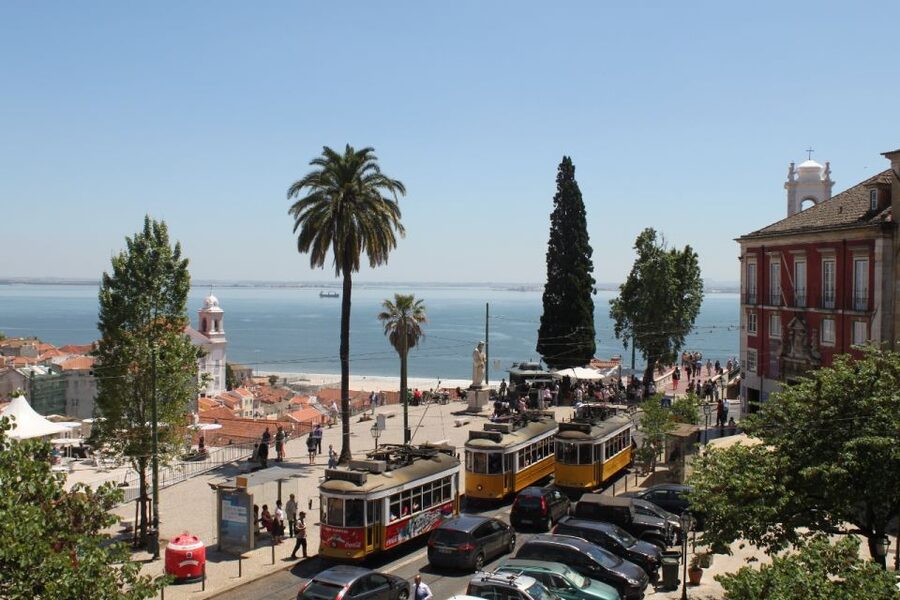
Alfama is closely tied to fado, Lisbon’s melancholy song tradition. The tour explains how fado began and how it became part of local customs, rather than treating it as a performance added for tourists.
You pass through Largo do Chafariz de Dentro, one of the area’s old gathering points. The stop connects music with public life, neighborhood routines, and the city’s long relationship with the river and working communities.
This is not a fado concert, so you should not book the tour expecting live music. Instead, you get context that can help you choose a fado venue later. That is one reason the tour works well on your first day in Lisbon. Several participants found it useful for getting their bearings and deciding what to return to afterward.
The guides also offer suggestions for the rest of your stay. That advice can be especially handy after the tour, when you are choosing between another historic site, a meal, or a fado evening. The benefit depends on how much you ask, but the format encourages questions.
More Castle Walking Tours in Lisbon:
- Edinburgh Castle: Guided Walking Tour with Entry Ticket
★ 4.7 · 11,699 reviews - Prague: 3-Hour Walking Tour of Old Town & Prague Castle
★ 4.7 · 5,696 reviews - Edinburgh Castle: Guided Walking Tour with Entry Ticket
★ 5.0 · 5,540 reviews - Edinburgh Castle Guided Walking Tour in English
★ 5.0 · 5,214 reviews
Lisbon Cathedral and its changing styles
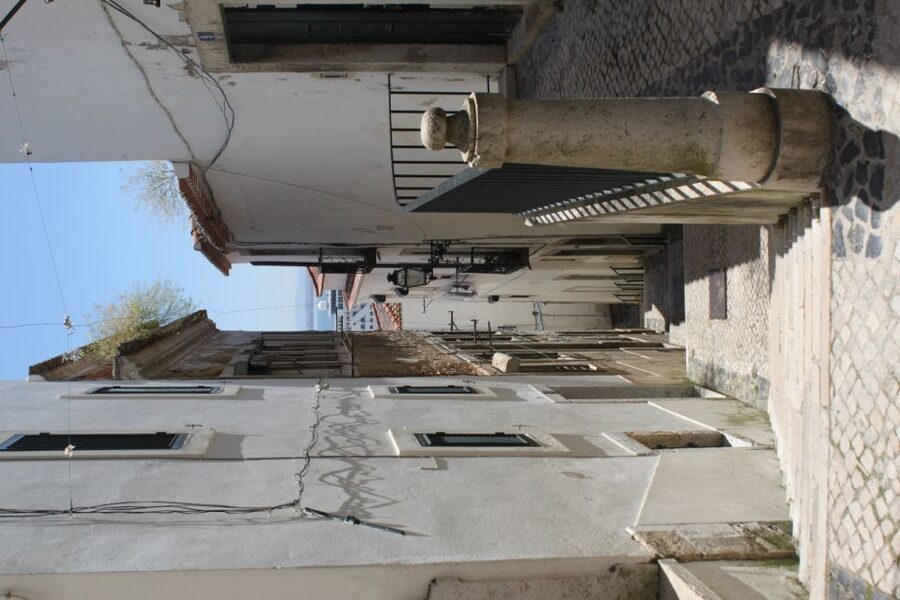
The Cathedral of Lisbon, often called Sé, is a central stop and the one major interior visit included in the price. Built in the 12th century, it has been altered over time, so you see a mix of architectural styles rather than one perfectly uniform design.
That mixture is part of the appeal. The cathedral reflects a city that has been rebuilt, modified, and repaired across centuries. A guide can point out how the building’s appearance relates to its age and changing fortunes, giving you more to notice than the facade alone.
The cathedral visit also breaks up the uphill walking. You move from narrow outdoor lanes into a major religious building, then return to the quarter around it. That rhythm works well during a 150-minute tour.
Keep in mind that the cathedral is included, while São Jorge Castle is not. If your main goal is to enter the castle, you will need to arrange a separate visit and pay its admission. The tour does take you toward the castle area, which helps you understand the setting, but it does not replace a castle ticket.
Portas do Sol and the best view on the route
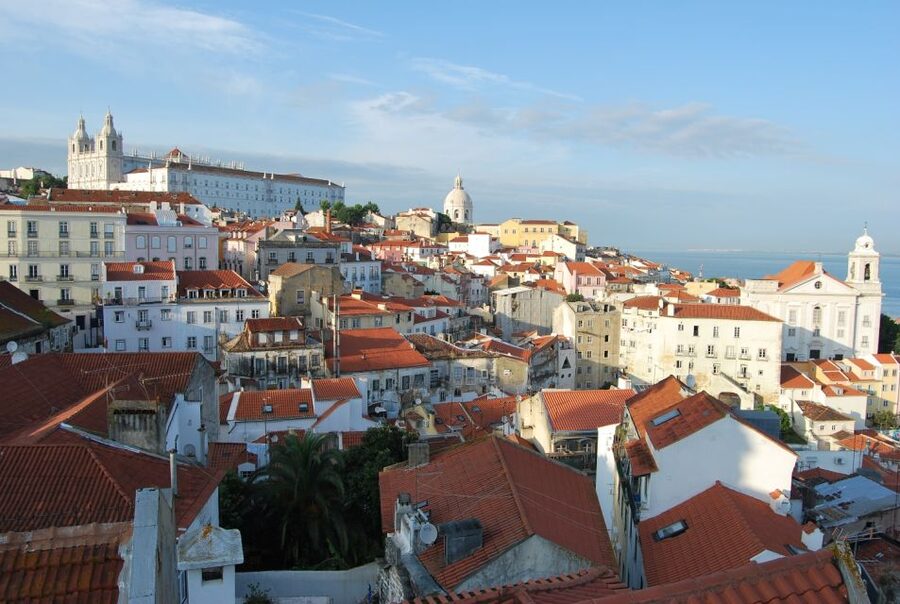
Portas do Sol is the visual high point of the walk. From this belvedere, you get panoramic views across Alfama and toward the riverfront, with Lisbon’s tiled roofs and hills spread below.
The viewpoint is more useful after the historical stops. By then, you have walked through the old quarter and heard how the city grew around the castle and walls. You can look down and recognize the slope as a lived-in district, not just a postcard scene.
I would treat this as a good orientation point. It helps you understand Lisbon’s steep layout before you explore on your own. It is also a natural place to pause, take photographs, and decide which streets or sights deserve a return visit.
Views are weather dependent, of course, and the stop does not remove the physical demands of the route. You still need to get there on foot. If hills are hard for you, the viewpoint may be more effort than pleasure.
What $23 gets you
At $23 per person, the tour offers a solid amount of guided time for Lisbon. You receive a live guide, entry and a guided visit to the cathedral, and a planned route through one of the city’s most confusing quarters.
The value is strongest if you want context. You are paying for the links between Roman Olisipo, Muslim Alfama, the former Jewish Quarter, fado, the cathedral, and the castle district. On your own, you can see many of the same streets, but you may miss the reasons they matter.
The price is less attractive if you only want photographs or if you planned to visit every stop independently. It also does not include São Jorge Castle admission or transport to and from the meeting point. Those costs are easy to understand, but they should be part of your budget.
The live explanation is the main purchase. Past guides have included Ricardo, Agatha, Helena, Elena, Lucy, Fatima, and Beatrice, with praise for clear history, friendly conversation, and flexible route choices. The exact guide will affect the tone, but the repeated strength is the human element.
Who should take this walk
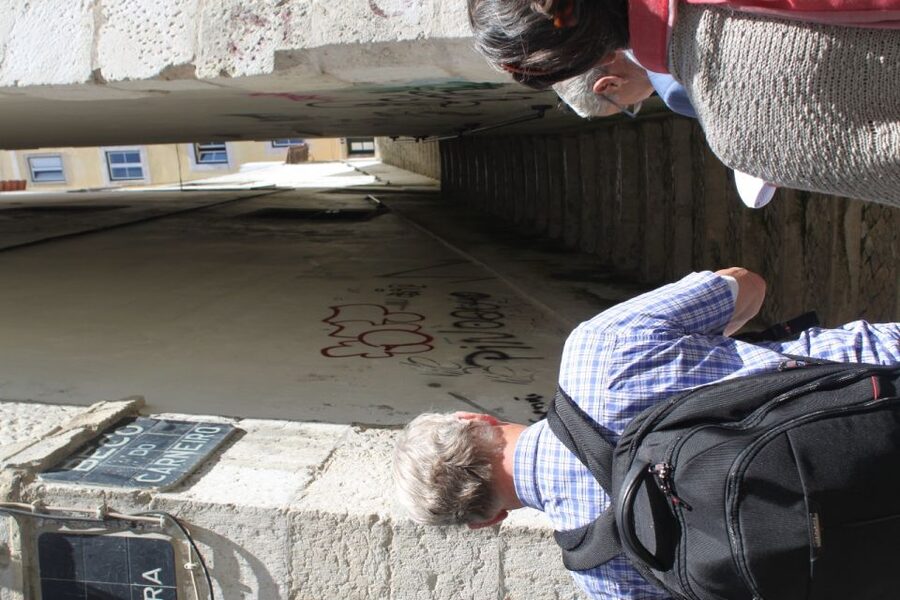
I would choose this tour early in a Lisbon visit. It gives you a working map of Alfama and points out places you may want to revisit, including the cathedral, fado areas, viewpoints, and castle surroundings.
It suits first-time visitors who want a broad introduction without spending half a day inside a museum. It also fits families, since one guide kept a 15-year-old interested and made an effort to include children in the conversation.
History fans will appreciate the chronological range, from Roman remains to medieval religious architecture and later music traditions. The tour also suits anyone who prefers local streets and ordinary urban details over a checklist of major monuments.
I would think twice if you have difficulty with hills, steps, or uneven paving. I would also skip it if your priority is entering São Jorge Castle. The tour reaches the castle quarter, but the castle itself is deliberately outside the included program.
Practical details for a smoother morning

Allow time to reach Campo das Cebolas and find Casa dos Bicos. Look for the building covered in diamond-shaped stones, then locate the guide carrying the black Lisboa Autêntica bag.
Wear comfortable clothes and shoes. The instructions are brief, but the route tells you why they matter. Alfama is steep and maze-like, and much of the experience depends on walking at a steady pace through old lanes and stairways.
The tour lasts 150 minutes, or two and a half hours. That is long enough to cover the main story without taking an entire day, though you should not schedule a tight appointment immediately afterward.
You can book with a reserve-now, pay-later option, and cancellation is free up to 24 hours before the start for a full refund. Those terms are useful if your Lisbon plans may shift.
Should you book the Alfama walk?
Book it if you want a clear introduction to old Lisbon, especially on your first day. The route combines Roman remains, Moorish and medieval echoes, fado customs, a cathedral visit, and a strong viewpoint for a reasonable price.
Do not book it expecting a tour inside São Jorge Castle. Choose it for the streets around the castle, the stories beneath Alfama’s surface, and the chance to ask a local guide what deserves more of your time.
For me, the best reason to go is the balance. You get major sights, but also patios, stairways, old walls, local customs, and clues about how residents use the neighborhood. If you can handle the hills and want more than a photo stop, this is a smart start to Lisbon.
FAQ
How long does the tour last?
The tour lasts 150 minutes, or two and a half hours.
What languages are available?
The live guide is available in English, Spanish, Portuguese, German, and French.
Where does the tour meet?
Meet at Campo das Cebolas, at Casa dos Bicos, the building covered in spikes. Terreiro do Paço is the nearest metro station.
How do I identify the guide?
The guide will be carrying a black bag with the Lisboa Autêntica logo.
Is São Jorge Castle included?
No. The tour explores the castle quarter and follows the area around the castle walls, but entry to São Jorge Castle is not included.
Is Lisbon Cathedral included?
Yes. Entrance and a guided visit to Lisbon Cathedral are included.
Does the tour include transport?
No. Transfers to and from the meeting point are not included.
Is the tour suitable for people with mobility impairments?
No. The activity is not suitable for people with mobility impairments.
What should I bring?
Wear comfortable clothes. Comfortable shoes are especially sensible for the steep streets, stairs, and uneven paving in Alfama.
Can I cancel for a refund?
Yes. You can cancel up to 24 hours in advance for a full refund. The booking also offers a reserve-now, pay-later option.
Just added around Lisbon
- Tomar: Knight’s Templar Castle and Convent of Christ Tour★ 4.9 · 84 reviews
- From Lisbon: Tomar, Christ Convent & Almourol Castle Tour★ 5.0 · 64 reviews
- Sintra: Moorish Castle, Pena Palace, Cabo da Roca, & Cascais★ 5.0 · 6 reviews
- Discover Alfama with the Exterior View of São Jorge Castle★ 4.4 · 21 reviews
- Lisbon: Sintra, Pena, Moorish Castle, Regaleira & Cascais★ 4.8 · 136 reviews
- Lisbon: Tower of Saint George’s Castle Church Ticket & Drink★ 3.7 · 37 reviews
- Lisbon Tour: Cristo Rei, Belem, São Jorge Castle, 360°View.★ 4.9 · 18 reviews
- Lisbon: Saint George’s Castle Entry Ticket and Guided Visit★ 4.6 · 127 reviews
Castle Walking Tours, compared.

Edinburgh Castle: Guided Walking Tour with Entry Ticket
Read our review →
3-Hour Walking Tour of Old Town & Prague Castle
Read our review →Edinburgh Castle: Guided Walking Tour with Entry Ticket
Read our review →
Edinburgh Castle Guided Walking Tour in English
Read our review →

Prague 3-hour Afternoon Walking Tour including Prague Castle
Read our review →
Royal Mile and Edinburgh Castle – Small Group Walking Tour
Read our review →Browse the lists this tour appears in