
Review · LISBON
Discover Alfama with the Exterior View of São Jorge Castle
The oldest streets tell the best stories. This 150-minute walk from Rossio into Alfama gives you a useful first look at Lisbon’s steep lanes, tiled façades, old churches, Fado traditions, and views toward the Tagus River. I love the stop at Miradouro Portas do Sol and the way the tour connects Alfama’s surviving streets with the destruction caused by the 1755 earthquake. The main consideration is that the advertised price is unusually low, so you should understand exactly how payment works before you set out.
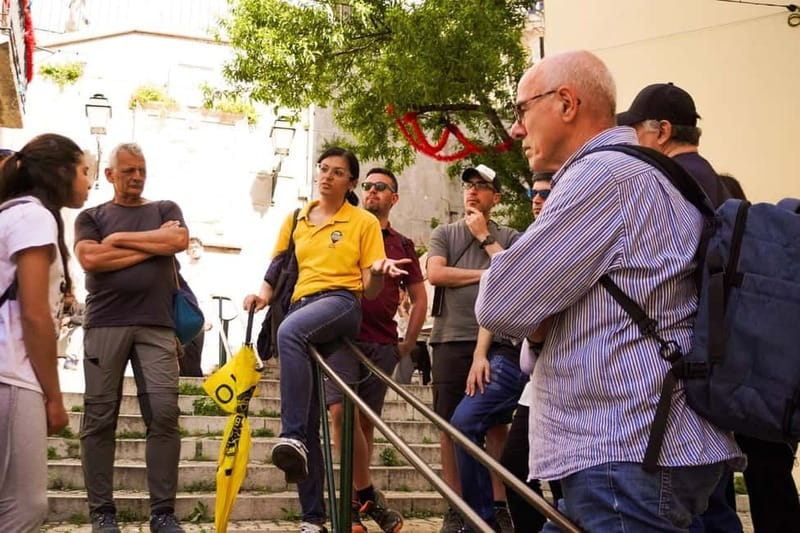
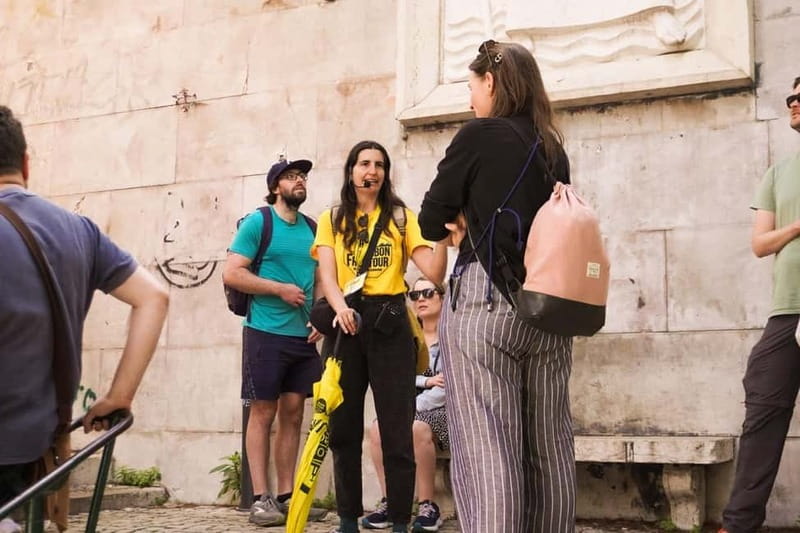
I also like the clear meeting point: look for the team by the statue in Rossio Square, marked by a yellow umbrella and yellow clothing. Guides such as Andy and Valeria have been praised for their warmth, humor, and strong command of Lisbon’s story. You will walk uphill and over uneven stone, so comfortable shoes and water are not optional extras.
Key points before you book
- Alfama survived the 1755 earthquake: Its winding street plan and older buildings offer a rare sense of Lisbon before the city was rebuilt.
- The walk begins at Rossio: You first move through central Lisbon before reaching Alfama’s narrow lanes and steep climbs.
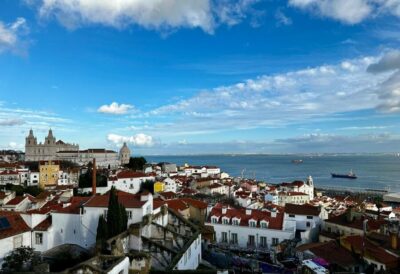
- Portas do Sol is a major payoff: The miradouro opens across terracotta roofs toward the Tagus River.
- Fado is part of the story: You learn how Lisbon’s famous music fits into Alfama’s identity and Portuguese culture.
- The route ends at Lisbon Cathedral: Monument entry is not included, but the cathedral gives you a fitting final landmark.
- The price needs careful attention: The listed cost is about $1.77 per person, while one guide explained a pay-what-you-feel arrangement at the end.
Starting in Rossio Square
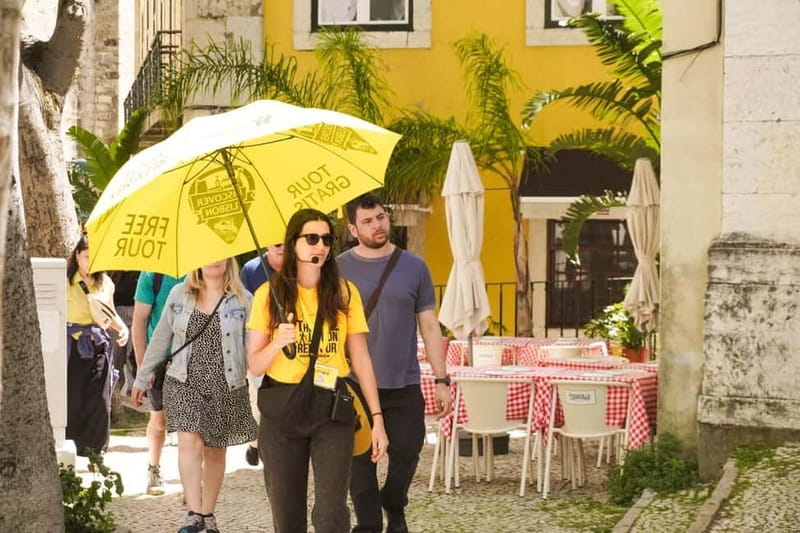
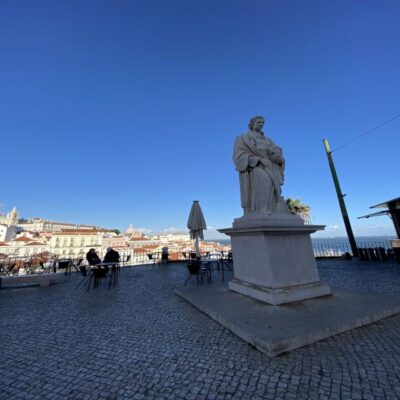
Rossio is a sensible place to begin. It is central, easy to recognize, and close to several important parts of old Lisbon. Meet near the statue in the middle of the square, where the team uses a yellow umbrella and yellow hoodie or T-shirt as its marker.
That clear visual signal matters in a busy city. You do not need to search a side street or enter a shop. Arrive with enough time to find the statue and identify the yellow team before the 150-minute walk begins.
The tour starts outside Alfama, which helps you understand the neighborhood in context. Rather than dropping you straight into a maze of lanes, the route first passes key areas of central Lisbon and then works toward the older quarter. This gives you a gradual change from open city squares to tight alleys and steep streets.
Your English-speaking guide provides historical and cultural explanations as you walk. The experience is not built around entering major monuments. It is a street-level tour, so the value comes from the guide’s interpretation, the route, and the views rather than from included admission tickets.
A few more castle visits around Lisbon worth a look
- Lisbon: São Jorge Castle E-Ticket and Audio Guide
★ 4.3 · 2,182 reviews - Lisbon: Sao Jorge Castle Skip-the-Line Ticket with Guide
★ 4.6 · 1,191 reviews - Templar Tour Convent of Christ & Almourol Castle from Lisbon
★ 5.0 · 704 reviews
Walking into old Alfama
Alfama is one of Lisbon’s oldest districts and one of the few areas to escape the worst of the 1755 earthquake. That fact explains much of its character. While other parts of Lisbon were planned and rebuilt after the disaster, Alfama retained a more tangled pattern of narrow streets and lanes.
You can expect a neighborhood that feels less orderly than central Lisbon. Streets twist, slopes rise, and one lane may open suddenly onto a small square or a broad view. This is a place where the route itself is part of the lesson.
The name Alfama comes from the Arabic Al-hamma, meaning hot fountains or baths. That detail points to the district’s earlier Moorish connection and helps explain why Alfama feels different from the grander streets rebuilt after the earthquake.
I like tours that explain why a neighborhood looks the way it does. Without that context, Alfama’s narrow lanes can seem merely picturesque. With it, the uneven street plan becomes evidence of survival, rebuilding, and changing Lisbon.
Be ready for a physical walk. The route includes steep, winding streets, and old paving can be tiring after a while. You might want to avoid new shoes or thin sandals. Water is worth carrying, especially in warm weather, since the tour lasts two and a half hours.
Azulejos, old churches, and everyday Lisbon
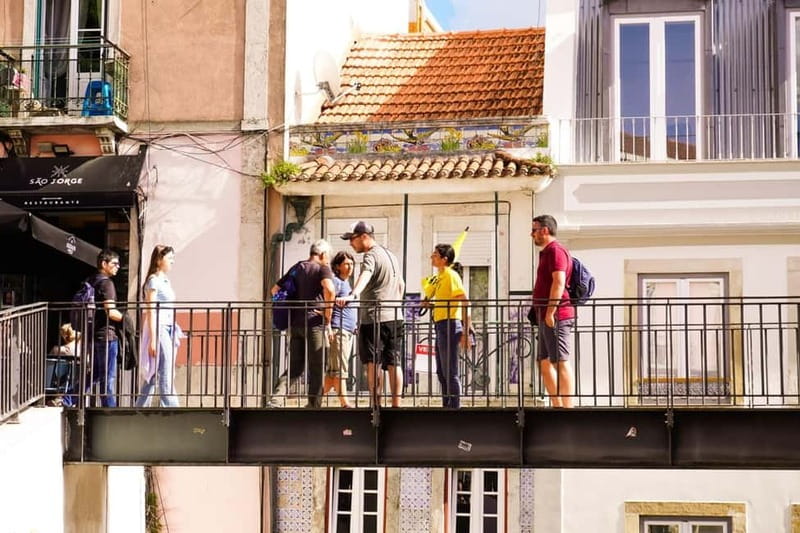
As you move through Alfama, look for azulejos, the painted ceramic tiles used across Portugal. Their colors and patterns bring life to walls and façades, but they also form part of the visual language of Lisbon.
The tour includes the history of famous monuments and visits to old churches. Since entry fees are not included, the church stops should be understood mainly as guided exterior or route experiences unless your guide indicates otherwise. You receive the story and setting, but you may need to pay separately if you want to enter a monument.
That distinction is important for budgeting. At roughly $1.77 per person, the tour is not selling access to paid sights. It is offering a guided introduction to a neighborhood that is best understood on foot.
You will also see Alfama as a lived-in district rather than simply a sightseeing area. The tour description points to local residents chatting, the smell of Portuguese food, and the sound of Fado. These details matter because Alfama’s appeal is not just its architecture. It is the combination of homes, music, food, religion, and daily life packed into a small hillside district.
Still, keep your expectations realistic. A short walking tour cannot explain every church, alley, and monument in Alfama. It gives you a framework. You will likely leave with several places and subjects worth exploring in greater detail on your own.
The earthquake story behind the streets
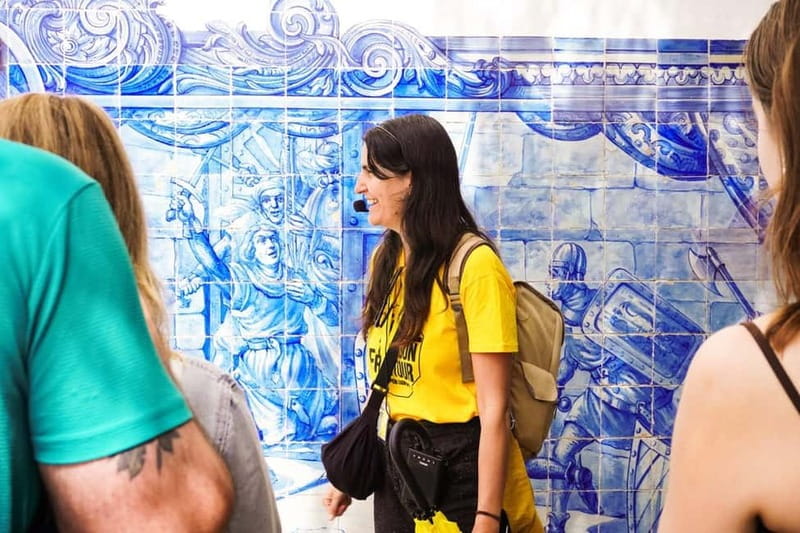
The 1755 earthquake is one of the central themes of this experience. The disaster caused widespread destruction in Lisbon, followed by fires and a tsunami. The supplied tour information focuses on earthquakes and past destruction, while Alfama’s survival provides the clearest local example.
That story gives the neighborhood a useful contrast with the rest of the city. Alfama was not untouched by history, but its older street pattern remained. When you walk through the district, you are seeing a part of Lisbon that was not erased and replaced in the same way as other areas.
I find this more useful than a simple date-and-name history lesson. The earthquake becomes visible in the city plan. You can compare Alfama’s irregular streets with the more planned areas elsewhere in Lisbon and better understand why the city changes character from one district to the next.
The guide makes a real difference here. Andy has been praised for adding humor to the history and for answering questions about Lisbon beyond the formal route. Valeria has also been praised for her kindness and command of the subject. Those comments suggest that the experience works best when you ask questions rather than simply follow along quietly.
The quality of a walking tour can depend heavily on the person leading it. The provider is Discover Lisbon, and the guide is listed as live and English-speaking. If your guide is as engaging as Andy or Valeria, the walk should feel personal rather than like a memorized lecture.
Same region, a different set of walls:
- From Lisbon: Tomar, Convent of Christ & Almourol Castle
★ 4.8 · 663 reviews - São Jorge Castle Skip-the-line Entry Ticket
★ 4.5 · 440 reviews - Lisbon: Pena Palace, Moorish Castle, Qta. Regaleira & Sintra
★ 5.0 · 325 reviews - Sintra Cascais Private Tour with Pena Palace and Mouros Castle
★ 4.5 · 280 reviews
Fado and Alfama’s musical identity
Fado is another important part of the route. This Portuguese music is linked closely with Lisbon, and it appears on UNESCO’s Intangible Cultural Heritage list. The tour uses Fado to explain more about Alfama’s cultural identity.
You should not book this experience expecting a concert. No performance is included in the details provided. Instead, the guide explains the tradition and its place in the neighborhood.
That can still be valuable. Music often gives a district an emotional identity that buildings alone cannot provide. Fado helps you understand why Alfama is associated with intimate, expressive Portuguese culture and why small streets and local gathering places matter to its image.
If you already know Fado, you may find this part introductory. If you are new to Lisbon, it gives you a useful starting point for deciding if you want to attend a separate Fado performance later.
The tour’s approach is strongest when it links music to place. You are not simply hearing a definition of Fado. You are learning why Alfama is one of the Lisbon neighborhoods most strongly connected with it.
The view from Miradouro Portas do Sol
The stop at Miradouro Portas do Sol is likely to be the visual high point. From this overlook, you can see a broad sweep of terracotta roofs and the Tagus River beyond them.
This is the moment when Alfama’s steep climb pays you back. The lanes can feel enclosed and confusing, but the miradouro opens the city again. Bring your camera, but also take time to look at the layout of the neighborhood below. From above, you can see how tightly the houses and streets gather on the hillside.
Views are one of the best reasons to take a guided walk rather than simply wander. You might find Portas do Sol on your own, but a guide can explain what you are seeing and place the roofscape, river, and historic quarter in a wider story.
The overlook can also be a busy public spot. The information provided does not specify crowd levels, so I would not expect a quiet private viewpoint. The reward is the outlook itself, not solitude.
Because the route is only 150 minutes, the stop should give you enough time to appreciate the view without turning the walk into a long photo session. If you want extensive photography, return later with more time.
Ending at Lisbon Cathedral
The walk finishes at Lisbon Cathedral, known locally as Sé de Lisboa. Ending here gives the tour a strong visual and historical conclusion.
The cathedral is one of the key monuments in the old city, but entrance is not included. You can decide separately if you want to visit inside after the tour. That arrangement gives you flexibility, especially if you prefer to keep the walk focused on the neighborhood.
Finishing at the cathedral also makes practical sense. After moving through Alfama’s lanes, you end at a clear landmark rather than an obscure meeting point. From there, you can continue exploring, stop for food, or make your own way elsewhere in Lisbon.
The exact route between every stop is not specified, so you should not treat the tour as a fixed checklist of every major sight in Alfama. Its structure is broader: Rossio, the approach through central Lisbon, the heart of Alfama, Portas do Sol, and the cathedral.
Is $1.77 a good value?
At about $1.77 per person, this is an exceptionally low advertised price for a 150-minute guided walk. If the full experience is provided at that price, the value is excellent. You are paying for a live English-speaking guide, local context, and a structured route through a difficult neighborhood to understand on your own.
There is an important wrinkle. One participant described a $1.50 price and said Andy asked people to place in the hat what they felt the tour was worth at the end. That means you should check the payment arrangement carefully when booking and at the meeting point.
A very low price can make it hard to judge the proper tip or contribution. If the walk is good, I recommend deciding in advance what the guide’s time and effort are worth to you. Do not assume the advertised amount tells the whole story.
The tour does not include transportation to Rossio, transportation afterward, or entry to monuments. Those exclusions are reasonable for a walking tour, but you should factor them in if you are counting every cost.
The experience offers strong value for first-time visitors who want an orientation to Alfama. It offers less value to you if you want long interior visits, a Fado performance, or a highly specialized history tour.
Who should take this Alfama walk?
I would recommend it to you if you want a practical introduction to Lisbon’s oldest district and prefer stories tied to actual streets. It suits first-time visitors, people interested in architecture and local culture, and anyone who wants to understand the earthquake before exploring more of the city.
It is also a good choice if you enjoy guides who add humor and welcome questions. Andy’s reported approach, with jokes and answers about places beyond the route, is the sort of extra help that can make a short tour more useful.
You should think twice if steep streets are a serious problem for you. The supplied information does not describe accessibility arrangements, and Alfama is clearly hilly, winding, and paved with older surfaces. The safest assumption is that you need to manage a fairly active city walk.
This may not be the best fit for a visitor who wants to spend most of the time inside monuments. Entry is not included, and the emphasis is on walking, viewpoints, history, Fado, and street life.
Book it early in your Lisbon stay if you want the neighborhood explained before you return on your own. Then you can revisit the streets, churches, viewpoints, and food spots that caught your attention during the tour.
Should you book Discover Alfama?
You should book this walk if you want an inexpensive, guide-led introduction to Alfama with a clear route from Rossio to the cathedral. The best reasons are the earthquake context, the Portas do Sol view, the Fado discussion, and the chance to ask a guide direct questions about Lisbon.
I would skip it if you need included monument admission, private transportation, or a Fado show. Also, confirm how the unusually low price is handled so you are not surprised by a requested contribution at the end.
For most first-time visitors who can handle hills, this is a sensible way to get your bearings and see why Alfama feels unlike the rebuilt parts of Lisbon. Bring water, wear good shoes, and give the guide’s time a fair value.
FAQ
Where does the tour meet?
The meeting point is Rossio Square, near the statue in the middle of the square. Look for the team with a yellow umbrella and yellow hoodie or T-shirt.
Where does the tour finish?
The tour ends at Lisbon Cathedral.
How long does the experience last?
The walking tour lasts 150 minutes, or two and a half hours.
What language is the tour conducted in?
The live tour guide speaks English.
Is São Jorge Castle included inside the tour?
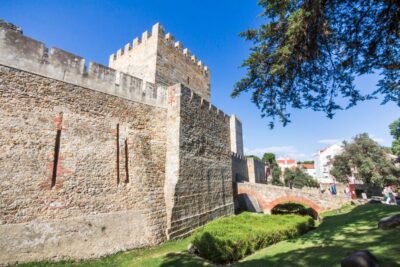
The experience provides an exterior view of São Jorge Castle. Entry to monuments is not included.
Is transportation included?
No. Transportation to and from the meeting point is not included.
What should I bring?
Bring comfortable shoes and water.
Can I cancel for a full refund?
Yes. You can cancel up to 24 hours in advance for a full refund. You can also reserve now and pay later, according to the booking terms provided.
Just added around Lisbon
- Tomar: Knight’s Templar Castle and Convent of Christ Tour★ 4.9 · 84 reviews
- From Lisbon: Tomar, Christ Convent & Almourol Castle Tour★ 5.0 · 64 reviews
- Sintra: Moorish Castle, Pena Palace, Cabo da Roca, & Cascais★ 5.0 · 6 reviews
- Lisbon: Tower of Saint George’s Castle Church Ticket & Drink★ 3.7 · 37 reviews
- Lisbon Tour: Cristo Rei, Belem, São Jorge Castle, 360°View.★ 4.9 · 18 reviews
- Lisbon: Sintra, Pena, Moorish Castle, Regaleira & Cascais★ 4.8 · 136 reviews
- Lisbon: Saint George’s Castle Entry Ticket and Guided Visit★ 4.6 · 127 reviews
- Lisbon: Saint George’s Castle Entry & City Self-Guided Tours★ 3.6 · 16 reviews
Lisbon Castle Tours, compared.
Sao Jorge Castle Skip-the-Line Ticket with Guide
Read our review →
Templar Tour Convent of Christ & Almourol Castle from Lisbon
Read our review →

Pena Palace, Moorish Castle, Qta. Regaleira & Sintra
Read our review →
Sintra Cascais Private Tour with Pena Palace and Mouros Castle
Read our review →
Sintra, Pena Palace, Moorish Castle & Regaleira Tour
Read our review →Browse the lists this tour appears in