
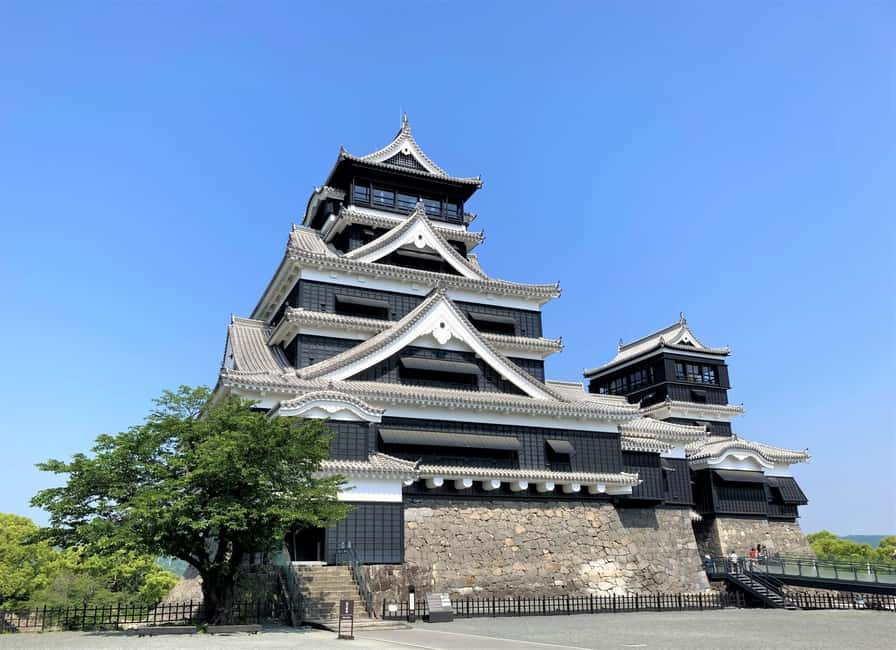
Review · JAPAN
Kumamoto Castle, Samurai Legacy & Restoration Tour
History is easier to grasp when the repairs are visible. This tour brings you into Kumamoto Castle’s restoration story, with a close look at its stone walls, defensive design, and recovery after the 2016 earthquake. I like the special route through the castle, especially the dual-style stone walls, and I like the stop at Wakuwakuza Museum, where Kato Kiyomasa’s leadership and military planning come into focus. The main drawback is the walking: stairs, uneven stone paths, and changing access during restoration require decent mobility and sensible shoes.
The private format gives you room to ask questions instead of simply following a flag through the grounds. Guide Eiji has earned especially warm praise for his humor, personal attention, and ability to show visitors around the castle as if hosting an old friend. Just check your selected option carefully, since the experience can last from about three hours to 390 minutes, and Hakata departures depend on a fixed Shinkansen schedule.
Key Points To Know Before Booking
- The restoration route shows history in progress: Earthquake damage and active repair work are part of the experience, not something hidden from view.
- The dual-style stone walls are a rare detail: The Niyō-no-Ishigaki walls reveal two construction methods from different periods.
- Wakuwakuza gives the castle a human story: Exhibits about Kato Kiyomasa explain the ambition and government behind the fortress.
- Kato Shrine provides a strong final view: The shrine sits beside the castle grounds and looks back toward the main complex.
- Private guiding improves the pace: You can ask about military design, samurai rule, or restoration without being tied to a large group.
- Hakata options save a separate booking: Selected packages include round-trip or one-way Shinkansen travel, but not every option includes train tickets.
Why Kumamoto Castle Deserves Your Time
Kumamoto Castle is not just a handsome Japanese fortress. It is a place where construction, warfare, politics, disaster, and repair all meet in one visit.
The castle is admired for its huge stone walls and defensive layout. Those walls are not mere decoration. Their shape, height, and angles were designed to make an attack difficult. Narrow routes, confusing turns, and defensive corridors forced an enemy to slow down and lose direction.
That design becomes easier to understand with a guide beside you. Rather than seeing a wall as a wall, you begin to notice how it controls movement. The castle was built to protect power, not simply to impress the eye.
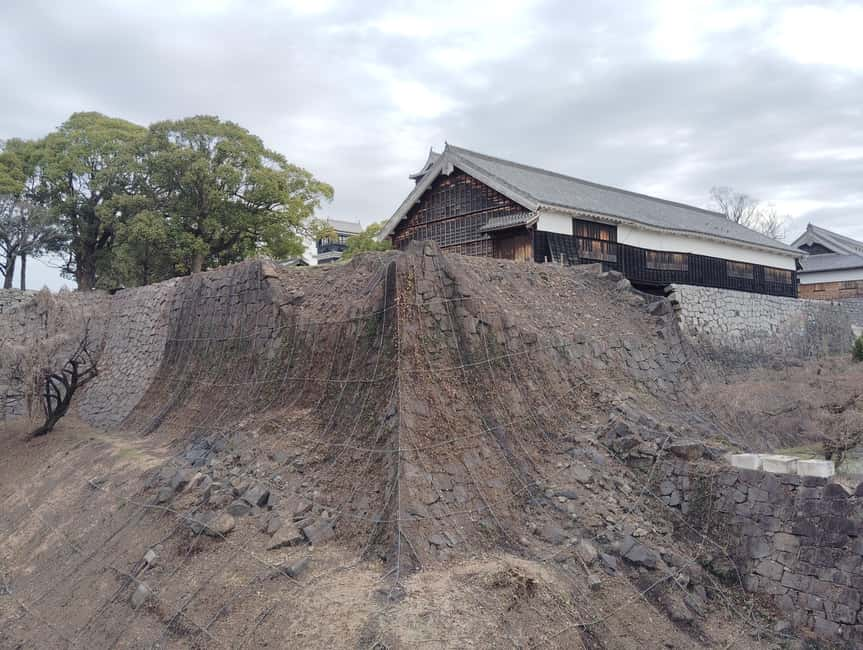
The 2016 earthquake adds another layer. Parts of the castle were damaged, and restoration remains ongoing. You may see areas closed or altered as repairs continue. That can limit the route on a particular day, but it also gives you something rare: the chance to see preservation as active work rather than a finished display.
I find that especially valuable for visitors who have already seen restored castles elsewhere in Japan. Here, the question is not only how the castle looked in the past. You can also consider how modern Japan decides what to repair, how to repair it, and how to keep a historic place open while work continues.
More Japanese Castle Tours in Japan:
- Osaka Castle: Museum and Tower Entry Ticket
★ 4.5 · 2,380 reviews - Kyoto: Nijo-jo Castle and Ninomaru Palace Guided Tour
★ 4.7 · 1,020 reviews - Kyoto: Nijo Castle, Kiyomizu & Fushimi Inari Guided Tour
★ 4.7 · 700 reviews
Wakuwakuza Museum Puts Kato Kiyomasa First
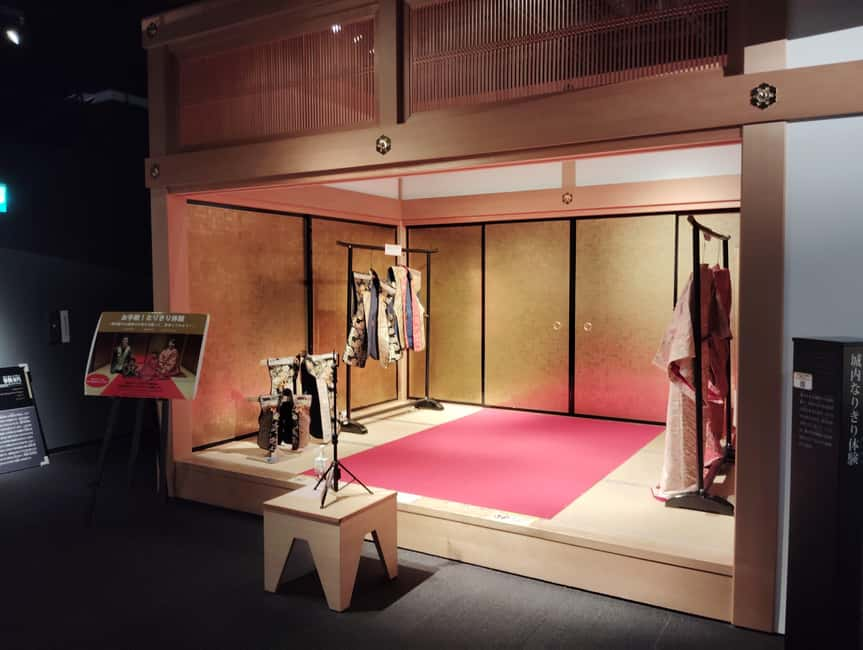
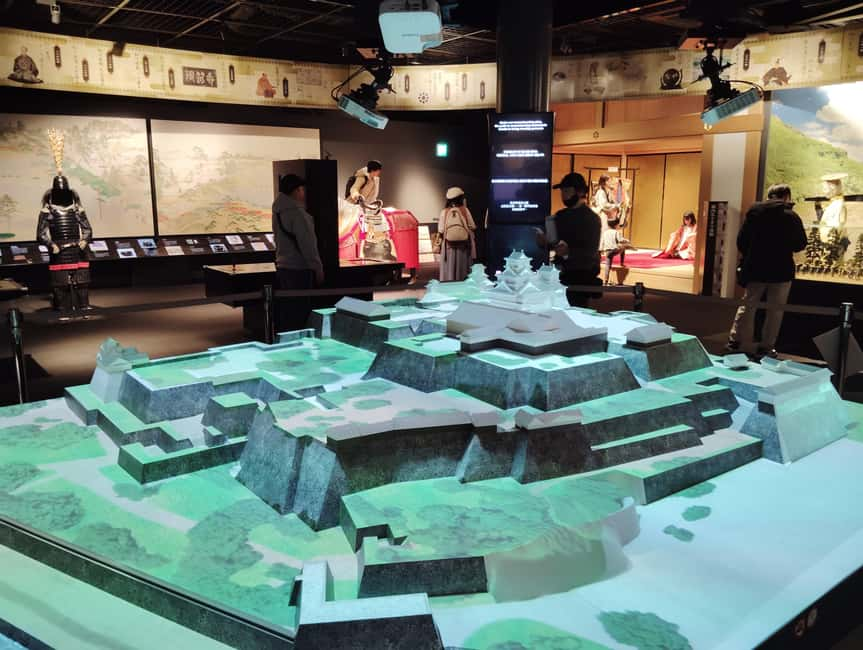
The tour begins at the Kumamoto Castle Museum Wakuwakuza. This is a useful starting point because it gives you the people and politics behind the stonework before you enter the fortress itself.
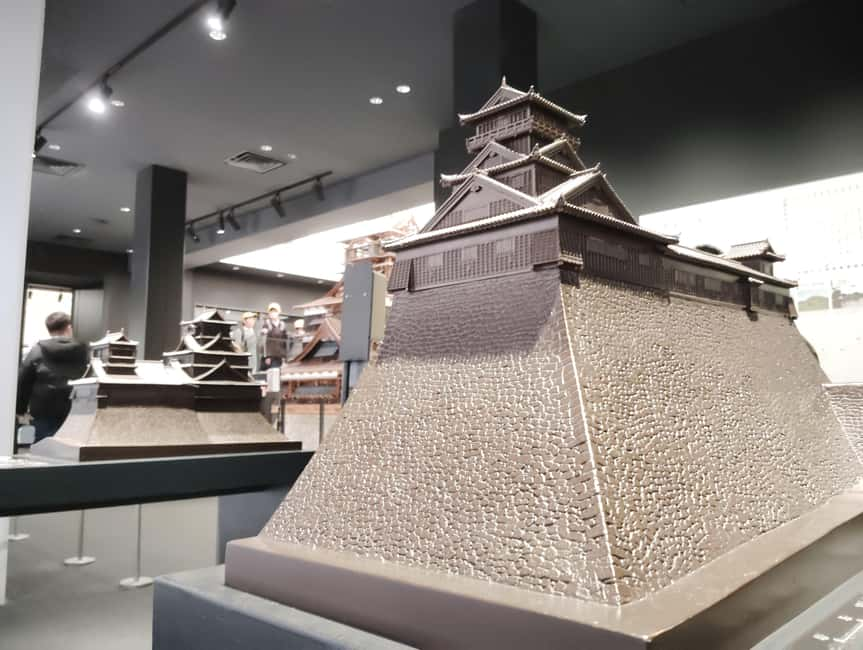
The displays introduce Kato Kiyomasa, the feudal lord who built Kumamoto Castle in the early 17th century. You learn about his leadership, samurai government, and military planning. Interactive exhibits make this more approachable than a room of labels and dates.
Kato Kiyomasa matters here because the castle reflects his priorities. He needed a strong military base, but he also needed a seat of authority. The scale of the castle tells you something about both concerns.
I like beginning with the museum because it prevents the castle from becoming a collection of picturesque walls. You get a sense of the decisions behind the construction. Political ambition and practical defense were linked, and the tour explains that connection before you reach the main keep.
Wakuwakuza is also a good place to ask your guide for context. If you are interested in samurai administration, engineering, or the daily meaning of power during the Edo period, this is the point to speak up. A private tour gives you more freedom to shape the conversation.
The Special Route And Its Two Kinds Of Stone Wall
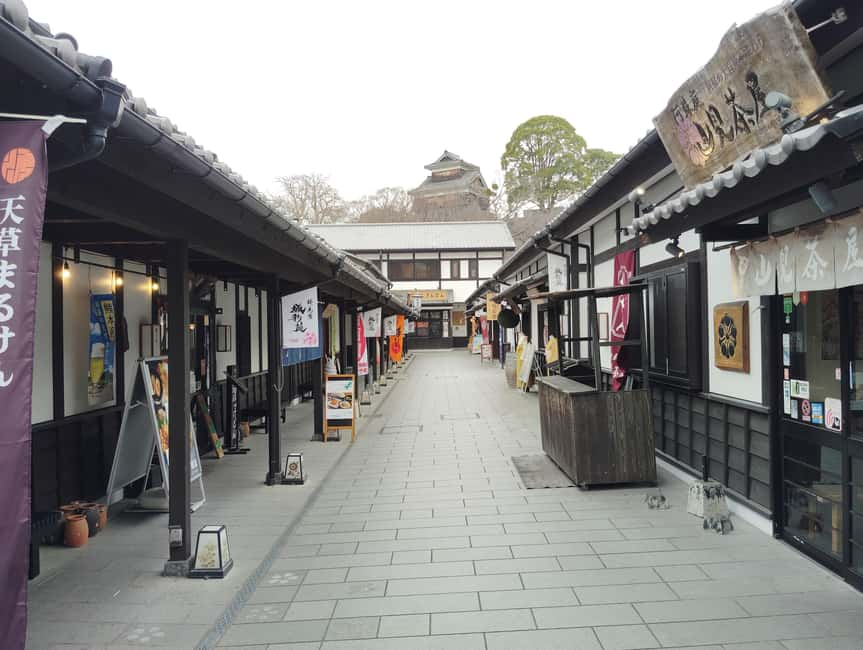
From Wakuwakuza, you enter Kumamoto Castle by a special restoration route. This is the core of the experience.
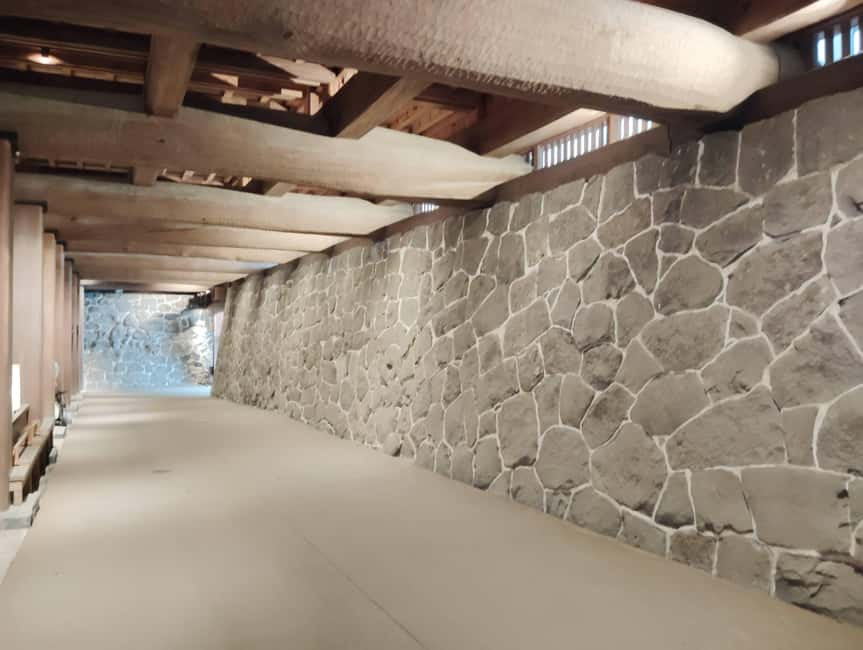
One of the most distinctive details is the Niyō-no-Ishigaki, or dual-style stone walls. The walls show two different building techniques layered across generations. In practical terms, you are seeing changes in construction rather than one perfectly uniform design.
That small detail can be easy to miss on a self-guided visit. A guide can point out the contrast and explain what it says about the castle’s development. Look closely at the stonework and the way the wall rises. The value is in understanding what you are looking at, not simply taking a picture in front of it.
The route also passes through defensive corridors. These spaces were planned to slow attackers and make the castle harder to navigate under pressure. You can picture how a force approaching the inner sections would lose time at turns, barriers, and restricted passages.
The walking is moderate, but do not treat this as a flat museum visit. You will encounter stairs, uneven stone pathways, and parts of the castle affected by restoration work. Comfortable walking shoes are a practical must. If you dislike uneven ground or have trouble with stairs, the physical side of the tour deserves careful thought.
The route may change if an area is restricted, or if weather and operating conditions require an adjustment. That uncertainty is part of visiting a working restoration site. You should come prepared to value the explanations even if a particular section is temporarily closed.
Inside The Main Keep, From Construction To Recovery
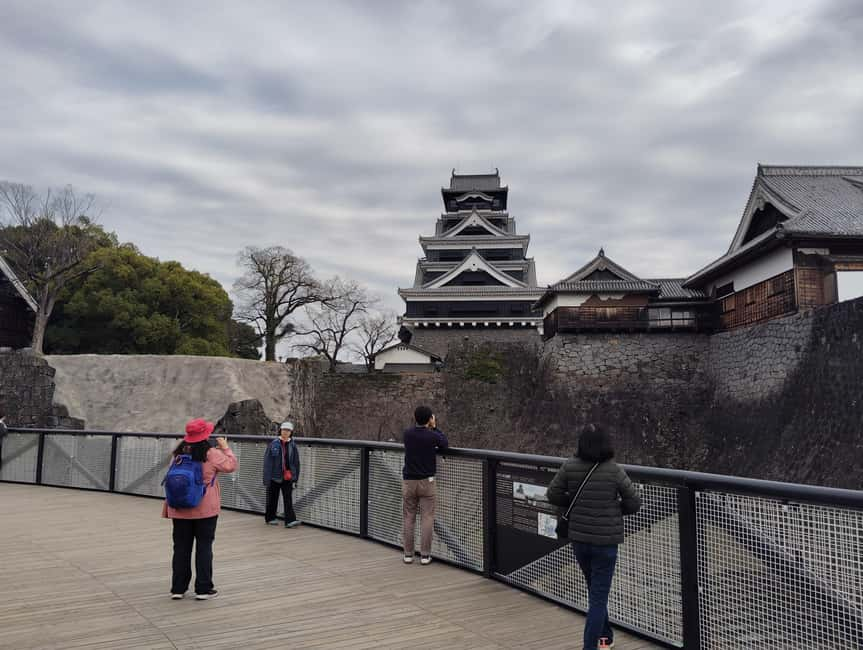
Inside the main keep, exhibitions cover the castle’s construction, the Satsuma Rebellion, and the long recovery effort following recent damage.
The main keep gives the tour a strong sense of sequence. First, you see why the castle was built. Then you consider how it functioned through later conflict. Finally, you see the work required to keep it standing after the earthquake.
The Satsuma Rebellion adds important regional context. It connects the castle to the turbulent period when Japan was changing rapidly and old power structures were being challenged. The displays help place Kumamoto within that larger story.
The restoration exhibits are just as important as the older history. You can see why repairs take time and why access cannot always be guaranteed. Historic structures are complicated systems, not stage sets that can be fixed overnight.
From the top floor, you get broad views across Kumamoto. The view helps explain the castle’s position and strategic purpose. This hilltop setting was useful for defense, but it also gives you a clear sense of how the castle relates to the modern city around it.
The keep is likely to be the part you remember most visually. Still, I would not rush through the outer route to get there. The stone walls, corridors, and visible repairs are what make this visit different from a standard castle interior tour.
A few more castle visits around Japan worth a look
- Tokyo Castle & Imperial PalaceーShogun Walking Tour
★ 4.7 · 1,068 reviews - Ultimate Osaka Walking Tour: Castle, Dotonbori & Hidden Gems
★ 5.0 · 862 reviews - Tokyo Castle & Imperial PalaceーShogun Walking Tour
★ 5.0 · 724 reviews - Osaka Castle Walking Tour and Castle Tower Admission
★ 5.0 · 561 reviews
Kato Shrine And The Closing View
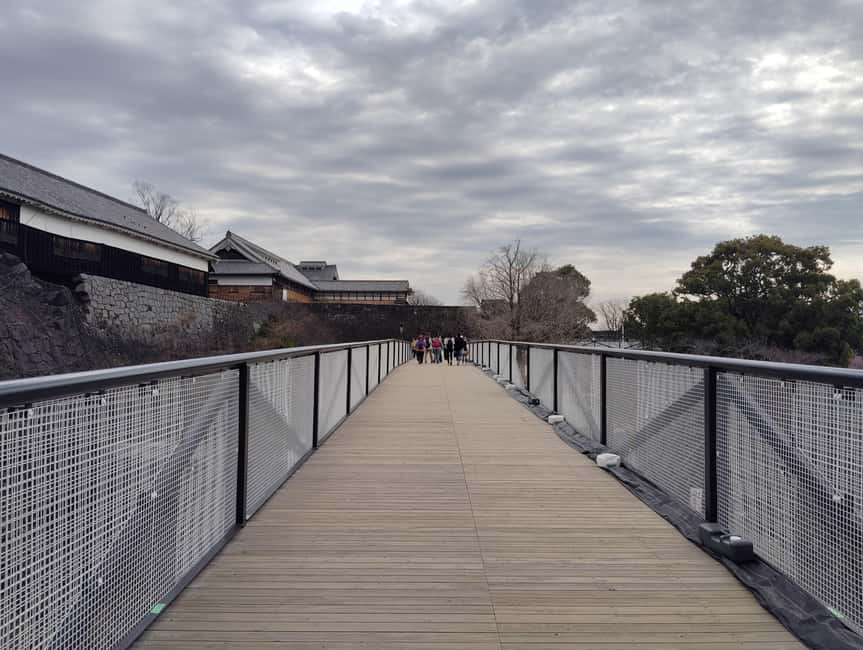
The final stop is Kato Shrine, dedicated to Kato Kiyomasa. It sits beside the castle grounds and offers one of the best views back toward the castle.
This is a well-chosen ending. At Wakuwakuza, you meet the builder and political figure. Inside the castle, you study the structure and its later story. At Kato Shrine, you see how his influence remains tied to Kumamoto’s identity.
The shrine also gives you a quieter pause after the stairs and enclosed corridors. You can look back at the castle from outside and connect the separate parts of the tour: the walls, the keep, the builder, and the ongoing restoration.
Do not expect the shrine to function as a separate, lengthy sightseeing program. Its value comes from the viewpoint and the connection to Kato Kiyomasa. If you are interested in Japanese religious sites, ask your guide about the shrine’s role and its link to the castle.
What The Private Guide Adds
This is a private English-language tour, which changes the feel of the visit. You are not working around the interests or pace of a large mixed group. You can ask for more detail about the stone walls, skip a question that does not interest you, or pause when you need a better look.
The available feedback points to the guide as a major strength. Eiji is praised for taking visitors all over the castle, combining clear explanations with good humor, and creating the feeling of being hosted by a friend. Guide assignments can vary, so you should not assume Eiji will lead every departure, but that gives you a useful picture of the service style to expect.
A private format is especially helpful at a site with complicated restoration work. You may want to know why one path is open and another is blocked. You may want to compare the two stone-building methods or ask how the earthquake changed the route. Those questions are easier to handle when the guide is focused on your group.
The tradeoff is price. At $97 per person, this is not the cheapest way to see Kumamoto Castle. You are paying for a private guide, museum entry, castle entry, and, with selected Hakata packages, Shinkansen transportation. The value is strongest if you want interpretation rather than a simple admission ticket.
Choosing Kumamoto Or Hakata Departure
You can join the tour locally in Kumamoto, or choose an option linked with Hakata Station. For visitors already staying in Kumamoto, the local choice is simpler and leaves you with less schedule pressure.
The Hakata option can be useful if you are based in Fukuoka and want to make Kumamoto a focused day visit. Selected packages include a round-trip Shinkansen journey from Hakata, while another option may begin in Hakata and finish in Kumamoto. Check the exact package before paying, since Shinkansen tickets are included only in the selected options.
Train timing matters. You need to arrive on time because the train cannot wait for a late tour participant. This is one reason I would avoid building a tight connection immediately afterward. The tour itself may last three hours, while the longest stated format reaches 390 minutes, so confirm the schedule and return arrangements before booking.
Lunch is not included unless your chosen package says otherwise. Plan around that. A meal break should not be assumed simply because you select a longer option.
The meeting point also changes with the package. Read the booking details carefully so you know whether you are meeting in Kumamoto or at Hakata Station.
Who Will Like This Tour Most
I would recommend this experience to you if you want a guided explanation of Kumamoto Castle rather than a quick walk around the grounds. It suits history fans, first-time visitors to Kumamoto, and anyone curious about how Japan repairs major historic sites after a disaster.
It is also a good choice if you are staying in Fukuoka and want an organized way to reach Kumamoto. The Shinkansen option can reduce planning work, provided you select the package that includes the tickets and can meet the fixed departure time.
Families with older children may appreciate the castle’s defensive design and the museum’s interactive exhibits. The samurai story has a clear human focus, and the walls give younger visitors something physical to examine.
I would be more cautious if you want a slow, flexible day with no fixed schedule. The Hakata packages depend on train times, and the castle route includes stairs and uneven ground. You should also accept that restoration work can change the itinerary.
Weather may lead to adjustments, and some areas can be restricted without advance notice. That is not a flaw unique to this tour. It is simply the reality of visiting a castle still under repair.
Is The $97 Price Worth It?
The answer depends on what you want from Kumamoto Castle.
If all you need is access, $97 may feel high. If you want the castle explained by a private English-speaking guide, the price becomes easier to justify. You receive guided castle entry, Wakuwakuza Museum admission, Kato Shrine, and a planned route through one of Japan’s most important fortresses.
The Hakata packages can offer stronger value because selected options include Shinkansen transportation. Compare the cost and effort of arranging your own train, local transport, entry, and guide before deciding. The price also buys convenience, especially for a first visit.
I would not book this solely for a view from the keep. You can get a good view as part of the visit, but the real value lies in the connections between construction methods, military design, samurai leadership, earthquake damage, and restoration.
The small set of available ratings is uniformly positive, with particular praise for the guide’s warmth and for the chance to learn about the castle’s recovery. That emphasis feels right. This is a tour where good guiding matters more than extra decoration.
Should You Book It?
Book this tour if you want Kumamoto Castle to make sense, not just look impressive. The special route, dual-style stone walls, Wakuwakuza Museum, restoration displays, and Kato Shrine create a well-connected visit.
Choose the Kumamoto departure for a simpler local outing. Choose a Hakata package if the included Shinkansen service fits your plans and you can follow the fixed schedule. Before booking, confirm the duration, meeting point, train inclusion, and walking demands.
At $97, it is best for you if explanation, private attention, and transport convenience matter. If you are happy with a self-guided castle visit and prefer to spend less, you may find the cost harder to defend. For a focused look at Kumamoto’s samurai past and earthquake recovery, though, this tour offers a strong and practical introduction.
FAQ
Where does the tour take place?
The tour takes place in Kumamoto, in Japan’s Kyushu region, with some booking options beginning or ending in Hakata.
How long does the tour last?
The listed duration ranges from three hours to 390 minutes, depending on the option selected. Check availability for the exact schedule.
Is the tour private?
Yes. The experience is offered as a private group tour.
Is the tour conducted in English?
Yes. A live English-speaking guide is included.
What is included in the tour?
The tour includes guided Kumamoto Castle entry, a visit to Kato Shrine, admission to Kumamoto Castle Museum Wakuwakuza, and a local guide.
Are Shinkansen tickets included?
Shinkansen tickets are included only in the selected Hakata departure packages. Check the exact package before booking.
Does the tour include lunch?
Lunch is not included unless it is specifically stated in the option you book.
Is the tour physically demanding?
The tour involves a moderate amount of walking, stairs, and uneven stone pathways inside Kumamoto Castle. Comfortable walking shoes are recommended.
Can the route change?
Yes. Restoration work, weather, or operating conditions may lead to itinerary changes, and some areas may be restricted without prior notice.
Can I cancel for a full refund?
You can cancel up to 24 hours in advance for a full refund. The activity also offers a reserve now and pay later option.
Just added around Japan
- Tokyo: Edo Castle and Imperial Palace Guided Walking Tour★ 5.0 · 6 reviews
- (Ticket Included) Explore Osaka Castle & Museum of History★ 4.8 · 21 reviews
- Peace Memorial Park, Hiroshima Castle, & Garden Private Tour★ 4.8 · 7 reviews
- Osaka: Explore Every Bit of Osaka Castle in 3 Hours★ 5.0 · 5 reviews
- Osaka/kyoto: Himeji Castle, Kobe. Luxury Day Trip with Guide★ 5.0 · 2 reviews
- Osaka: Early Morning Osaka Castle Guided Tour, Avoid Crowds★ 4.9 · 12 reviews
- Osaka: Osaka Castle 3 hours Historical Walking Tour★ 4.6 · 14 reviews
- Osaka: Osaka Castle – Tsuruhashi – Tennoji (Spanish Guide)★ 4.7 · 10 reviews
Japanese Castle Tours, compared.
Nijo-jo Castle and Ninomaru Palace Guided Tour
Read our review →
Nijo Castle, Kiyomizu & Fushimi Inari Guided Tour
Read our review →
Osaka Castle Walking Tour and Castle Tower Admission
Read our review →
Imperial Palace & Nijo Castle Guided Walking Tour
Read our review →
Himeji Castle, Arima Onsen & Mt. Rokko Day Tour
Read our review →
5-Hour Osaka Bike Tour to the Neighborhood of Osaka Castle
Read our review →
Browse the lists this tour appears in