
Review · JAPAN
Kumamoto: Castle Express Guided Tour
Kumamoto Castle has battle scars worth seeing. This 90-minute private walking tour brings the castle’s bold black keep, curved stone walls, and earthquake repairs into focus. I like the clear historical story and the chance to see restoration work still underway. The main drawback is that some areas remain restricted, so you should expect a partial view rather than a fully open castle visit.
At $67 per person, the tour makes the most sense if you want an English-speaking guide to explain what you are seeing instead of simply walking around the grounds alone. I also like the easy city-center meeting point and the small private-group format. You will need to arrange your own transport there, and food is not included.
Key points to know before you go
- See a true castle of war: Kumamoto Castle endured two historic sieges and was never captured.
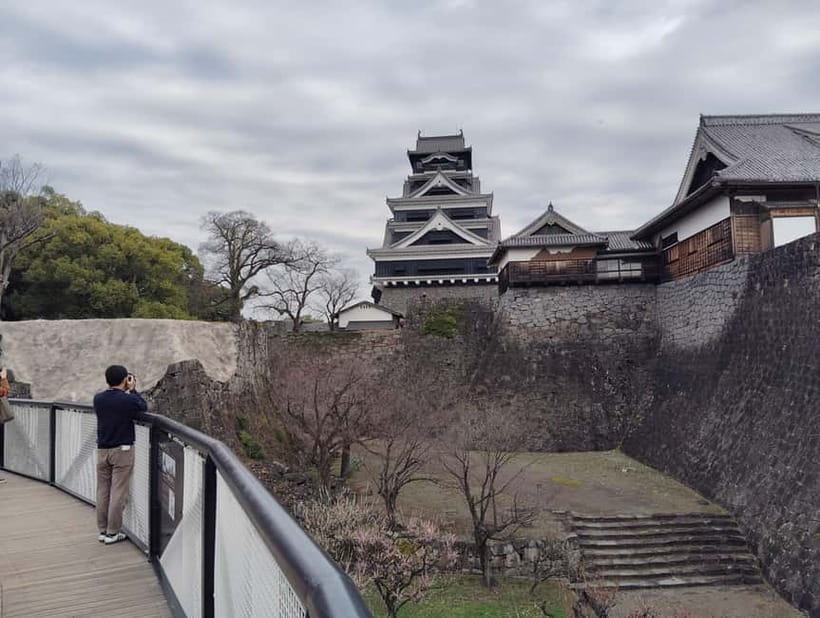
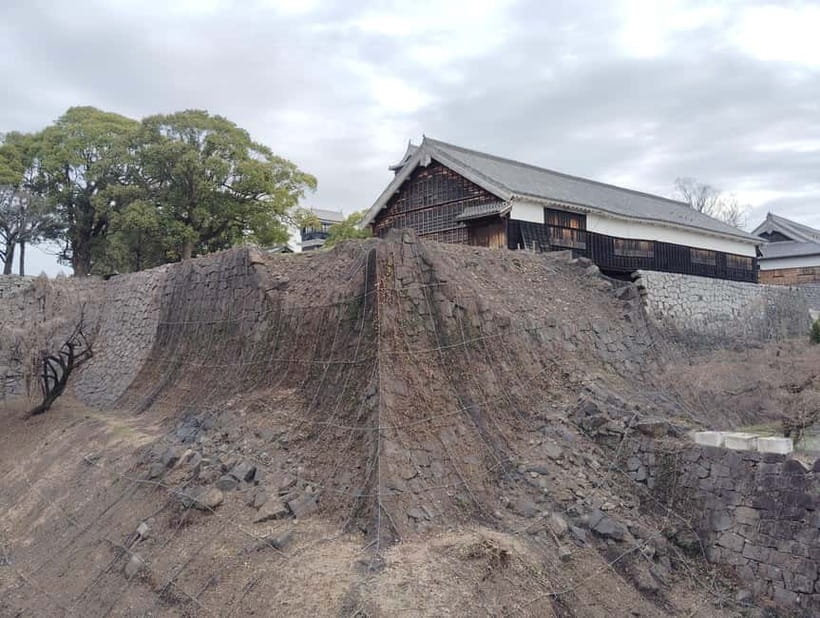
- Watch restoration in progress: The 2016 earthquake damaged walls, turrets, and other buildings, creating a rare chance to see a major Japanese castle being rebuilt.
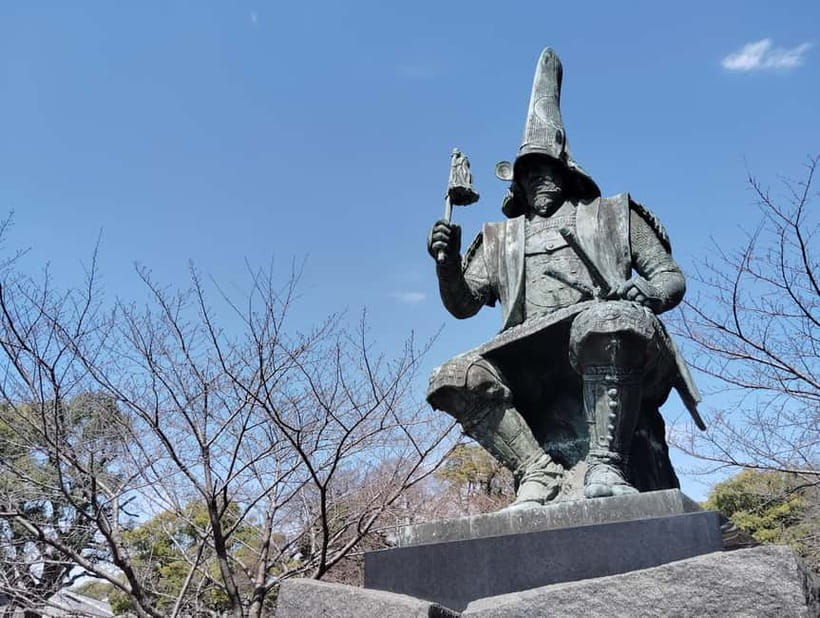
- Start beside Kato Kiyomasa: Meet in front of the statue of the warlord who built the original castle more than 400 years ago.
- Walk through striking defenses: Expect black buildings, sharply curved stone walls, and a vast defensive layout.
- Use the private guide well: An English-speaking guide can explain why the castle was designed for battle, not just ceremony.
- Plan for 90 minutes on foot: Comfortable shoes matter, and some sections may be closed during restoration.
Why Kumamoto Castle is different from other Japanese castles
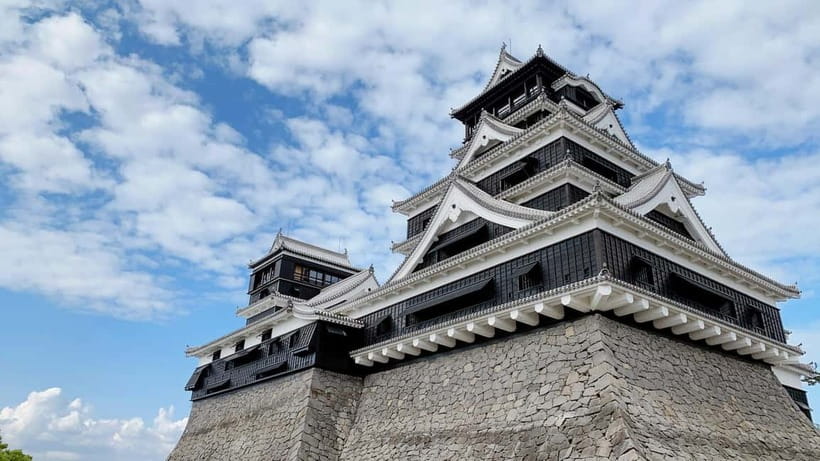
Many surviving Japanese castles are beautiful reminders of political power. Kumamoto Castle adds something more severe to the picture. It was designed to resist attack, and its walls, gates, towers, and awkward approaches were built with warfare in mind.
I find that distinction important. Without a guide, you can admire the dark exterior and impressive stonework, but you may miss why the castle feels so imposing. The tour explains how the design helped protect the stronghold and why Kumamoto is often called a castle of war.
Kato Kiyomasa originally built the castle more than 400 years ago. His statue marks the meeting point, which gives the tour a useful opening scene. You are not starting at an anonymous gate or a modern ticket area. You begin beside the figure most closely linked to the castle’s creation.
Kumamoto Castle also has an unusual record. It withstood two historic sieges and never fell into enemy hands. That fact gives the walls a practical purpose. Their size and shape were not simply decorative choices made to impress visiting officials.
More Guided Castle Tours in Japan
- Kyoto: Nijo-jo Castle and Ninomaru Palace Guided Tour
★ 4.7 · 1,020 reviews - Kyoto: Nijo Castle, Kiyomizu & Fushimi Inari Guided Tour
★ 4.7 · 700 reviews - Kyoto: Imperial Palace & Nijo Castle Guided Walking Tour
★ 4.7 · 453 reviews
Meeting Kato Kiyomasa at the starting point
The tour begins in front of the statue of Kiyomasa Kato, written in Japanese as 加藤清正公像. Your guide will hold a yellow DeepExperience sign, so you have a clear visual marker at the meeting place.
The location is accessible through Kumamoto’s public transportation network, but transport to the statue is not included. You should allow enough time to find the statue before the scheduled start, especially if you are unfamiliar with the castle area.
This opening point also suits the tour’s theme. Kato Kiyomasa is not a random historical footnote here. He was the warlord responsible for the original castle, and the guide can connect his role to the defensive design you see later.
The group is private, and the tour is conducted in English. That matters if you want to ask questions or slow down briefly for an explanation. A private format usually gives you more room to focus on the parts of the castle that interest you most, though the tour still follows a 90-minute schedule.
The first walk through the castle grounds
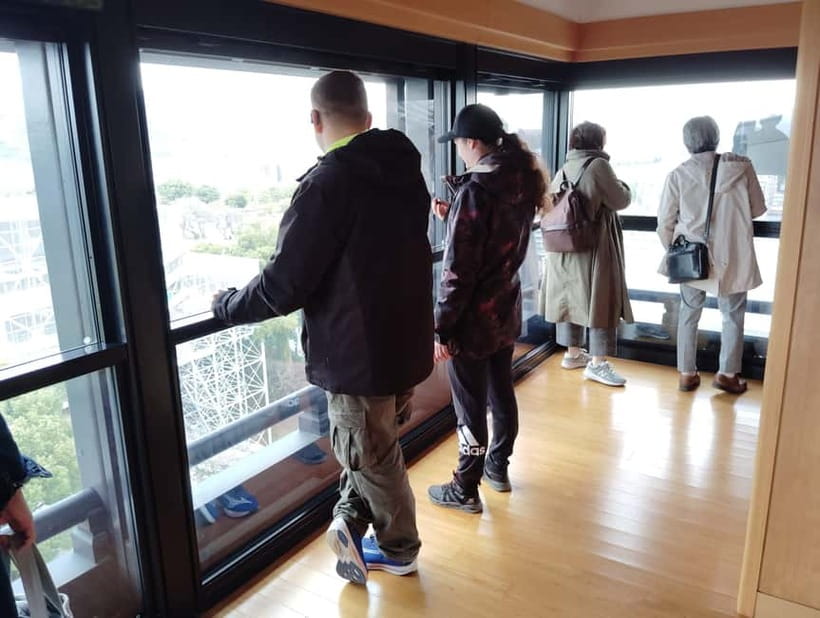
The main portion of the experience is a guided walk through the castle grounds. You will see the architecture from several points while hearing how the site functioned as a military stronghold.
The castle is famous for its black keep. Against the surrounding city, that dark exterior creates a strong visual impression. The tour does not treat the keep as an isolated photo subject. Instead, it places the building within a much larger defensive system of walls, gates, towers, and open grounds.
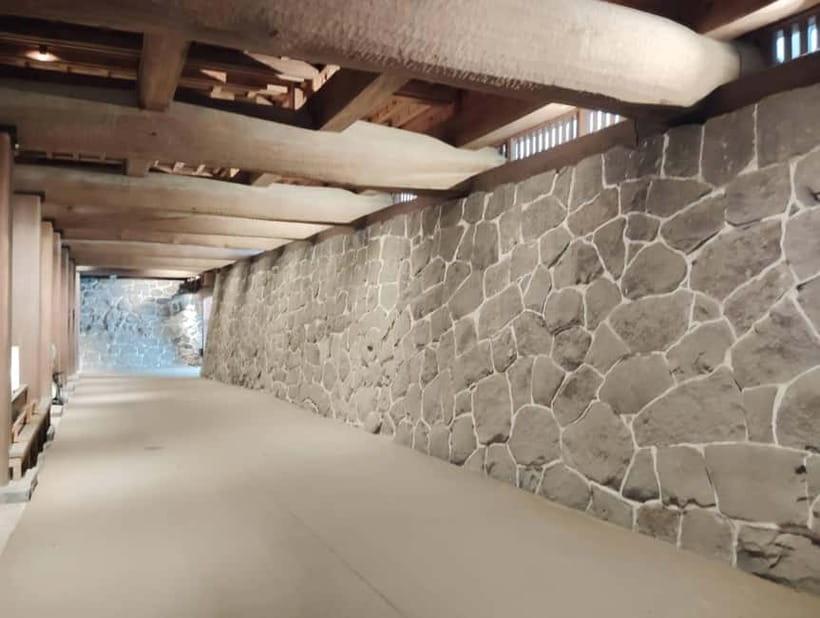
The stone walls are another major feature. Their curves are elegant, but they also made the castle harder to attack. As you walk, the guide can point out how the shape and scale of the walls contributed to defense.
Kumamoto Castle is visible from many parts of Kumamoto City, which helps explain its importance as a city symbol. On this tour, you see the castle from inside its grounds, but you also gain a sense of how it has long occupied a central place in the city’s identity.
The walk lasts about 1.5 hours, so you should expect steady movement rather than a long indoor lecture. Comfortable shoes are a sensible choice. The castle grounds are expansive, and the experience is best for visitors who enjoy seeing a site on foot.
Two sieges and the castle’s military design
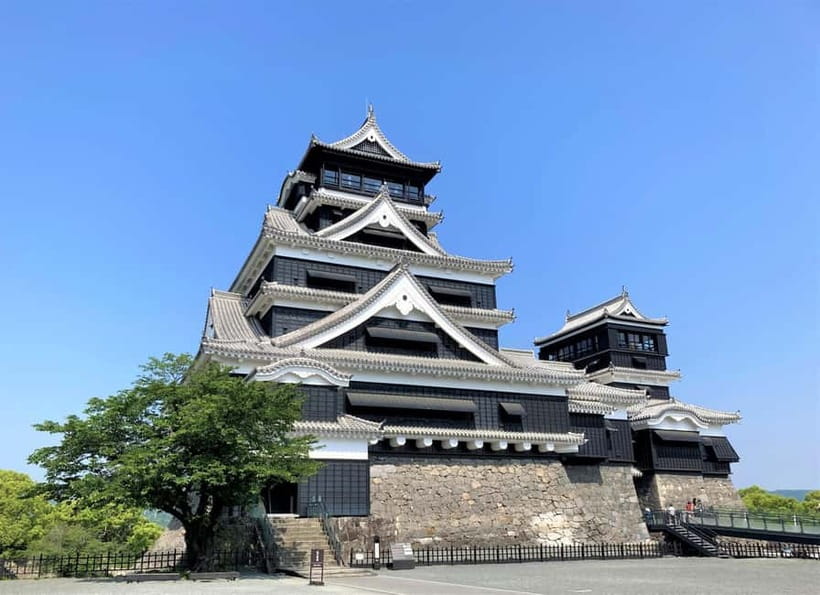
The most valuable part of the tour may be the explanation of how Kumamoto Castle worked in wartime. Its reputation is not based only on age or appearance. The castle survived two sieges and was never taken by an enemy force.
That history gives meaning to features that might otherwise seem ornamental. Curved stone walls, massive construction, and carefully planned approaches could slow attackers and make direct access difficult. Your guide can help you read these details as defensive tools.
I like this part of the experience because it changes the pace of sightseeing. You are not just collecting photographs of a famous Japanese castle. You are looking at a place shaped by military needs and asking why each section was built as it was.
The castle’s size also becomes easier to understand. Its scale was not accidental. The grounds, walls, and towers formed a connected system, and the guide’s commentary helps tie the separate pieces together.
If you have already visited castles that function mainly as preserved residences or government centers, Kumamoto offers a different lesson. Here, the story centers on survival under attack. That gives the walk a harder edge and makes the stonework feel less like decoration.
Same region, a different set of walls:
- Osaka Castle: Museum and Tower Entry Ticket
★ 4.5 · 2,380 reviews - Tokyo Castle & Imperial PalaceーShogun Walking Tour
★ 4.7 · 1,068 reviews - Ultimate Osaka Walking Tour: Castle, Dotonbori & Hidden Gems
★ 5.0 · 862 reviews - Tokyo Castle & Imperial PalaceーShogun Walking Tour
★ 5.0 · 724 reviews
Seeing the damage from the 2016 earthquake
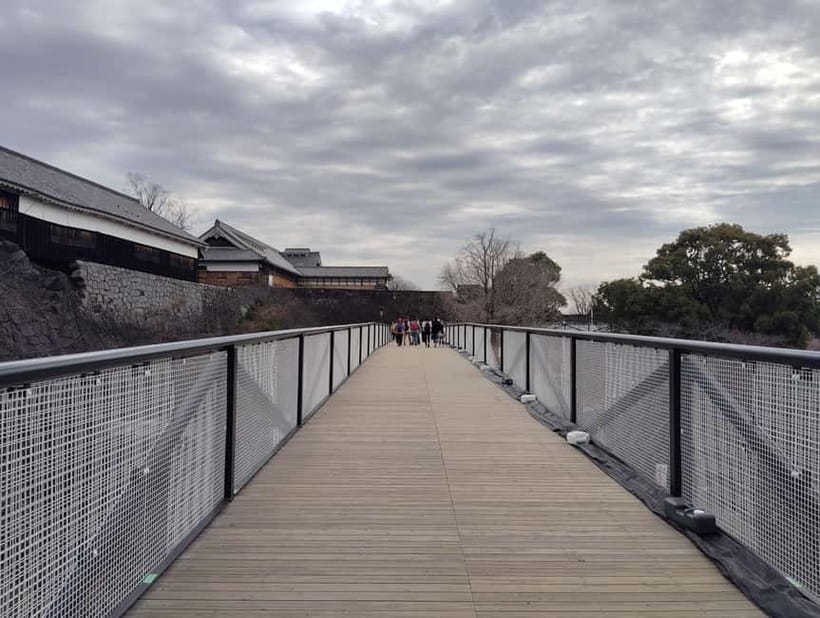
The castle’s story took a painful turn in 2016, when a powerful earthquake struck the region. Many surrounding structures, stone walls, and turrets collapsed. The main keep retained its shape, but the wider complex suffered extensive damage.
For you, this means the tour is not a simple look back at a finished monument. You see a historic site in the middle of a long recovery. Some areas may be restricted, and the route can show only selected sections of the grounds.
That limitation is worth knowing before you book. If your main goal is to enter every building or view the castle exactly as it looked before the earthquake, this tour may leave you wanting more. Restoration is still underway, and access can change.
At the same time, the damage is part of what makes the visit meaningful. The earthquake did not erase the castle’s importance. It added a modern chapter about preservation, engineering, and the effort needed to protect a major cultural site.
The contrast is powerful. You can see an old defensive monument beside evidence of recent destruction and repair. That combination gives the castle a living quality. You are looking at both the past and the work required to carry that past forward.
Restoration work is part of the experience
Kumamoto Castle is undergoing a large reconstruction project using advanced Japanese technology. The aim is to rebuild damaged sections faithfully while keeping the castle’s historic character.
This is not the kind of restoration you view only in a museum display. The work is happening around the actual castle grounds, which gives you a direct look at preservation in progress. Your guide can explain what was damaged and how the rebuilding effort is helping return the castle to its former form.
I consider this one of the tour’s strongest features. Many historic sites present a polished final product. Kumamoto lets you see the difficult middle stage, when walls, towers, and other structures are being repaired or reconstructed.
You should keep your expectations realistic. Restoration zones can mean blocked paths, limited views, or structures that appear incomplete. Those conditions may be disappointing if you want a perfectly finished sightseeing stop, but they also make this visit unlike a standard castle tour in Japan.
The rebuilding effort gives the castle a second kind of resilience. Its original defenses helped it survive warfare, while the present restoration responds to a natural disaster. The guide connects those two periods, turning a damaged wall or closed section into part of the larger story.
What the final stop adds to the visit
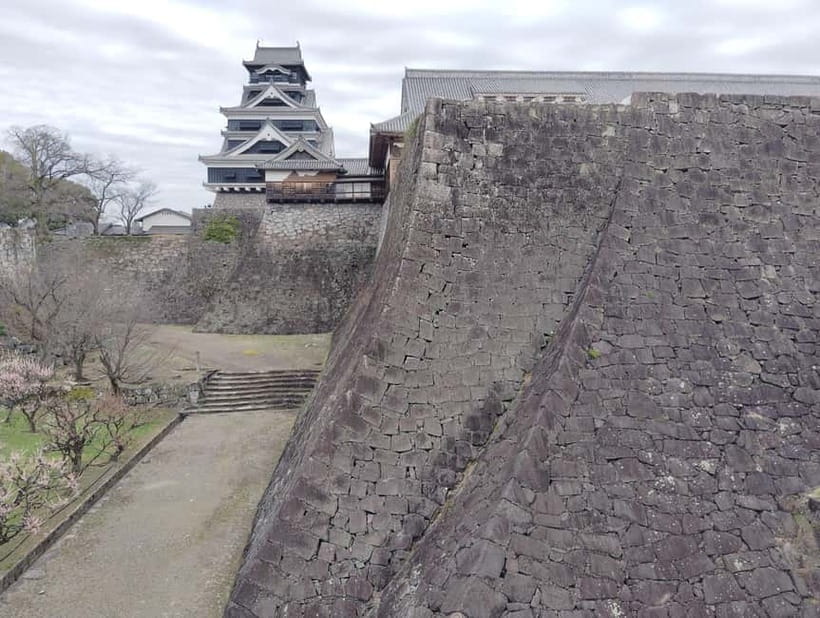
The tour finishes at 天守閣前広場, the plaza in front of the main keep. This is a sensible ending point because it places you near one of the castle’s most recognizable features.
By the end of the walk, you should have more context for the black keep than you would at the start. You will have learned about the castle’s military design, its role in the city, the earthquake damage, and the ongoing repair work.
The final plaza also gives you a natural moment to look back at the keep and the surrounding grounds. The tour ends there rather than returning you to the starting statue, so you should plan your next move from the castle’s main keep area.
Because the official route finishes at this plaza, it is worth knowing that the tour does not promise a full visit to every part of the complex. The focus is guided interpretation of the grounds and visible architecture, with restoration as a major theme.
Is $67 a fair price?
The cost is $67 per person. That is not the cheapest way to see Kumamoto Castle, especially if you are happy to walk independently and read signs at your own pace.
The value improves if you want an English-speaking professional guide and a private group. You are paying for interpretation, not only access to the grounds. The guide explains why the castle was built as it was, how it survived two sieges, and what the earthquake changed.
That information can be difficult to gather in a short independent visit. A castle this large has plenty of visual drama, but its military logic is not always obvious. At $67, the tour suits visitors who would rather understand the site than simply photograph it.
The price is less attractive if you have already studied Kumamoto Castle in detail or prefer long, self-directed visits. The tour lasts 90 minutes, and some sections are restricted during restoration. You are paying for a focused guided walk, not an all-day castle pass.
Food, drinks, and transport to the meeting point are not included. You should budget for those separately, although the tour itself is short enough to fit neatly around a larger day in Kumamoto.
Who will get the most from this tour?
I would recommend this experience most strongly to first-time visitors who want the castle’s story explained in English. It also suits anyone interested in Japanese fortifications, historic construction, disaster recovery, or the practical side of preservation.
Families with older children may appreciate the siege story and the clear visual details in the walls and towers. The 90-minute length is also manageable for a busy sightseeing day, though everyone should be ready to walk.
Castle enthusiasts will find plenty to study. Kumamoto’s reputation as a castle of war, along with its record of surviving two sieges, gives the site a special place among Japan’s historic castles.
You may want to skip it if you are looking for a fully restored, unrestricted indoor visit. The 2016 earthquake continues to affect access, and some structures remain closed or under repair.
The tour is also not aimed at food lovers or people seeking a relaxed café stop. Food and drinks are not part of the experience. This is a history and architecture walk, with the castle itself doing the entertaining.
Practical tips for a smoother visit
Wear comfortable shoes. The tour covers the castle grounds on foot, and the site is large enough that poor footwear can distract from the experience.
Arrive early at the Kiyomasa Kato statue. Look for the guide holding the yellow DeepExperience sign. Since transport is not included, check your route through Kumamoto’s public transportation network before leaving your hotel or previous sightseeing stop.
Keep an open mind about restricted areas. Restoration can change what you see, but it also provides one of the tour’s most unusual features. The incomplete sections are not a flaw in the story. They are part of the story.
You can cancel up to 24 hours before the tour for a full refund, and you may reserve now and pay later. Those options are useful if your Kyushu plans are still shifting.
Should you book the Kumamoto Castle Express Guided Tour?
Book it if you want a focused English walking tour that explains the castle’s battle defenses, earthquake damage, and reconstruction work. The private-group format and 90-minute length make it easy to fit into a day, while the guide adds meaning to walls and buildings you could otherwise see without much context.
Skip it if you prefer exploring alone, need full access to every section, or want a longer visit at a lower cost. For the right visitor, though, the $67 price buys more than a view of a famous black keep. It gives you a clear way to understand why Kumamoto Castle survived war, suffered disaster, and remains a powerful symbol of the city.
FAQ
Where does the Kumamoto Castle tour meet?
The meeting point is in front of the statue of Kiyomasa Kato, written as 加藤清正公像. The guide will hold a yellow DeepExperience sign.
How long does the tour last?
The walking tour lasts 90 minutes, or about 1.5 hours.
What language is the tour conducted in?
The tour is conducted in English by a live professional guide.
Is this a private tour?
Yes. The group type is listed as a private group.
What is included in the tour price?
The price includes the 90-minute walking tour, a professional guide, and access to the Kumamoto Castle grounds.
Are transportation, food, and drinks included?
No. You must arrange your own transportation to the meeting point, and food and drinks are not included.
Can I visit every part of the castle?
Not necessarily. Kumamoto Castle is still undergoing restoration, and some areas may be restricted.
Just added around Japan
- Tokyo: Edo Castle and Imperial Palace Guided Walking Tour★ 5.0 · 6 reviews
- (Ticket Included) Explore Osaka Castle & Museum of History★ 4.8 · 21 reviews
- Peace Memorial Park, Hiroshima Castle, & Garden Private Tour★ 4.8 · 7 reviews
- Osaka: Explore Every Bit of Osaka Castle in 3 Hours★ 5.0 · 5 reviews
- Osaka/kyoto: Himeji Castle, Kobe. Luxury Day Trip with Guide★ 5.0 · 2 reviews
- Osaka: Early Morning Osaka Castle Guided Tour, Avoid Crowds★ 4.9 · 12 reviews
- Osaka: Osaka Castle 3 hours Historical Walking Tour★ 4.6 · 14 reviews
- Osaka: Osaka Castle – Tsuruhashi – Tennoji (Spanish Guide)★ 4.7 · 10 reviews
Guided Castle Tours, compared.

Edinburgh Castle: Guided Walking Tour with Entry Ticket
Read our review →
Cathedral, Giralda & Alcazar Entry With Guided Tour
Read our review →Edinburgh Castle: Guided Walking Tour with Entry Ticket
Read our review →
Stonehenge, Windsor Castle and Bath Full Day Guided Tour
Read our review →
Edinburgh Castle Guided Walking Tour in English
Read our review →
Alcázar and Cathedral Entry Ticket and Guided Tour
Read our review →
Alcázar of Seville Skip-the-Line Tickets and Guided Tour
Read our review →
Dublin Book of Kells, Castle and Molly Malone Statue Guided Tour
Read our review →Browse the lists this tour appears in