
Review · PALACE TOURS
Private Trip to Beiteddine Palace, Deir elQamar and Mousa Castle
Three historic stops, one mountain road. This private day trip from Beirut takes you into the Chouf for Beiteddine Palace, Moussa Castle, and Deir el Qamar, with hotel pickup, private air-conditioned transport, and a professional guide included. I like the mix of grand Ottoman-era architecture and smaller religious sites, and I like that Deir el Qamar adds real local context rather than leaving you with only a palace visit. The main drawback is that the $75 price does not include lunch or admission to Beiteddine Palace and Moussa Castle.
The private format gives you useful flexibility, especially on a long eight-hour day. Guides such as Albert and Ziad have been praised for their cultural and historical explanations, which matters here because the sites tell very different stories. I would also keep weather in mind: snow once caused the Chouf Cedars to close during a similar outing, so mountain conditions can affect plans.
Key Points to Know Before You Go
- Beiteddine Palace takes the largest share of the day: Plan on about 90 minutes among mosaics, courtyards, and Ottoman-era rooms.
- Moussa Castle is a personal project, not an ancient fortress: Its story centers on Moussa Al Maamari, who began dreaming of the castle at age 14.
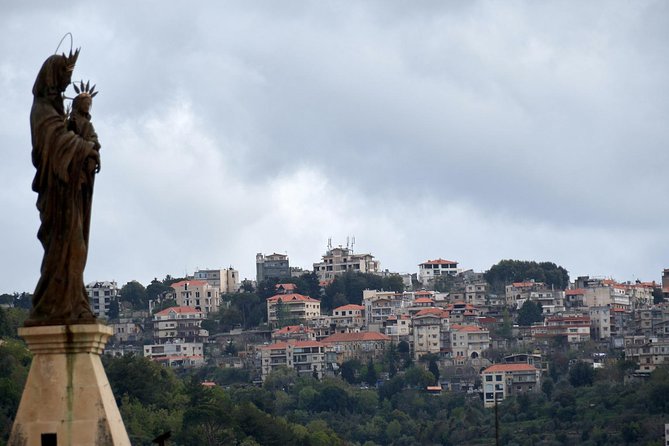
- Deir el Qamar rewards a slower look: The former capital of the Mount Lebanon Emirate brings together Christian churches, a mosque, and a history of religious coexistence.
- The tour is genuinely private: Only your group participates, and pickup and drop-off are included.
- Guiding can shape the whole day: Albert received praise for his explanations at Beiteddine, while Ziad was described as an especially cultured guide and driver.
- Budget for extra costs: Lunch and admission to Beiteddine Palace and Moussa Castle are not included.
Leaving Beirut for the Chouf Mountains
The day begins at 9:00 a.m. with hotel pickup in Beirut. You then head toward the Chouf countryside in a private, air-conditioned vehicle. The drive is part of the appeal, since the route climbs through the Mount Lebanon area and changes the pace from Beirut’s urban streets to mountain towns and historic sites.
An eight-hour schedule sounds generous, but it is not excessive for this route. The day includes three main destinations and several smaller stops, along with the drive in both directions. Private transport is especially useful here because you are not fitting into a large group schedule or waiting for other passengers at every stop.
I would use the drive to ask your guide about Lebanon’s political and religious history. The sites are connected by the story of Mount Lebanon, but each one presents a different piece. Beiteddine reflects the power of an emir, Moussa Castle reflects one man’s determination, and Deir el Qamar shows how a town developed across religious and political lines.
The vehicle is air-conditioned, which is welcome on a full summer day. At the same time, mountain weather can change plans. Snow closed the Chouf Cedars on one previous outing, so do not assume every nearby attraction will be open in winter conditions. This tour still has enough major stops to make the day worthwhile, but flexible expectations are wise.
More Palace Tours in the world:
- Prague: Prague Castle and Lobkowicz Palace Entry Tickets
★ 4.4 · 5,066 reviews - Koblenz: Rhine Valley Castles and Palaces Boat Tour
★ 4.4 · 1,824 reviews - Neuschwanstein Castle and Linderhof Palace Day Trip from Munich
★ 4.5 · 1,756 reviews
Beiteddine Palace and the World of Emir Bashir
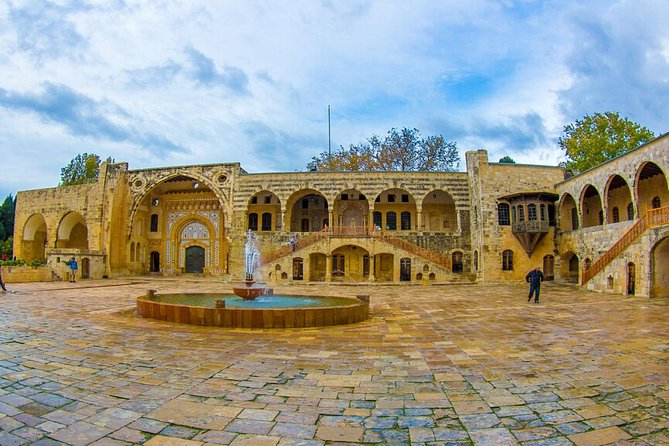
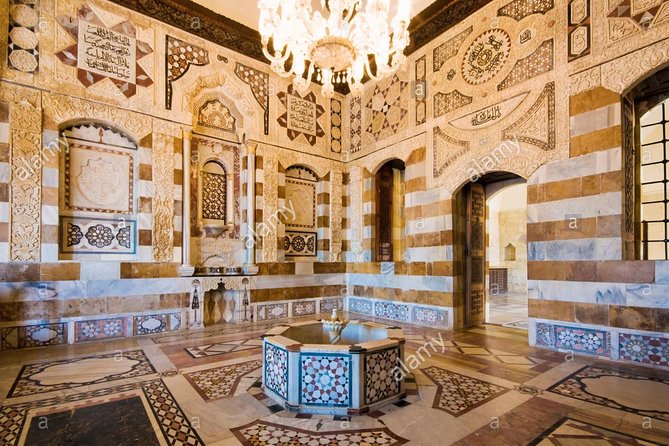
Beiteddine Palace is the anchor of the day. Its name means House of Faith, and its scale gives you a clear sense of the ambition behind the project. Emir Bashir Chehab II built the palace between 1788 and 1818, later becoming ruler of the Mount Lebanon Emirate.
Allow about 90 minutes here. That is enough time for a meaningful visit, though not enough to examine every detail at length. The palace includes courtyards, decorated interiors, and striking mosaics. One particularly praised feature is the mosaic work, which gives the complex much of its visual appeal.
The building also carries several layers of modern Lebanese history. After 1840, the Ottomans used it as a government building. During the French Mandate, it became a local administrative office. In 1943, it was declared the official summer residence of the president of Lebanon.
The Lebanese Civil War badly damaged the palace, and only parts are open to the public today. The remaining presidential use gives the site a practical limitation: you are seeing an important historic complex, but not every room or section is available. That partial access is worth knowing before you arrive.
Admission to Beiteddine Palace is not included in the tour price. Since the $75 covers private transportation, pickup, drop-off, and guiding, I would treat the entrance fee as part of your day-trip budget rather than an unexpected surprise.
A guide can make a major difference here. Albert was praised for explaining both Beiteddine and the wider story of Lebanon. If Albert is leading your visit, ask him about the palace’s changing roles, from emir’s residence to government building to presidential summer home. Those changes help turn a beautiful building into a readable piece of Lebanese history.
Moussa Castle and One Man’s Long Project
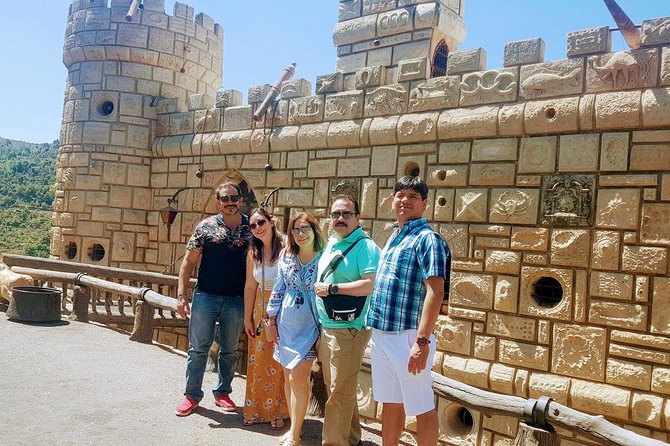
Moussa Castle offers a sharp change of tone. It is not an ancient fortress left behind by a medieval army. It was built in the twentieth century by Moussa Al Maamari, who was born in 1931.
The story begins with a teenage ambition. Moussa developed the idea of building his own castle when he was 14, hoping to impress a local girl he loved. The castle was built on a hill between Deir el Qamar and Beiteddine, and its stones carry the builder’s beliefs and ideas.
You have about an hour here. That gives you time to see the structure and understand the unusual story behind it without turning the visit into a long architectural study. Moussa Castle works best when you approach it as a personal act of persistence. Its interest comes less from ancient age and more from the fact that one person pursued a private dream over many years.
Admission is not included, so allow for another entrance cost. The extra fee may matter to budget-conscious visitors, especially since lunch is also separate. Still, the stop adds variety to the day. After the formal palace at Beiteddine, Moussa Castle feels more eccentric and personal.
I would not visit expecting the same kind of historical importance as Beiteddine. The value is different. You are seeing how a modern individual shaped a place around his own ideas, and that makes the stop memorable in its own way.
Deir el Qamar, the Monastery of the Moon
Deir el Qamar means Monastery of the Moon. The village lies about five kilometres from Beiteddine Palace and was once the capital of the Emirate of Mount Lebanon.
The scheduled village visit lasts around 30 minutes, so you will need to keep moving. Even with limited time, Deir el Qamar gives the tour its strongest sense of community history. It was the first village in Lebanon to have a municipality, established in 1864, and it was home to artists, writers, and politicians.
The town is also important for its religious mix. People from different religious backgrounds lived here, and the village had a mosque, a synagogue, and Christian churches. That combination makes Deir el Qamar more than a pretty old town. It offers a compact example of the different communities that shaped Mount Lebanon.
The village was destroyed in 1860 during fighting between Druze and Christians, when it was set ablaze. Napoleon III later sent a French contingent to help rebuild it. That difficult past is part of what gives the town its weight. You are not simply walking through old streets. You are seeing a place rebuilt after violence and used again as a shared home.
There is no admission fee for the Deir el Qamar stop. The short visit may feel rushed if you enjoy wandering slowly, taking photographs, or reading every architectural detail. Since the trip is private, you can ask your guide to focus on the parts that interest you most, though the overall day still has a fixed shape.
A few more castle visits around the world worth a look
- Seville: Royal Alcázar Entry Ticket
★ 4.6 · 28,378 reviews - Stonehenge, Windsor Castle, and Bath from London
★ 4.5 · 18,662 reviews - Bucharest: Dracula’s Castle, Peles Castle, & Brasov Old Town
★ 4.5 · 17,858 reviews - From Munich: Neuschwanstein & Linderhof Castle Full-Day Trip
★ 4.6 · 14,646 reviews
Fakhreddine’s Mosque and an Octagonal Minaret
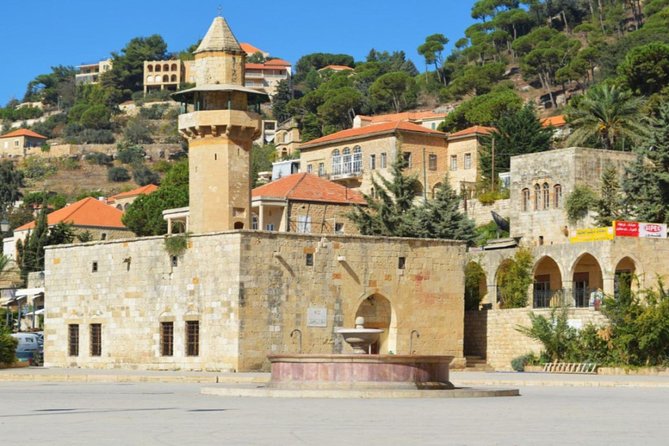
The visit to Fakhreddine’s Mosque is brief, about 15 minutes, but the stop adds an important detail to Deir el Qamar’s story. Built in 1493 and restored in the sixteenth century by Fakhreddine I, it is described as the oldest mosque in Mount Lebanon.
Its most noticeable feature is the octagonal minaret. With only a short time here, you may not have the chance for a long visit, but the mosque helps explain the town’s religious variety. It is also a useful reminder that Deir el Qamar’s Christian identity does not tell the whole story.
There is no admission fee. Your guide can provide the context that a quick look alone cannot. If religious buildings interest you, this is one of the stops where a few clear explanations are more valuable than extra free time.
Saydet El Talle and a Layered Sacred Site
The Church of Saidet et Tallé, also called Our Lady of the Hill, dates to the fifteenth century and is one of Deir el Qamar’s major religious sites. The visit lasts about 15 minutes and is free.
The church’s story reaches further back than its current building. Monk Nicolas Smisaati built a church here over the remains of an old Phoenician temple dedicated to Astarte. That earlier structure was later destroyed by an earthquake in 859.
A local legend adds another layer. A Druze emir in Baakline reportedly saw a light coming from the hill at Dar el Qamar. He ordered his soldiers to dig there, with instructions to build either a mosque or a church depending on the symbol they found. The story links the site to the religious cooperation that runs through Deir el Qamar’s identity.
You will not have a long time to study the church, so listen closely to the explanation and note the setting. This is a place where archaeology, religious tradition, and local legend sit close together. The short stop works as part of the broader village visit, though it may feel too quick if you want to pray or examine the building in detail.
What the $75 Price Really Covers
At $75 per person, the tour offers fair value if you want a private day from Beirut. The price includes hotel pickup and drop-off, private transportation, an air-conditioned vehicle, and a professional guide. Those inclusions matter because the route covers several mountain sites over roughly eight hours.
The private setup is the biggest value point. You are not sharing the day with a large group, and only your party participates. That can make the long drive more comfortable and lets you direct questions toward the subjects you care about.
The price does not include lunch. It also does not include admission to Beiteddine Palace or Moussa Castle. Deir el Qamar, Fakhreddine’s Mosque, and Saydet El Talle are listed as free, but you should still carry money for the two paid sites and food.
Group discounts are available, which could improve the value for a larger party. Solo visitors and couples should compare the private price with the convenience of having transport and a guide arranged for the whole day. If you already have a rental car and prefer to explore independently, the private package may seem less essential. If you want a simple day outside Beirut without arranging each transfer, it earns its cost more easily.
Who Will Enjoy This Day Most?
I would recommend this tour to you if you want a broad introduction to the Chouf without changing hotels or arranging several separate transfers. It suits visitors who like architecture, religious sites, political history, and unusual personal stories in the same day.
It is also a good choice if you value a guide. Albert received strong praise for his explanations and his ability to connect Beiteddine with Lebanon’s wider story. Ziad was described as a thoughtful guide, driver, and person with strong knowledge of Lebanese history and culture. Guide availability is not guaranteed, but these names give you useful people to ask about when booking.
The tour is less suitable if you want a slow village walk, a long lunch, or extensive time at every site. The schedule gives Beiteddine the most time, then moves through shorter stops. The mountain route can also be affected by snow, so winter visits require a little patience.
Free cancellation is available if you cancel at least 24 hours before the start time. Changes or cancellations made inside that 24-hour window are not accepted for a refund.
Should You Book This Chouf Day Trip?
Book it if you want a private, well-rounded day from Beirut that combines a major palace, a modern castle, and a historically mixed mountain town. The strongest parts are the range of sites, the private transport, and the chance to have a guide explain the connections between them.
Think twice if you want admission and lunch included in one price, or if your ideal day means lingering at one place. For most visitors who have limited time in Lebanon, the $75 cost is sensible once you count the vehicle, driver, pickup, drop-off, and guide. Bring extra money for the two paid attractions, ask whether Albert or Ziad is available, and allow some flexibility for mountain weather.
FAQ
What time does the tour start?
The tour starts at 9:00 a.m.
How long does the experience last?
The trip lasts approximately eight hours.
Is hotel pickup included?
Yes. Hotel pickup and drop-off are included.
Is the transportation private?
Yes. The tour uses comfortable private transportation in an air-conditioned vehicle, and only your group participates.
Is a guide included?
Yes. A professional guide is included.
Is lunch included?
No. Lunch is not included in the tour price.
Are admission tickets included?
Admission to Beiteddine Palace and Moussa Castle is not included. Deir el Qamar, Fakhreddine’s Mosque, and Saydet El Talle are listed as free stops.
Can I cancel for a full refund?
Yes, if you cancel at least 24 hours before the experience starts. Cancellations made less than 24 hours before the start time are not refunded.
Just added around the world
- Standing Stones, Inveraray and Kilchurn Castle & Highlands Tour starting Balloch★ 5.0 · 35 reviews
- Cardiff: South Wales Cliffs, Beaches & Castles Day Tour★ 5.0 · 36 reviews
- West Coast Lochs & Castles Tour – from Glasgow★ 5.0 · 20 reviews
- Private Day Tour of South Wales, including Cardiff & Caerphilly Castle.★ 5.0 · 15 reviews
- Private Tour – Edinburgh to St Andrews, Dunnottar Castle & Dundee★ 5.0 · 9 reviews
- From Cardiff: 3 Amazing Castles, Tintern Abbey & Roman Caerleon★ 5.0 · 12 reviews
- Private Day Tour of Cardiff, including Cardiff Castle, St Fagans, & Cardiff Bay★ 5.0 · 5 reviews
- Carcassonne: Secrets of the Castle’s Defense Self-Guided Tour★ 4.5 · 8 reviews
Palace Tours, compared.
Prague Castle and Lobkowicz Palace Entry Tickets
Read our review →
Neuschwanstein Castle and Linderhof Palace Day Trip from Munich
Read our review →
Rhine Valley boat tour along the castles and palaces
Read our review →
Nijo-jo Castle and Ninomaru Palace Guided Tour
Read our review →
Alcázar Guided Palace Tour with Priority Access
Read our review →
Imperial Palace East Garden and Edo Castle Walking Tour in Tokyo
Read our review →Browse the lists this tour appears in