
Review · JAPAN
Kumamoto Castle Guided Tour with Locals
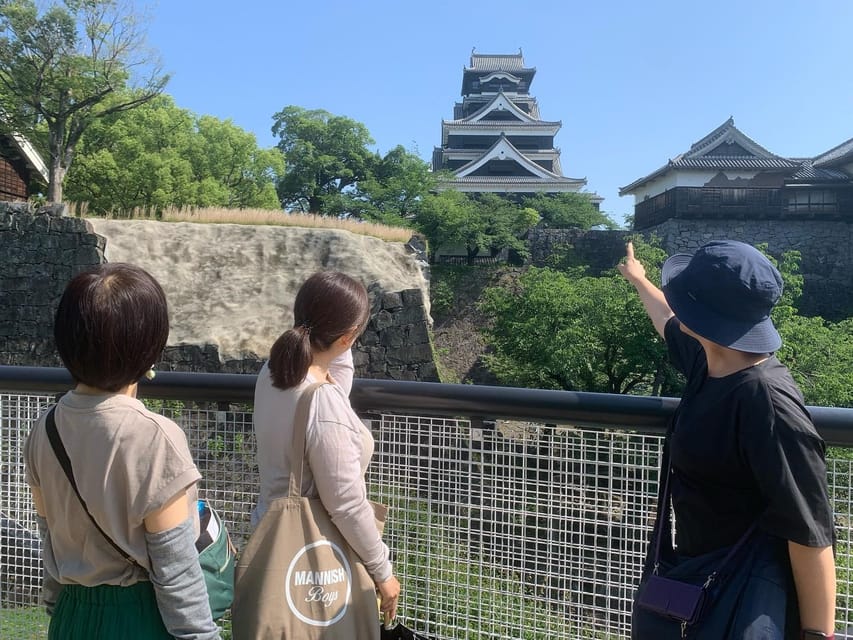
Kumamoto’s castle tells a bigger story than stone walls. This three-hour private walking tour brings the fortress to life through samurai history and local stories. I like the personal guidance, especially when the guide points out architectural details that are easy to miss, and I like that part of the price supports restoration after the 2016 earthquake. The main drawback is the pace: three hours on foot, often outdoors, can feel long in hot or sunny weather.
A local guide leads you from Kumamoto City Hall to the castle area and finishes at Sakuranokojo Josaien. The English commentary is especially useful inside the keep, where many displays are mainly in Japanese. Bring water, wear good walking shoes, and expect a history lesson with plenty of walking rather than a quick photo stop.
Key points to know before you book
- Four hundred years of castle strategy: Learn how Kato Kiyomasa used Kumamoto’s natural hill and roughly 50-meter rise to strengthen the fortress.
- Private English-speaking tour: Your group receives live commentary rather than joining a large public crowd.
- Observation-floor views: The main keep rises about as high as a 14-story building and provides broad views over Kumamoto.
- Helpful photo support: The guide can help with pictures at key viewing points, useful for solo visitors and couples.
- A tour with a restoration purpose: Part of the program proceeds supports repairs following the 2016 Kumamoto earthquake.
- A three-hour walk: Hats, towels, water, and comfortable footwear are not optional extras in warm weather.
Why Kumamoto Castle deserves three hours
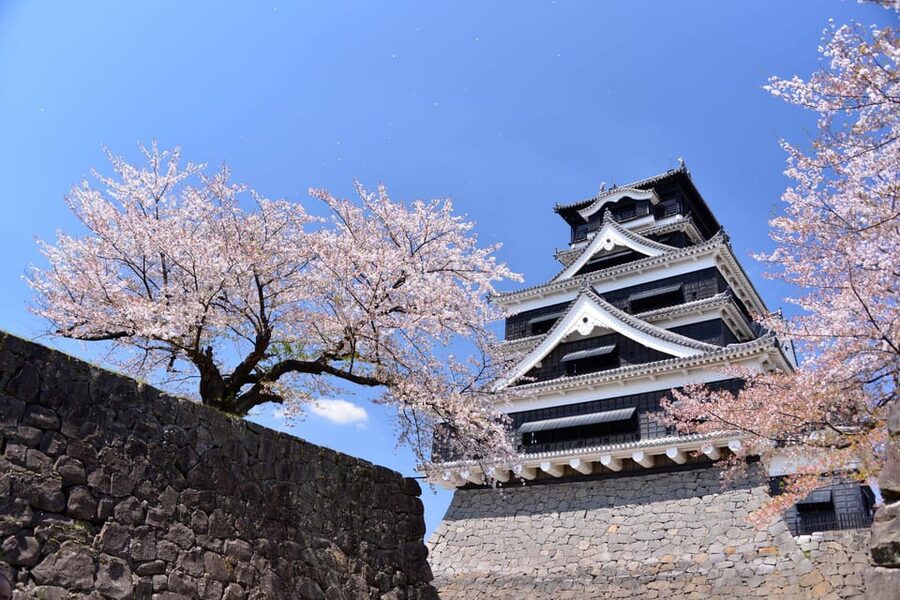
Kumamoto Castle is not simply a handsome building placed in the middle of town. It is a large defensive complex shaped by warfare, terrain, and the political power of the samurai era.
The castle was built about 400 years ago by Kato Kiyomasa, a powerful warlord known for careful planning. His design used the existing hill rather than fighting against it. The site rises by roughly 50 meters, giving the fortress a strong natural advantage and making the approach part of its defense.
That detail gives the tour more substance than a simple walk around a famous landmark. You are not only looking at rooflines and walls. You are learning why the castle was built where it was and how its form served the people who controlled it.
The main keep is the visual center. Its height is often compared with a 14-story building, which helps explain its scale. From the observation floor, you can look across Kumamoto and better understand how the castle dominated the city.
I find that this sort of guided explanation matters most at historic sites with complicated layouts. Without context, a visitor may see handsome walls, steep paths, and large wooden structures. With a guide, those same features become parts of a military plan.
More Guided Castle Tours in Japan
- Kyoto: Nijo-jo Castle and Ninomaru Palace Guided Tour
★ 4.7 · 1,020 reviews - Kyoto: Nijo Castle, Kiyomizu & Fushimi Inari Guided Tour
★ 4.7 · 700 reviews - Kyoto: Imperial Palace & Nijo Castle Guided Walking Tour
★ 4.7 · 453 reviews
Meeting the guide at Kumamoto City Hall
The tour begins in front of Kumamoto City Hall, beside the main entrance on the Kumamoto City Tram Street side. The guide waits with the tour name, which gives you a clear place to begin rather than asking you to search through the castle grounds.
This starting point is practical. Kumamoto Castle is a major site, and meeting at a recognizable civic building helps you get organized before the walking begins. You should still allow enough time to reach City Hall and confirm your route before the appointed start.
The activity is listed as a private group tour, with an English-speaking live guide. That format is useful if you want to ask questions about the castle, samurai life, architecture, or Kumamoto itself. You are not limited to a fixed audio track or a short paragraph beside an exhibit.
The guide also knows local points of interest around Kumamoto. That can make the experience feel more connected to the city instead of treating the castle as an isolated monument.
Walking through a fortress shaped by terrain
The strongest part of the tour is the explanation of how the castle works as a fortress. Kato Kiyomasa used the hill’s height and natural contours to create a difficult site for attackers. The roughly 50-meter elevation is not a minor geographic detail. It is part of the castle’s design logic.
As you walk, the guide explains the samurai era and the practical thinking behind the castle’s layout. You can expect attention to notable spots, architectural features, and the lives of the people who lived within this political and military world.
This is where a local guide adds value. A castle can appear static, but the stories show how it functioned. You begin to picture samurai, retainers, rulers, and ordinary workers moving through the compound 400 years ago.
The tour description does not promise a full reconstruction of daily life in every building, so you should not expect access to every corner or a staged historical performance. Its strength is interpretation: the guide helps you read the site and understand its purpose.
Inside the main keep and the museum area
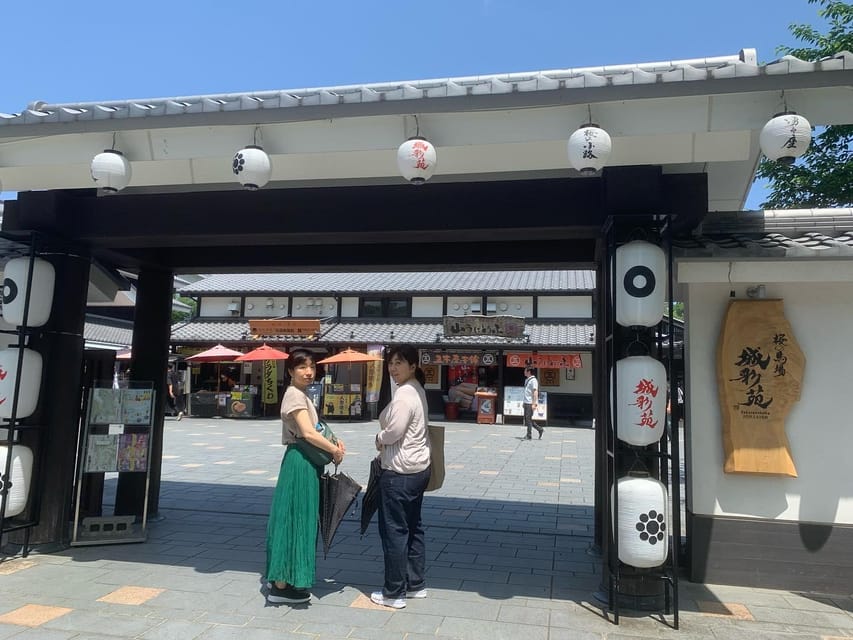
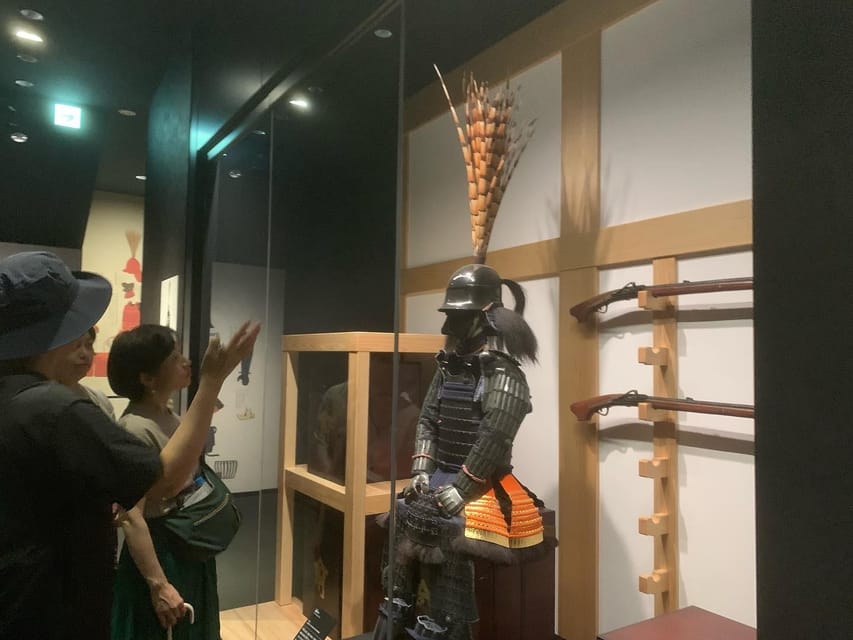
Admission includes Kumamoto Castle and the Kumamoto Castle Museum Exciting Zone. That is important because the price covers more than an outside walk and a few viewpoints.
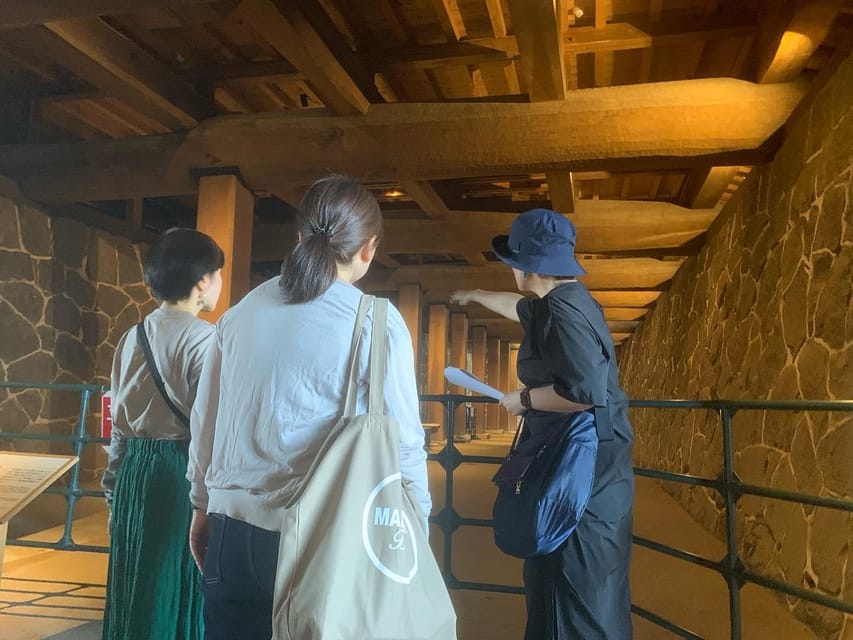
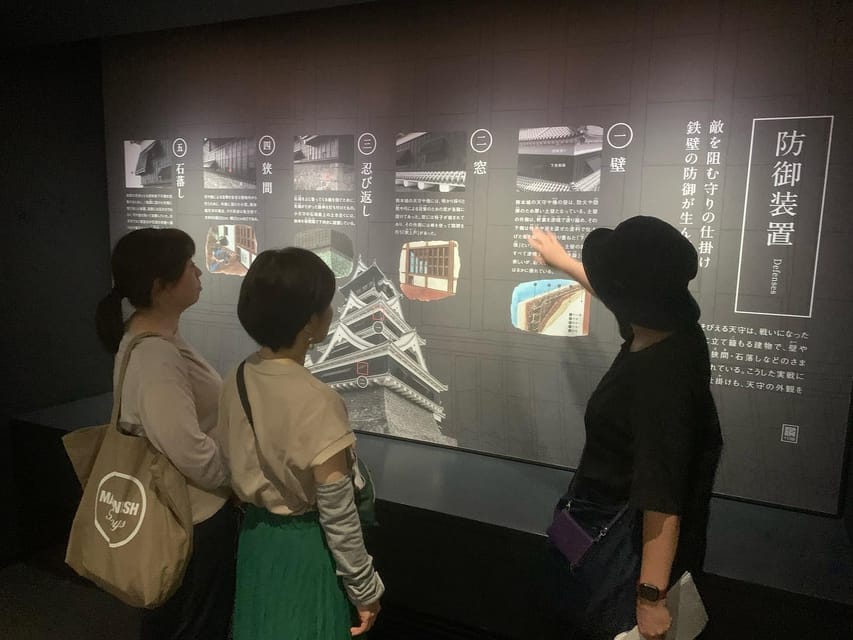
Inside the keep, the exhibits are primarily in Japanese. You may need a translation app to read all the written material. This is the main place where the guide’s commentary becomes especially valuable. Rather than stopping at every panel and trying to translate it yourself, you can listen to the historical explanation and ask questions as you go.
The guide has particular knowledge of Japanese history and culture, so the visit does not depend entirely on English signage. You should still bring your phone if you want to use a translation app for labels or displays that interest you.
The museum portion gives the castle a wider setting. You can connect the architecture to the samurai period and understand why the building mattered beyond its role as a military stronghold. The tour is therefore a good fit for you if you prefer context over a quick circuit of photo spots.
More Japanese Castle Tours in Japan:
- Osaka Castle: Museum and Tower Entry Ticket
★ 4.5 · 2,380 reviews - Osaka Castle Walking Tour and Castle Tower Admission
★ 5.0 · 561 reviews - From Osaka: Himeji Castle, Arima Onsen & Mt. Rokko Day Tour
★ 4.6 · 339 reviews - 5-Hour Osaka Bike Tour to the Neighborhood of Osaka Castle
★ 5.0 · 319 reviews
The observation floor and Kumamoto views
Reaching the observation floor is one of the tour’s natural high points. The main keep’s height gives you a broad view over Kumamoto, and the guide can explain what you are seeing from above.
The view is useful not only for photographs. It helps you grasp the castle’s position in relation to the city and the surrounding area. After seeing the hill, walls, and buildings at ground level, looking down from the keep gives the entire site a clearer shape.
The guide also supports participants with photos at designated photo spots. That is a small service, but it can make a real difference. Solo visitors do not have to rely entirely on a timer, and couples can ask for a properly framed picture instead of accepting a hurried snapshot.
Do not expect the tour to be built around photography alone. The photos are part of the experience, while the main purpose remains history, architecture, and local interpretation.
The earthquake story and restoration work
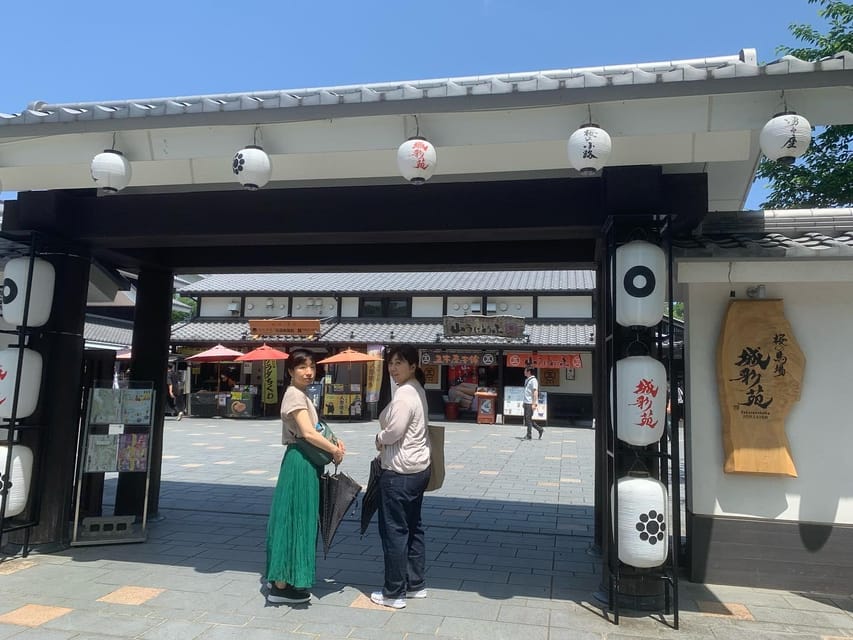
Kumamoto Castle carries a modern story as well as a samurai-era one. In 2016, a magnitude 7.3 earthquake struck the Kumamoto region. About 30 percent of the castle’s stone walls collapsed, and the repair work is expected to take 30 years.
That long recovery changes how you see the site. The castle is not a perfectly untouched relic. It is a historic place being repaired while remaining meaningful to the people of Kumamoto.
Part of the proceeds from this program supports restoration. For me, that improves the value of the admission and guiding fee, because your visit contributes directly to preserving the castle. It does not remove the need to assess the price carefully, but it gives the payment a clear civic purpose.
The restoration story also adds honesty to the visit. You are seeing a landmark shaped by past builders, later generations, and a major natural disaster. The guide can help connect those periods and explain why Kumamoto Castle remains a source of local pride.
Is $105 per person fair value?
At $105 per person, this is not a budget castle visit. You are paying for a private three-hour tour, an English-speaking local guide, entry to Kumamoto Castle, and admission to the Kumamoto Castle Museum Exciting Zone.
The price makes the most sense if you value explanation and personal attention. A self-guided visit may cost less, but inside the keep you would face Japanese-language displays and need to organize the historical story yourself. Here, the guide supplies the background, points out important details, and helps with photos.
The value is also stronger for couples, families, and small private groups who want to move at their own pace within the tour structure. You can ask questions and focus on the parts of Japanese history that interest you.
The value is weaker if you only want a brief look at the exterior or already know the castle well. Three hours is a substantial commitment, and the price does not include food, drinks, bus fare, transport to the meeting point, or purchases at shops.
Tips are not included either. Gratuity is optional and separate.
What to bring for a three-hour walk
The practical advice here is simple. Wear walking shoes and comfortable clothing. The tour lasts three hours, and castle grounds usually involve movement between outdoor areas, interior spaces, paths, and viewing points.
Bring a hat for sunny weather, a towel for wiping sweat, and drinking water to help prevent dehydration and heatstroke. A bag is useful because information materials are provided during the tour.
Writing utensils are also recommended if you like taking notes. That may sound old-fashioned, but a few written reminders can help you remember names, architectural terms, and the guide’s explanations after the visit.
The clothing advice matters most in warm weather. Do not treat this as a short indoor museum visit. You will spend time walking, and the height of the castle does not mean every part of the tour is cool or sheltered.
Who will enjoy this Kumamoto experience?
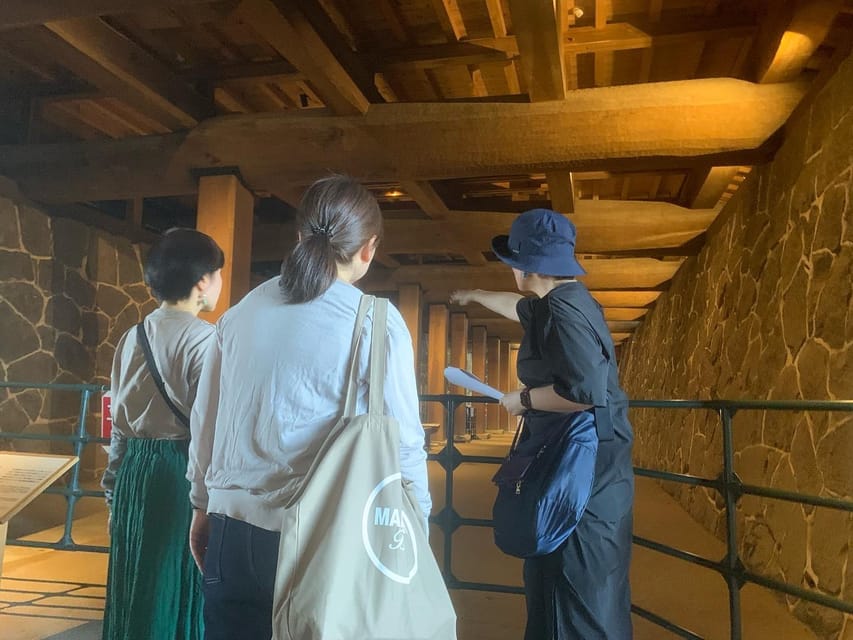
I would recommend this tour to you if you want a clear introduction to Kumamoto Castle and prefer a human guide to reading signs alone. It is a particularly good choice for first-time visitors to Kumamoto, people interested in samurai history, and anyone who wants to understand why the castle’s design matters.
It also suits solo visitors and couples who appreciate help with photos. Families may like the storytelling, though the three-hour walking time could be tiring for young children or anyone uncomfortable on their feet.
The private format gives the experience a more personal feel. You can ask about Japanese history, castle construction, Kumamoto culture, or the earthquake repairs without worrying about holding up a large group.
I would hesitate to book it if your schedule is tight, you dislike walking, or you only want a quick view from outside. In that case, a shorter self-guided stop may serve you better.
The tour includes no food or drink, so plan your meal separately. The listed finish is at Sakuranokoji Josaien, while the meeting information also refers to ending back at the meeting point. Confirm the final return point when booking, especially if you have a train, bus, or restaurant reservation afterward.
Booking flexibility and timing
The tour lasts three hours, with available starting times shown during booking. If you need a different start time or meeting point, the operator may be able to adjust it when possible. Contact them before assuming a change is confirmed.
You can cancel up to 24 hours in advance for a full refund. The reserve-now, pay-later option also helps if you are still arranging your Kyushu schedule.
Because this is a private group experience, the timing can be easier to manage than a large scheduled excursion. Even so, the castle visit itself requires enough time for walking, commentary, museum displays, and the observation floor.
Should you book the Kumamoto Castle Guided Tour?
Book it if you want the castle to make sense, not just look impressive. The friendly guide, clear samurai stories, photo help, admission fees, and restoration contribution give the experience real value for a three-hour visit.
The best reason to choose it is the combination of local perspective and practical explanation. You will learn how Kato Kiyomasa used the hill, why the keep is so imposing, how the castle connects to Kumamoto’s identity, and how earthquake repairs continue today.
Skip it if you want the cheapest possible entry, cannot comfortably walk for three hours, or prefer exploring entirely on your own. For everyone else, especially first-time visitors who want an English explanation, this is a thoughtful way to meet Kumamoto Castle.
FAQ
How long does the Kumamoto Castle guided tour last?
The tour lasts three hours.
What language is the tour conducted in?
The live guided tour is conducted in English.
Is this a private group experience?
Yes. The tour is offered for a private group.
Where does the tour begin?
It begins in front of Kumamoto City Hall, at the main entrance on the Kumamoto City Tram Street side.
Where does the tour finish?
The listed finish is Sakuranokoji Josaien. The meeting information also refers to ending back at the meeting point, so confirm the final return location before booking.
Are Kumamoto Castle admission fees included?
Yes. Entry to Kumamoto Castle and the Kumamoto Castle Museum Exciting Zone is included.
Is transportation to the meeting point included?
No. Round-trip transportation to the meeting point and bus fares are not included.
Are food and drinks included?
No. Food and drinks are not included, and purchases at shops during the tour are also separate.
What should I bring?
A hat, towel, drinking water, bag, and writing utensils are recommended. Comfortable clothing and walking shoes are also advised.
Can I cancel for a full refund?
Yes. You can cancel up to 24 hours in advance for a full refund.
Just added around Japan
- Tokyo: Edo Castle and Imperial Palace Guided Walking Tour★ 5.0 · 6 reviews
- (Ticket Included) Explore Osaka Castle & Museum of History★ 4.8 · 21 reviews
- Peace Memorial Park, Hiroshima Castle, & Garden Private Tour★ 4.8 · 7 reviews
- Osaka: Explore Every Bit of Osaka Castle in 3 Hours★ 5.0 · 5 reviews
- Osaka/kyoto: Himeji Castle, Kobe. Luxury Day Trip with Guide★ 5.0 · 2 reviews
- Osaka: Early Morning Osaka Castle Guided Tour, Avoid Crowds★ 4.9 · 12 reviews
- Osaka: Osaka Castle 3 hours Historical Walking Tour★ 4.6 · 14 reviews
- Osaka: Osaka Castle – Tsuruhashi – Tennoji (Spanish Guide)★ 4.7 · 10 reviews
Japanese Castle Tours, compared.
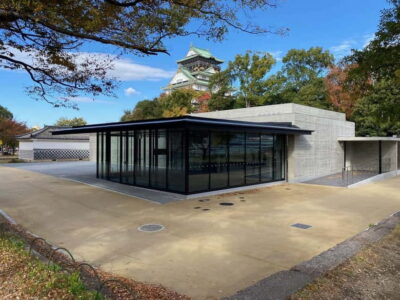
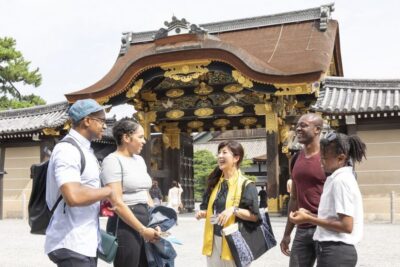
Nijo-jo Castle and Ninomaru Palace Guided Tour
Read our review →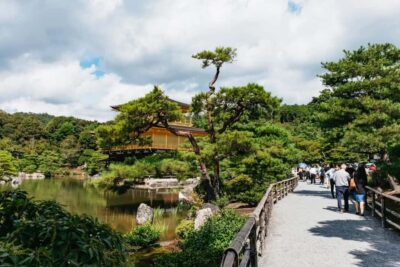
Nijo Castle, Kiyomizu & Fushimi Inari Guided Tour
Read our review →
Osaka Castle Walking Tour and Castle Tower Admission
Read our review →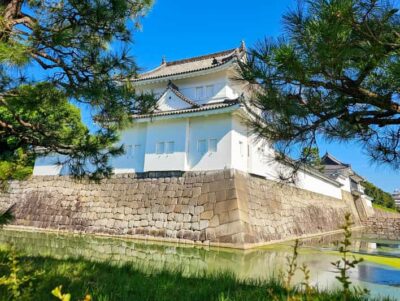
Imperial Palace & Nijo Castle Guided Walking Tour
Read our review →
Himeji Castle, Arima Onsen & Mt. Rokko Day Tour
Read our review →
5-Hour Osaka Bike Tour to the Neighborhood of Osaka Castle
Read our review →
Browse the lists this tour appears in