
Review · CLUJ-NAPOCA
Cluj-Napoca: Turda Salt Mine & Alba Carolina Fortress Tour
History takes a surprising turn underground. This private day trip pairs Alba Carolina Fortress with the vast chambers of Turda Salt Mine, giving you two very different looks at Transylvania in one long outing. I especially like the mix of Roman, medieval, and Habsburg-era sights, plus the chance to ask a guide about Romanian customs and daily life. The main drawback is the price: at $274 per person, this is a serious spend, and lunch is extra.
You will be out for about 10 hours, so this suits you best if you want a full day away from Cluj-Napoca rather than a gentle half-day visit. The group is private, which adds comfort and flexibility, but the schedule still covers a lot of ground. Comfortable shoes are essential, and the tour is not suitable for wheelchair users or people with mobility impairments.
Key points to know before booking
- Alba Carolina has six points and 12 kilometers of walls: The star-shaped fortress is the day’s grandest outdoor sight, with Baroque details at each entrance.
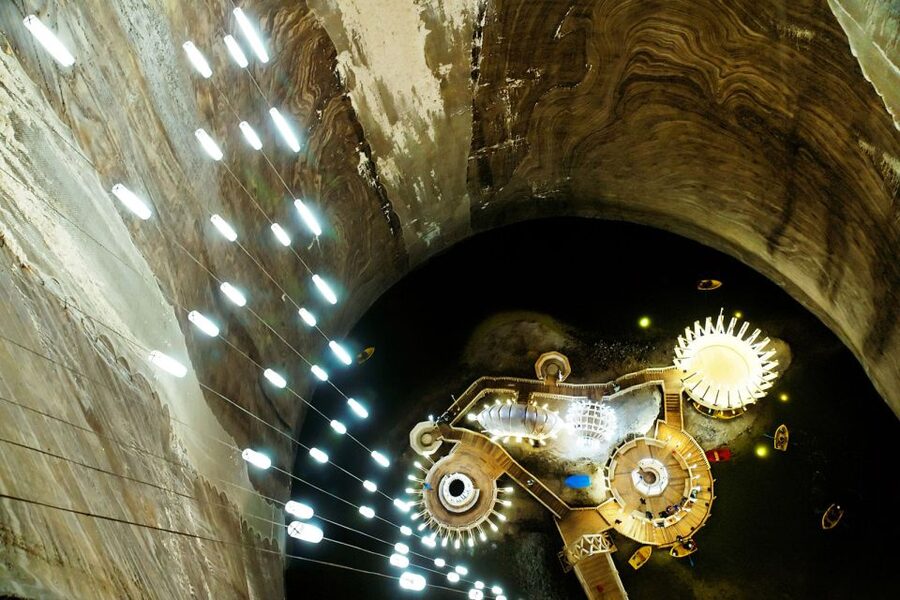
- Turda Salt Mine reaches 90 meters in height: Its underground chambers feel more like a giant hall than a normal mine.
- The day joins three eras of Romanian history: You will encounter Roman Apulum, medieval Alba Iulia, and an 18th-century Vauban-style citadel.
- A private guide makes the long day more rewarding: Joseph, also referred to as Josif, received especially warm praise for his history background, clear explanations, and care with breaks and water.
- Lunch costs about 12 euros extra: It is served in a medieval setting, but food is not part of the tour price.
- Bring identification and a warm layer: The mine stays between 10 and 12 degrees Celsius year-round, even when Cluj is hot.
Why this makes a strong day trip from Cluj-Napoca
The appeal here is contrast. In Alba Iulia, you walk through a formal fortress built for defense and royal ceremony. At Turda, you enter a place shaped by geology and two thousand years of salt extraction. One stop opens outward across walls, gates, and public squares. The other leads down into cool, dim chambers carved from salt.
That variety gives the tour a better rhythm than a day spent visiting similar churches or fortifications. You get architecture, military history, local culture, and an unusual natural setting. I also like that the route gives you time to ask broad questions about Romania, not just listen to a fixed speech about monuments.
The private format matters. You can ask for clarification, pause over a detail, or spend more time at a favorite section. The guide feedback is especially strong on this point. Joseph was praised for answering detailed questions, adjusting to a guest’s schedule, and keeping interest alive during a tiring day. A guide with a history background can make the Roman and Habsburg layers easier to follow.
Still, this is not a light outing. Ten hours is a long day, and the experience combines substantial driving with walking through a large fortress and an underground attraction. If your energy is low or your trip already includes several full-day tours, you may find the pace demanding.
More Fortress and Citadel Tours in Romania
- Brasov: Peles Castle, Bran Castle & Rasnov Fortress Day Tour
★ 4.8 · 238 reviews - Small Group Tour to Viscri Church Sighisoara Town Rupea Fortress
★ 5.0 · 225 reviews - Brasov: Bear Sanctuary, Dracula Castle, and Râşnov Fortress
★ 4.7 · 176 reviews
Alba Iulia, a city built in layers
Your first major stop is Alba Iulia, one of Transylvania’s key historic cities. The city’s identity comes from several cultures and periods rather than one single story. Roman influence, German settlement, Hungarian rule, and later Habsburg power all left visible marks.
The Roman connection begins with Apulum, a strategically important settlement and the largest Roman castrum in the area. That detail helps explain why this location mattered long before the present fortress took shape. You are not simply visiting a pretty old town. You are seeing a place chosen for military and political reasons over many centuries.
Look for the mixture of architectural styles as you walk. Baroque and Romanesque churches sit within a setting shaped by Roman defenses and later fortifications. The description also points to a Babylonian-style building, an unusual detail that adds to the city’s architectural variety.
I would let the guide provide the connecting story here. Without context, Alba Iulia can look like a collection of grand buildings and gates. With context, you begin to see how the city changed hands and purpose over time. That is where a private guide earns much of the tour’s value.
Walking through the six-point Alba Carolina Fortress
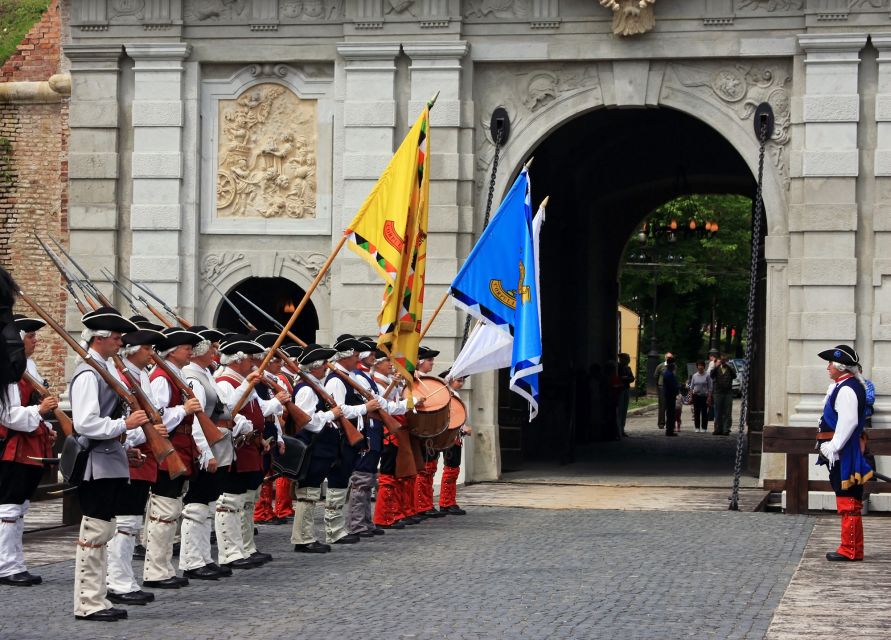
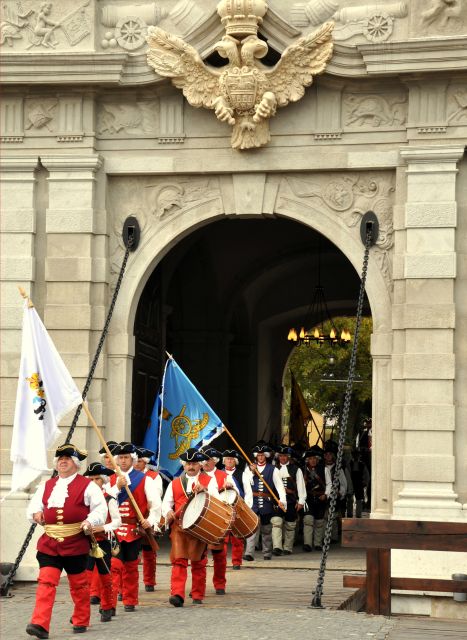
Alba Carolina is the centerpiece of the Alba Iulia visit. Built in the 18th century, it is Romania’s largest fortress, designed in the Vauban style with a six-pointed star plan. Its walls extend for about 12 kilometers, so you are seeing a major military complex rather than a single stone building.
The shape is easiest to understand from above, but even at ground level the fortress feels carefully ordered. Bastions, gates, walls, and open spaces show how military design controlled movement and protected the center. The earlier Roman fort and medieval fortress beneath the later citadel give the site an unusual time span.
The six entrances are a highlight. Each has Baroque decorative work, a reminder that military architecture in 18th-century Europe did not have to be plain. The gates were functional, but they also announced power. Take time to look up and around instead of rushing from one opening to the next.
Alba Carolina also carries a national meaning. It sits near the center of Romania, with the Carpathian Mountains around the wider region, and it is associated with the coronation of Romanian kings. That symbolism makes the fortress more than an impressive wall system. It connects military power with the formation of modern Romania.
The scale can be tiring. Twelve kilometers of walls is a large figure, even though you will not walk every section during a guided visit. Wear shoes with solid support, and use the free time sensibly. You do not need to chase every gate to understand the place.
A medieval-style lunch break
After the fortress visit, lunch is served in a medieval atmosphere. This is a pleasant pause in a long day, especially before the underground portion of the trip. Food is not included, and the stated estimate is about 12 euros per person.
That extra cost is modest compared with the total tour price, but it is worth planning for because the day has few natural opportunities to stop. Personal expenses are also excluded. If you prefer to keep spending predictable, ask the guide what meal options are available and how much time you have before ordering.
I like this pause because it breaks up the history lesson. You can sit down, warm up or cool off depending on the season, and process the fortress before moving to a completely different kind of attraction.
Same region, a different set of walls:
- Bucharest: Dracula’s Castle, Peles Castle, & Brasov Old Town
★ 4.5 · 17,858 reviews - Bucharest: Dracula Castle, Peles Castle & Brasov Old Town
★ 4.6 · 10,891 reviews - Bucharest: Dracula’s Castle, Peleș Castle & Brașov Day Trip
★ 4.4 · 6,100 reviews - Bucharest: Day Trip to Dracula Castle, Peles Castle & Brașov
★ 4.4 · 3,049 reviews
Entering Turda Salt Mine’s enormous chambers
Turda Salt Mine is the day’s most unusual stop. Salt deposits in the area formed about 13 million years ago, and people have worked them for roughly two thousand years. The result is an underground complex with galleries that open into a huge chamber carved from salt.
The chamber reaches about 90 meters in height. That number is hard to picture until you are inside a space where the ceiling rises far above you and the walls show the effect of long-term extraction. The mine is not just a series of narrow tunnels. Its scale is the surprise.
A salt lake sits in the mine, with the opportunity for a boat ride on the water. The glass elevator provides another memorable view, letting you see the chamber from a different angle. If you enjoy unusual photographs, this will likely be the stop that fills your camera fastest.
The atmosphere is also practical, not just scenic. The temperature remains between 10 and 12 degrees Celsius throughout the year. Bring a jacket or sweater even if you leave Cluj-Napoca on a warm summer morning. The cool, salty air is often associated with benefits for people with respiratory problems, though you should treat that as a feature of the environment, not a medical promise.
You should also prepare for a darker, more enclosed setting. The mine may be fascinating, but it is not ideal for anyone who dislikes underground spaces. The walking and elevator portions also mean that people with mobility limitations may struggle. The tour specifically excludes wheelchair users and is not suitable for people with mobility impairments.
How the guide affects the experience
This is a guide-dependent day, and the available feedback gives you a useful picture of what to look for. Joseph, also called Josif, was repeatedly praised for strong historical explanations, enthusiasm for Transylvania, and careful attention to the group.
One guest noted that he kept the group hydrated and allowed enough personal time. Another appreciated that he worked around a schedule and answered questions about Romania, its people, and its customs as well as the main sights. Those details matter on a 10-hour private tour. A guide who only recites dates can make a long day feel longer. A guide who responds to your interests can turn the drive and walking time into part of the experience.
The language offered is English. German and French-speaking guides are available on request, although you should arrange that before booking rather than assume it will be available at the last moment.
The private group format is a real advantage for curious visitors. You can ask why a fortress was built in one location, how Roman and later defenses relate to one another, or how salt mining shaped the area. That personal exchange is one of the strongest reasons to choose this tour instead of arranging a basic transfer between the two sites.
Is $274 per person a fair price?
At $274 per person, the tour is expensive if you are comparing it with a simple public excursion or independent sightseeing. The price becomes easier to justify when you consider the private guide, a full 10-hour day, entrance to Turda Salt Mine, and the convenience of linking two major destinations from Cluj-Napoca.
It is especially good value for couples, families, or small groups who want direct explanations and do not want to manage the route themselves. The guide’s local knowledge also adds value when you want more than photographs and a quick walk through the gates.
The calculation changes if you are traveling alone or on a tight budget. Lunch costs around 12 euros extra, personal expenses are not included, and any extra costs connected with optional activities should be confirmed before you go. The tour is best understood as a private, guided history day, not a cheap way to reach two attractions.
The strong rating of 5 from eight published bookings supports the idea that the service is well regarded, particularly for guide quality and organization. That is a small sample, so I would not treat it as a guarantee. Still, the repeated praise for clear explanations, flexibility, hydration, and personal attention points to the right reason to book.
What to bring and how to prepare
Bring your passport or ID card, as required for the activity. Pack comfortable shoes for the fortress and mine, plus a warm layer for the underground chambers.
I would also bring water beyond the supplied bottle if you usually drink often on long outings. One guest specifically appreciated being kept hydrated, but a 10-hour day still calls for simple preparation.
Avoid bringing pets, which are not allowed. If you have mobility concerns, think carefully before booking. The fortress involves outdoor walking, and the mine includes underground paths and a glass elevator. The activity is not suitable for wheelchair users or people with mobility impairments.
Free cancellation is available up to 24 hours before departure, and you can reserve now and pay later. Those terms give you some planning room, but they do not change the main question: can you comfortably handle a full day of walking, transport, and two major sightseeing stops?
Who should book this private tour?
I would recommend it to you if you want a strong first look at central Transylvania and prefer a guide who can connect the facts. It suits history fans, photographers, small private groups, and anyone who wants to ask questions about Romania beyond the headline sights.
It is also a good choice if you have limited time in Cluj-Napoca. Instead of arranging Alba Iulia and Turda separately, you can handle both in one day with one guide and one organized plan.
I would think twice if you need a relaxed schedule, have difficulty walking, dislike underground spaces, or are mainly seeking the lowest possible price. Turda Salt Mine is cool and dramatic, but Alba Carolina is large, and the entire outing asks for stamina.
FAQ
How long does the Alba Iulia and Turda Salt Mine tour last?
The tour lasts 10 hours. Starting times vary, so you should check availability when choosing your date.
What language is the guide?
The live guide is provided in English. German and French-speaking guides are available on request.
Is lunch included in the tour price?
No. Lunch is not included and costs approximately 12 euros per person.
What is included in the admission price?
The English-speaking guide, entrance fees to Turda Salt Mine, and a bottle of water are included. Personal expenses are not included.
What should I bring?
Bring a passport or ID card and comfortable shoes. A warm layer is also sensible because Turda Salt Mine stays between 10 and 12 degrees Celsius throughout the year.
Is the tour suitable for wheelchair users?
No. The activity is not suitable for wheelchair users or people with mobility impairments. Pets are also not allowed.
Should you book it?
Book this tour if you want a private, guide-led day with real variety and the $274 price fits your budget. Alba Carolina gives you Roman, medieval, and 18th-century history in one setting, while Turda Salt Mine supplies the day’s dramatic change of scene.
The best reason to choose it is the guide service. Joseph and Josif were praised for history knowledge, patience, flexibility, and attention to practical needs. If you want a relaxed, low-cost outing, this is not the right match. If you want two major Transylvanian sights explained by a responsive guide, it is a strong use of one full day from Cluj-Napoca.
Just added around Romania
- Vlad the Impaler Royal Court from Târgoviște, Peleș Castle and Dracula grave★ 5.0 · 8 reviews
- From Bucharest: Brasov & Dracula’s Castle Transylvania★ 5.0 · 5 reviews
- Legends & Stories from Transylvania -2 Castles & Brasov Old Town★ 5.0 · 3 reviews
- Transylvania Castles 4-day tour from Bucharest★ 5.0 · 31 reviews
- The essence of Saxon Transylvania – 3-day tour of its citadels★ 5.0 · 3 reviews
- Private Day Tour – Transylvania & Dracula’s Castle Through The BackDoor!★ 5.0 · 3 reviews
- Private tour to Bran Dracula’s Castle and Peleș Royal Castle★ 5.0 · 4 reviews
- Day trip from Bucharest to Brasov, Peles & Dracula’s Castle★ 5.0 · 11 reviews
Fortress & Citadel Tours, compared.
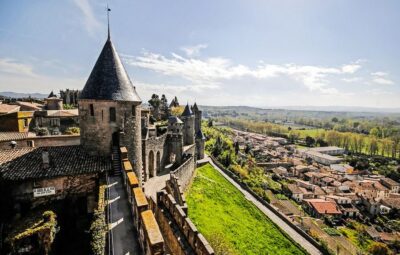
Carcassonne: Castle and Ramparts Entry Ticket
Read our review →
From Cairo Alexandria Catacombs, Citadel Day Trip with Lunch
Read our review →
Charleston historical walking tour with a Professor of History at The Citadel
Read our review →
Hue Customizable Tour with Imperial Citadel & Forbidden City
Read our review →
Desert Safari: Luxury Fortress Dinner, Camel Ride & Dune Bashing
Read our review →
Egyptian Museum, Citadel, and Old Cairo Guided Tour
Read our review →Browse the lists this tour appears in