Review · BUCHAREST
The essence of Saxon Transylvania – 3-day tour of its citadels
Medieval Transylvania fits three busy days. This private tour links Sibiu, Sighisoara, Brasov, Bran Castle, Peles Castle, and Biertan with hotel or airport pickup from Bucharest. I especially like the mix of famous sights and smaller Saxon villages, plus the chance to understand how Vlad the Impaler became tied to the Dracula legend.
I also like the personal guiding, with Gelu and Vlad praised for clear English, strong local knowledge, and memorable anecdotes. The main drawback is the pace: you cover a lot of ground in three days, and meals, photo fees, and some personal expenses are not included.
Key points to know before booking
- Saxon Transylvania in one compact route: See Sibiu, Sighisoara, Brasov, Biertan, Saschiz, Rupea, Bran, and Sinaia.
- Private travel matters: Only your group takes part, with private transportation in an air-conditioned vehicle.
- History comes in layers: Medieval churches, fortified villages, Teutonic Knights, Lutheran bishops, Romanian kings, and Dracula all fit into the story.
- The best guide praise goes to Gelu and Vlad: Expect strong English, detailed explanations, and plenty of local anecdotes.
- Two nights are included: Accommodation is in a double room at a three-star superior hotel or guesthouse, with breakfast.
- The pace is full: Plan for long sightseeing days, walking in old towns, and several hours on the road.
Why this three-day route works
Transylvania is not one single attraction. It is a large region with medieval towns, fortified churches, mountain roads, royal castles, and villages shaped by German settlers. Seeing it properly can take much longer than three days.
This tour gives you the main story in a tight loop from Bucharest. You follow the Olt River Valley toward Sibiu, cross old Saxon country toward Sighisoara, continue to Brasov, then visit Bran and Sinaia before the experience ends at Peles Castle.
That route is valuable because each stop adds something different. Sibiu shows a polished medieval city. Biertan explains the defensive church system of the Saxon villages. Sighisoara gives you the classic fortified citadel. Brasov adds a larger urban center. Bran supplies the Dracula connection, while Peles shows modern Romania reaching for European royal style.
You should expect a busy schedule rather than slow village life. The private format helps because your group does not have to match the pace of strangers, but the distances remain real. Three days allow a strong first look, not a relaxed study of every town.
More Castle Day Trips in Bucharest
- Bucharest: Dracula’s Castle, Peleș Castle & Brașov Day Trip
★ 4.4 · 6,100 reviews - Bucharest: Day Trip to Dracula Castle, Peles Castle & Brașov
★ 4.4 · 3,049 reviews - Dracula’s Castle, Peles Castle and Brasov Day Trip from Bucharest
★ 4.5 · 1,804 reviews
Cozia Monastery and the road through the Olt Valley
The first morning begins with pickup at your Bucharest hotel or the airport. The route heads north through the Olt River Valley, giving you an early change from the capital to a more rural part of Romania.
Cozia Monastery is the first stop. Mircea the Elder founded it in 1388, and the connection to Vlad the Impaler begins here. Mircea was Vlad’s grandfather, so this visit gives you a useful historical thread before the tour reaches Sighisoara and Bran.
The stop lasts about 30 minutes, and admission is free. That makes it a short introduction rather than a full religious site visit. Still, it helps place the Dracula story in its actual medieval setting, among Wallachian princes, dynastic ties, and Orthodox Christianity.
The Olt Valley also makes the first transfer more rewarding than a simple highway ride. You are not just being moved from Bucharest to Sibiu. You are entering the historic region through a scenic route, with the guide explaining how people and power moved through this part of Romania.
Sibiu, from the Council Tower to the Evangelical Church
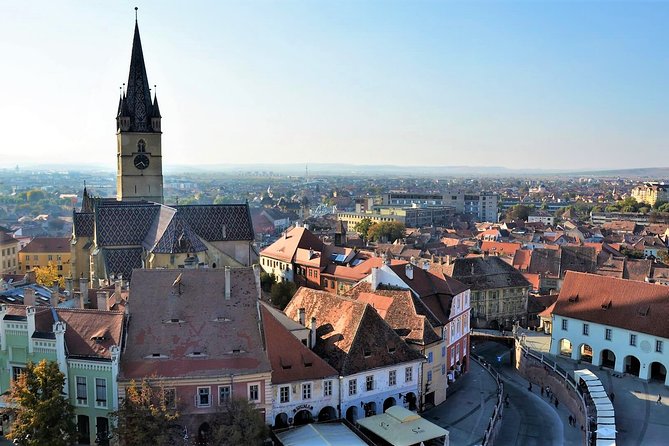
After lunch and a short rest, the tour reaches Sibiu. The guided visit lasts about two hours, with a climb up the medieval stairs of the Council Tower for a view over the old city.
That climb is a useful way to get your bearings. From above, the arrangement of Sibiu’s historic center makes more sense, especially the connection between its main squares and old defensive areas. The tour then continues on foot through the Grand Square, Small Square, and Albert Huet Square.
Albert Huet Square is especially important because it dates from the 12th century. The city’s age is easier to grasp when you move between these spaces rather than simply photographing one central plaza.
The Orthodox Cathedral adds another layer. Its design allows you to compare Romanian Orthodox worship with the Saint Sofia Basilica in Constantinople. The Evangelical Church then shifts the focus toward Sibiu’s German Saxon past.
I like this pairing because it avoids presenting Transylvania as only a Dracula destination. You see how different religious communities shaped the city, and you get both grand civic spaces and places of worship within a short walking visit.
The time is limited, so you should not expect every museum or side street. The value is in the guided overview and the clear introduction to Sibiu’s urban history.
Biertan and the fortified churches of Saxon country
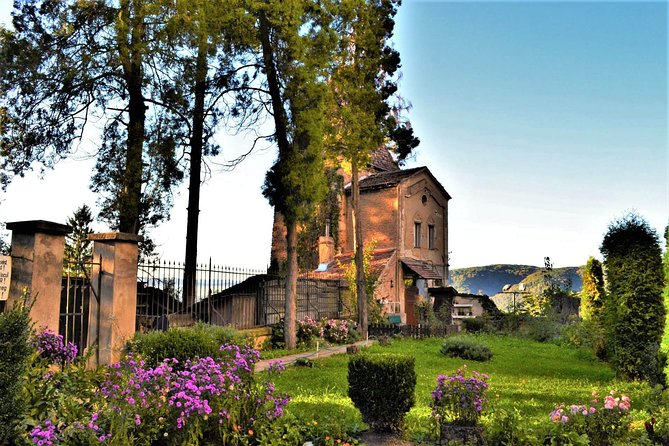
On the second day, the road leaves Sibiu for Sighisoara through the Hartibaciu Valley. You pass old Saxon villages and wooded areas before reaching Biertan.
Biertan’s fortified church is one of the most meaningful stops on the route. It was built between 1486 and 1524 and served for centuries as the seat of the Lutheran bishopric. Its strong walls make sense once you understand that religious buildings also had to protect the local community.
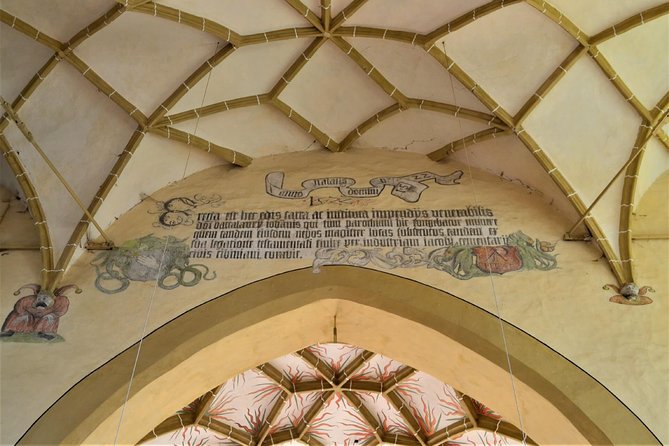
The one-hour visit includes the church, defensive walls, nave ceiling, and a collection of tombstones belonging to former bishops and local figures. Admission is included.
The church explains why Saxon villages in Transylvania often look different from ordinary rural settlements. Competition between powers and the need for defense shaped the buildings, the village layouts, and the local religious life.
This is also where the tour’s title makes the most sense. You are seeing more than a famous town. You are seeing the everyday setting of Saxon Transylvania, where fortified churches served as places of worship, community centers, and refuges.
The drive through the valley is part of the experience, but it also adds time in the vehicle. If you want a slow rural walking tour, this schedule will feel quick. If you want a strong sample of the region, the combination works well.
More Castle Day Trips in Romania
- Transylvania and Dracula Castle Full Day Tour from Bucharest
★ 4.5 · 1,589 reviews - From Bucharest: Brasov Peles & Dracula’s Castle Day Tour
★ 4.5 · 1,244 reviews - Small-Group Day Trip to Dracula’s Castle, Brasov and Peles Castle
★ 4.5 · 935 reviews - Bucharest: Peles Castle, Bran Castle, & Brasov Full-Day Tour
★ 4.4 · 879 reviews
Sighisoara and the real Vlad connection
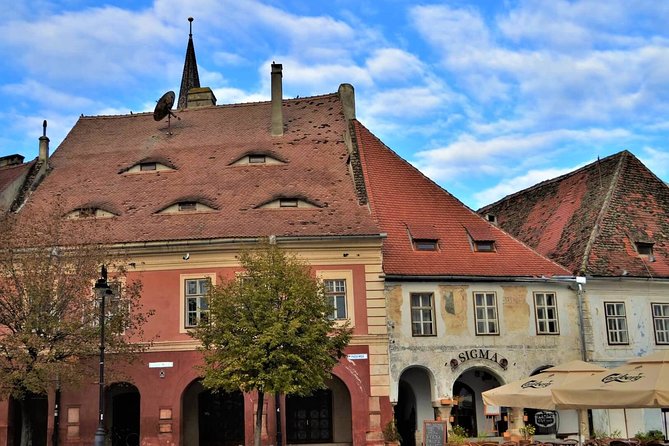
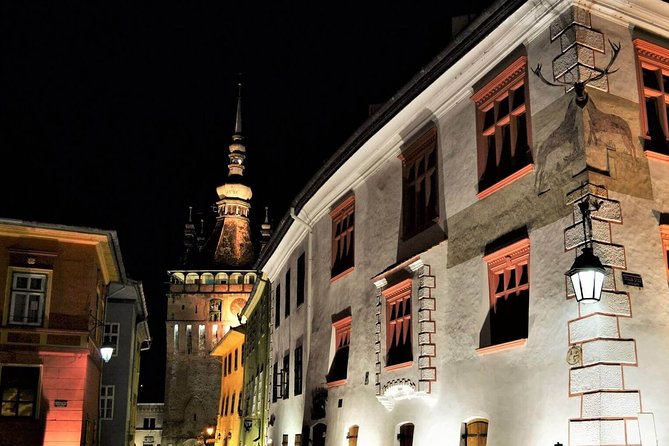
Sighisoara is one of the major reasons to choose this trip. The historic citadel is a UNESCO World Heritage site, and the planned visit lasts about two hours.
You walk to the Clock Tower, the Church on the Hill, the covered stairs, and the old fortifications and towers. The citadel gives you a compact medieval setting, but it is not only a picturesque backdrop. It was also the birthplace of Vlad the Impaler, the historical figure later tied to the Dracula legend.
That connection is important because it separates fact from fiction. Vlad was a real 15th-century ruler, while Bram Stoker’s Count Dracula belongs to literature. The tour uses the places associated with Vlad to explain the person behind the popular image.
The walk includes stairs and uphill sections, particularly toward the Church on the Hill. You should wear practical shoes and be ready for a physical visit. The guide’s role matters here because the walls and towers mean more when you understand the conflicts that made them necessary.
Lunch takes place in Sighisoara before the group continues toward Brasov. You will need to budget for meals, since they are not part of the price. That gives you some choice, but it also means the advertised tour cost is not the complete amount you will spend.
Saschiz and Rupea from the road
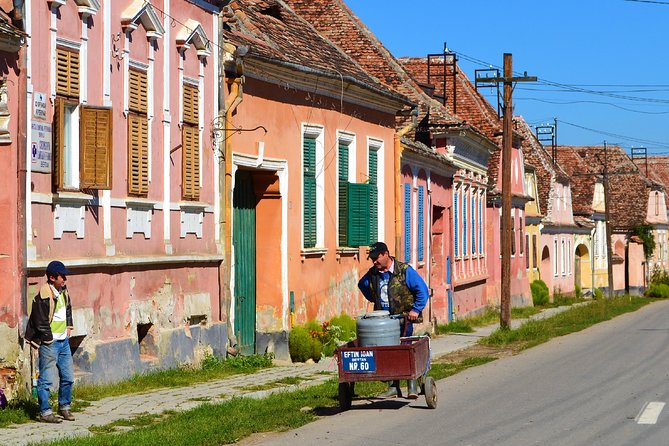
Between Sighisoara and Brasov, the route includes views of Saschiz fortified church and Rupea fortress. These are described as passing sights rather than full visits, so you should not expect the same walking time given to Biertan or Sighisoara.
Saschiz’s church dates from the end of the 15th century. Its tower recalls the Clock Tower in Sighisoara, making it a useful visual link between the two sites.
Rupea fortress is among Romania’s oldest fortifications. It was built over earlier Roman and Dacian fortifications, so even a view from the road adds another layer to the region’s long military history.
These brief glimpses are a good compromise in a three-day trip. A longer stop at every church and fortress would make the route much slower. The tradeoff is simple: you gain range, but you do not get a full visit at every landmark.
Brasov, the Black Church, and Rope Street
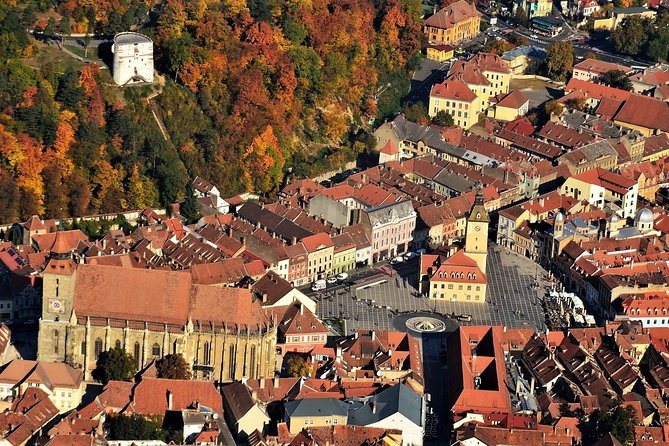
Brasov is the largest city on the route and the place where the medieval story meets a modern Romanian city. Its early fortress was established in 1211 by the Teutonic Knights. After conflict between the knights and the king, German settlers helped shape the city that followed.
The visit lasts about two hours after check-in. You see the Black Church, a 14th-century Gothic monument, along with the old fortifications, bastions, towers, and Rope Street.
The Black Church is the main historical sight. Its scale and Gothic form reflect Brasov’s importance as a major commercial and religious center. The fortifications then show how the city protected its wealth and population.
Rope Street provides a lighter moment. It is famously narrow and makes an amusing contrast with the large church and defensive walls. This is one of those places where the guide’s anecdotes can add as much as the architecture.
Brasov also has more energy than the smaller historic settlements. The city developed a strong industrial base during the last century and drew people from across Romania. That means you get a living city, not a preserved medieval stage set.
The schedule gives you a solid introduction, but not enough time to explore every corner. If Brasov interests you most, consider adding a separate night before or after the tour.
Bran Castle and the Dracula question
On the third day, you first catch sight of Rasnov fortress from the road. The fortress dates from the 13th century and may relate to the short period when the Teutonic Knights controlled the area around Brasov.
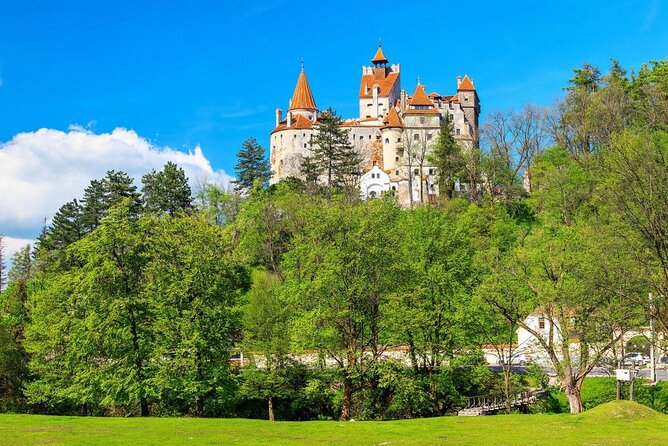
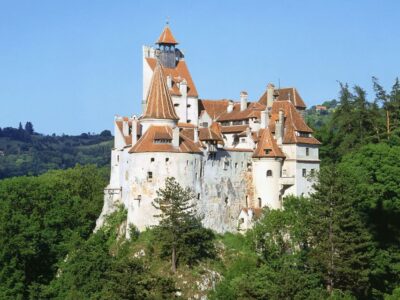
Bran Castle follows, with about two hours for the visit and admission included. The castle was built in the 14th century to guard a commercial route between Wallachia and Transylvania. Its position on a high rock helped make it a powerful defensive site.
Bran became linked with Count Dracula because of its dramatic setting and its resemblance to the castle imagined in popular culture. The historical connection to Vlad the Impaler is much less direct than many visitors expect. That is precisely why the guided explanation is useful.
You should visit Bran for both reasons: it is a striking medieval fortress, and it reveals how a real ruler was transformed into a fictional character. Expect a popular attraction rather than a quiet archaeological site. The two-hour visit gives you time to see the castle, but the stop remains one part of a packed day.
Peles Castle and King Carol I’s modern Romania
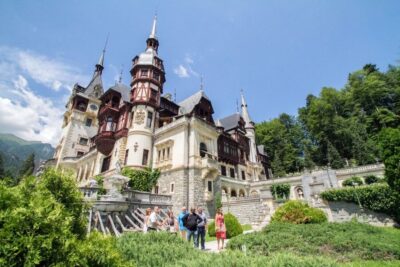
The final major stop is Peles Castle in Sinaia. It was built at the end of the 19th century by Carol I, Romania’s first king, who came from the German Hohenzollern-Sigmaringen family.
The castle makes a sharp contrast with Bran. Bran is medieval, defensive, and tied to legend. Peles is royal, decorative, and linked to Romania’s effort to present itself as a modern European state.
Carol I ruled for 48 years and pushed hard to modernize the country. His reputation for discipline contrasts with the castle’s elaborate appearance, a contrast also reflected in the story of Queen Elisabeth saying that he wore the crown even while sleeping.
The visit lasts about two hours and admission is included. Peles is a strong final stop because it changes the subject from medieval survival to royal ambition. You leave with a broader view of Romania, not just a collection of fortified churches and Dracula stories.
The route says early afternoon arrival, so timing matters. Castle access and daily conditions can affect the flow of the day, and the schedule does not leave much spare time if earlier visits run long.
What the $914.51 price really includes
At $914.51 per person, this is not a budget coach tour. It is a private three-day experience with air-conditioned transportation, private travel, taxes and fees, two nights of accommodation, and breakfast.
The value improves if you are traveling as a small private group. You avoid a larger shared bus and can benefit from direct guiding throughout the route. The price also covers several major admission fees, including Biertan, Sighisoara, Brasov, Bran, and Peles.
You still need to pay for meals, photo fees, and flights. The wording also specifies double-room occupancy, so solo travelers should confirm how the room arrangement affects the final cost before booking.
I would see the price as reasonable for visitors who want one organized trip from Bucharest with a private guide and transport. It is less attractive if you prefer public transport, independent hotel selection, or several free hours in each town.
Guides, group size, and practical comfort
This is a private activity, so only your group participates. That is a major advantage for families, couples, and friends who want to ask questions without holding up a large tour.
Gelu and Vlad receive especially strong praise for their English, historical explanations, and storytelling. Gelu is also praised for knowing local anecdotes and for making the trip more revealing than it would be without a guide.
That matters on this route. Many of the places look impressive even without explanation, but the connections between Mircea the Elder, Vlad the Impaler, Saxon settlement, Lutheran power, Teutonic Knights, and Romanian monarchy are not obvious at first glance.
Most people can take part, and service animals are allowed. The tour is near public transportation, though pickup is offered from your hotel in Bucharest or the airport. Historic towers, church visits, and old citadels involve walking and stairs, so comfortable shoes are a sensible choice.
The stated operating hours are Monday through Sunday, 8:00 AM to 8:00 PM. Confirmation is received at booking. For changes, the cancellation terms are strict: six full days or more before the start brings a full refund, two to six days brings 50 percent, and cancellation within two days brings no refund.
Who should book this tour?
I would recommend it to first-time visitors who want the main Transylvanian sights without arranging several hotels, transfers, and admissions themselves. It also suits anyone who wants historical context instead of simply stopping for photographs.
Families may appreciate the private format, while couples and small groups can make good use of the flexible conversation with the guide. The tour is also a strong choice if you are interested in the relationship between Romanian, Saxon, Lutheran, Orthodox, and royal traditions.
I would hesitate if you dislike long drives, prefer unplanned afternoons, or want to spend several hours in just one town. The schedule is efficient, but efficiency means tradeoffs.
Should you book this Transylvania tour?
Book it if you want a concentrated introduction to Saxon Transylvania, with private transport, two included hotel nights, and guides such as Gelu and Vlad who can explain the stories behind the monuments. The route gives you a rare balance of famous castles, UNESCO sites, fortified villages, and living cities.
Skip it if your priority is low cost or a slow pace. At $914.51 per person, plus meals and other extras, it earns its price through convenience, admissions, personal guiding, and the amount of ground covered. For a first visit from Bucharest, that combination makes it a strong, practical choice.
FAQ
Where does the tour begin?
Pickup is offered from your hotel in Bucharest or from the airport.
How long does the experience last?
The tour lasts approximately three days and includes two nights of accommodation.
Is this a private tour?
Yes. Only your group participates, and private transportation is provided in an air-conditioned vehicle.
What accommodation is included?
Two nights are included in a double room at a three-star superior hotel or guesthouse. Breakfast is included.
Are meals included?
No. Meals are not included, so you should budget separately for lunch and dinner during the three days.
Which major sites include admission?
Admission is included for Biertan fortified church, Sighisoara, Brasov’s historic center, Bran Castle, and Peles Castle. Cozia Monastery has no admission fee listed.
More Fortress and Citadel Tours in Romania
- Hiking to the Poenari Fortress and Princely Court of Târgoviște
★ 5.0 · 6 reviews - Hike Bulgaria Love Swing, Veliko Tarnovo and Tarevet Fortress
★ 5.0 · 4 reviews - Day Trip to Sibiu and Fagaras Fortress from Bucharest
★ 4.5 · 4 reviews - Bear Sanctuary & Rasnov Fortress – Private day tour from Bucharest
★ 5.0 · 4 reviews
More Fortress and Citadel Tours in Bucharest
- Visit Bulgaria – Veliko Tarnovo Medieval Fortress – Private tour from Bucharest
★ 5.0 · 51 reviews - Hike to Poenari Fortress, Vidraru Dam, Argeș Monastery – Private
★ 5.0 · 26 reviews - 2-Day Small-Group Tour to Dracula’s Castle, Rasnov Fortress, Peles Castle, Sighisoara and Libearty Brown Bear Sanctuary with Overnight in Brasov
★ 4.5 · 9 reviews - Buzludzha Monument and Tsarevets Fortress in Bulgaria Private
★ 5.0 · 8 reviews
Just added around Bucharest
- Vlad the Impaler Royal Court from Târgoviște, Peleș Castle and Dracula grave★ 5.0 · 8 reviews
- From Bucharest: Brasov & Dracula’s Castle Transylvania★ 5.0 · 5 reviews
- Legends & Stories from Transylvania -2 Castles & Brasov Old Town★ 5.0 · 3 reviews
- Transylvania Castles 4-day tour from Bucharest★ 5.0 · 31 reviews
- Private Day Tour – Transylvania & Dracula’s Castle Through The BackDoor!★ 5.0 · 3 reviews
- Private tour to Bran Dracula’s Castle and Peleș Royal Castle★ 5.0 · 4 reviews
- Day trip from Bucharest to Brasov, Peles & Dracula’s Castle★ 5.0 · 11 reviews
- Dracula’s Castle & Peles Palace Tour from Bucharest Including Brasov Old Town★ 5.0 · 14 reviews
Dracula & Transylvania Castles, compared.
Dracula’s Castle, Peles Castle, & Brasov Old Town
Read our review →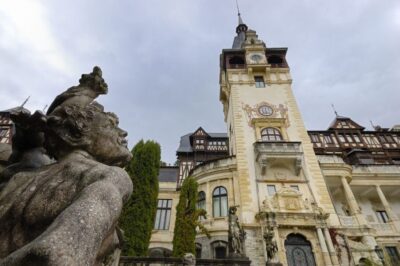
Dracula Castle, Peles Castle & Brasov Old Town
Read our review →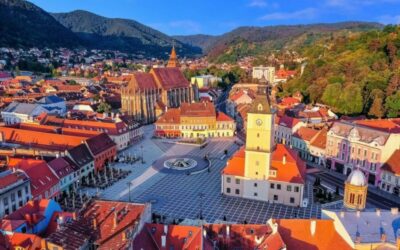
Dracula’s Castle, Peleș Castle & Brașov Day Trip
Read our review →
Day Trip to Dracula Castle, Peles Castle & Brașov
Read our review →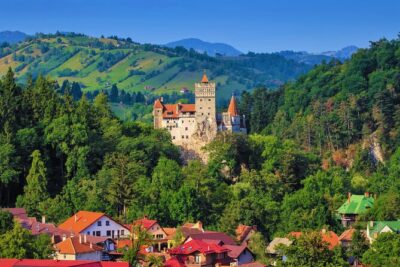
Bucharest to Dracula Castle, Peles Castle and Brasov Guided Tour
Read our review →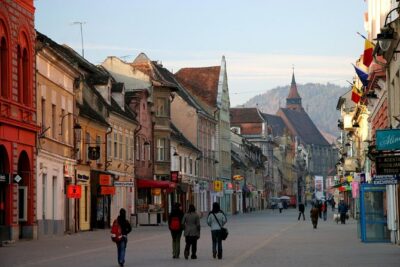
Dracula’s Castle, Peles Castle and Brasov Day Trip from Bucharest
Read our review →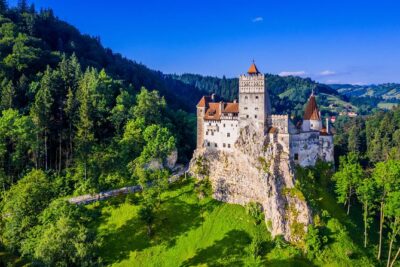
Transylvania and Dracula Castle Full Day Tour from Bucharest
Read our review →