
Review · ITALY
Bari: Norman-Swabian Castle Entry Ticket
History is built into Bari’s streets. This ticket gives you a direct look at the Swabian Castle of Bari, a fortress set in the old city between the cathedral and the docks. I especially like the castle’s changing identity, from Norman stronghold to Swabian fortress to Renaissance residence, and I like that the optional audio guide explains those changes in several languages. The main drawback is value: at about $14, or €10 for adult admission before the €6 audio guide, some visitors may find the interior visit too short for the cost.
You enter at a fixed time, so this is not a casual walk-in ticket you can use whenever you happen to pass by. I would pair it with a visit to Bari Cathedral and the old city, since the castle’s location makes it easy to connect several major sights in one outing.
Key points to know before you go
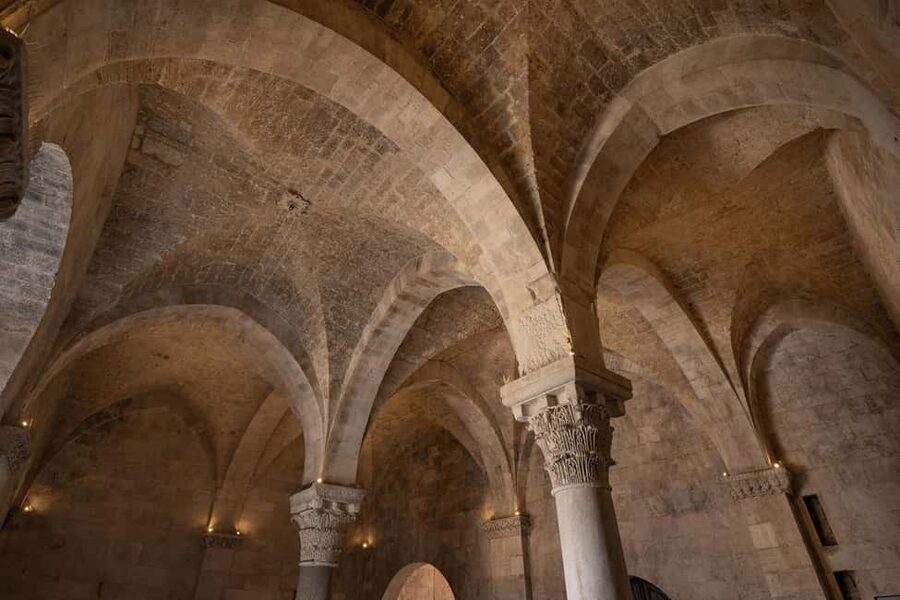
- A fortress with three major chapters: The castle began under Norman ruler Ruggero II in 1131, was rebuilt by Frederick II in the 13th century, and later became a Renaissance residence.
- The Renaissance rooms are the highlight: Isabella of Aragon and Bona Sforza softened the castle’s military character and drew poets and artists to the building.
- The audio guide adds real value: It is available in English, Italian, French, Spanish, and German, and helps explain the castle’s development over time.
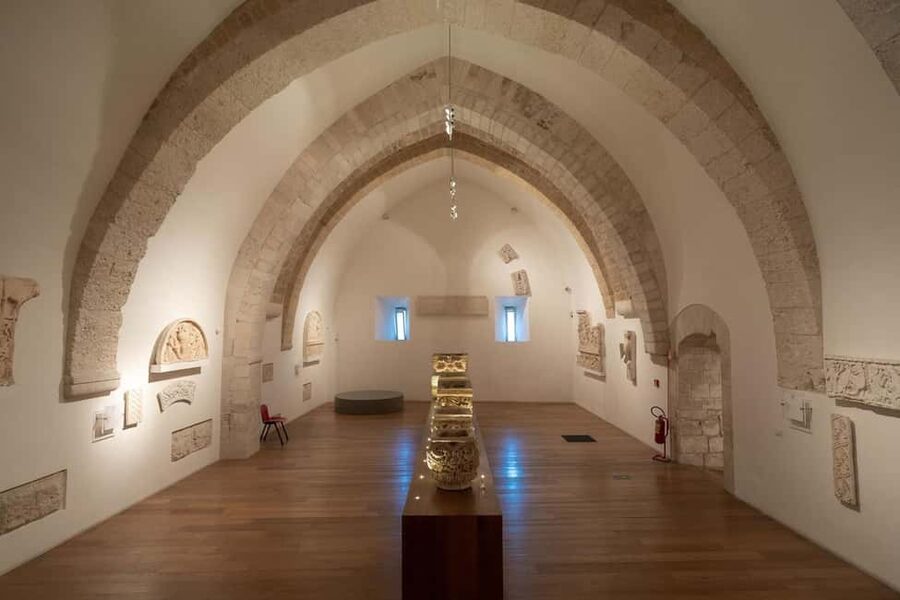
- The Gipsoteca adds an unusual museum stop: Opened in 2011, it contains plaster casts of important monuments and places of worship from Puglia.
- The visit works best with nearby sights: The castle sits between Bari Cathedral and the docks, in the oldest part of the city.
- Check the date and time carefully: Your selected entry time is mandatory, and opening hours can change according to museum requirements.
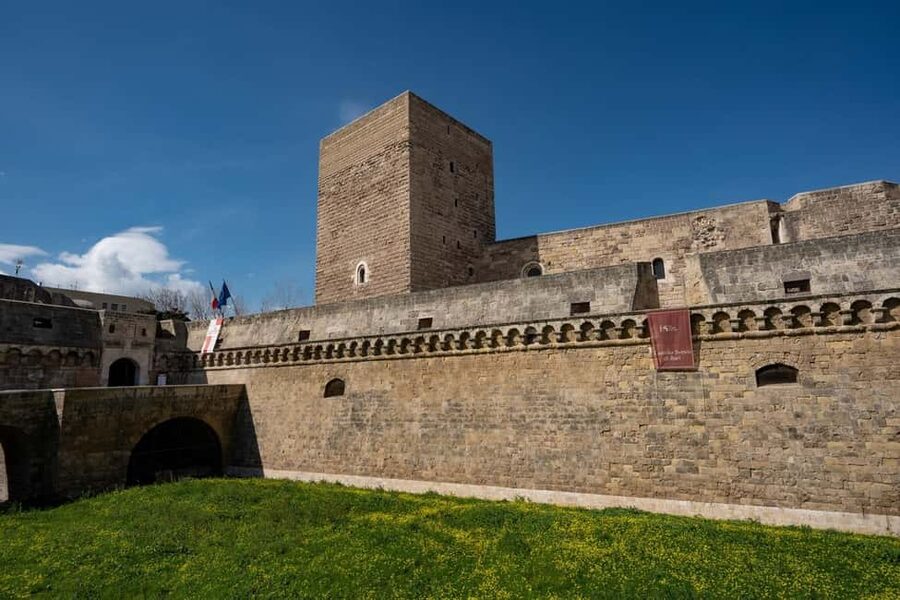
Arriving at the castle between Bari Cathedral and the docks
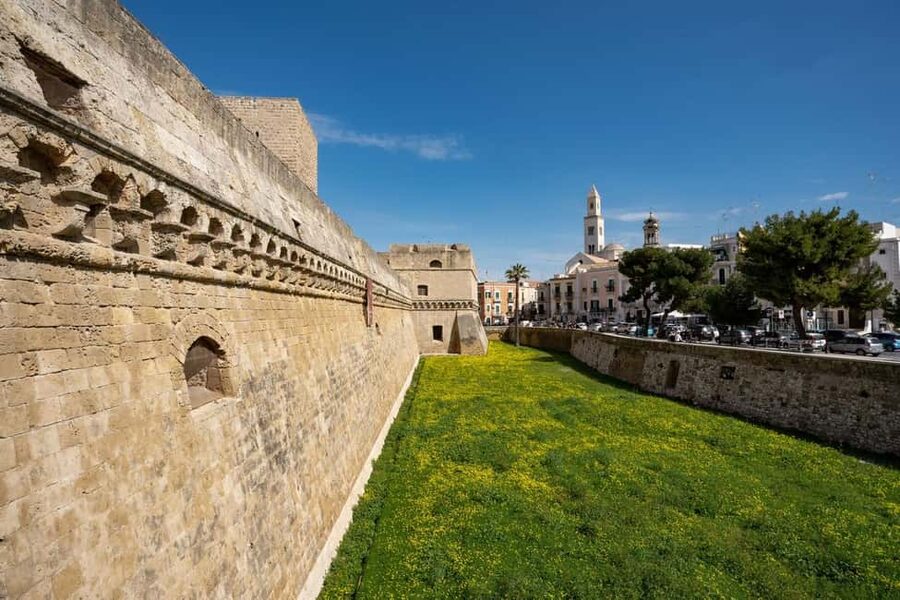
The Swabian Castle occupies a useful spot in Bari’s historic core. It sits between the cathedral and the harbor, so you can easily fold it into a walking route through the oldest part of the city. The location is one of the ticket’s practical strengths because you do not need separate transportation to reach the building from nearby old-town sights.
The castle’s shape makes an immediate impression. Its imposing trapezoidal form reflects its military purpose, while the surrounding streets place it firmly in Bari’s older urban fabric. You are not approaching an isolated palace or a country fortress. This is a defensive building tied closely to the city around it.
The ticket is for a specific entry time. That matters because you cannot treat it as an open-ended admission pass. Check the available times before booking, arrive with your chosen time in mind, and remember that opening hours may change if museum requirements affect access.
There is no transportation included, so you are responsible for reaching the castle. That is not a major problem if you are already sightseeing in central Bari, but it matters if you are planning a day trip from elsewhere in Apulia. Meals, drinks, and souvenirs are also separate.
More Castle Entry Tickets in Italy
- Milan: Sforza Castle Entry Ticket with Digital Audio Guide
★ 4.0 · 2,675 reviews - Trieste: Miramare Castle & Museum Entry Ticket & Audio App
★ 4.2 · 213 reviews - San Leo: Fortress Entry Ticket and Cagliostro’s Prison
★ 4.2 · 38 reviews
Ruggero II and the Norman beginning in 1131
The first major chapter begins in 1131, when Ruggero II built the castle to help secure the Norman conquest of Bari. The building was not simply a royal residence. It was part of the process of controlling the city and protecting an important coastal position.
That political purpose helps you read the castle correctly. The thick, severe structure is not trying to charm you at first glance. It was built to project control. Even if you have only a basic interest in medieval history, the castle gives a clear example of how rulers used architecture to make power visible.
The setting adds to the effect. Bari’s cathedral and docks are close by, linking the castle to religion, trade, and military control. I like this connection because you can understand more of the city’s past by walking a short distance rather than treating each sight as an isolated attraction.
The ticket does not include a live guide, so the audio option becomes useful here. The guide is available in five languages and can give structure to the early part of the visit. Without it, you will still see the architecture and displays, but some of the political background may be less clear.
Frederick II’s 13th-century rebuilding
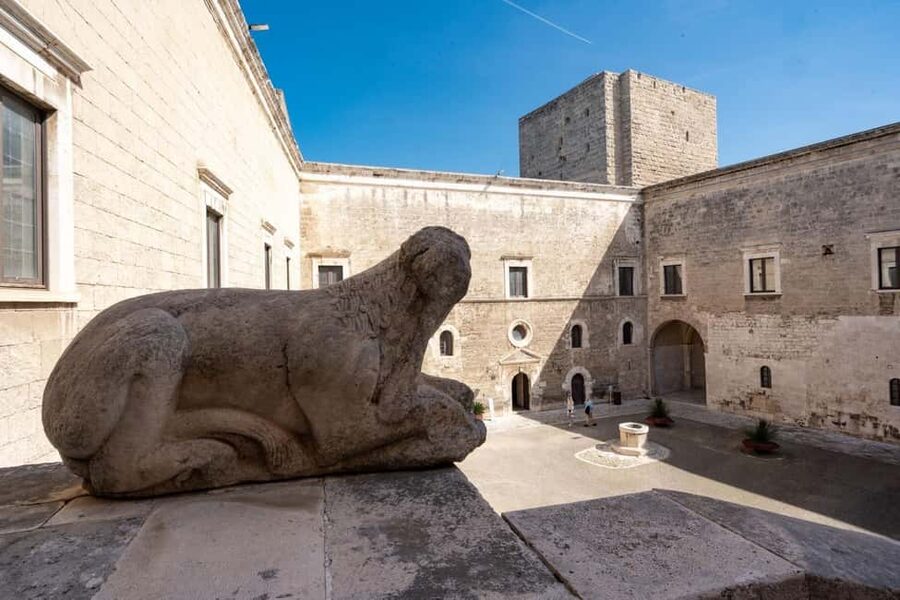
The next important phase came under Frederick II of Swabia, often called the Stupor Mundi. He rebuilt the castle in the 13th century, and his work can be seen in the majestic entrance portal, the atrium, and the loggia.
Look closely at the architectural details named in the visit material: architraves, cornices, corbels, and capitals. These elements help you see that the castle is not only a massive defensive block. It also contains carefully designed spaces meant to express imperial authority.
The entrance portal is especially important because it marks the transition from the outer fortress to the interior. The atrium gives you a sense of how the building’s spaces connect, while the loggia introduces a more refined architectural language than you might expect from a military structure.
I would not rush through these areas. The larger outline of the castle is easy to grasp, but the smaller details reward a slower look. The audio guide can help point out what you are seeing, especially if Romanesque and medieval architectural terms are not familiar to you.
The castle’s story is easier to follow when you think of it as a working building that changed with each ruling power. Norman construction, Swabian rebuilding, and later Renaissance alterations each left a different mark.
Isabella of Aragon and Bona Sforza change the mood
The most striking change came in the 16th century, when Isabella of Aragon and her daughter Bona Sforza transformed the austere military structure into a refined Renaissance residence.
This is where the visit gains contrast. You begin with a castle built to defend and control. Then you see how royal women adapted that setting for court life, culture, and display. The transformation did not erase the fortress, but it changed the way parts of the building were used and experienced.
The connection with poets and artists gives this chapter added interest. The castle was no longer only about walls, weapons, and authority. It became a place associated with culture and refined living, even while its earlier defensive character remained visible.
For me, this is the most useful historical idea in the visit: buildings do not have only one identity. A fortress can become a residence without losing all traces of its earlier purpose. The rooms and collections help show that shift more clearly than a simple timeline would.
The interior installations are particularly helpful here. They explain the castle’s development over the centuries and show how the fortress changed. That focus on evolution has been one of the strongest parts of the experience, especially if you want more than a quick look at stone walls.
Same region, a different set of walls:
- Milan: Sforza Castle and Michelangelo’s Pietà Rondanini Tour
★ 4.7 · 1,119 reviews - From Siena: Chianti and Castles Tour with Wine Tastings
★ 4.6 · 631 reviews - Milan: The Last Supper & Sforza Castle Guided Tour
★ 4.6 · 610 reviews - Milan: Last Supper and Sforza Castle Guided Tour
★ 4.6 · 498 reviews
Inside the collections: ceramics, jewelry, and castle models
The castle interior houses several collections. Renaissance-era ceramics and jewelry give you a closer view of decoration and daily life connected with the building’s later use.
These objects matter because they add scale to the political story. A ruler’s name and a construction date can feel distant. Ceramics and jewelry bring the period closer to ordinary human details, even though the available information does not specify the individual objects on display.
You will also find wooden models of the castles of Bari, Barletta, and Monopoli. These models are a practical way to understand regional defenses. Instead of looking at one building alone, you can compare it with other fortifications in Apulia.
I find models useful when a large structure is hard to understand from ground level. A castle’s walls, corners, and overall plan can be difficult to read while you are inside it. A wooden model lets you step back and see the complete design.
The collection rooms are also where expectations matter. This is not presented as a huge museum complex with endless galleries. The experience is focused on the castle, its development, and selected objects connected with its cultural setting. If you want a compact historical visit, that focus works well. If you expect hours of displays, the €10 admission may feel less generous.
The Gipsoteca and Puglia in plaster
The Gipsoteca, opened in 2011, adds a different kind of collection. It contains plaster casts of important monuments and places of worship from Puglia.
This section gives you a chance to see regional architecture in another form. You are not only studying the castle in front of you. You are also getting a wider look at important buildings and religious sites from across Puglia.
Plaster casts can be especially useful when you are planning further sightseeing. They may help you notice architectural details later in Bari or elsewhere in the region. The available information does not identify each cast individually, so you should think of the Gipsoteca as a regional supplement rather than a tightly scripted stop with named works.
Its location inside the castle also reinforces the building’s role as a cultural center. The castle is not only preserving its own past. It is also presenting parts of Puglia’s architectural heritage.
If your main interest is military architecture, you may find the Gipsoteca less essential than the entrance, atrium, loggia, and historical installations. If you enjoy buildings, sculpture, and religious architecture, it may be one of the most distinctive parts of the visit.
How much time and money should you allow?
The ticket is valid for one day, but that does not mean the attraction requires a full day. The information provided does not give a fixed visit length, so I would treat it as a compact stop within a larger Bari sightseeing plan rather than your only activity.
The listed adult admission is €10. The summary price is about $14 per person, though the dollar amount can change with exchange rates. The optional audio guide costs €6, bringing the listed total to €16 for an adult who chooses it.
That price can be fair if you value context and take time with the architecture, collections, and Gipsoteca. The audio guide is available in English, Italian, French, Spanish, and German, so it is a useful addition if you want the building’s story explained as you move through it.
The value is less convincing if you only want to step inside, glance at the rooms, and leave. One very poor assessment described the experience as offering little to see for the price. I would take that as a warning to use the visit actively: read the installations, study the architectural details, and allow time for the collections instead of treating the castle as a quick photo stop.
Admission is free on the first Sunday of each month and on April 25, June 2, and November 4. If your schedule matches one of those dates, paying in advance may not be necessary. Check opening conditions before relying on a free-admission day.
Who will get the most from this visit?
I would recommend the castle to you if you enjoy architecture, medieval and Renaissance history, or compact museum visits with a strong sense of place. It also suits anyone already exploring Bari’s old city, since the castle fits naturally between the cathedral and the docks.
Families may appreciate the wooden castle models and the clear visual change from fortress to residence. The installations that show the building’s evolution can make the story easier to follow than a room filled only with labels.
The optional audio guide is a good choice if you want more explanation without joining a group. It is also useful if you are visiting in a language other than Italian. The guide is not included in the basic ticket, so decide before booking whether the added €6 fits your interests.
The castle may be less satisfying for you if you want a long guided tour, a large collection, or a fully scheduled day of activities. This ticket provides entry, not meals, transport, or a live guide. Its appeal comes from the building and its focused displays.
The site is wheelchair accessible, which makes it a practical option for visitors who need accessible entry. Since specific details about every route inside are not provided, you may still want to confirm current arrangements before arrival.
Booking advice and practical cautions
Cancellation is free up to 24 hours before the visit for a full refund. That gives you useful flexibility, but only if you cancel within the stated window.
You receive booking confirmation within 48 hours after purchase. I would not leave this until the last minute if you need the confirmation to organize a tightly timed day in Bari.
Respect the selected entry time. Opening hours can change, so check the current schedule before setting off. This is particularly important if you are visiting on a holiday, a free-admission date, or a day when your itinerary depends on several fixed bookings.
The provider is GetYourGuide Tours & Tickets GmbH. The ticket includes admission, while the audio guide is an add-on if selected. Transportation, food, drinks, and souvenirs are not part of the price.
Should you book Bari’s Swabian Castle?
I would book it if you are already visiting Bari’s old city and want a clear look at the city’s Norman, Swabian, and Renaissance chapters. The Renaissance transformation, the architectural details connected with Frederick II, and the audio guide give the visit more substance than a simple fortress walk.
I would skip it if your schedule is extremely tight or if €10 to €16 feels high for a compact indoor attraction. The best reason to go is not the promise of a huge collection. It is the chance to see how one building changed as Bari passed through different periods of power and culture.
Plan it with the cathedral and nearby old-town streets, choose the audio guide if you want historical explanation, and make sure your entry time fits your day. Used that way, the castle offers a focused and worthwhile stop in central Bari.
FAQ
Where is the Swabian Castle of Bari?
The castle is in the oldest part of Bari, between Bari Cathedral and the docks.
How much does adult admission cost?
Adult admission is listed at €10. The summary price is about $14 per person, with the dollar amount subject to exchange-rate changes.
How much does the audio guide cost?
The optional audio guide costs €6.
Which languages are available for the audio guide?
The audio guide is available in English, Italian, French, Spanish, and German.
Is the audio guide included in the basic ticket?
No. It is included only if you select the audio-guide option.
How long is the ticket valid?
The ticket is valid for one day.
Do I have to enter at a specific time?
Yes. You must respect the entry time you choose when booking.
Can I cancel for a refund?
Yes. You can cancel up to 24 hours in advance for a full refund.
Is the castle wheelchair accessible?
Yes. The experience is listed as wheelchair accessible.
When is admission free?
Admission is free on the first Sunday of each month and on April 25, June 2, and November 4. Opening conditions may still vary, so check before visiting.
Just added around Italy
- HIKING TOUR: VARENNA, Castle of VEZIO Villa MONASTERO, FIUMELATTE★ 5.0 · 48 reviews
- Castles of Puglia Day Trip from Bari★ 4.5 · 7 reviews
- Enchanted Castle of Sciacca – Museum Tickets★ 3.5 · 63 reviews
- Taormina; Taormina Castle Tour★ 3.8 · 11 reviews
- St. Angel’s Castle: 2-Hour Private Tour★ 5.0 · 9 reviews
- Milan: Skip-the-line Sforza Castle and Museums Private Tour★ 4.7 · 7 reviews
- Siena: Tour and Wine Tasting in a Tuscan Private Castle★ 4.9 · 50 reviews
- Sforza Castle & Michelangelo’s Pietà Rondanini Guided Tour★ 4.7 · 3 reviews
Castle Entry Tickets, compared.


Edinburgh Castle: Guided Walking Tour with Entry Ticket
Read our review →
Castle Tour with Local Guide and Entry Ticket
Read our review →
Prague Castle 2.5-Hour Tour Including Admission Ticket
Read our review →
Edinburgh Castle: Guided Walking Tour with Entry Ticket
Read our review →
Prague Castle and Lobkowicz Palace Entry Tickets
Read our review →
Alcázar and Cathedral Entry Ticket and Guided Tour
Read our review →Browse the lists this tour appears in