Review · KRAKOW
Krakow’s Essential Tour of the Old Town and Wawel Castle
Krakow’s best sights fit into one lively walk. I like the way this tour links the Old Town’s grand square, medieval gates, university buildings, and Wawel Hill rather than treating them as separate stops. I also like the storytelling, especially the tale behind St. Mary’s Basilica trumpet call and the guide’s account of Krakow during World War II. The main drawback is that museum and church entry fees are not included, and the tour is based on donations after a $3 booking fee.
You begin at Rynek Główny, Krakow’s enormous Main Market Square, then walk south toward Wawel Castle. That route gives you a useful first look at the city’s layout, with a guide handling the turns and explaining what you are seeing. It is a strong choice for your first morning in Krakow, though you should expect steady walking and several outdoor stops.
The guides are a major part of the appeal. Bart, Slavek, Chris, also called Krzysztof, and Fran have all been praised for clear explanations, humor, patience, and enthusiasm for Polish history. One practical warning: check your start time carefully. A timing mix-up once left a group waiting 40 minutes before the walk began.
Key points before you book
- A $3 booking fee leads to a donation-based tour: You pay what you wish at the end, in any currency, rather than covering a standard full tour price upfront.
- Eleven major stops fill about two and a half hours: The route includes St. Mary’s Basilica, the Cloth Hall, Jagiellonian University, and Wawel Cathedral and Castle.
- The walk begins at Rynek Główny 4: It ends at Wawel Royal Castle, about 10 minutes from the Main Market Square.
- Stories matter as much as the buildings: Expect explanations about the trumpet signal, medieval trade, Polish rulers, communism, and World War II.
- Entry tickets cost extra: The tour shows you the exteriors and explains the sites, but museum and church admission is not included.
- The group can reach 30 people: That is still manageable for a city walk, but it may feel less personal than a small private outing.
Why this makes a smart first walk in Krakow
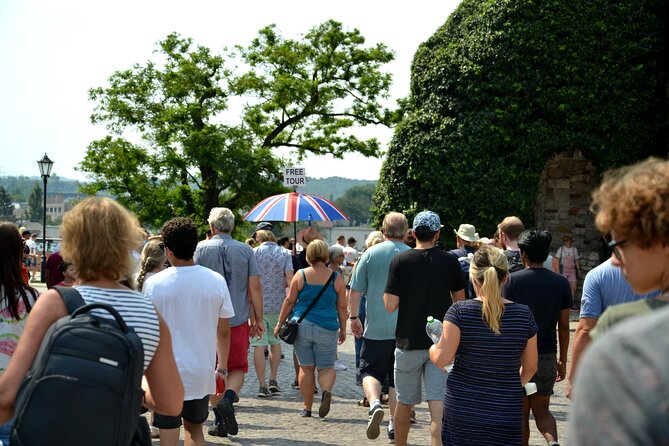
Krakow can feel confusing at first because its biggest sights cluster tightly around the Old Town. You can easily walk past a university courtyard, a medieval defense gate, or an important church without understanding why it matters. This tour gives you a framework before you return to explore on your own.
I especially like the route’s shape. It starts in the heart of the city and gradually moves toward Wawel Hill, where Polish kings lived and the country’s rulers were crowned and buried. You do not spend the whole time inside museums, so the walk keeps moving and gives you a good sense of the streets between the landmarks.
The historical range is also useful. You hear about medieval Krakow, the city’s royal period, its university tradition, the years before World War II, the German occupation, and the communist era. The tour does not simply present pretty facades. It connects the buildings to people and events.
The experience is advertised as a private guided tour, but the stated maximum is 30 participants. Read that as a guided walk with a professional guide, not necessarily a one-family outing. A group of that size can work well in open squares, though you may need to stay close when the guide speaks near busy streets.
More Medieval Old Town Tours in Krakow
- Old Town Krakow & Wawel Castle Walking Tour
★ 5.0 · 1,508 reviews - Kraków: Old Town & Wawel Castle Walking Tour in English
★ 4.8 · 532 reviews - Historic Krakow : Old Town & Wawel Castle Walking tour
★ 5.0 · 318 reviews
St. Mary’s Basilica and the trumpet call
The first stop is St. Mary’s Basilica, one of the defining buildings on the Main Market Square. You learn why its two towers are unequal and who plays the hourly tune from the highest tower.
That trumpet signal is one of Krakow’s most famous small rituals. The guide gives it context, turning a sound you might otherwise hear for a few seconds into a story connected with the city’s past. It is a good example of the tour’s approach: familiar sights become easier to remember once you know the tale attached to them.
The stop lasts about 15 minutes. Admission is not included, so do not expect a guided interior visit as part of the basic walk. If the basilica interests you, you can return later with a separate ticket and more time.
Rynek Główny, the Cloth Hall, and the old city center
The Main Market Square gets about 30 minutes, the longest single stop on the early part of the route. You look across one of Europe’s largest medieval market squares and learn how its main buildings fit together.
This is where the tour earns its keep for first-time visitors. The square is broad, busy, and packed with details. A guide helps you sort out the Cloth Hall, St. Mary’s Basilica, the Town Hall Tower, and the surrounding streets instead of leaving you to identify them from a map.
At Sukiennice, or the Cloth Hall, the focus shifts to medieval shopping. You hear how this old market building worked and what lies beneath it. The idea of an underground space under the modern market is a useful reminder that Krakow has several layers of city below its present-day surface.
The Cloth Hall stop lasts around 10 minutes. Entry is not included, so the tour is mainly an introduction. You can later return for more time inside, especially if you want to browse the market stalls or visit the museum areas.
The nearby Town Hall Tower offers another compact history lesson. The guide explains why only part of the old Town Hall remains and what the site was known for in earlier times. This is a quick stop, but it helps explain why the square does not look quite as complete as you might expect from such an important civic center.
The theater, Barbican, and medieval gateway
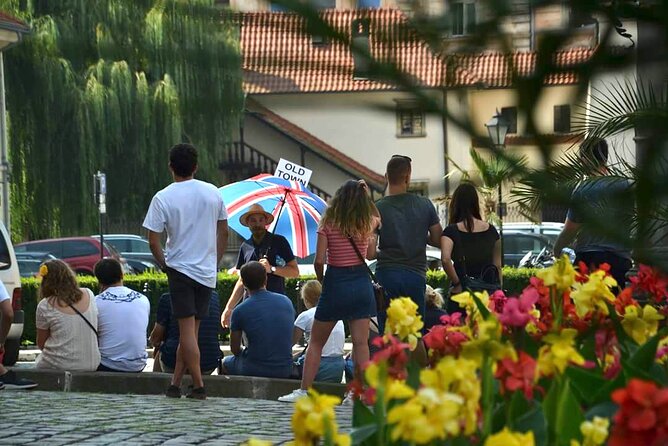
The Slowacki Theatre is an unusual stop because its story reaches beyond Krakow. You learn why the theater was not built in Poland and why the city once considered it more important than clean water.
That contrast gives the walk some humor and social history. It also keeps the tour from becoming a procession of royal buildings. You are reminded that city life involved arguments over public priorities, culture, status, and civic money.
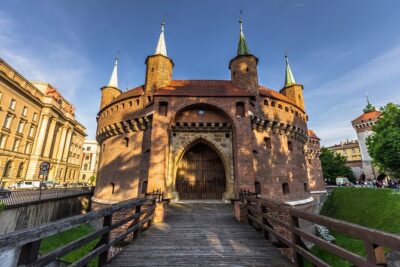
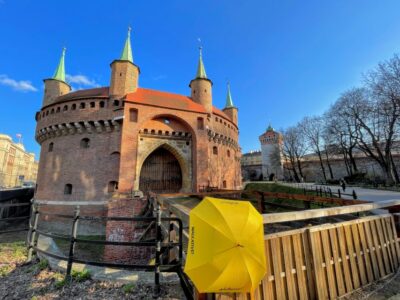
The stop at the Barbican introduces Krakow’s medieval defenses. The guide presents it as a 15th-century work of military architecture, then takes you through the old main entrance toward medieval Krakow. The passage through a centuries-old gateway makes the city’s former defensive line easier to picture.
These stops are brief, about 10 minutes each. You will not receive a full museum visit or a detailed military lecture, but you get enough context to decide which places deserve a return visit.
More Medieval Old Town Tours in Poland
- Krakow: Skip-the-Line Wawel Castle & Old Town Guided Tour
★ 4.9 · 23 reviews - Krakow: Old Town and Wawel Castle Guided Golf Cart Tour
★ 4.4 · 13 reviews - Segway Tour Krakow: Grand Tour (Old Town + Wawel Castle)
★ 5.0 · 10 reviews - Krakow: Wawel Castle & Cathedral, Old Town & City Basilica
★ 5.0 · 5 reviews
Jagiellonian University and Krakow’s wartime story
The university section gives the route a more serious turn. At Collegium Iuridicum, you get inside one of Poland’s most prestigious universities and one of the world’s oldest.
The value here is not just the age of the institution. The university helps explain Krakow as an intellectual center, not merely a royal city with handsome buildings. The short stop gives you a sense of the role education has played in Polish public life.
At Collegium Novum, the guide discusses what happened to professors in Krakow at the beginning of World War II and asks whether the city was destroyed. This is one of the most important parts of the tour because it moves from architecture into lived history.
The commentary on World War II is repeatedly praised for adding substance to the walk. You should not expect a dedicated war-history tour, but the subject is treated as part of Krakow’s story rather than skipped in favor of pleasant sightseeing.
The university stops last about 10 minutes each. Since the tour moves through active public areas, access may be limited to the locations included in the route. The key benefit is the guide’s explanation, not a long indoor visit.
The Bishop’s Palace and a famous window
The Bishop’s Palace is a 15-minute stop with free admission. Here you see the window associated with Pope John Paul II and hear about Poland under communism.
This is one of the more personal moments on the route. The window is not simply another architectural feature. It links Krakow to a major Polish religious and political figure and opens a discussion about how faith, public life, and opposition existed under communist rule.
Several guides have been praised for choosing this stop and explaining it with care. You get a short look, a focused story, and a useful reminder that Krakow’s recent past can be as powerful as its medieval monuments.
Wawel Cathedral and the royal hill
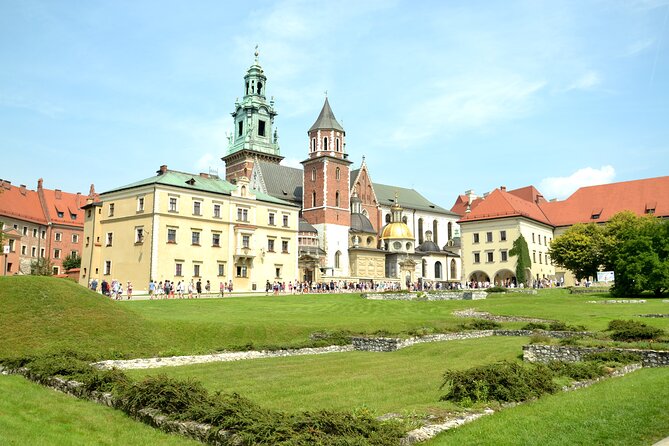
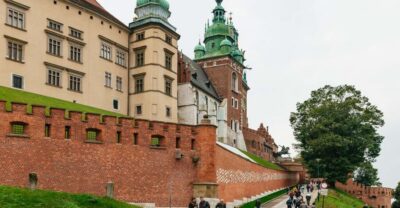
The final stage leads uphill toward Wawel. The route ends at Wawel Royal Castle, about 10 minutes from the Main Market Square, so you finish in one of Krakow’s most important sightseeing areas rather than returning to the starting point.
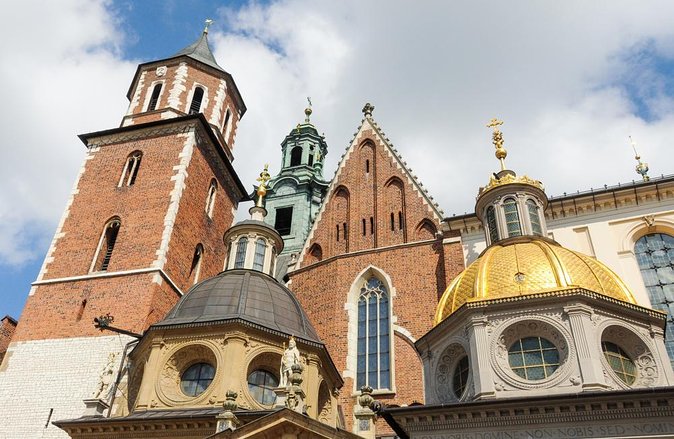
Wawel Cathedral is described as Poland’s national pantheon. It was the place of royal coronations and the burial site of Polish rulers. Even from a short exterior-focused visit, the building carries a sense of national importance that ties together much of the earlier history.
The tour also explains where Polish rulers lived and why one section of the castle differs from the rest. That architectural difference becomes a way to discuss the castle’s changing periods and the people who used it.
There are two Wawel stops listed, one for the cathedral and one for the castle area. Admission fees are not included. If you want to enter the cathedral, royal chambers, or museum collections, plan to pay separately and return with enough time for a proper visit.
This is an important planning point. The walk gives you an excellent orientation to Wawel, but it is not a substitute for spending a half-day inside the castle complex. Treat the tour as your introduction, then choose the interiors that match your interests.
The donation price and what you really pay
The advertised price is $3, but that is only the booking fee. The tour operates on donations, so you decide how much to give at the end. You may pay in any currency.
That structure can offer excellent value if you want a broad introduction without committing to an expensive private tour. It also places some responsibility on you. The $3 does not mean the entire experience is fully paid for, and your final cost depends on the amount you choose to donate.
The value comes from the route and the guide’s interpretation. In two and a half hours, you cover many of Krakow’s central sights, learn how the city fits together, and get ideas for what to revisit. That is a useful return for a first-day walk.
Food and drinks are not included. You should also budget for separate entrance fees if you want to go inside the museums, the cathedral, or the castle collections.
Walking pace, group size, and meeting details
The meeting point is Rynek Główny 4 in the Main Market Square. The walk finishes at Wawel Royal Castle, Wawel 5. Since the route covers many stops, wear comfortable shoes and keep your attention on the guide when crossing between busy areas.
The published duration is approximately two hours and 30 minutes. One review describes a steady pace with frequent stops, which is a helpful way to picture the experience. You walk a lot, but you are not expected to march without breaks.
The maximum group size is 30. Most people can participate, service animals are allowed, and the meeting area is near public transportation. These details make the tour workable for a broad range of visitors, but the route still involves outdoor walking and uneven city surfaces may be possible.
Check the start time printed on your confirmation. A booking showed a time mismatch, with the group waiting 40 minutes because the local guides had a different start time. Confirmation is normally issued at booking, but reservations made within one hour of departure are confirmed as soon as possible, subject to availability.
Free cancellation is available up to 24 hours before the start time. Within 24 hours, the payment is not refunded, and late changes are not accepted.
Which guide style should you expect?
The guide makes the difference on this walk. Bart has been praised for combining archaeology, history, humor, and a steady pace. Slavek is described as charismatic, informed, and engaging. Chris, or Krzysztof, is known for clear speech and funny stories, while Fran has been praised for patience and attention to the group.
Those names do not guarantee who will lead your departure, but they give you a sense of the standard to hope for. The strongest guides on this route do more than recite dates. They explain social life, political change, religious traditions, and the practical reasons behind Krakow’s buildings.
The best fit is someone who enjoys listening while walking. If you want long indoor visits, extensive time for photographs, or a silent route at your own pace, this may feel too structured. If you want a clear introduction with plenty of stories, it is a sensible start.
Should you book Krakow’s Essential Tour?
Yes, if you want to get your bearings quickly and understand why Krakow’s central sights matter. The route covers a lot, the donation model keeps the upfront price low, and the mix of medieval buildings, university history, World War II, communism, and royal Krakow gives you more than a basic photo walk.
Book it early in your stay, then use the final stop at Wawel to plan your next visit. I would not book it as your only Wawel experience because entry fees are extra and the castle deserves more time inside.
Skip it if you strongly dislike group walks, have little tolerance for a two-and-a-half-hour route, or want a tour devoted to one subject. For most first visits, though, this is a practical and entertaining way to see Krakow’s core sights without getting lost.
FAQ
How long does the tour last?
The tour lasts approximately two hours and 30 minutes.
Where does the tour begin?
It begins at Rynek Główny 4 in Krakow’s Main Market Square.
Where does the tour end?
It ends at Wawel Royal Castle, Wawel 5, about 10 minutes from the Main Market Square.
Is the $3 price the full tour cost?
No. The $3 price is a booking fee. The tour is donation-based, so you decide how much to pay at the end, in any currency.
Are museum and church entrance fees included?
No. Museum and church admission fees are not included. Food and drinks are also not included.
How large can the group be?
The activity has a maximum of 30 participants.
Can I cancel for a refund?
Yes. You can cancel up to 24 hours before the start time for a full refund. Cancellations or changes made within 24 hours are not refunded or accepted.
More Wawel and Polish Castle Tours in Krakow
- Krakow: Wawel Castle & Cathedral Guided Tour
★ 4.7 · 2,111 reviews - Krakow: Wawel Royal Hill with Optional Castle and Cathedral
★ 4.2 · 1,220 reviews - Krakow: Wawel Castle and Cathedral Guided Tour
★ 4.6 · 595 reviews - Krakow: Wawel Castle Guided Tour with Entry Tickets
★ 4.4 · 381 reviews
Just added around Krakow
- Krakow: Wawel Castle Guided Tour with Skip-The-Line Entry★ 5.0 · 2 reviews
- Krakow: Skip-the-Line Wawel Castle & Old Town Guided Tour★ 4.9 · 23 reviews
- Rynek Underground Museum & Wawel Castle, Cathedral – Cracow★ 5.0 · 3 reviews
- Krakow: Wawel Castle, Cathedral, Salt Mine, and Lunch★ 5.0 · 2 reviews
- Krakow: Wawel Castle Guided Tour★ 4.7 · 14 reviews
- Krakow: Wawel Castle, Cathedral, Salt Mine, and Lunch★ 4.9 · 6 reviews
- Krakow: Wawel Castle, Cathedral, Rynek Underground & Lunch★ 4.4 · 12 reviews
- Krakow: Wawel Castle, Cathedral, Salt Mine, and Lunch★ 4.9 · 4 reviews
Wawel & Polish Castles, compared.
Wawel Royal Hill with Optional Castle and Cathedral
Read our review →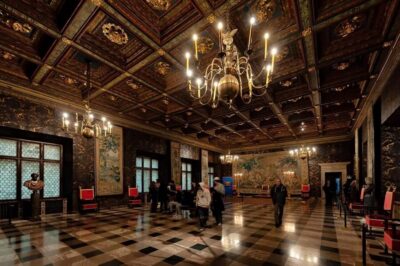
Kraków: Old Town & Wawel Castle Walking Tour in English
Read our review →