Review · KRAKOW
Krakow: Wawel Castle & Cathedral Guided Tour
Royal Poland begins on a hill above the river. This two-hour tour brings you into Wawel Castle, the former home of Polish kings, then into Wawel Cathedral, where monarchs were crowned, married, and buried. I like the way the tour combines grand interiors with personal stories, and I also like the chance to climb the cathedral tower and touch the Sigismund Bell for good luck. The main drawback is pace: two hours covers a lot, so you may want more time in both the cathedral and castle.
The $57 price is fair if you want the important rooms, artworks, and royal burial places explained by a local guide. I would not choose this format if you prefer wandering alone or stopping for long stretches at individual displays. Groups can reach 30 people, and busy summer visits may feel brisk, though headsets are supplied for groups of nine or more.
Key points to know before booking
- The meeting point is below Wawel Hill: Find the guide at the Piotr Skarga Monument on St. Mary Magdalene Square, not at the castle itself.
- One castle exhibition is included: Entry is for the State Rooms, Royal Private Apartments, or Crown Treasury, depending on availability.
- The cathedral visit includes more than the nave: You enter chapels, climb to the Sigismund Bell, and descend to the royal crypts.
- Guides give this tour its strength: Helena, Anna, Jadwiga, Alexandra, and others have been praised for clear storytelling and strong knowledge of Polish culture.
- Wear sensible clothes and shoes: Knees and shoulders must be covered in the cathedral, and the tour involves plenty of walking and stairs.
- You need to be punctual: Arrive 10 minutes early. Once the group leaves, late arrivals cannot join and the ticket is not refundable.
Why Wawel Hill matters
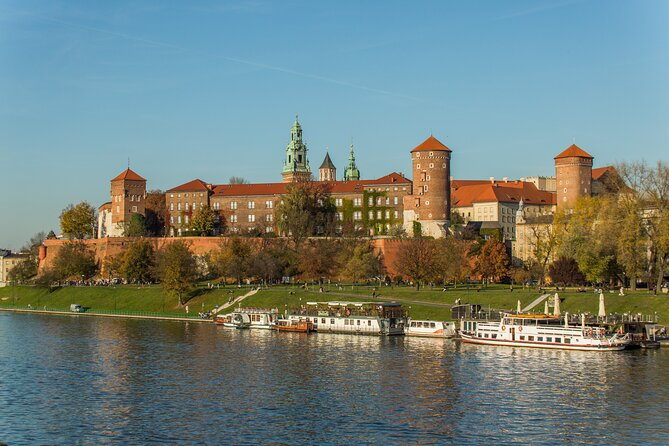
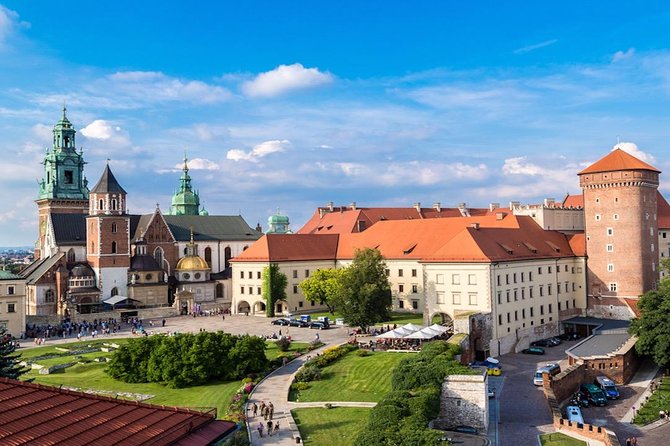
Wawel is more than a pretty castle complex. For centuries, it was the seat of Poland’s kings and an important center of religious and political life. Even after the royal court moved away, Wawel remained a strong symbol of Polish identity.
That context helps explain why the visit feels larger than a standard palace tour. You are not simply looking at expensive furniture and old paintings. You are moving through places connected with coronations, royal funerals, religious devotion, invasions, and changing borders.
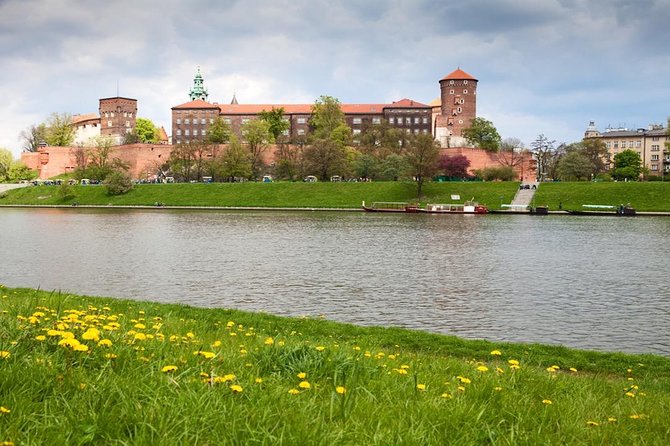
The site is part of Krakow’s UNESCO World Heritage area, and its position high above the Vistula gives you a fine view over the river. Build in a few minutes before or after the tour to enjoy the hill and its viewpoints. The guided visit itself focuses on the interiors, cathedral, and royal story rather than giving you a long free period outdoors.
The meeting point deserves careful attention. The Piotr Skarga Monument is on St. Mary Magdalene Square, away from the castle entrance. Your guide carries an excursions.city sign, but I would still allow extra time to find the square, especially if you are coming from Krakow’s Old Town with a family or luggage.
More Castle and Cathedral Tours in Krakow
- Krakow: Wawel Royal Hill with Optional Castle and Cathedral
★ 4.2 · 1,220 reviews - Krakow: Wawel Castle and Cathedral Guided Tour
★ 4.6 · 595 reviews - Krakow: Wawel Castle and Cathedral Guided Tour
★ 4.7 · 273 reviews
Inside the royal chambers
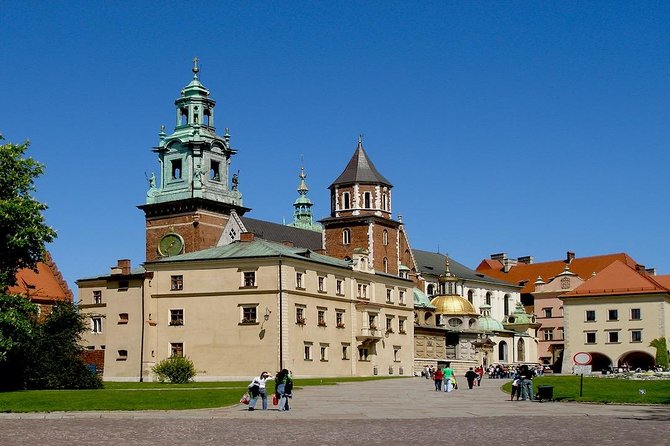
The castle section takes you into one permanent exhibition. The exact choice depends on availability, so you may visit the State Rooms, Royal Private Apartments, or Crown Treasury.
That uncertainty is worth noting. If you have your heart set on one particular collection, this tour does not guarantee it. Still, all three options give you a useful introduction to the royal complex, and a guide adds meaning that labels alone cannot provide.
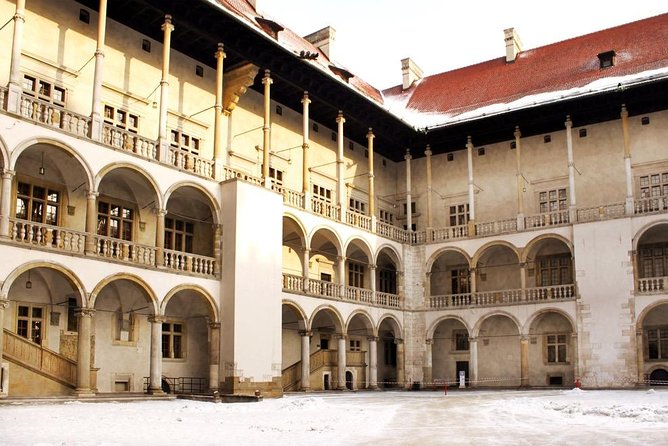
The State Rooms are the most obvious choice for visitors interested in ceremony and architecture. Expect Renaissance and Baroque interiors, grand furnishings, painted decoration, and rooms built to impress diplomats and visiting dignitaries. The Royal Private Apartments offer a more intimate look at the people who lived within the royal residence. The Crown Treasury focuses on objects connected with kingship and state power.
The displays include paintings, sculptures, porcelain, military objects, and elaborate furnishings. One unusual detail is furniture made with tortoiseshell, while another is a huge piece said to weigh more than 300 kilograms. These small facts help you see the rooms as working spaces, not just attractive historic interiors.
The castle also holds Flemish wall hangings commissioned by King Sigismund II Augustus. These pieces are among the major artistic treasures of Wawel, and they are easier to appreciate when your guide explains their royal purpose and setting.
Italian Renaissance works from the Lanckoroński collection add another layer. You will also hear about Wawel’s Eastern art holdings, including Europe’s largest collection of Ottoman tents. That last detail can surprise visitors who expect only Polish paintings and medieval church objects.
I like this mixture because it prevents the castle from feeling like a single period frozen in place. Renaissance taste, Baroque decoration, military history, Eastern objects, and royal ceremony all appear in the same visit. The trade-off is that you will not study every object closely in two hours.
The Gothic cathedral and its royal connections
Wawel Cathedral has a different mood from the castle. The castle presents monarchy through rooms and objects, while the cathedral shows how closely royal power was tied to faith.
This Gothic church has witnessed the coronations, weddings, and funerals of Polish monarchs. Your guide leads you through chapels and altars, pointing out the details that can be easy to miss when you enter on your own. The interiors are packed with memorials and religious art, so a clear explanation helps you sort out what you are seeing.
The cathedral is often the emotional high point of the tour. Several visitors have singled it out as more impressive than expected, and I can understand why. Its importance is not only architectural. It connects Poland’s rulers, saints, poets, and national memory in one place.
The cathedral can also be busy, especially in the high season. One practical consequence is that you may not get as much quiet time as you would like. A summer visit may feel more crowded than a winter one, and the group sometimes needs to keep moving so it does not block other people.
Dress properly before you arrive. Shorts and sleeveless tops are not allowed in places of worship and selected museums. Both men and women need to cover their knees and shoulders. This is easy to manage with a light layer or longer trousers, but it is worth planning ahead rather than being turned away at the door.
Climbing to the Sigismund Bell
The bell tower adds a physical challenge and a memorable detail to the cathedral visit. You climb to see the mighty Sigismund Bell, one of Wawel’s best-known objects.
Tradition says that touching the bell brings good luck. It is a small ritual, but it gives the visit a human touch. You are not only hearing about kings and national events. You are taking part in a custom that many people remember long after the names and dates fade.
The stairs matter. The tour involves a fair amount of walking, and the bell tower requires climbing. Wear comfortable shoes, as one visitor specifically advised. If you dislike stairs or need a slower pace, keep this part in mind when deciding if the tour suits you.
The tower visit may feel like a bonus because the main description centers on the castle and cathedral. For many people, it becomes the surprise highlight. It also breaks up the formal interiors with a more active part of the route.
More Castle and Cathedral Tours in Poland
- Krakow: Wawel Guided Tour – Cathedral and/or Castle
★ 4.5 · 249 reviews - Guided Tour of the Wawel Castle & Cathedral in Cracow
★ 4.7 · 24 reviews - Krakow: Wawel Castle & Cathedral Guided Tour
★ 4.5 · 20 reviews - Krakow: Wawel Castle, Cathedral, Rynek Underground & Lunch
★ 4.4 · 12 reviews
The crypts beneath the cathedral
The tour then descends into the crypts, where Polish kings, queens, poets, and national heroes are buried. This section gives the visit a quieter and more serious tone.
Your guide connects the people buried here with the wider story of Poland. The result is not just a list of tombs. You get a sense of how national memory developed around Wawel, and why the cathedral remains important long after Krakow stopped being Poland’s political capital.
This is one place where the guide’s storytelling matters most. Guides such as Helena, Anna, Jadwiga, and Alexandra have received especially warm praise for making complex material clear and personal. Helena, in particular, has been described as passionate about Polish culture and able to link the castle to Poland’s struggles with neighboring powers and enemies.
The crypts are not a place for rushing, but the schedule is fixed. The tour needs to finish within two hours, and the cathedral may be crowded. You will hear the main stories, but you may not have time to linger at every memorial.
The quality of the guiding
The strongest part of this experience is the human explanation. The building is impressive on its own, but the history is dense. A guide can tell you why a room mattered, who used it, and how a painting or piece of furniture fitted into royal life.
The best feedback has focused on guides who combine facts with personality. Helena has been praised for her passion, interactive style, and ability to make the material easy to remember. Anna has been described as friendly, amusing, considerate, and well prepared. Jadwiga earned praise for her storytelling, while Alexandra, also called Ola, explained the castle, surrounding area, paintings, and wall hangings with care.
Of course, a guided experience depends partly on the individual guide and the language group. Tours are conducted in one language, chosen when you book. Options include English, Spanish, French, Polish, German, and Italian.
Headsets are provided for groups of nine or more. That matters in the castle’s large rooms and crowded corridors, where it can be hard to stand close to the guide. The maximum group size is 30, set by the museum. That is not tiny, but it is manageable when the audio equipment is in use.
Some departures may be much smaller. A group of five, for example, allows more questions and a more relaxed exchange. You should not count on that size, but the tour format leaves room for a personal experience when numbers are low.
Is $57 good value?
At $57 per person, this is not the cheapest way to look at Wawel. You are paying for a licensed guide, admission to one permanent castle exhibition, cathedral entry, and the convenience of skipping the ticket line.
I think the price works best for a first visit to Krakow. The castle has several sections, the cathedral contains layers of royal and religious history, and the available exhibition can change. A guide helps you use two hours well instead of spending part of your visit working out where to go and what matters.
The value is also stronger if you care about context. You will hear about royal life, art collections, military objects, religious spaces, the German invasion of the castle, and the legend of the Krakow dragon. You may not get every detail, but you get a useful framework for exploring more of Krakow later.
The price is less attractive for repeat visitors who already know Wawel or want to focus on one collection. Since only one permanent exhibition is included, you may still need another visit if you want to see all the castle displays.
Food and drinks are not included. The tour is only two hours, so you can easily plan lunch or coffee before or afterward in central Krakow, but those costs belong in your day’s budget.
Who will enjoy this tour most?
I would recommend it to first-time visitors, families with older children, and anyone who wants the main Wawel story without spending a full day on site. The reviews show that children can enjoy it when the guide keeps the group engaged, though one visitor found that restless children disrupted the commentary.
It also suits people who like history but do not want a dry lecture. The guides use stories, questions, humor, and details about objects to make the material easier to follow.
You may prefer a self-guided visit if you want to read every label, sketch, photograph, or sit quietly in the cathedral. The schedule is tight, and one visitor felt there was not enough time to look around independently. That is a fair criticism.
I would also skip it if your mobility makes stairs difficult, since the tower and castle route involve walking and climbing. The supplied information does not give detailed accessibility guidance, so contact the provider before booking if you have specific needs.
Practical planning for your two hours
Arrive at least 10 minutes early at St. Mary Magdalene Square. Do not go straight to Wawel Hill assuming that is where the group gathers. Once the tour has departed, latecomers cannot join and the ticket is non-refundable.
Wear comfortable shoes and clothing that covers your knees and shoulders. Bring only what you need, since moving through a busy historic complex is easier without extra bags.
Keep your schedule flexible after the tour. The two-hour duration is fixed, but crowds can affect the pace. If you want to visit another part of Wawel, see the dragon-related site, or spend time enjoying the river view, plan that separately rather than expecting a long free period during the tour.
Cancellation is free up to 24 hours before the start, and you can reserve now and pay later. Those terms are useful if your Krakow plans are still changing, but they do not remove the need to arrive on time.
Should you book the Wawel Castle and Cathedral tour?
Book this tour if you want royal rooms, the cathedral, the Sigismund Bell, and the crypts explained in one focused visit. The guide is the main reason to choose it. Strong storytelling turns a beautiful but complicated site into a clear account of Polish kings, faith, art, invasion, and national memory.
Skip it if you want a slow museum visit or guaranteed access to one specific castle exhibition. For most first-time visitors, though, $57 is a reasonable price for the admission, line-skipping, and expert direction. Bring comfortable shoes, cover your shoulders and knees, and arrive early at the monument. That small bit of planning lets you spend your time looking up at Wawel instead of searching for the group.
FAQ
How long does the Wawel Castle and Cathedral tour last?
The tour lasts two hours.
How much does the tour cost?
The listed price is $57 per person.
Where does the tour meet?
Meet the guide at the Piotr Skarga Monument on St. Mary Magdalene Square. The meeting point is not on Wawel Hill, and the guide will hold an excursions.city sign.
Which castle exhibition will I visit?
You will enter one permanent exhibition: the State Rooms, Royal Private Apartments, or Crown Treasury. The specific exhibition depends on availability.
Is the cathedral included?
Yes. The tour includes a ticket to Wawel Cathedral, including its chapels, the Sigismund Bell tower, and the crypts visited during the tour.
What languages are available?
Tours are offered in English, Spanish, French, Polish, German, and Italian. Each group tour uses one language selected at booking.
Do I need to arrive early?
Yes. Arrive 10 minutes before the start time. Late arrivals cannot join once the group has left, and tickets are non-refundable in that situation.
Can I cancel the booking?
You can cancel up to 24 hours in advance for a full refund. Reserve now and pay later is also available.
More Guided Castle Tours in Poland
- Krakow: Skip-the-Line Wawel Castle and Hill Guided Tour
★ 4.8 · 4 reviews - Krakow: Wawel Castle Guided Tour with Skip-The-Line Entry
★ 5.0 · 2 reviews - Warsaw: Skip-the-Line Royal Castle Guided Tour
★ 4.9 · 79 reviews - Skip-the-Line Warsaw Royal Castle Private Guided Tour
★ 5.0 · 4 reviews
More Guided Castle Tours in Krakow
- Krakow: Wawel Castle Guided Tour with Entry Tickets
★ 4.4 · 381 reviews - Krakow: Skip-the-Line Wawel Castle & Old Town Guided Tour
★ 4.9 · 23 reviews - Krakow: Wawel Castle Guided Tour
★ 4.7 · 14 reviews - Cracow: Guided Tour of the Wawel Castle & Cathedral
★ 4.5 · 7 reviews
Just added around Krakow
- Krakow: Wawel Castle Guided Tour with Skip-The-Line Entry★ 5.0 · 2 reviews
- Krakow: Skip-the-Line Wawel Castle & Old Town Guided Tour★ 4.9 · 23 reviews
- Rynek Underground Museum & Wawel Castle, Cathedral – Cracow★ 5.0 · 3 reviews
- Krakow: Wawel Castle, Cathedral, Salt Mine, and Lunch★ 5.0 · 2 reviews
- Krakow: Wawel Castle Guided Tour★ 4.7 · 14 reviews
- Krakow: Wawel Castle, Cathedral, Salt Mine, and Lunch★ 4.9 · 6 reviews
- Krakow: Wawel Castle, Cathedral, Rynek Underground & Lunch★ 4.4 · 12 reviews
- Krakow: Wawel Castle, Cathedral, Salt Mine, and Lunch★ 4.9 · 4 reviews
Wawel & Polish Castles, compared.
Wawel Royal Hill with Optional Castle and Cathedral
Read our review →
Kraków: Old Town & Wawel Castle Walking Tour in English
Read our review →