
Review · BUCHAREST
Bucovina Painted Monasteries & Transylvania Tour: 4-Day Private
Frescoes turn stone walls into storybooks. This four-day private journey links Romania’s finest painted monasteries with the medieval towns of Sighișoara and Brașov, then finishes at Peleș Castle. I especially like the private transport, which saves you from dealing with long rural bus connections, and the one-on-one guidance that helps explain the art, Orthodox faith, and complicated past behind each stop.
The main drawback is the pace. You cover a large stretch of Romania in four days, with several hours on the road between major sights. The advertised price is $1,356.43 per person, and although hotel stays and breakfasts are included, several entrance tickets are paid separately. You should also expect modest three-star lodging rather than a luxury tour.
Five things to know before booking
- The painted monasteries are the heart of the trip: Sucevița, Moldovița, and Voroneț offer outdoor frescoes that are hundreds of years old.
- Agapia and Văratec add living religious communities: These are active nunneries, not simply monuments behind museum ropes.
- The private format gives you flexibility: Only your own group participates, with hotel pickup anywhere in Bucharest.
- The route covers two very different regions: Bucovina brings Orthodox art and rural Moldova, while Transylvania brings fortified churches, Saxon towns, and royal architecture.
- Some important costs come later: Entrance fees for Viscri Fortified Church, the Black Church, and Peleș Castle are not included.
- Guide quality matters greatly: Toni Tatar and Marius are named in the supplied feedback, with special praise for their care, history knowledge, and practical help.
Why this four-day route works
This is not a quick Bucharest side trip. The route pushes north into Neamț County and Bucovina, then cuts across to Transylvania before returning south through Sinaia. That distance is the reason private transport matters so much.
You are not simply ticking off churches. You are moving through several chapters of Romanian culture. The first days focus on Orthodox monastic life and painted religious art. The third day shifts to fortified Saxon settlements and medieval walls. The final morning brings you to two major architectural sights near Brașov and Bucharest.
The private setup also changes the mood. You do not have to match the pace of a large coach group, and your guide can give more direct attention. The experience is offered in English, starts at 9:00 a.m., and includes pickup and drop-off anywhere in Bucharest.
The tour has a perfect 5 rating from six submitted ratings, though that is a small sample. The strongest praise centers on the guides, comfortable vans, thoughtful hotel choices, and help during an illness. Those are meaningful strengths on a route where the driving is long and the days can be full.
More Dracula and Transylvania Castle Tours in Bucharest:
- Bucharest: Dracula’s Castle, Peles Castle, & Brasov Old Town
★ 4.5 · 17,858 reviews - Bucharest: Dracula Castle, Peles Castle & Brasov Old Town
★ 4.6 · 10,891 reviews - Bucharest: Dracula’s Castle, Peleș Castle & Brașov Day Trip
★ 4.4 · 6,100 reviews
Day one: Agapia and Văratec bring monastic life close
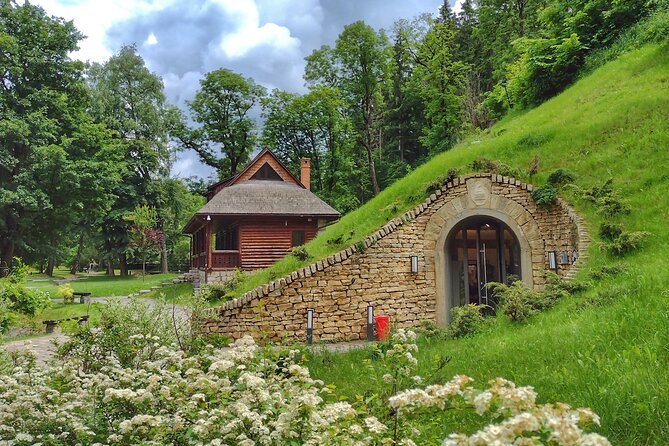
The first day begins with Agapia Monastery, about 9 kilometers west of Târgu Neamț. The complex was built between 1641 and 1643 by Gavriil Coci, a hetman and brother of Moldavian ruler Vasile Lupu.
Agapia’s greatest artistic claim comes from Nicolae Grigorescu, one of Romania’s best-known painters. He decorated the church between 1858 and 1861. That gives the visit a different character from the older exterior frescoes you see later in Bucovina. Here, you are looking at a major Romanian artist working within an Orthodox religious setting.
Agapia is also one of the country’s largest nunneries, with roughly 300 to 400 nuns. That active community matters. You are visiting a place where religious life continues, rather than a silent archaeological site. Keep your voice low, dress respectfully, and allow the hour here to unfold without rushing.
Văratec Monastery follows, also in Agapia Commune. With more than 400 nuns, it is described as the largest nun monastery in Romania. The two visits complement one another well. Agapia offers the Grigorescu connection and a major church, while Văratec gives you a stronger sense of the scale of Romanian monastic communities.
The first day is less about dramatic sightseeing and more about setting the tone. If you prefer castles and city squares, this may feel slow. If you want religious art, quiet courtyards, and a closer look at Orthodox life, it is a fine opening.
Day two: three painted churches in Bucovina
Day two is the artistic high point. You visit Sucevița, Moldovița, and Voroneț, with about two hours planned at each monastery. That generous timing is useful. The frescoes cover so much surface that a rushed half-hour visit would only give you a blur of color and biblical scenes.
Sucevița Monastery
Sucevița combines Byzantine and Gothic features with local Moldavian design. Both the inner and outer walls carry mural paintings, showing scenes from the Old and New Testaments.
The outside walls are the reason to slow down. Instead of treating the church as a single object, walk around it and look at how the images form a visual teaching system. Your guide can help you understand the religious subjects and the artistic differences between monasteries.
Two hours may feel generous if you are not interested in sacred art, but it is valuable for anyone who likes painting, architecture, or medieval religion. Photography rules can vary by location. One supplied note says that outdoor photos at a monastery required a 10 lei receipt, about 2 euros, while interior photos were not allowed. Carrying some Romanian currency is sensible.
A few more castle visits around Bucharest worth a look
- Transylvania Castles 4-day tour from Bucharest
★ 5.0 · 31 reviews - 4 Day Private Tour: Petra Jerash Mount Nebo Karak Castle Wadi Rum Red & Dead Sea
★ 5.0 · 29 reviews - Scottish Highlands 4-Day Castle Tour From Edinburgh
★ 4.7 · 3 reviews
Moldovița Monastery
Moldovița was built in 1532 by Petru Rareș, the son of Stephen the Great. Its original purpose included protection against Ottoman expansion from the east, so the monastery reflects both devotion and defense.
That historical setting helps you read the building differently. These were not isolated decorative projects. The monasteries formed part of a political and religious world shaped by border pressure, powerful rulers, and the Orthodox church.
Moldovița’s exterior paintings reward patient viewing. You may notice how the artists used the walls to present religious teaching to people who could not read. The tour’s private format gives your guide room to compare the churches rather than giving each one the same brief speech.
Voroneț Monastery
Voroneț is often called the Sistine Chapel of the East, a grand nickname that can sound inflated until you see the famous blue frescoes. The distinctive shade is known locally as Voroneț blue.
Stephen the Great built the monastery in 1488, reportedly in only three months and three weeks, to mark his victory at the Battle of Vaslui. The speed of construction makes the refined painting even more striking.
Voroneț is in the village of the same name, now part of Gura Humorului. Its exterior frescoes are the visual climax of the day, but the value is not only photographic. You are seeing a carefully planned religious program that has survived for centuries in a setting where the monastery still carries spiritual meaning.
The three-monastery sequence can become visually heavy. After several hours of saints, biblical scenes, blue walls, and church architecture, you may need a break. The schedule gives each site two hours, so tell your guide if you need a slower meal stop or a little quiet time. The private format should make that kind of adjustment easier than on a fixed coach excursion.
Day three: Sighișoara, Viscri, and Brașov
Day three changes the subject completely. You leave Bucovina’s monasteries for Transylvania’s fortified towns and Saxon architecture.
Sighișoara’s medieval citadel
Sighișoara is known for its well-preserved walled old town, a UNESCO World Heritage Site. The two-hour visit gives you time to walk through the historic center and absorb the compact medieval setting.
This is a good counterpoint to the rural monasteries. In Sighișoara, the story is urban and commercial, shaped by fortified streets, walls, and the Transylvanian Saxon community. You can expect uneven walking surfaces and some uphill sections in old-town areas, which is why the tour asks for a moderate level of physical fitness.
Do not judge this stop only by how many sights you can photograph. Its pleasure comes from moving slowly through the citadel and noticing how the old town still functions as a place rather than a single monument.
Viscri Fortified Church
Viscri offers a smaller-scale look at Saxon Transylvania. Its fortified church is a UNESCO World Heritage Site and remains well preserved.
The church is the one stop on day three with an admission fee not included in the tour price. Plan for this extra cost on the spot. The supplied information gives general ticket estimates of about 25 to 30 euros per person for inside visits, but it does not assign that entire amount to each individual site. Ask your guide for the current local price before entering.
Viscri may appeal most to you if you prefer rural settings and defensive church architecture over grand interiors. It also breaks up the larger city visits with a more intimate historical site.
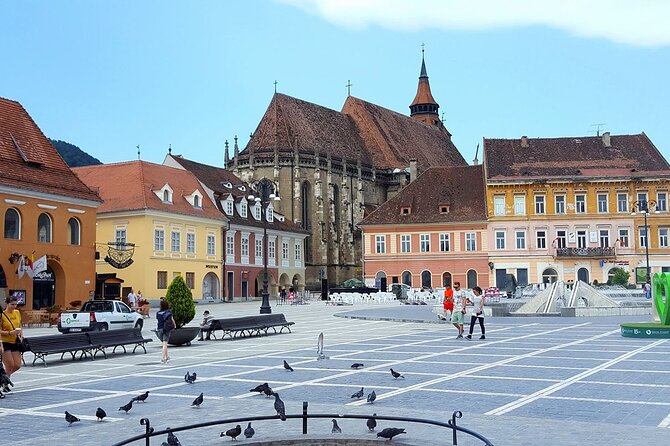
Brașov Historical Center
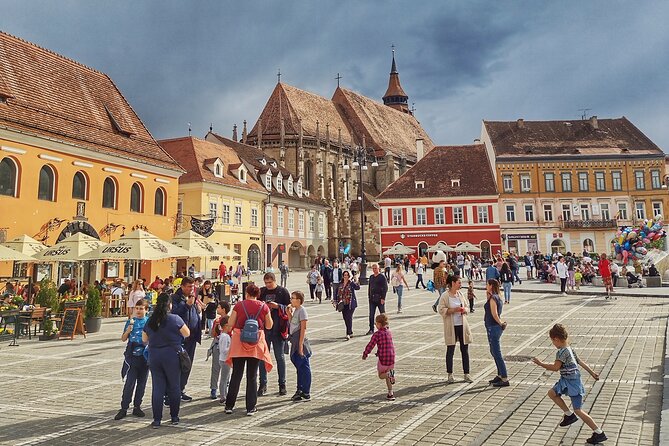
Brașov was once the regional capital of the Transylvanian Saxons in the Burzenland area. Its position on trade routes between East and West helped make it a major commercial center.
The two-hour visit lets you see the historic center before the next day returns you to the Black Church. Brașov also has a national connection: it is the birthplace of Romania’s national anthem.
This is a pleasant evening-style stop, though the full route means you may arrive after a tiring day. I would value the chance to walk here at an easy pace rather than trying to force in every side street and museum. The guide can help you focus on the central history without turning the visit into a lecture.
Day four: Gothic Brașov and royal Peleș
The final day opens with the Black Church, the major Gothic monument in Brașov. It was built by the city’s German community and remains one of the most important Lutheran places of worship in the region.
The church is a useful reminder that Romania’s religious story is not only Orthodox. After three days focused largely on Orthodox monasteries, the Gothic structure and Lutheran background widen the picture.
Admission is not included, so keep extra money available. The planned visit lasts one hour, enough for a focused look without making the final morning too heavy.
Peleș Castle near Sinaia
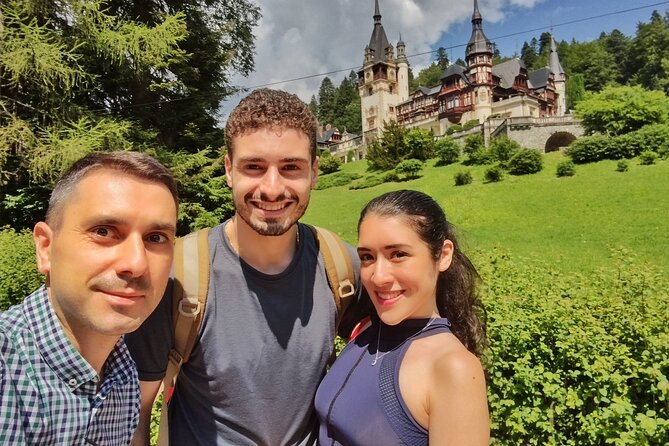
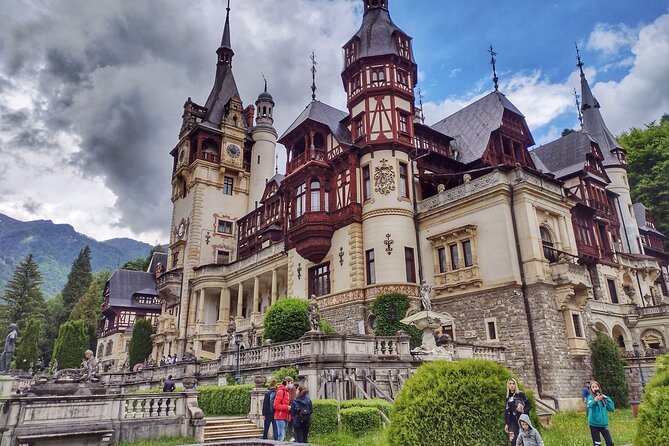
Peleș Castle was built between 1873 and 1914 as the summer residence of King Carol I. Its inauguration took place in 1883, and its Neo-Renaissance design reflects the ambitions of Romania’s royal period.
The castle sits in the Carpathian Mountains near Sinaia, along an old route linking Transylvania and Wallachia. That location gives the final stop a strong geographic connection to the whole trip. You have crossed from Moldavia toward Transylvania, and now the royal residence marks a later chapter in the country’s development.
Interior admission is not included. Since ticket rules and prices can change, confirm the current amount with the operator or guide. The planned visit is one hour, so you should not expect a full museum day inside the castle. Think of it as a focused final stop before returning to Bucharest.
Hotels, transport, and guide support
The price includes three nights in three-star hotels and three breakfasts. That is a practical level of comfort for a route where you spend much of the day sightseeing or on the road. One account describes the rooms as very comfortable, while another notes that the hotels were lovely and reasonably priced. That is encouraging, but you should still book this for the route and service rather than for upscale lodging.
The vehicle is private and described in supplied feedback as a spacious, air-conditioned, comfortable new van. That matters here. The distance between northern Moldavia and Transylvania is substantial, and a cramped vehicle would make the trip much harder.
Guide support appears to be the strongest part of the experience. Toni Tatar is praised for bringing Romanian history to life and for being a pleasant companion. Marius is praised for explaining the art, religion, and differences between monasteries, while also knowing when to keep the day from becoming too tiring.
One particularly striking account describes Marius helping a sick participant reach an emergency room, navigating the medical system, staying late, and still continuing the next day. You should not expect medical assistance to be part of a tour service, but this suggests a serious level of personal care from the operator.
Meals other than breakfast are not included. Drinks and snacks are also extra. The supplied feedback praises local restaurants and affordable food, but you should budget separately for lunch, dinner, and stops along the route.
Is the $1,356.43 price good value?
At $1,356.43 per person, this is not a budget excursion. Its value depends on how many people share the private vehicle and how much you would otherwise spend arranging hotels, transport, entrance tickets, and a guide yourself.
The price includes three hotel nights, three breakfasts, Bucharest pickup and drop-off, private transport, and guiding. It also removes the stress of planning a complicated one-way route through several regions. For a couple or small group that wants a dedicated guide, those benefits may justify the cost.
The wording about entrance fees needs care. The highlights describe included entrance fees, but the detailed cost information says inside visits are not included and specifically lists Viscri, the Black Church, and Peleș Castle as extra. I would ask for a current written breakdown before paying. Budget extra money for admissions rather than assuming every ticket is covered.
Group discounts are offered, which may improve the price for larger private parties. Since the tour is private, you are paying for control and attention, not the lowest possible seat on a shared bus.
Who should book this tour?
I would recommend it to you if you want a broad introduction to Romania and prefer a guide to handle the driving and logistics. It suits people who care about religious art, medieval towns, royal architecture, and local history more than nightlife or long free periods.
It is also a good match for a small group with mixed interests. The route includes enough variety that one person can enjoy frescoes, another can focus on castles, and everyone gets time in Sighișoara and Brașov.
I would hesitate if you want a slow holiday with late mornings. The 9:00 a.m. start, long road sections, and several two-hour visits create a full schedule. You should also be comfortable walking around old towns and monastery grounds. Moderate physical fitness is requested.
Book at least six full days before departure if you want the possibility of a full refund. Cancellations two to six full days ahead receive 50 percent back, while cancellations less than two full days ahead are not refunded. Poor weather can also lead to a changed date or full refund.
Final verdict: a strong private introduction to Romania
I like this tour because it links places that are difficult to combine without a car. The painted monasteries are the main prize, especially Voroneț’s blue frescoes, but Agapia, Văratec, Sighișoara, Viscri, Brașov, and Peleș Castle keep the four days varied.
The strongest reason to choose it is the private guide. Toni Tatar and Marius receive especially warm praise for clear explanations, kindness, and practical care. That human element matters on a route where the art can otherwise become a parade of beautiful walls.
I would book it if I had four days, wanted to see far more than Bucharest, and accepted the extra admission costs and active pace. I would skip it only if I preferred independent travel, luxury hotels, or a slower schedule. For a compact first look at Bucovina and Transylvania, it offers a lot of Romania in a short time.
FAQ
Where does the tour start and finish?
The tour starts and ends in Bucharest, Romania. Hotel pickup and drop-off can be arranged anywhere in Bucharest.
What time does the tour start?
The stated start time is 9:00 a.m.
How long is the tour?
The experience lasts approximately four days and includes three nights of accommodation.
Is this a private tour?
Yes. Only your group participates in the activity, and private transport is provided.
Is the tour offered in English?
Yes. The tour is offered in English.
Are hotels and breakfasts included?
Yes. The price includes three nights in three-star hotels and three breakfasts.
Are all entrance fees included?
No. The detailed cost information says inside visits are not included. Viscri Fortified Church, the Black Church, and Peleș Castle specifically list admission as extra.
What level of fitness is needed?
A moderate level of physical fitness is recommended.
Can I cancel for a full refund?
Yes, if you cancel at least six full days before the experience start time. Cancellations two to six full days ahead receive a 50 percent refund, while cancellations less than two full days ahead are not refunded.
Just added around Bucharest
- Vlad the Impaler Royal Court from Târgoviște, Peleș Castle and Dracula grave★ 5.0 · 8 reviews
- From Bucharest: Brasov & Dracula’s Castle Transylvania★ 5.0 · 5 reviews
- Legends & Stories from Transylvania -2 Castles & Brasov Old Town★ 5.0 · 3 reviews
- Transylvania Castles 4-day tour from Bucharest★ 5.0 · 31 reviews
- The essence of Saxon Transylvania – 3-day tour of its citadels★ 5.0 · 3 reviews
- Private Day Tour – Transylvania & Dracula’s Castle Through The BackDoor!★ 5.0 · 3 reviews
- Private tour to Bran Dracula’s Castle and Peleș Royal Castle★ 5.0 · 4 reviews
- Day trip from Bucharest to Brasov, Peles & Dracula’s Castle★ 5.0 · 11 reviews
Dracula & Transylvania Castles, compared.
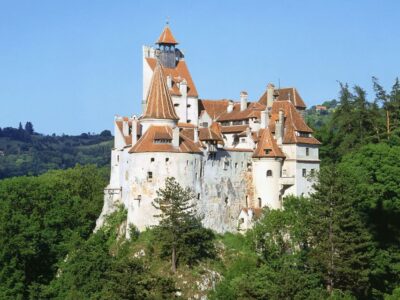
Dracula’s Castle, Peles Castle, & Brasov Old Town
Read our review →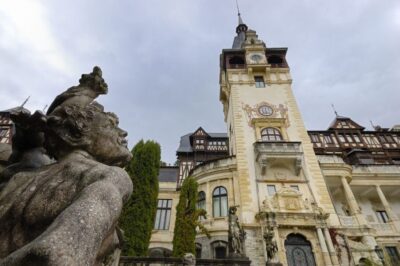
Dracula Castle, Peles Castle & Brasov Old Town
Read our review →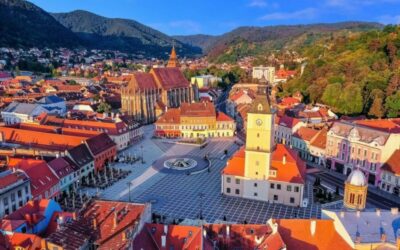
Dracula’s Castle, Peleș Castle & Brașov Day Trip
Read our review →
Day Trip to Dracula Castle, Peles Castle & Brașov
Read our review →
Bucharest to Dracula Castle, Peles Castle and Brasov Guided Tour
Read our review →
Dracula’s Castle, Peles Castle and Brasov Day Trip from Bucharest
Read our review →
Transylvania and Dracula Castle Full Day Tour from Bucharest
Read our review →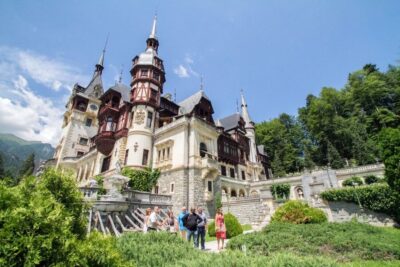
Browse the lists this tour appears in