
Review · EDINBURGH
Scottish Highlands 4-Day Castle Tour From Edinburgh
Scotland keeps its best stories in stone. I like this four-day castle tour because it joins famous royal sites with lesser-known tower houses, ruined strongholds, gardens, and Culloden. I also like the small Mercedes mini-coach, limited to 16 people, which makes long days through Aberdeenshire and Perthshire easier than driving yourself. The main drawback is the pace: you cover a lot of ground, and some stops deserve more time than the schedule allows.
You sleep in small, locally owned guesthouses and B&Bs rather than large chain hotels. That gives the trip a personal touch, and the accommodation has been praised for both comfort and attentive owners. Still, these properties can sit on the edge of town, with a 20 to 30 minute walk to pubs and restaurants.
Five memorable reasons to take this castle tour
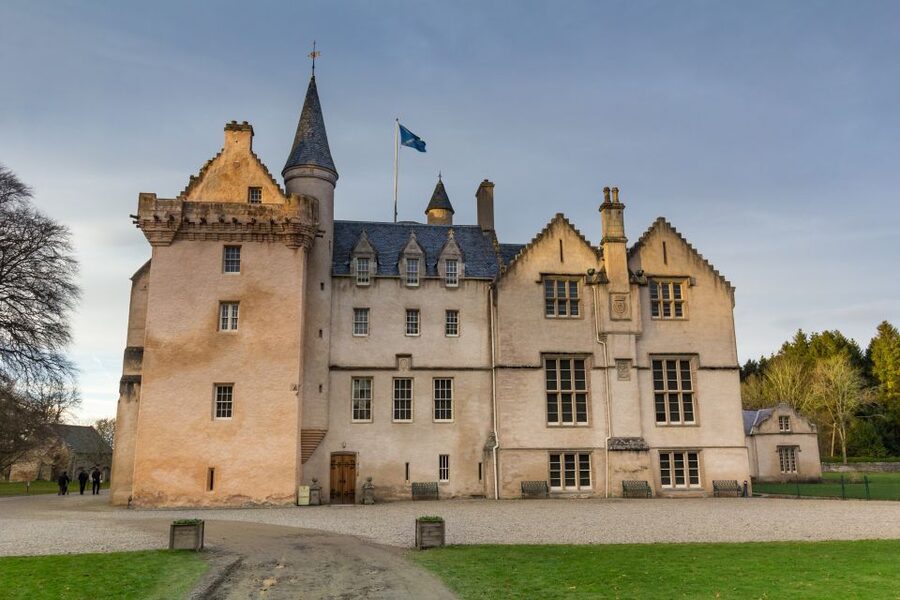
- Falkland Palace and Mary Queen of Scots: See the royal hunting lodge and the world’s oldest tennis court, then stroll through the medieval village used in Outlander.
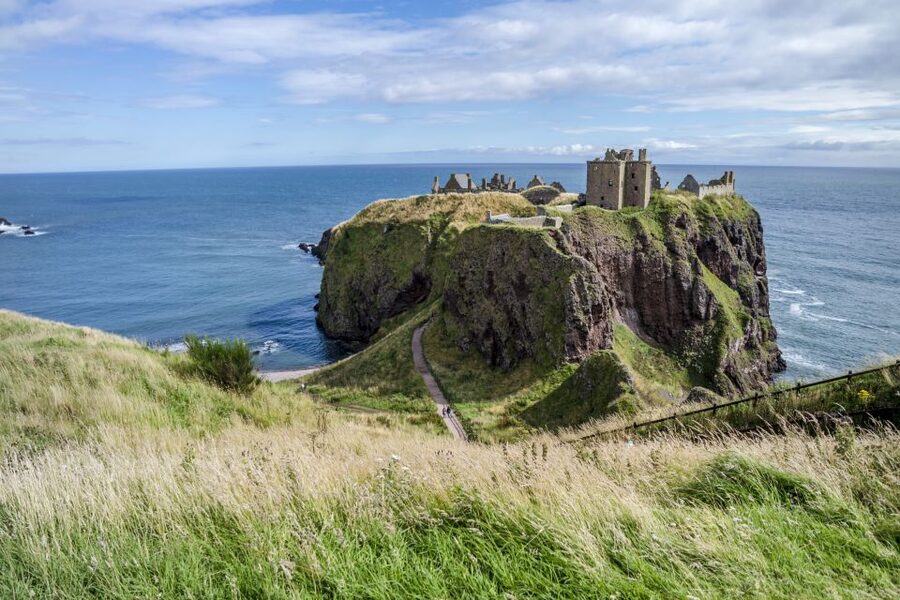
- Dunnottar Castle on the cliffs: Photograph one of Scotland’s most dramatic ruins, perched above the sea near Stonehaven.
- Two Royal Deeside castles: Castle Fraser and Crathes Castle offer different experiences, from a grand tower house and walled garden to a fairytale fortress with mysterious tales.
- Culloden and the Jacobite Rising: Walk the battlefield and visit the museum at the site of Britain’s last land-fought battle.
- Cardhu whisky tasting: Visit the distillery founded by Helen Cumming and take part in the Flavour Journey tour and tasting.
What the four-day route does well
This is not a tour built around one giant castle and a lot of filler. Each day has a clear theme. The first mixes royal Scotland, St Andrews, and a cliff-top ruin. The second focuses on gardens and castles in Royal Deeside. The third turns toward medieval church art and Culloden. The final day combines whisky, military remains, Blair Castle, and the road south.
That variety is the biggest strength. You are not seeing four near-identical fortresses. You move between royal residences, lived-in estates, ruined castles, gardens, a battlefield, and a distillery.
The trade-off is time on the road. A four-day trip from Edinburgh cannot give every stop a leisurely afternoon. You should see this as a well-planned introduction to northern Scotland, not a slow country-house holiday.
The driver-guide handles the route and gives the group context along the way. English is the tour language. With no more than 16 people, the group should feel smaller and more manageable than a standard coach excursion, though the mini-coach still means you share every transfer and stop.
More Scottish Castle Tours in Edinburgh:
- From Edinburgh: Loch Lomond, Stirling Castle & Kelpies Tour
★ 4.6 · 2,360 reviews - Loch Lomond, Kelpies & Stirling Castle Tour Including Admission
★ 4.5 · 1,305 reviews - Edinburgh: Loch Lomond, Stirling Castle and the Kelpies Day Tour
★ 4.5 · 1,198 reviews
Day one: Falkland Palace, St Andrews, and Dunnottar
The journey begins north from Edinburgh, crossing the Queensferry Crossing into Fife. The bridge crossing gives you an early change of scene, from the capital to open country and historic villages.
Falkland Palace is the first major stop. Once a royal hunting lodge, it is closely tied to Mary Queen of Scots. The detail that catches the imagination is its old tennis court, described as the world’s oldest. Even if you are not interested in tennis, it helps you picture royal life in a more concrete way than another set of grand rooms would.
You also have time in Falkland village, a medieval setting recognized by Outlander. This is a useful pairing. The palace provides the royal story, while the village gives you a chance to walk through the kind of streets that make period dramas feel believable.
St Andrews follows, with time for lunch and independent discovery. The town is known for its ancient university and cobblestone streets, and the schedule gives you a break from formal sightseeing. You can use this stop to eat, browse, or simply enjoy a walk without being led from room to room.
In the afternoon, the tour reaches Dunnottar Castle. The ruined fortress sits on a cliff above the coast, making it one of the most powerful views on the route. This is the stop where your camera will work hardest, but do not spend the whole visit looking through a screen. The position of the ruins, the sea, and the open space around them are the real attraction.
Dunnottar is a ruin rather than a furnished palace. You come for the setting, the photographs, and the sense of isolation. Uneven ground and changing weather make waterproof clothing and sturdy shoes useful.
The night is spent in Aberdeen. Since the tour returns there after the first and second days, you do not need to move rooms every night. That helps offset the amount of sightseeing.
Day two: Castle Fraser, Ballater, and Crathes
Day two heads into Royal Deeside, an area associated with castles, estates, and royal connections. The first stop is Castle Fraser, a grand Scottish tower house with an 18th-century walled garden.
I like the balance here. The castle gives you defensive architecture and domestic rooms, while the garden adds a quieter outdoor walk. If the weather is fair, the garden may be one of the most pleasant parts of the morning. In wet weather, the house becomes the safer bet, though waterproof layers remain important.
Lunch is in Ballater, a village with royal associations. This is another chance to buy food independently rather than relying on a fixed group meal. Meals are not included in the tour price, so your lunch stops are also part of your daily budget.
The afternoon belongs to Crathes Castle. It is presented as a fairytale-like fortress, but the description does not mean it is merely decorative. The house has a haunted history and rooms you can explore freely, while the gardens provide more space to walk.
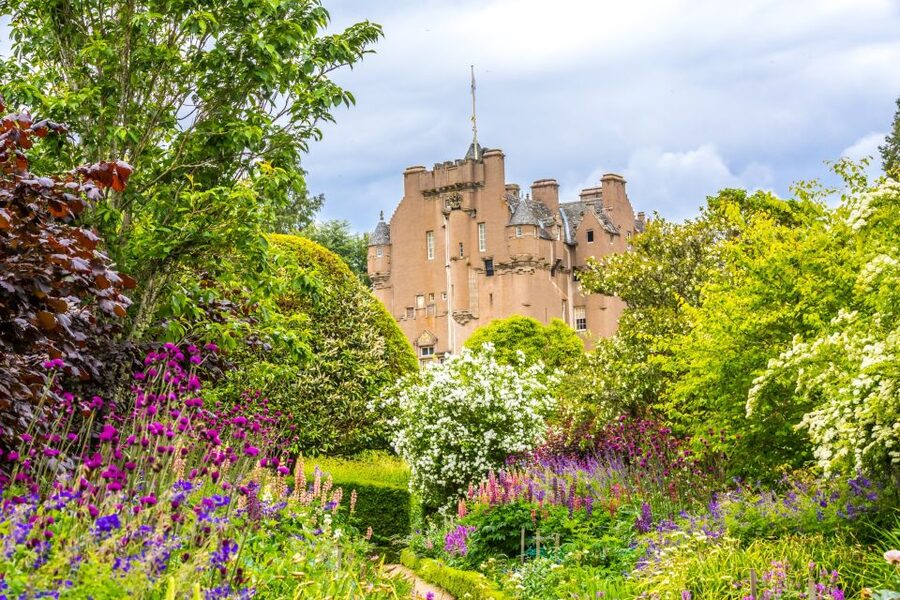
The June Borders are a particularly attractive feature of the grounds. Their seasonal display can frame the castle beautifully, although garden conditions always depend on the time of year. The tour information specifically calls attention to June, so you may want to keep that in mind if flowers matter to you.
Crathes and Castle Fraser work well together because they are not duplicates. One gives you the pleasure of a tower house and walled garden, while the other combines a more storybook appearance with gardens and unsettling tales.
You return to Aberdeen for a second night. That makes day two simpler at the end, but it also means some backtracking compared with a route that changed hotels every night.
Day three: Fyvie Castle, Elgin Cathedral, and Culloden
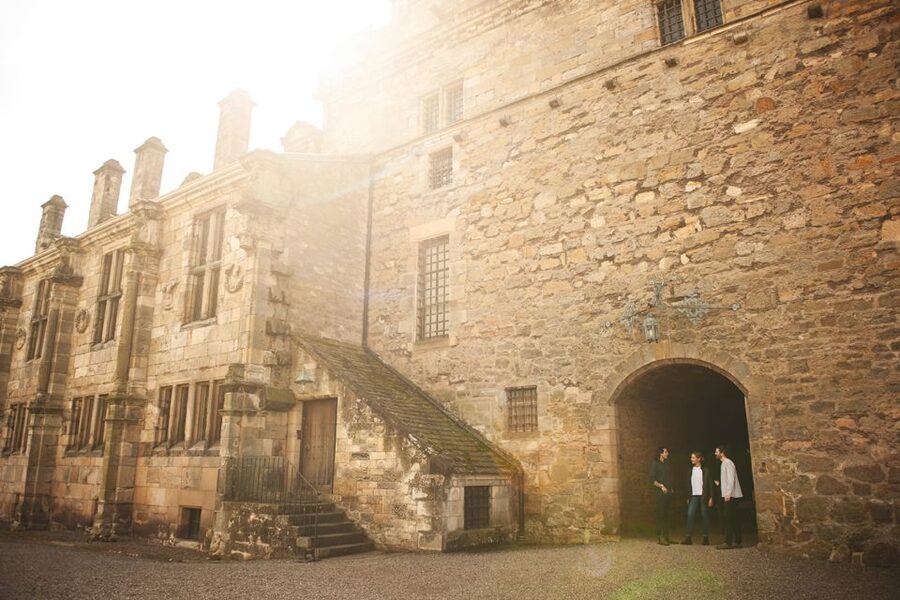
Fyvie Castle begins the third day. Its origins reach back to the 13th century, and the interior includes arms, armor, and 17th-century tapestries. This is a stop for people who like objects as much as architecture. The collections give the building a sense of use and purpose.
The tour then travels toward Elgin for lunch. Afterward, you visit the ruins of Elgin Cathedral, including an intricately carved Pictish stone. The cathedral adds a religious and artistic layer to the trip. After two days of royal residences and fortified homes, you are looking at medieval stonework and carved symbols.
The afternoon at Culloden is the emotional center of the tour. You visit the visitor centre, museum, and battlefield, where the Jacobite Rising ended in 1746. It was Britain’s last land-fought battle, and the site is treated as a place of remembrance rather than simple sightseeing.
You can walk the battlefield and consider the human cost of the conflict. The experience is more moving if you slow down and read the information provided instead of treating Culloden as a quick photo stop. The museum admission is included, which matters here because the indoor displays add context that the open field alone cannot provide.
This day may feel heavier than the others. Fyvie and Elgin are architectural and cultural stops, while Culloden asks you to reflect on defeat, loss, and the end of the Jacobite cause. That change of tone gives the itinerary depth, but it may not suit someone who wants four days of castles without a serious historical stop.
The overnight is in Nairn. As with the other nights, accommodation is in a small guesthouse or B&B with an en suite room. Lifts are not available in these types of properties, so tell the operator in advance if stairs are difficult.
A few more castle visits around Edinburgh worth a look
- Transylvania Castles 4-day tour from Bucharest
★ 5.0 · 31 reviews - 4 Day Private Tour: Petra Jerash Mount Nebo Karak Castle Wadi Rum Red & Dead Sea
★ 5.0 · 29 reviews - Bucovina Painted Monasteries & Transylvania Tour: 4-Day Private
★ 5.0 · 6 reviews
Day four: Cardhu, Ruthven Barracks, and Blair Castle
The final day turns south through Scotland’s mountain country. Cardhu Distillery is the major morning attraction. It was founded by Helen Cumming, and the included Flavour Journey tour and tasting give you more than a quick sample at a visitor counter.
This is a strong inclusion for anyone interested in whisky, particularly because Cardhu is in the Speyside region. It also breaks up the castle focus with a working drinks tradition. The exact distillery visit can change, so you should treat Cardhu as planned rather than absolutely guaranteed.
The route passes Kingussie and pauses at Ruthven Barracks. The stop is brief, but it adds military history to a day already shaped by Culloden and Scotland’s conflicts. Do not expect a full-length visit here. Think of it as a short historical pause during the southbound journey.
Blair Castle is the final major attraction. Admission to the castle and gardens is included, and the site gives you both grand interiors and outdoor space. The ballroom, decorated with 175 antlers, is an unusual detail that you are unlikely to confuse with any other room on the tour.
The nine-acre Georgian garden provides room to stretch your legs after several hours in the mini-coach. Lunch is also scheduled here, though you pay for meals yourself. Blair works well as a final stop because it is broad in scope: architecture, collections, gardens, and a memorable interior.
The return route passes through Perthshire’s wooded countryside and picturesque towns before crossing the Firth of Forth and reaching Edinburgh at about 6:30 p.m. Do not book an evening flight or a tight onward connection. The arrival time is approximate, and road conditions can affect the final stretch.
Accommodation, meals, and daily comfort
The tour uses small, locally owned guesthouses and B&Bs. All rooms are en suite, and the accommodation has received especially positive comments for comfort and the attention of the owners. That personal contact can be a real advantage after a long day.
The location may be less convenient than a city-centre hotel. Properties are often on the outskirts, and you may face a 20 to 30 minute walk to pubs or restaurants. Meals are not included, so you should budget for breakfast, lunch, dinner, snacks, and drinks beyond the scheduled inclusions.
Luggage is limited to 20 kilograms per person. The allowance is one piece similar to an airline carry-on, roughly 55 by 45 by 25 centimetres, plus a small onboard bag. Pack light. A hard-to-handle suitcase will be awkward in a small vehicle and in B&Bs without lifts.
Wear comfortable footwear every day. You will walk through castle grounds, gardens, villages, ruins, and a battlefield. Waterproof clothing is not optional advice for Scotland. The weather can change quickly, and an attractive ruin is less enjoyable when you are cold and wet in unsuitable shoes.
Is the $1,010 price good value?
At $1,010 per person, the price is not cheap, but it covers four days of transport, a driver-guide, three nights of bed and breakfast accommodation, seven named admissions, and the Cardhu tasting experience.
The included attractions are important. You are not paying for transport only and then discovering that every castle requires another admission fee. Falkland Palace, Castle Fraser, Crathes Castle, Fyvie Castle, Culloden, and Blair Castle are covered, along with Blair’s gardens and the Cardhu visit.
The value also comes from convenience. You do not need to plan the route between Edinburgh, Fife, Aberdeenshire, Speyside, Culloden, and Perthshire. You also avoid driving on unfamiliar roads while trying to find remote castles.
Still, meals, refreshments, and any attractions not listed as included are extra. You should set aside money for lunches and dinners, plus any personal purchases. The tour makes the most sense if you value a planned route, guided context, and small-group transport more than the lowest possible daily cost.
Who should book this tour?
I would choose this trip if you want a focused introduction to Scottish castles without renting a car. It suits adults who enjoy history, gardens, whisky, photography, and scenic drives, and who are comfortable with a full schedule.
It is also a good fit if you prefer small guesthouses to large hotels. The personal service has been a clear strength, but you need to accept occasional walks to town and stairs at some properties.
I would think twice if you want long, unhurried visits at each site. The route covers a lot of Scotland in four days, and the mini-coach remains your base between stops. Families with children under five cannot join, and anyone under 18 must travel with an adult.
The tour has a 4.7 rating based on three published bookings, including one 5-star response and a 4-star comment praising the accommodation and owners. That is a small sample, but it supports the main practical point: the lodging and personal service are likely to be among the trip’s strongest features.
FAQ
How long is the Scottish Highlands castle tour?
The tour lasts four days and returns to Edinburgh on the fourth day at approximately 6:30 p.m.
What is the maximum group size?
The group is limited to 16 participants and travels in a luxury 16-seat Mercedes mini-coach.
What language is the tour conducted in?
The tour is conducted in English with a live English-speaking driver-guide.
What accommodation is provided?
You stay for three nights in small, locally owned guesthouses and B&Bs. Rooms are en suite.
Are meals included?
No. Meals and refreshments are not included, so you pay for food and drinks during the tour.
How much luggage can I bring?
You can bring up to 20 kilograms per person. This should be one airline carry-on-sized piece, approximately 55 by 45 by 25 centimetres, plus a small personal bag.
Is the Cardhu distillery visit guaranteed?
The itinerary and distillery visits are subject to change. The planned inclusion is a Flavour Journey tour and tasting at Cardhu Distillery.
Can children join the tour?
Children under five are not accepted. Anyone under 18 must be accompanied by an adult.
Just added around Edinburgh
- Skip-the-line Edinburgh Castle with Old Town Walking Tour★ 4.8 · 6 reviews
- Edinburgh: St Andrews, Dunnottar Castle & Falkland Tour★ 4.7 · 181 reviews
- Private Photoshoot with Views of Famous Edinburgh Castle★ 5.0 · 2 reviews
- Loch Lomond, Highlands & Stirling Castle Tour from Edinburgh★ 4.2 · 173 reviews
- From Edinburgh: Highland Lochs, Glens, and Castles Tour★ 5.0 · 37 reviews
- Edinburgh: Highland Cow, Blackness Castle, and Cake Tour★ 5.0 · 40 reviews
- Edinburgh: Harry Potter Walking Tour and Castle Entry Ticket★ 4.7 · 26 reviews
- Edinburgh: Oban, Kilchurn Castle & Inveraray Tour in Spanish★ 3.0 · 4 reviews
Scottish Castle Tours, compared.
Isle of Skye and Eilean Donan Castle Day Trip
Read our review →
Oban, Glencoe, Highlands Lochs & Castles Small Group Day Tour from Glasgow
Read our review →
Loch Lomond, Trossachs & Stirling Castle Tour
Read our review →Browse the lists this tour appears in