
Review · ITALY
Guided tour of the Castle of Chignolo Po
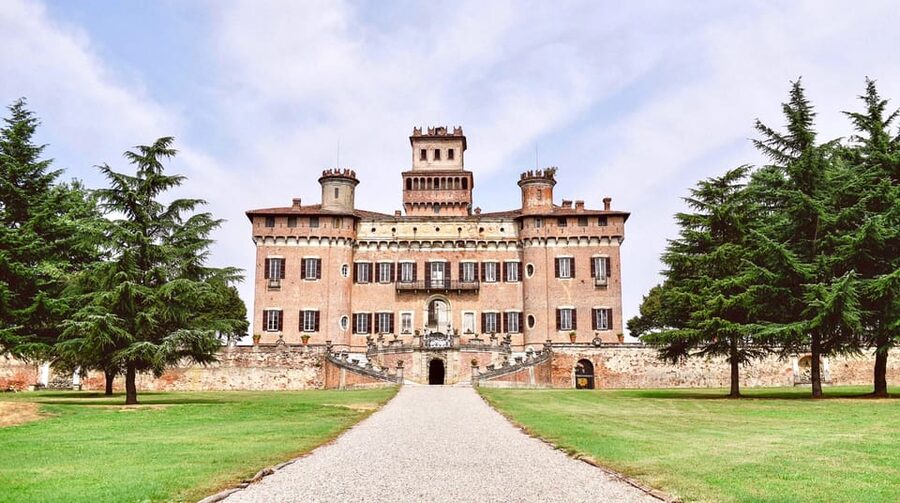
Italy keeps a few grand surprises behind quiet gates. The guided tour of Chignolo Po Castle brings you into a Lombard residence often presented as the Versailles of Lombardy, with Baroque rooms, medieval defenses, frescoes, and formal outdoor spaces. I like the way the visit joins art and architecture, and I also like the low $19 price, which makes this an easy addition to a day in the area. The main drawback is that the tour is conducted in Italian, and the castle is not suitable for wheelchair users.
The visit covers a lot of ground, from the ravelin and moat to the grand staircase, feast hall, gallery, library, ceramics room, bedroom, and dining room. I would especially choose it for the Baroque interiors, though the medieval section adds useful context and a rougher, more defensive mood. One local assessment puts it neatly: the Baroque part is more interesting, but the medieval section has its own charm.
Key points to know before visiting
- The Baroque rooms are the main attraction, with stuccoes, frescoes, and a grand feast hall centered on the four seasons.
- The castle has two distinct personalities, combining a medieval feudal court with an 18th-century-style residence.
- The route includes outdoor details, such as terraces, gazebos, the moat, ravelin, and Theatre of the Birds.
- The tour is in Italian, so language will shape how much context you receive.
- The $19 admission offers solid value, especially since guided entry, parking, toilets, and a small magnet are included.
- Accessibility needs attention, since the experience is not suitable for wheelchair users.
A castle with two very different moods
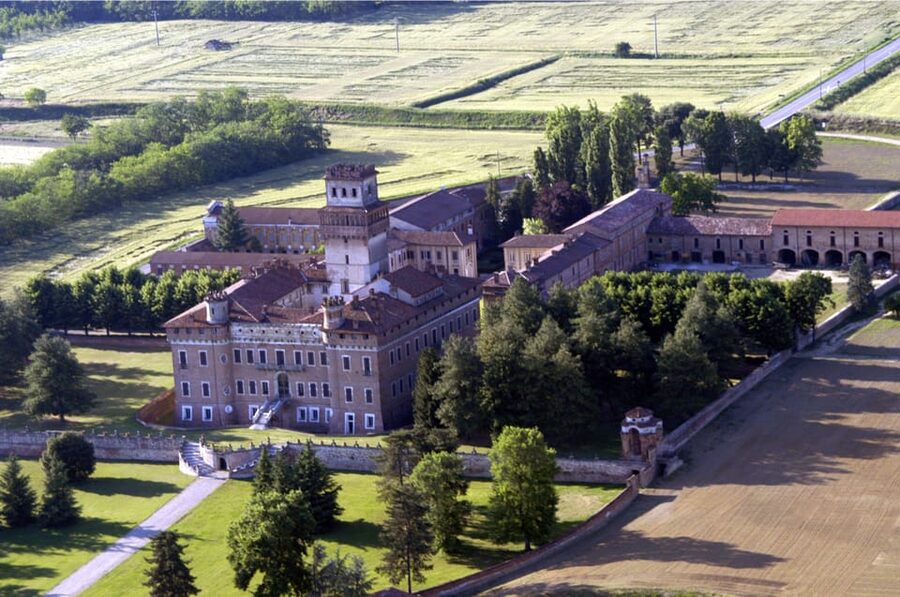
Chignolo Po Castle is most rewarding when you see it as two places in one. The earlier side is defensive and feudal, while the later rooms show how the property became a grand residence designed for display, ceremony, and leisure.
That contrast gives the tour a useful rhythm. You begin with the castle’s position and defenses, then move toward the decorative rooms where power was expressed through paintings, stucco, architecture, and refined domestic spaces. I like this kind of visit because the building is not just a collection of pretty rooms. Its changes tell you how the role of a fortified home shifted over time.
The advertised nickname, the Versailles of Lombardy, points toward the Baroque character of the property rather than an exact comparison with Versailles. You should expect a smaller Italian castle, not a vast royal complex. Still, the grand stairway, formal facades, decorated halls, terraces, and garden-related features give the comparison some logic.
More Guided Castle Tours in Italy
- Milan: The Last Supper & Sforza Castle Guided Tour
★ 4.6 · 610 reviews - Milan: Last Supper and Sforza Castle Guided Tour
★ 4.6 · 498 reviews - Valpolicella: Amarone Chateau Guided Tour and Wine Tasting
★ 4.5 · 164 reviews
Starting at the ticket office
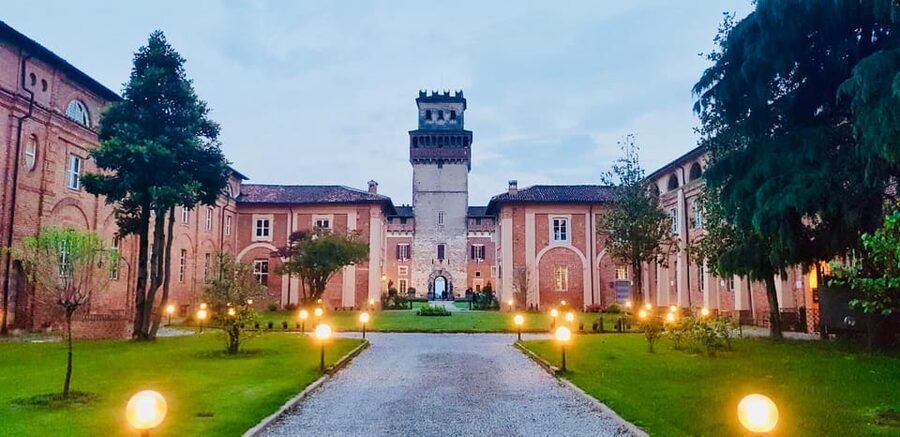
The tour begins at the ticket office and returns there at the end. That simple arrangement is useful if you arrive by car, since free indoor parking is included and you do not need to sort out a second meeting point after the visit.
The experience is listed at $19 per person. For that amount, you receive castle admission and a guided visit, along with free parking, toilet access, and a magnet. The magnet is a small extra, not a reason to book, but the parking matters more. A paid attraction can feel less costly when you are not adding parking fees or a separate admission charge.
The booking information describes the activity as lasting one day, while starting times are shown through availability. I would check the selected date and time carefully before setting out, since the exact start time is not fixed in the information provided. The tour also offers skip-the-ticket-line entry, which should make arrival more direct.
The Theatre of the Birds and the hunting lodge
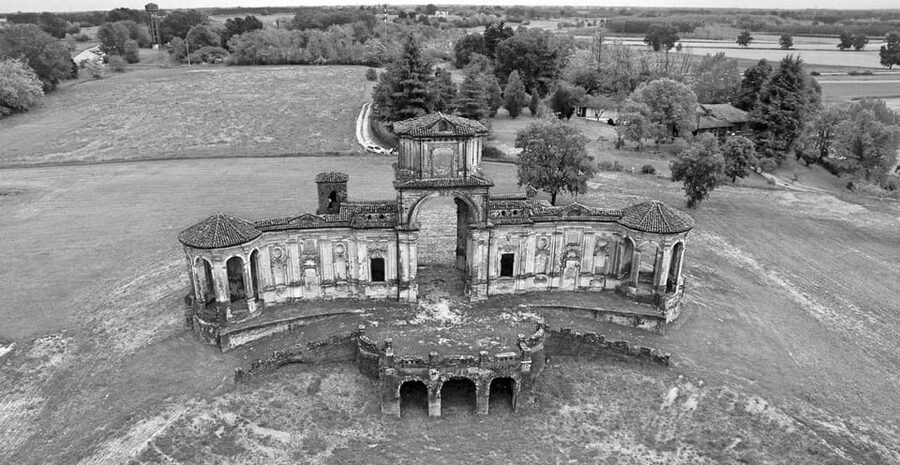
One of the more unusual parts of the visit is the Theatre of the Birds. In 1800, it became the Palazzina della Caccia, or hunting lodge, at the request of Marquis Francesco Cusani, who owned the property at the time.
This detail gives the building a personal connection to the people who shaped it. Instead of seeing only a formal residence, you get a glimpse of how aristocratic owners used their estates for hunting, entertainment, ceremony, and private life.
The name Theatre of the Birds immediately suggests a more playful setting than the defensive sections of the castle. You might find this part especially interesting if you enjoy unusual architectural features with a clear link to former leisure activities. The tour does not present the castle as a single frozen period. It shows how later owners adapted older spaces to suit changing tastes.
The Baroque facade, gazebos, and terraces
The Baroque facade is one of the visual anchors of the visit. Its purpose is not defense. It presents the castle as a place of rank and refinement, announcing the change from feudal stronghold to grand residence.
The route also includes the eastern gazebo, western gazebo, and terraces. These elements help you read the castle from the outside, not just through its decorated interiors. Gazebos and terraces are spaces for looking outward, taking air, and framing the residence as part of a larger setting.
I would pay attention to how different these features feel from the ravelin and moat. The defensive structures speak to caution and control. The terraces and gazebos speak to comfort and display. That shift is one of the best reasons to take the guided route rather than simply viewing the facade and leaving.
The outdoor parts may be less memorable than the decorated rooms for some people. If your main interest is painting and interior design, you will probably want to save your attention for the feast hall and gallery. Still, the terraces and gazebos help make sense of the building as a complete estate.
Same region, a different set of walls:
- Milan: Sforza Castle Entry Ticket with Digital Audio Guide
★ 4.0 · 2,675 reviews - Milan: Sforza Castle and Michelangelo’s Pietà Rondanini Tour
★ 4.7 · 1,119 reviews - From Siena: Chianti and Castles Tour with Wine Tastings
★ 4.6 · 631 reviews - Montalcino: Brunello Wine Tasting & Lunch in a Tuscan Castle
★ 4.6 · 324 reviews
The monumental staircase and medieval defenses
The monumental staircase supplies the transition from exterior grandeur to interior ceremony. A large staircase is never just a way to change floors in a palace-like residence. It creates an entrance, controls the pace of arrival, and gives formal rooms a sense of importance.
The medieval portion provides a sharper contrast. You will see the ravelin that guarded the feudal lord’s court, along with the crown of the moat viewed from above. These details are valuable because they show the practical side of the castle before later decoration softened its appearance.
The ravelin and moat are not just scenic leftovers. They explain how the site was protected and how access could be controlled. From above, the moat’s shape becomes easier to understand, giving you a better sense of the castle’s original defensive plan.
This section may appeal most to anyone who enjoys military architecture and medieval buildings. It may feel less polished than the Baroque rooms, but that is precisely its value. The medieval portion has a different kind of appeal, one based on structure, age, and function rather than ornament.
The courtyard of honor and the feast hall
The courtyard of honor marks the ceremonial heart of the residence. Courtyards of this type helped organize the approach to the main building and provided a setting for arrival and display.
From there, the tour moves toward the feast hall, where a fresco celebrates the apotheosis of the four seasons. This is one of the strongest stops on the route for anyone interested in decorative painting. The subject is familiar, but its placement in a formal dining and reception setting gives it a clear purpose: nature becomes part of the spectacle of aristocratic life.
The feast hall is likely to be one of the rooms where the Baroque side of the castle feels most complete. Look beyond the central fresco and notice how the room works as a whole. Size, decoration, and function combine to create a setting meant for important meals and public ceremony.
If you prefer plain medieval stonework, this room may feel too ornate. If you enjoy painted ceilings and grand interiors, it should be near the top of your list.
The gallery and its Tiepolesque decoration
The gallery contains a flight of drawing rooms decorated with stuccoes and frescoes from the Tiepolesque school. This is the part of the visit that best supports the castle’s grand Baroque reputation.
A gallery of connected rooms gives you more than a single showpiece. It lets you see how decoration changes from room to room while maintaining a common style. The stucco work adds three-dimensional detail, while the frescoes bring color and movement to the walls and ceilings.
The phrase Tiepolesque refers to the artistic world associated with the Tiepolo tradition, known for airy compositions, theatrical effects, and lively painted scenes. You do not need specialist knowledge to appreciate the result. Simply watch how the rooms use painted and sculpted decoration to make everyday movement through the house feel ceremonial.
For me, this is the likely highlight of the tour. The medieval defenses explain the castle’s origins, but the gallery explains why the building is marketed as a Lombard Versailles. If your time is limited, pay close attention here.
The library, ceramics room, bedroom, and dining room
The later part of the route moves into rooms that show private and domestic life. The library offers a quieter contrast to the feast hall and gallery. It suggests study, reading, and administration, reminding you that a grand residence needed more than ceremonial rooms.
The ceramics room focuses attention on objects and household taste. Ceramics can seem less dramatic than a painted ceiling, but they often tell you how daily life was organized and how a household expressed status through useful things.
The bedroom and dining room bring the tour closer to personal routines. These spaces help prevent the castle from becoming only a parade of grand halls. You can begin to picture where people slept, ate, and carried out ordinary parts of life within a very formal setting.
The information supplied does not identify individual furnishings or specific works in these rooms, so I would avoid expecting a named collection or a museum-style catalog of objects. Their value is in completing the picture of the residence, from public spectacle to private use.
What the Italian guided format means
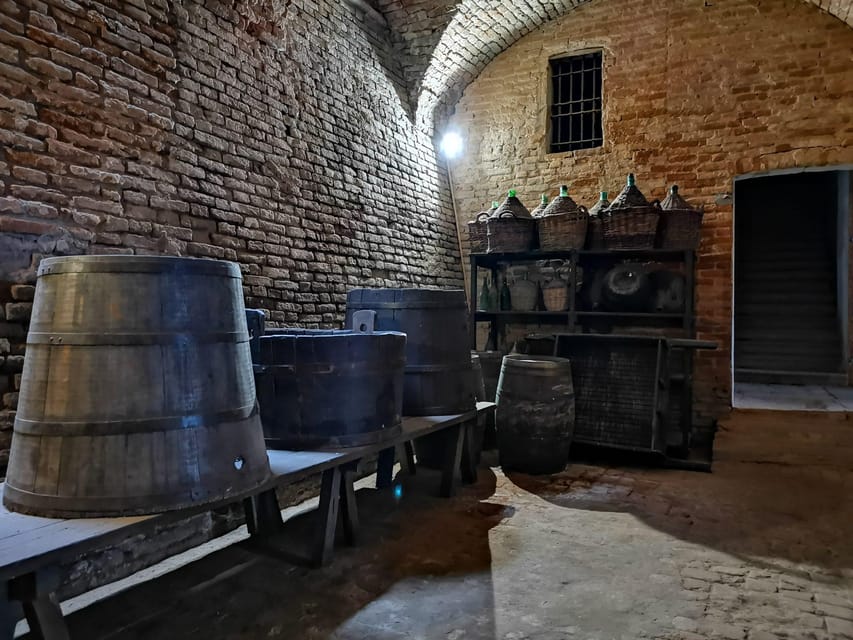
The live guide conducts the tour in Italian. That is important to consider before booking. If you understand Italian, the guided format should add context to the architecture, the owners, and the changes made to the building. If you do not, you can still see the rooms and structures, but you may miss explanations that connect the medieval and Baroque sections.
No other tour language is specified. I would not book this experience expecting English commentary, multilingual headsets, or printed translations unless the provider confirms them separately.
A guided visit is especially useful here because the castle contains many layers. Without explanation, a gazebo, ravelin, hunting lodge, or decorative school of painting can blur into a long sequence of names. The guide’s role is to show why each part matters.
Who will get the most from this visit
I would recommend the castle to you if you enjoy historic houses, Baroque decoration, medieval defenses, and places where architecture reveals changing social habits. It also suits visitors who want a focused cultural stop in Lombardy without paying the price of a major royal palace.
Families with an interest in castles may find the moat, ravelin, and Theatre of the Birds more engaging than a standard art museum. People who prefer paintings and interiors should focus on the feast hall, gallery, library, and ceramics room.
The tour is less suitable if you need wheelchair access, since the activity is specifically not suitable for wheelchair users. It may also disappoint you if you require an English-language guide or want a self-guided visit at your own pace. The fixed guided format is part of the experience, so plan around it.
Is $19 good value?
At $19, I consider this a strong-value visit if the date and Italian language work for you. The price includes admission, a guided tour, indoor parking, toilets, and a magnet. The central value, however, comes from seeing both the medieval defensive structures and the Baroque residential rooms in one stop.
The experience is not designed as a full-day program with a long list of separate activities. The booking information uses a one-day duration label and asks you to check available starting times, but it does not give a precise tour length. I would treat it as a scheduled castle visit and leave room in your day for other plans.
Free cancellation up to 24 hours before the visit and the option to reserve now and pay later add useful flexibility. These terms matter if your Lombardy plans are still shifting.
Should you book Chignolo Po Castle?
Book it if you want Baroque rooms with real architectural context, not just a quick photo stop. The gallery of stuccoes and Tiepolesque-style frescoes, the feast hall with its four seasons, and the monumental staircase are the strongest reasons to go.
Book it also if medieval defenses interest you. The ravelin, moat, and feudal court give the visit a firm historical base, even if the Baroque section is likely to be the more impressive half.
Skip it if you need wheelchair access, require a guide in a language other than Italian, or prefer a completely flexible self-guided visit. For everyone else, $19 is a sensible price for a castle that offers both rough medieval character and polished Baroque showmanship.
FAQ
Where is the Castle of Chignolo Po?
The Castle of Chignolo Po is in Lombardy, Italy.
How much does the guided tour cost?
The price is $19 per person.
What language is the tour conducted in?
The live guided tour is conducted in Italian.
Where does the tour begin?
The tour begins at the castle ticket office.
Where does the activity end?
The activity ends back at the ticket office and meeting point.
Is parking included?
Yes. Free indoor parking is included.
Can I cancel the booking for a refund?
Yes. You can cancel up to 24 hours in advance for a full refund.
Is the tour suitable for wheelchair users?
No. The activity is not suitable for wheelchair users.
Just added around Italy
- HIKING TOUR: VARENNA, Castle of VEZIO Villa MONASTERO, FIUMELATTE★ 5.0 · 48 reviews
- Castles of Puglia Day Trip from Bari★ 4.5 · 7 reviews
- Enchanted Castle of Sciacca – Museum Tickets★ 3.5 · 63 reviews
- Taormina; Taormina Castle Tour★ 3.8 · 11 reviews
- St. Angel’s Castle: 2-Hour Private Tour★ 5.0 · 9 reviews
- Milan: Skip-the-line Sforza Castle and Museums Private Tour★ 4.7 · 7 reviews
- Siena: Tour and Wine Tasting in a Tuscan Private Castle★ 4.9 · 50 reviews
- Sforza Castle & Michelangelo’s Pietà Rondanini Guided Tour★ 4.7 · 3 reviews
Guided Castle Tours, compared.

Edinburgh Castle: Guided Walking Tour with Entry Ticket
Read our review →
Cathedral, Giralda & Alcazar Entry With Guided Tour
Read our review →Edinburgh Castle: Guided Walking Tour with Entry Ticket
Read our review →
Stonehenge, Windsor Castle and Bath Full Day Guided Tour
Read our review →
Edinburgh Castle Guided Walking Tour in English
Read our review →
Alcázar and Cathedral Entry Ticket and Guided Tour
Read our review →
Alcázar of Seville Skip-the-Line Tickets and Guided Tour
Read our review →
Dublin Book of Kells, Castle and Molly Malone Statue Guided Tour
Read our review →Browse the lists this tour appears in