
Review · KHIVA
Daytrip from Khiva to Five Ancient Fortresses
Ancient walls rise from the desert. This private day trip from Khiva takes you to five fortresses across Karakalpakstan, including the dramatic Ayaz-Kala and the extensive ruins of Toprak-Kala. I like the private car for up to three people and the freedom to set a flexible departure time. I also like how far beyond Khiva this journey takes you, into a quiet part of Uzbekistan that many visitors miss.
The main catch is that this is transport with sightseeing stops, not a fully guided history tour. A guide is not included, and some drivers speak little English. You will see more and understand more if you read about the fortresses beforehand or arrange your own guide.
Five useful things to know before you go
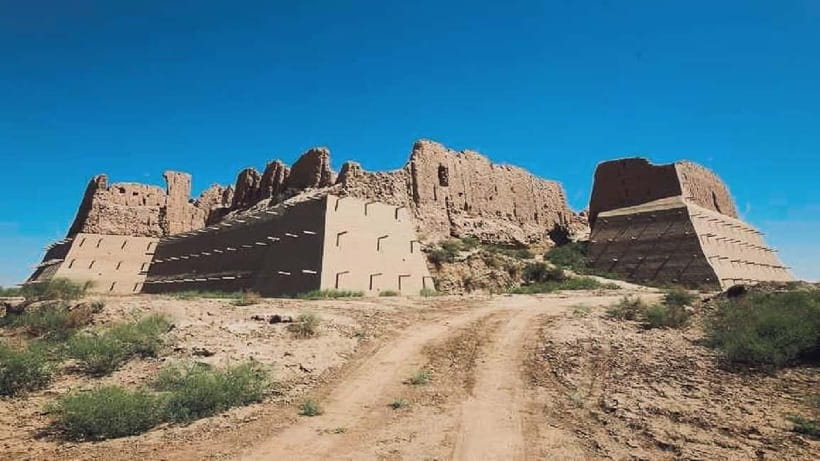
- Ayaz-Kala is the star stop: It is actually a group of three fortresses and offers the most striking views and photographs.
- The ride is private: The price is $115 for a group of up to three, with pickup and drop-off in Khiva or Urgench.
- The five sites are not equal: Ayaz-Kala and Toprak-Kala offer the clearest sense of ancient architecture, while Kavat-Kala and parts of Guldursun-Kala can feel sparse.
- English may be limited: Your driver should know the route and schedule, but may provide little historical explanation.
- Admission is extra: Entry tickets are not included, so carry Uzbek som for site fees.
- Allow seven hours: This is a full outing with long road stretches, walking, photo stops, and several ruined sites under open skies.
Why these five fortresses are worth the long road from Khiva
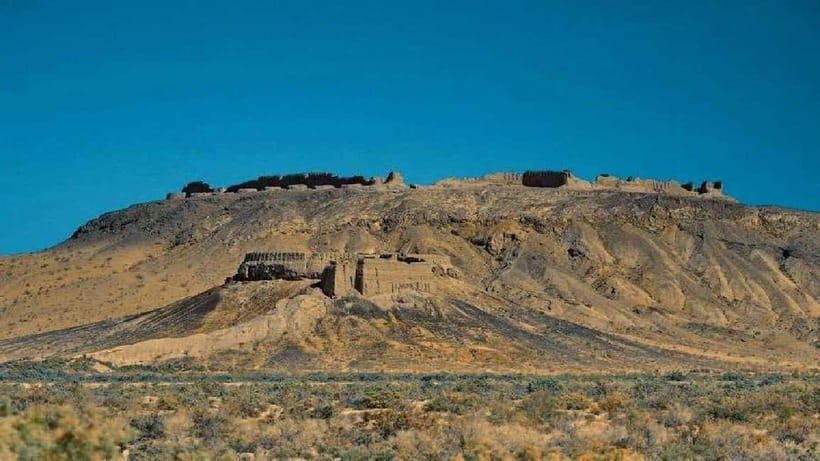
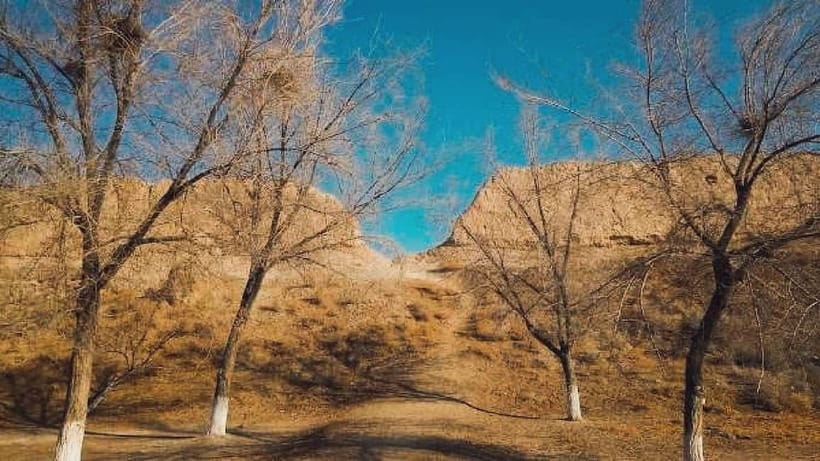
Khiva’s old town is compact and richly decorated, but it can also feel like a carefully preserved historic quarter. This excursion changes the mood completely. You leave the tiled minarets behind and head into the dry reaches of ancient Khorezm, where fortresses were built from mud brick and spread across broad open ground.
The sites are linked to the old Khorezmian world, a region shaped by irrigation, trade, farming, royal power, and repeated attacks. These are not restored castles with furnished rooms and neat signs. They are weathered remains. At some stops, you will walk over rough ground and try to read the shape of walls that time has softened.
That is part of the appeal. You are not simply looking at a building. You are trying to picture a settlement, a defensive wall, a ruler’s residence, or a farming community in a place where the surrounding silence makes the past feel unusually close.
The trip works best if you enjoy ruins, archaeology, and open scenery. If you want a guide explaining each wall and artifact, you need to plan for that separately.
More Fortress and Citadel Tours in the world:
- Carcassonne: Castle and Ramparts Entry Ticket
★ 4.6 · 2,884 reviews - Salzburg: Hohensalzburg Fortress Admission Ticket
★ 4.6 · 2,236 reviews - Salzburg: Best of Mozart Fortress Concert and Dinner
★ 4.5 · 1,424 reviews
Guldursun-Kala, the first fortress with a troubled past
Guldursun-Kala is generally dated to the second and first centuries BC. The fortress was built on a rectangular plan covering about 35 hectares, with thick adobe walls arranged in two rows and pierced by loopholes for defense.
The scale matters. From ground level, the walls can look like eroded earth. Once you understand that the enclosure covered such a large area, the site becomes easier to read. It was not a small watchtower. It was a fortified settlement built to protect people and property.
The fortress was later abandoned for reasons that remain unclear. Archaeological evidence also places its last occupation around 1220, during the rule of Shah Ala ad-Din Muhammad, shortly before the Mongol invasions of the Khwarezmian Empire. That gives the ruins a long and uneven story rather than a single neat date.
Your stop here is listed as a visit, walk, sightseeing break, and photo stop. Expect a self-guided visit. You may find the site more atmospheric than visually complete, so it helps to bring enough historical context with you.
Ayaz-Kala, the most rewarding stop of the day
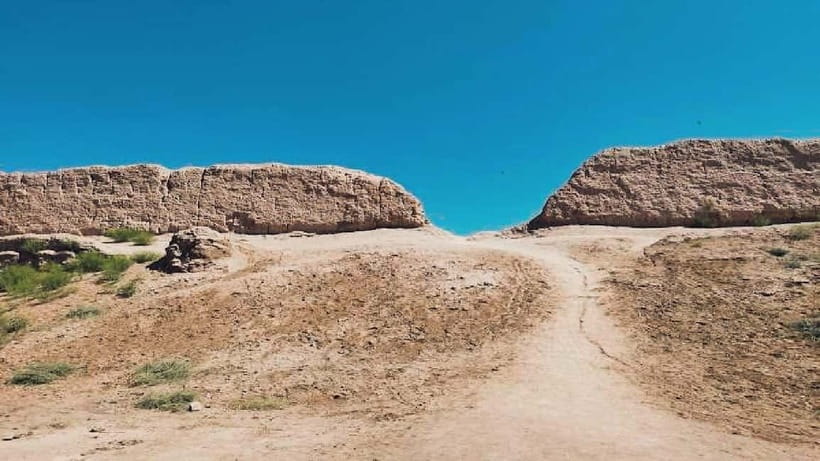
Ayaz-Kala is the highlight for many people, and I can see why. It is often described as the most impressive fortress in ancient Khorezm, but it is actually a complex of three fortresses grouped around a hill in the eastern part of the Sultan Uizdak range.
The name is linked to a Turkic word meaning frosty or cold. The site is about 96 kilometers from Khiva and 30 kilometers from Buston settlement, placing it well beyond the city and deep into the open country.
The hilltop setting gives Ayaz-Kala its visual strength. You can see how the fortifications used height, distance, and broad visibility to help protect the settlement. The remains are easier to understand here than at the less recognizable stops, especially when you walk around the walls and look back across the surrounding ground.
You have free time for walking and photographs, and the visit is self-guided. Wear shoes that can handle uneven surfaces. The fortress is exposed, and there is little reason to rush your time here. If you are choosing where to spend your longest photo stop, Ayaz-Kala deserves it.
The three-part layout also makes this more than a single ruin. You are seeing a defensive group built around a natural rise, not just one isolated wall. For many visitors, this is the moment when the day begins to make sense.
Kavat-Kala, the hardest site to picture
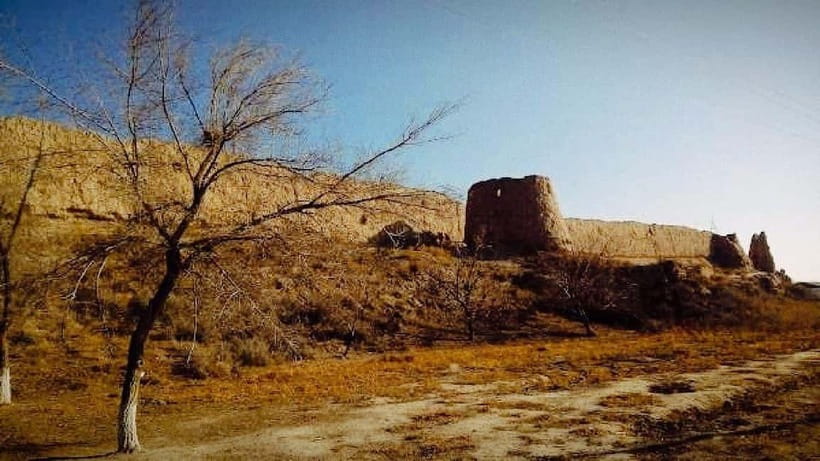
Kavat-Kala is a different kind of stop. It is not only one fortress but a large complex of monuments extending about 15 kilometers along the Gavhore Channel, with a width of roughly two to three kilometers.
Between the 12th and 13th centuries, the central area was heavily populated. As many as 90 estates once existed there, with the main fortress forming the center of the oasis. The central fortification measured about 160 by 190 meters.
That information is important because the site itself may not immediately communicate its former size. Ruins of homes and clay buildings have been damaged or lost, and the area is still the subject of archaeological research. You might see traces rather than dramatic walls.
The stop includes a break, sightseeing, and a self-guided visit. Treat Kavat-Kala as an archaeological zone rather than a polished monument. It rewards patience and imagination, but it may disappoint you if you expect another Ayaz-Kala.
This is also one reason the five-stop plan can feel uneven. The variety is useful, but not every fortress offers the same visual payoff.
A few more castle visits around the world worth a look
- Seville: Royal Alcázar Entry Ticket
★ 4.6 · 28,378 reviews - Stonehenge, Windsor Castle, and Bath from London
★ 4.5 · 18,662 reviews - Bucharest: Dracula’s Castle, Peles Castle, & Brasov Old Town
★ 4.5 · 17,858 reviews - From Munich: Neuschwanstein & Linderhof Castle Full-Day Trip
★ 4.6 · 14,646 reviews
Toprak-Kala, the royal city in the desert
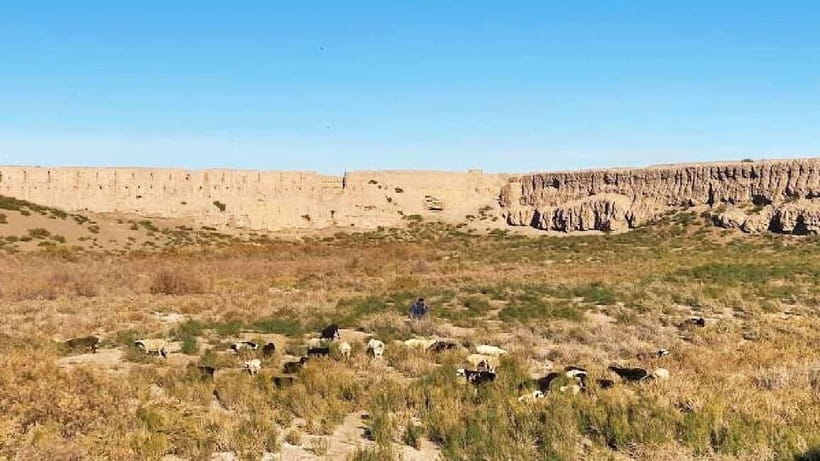
Toprak-Kala is one of the most historically important stops. Built in the third century, it served as a residence for the Khorezmian rulers until around AD 305. Later wars forced the rulers to leave, and the city gradually declined.
The ruins help you picture a place that was once more than a defensive outpost. This was a royal residence and an urban center, with enough scale to support administration and court life.
Excavations uncovered coins, Zoroastrian ossuary fragments, fine ceramics, wool and silk textiles, gold ornaments, and a necklace made from 300 glass beads, paste, amber, and coral. These finds show the quality and range of objects connected with the site, even though you should not expect to see all of them in place during this visit.
Toprak-Kala is included as a walking visit, photo stop, and break. It is a good place to slow down and study the layout. The remains may look plain at first, but the former royal role gives the site real weight.
I would rank Toprak-Kala with Ayaz-Kala as one of the two essential stops. The architecture is ruined, but the idea of a royal seat in this remote setting is powerful.
Kyzyl-Kala and its warning system
Kyzyl-Kala served as a refuge during raids by nomadic groups. The fortress had a double wall, corner watchtowers, and a system designed to protect local people when danger approached.
Smoke signals were used to warn of enemy armies. That detail helps you understand how these fortresses worked as part of a wider defensive network. A settlement did not need to wait until an army arrived at its gate. Watchtowers and signals could pass the warning across the region.
The citadel also had ceramic pipes to bring in a steady water supply. Water was the basic problem in any dry fortified settlement, so this small engineering detail is just as interesting as the walls.
The stop includes walking, photographs, sightseeing, a break, and a safety briefing. Like the other sites, it is self-guided. Look for the defensive logic: where people would shelter, how the walls controlled access, and how the towers helped watch the approaches.
Kyzyl-Kala may not have the same immediate drama as Ayaz-Kala, but it adds useful context. The day is stronger because you are not seeing five copies of one ruin. You are seeing royal, residential, defensive, and regional settlement sites.
What the private car adds to the day
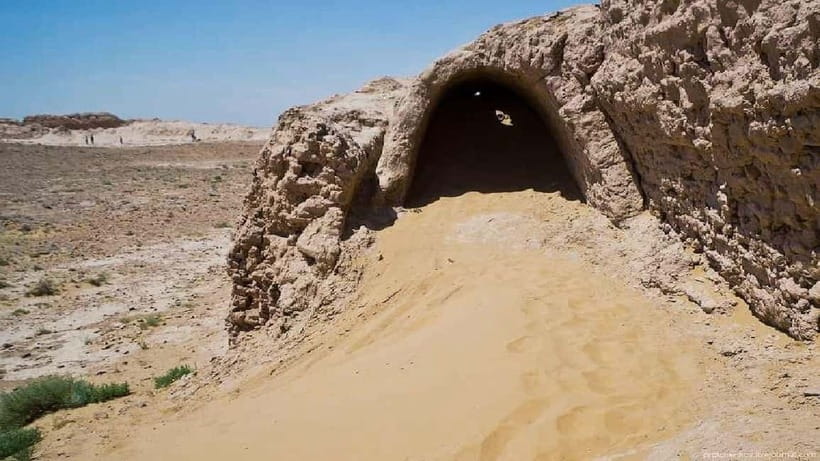
The $115 price covers a private group of up to three people. That works out well for a couple or a small trio, especially compared with arranging separate transport to remote sites.
You receive pickup from a hotel in Khiva, or from an airport or train station in Urgench. Drop-off is available in either Khiva or Urgench. The vehicle is air-conditioned, private, and used for the round trip. Parking fees are included.
A flexible departure time is another practical advantage. You can coordinate the start around your arrival or hotel schedule instead of joining a fixed large group. The driver can also stop where appropriate, and one highly praised driver, Izzat, was described as friendly, accommodating, and eager to share aspects of local culture despite the language barrier.
Still, you should understand the service clearly. This is not a chauffeur-guide package. The driver takes you from place to place and may offer some information, but English ability varies. One especially positive experience involved a driver who tried hard to communicate, while other outings had no useful English explanation at all.
If history is your main reason for going, arrange a guide who speaks your language or prepare your own notes. Without that, you may spend much of the day looking at walls without learning why they matter.
The seven-hour schedule and how it feels
Seven hours is efficient, but not generous. You are covering several distant sites, and the day includes driving, parking, walking, photo stops, and breaks. The route gives you a broad view of the fortress zone, but it does not leave unlimited time at each one.
The listed order begins with Guldursun-Kala, followed by Ayaz-Kala, Kavat-Kala, Toprak-Kala, and Kyzyl-Kala. The schedule also allows visits around sunset, which can improve the look of the adobe walls and make photographs more appealing.
You should expect some stops to feel brief and others to deserve extra time. Ayaz-Kala and Toprak-Kala are the places where I would want to linger. Kavat-Kala may need less time unless you have a strong interest in archaeology.
Bring water, sun protection, and comfortable shoes. The information provided does not promise meals, and lunch is optional rather than included. One practical point is especially important: carry cash in Uzbek som for entry fees. Admission is not included, and one account mentioned paying 20,000 som at three sites, though you should confirm current charges locally because fees can change.
Food requires a little care. The driver may suggest a restaurant, but you should check prices and ratings yourself before ordering. One bad experience involved an establishment with no prices on the menu and an uncomfortable sense of overcharging. That does not define every meal stop, but it is a good reason to choose lunch independently.
Driving standards deserve your attention
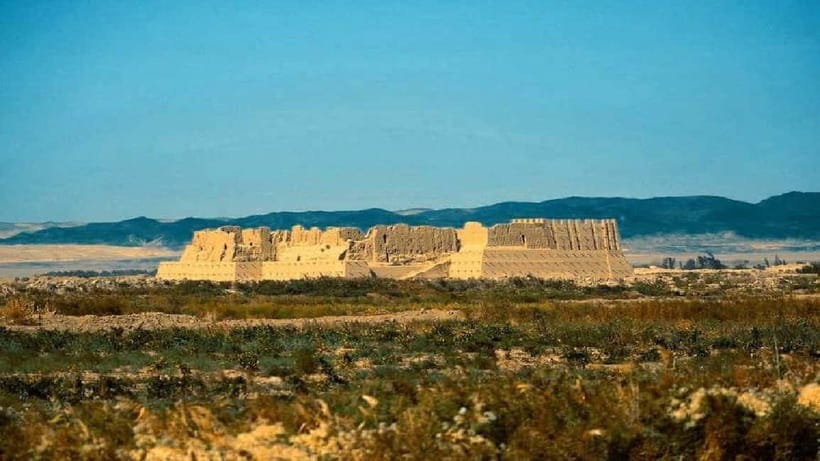
Most of the praise centers on friendly, flexible drivers. A good driver can make a long road day feel easy, stop when you need photographs, and help bridge the language gap. Several positive outings valued the driver’s kindness and willingness to accommodate requests.
There is also a serious caution. One passenger described very fast driving that felt unsafe, and another account raised the same concern about speed on poor roads. This is not a minor issue on a seven-hour trip.
At pickup, make your expectations clear. Ask the driver to slow down if necessary, especially on rough roads. If the driving feels unsafe, say so directly. The vehicle is private, so you are not locked into someone else’s pace or seating arrangement.
Who will get the most from this trip
I would recommend this outing to you if you like:
- Archaeological ruins without restoration
- Long drives through open country
- Photography and unusual historic sites
- Private transport for a small group
- Flexible timing
- Seeing places beyond Khiva’s old town
I would be more cautious if you need continuous English guiding, dislike rough or exposed walking areas, or want every stop to look like a complete fortress. Two sites provide the clearest visual reward, while the others require more imagination.
The trip is also better for adults and older children who can handle a full day of transport and outdoor sightseeing. The information provided does not give detailed accessibility arrangements, so ask the provider if you have mobility concerns.
Is $115 good value for three people?
For one person, $115 may feel high if you are mainly paying for a driver. For three people, it becomes much better value because the price covers the private vehicle, pickup, drop-off, air conditioning, parking, and the full route.
You still need to add entry tickets, food, and possibly a separate guide. That means the final cost will be higher than the advertised transport price. Even so, reaching five remote fortresses independently would be difficult, and the convenience of door-to-door transport is a major part of the value.
I would see this as a good transport deal for a small group, not a bargain guided tour. The more you value privacy and flexibility, the better the price looks.
Should you book the Five Fortresses day trip?
Book it if you want a practical way to reach Ayaz-Kala, Toprak-Kala, and three less developed archaeological sites without arranging transport yourself. The private format, flexible pickup, and small-group price make it a sensible add-on to a Khiva visit.
Before confirming, ask two questions: Can the driver communicate in your preferred language, and can you request a slower driving pace? If you want detailed explanations, arrange a guide separately. If you do that, this becomes a strong day outside Khiva.
If you have only one day and want the most impressive ruins, ask about a shorter trip focused on Ayaz-Kala and Toprak-Kala. If you want breadth, open-country scenery, and a look at the wider Khorezmian fortress system, book all five and accept that two or three stops will feel more like archaeological traces than complete monuments.
FAQ
How long is the Five Fortresses day trip?
The experience lasts about seven hours, including transport and visits to all five fortresses.
Where can pickup take place?
Pickup is available from hotels in Khiva, as well as the airport or train station in Urgench.
Where can I be dropped off?
Drop-off is available in Khiva or Urgench.
How many people can join for $115?
The price covers a private group of up to three people.
Is transportation private?
Yes. The experience includes private round-trip transportation in an air-conditioned vehicle.
Is a guide included?
No. A guide is not included. The driver handles the transport and may provide some information, but English ability can be limited.
Are entry tickets included?
No. Entry tickets are not included in the price.
Is lunch included?
No. Lunch is optional and is not included.
Which fortresses are visited?
The route includes Guldursun-Kala, Ayaz-Kala, Kavat-Kala, Toprak-Kala, and Kyzyl-Kala.
Can I cancel the booking?
You can cancel up to 24 hours in advance for a full refund. You can also reserve now and pay later, according to the booking conditions provided.
Just added around the world
- Standing Stones, Inveraray and Kilchurn Castle & Highlands Tour starting Balloch★ 5.0 · 35 reviews
- Cardiff: South Wales Cliffs, Beaches & Castles Day Tour★ 5.0 · 36 reviews
- West Coast Lochs & Castles Tour – from Glasgow★ 5.0 · 20 reviews
- Private Day Tour of South Wales, including Cardiff & Caerphilly Castle.★ 5.0 · 15 reviews
- Private Tour – Edinburgh to St Andrews, Dunnottar Castle & Dundee★ 5.0 · 9 reviews
- From Cardiff: 3 Amazing Castles, Tintern Abbey & Roman Caerleon★ 5.0 · 12 reviews
- Private Day Tour of Cardiff, including Cardiff Castle, St Fagans, & Cardiff Bay★ 5.0 · 5 reviews
- Cardiff: Welsh Castles, Mountains & Steam Railway Day Tour★ 4.5 · 25 reviews
Fortress & Citadel Tours, compared.
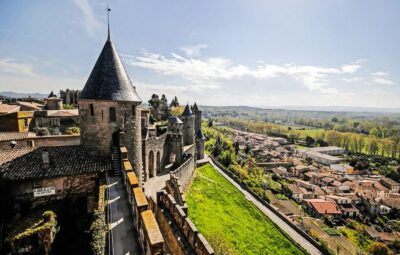
Carcassonne: Castle and Ramparts Entry Ticket
Read our review →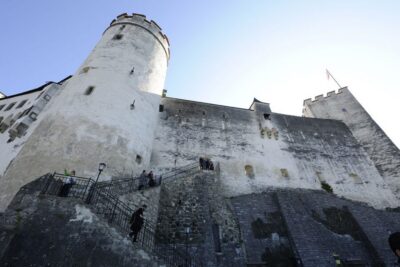
From Cairo Alexandria Catacombs, Citadel Day Trip with Lunch
Read our review →
Charleston historical walking tour with a Professor of History at The Citadel
Read our review →
Hue Customizable Tour with Imperial Citadel & Forbidden City
Read our review →
Desert Safari: Luxury Fortress Dinner, Camel Ride & Dune Bashing
Read our review →
Egyptian Museum, Citadel, and Old Cairo Guided Tour
Read our review →Browse the lists this tour appears in