
Review · BELGRADE
Danube fortresses and Roman archeological park
Three major sights, one long day. This small-group trip links Smederevo Fortress, Viminacium Archaeological Park, and Golubac Fortress along the Serbian Danube. What I like most is the clear historical range: you move from Roman Serbia to the medieval Serbian state, then to the Ottoman, Hungarian, and Austrian frontier world. I also like the limited group size of seven, which should make the long road stretches and guided visits easier to manage.
The main consideration is time. Nine hours is a serious day out, and much of it is spent in a vehicle. You get several important places in one outing, but you will not have the slow, unhurried pace of a private visit to each site.
Key points at a glance
- Smederevo’s 15th-century fortress was built at the meeting point of the Jezava and Danube rivers when Smederevo became Serbia’s capital.
- Viminacium was once the capital of the Roman province of Moesia Superior.
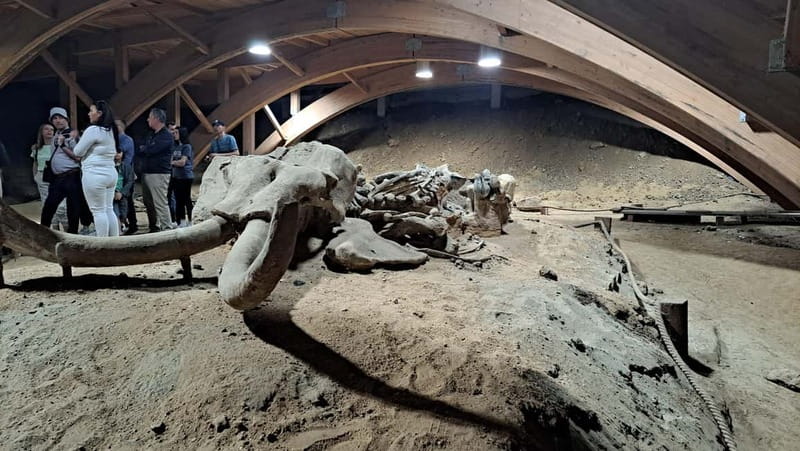
- A 27-meter-deep mammoth skeleton is a special feature of Viminacium’s paleontological park.
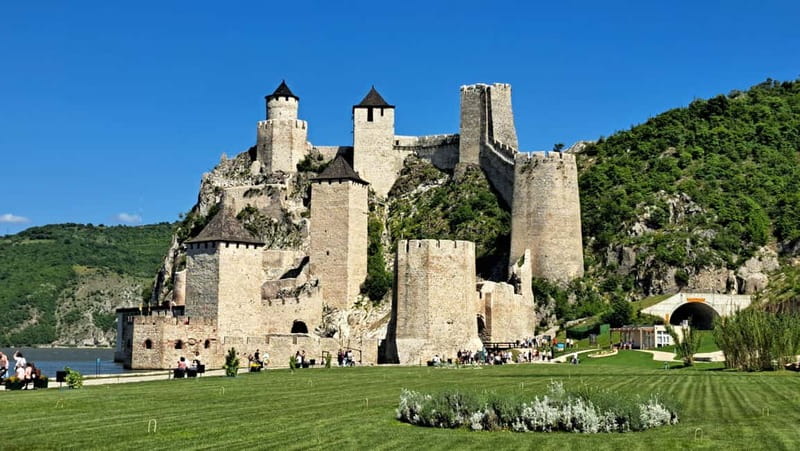
- Golubac Fortress guards the point where the broad Danube enters the narrow Djerdap Gorge.
- A small group of up to seven people gives the day a more personal feel than a large coach tour.
- Transportation, entrance fees, and an English-speaking guide are included in the $223 price.
Why This Day Trip Matters
Belgrade is a fine base, but Serbia’s story becomes clearer once you leave the capital. The Danube was not just a pretty river. It was a highway, a border, and a military problem for every power that wanted control of southeastern Europe.
This outing shows that story in three steps. Smederevo represents medieval Serbian power. Viminacium takes you back to Roman rule. Golubac returns you to the military frontier, where a fortress controlled river traffic at one of the Danube’s most important choke points.
I like that the day is not built around one famous photo stop. Each place adds a different layer. The result is useful for anyone who wants more than central Belgrade but has limited time for independent planning.
More Fortress and Citadel Tours in Belgrade:
- From Belgrade: Golubac Fortress and Iron Gate Gorge Tour
★ 4.8 · 271 reviews - Along the Danube: Golubac Fortress & Iron Gate Gorge day trip from Belgrade
★ 4.5 · 185 reviews - From Belgrade: Golubac Fortress & Iron Gate Danube Gorge
★ 4.8 · 185 reviews
Smederevo Fortress and Serbia’s Short-Lived Capital
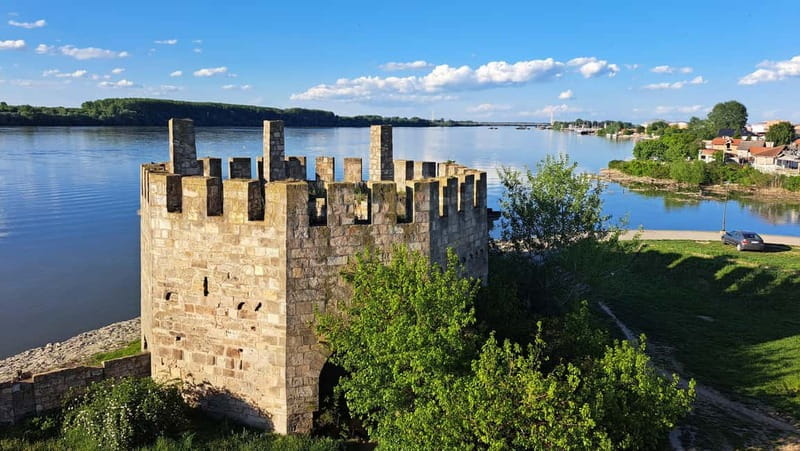
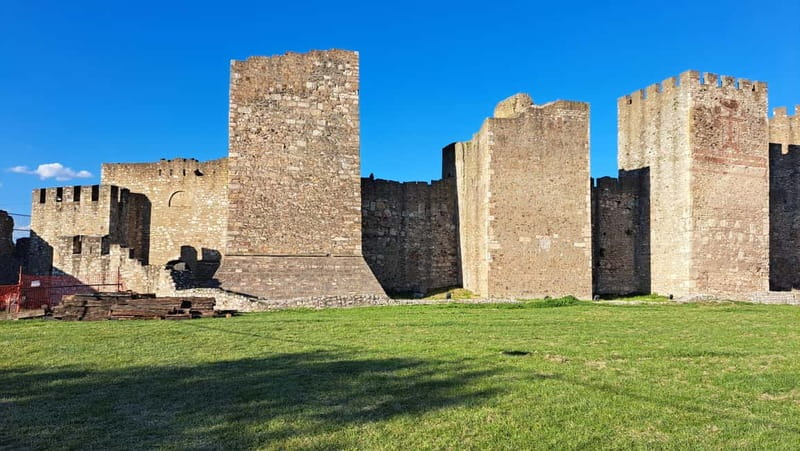
The first major stop comes after roughly an hour from Belgrade. Smederevo became the capital of Serbia in the 15th century, and Serbian Despot Djuradj Brankovic ordered the fortress built at the confluence of the Jezava and Danube rivers.
The location tells you why the site mattered. Rivers offered transport and trade, but they also created natural defensive lines. The fortress was built quickly, and its scale reflects the urgency of the period. It is described as the largest lowland fortress in Serbia, a useful distinction because it is not perched on a steep mountain ridge like many better-known European strongholds.
You have about 45 minutes here for a visit, guided touring, and photographs. That is enough for an introduction and a good look at the setting, though it is not a long archaeological study. I would pay close attention to the relationship between the fortress walls and the two rivers. That is the point of Smederevo: this was a capital designed around defense and access.
The stop also gives you an early sense of the day’s rhythm. You will see a large historic site, hear its main story, take photographs, and then return to the vehicle. If you prefer lingering in one place, Smederevo may feel brief. If you want several important Serbian sites in one day, the compact visit works well.
Viminacium, Rome in the Serbian Danube Plain
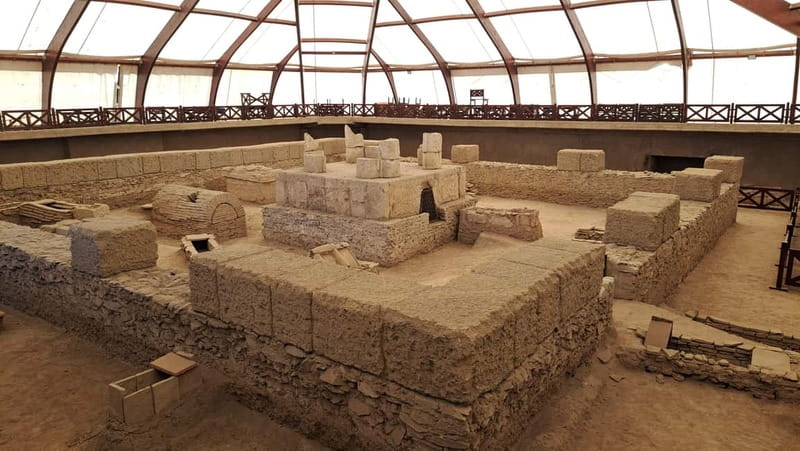
From Smederevo, the drive to Viminacium takes about an hour. The archaeological park occupies the site of the former Roman capital of Moesia Superior, a province that covered part of the Roman Balkans.
This is the most unusual stop on the trip because it combines Roman archaeology with paleontology. You can see a bust of Constantine the Great and representations of 17 other Roman emperors born in Serbia. That detail gives the visit a strong local angle. Roman history here is not just a story imported from Italy. The region produced emperors and occupied an important place within the empire.
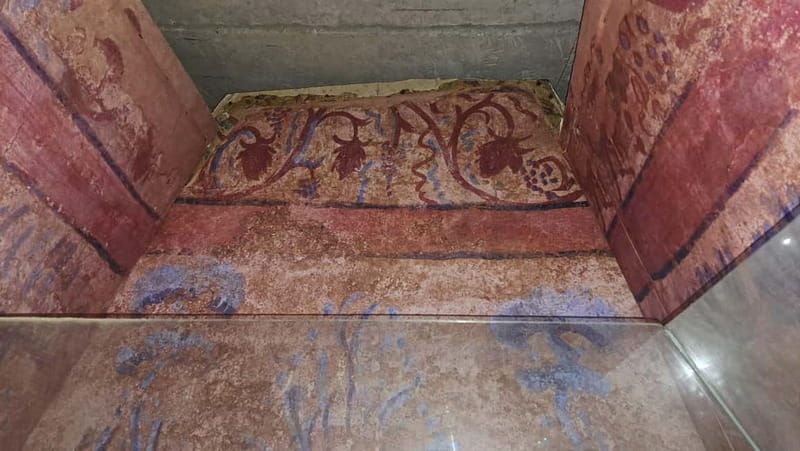
The park also includes a mosaic-decorated floor. Mosaics are often the quickest way to understand the wealth and habits of an ancient settlement. A floor can reveal artistic taste, building skill, and the kind of resources available to people who lived there.
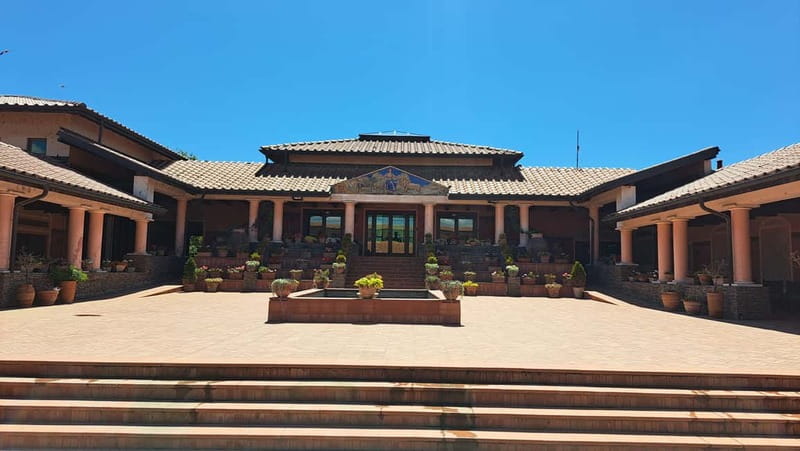
The visit lasts about an hour and a half and includes guided sightseeing and walking. That is a useful amount of time for an overview, but expect a selected introduction rather than every corner of the ancient site. Archaeological parks can be spread out, so comfortable shoes are sensible even though no special equipment is listed.
The paleontological park may be the surprise highlight. A mammoth skeleton discovered 27 meters below ground is said to be about one million years old. This gives Viminacium a second story that has nothing to do with Roman emperors. You move from imperial politics to prehistoric life in the same general area, which makes the stop more memorable for families and anyone who enjoys natural history.
I would rank Viminacium as the place where a guide adds the most value. Ruins can be hard to read without context, especially when the surviving walls and foundations do not immediately show how the settlement worked. The included English-speaking guide helps connect the objects, buildings, and Roman provincial setting.
Golubac Fortress at the Iron Gates
The longest drive between stops takes you toward Golubac, with roughly 75 minutes on the road. The fortress appears at the entrance to the Iron Gates, where the Danube narrows from a section described as six kilometers wide into the Djerdap Gorge.
That location explains the fortress better than any romantic legend. Golubac controlled movement on the Danube. Anyone using the river through this passage had to deal with a stronghold built into the rock above the water. The fortress dates to the 14th century and passed under Hungarian, Serbian, Turkish, and Austrian rule.
The walls and towers are the main attraction, but the setting does much of the work. A fortress placed at a river bottleneck feels practical rather than decorative. Its purpose was to watch, restrict, and defend navigation. The site is said never to have been overrun, a striking claim that reflects the strength of its position and defenses.
You have about two hours for the visit, including a guided tour, walking, sightseeing, photographs, and free time. That is the most generous site visit of the day. You should have room to look beyond the main explanation and spend a little time taking in the relationship between the fortress, rock, and river.
After the fortress, the schedule includes another 1.5 hours of free time in Golubac. The supplied details do not specify exactly how that free time is organized, so follow the guide’s instructions for the meeting point and return time. It is wise to keep your watch visible. A relaxed pause is useful after a full day, but the final drive back to Belgrade is listed at about 2.5 hours.
A few more castle visits around Belgrade worth a look
- Belgrade: Golubac Fortress with Iron Gate Speed Boat Ride
★ 4.8 · 94 reviews - Belgrade: Guided City Tour and Kalemegdan Fortress Visit
★ 4.9 · 72 reviews - Golubac Fortress w/Iron Gate Speed Boat & Rakija Distillery tour
★ 5.0 · 47 reviews - Iron Gate Tour: Golubac Fortress, Lepenski Vir+National Park
★ 4.9 · 42 reviews
The Road Time and Small-Group Advantage
The trip uses bus or coach transportation throughout, with pickup in front of your apartment or hotel in Belgrade. That removes the need to arrange several separate journeys or figure out parking near fortress sites.
The road time is also the main tradeoff. The route includes about an hour to Smederevo, another hour to Viminacium, about 75 minutes to Golubac, and roughly 2.5 hours back to Belgrade. Add the stops and the day feels full. I would not schedule an important evening reservation immediately after the stated return time.
The group is limited to seven participants. That matters on a long day. A small group usually means less time waiting for people to board and a better chance to hear the guide during outdoor explanations. It also makes pickup and coordination less cumbersome than a large coach excursion.
The tour is offered in English with a live guide. Transportation and entrance to the attractions described are included. Meals are not listed, so you should treat the free time as the point when you may need to arrange food, unless your guide provides different instructions on the day.
Is $223 a Fair Price?
At $223 per person, this is not a budget outing. The value depends on what you are comparing it with.
You are paying for a full day of transportation from Belgrade, an English-speaking guide, entry to three major sites, and a group capped at seven. The route covers a lot of ground, and arranging it independently would require coordinating transport between Smederevo, Viminacium, and Golubac. For a solo visitor or anyone who does not want to drive, that convenience has real value.
The price is less attractive if you want only one fortress or prefer to travel slowly. You are paying for coverage and organization, not a leisurely stay at each location. The small group helps justify the cost, but you should still decide if three historical stops are worth a full day on the road.
The booking terms are flexible: cancellation is allowed up to 24 hours before departure for a full refund, and you can reserve now and pay later. That is useful when your Belgrade plans may change.
Who Should Book This Experience?
I would recommend it to you if you want a broad introduction to Serbian history outside Belgrade. It suits people interested in Roman archaeology, medieval fortifications, river history, and military geography.
Families may find the mammoth skeleton at Viminacium especially appealing, since it breaks up the fortress and Roman material with something much older. History-minded visitors will appreciate the contrast between a Roman provincial capital and two medieval strongholds.
I would think twice if you dislike long drives, need lots of unstructured time, or want a physically easy sightseeing day. The schedule includes walking at archaeological and fortress sites, though the available information does not give a detailed accessibility description. Ask the provider about mobility needs before booking.
The experience has a perfect 5 rating from two recorded bookings. One verified booking from Batyr of Kazakhstan, dated January 3, 2026, gives the short assessment that everything was wonderful. That is encouraging, but the small number of ratings means you should place more weight on the clear itinerary, small group, and included visits than on the rating alone.
Should You Book the Danube Fortress Tour?
Book it if you want the most efficient way to see Smederevo, Viminacium, and Golubac from Belgrade without renting a car. The strongest feature is the mix: Roman emperors, a one-million-year-old mammoth, medieval Serbian power, and a fortress guarding the Danube’s Iron Gates.
Skip it if your ideal day means lingering over one site or avoiding several hours in a vehicle. For the right visitor, $223 buys a well-packed history day with a small group and an English-speaking guide. Just start early, wear comfortable shoes, and treat the schedule as full rather than flexible.
FAQ
Where does the tour begin?
Pickup is included in Belgrade, in front of your apartment or hotel.
How long does the experience last?
The stated duration is 9 hours.
Which sites are visited?
The tour visits Smederevo Fortress, Viminacium Archaeological Park, and Golubac Fortress.
What language is the tour conducted in?
The live tour guide speaks English.
How many people can join the group?
The group is limited to 7 participants.
Is transportation included?
Yes. Transportation by bus or coach is included.
Are entrance fees included?
Yes. Entrance to the attractions described is included.
Can I cancel for a full refund?
Yes. You can cancel up to 24 hours in advance for a full refund.
Just added around Belgrade
- Petrovaradin Fortress Catacombs★ 5.0 · 2 reviews
- Golubac Fortress Eastern Serbia Tour★ 5.0 · 2 reviews
- Golubac Fortress w/Iron Gate Speed Boat & Rakija Distillery tour★ 5.0 · 47 reviews
- Private day-trip to Golubac Fortress★ 5.0 · 5 reviews
- Private Half Day Serbia Tour Novi Sad and Petrovaradin Fortress★ 5.0 · 3 reviews
- Private Day Tour to Iron Gate Gorge and Golubac Fortress★ 5.0 · 18 reviews
- From Belgrade: 3 Danube Fortresses tour★ 5.0 · 19 reviews
- Get Big Picture of Belgrade at its 2,000 years old Fortress★ 5.0 · 20 reviews
Fortress & Citadel Tours, compared.
Carcassonne: Castle and Ramparts Entry Ticket
Read our review →
From Cairo Alexandria Catacombs, Citadel Day Trip with Lunch
Read our review →
Charleston historical walking tour with a Professor of History at The Citadel
Read our review →
Hue Customizable Tour with Imperial Citadel & Forbidden City
Read our review →
Desert Safari: Luxury Fortress Dinner, Camel Ride & Dune Bashing
Read our review →
Egyptian Museum, Citadel, and Old Cairo Guided Tour
Read our review →Browse the lists this tour appears in