
Review · LATVIA
Day Trip To Gauja National Park: Animals, and Castles
Gauja rewards a full day outside Riga. This trip brings together medieval ruins and manor architecture with forests, river views, and rescued Latvian wildlife. I especially like the mix of active walking and cultural stops, plus the chance to visit Ligatne, a former papermill village that still recalls 19th-century Latvia. The main drawback is a busy seven-hour schedule, with long walks and several major sights packed into one day.
I also like that transportation, an English-speaking guide, and the Ligatne Nature Trails admission are included. Guides such as Zaiga and Valdis have earned praise for being patient, helpful, and engaging, with Valdis even making a photo stop for a traveler who wanted to photograph Sam the monkey. You should know that lunch and drinks are not included, so bring water and plan for food during the day.
Key points at a glance

- Gauja National Park in one efficient day: Reach Latvia’s largest and oldest national park after about an hour from Riga.
- Two very different Sigulda castles: Compare medieval castle ruins with the 19th-century Sigulda New Castle.
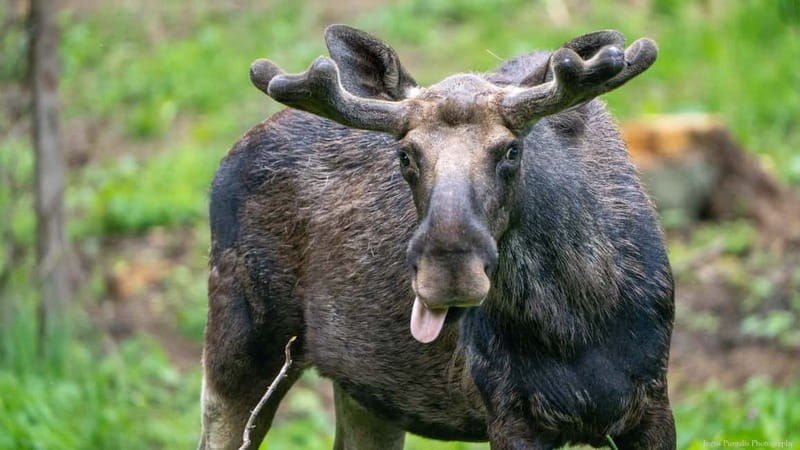
- Ligatne’s four-kilometer wildlife walk: See Latvian species such as brown bears, elk, deer, and wild boar in an animal care setting.
- Gutman’s Cave adds a dramatic final stop: Visit the biggest cave in the Baltics and Latvia’s oldest tourist attraction.
- A small private-style outing: The group is limited to eight participants, with pickup in Riga and an English-speaking driver-guide.
- A day for walkers: The route combines castle grounds, nature trails, and cave access, so comfortable shoes matter.
Why Gauja makes a strong escape from Riga
Riga is Latvia’s main cultural center, but Gauja National Park shows you a quieter side of the country. About an hour by road, the park is known as the Switzerland of Latvia because of its wooded scenery and the Gauja River valley. You get a clear change of pace without committing to a long transfer or an overnight stay.
I like this outing because it does not force you to choose between nature and history. Many day trips offer one castle and a quick photo stop. This one adds a wildlife center, a former industrial village, and a cave. That variety makes the day feel more like an introduction to the region than a single sightseeing stop.
The seven-hour duration is also sensible for a day from Riga. It gives you enough time to walk and look around rather than simply stepping out of a vehicle for ten minutes. Still, you should expect a full schedule. If you want long museum visits, a leisurely meal, or extended time at each castle, this may feel rushed.
More Castle Day Trips in Latvia:
- Group Day trip to Rundale Palace, Hill of Crosses & Bauska Castle
★ 5.0 · 92 reviews - Private Day Trip to Cesis, Sigulda and Turaida Castles
★ 5.0 · 13 reviews - Sigulda Day Tour – Castle Ruins, Gūtmaņala Grotto, & More
★ 5.0 · 8 reviews
The drive from Riga to the Gauja valley
Pickup is included in Riga, and the driver-guide handles the transportation for the day. The ride to Gauja National Park takes about an hour, which keeps the outing practical for a single day.
A private or small-group vehicle matters here because the sights are spread across the park area. You avoid trying to coordinate separate buses and local connections, and you have a guide available to explain the places along the way. The small group limit of eight should also make pickup and movement easier than a large coach tour.
The exact starting time depends on availability, so check the schedule before booking. Since the experience lasts seven hours, think of it as your main activity for the day rather than something to squeeze between other Riga plans.
Ligatne Nature Trails and rescued Latvian animals
The Ligatne Nature Trails are one of the most distinctive parts of the outing. The walk covers about four kilometers and introduces you to wild mammals associated with Latvia, including brown bears, elk, deer, and wild boar.
This is not presented as a standard zoo visit. The animals at the care center were abandoned, injured, or tamed as babies. The purpose of the trails is educational: you learn about native plants and animals while seeing creatures that could not simply be released into the wild.
That background gives the stop more meaning. You are not only looking for an attractive animal encounter. You are also seeing how Latvia helps care for animals that need a protected home. I would give this section plenty of attention, especially if you enjoy wildlife or want something beyond castles and architecture.
The walk itself is a real part of the day. Four kilometers can feel easy for an active visitor, but it is still worth wearing sturdy, comfortable shoes. Autumn conditions can add a crisp, cool feel to the outing, and one visitor especially enjoyed the fresh air during the Ligatne walk. Weather can change the comfort of the trail, so dress for time outdoors rather than for a city tour.
Families should note the stated age restriction: children under six are not suitable for this activity. The trail may also be a poor fit if you have serious mobility limits, though the provided information does not specify accessibility details. Ask the provider before booking if walking conditions are a concern.
Ligatne, the old papermill village
The visit to Ligatne adds a human story to the natural setting. This former papermill village still looks almost as it did in the 19th century. That detail helps explain why the area developed as it did and gives you a glimpse of Latvian working life beyond Riga’s grand buildings.
I like the contrast. The nature trails show Latvia through animals and woodland, while Ligatne shows a settlement shaped by industry. You get a stronger sense of place when the countryside is not treated as empty scenery but as an area where people lived and worked.
The village visit is part of the broader day rather than a separate long tour. Expect an overview and time to take in the setting, not an extensive industrial museum program. If old villages, local history, and unusual town layouts interest you, this short stop adds real value.
More National Park Trips in Latvia:
- Day Trip to Loch Lomond and Trossachs National Park with Optional Stirling Castle Tour from Edinburgh
★ 5.0 · 626 reviews - From Krakow: Ojców National Park & Ogrodzieniec Castle Tour
★ 4.9 · 64 reviews - Iron Gate Tour: Golubac Fortress, Lepenski Vir+National Park
★ 4.9 · 42 reviews - From Inverness: Cawdor Castle and Cairngorms National Park
★ 4.8 · 34 reviews
Sigulda’s medieval ruins and New Castle
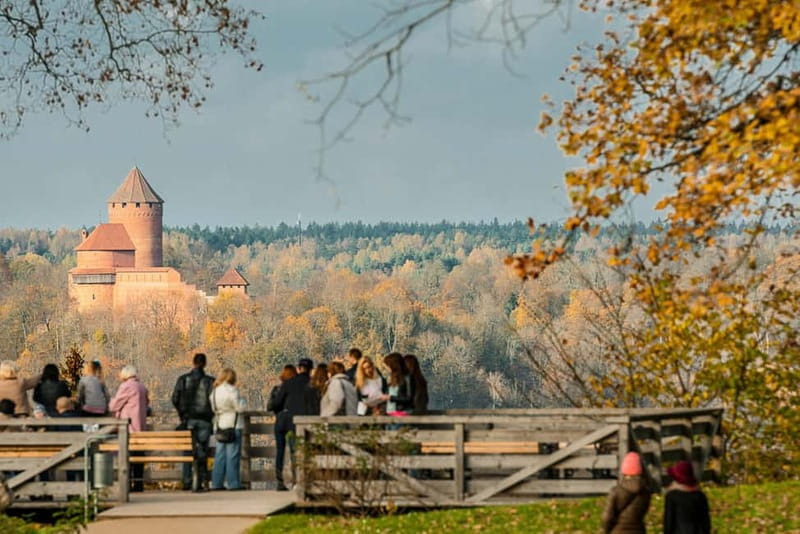
Sigulda gives the day its strongest history section. The Sigulda Castle Complex contains two castles built in different centuries, so you can compare the remains of a medieval fortress with a later manor house.
The medieval castle ruins mark the beginnings of Sigulda as a town. Ruins are often more evocative than polished interiors because you can see the shape of the old defensive site and imagine how the town grew around it. The experience is about atmosphere, stonework, and location as much as surviving rooms.
Sigulda New Castle offers a different picture. Built as a 19th-century manor house, it reflects a later period of Latvian history and gives the complex a more refined architectural character. Seeing both places side by side makes the timeline easier to understand.
You will have time for a guided visit of about two hours in Sigulda. That is enough to explore the complex, hear its background, and climb the tower for a view over the Gauja River valley. The tower is an important detail for anyone who wants more than ground-level sightseeing. It also means you should be ready for steps and uneven surfaces, though the supplied details do not describe the exact access conditions.
The views are part of the appeal, but the weather can affect them. On a clear day, the valley setting helps explain why Gauja is called the Switzerland of Latvia. On a gray day, the castle remains and forested surroundings still give you plenty to see, but the wider panorama may be less impressive.
Gutman’s Cave, the final natural wonder
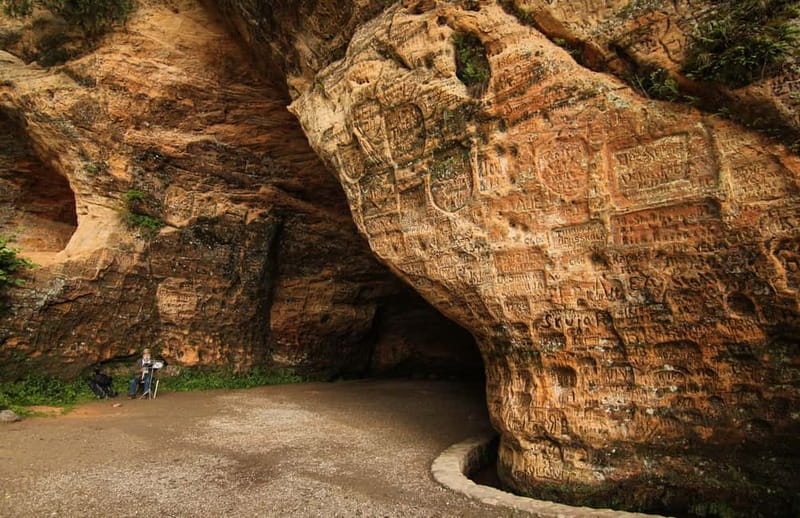
Before returning to Riga, the tour stops at Gutman’s Cave. It is described as the biggest cave in the Baltics and the oldest tourist attraction in Latvia, making it more than a quick geological curiosity.
The cave adds a strong finish because it is unlike the castles and animal trails earlier in the day. You move from human history to a natural formation linked with Latvia’s long tradition of local sightseeing. The stop is especially useful for visitors who want to see several of Gauja’s best-known landmarks without arranging separate transport.
If you have claustrophobia, this is a serious consideration. The activity is specifically listed as unsuitable for people with claustrophobia. Anyone who feels uncomfortable in enclosed spaces should ask the provider for more details before paying.
The cave is also one reason the schedule can feel full. You have a castle complex, a four-kilometer wildlife walk, Ligatne, and the cave within seven hours. The benefit is variety. The tradeoff is that none of these stops becomes a slow, unstructured afternoon.
What the guide adds to the day
The guide can make or break a countryside day trip, particularly when several sites have different historical and natural themes. This experience includes an English-speaking driver-guide rather than transport alone.
Zaiga received specific praise for being excellent, professional, and patient. Valdis was praised for helpful conversation and for explaining the history and culture of Latvia. Those details suggest the guiding style can be personal and flexible rather than limited to memorized facts.
One useful example is the photo stop for Sam the monkey on the return journey. That kind of small adjustment can make the day feel more responsive to your interests. It should not be treated as a guaranteed stop, but it shows the possible value of having a guide who pays attention to what you want to see.
The language offered is English. The group is limited to eight people, which is a good middle ground: more social than a private car for one, but far less cumbersome than a large bus.
The $330 price and what you receive
The listed price is $330 per group up to one person. Because the booking information also describes a small group of up to eight participants, I would confirm exactly how the final price is calculated before booking. That wording can affect the value considerably.
Included are private transportation, admission to the Ligatne Nature Trails animal care center, and an English-speaking guide. Lunch and drinks are extra. The biggest cost advantage is the transport and guide, since arranging several Gauja stops independently would require more planning and careful timing.
For one person, $330 is a substantial day-trip price. The value improves if the booking structure lets a small party share the cost, but you should verify that detail directly. You are paying for a long route, door-to-door pickup in Riga, local guidance, and access to a spread-out group of sights rather than for one entrance ticket.
Bring water, pack or buy lunch, and avoid assuming there will be a long meal break. The day works best when you treat the food stop as something to plan in advance.
Who should book this Gauja day trip?
I would recommend it to you if you want a broad first look at Gauja National Park without renting a car or piecing together local transport. It suits active visitors who enjoy walking, castle ruins, wildlife, and scenic countryside in the same day.
It is also a good fit if you value conversation with a local guide. The comments about Zaiga and Valdis point to an experience where questions about Latvian history and culture are welcome, rather than a simple transfer between attractions.
You may want a different plan if your priority is a slow meal, long castle visits, or a relaxed day with little walking. The experience is not suitable for children under six, pregnant women, people with heart problems, people with motion sickness, or people with claustrophobia. Those restrictions should be taken seriously, especially because the route includes road travel, outdoor walking, and Gutman’s Cave.
Free cancellation is available up to 24 hours before the activity, and you can reserve now and pay later. Those terms are useful if your Riga plans may change, but they do not replace checking the price structure and starting time before booking.
Final call: is Gauja worth a full day?
Book this experience if you want variety and convenience: castles, a historic papermill village, rescued Latvian animals, and Gutman’s Cave, all reached from Riga with a guide and transport included.
Skip it if you prefer to linger at one site or dislike active days with several stops. For most visitors with seven hours to spare, this is a well-rounded way to see why Gauja National Park is one of Latvia’s top outings beyond the capital. Just confirm the $330 group pricing, bring food and water, and wear shoes suited to a four-kilometer trail.
FAQ
How long does the Gauja National Park day trip last?
The activity lasts seven hours, including pickup in Riga, visits around Gauja National Park, and the return to Riga.
Where does the tour begin?
Pickup is included from a given location in Riga.
How far is Gauja National Park from Riga?
The drive from Riga to Gauja National Park takes about one hour.
Which castles are included?
You visit the Sigulda Castle Complex, including Sigulda Medieval Castle Ruins and Sigulda New Castle.
What is special about Sigulda New Castle?
Sigulda New Castle is a 19th-century manor house and offers a chance to enjoy views of the Gauja River valley from its tower.
What animals can you see at Ligatne Nature Trails?
The trails may show Latvian wild mammals including brown bears, elk, deer, and wild boar.
How long is the Ligatne Nature Trails walk?
The nature trail covers about four kilometers.
Is Gutman’s Cave included?
Yes. Gutman’s Cave is visited before the return to Riga and is described as the biggest cave in the Baltics.
Is lunch included?
No. Lunch and drinks are not included, so you should plan for them separately.
Is this activity suitable for young children?
Children under six are not suitable for this activity.
What language is the tour offered in?
The live tour guide speaks English.
How large is the group?
The group is limited to eight participants.
More Day Trips in Latvia
- From Munich: Neuschwanstein & Linderhof Castle Full-Day Trip
★ 4.6 · 14,646 reviews - Bucharest: Dracula’s Castle, Peleș Castle & Brașov Day Trip
★ 4.4 · 6,100 reviews - Windsor Castle, Stonehenge, and Oxford Day Trip from London
★ 4.5 · 5,292 reviews - Inverness: Isle of Skye and Eilean Donan Castle Day Trip
★ 4.8 · 4,136 reviews
Just added around Latvia
- Sigulda Day Tour – Castle Ruins, Gūtmaņala Grotto, & More★ 5.0 · 8 reviews
- Riga: Nearby Manors and Castles Tour★ 4.5 · 5 reviews
- Riga: Soviet Bunker, Seaside Fortress + Authentic BBQ lunch★ 5.0 · 5 reviews
- Riga: Rundale, Bauska and Hill of Cross Private Castle Tour★ 5.0 · 8 reviews
- Latvian Palace and Medieval Castle Private Trip★ 4.3 · 8 reviews
- Kemeri N Park, Jurmala, Lake Melnezers & White Castle Hotel★ 4.6 · 4 reviews
- Private Day Trip to Cesis, Sigulda and Turaida Castles★ 5.0 · 13 reviews
- From Riga : Rundale palace and Bauska castle tour and back.★ 3.1 · 6 reviews
Castle Day Trips, compared.

Neuschwanstein & Linderhof Castle Full-Day Trip
Read our review →
Neuschwanstein & Linderhof Castle-Fairytale Day Tour from Munich
Read our review →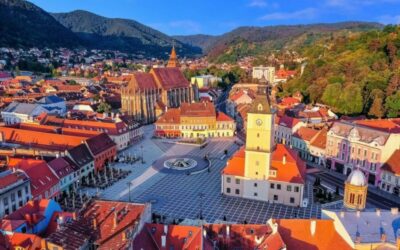
Dracula’s Castle, Peleș Castle & Brașov Day Trip
Read our review →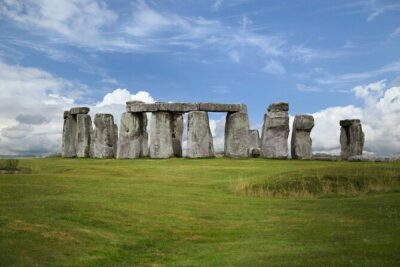
Windsor Castle, Stonehenge, and Oxford Day Trip from London
Read our review →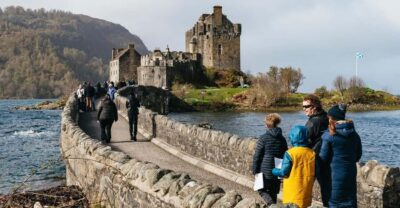
Isle of Skye and Eilean Donan Castle Day Trip
Read our review →
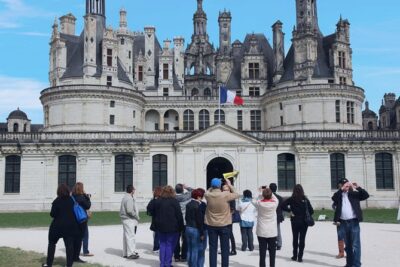
Loire Valley Castles Day Trip from Paris with Complementary Wine
Read our review →
Windsor Castle, Stonehenge & Bath Full-Day Tour
Read our review →Browse the lists this tour appears in