
Review · ROME
Private Tour – St. Angel’s Castle
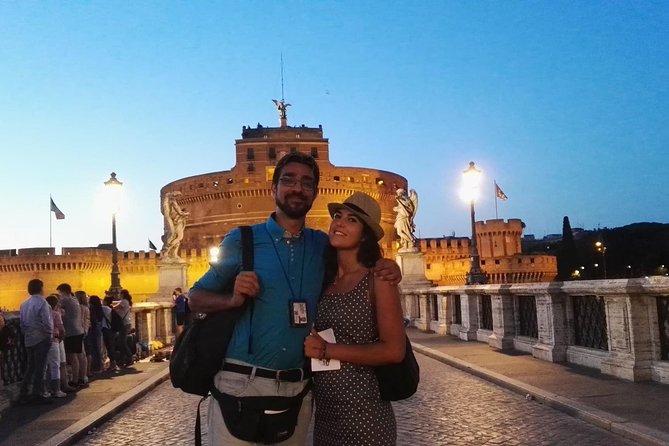
Rome keeps its best stories behind thick walls. This private Castel Sant’Angelo tour brings you through a former imperial tomb, papal fortress, prison, and museum, with a local guide to explain the changes. I like the private format, which gives your group room to ask questions, and I like that tickets are included, so you can avoid buying admission at the entrance. The main tradeoff is the $138.17 per person price, which is a serious spend for a tour lasting about two hours and fifteen minutes.
The tour is offered in English, with morning and afternoon start times. Guide Vincent receives especially strong praise for his storytelling, clear English, and warm interaction with groups. If you want a quick, self-guided look at the castle, this may cost more than you need. If you want the building’s many historical layers explained as you go, the price is easier to defend.
Key points to know before booking
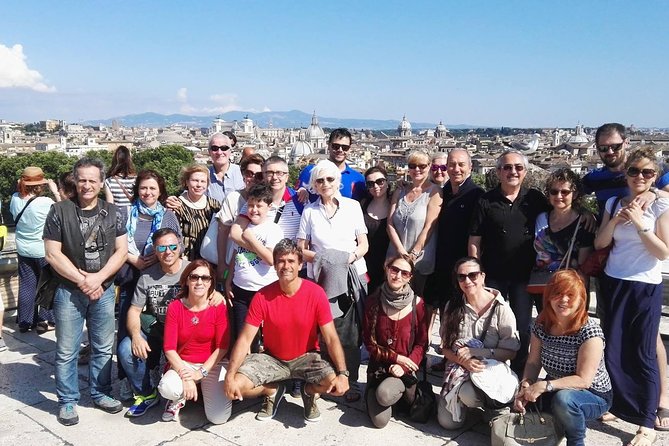
- A private visit inside Castel Sant’Angelo: Only your group takes part, giving you a more personal pace than a large group tour.
- A building with several lives: The site began as Emperor Hadrian’s mausoleum, then became a fortress, garrison, prison, and Vatican facility.
- Vincent is a praised guide: His storytelling, English, and ability to keep the group involved are major strengths.
- Frescoed rooms and museum collections: You may see halls linked to Apollo, Alexander the Great, Perseus, Amore and Psiche, along with arms, paintings, sculptures, ceramics, and ancient marble.
- A strong rooftop payoff: The terrace offers wide views across Rome’s historic center.
- Simple central meeting point: You meet at Castel Sant’Angelo on Lungotevere Castello, 50, and finish at the same place.
Why Castel Sant’Angelo is worth your time
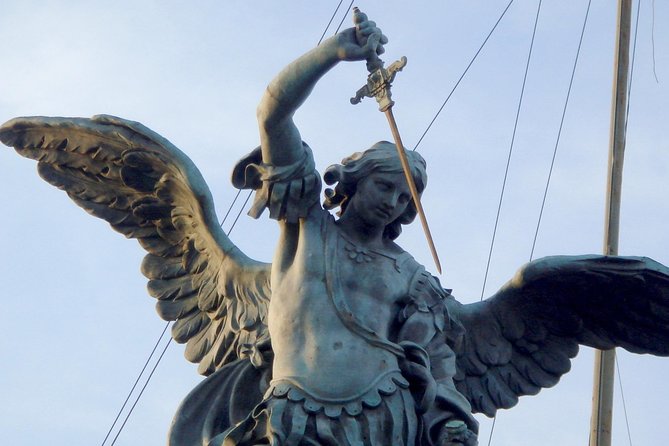
Castel Sant’Angelo is not just another old Roman building. Its appeal comes from the way one structure reflects different periods of Roman power. Emperor Hadrian had it built between 117 and 138 AD as a mausoleum for himself and later emperors. The Aelius Bridge was built in front of it, creating a grand approach across the Tiber.
That original purpose matters when you enter. You are not starting in a palace designed for comfort or ceremony. You are entering a monumental tomb that was later adapted for defense and control. Over the centuries, the building became a defensive rampart for Vatican City, a military garrison, a prison, and a place connected with the Vatican Treasury and Archive.
I find that kind of layered site more rewarding than a monument with only one story. The castle lets you connect imperial Rome, medieval defense, papal power, and museum collections in one visit. A guide can help you follow those changes instead of treating each room as an isolated stop.
The building is also useful for your Rome planning. Its central location makes it a natural stop near the Vatican area and the Tiber. Since the experience begins and ends at the castle, you do not lose time waiting for a hotel transfer or traveling in a private vehicle.
More Private Castle Tours in Italy
- Milan Private Tour – Duomo, Sforza Castle & Gelato Tasting
★ 5.0 · 40 reviews - Milan: Duomo, Scala, Sforza Castle and Last Supper Private Tour
★ 5.0 · 38 reviews - Milan: Private Tour – Duomo, Sforza Castle & Gelato Tasting
★ 4.8 · 36 reviews
Starting at Lungotevere Castello
Your meeting point is Castel Sant’Angelo, Lungotevere Castello, 50, 00193 Roma RM, Italy. The activity ends back at the same meeting point. That simple arrangement is good for a city day when you want control over the rest of your schedule.
There is no hotel pickup or drop-off, and private transportation is not included. You need to make your own way to the entrance. The site is near public transportation, so the location is practical, but you should still allow enough time to find the meeting point and arrive before the tour begins.
The tour is offered in the morning or afternoon. That choice gives you some flexibility around meals, the Vatican, churches, or other scheduled stops. A morning visit may suit you if you want to handle major sights early. An afternoon visit can fit well after other central Rome plans, though your exact schedule will depend on the time selected when booking.
The confirmation arrives at the time of booking. Since the tour is often reserved well ahead, planning early makes sense if your Rome dates are fixed. It is booked an average of 93 days in advance, which suggests that you should not assume a preferred time will remain open close to your trip.
Seeing the mausoleum of Emperor Hadrian
The first major idea to keep in mind is the castle’s original purpose. Hadrian was not building a fortress in the form you see today. He was creating a monumental mausoleum for himself and his successors.
The link with the Aelius Bridge gives the site a strong setting. The bridge led toward the tomb, and the castle’s location beside the Tiber helped make it a major point in Rome’s urban story. A guide can point out how a structure meant to honor emperors later served practical military and political purposes.
This is one reason I prefer taking the tour rather than simply walking through alone. Without context, the castle can look like a sequence of thick walls, corridors, rooms, and views. With context, you begin to see why the building changed and what those changes reveal about Rome.
The tour is described as lasting about two hours, while the overall experience is listed at approximately two hours and fifteen minutes. That is enough time for a focused visit without turning the castle into an exhausting all-day project. You should expect a steady amount of walking and a moderate level of physical activity.
Exploring halls, prisons, and collections
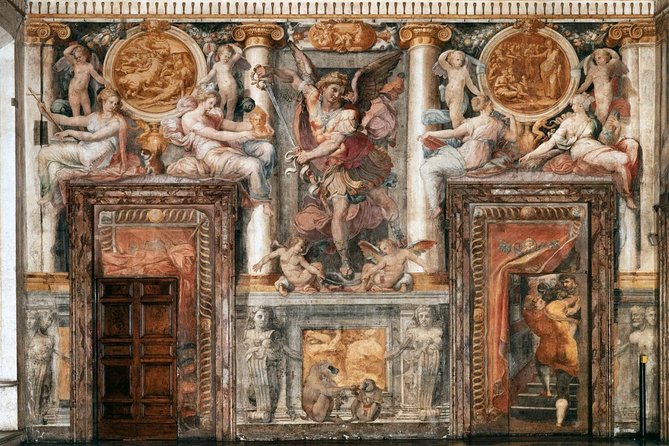
The interior contains several different types of spaces. The seventeenth-century frescoed halls are among the most decorative parts of the visit. The Hall of Apollo, Hall of Paolina, Hall of Perseus, and Room of Amore and Psiche each add a different artistic layer to the building.
The Hall of Paolina is decorated with scenes from the stories of Alexander the Great. The Hall of Perseus presents episodes from the myth of the Greek hero. The Room of Amore and Psiche draws on the familiar story of Cupid and Psyche. These names are more than a room list. They give you a way to remember the castle after the visit and help you notice how myth and power were used in decoration.
The interiors are not the entire experience. The prisons show a harsher side of the building. The castle was not only a residence or ceremonial site. It also held people in confinement, and the prison spaces make its defensive and political role more tangible.
You can also see a collection of antique arms. This adds a practical military element after the grander halls. The collection of ancient marbles, ceramics, and sculptures broadens the visit again, while the painting gallery includes works by Carlo Crivelli, Luca Signorelli, and Dosso Dossi.
I like this mix because it prevents the tour from becoming only an architectural walk. You get painted rooms, legends, weapons, paintings, sculpture, and prison spaces. The drawback is that a two-hour visit cannot give every collection equal attention. If one particular artist or object matters most to you, ask your guide to spend extra time there.
Same region, a different set of walls:
- Milan: Sforza Castle Entry Ticket with Digital Audio Guide
★ 4.0 · 2,675 reviews - Milan: Sforza Castle and Michelangelo’s Pietà Rondanini Tour
★ 4.7 · 1,119 reviews - From Siena: Chianti and Castles Tour with Wine Tastings
★ 4.6 · 631 reviews - Milan: The Last Supper & Sforza Castle Guided Tour
★ 4.6 · 610 reviews
Letting a guide connect the stories
The guide is the heart of this experience. Vincent is praised for bringing the castle’s past to life through storytelling. He is also described as passionate, clear in English, and good at interacting with the group.
That matters at Castel Sant’Angelo because the building has no single simple identity. You need help linking the emperor’s mausoleum to the later fortress and the Vatican connection. You also need someone to explain why decorated halls sit alongside prisons and military collections.
A private tour gives you a chance to ask those questions as they occur. You can ask about the frescoes, the former prison spaces, the arms, or the castle’s relationship with Vatican City. In a large group, you may hesitate to interrupt or may get only a standard presentation. Here, the guide’s attention is reserved for your group.
The private format is especially useful for families or small groups with different interests. One person may care about Roman emperors, another about paintings, and another about the rooftop view. A good guide can respond to those interests better than a fixed audio route.
Still, private does not automatically mean perfect. The quality depends heavily on the guide assigned and on how actively you use the opportunity to ask questions. The available feedback points strongly to Vincent, but you should not assume every booking will have the same individual unless the provider confirms it.
Reaching the terrace for the Rome views
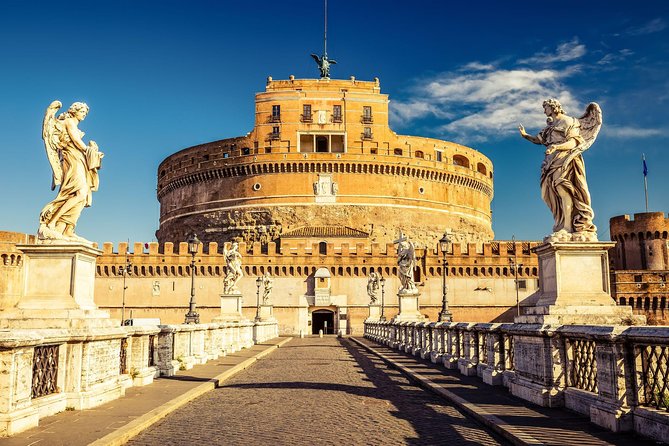
The terrace is the natural high point of the visit. It offers one of the best panoramic views of Rome’s historic center, giving you a chance to look outward after spending time inside heavy stone walls.
This view is not just a pleasant ending. It helps you understand the castle’s position in the city. From above, Rome becomes easier to read as a collection of connected landmarks, streets, river crossings, and historic districts. After hearing about the building’s defensive role, the high viewpoint has extra meaning.
You should save a little attention for the terrace rather than treating it as a quick photo stop. The interior rooms require concentration, while the terrace gives you space to pause and take in the city. It is also a useful moment to ask your guide to identify features in the view, if that is part of the discussion.
The tour does not promise a long independent period on the terrace, so do not book it solely as a photography session. The main value is the combination of the views with the guided visit through the castle.
Is $138.17 per person a fair price?
At $138.17 per person, this is not a budget attraction. The price includes tickets, a local guide, and a professional guide, with no separate admission purchase required at the visit. It also buys you a private experience rather than a standard group walk.
The value depends on the size of your party and your priorities. For a group that wants personal attention and enjoys asking questions, the cost may be reasonable. Group discounts are available, which may improve the total value for some bookings. For one person or a couple watching every euro, the price may feel high compared with entering the castle independently.
I would judge the price by what you want from the visit. If you only need to see the terrace and a few rooms, a private tour may offer more guidance than you need. If you want the castle explained as an imperial tomb, papal defense, garrison, prison, and museum, the guide adds real substance.
The strong five-star rating from 42 reviews and a 100 percent recommendation record support the idea that the experience delivers well for its intended audience. Those figures do not remove the price concern, but they do suggest that the private guiding and storytelling are the main reasons people find the tour worthwhile.
Who should book this private visit?
I would recommend it to you if you enjoy history but do not want to read a long guidebook before entering. The castle has enough different periods and collections to reward explanation, and the private format gives you room to ask for the level of detail you want.
It also suits small groups, families, and couples who prefer a guide focused only on them. The English-language option is useful if you want a full explanation rather than relying on labels or brief printed information.
You should have a moderate level of physical fitness. The supplied information does not describe every surface, stair, or route inside, so you should be prepared for a walking visit through a large historic building. Anyone seeking a fully passive sightseeing experience may find the pace less comfortable.
I would be more cautious about booking if your Rome schedule is already packed. Two hours and fifteen minutes is manageable, but you still need to reach the meeting point and plan whatever comes next. Since there is no pickup or drop-off, the tour works best when you are already organizing your day around central Rome.
Free cancellation is available if you cancel at least 24 hours before the start time. A cancellation made less than 24 hours before the tour is not refunded, and changes inside that window are not accepted. The cut-off follows local Rome time.
Final verdict: a strong choice for history-minded Rome visits
Book this tour if you want Castel Sant’Angelo to make sense, not just look impressive. The private group setting, included tickets, English guide, decorated halls, prison spaces, museum collections, and rooftop view create a well-shaped two-hour visit.
The biggest reason to choose it is the guide-led storytelling, with Vincent receiving particularly warm praise for his clear English and engaging style. The biggest reason to hesitate is the price, especially if you are comfortable exploring independently.
For a small group that values personal attention, I think the tour is worth serious consideration. For a tight budget, visit the castle without a private guide and spend the savings elsewhere in Rome. Either way, leave time to look up from the rooms and take in the historic center from the terrace.
FAQ
Where does the Castel Sant’Angelo tour begin?
The tour begins at Castel Sant’Angelo, Lungotevere Castello, 50, 00193 Roma RM, Italy.
Where does the tour end?
The activity ends back at the meeting point at Castel Sant’Angelo.
How long does the private tour last?
The tour lasts approximately two hours and fifteen minutes. The castle visit itself is listed as about two hours.
Is the tour offered in English?
Yes. The experience is offered in English.
Are admission tickets included?
Yes. Tickets are included in the tour price, so you do not need to buy admission tickets on the spot.
Is this a private activity?
Yes. Only your group takes part in the private tour.
What is the cancellation policy?
You can cancel for a full refund up to 24 hours before the experience begins. Cancellations or changes made less than 24 hours before the start time are not accepted for a refund.
Just added around Italy
- HIKING TOUR: VARENNA, Castle of VEZIO Villa MONASTERO, FIUMELATTE★ 5.0 · 48 reviews
- Castles of Puglia Day Trip from Bari★ 4.5 · 7 reviews
- Enchanted Castle of Sciacca – Museum Tickets★ 3.5 · 63 reviews
- Taormina; Taormina Castle Tour★ 3.8 · 11 reviews
- St. Angel’s Castle: 2-Hour Private Tour★ 5.0 · 9 reviews
- Milan: Skip-the-line Sforza Castle and Museums Private Tour★ 4.7 · 7 reviews
- Siena: Tour and Wine Tasting in a Tuscan Private Castle★ 4.9 · 50 reviews
- Sforza Castle & Michelangelo’s Pietà Rondanini Guided Tour★ 4.7 · 3 reviews
Private Castle Tours, compared.

Cairo Citadel, Old Cairo and Khan El Khalili: Private Tour
Read our review →

Seville Private Walking Tour with Alcazar & Cathedral Tickets
Read our review →
Sintra Cascais Private Tour with Pena Palace and Mouros Castle
Read our review →
Skip-the-Line Wawel Castle Chambers Private Tour
Read our review →
Castles of Transylvania: Private Day Trip from Bucharest
Read our review →
Dracula’s Castle, Peles Castle and Brasov – Private Day Trip from Bucharest
Read our review →
Private Walking Tour Alcazar and Cathedral in Sevilla
Read our review →Browse the lists this tour appears in