
Review · BELGRADE
Get Big Picture of Belgrade at its 2,000 years old Fortress
Two thousand years of Belgrade fit inside one hill. This private 90-minute walk pairs sweeping views of the Sava and Danube with an art historian guide, making the fortress far more than a quick photo stop. I like the intimate format for groups of up to eight, and I like the way the tour connects Roman, Ottoman, Habsburg, Nazi, and Cold War events to the stones beneath your feet.
The price is $66.01 per person, which is fair if you value a private guide and focused history rather than a large group walk. The main consideration is pace: ninety minutes is short for a site with so many gates, walls, towers, churches, and underground spaces, so this suits you best if you want a sharp introduction rather than an exhaustive archaeological visit.
Key points to know before you book
- The noon bell has a Belgrade connection: You will hear why church bells across Europe ring at noon and how that custom relates to the city.
- Your guide is an art historian: Igor and Ksenija are named as guides, with Igor especially noted for linking Serbian history, politics, and present-day life.
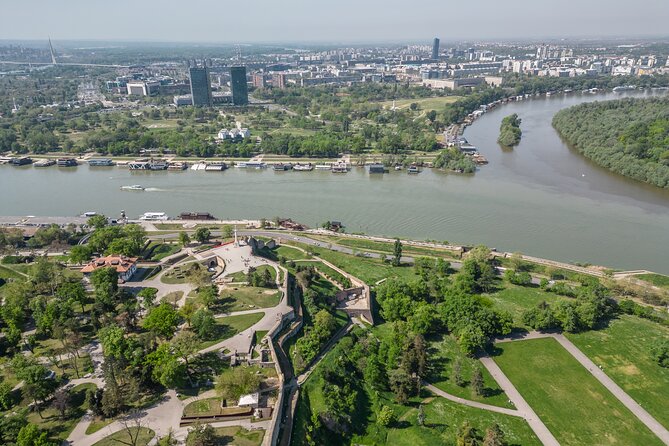
- The views are a major part of the tour: From the fortress, you can see the Sava and Danube meeting, plus New Belgrade and Zemun.
- The tour stays private: Only your group joins, with space for as many as eight people.
- Sunset changes the experience: The fortress can be timed for evening views, with sunset ranging from about 4:30 p.m. in winter to after 7 p.m. in summer.
- The walk covers difficult chapters: Expect stories about Roman rule, Ottoman and Habsburg power, the 1941 bombing, and the Soviet threat of the 1950s.
Why Belgrade Fortress is the right place to start
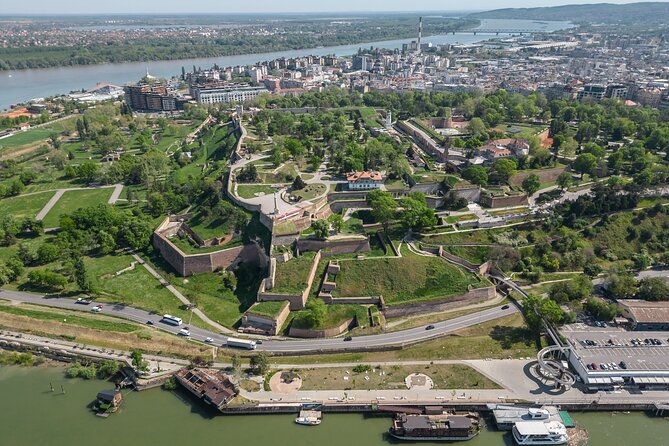
Belgrade Fortress gives you the city in one glance. It sits where the Sava flows into the Danube, a position that explains much of Belgrade’s past. Control this high ground and you control movement along two major rivers. It is a simple point, but it makes the long sequence of battles easier to understand.
You are not visiting a single intact castle. The site is a layered set of defenses and memories. Roman foundations sit near medieval walls. Ottoman and Habsburg changes appear in gates, towers, and military structures. Kalemegdan Park softens the setting with trees and open paths, but the fortifications keep reminding you that this was a place built for conflict.
That combination makes a guided walk especially useful. Without a guide, you may see attractive stonework and river views but miss why one wall belongs to a different period from the next. You may also overlook the political meaning of the place. This is where an art historian can help, by reading the site as architecture, military design, public memory, and city symbol all at once.
The tour is also well suited to a first afternoon in Belgrade. It gives you a visual map of Old Belgrade, New Belgrade, and Zemun. Afterward, you will have a better sense of how the city is divided by the rivers and how its older center relates to the broad socialist-era district across the water.
More Fortress and Citadel Tours in Belgrade:
- From Belgrade: Golubac Fortress and Iron Gate Gorge Tour
★ 4.8 · 271 reviews - Along the Danube: Golubac Fortress & Iron Gate Gorge day trip from Belgrade
★ 4.5 · 185 reviews - From Belgrade: Golubac Fortress & Iron Gate Danube Gorge
★ 4.8 · 185 reviews
Starting at the Cvijeta Zuzorić Art Pavilion
The meeting point is the Art Pavilion Cvijeta Zuzorić at Mali Kalemegdan 1. That location places you beside the park and near the fortress rather than in the middle of a busy modern street. The tour ends at the Embassy of France on Pariska 11, so you finish near the central pedestrian and historic area.
The starting point also fits the character of the experience. You are meeting for a walking tour led by someone with an art history background, and the setting immediately puts you among Belgrade’s cultural institutions and historic defenses. The route does not require a separate ride between attractions.
You receive a mobile ticket, and the tour is offered in English. Confirmation comes at booking. The meeting area is near public transportation, though the supplied details do not specify a particular bus, tram, or stop, so you should check your route before setting out.
The first 30 minutes: views, park, and the city in context
The first section introduces the fortress and its setting. You will see broad views over the Sava and Danube, including their confluence. Across the water are New Belgrade, once the capital of Socialist Yugoslavia, and Zemun, which has a more Central European appearance.
These views are not just a pleasant opening. They give you a quick lesson in Belgrade’s geography and politics. New Belgrade represents a very different period from the old fortress, with its planned socialist development and wide modern spaces. Zemun has another feel again. Seeing all three areas from above helps you understand that Belgrade is not one uniform city.
Kalemegdan Park adds greenery to the walk. It gives you room to look outward and pause between stretches of fortification. If you are visiting with children or a mixed-age group, the open park setting may make the historical material easier to handle than a tight museum interior.
The trade-off is that the first half hour may feel more like orientation than a full historical tour. That is useful if you are new to Belgrade, but less essential if you already know the city well. The panoramic stops are also weather-dependent. Clear conditions make New Belgrade, Zemun, and the river junction easier to appreciate.
Roman walls, medieval foundations, and changing rulers
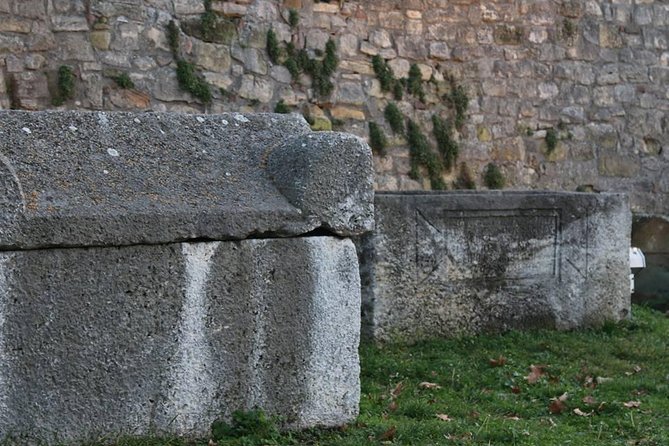
The central portion traces the powers that fought over this piece of land. The story begins with ancient Rome and moves through the later struggles involving the Ottomans and Habsburgs. Instead of presenting Serbian history as a straight line, the guide can show you how the fortress changed hands and purpose over time.
The physical remains help anchor the story. You may see Roman wall foundations, the foundations of a medieval castle, gates, dungeons, and towers. The experience is strongest when the guide connects these remnants to the larger question of why each ruling power rebuilt, strengthened, or adapted the site.
One particularly memorable detail concerns a church built from a former military magazine. That small fact shows how the fortress changed as military structures lost their original function. A building designed for war could later serve a religious role, giving the site an extra layer beyond battles and rulers.
The guide also explains why one Ottoman sultan called Belgrade Fortress his Contemplation hill. That phrase gives the place a more personal side. The fortress was not only a strategic prize. It was also a place from which rulers considered power, territory, and the uncertain future of an empire.
If you enjoy history and politics, this section is likely to be the heart of the walk. Igor is described as especially passionate about Serbian history and willing to discuss how the past still shapes the country today. That can make the tour more conversational than a basic list of dates.
A few more castle visits around Belgrade worth a look
- Belgrade: Golubac Fortress with Iron Gate Speed Boat Ride
★ 4.8 · 94 reviews - Belgrade: Guided City Tour and Kalemegdan Fortress Visit
★ 4.9 · 72 reviews - Golubac Fortress w/Iron Gate Speed Boat & Rakija Distillery tour
★ 5.0 · 47 reviews - Iron Gate Tour: Golubac Fortress, Lepenski Vir+National Park
★ 4.9 · 42 reviews
The 1941 bombing and the Cold War shadow
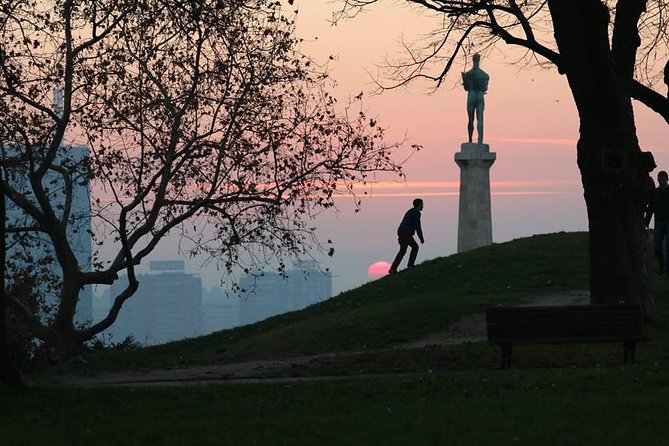
The fortress story does not stop with medieval walls. The tour also addresses what happened when Nazis bombed Belgrade in 1941 and what changed when a Soviet invasion appeared possible in the 1950s.
Those subjects matter because they bring the site into modern memory. You are not only hearing about distant sultans and kings. You are considering how Belgrade dealt with occupation, destruction, political pressure, and fear in the twentieth century.
The Cold War portion should be particularly useful if you want more than monuments. The Soviet invasion threat in the 1950s raises questions about Yugoslavia’s position between major power blocs and about the ways military sites continued to matter after the Second World War.
The guide’s role is important here. Political history can quickly become confusing, especially when several empires, states, and alliances appear within a short period. The strongest part of this experience is the chance to ask questions and hear a local historian’s interpretation rather than simply read a plaque.
You will also hear about a filmmaker who said he felt inspired after going underground. The supplied details do not identify the filmmaker, so do not book this expecting a named film connection. Instead, treat it as one of the tour’s curious side stories, the sort of detail that gives underground spaces a little drama.
Underground spaces, gates, and military design
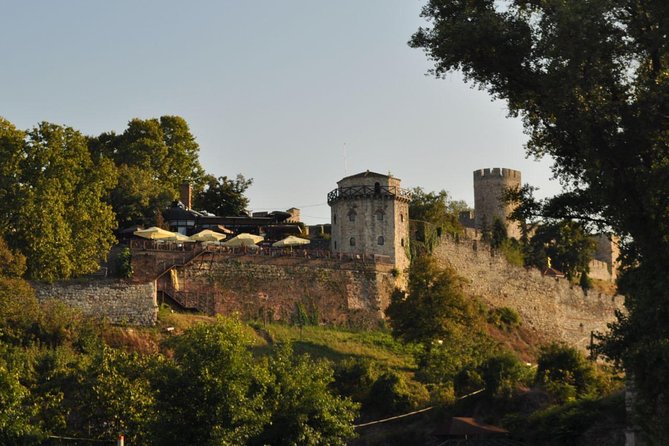
The walk takes you past gates, walls, dungeons, and towers. Some of the site’s appeal comes from moving through these features in sequence. Each one changes the scale of the story, from the broad sweep of imperial rivalry to the practical problems of defending an entrance or storing supplies.
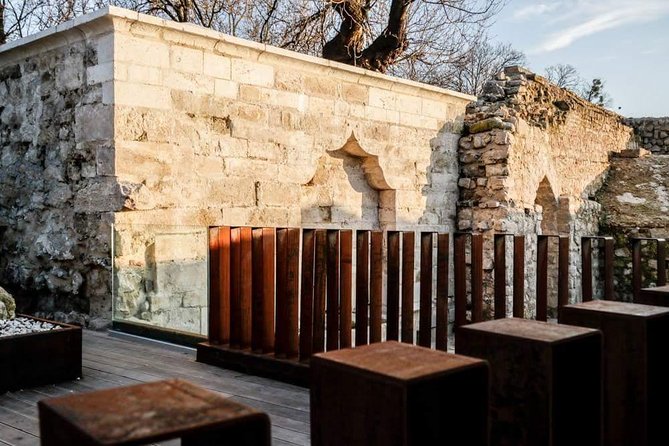
The underground areas add atmosphere, but the available information does not promise entry into every chamber or dungeon. You should expect to see and discuss underground structures, with access depending on the route and conditions at the time. The tour includes admission to the fortress experience, but no separate admission fee is listed.
This is one reason to wear sensible shoes and be ready for a moderate amount of walking. The experience is not presented as difficult, but the physical fitness requirement is moderate. Walls, gates, park paths, and uneven historic surfaces can make the walk less effortless than the short duration suggests.
Service animals are allowed, and the site is near public transportation. The supplied information does not give details about wheelchair access, seating, or restroom facilities, so you should ask the provider directly if those points matter to you.
Sunset at the confluence of two rivers
For many people, the best timing is near sunset. The fortress faces the meeting point of the Sava and Danube, and the high position gives you an open view across the water and city districts.
Sunset is around 5:30 p.m. in autumn, 4:30 p.m. in winter, about 6 p.m. in April and May, and after 7 p.m. in summer. These times are useful when planning, but daylight alone should not decide your booking. A morning tour can be better if you want sharper views and a calmer start to your day.
The sunset option suits couples and photographers, though the tour remains historical rather than purely scenic. You will still be walking through the fortress and hearing about war, politics, and changing rulers. The reward is that the final panorama can give emotional weight to the story. After hearing how many powers fought for this place, you look out over the same rivers that helped make it valuable.
A practical caution: the later the tour, the more important it is to confirm the exact start time when booking. Seasonal sunset times change, and the tour lasts about 90 minutes. You want the schedule to match the view you are hoping to catch.
How the private format changes the experience
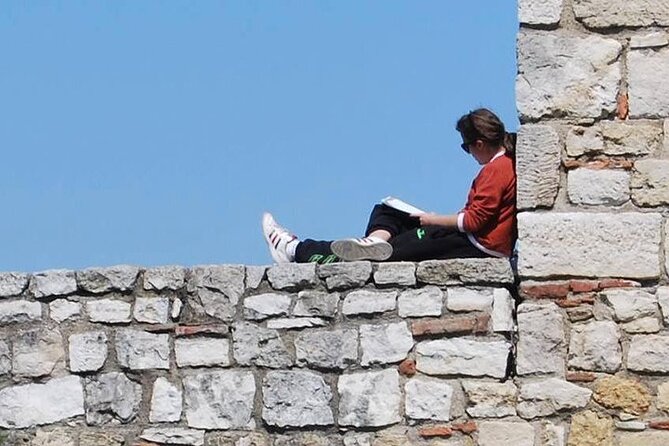
The tour can be booked for up to eight people, and only your group participates. That is a real advantage if you are traveling with family or friends. You can ask about Serbian history, politics, architecture, or current life without waiting for a large group to move along.
The private format also makes the tour more flexible in tone. The supplied feedback describes Igor as open to conversation and even friendly debate. Another account describes staying a little longer to discuss the subjects raised during the walk. The official duration remains about 90 minutes, so any extra conversation should not be assumed, but the guide’s style appears to welcome questions.
This approach suits curious visitors who want interpretation rather than a script. It is less useful if you only want a quick photo walk with minimal commentary. At $66.01 per person, the value improves when several people share the private booking, especially if you prefer an English-language guide focused on your interests.
For one person or a couple, the price is harder to judge. You are paying for privacy, an art historian, and a concentrated introduction to one of Belgrade’s most important sites. If your main goal is simply to walk through Kalemegdan Park and see the rivers, you can do that without paying for a tour. If you want the Roman foundations, political background, and underground stories to make sense, the fee is easier to justify.
Who will get the most from this 90-minute walk
I would choose this tour if you meet one or more of these descriptions:
- You have only a short time in Belgrade and want a strong first orientation.
- You enjoy history, politics, military architecture, and contested places.
- You prefer a private conversation to a large scheduled group.
- You are traveling with family or a small group of up to eight.
- You want river views and sunset possibilities without giving up serious historical context.
- You like asking questions and hearing a local perspective on the past and present.
I would think twice if you want a long archaeological study or a tour devoted only to architecture. Ninety minutes gives you a useful route, but not every wall, tower, and period can receive equal attention. The experience also depends on the guide’s storytelling, the weather, and how much time the group spends on questions.
The tour has a strong record, with a 4.9 rating from 20 ratings and 100 percent recommendation. The most consistent praise centers on the guide’s passion, the exciting history, the political discussion, and the views of Zemun and New Belgrade. Those are the parts I would use to judge the experience, rather than expecting a large number of formal interior visits.
Booking, cancellation, and useful planning details
The tour costs $66.01 per person and is booked, on average, 19 days in advance. That advance-booking pattern suggests you should not leave it until the last minute if your dates are fixed, especially if you need a particular sunset time or are traveling with a private group.
Free cancellation is available up to 24 hours before the start time for a full refund. Cancellations or changes made less than 24 hours before the start are not accepted for a refund, and the cut-off follows local time.
The experience is provided by Walking Belgrade. It is offered in English, includes a mobile ticket, and includes a professional art historian guide. No extra inclusions or exclusions are listed, so you should not assume food, drinks, transport, or special museum access are part of the price.
My verdict: book it for the story, not just the view
I would book this private Belgrade Fortress tour if I wanted a compact, thoughtful introduction to the city. The views are excellent, but the real value comes from connecting those views to Roman defenses, medieval remains, Ottoman and Habsburg struggles, the 1941 bombing, and the Cold War years.
Choose it for a small group, an interest in politics and history, or a first visit with limited time. Pick a sunset slot if the river panorama matters most, or choose daylight if you want clearer orientation. Skip it if you prefer to explore quietly at your own pace or want a much longer archaeological tour.
For most people, the balance is good: a private guide, a manageable 90-minute route, strong views, and enough serious history to make the fortress memorable after you leave.
FAQ
Where does the tour start?
It starts at the Art Pavilion Cvijeta Zuzorić, Mali Kalemegdan 1, Belgrade, Serbia.
Where does the tour end?
The tour ends at the Embassy of France at Pariska 11, Belgrade 11000, Serbia.
How long does the tour last?
The tour lasts approximately 1 hour and 30 minutes.
How much does the tour cost?
The listed price is $66.01 per person.
Is this a private tour?
Yes. Only your group participates, and the booking can include up to eight people.
What language is offered?
The tour is offered in English.
Who leads the experience?
A professional art historian leads the tour. The named guides include Igor and Ksenija, with Igor noted for his passionate discussions of Serbian history and politics.
What can you see from the fortress?
You can see the Sava and Danube, their confluence, New Belgrade, and Zemun. The tour also includes views of Belgrade landmarks and the greenery of Kalemegdan Park.
Is the tour suitable for people with service animals?
Yes. Service animals are allowed.
Can I cancel for a full refund?
Yes, if you cancel at least 24 hours before the experience start time. Cancellations or changes made less than 24 hours before the start are not accepted for a refund.
Just added around Belgrade
- Petrovaradin Fortress Catacombs★ 5.0 · 2 reviews
- Golubac Fortress Eastern Serbia Tour★ 5.0 · 2 reviews
- Golubac Fortress w/Iron Gate Speed Boat & Rakija Distillery tour★ 5.0 · 47 reviews
- Private day-trip to Golubac Fortress★ 5.0 · 5 reviews
- Private Half Day Serbia Tour Novi Sad and Petrovaradin Fortress★ 5.0 · 3 reviews
- From Belgrade: 3 Danube Fortresses tour★ 5.0 · 19 reviews
- Private Day Tour to Iron Gate Gorge and Golubac Fortress★ 5.0 · 18 reviews
- Iron Gates Tour (Golubac Fortress, Lepenski Vir, Captain’s Misha Hill)★ 4.5 · 2 reviews
Fortress & Citadel Tours, compared.
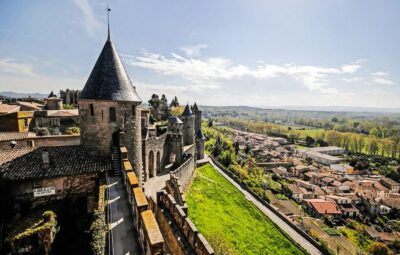
Carcassonne: Castle and Ramparts Entry Ticket
Read our review →
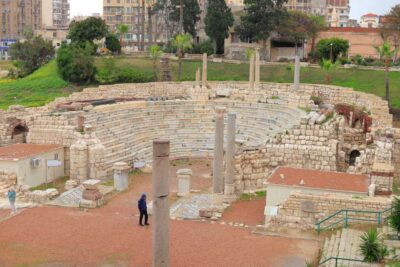
From Cairo Alexandria Catacombs, Citadel Day Trip with Lunch
Read our review →
Charleston historical walking tour with a Professor of History at The Citadel
Read our review →
Hue Customizable Tour with Imperial Citadel & Forbidden City
Read our review →
Desert Safari: Luxury Fortress Dinner, Camel Ride & Dune Bashing
Read our review →
Egyptian Museum, Citadel, and Old Cairo Guided Tour
Read our review →Browse the lists this tour appears in