
Review · CANADA
Québec City: Saint-Louis-Forts-and-Châteaux visit
Power once hid beneath the promenade. The Saint-Louis Forts and Châteaux visit takes you below Dufferin Terrace into the remains of the château that served as the official residence and seat of power for French and British governors from 1620 to 1834. I especially like the way the site connects archaeological remains with political history, and the Huron-Wendat perspective adds an important voice to a story often told only through colonial leaders. At $9 per person, it is also an easy addition to a day in Old Québec.
I also like the choice between a live guide and a downloadable audio tour. A strong guide can make the site lively and memorable, while the app lets you move at your own pace. The main consideration is accessibility: stairs and uneven historic remains make this visit unsuitable for wheelchair users and people with mobility impairments. The audio presentation also uses role-playing, which some visitors may enjoy and others may find distracting.
Key points to know before you go
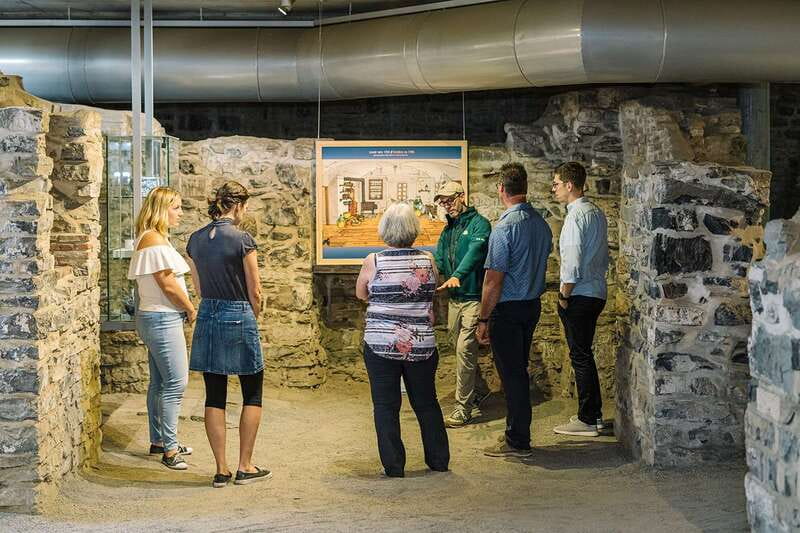
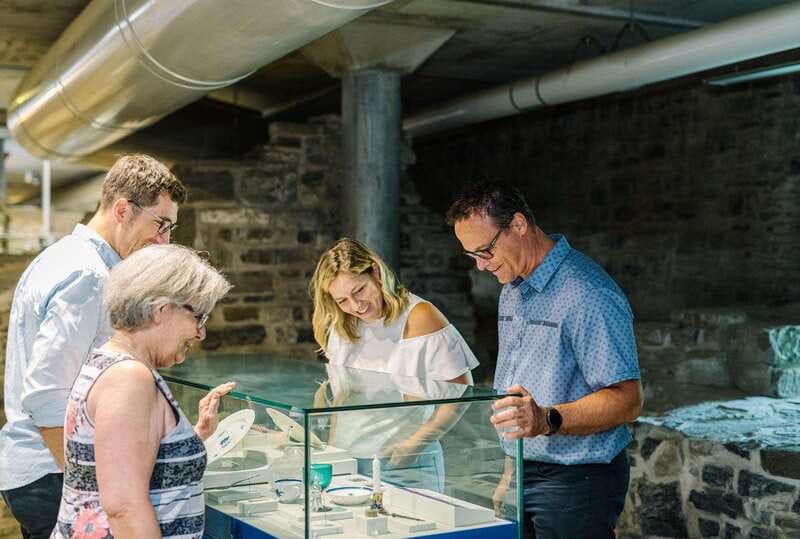
- More than 120 artifacts are displayed among the remains beneath Dufferin Terrace.
- The site covers over 200 years, from the French period through British rule and the château’s final years in 1834.
- Huron-Wendat diplomacy receives its own focus, presented in collaboration with the Huron-Wendat Nation.
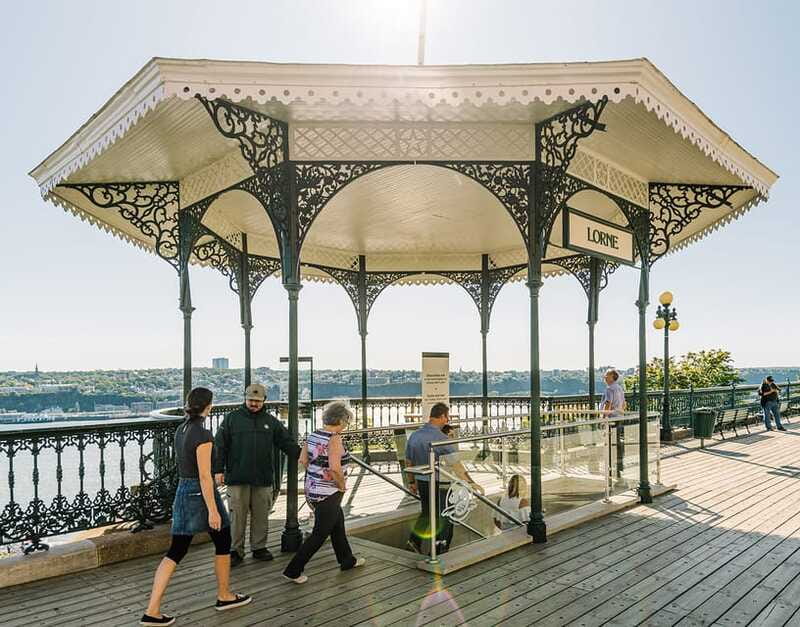
- The meeting point is easy to spot, at the beginning of Dufferin Terrace beside a green and white kiosk marked Frontenac.
- You get about one hour of history for $9, with a guide or a downloadable Parks Canada audio circuit.
- The site is not suitable for limited mobility, and food, drinks, luggage, large bags, and pets are not permitted.
Starting Above the Ruins on Dufferin Terrace
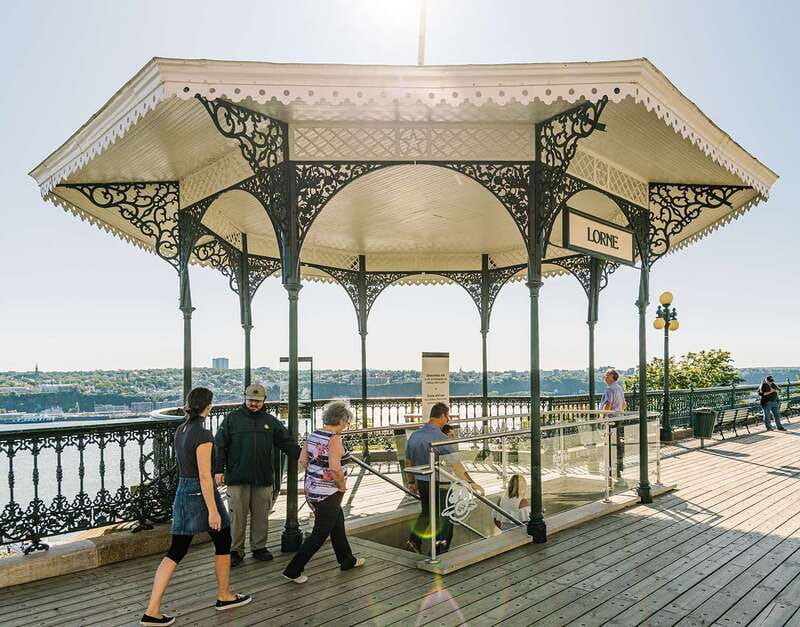
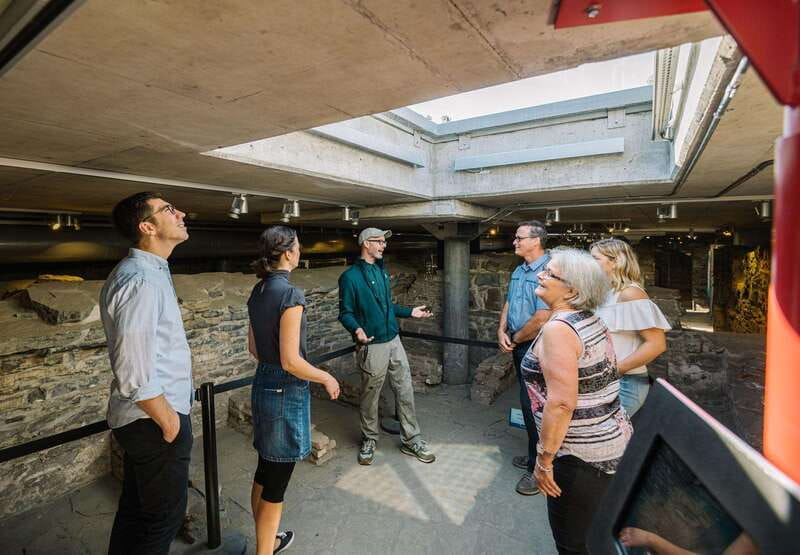
Your visit begins at one of Québec City’s most scenic public spaces. Look for the green and white kiosk with a Canadian flag at the start of Dufferin Terrace and a Frontenac sign. If you booked the guided option, your guide wears a green and beige uniform.
Before you go below the terrace, take a moment to look toward the St. Lawrence River. The view helps explain why this location mattered. The château was not tucked away in an ordinary residential corner. It occupied a commanding position in the old city, close to the seat of government and above the river.
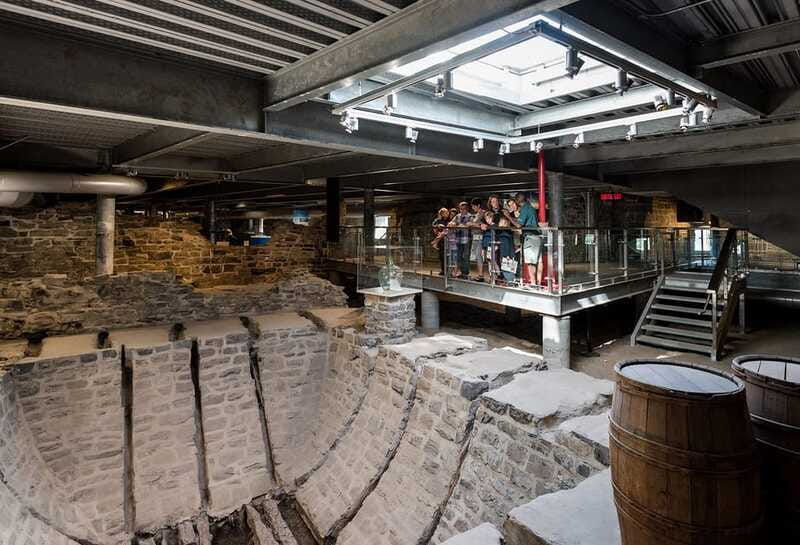
The descent is part of the experience. You leave the broad, open promenade and enter the remains of a place that once directed military, political, and diplomatic affairs across French and British North America. The contrast is effective. One moment you are looking at the river and modern Québec City, and the next you are examining walls, foundations, and objects buried beneath the terrace.
You should expect stairs and a historic site rather than a polished museum floor. That helps preserve the character of the place, but it also means you need comfortable shoes and steady footing.
More Fortress and Citadel Tours in Canada:
- Halifax Premium Tour: Peggy’s Cove, Citadel & Titanic Cemetery
★ 4.5 · 368 reviews - Quebec: La Citadelle de Québec Ticket and Guided Tour
★ 4.7 · 227 reviews - Halifax: Peggy’s Cove, Citadel and Titanic Cemetery Tour
★ 4.0 · 180 reviews
What the Saint-Louis Château Once Meant
The Saint-Louis Forts and Châteaux National Historic Site preserves the remains of the official residence of French and British governors between 1620 and 1834. During that period, the building was far more than a private home. It was the North American seat of power, where governors hosted important people, received diplomatic visitors, and made decisions with consequences far beyond Québec.
The visit gives you a useful way to picture the château’s changing role. The architecture was planned, altered, and developed over more than two centuries. The remains help you follow those changes instead of treating the site as one fixed building from one fixed period.
That is one reason the visit works well for people who enjoy history but do not want a long museum visit. You are not simply reading dates on a wall. You are looking at the physical traces of a residence and government center, then connecting those traces to the people who used the space.
The site also helps explain how power operated in daily life. Governors required formal rooms for diplomacy, practical spaces for household work, and areas suited to public ceremony. The archaeological evidence gives you a glimpse of those different needs.
Walking Through the Archaeological Remains
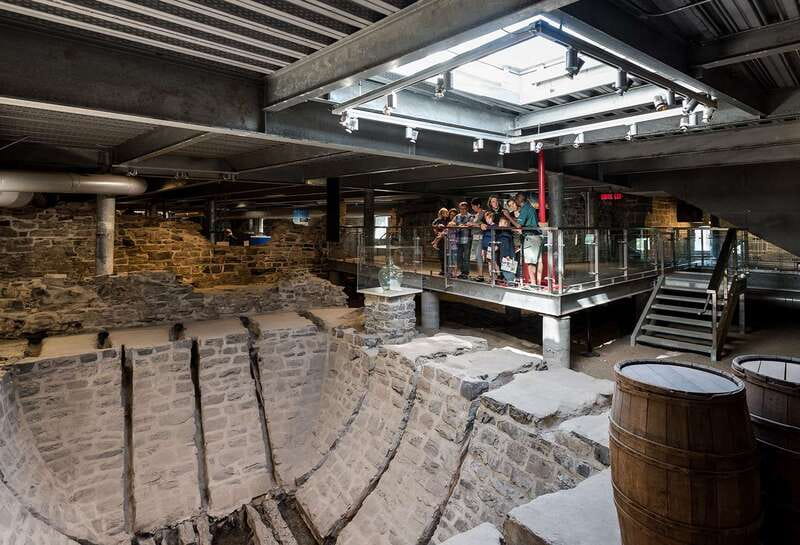
The remains beneath Dufferin Terrace are the heart of the visit. You walk through the excavated site while learning how archaeologists found and interpreted the material left behind.
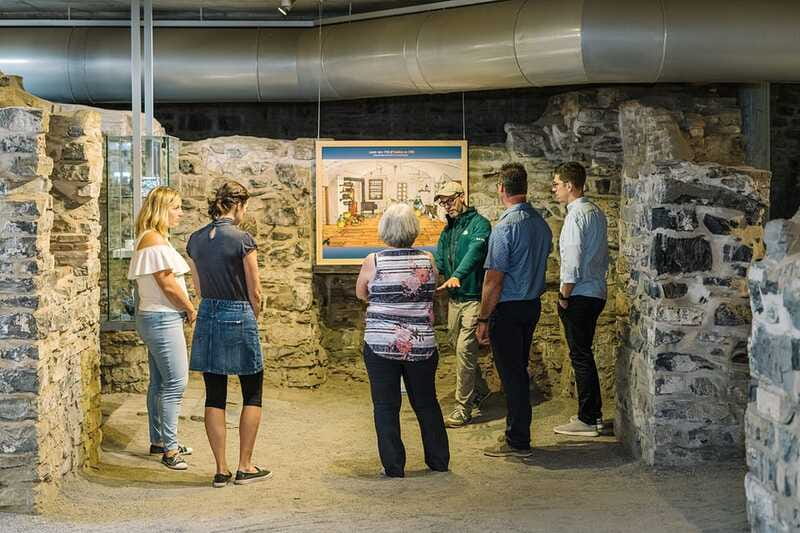
More than 120 artifacts are displayed here. They offer small, concrete details that broad political stories often miss. One review of the audio circuit points to questions about an icebox, grooves in the bottom of an object, and the use of bottles of ammonia by women. Those details may sound minor, but they are exactly the sort of clues that make historic life easier to picture.
An icebox, for example, is not just an old household object. It raises practical questions about food storage before modern refrigeration. Grooves in an artifact can suggest how an object was used, even when its purpose is not obvious at first glance. Bottles of ammonia open a window onto cleaning and domestic routines.
These objects do useful work. A governor’s decision can feel distant, but an everyday tool gives you something familiar to hold onto. I find that combination of grand politics and ordinary household life one of the site’s strongest features.
The artifacts were recovered through archaeological digs, so the collection is tied directly to the location beneath your feet. You are not looking at unrelated objects brought in from elsewhere. The material came from the site and helps explain how people lived and worked there.
French and British Power in One Location
The Saint-Louis site covers a long stretch of Québec’s political history. French governors used the château before British control, and British governors continued to use it afterward. That gives the tour a clear advantage: you can see how one location remained important as political authority changed hands.
The visit does not reduce the story to a simple French-versus-British contest. Instead, it shows a working center of government that survived changes in administration. The physical remains help you understand continuity as well as change.
The building’s evolution is especially useful here. Architecture, planning, and governance are connected. Changes to the château reflected changing needs, changing rulers, and changing expectations about how a governor’s residence should function.
You may find that the visit rewards close attention more than quick photography. The foundations and artifacts are not always self-explanatory. Listen to the guide or audio stops, then look again at the remains. The explanation gives the stones meaning.
A few more castle visits around Canada worth a look
- Quebec City: Guided Tour of Fairmont Le Château Frontenac
★ 4.7 · 3,027 reviews - Guided Tour of the Fairmont Le Chateau Frontenac in Quebec City
★ 4.5 · 1,217 reviews - 3-Hour 1000 Islands Cruise from Gananoque with views of Boldt Castle
★ 4.0 · 388 reviews - Boldt Castle and Thousand Islands Helicopter Tour
★ 5.0 · 255 reviews
Huron-Wendat Diplomacy and Colonial Alliances
A particularly important part of the visit examines diplomatic alliances between the Huron-Wendat Nation and colonial governors. This exhibition was presented in collaboration with the Huron-Wendat Nation, giving the subject a perspective that is not limited to the colonial administration.
That matters because the château was not only a place where European officials made decisions among themselves. It was also a setting connected to relationships with First Nations. Alliances, negotiations, and diplomacy shaped the history of the region.
The Huron-Wendat perspective adds needed context to the governor-centered story. Instead of seeing Indigenous people only as background to colonial events, you are encouraged to consider diplomacy as a relationship involving decisions and interests on both sides.
I would give this section your full attention. It is one of the most valuable parts of the visit, especially if you already know the basic story of Québec’s French and British periods. The exhibition adds another layer without requiring a separate museum visit.
Lavish Events and Ordinary Household Life
The château was a place of ceremony as well as administration. The tour discusses lavish events held there, offering a glimpse of the formal world surrounding the governors.
That side of the story is useful, but it is best balanced with the humbler details of daily life. The artifacts and interpretive material help you move between grand receptions and the practical work required to keep a large official residence operating.
This contrast makes the site feel more human. Power might have been exercised in formal rooms, but people still needed to store food, clean, prepare rooms, and manage household objects. The historic site gives you both ends of that scale.
The audio circuit uses role-playing, with the presentation sometimes taking the part of a governor and sometimes a servant. If you enjoy theatrical interpretation, this can make the material more memorable. If you prefer a direct museum-style explanation, you may find the acting a little forced.
That is the clearest difference between the two formats. A live guide can respond to the group and explain the material in a natural way. The audio option provides freedom and useful information, but its dramatic style will not appeal to everyone.
Choosing Between a Live Guide and the Audio Tour
The live tour is likely the better choice if you want a clear narrative and the chance to ask questions. Guides are available in English, French, Spanish, German, and Chinese, and the experience is described as animated and interactive. A good guide can also help you notice architectural details that you might pass without understanding.
The audio option is more flexible. The downloadable Parks Canada app enriches the self-guided circuit, and you can move through the site at your own pace. This works well if you prefer to pause at artifacts, take notes, or spend more time with the Huron-Wendat exhibition.
The tradeoff is style. The audio circuit includes role-playing, and not everyone wants historical information delivered as an auditory theater piece. If that sounds like you, choose the live guide if a suitable time is available.
The one-hour length is another advantage. You get enough time to understand the site without giving up most of your day in Old Québec. I would place it between other activities rather than treating it as a full-day attraction.
Is the $9 Admission Good Value?
At $9 per person, this is a strong-value historic site visit. You receive access to the archaeological remains, the artifact displays, and either a live heritage guide or the self-guided audio material.
The value comes from the location as much as the price. You are already likely to pass Dufferin Terrace while exploring Old Québec, so the visit adds a focused historical stop without requiring separate transportation. It also gives you access to a site that cannot be understood from the promenade above.
The low price makes it especially appealing for families, history-minded visitors, and anyone building a full day around Old Québec. You can learn about government, diplomacy, architecture, domestic life, and archaeology in roughly an hour.
Canadian Armed Forces members, Canadian veterans, and their immediate families may receive daily free admission to Parks Canada sites by presenting the applicable Platinum card or Canadian veterans service card. This does not include a guided tour, so confirm which format you are choosing before arrival.
Free cancellation up to 24 hours before the visit and reserve-now, pay-later booking add flexibility. These details are helpful if your Québec City schedule depends on weather or changing sightseeing plans.
Practical Limits You Should Know
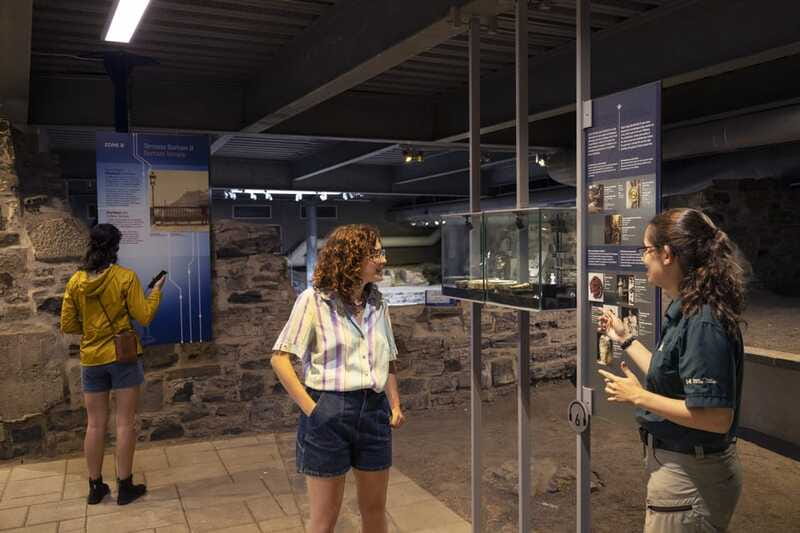
Plan for a light visit, not a luggage stop. Food, drinks, luggage, and large bags are not permitted inside. Pets are also not allowed, except for assistance dogs, and bare feet are not permitted.
Mobility is the main concern. The experience is not suitable for wheelchair users or people with mobility impairments. Since the route includes a descent from Dufferin Terrace into an archaeological site, you should be comfortable with stairs and historic walking surfaces.
The meeting point is straightforward, but arrive knowing that the terrace can be busy. The Frontenac sign and Canadian flag provide useful landmarks, and the green and beige uniform identifies the guide.
The site is in Old Québec, so it works best as part of a walking day. You might visit before exploring the terrace, the Château Frontenac area, or other historic streets nearby. The tour itself lasts one hour, though you should allow a little extra time to find the kiosk and get settled.
Who Will Enjoy This One-Hour Visit?
I would recommend this experience most strongly to you if you like history presented through physical evidence. The combination of foundations, artifacts, architecture, and political decisions gives the visit more substance than a simple overview of Québec’s past.
It also suits people who want a short, affordable activity. One hour is enough to add context to Old Québec without exhausting your attention or forcing you to cancel another plan.
Families may appreciate the practical details about food storage, cleaning, and household life. Those subjects can make a distant period easier for children to understand. The role-playing audio may also appeal to younger visitors, though adults who prefer plain narration may want the live guide instead.
The visit is less suitable if you want a large, fully accessible museum with broad indoor galleries. It is also not the right pick if you dislike stairs, archaeological remains, or theatrical audio narration.
Should You Book the Saint-Louis Forts and Châteaux Visit?
Book it if you want to understand what happened beneath Dufferin Terrace and how Québec City functioned as a center of power. The archaeological remains make the story physical, the artifacts add everyday detail, and the Huron-Wendat exhibition gives the diplomacy section greater balance.
Choose the live guide for a more personal and adaptable explanation. Choose the audio circuit if you want control over your pace and do not mind role-playing. At $9 for an hour, this is an easy recommendation for most visitors who can manage the stairs.
I would skip it only if mobility limits make the descent difficult or if your schedule is already packed with longer attractions. For everyone else, it is a compact and worthwhile way to connect Québec City’s famous promenade with the political and domestic life that once lay below it.
FAQ
Where is the Saint-Louis Forts and Châteaux visit located?
The site is beneath Dufferin Terrace in Old Québec, near the beginning of the terrace.
How do I find the meeting point?
Look for a Frontenac sign on a green and white kiosk with a Canadian flag at the beginning of Dufferin Terrace.
How long does the visit last?
The visit lasts one hour.
How much does admission cost?
The listed price is $9 per person.
Is the experience guided?
You can choose a live heritage guide or a self-guided audio tour using the downloadable Parks Canada app.
Which languages are available?
Live tour guide languages include English, French, Spanish, German, and Chinese.
What can I see at the site?
You can see the remains of Château Saint-Louis and more than 120 artifacts found during archaeological digs.
Is the visit suitable for wheelchair users?
No. The experience is not suitable for wheelchair users or people with mobility impairments.
Can I bring food, drinks, luggage, or pets?
Food, drinks, luggage, and large bags are not permitted. Pets are not allowed, except for assistance dogs.
Can I cancel my booking?
You can cancel up to 24 hours in advance for a full refund. A reserve-now, pay-later option is also available.
Just added around Canada
- Louisbourg Fortress Tours★ 5.0 · 3 reviews
- Fortress of Louisbourg Driving Tour from Sydney Nova Scotia★ 3.0 · 38 reviews
- Louisbourg Fortress, Lighthouse and Cliffside Adventure★ 5.0 · 2 reviews
- Banff Food Tour: Eat the Castle★ 5.0 · 130 reviews
- Rockport, ON: 1000 Islands/Boldt Castle Sightseeing Cruises★ 4.7 · 4 reviews
- Ottawa: Secrets of the Château Laurier – Guided Hotel Tour★ 4.4 · 148 reviews
- Halifax: Peggy’s Cove, Citadel and Titanic Cemetery Tour★ 4.0 · 180 reviews
- Halifax: Small Group Walking Tour with Citadel & Museum★ 4.8 · 16 reviews
Fortress & Citadel Tours, compared.

Carcassonne: Castle and Ramparts Entry Ticket
Read our review →
From Cairo Alexandria Catacombs, Citadel Day Trip with Lunch
Read our review →
Charleston historical walking tour with a Professor of History at The Citadel
Read our review →
Hue Customizable Tour with Imperial Citadel & Forbidden City
Read our review →
Desert Safari: Luxury Fortress Dinner, Camel Ride & Dune Bashing
Read our review →
Egyptian Museum, Citadel, and Old Cairo Guided Tour
Read our review →Browse the lists this tour appears in