
Review · GREECE
Old fortress and Corfu Old Town: History and culture
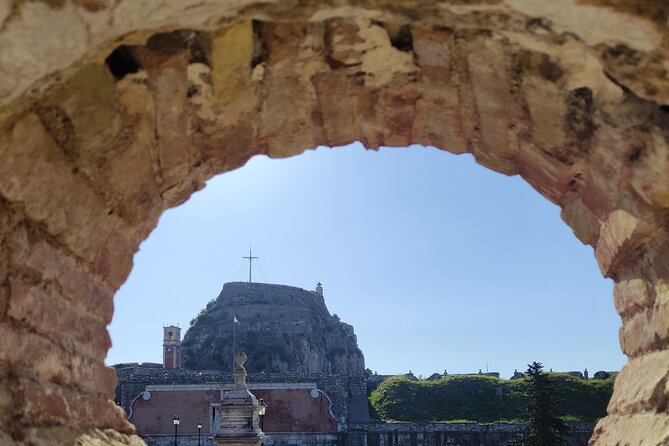
Fortresses make history easier to see. This 2.5-hour walking tour connects Corfu’s mighty Venetian defenses with its churches, gardens, squares, and Jewish quarter, giving you a useful first look at the old city. I especially like the way the tour begins inside the Old Fortress, where bastions, battlements, cisterns, shelters, and powder magazines show how defense worked in practical terms. I also like the route through places such as St. Spyridon Church, Liston, and the Jewish quarter, where Corfu’s past feels tied to real streets and buildings rather than only dates.
The main consideration is physical effort. The tour is not suitable for wheelchair users or people with a low level of fitness, and the entrance fee to the Old Fortress is not included in the $88 price. Good weather also matters if you want to walk to the top for the full 360-degree view.
Key points at a glance
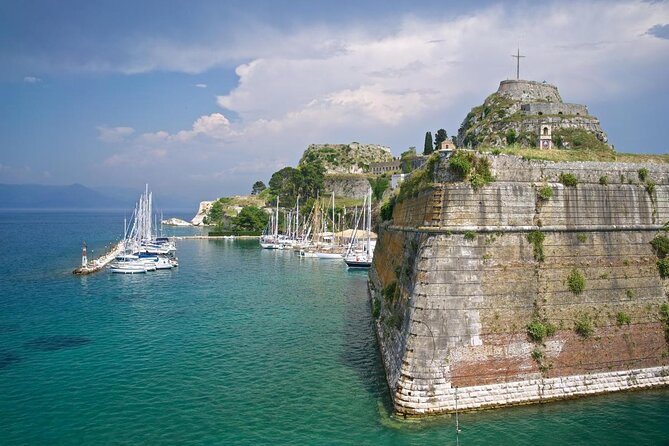
- Venetian military design: See bastions, battlements, secret chambers, cisterns, shelters, and powder magazines inside the Old Fortress.
- A full old-city route: Walk from the fortress through Bosketo Garden, St. Michael and St. George Palace, Liston, St. Spyridon Church, and the Jewish quarter.
- A personal guide: The tour is led in English by a licensed local guide. Sofia received especially warm praise for her clear, engaging explanations.
- History beyond the postcard: Learn about Ottoman attacks, the Serbian rescue on Vido Island, the Jewish community, and Corfu’s first lyric theater.
- Two fortresses, one city: The route ends near the New Fortress, helping you understand how Corfu’s defenses shaped the old town.
- Plan for walking: The 2.5-hour route includes fortress paths and city streets, with some areas that may be challenging for anyone with limited fitness.
Why Corfu’s old town is built like a fortress

Corfu Old Town is not simply a pretty collection of narrow streets and grand buildings. Its layout reflects centuries of pressure from the sea, especially from Ottoman forces seeking control of the Ionian Islands.
Together, the Old Fortress and New Fortress helped protect the city. Their defensive design is the main reason Corfu Old Town is recognized as a UNESCO World Heritage Monument. On this tour, you see that military purpose alongside the city’s religious, civic, and cultural life.
I like this combination because it keeps the experience from becoming a single-site fort visit. You begin with walls and weapons, then move into gardens, churches, squares, and neighborhoods where people still live and work. The guide’s job is to connect these parts, and the English-language format makes the explanation easy to follow for visitors who want more than a quick photo stop.
The meeting point is the statue of Count Von Der Schulenburg, beside the entrance to the Old Fortress. That is a practical place to begin because you are immediately next to the main historic site rather than spending the first part of the tour searching for it.
More Fortress and Citadel Tours in the world:
- Carcassonne: Castle and Ramparts Entry Ticket
★ 4.6 · 2,884 reviews - Salzburg: Hohensalzburg Fortress Admission Ticket
★ 4.6 · 2,236 reviews - Salzburg: Best of Mozart Fortress Concert and Dinner
★ 4.5 · 1,424 reviews
Inside the Old Fortress: walls built for war
The Old Fortress is the centerpiece of the experience. You receive a guided visit and time for photographs, but the main reward is learning how the structure worked.
The Venetians developed an advanced system of defense here. The fortress included imposing bastions and battlements, along with less visible features such as underground chambers, cisterns, shelters, and powder magazines. These details matter because they show that a fortress was more than a thick wall. It was a working system designed to support soldiers, store supplies, protect ammunition, and withstand attack.
The guide explains how the fortifications were meant to repel Ottoman assaults. That context gives the stonework a purpose. Instead of seeing a wall as an old ruin, you begin to understand where defenders might stand, how supplies were stored, and why the fortress was considered one of the strongest in the Mediterranean.
The route also includes Agios Georgios Church, one of the island’s most unusual churches. It is especially notable because the Greek-born Prince Philip, later husband to Queen Elizabeth II, was baptized there. That single detail adds a surprising royal connection to a site that might otherwise be easy to overlook.
If the weather is favorable, you can walk to the top of the fortress for a 360-degree panorama. This is one of the strongest reasons to check the forecast before you go. The view is not guaranteed in poor conditions, but clear weather can turn the high point into the visual payoff of the fortress visit.
The practical catch is that the entrance fee is extra. At $88 per person, you should include that added cost when comparing this tour with a self-guided visit. Still, the guide can help you make sense of the fortress’s complicated defensive design, which is difficult to grasp from signs alone.
Bosketo Garden and St. Michael and St. George Palace
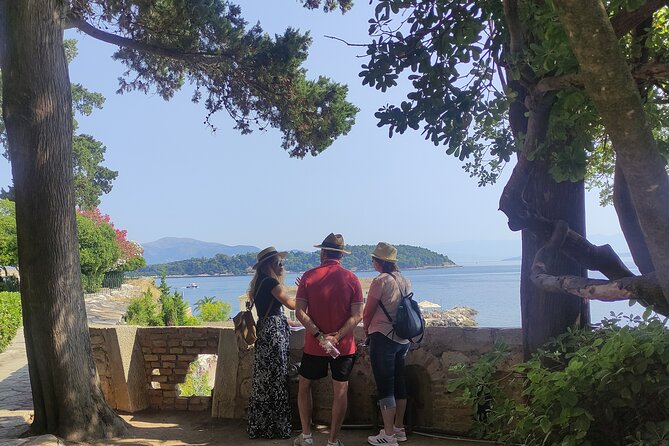
After the fortress, the walk moves toward Bosketo Garden and the flower gardens of the Palace of St. Michael and St. George. This shift in mood is welcome. You move from military stonework to formal gardens and civic architecture, seeing a calmer side of Corfu.
The palace is included as a guided photo stop. The tour does not promise an interior visit, so you should think of this part as an architectural and historical pause rather than a museum tour. The guide helps place the building in the broader story of Corfu’s public life, while the gardens provide a quieter setting between the fortress and the busy old town.
This section also includes views toward Vido Island and the story of the Serbian people who were saved on Corfu. The subject is a serious one, and it adds a human dimension to the route. You are not only looking at buildings. You are hearing how Corfu became part of larger events affecting people from outside the island.
Liston and the heart of the old town
Liston is one of Corfu’s best-known urban spaces, with elegant arcades and a strong connection to the city’s public life. The tour pauses here for photographs and explanation before continuing toward St. Spyridon Church.
Liston works well in this itinerary because it shows how Corfu’s identity extends beyond fortifications. The city is shaped by Venetian, French, British, Greek, Orthodox, Jewish, and military influences. You can read some of that mixture in the streets and buildings without needing to visit a separate museum.
The square is also a useful place to notice the change in pace. The fortress is about defense and command. Liston is about movement, meeting, and daily city life. I like that the guide does not treat these as unrelated sights. They are connected parts of a city built around a strategic port.
More Medieval Old Town Tours in the world:
- Bucharest: Dracula’s Castle, Peles Castle, & Brasov Old Town
★ 4.5 · 17,858 reviews - Bucharest: Dracula Castle, Peles Castle & Brasov Old Town
★ 4.6 · 10,891 reviews - Prague: 3-Hour Walking Tour of Old Town & Prague Castle
★ 4.7 · 5,696 reviews - Prague: 3-Hour Old Town and Prague Castle Tour in German
★ 4.8 · 5,671 reviews
St. Spyridon Church and Corfu’s Orthodox tradition
The route continues to the imposing Orthodox Church of St. Spyridon. The church is important because it holds the venerable relic of St. Spyridon, one of Corfu’s central religious figures.
This stop is more than a quick look at a church facade. The guide explains why the church matters to the island, helping you understand the religious traditions that remain part of Corfu’s identity. As with any active religious site, visitors should be ready to behave respectfully and follow any instructions given during the visit.
For many people, St. Spyridon will be one of the most memorable stops because it brings living religious practice into a tour that has so far focused heavily on military history. It also gives you a sense of how monuments in Corfu continue to function, rather than sitting apart from modern life.
The Old Town Hall and Greece’s first lyric theater
The next stop is the Old Town Hall of Corfu, also known as the former San Giacomo Theatre. You see the shell of what was Greece’s first lyric theater, a useful reminder that Corfu’s cultural history reaches beyond churches and fortresses.
Today, the building houses municipal services. That practical reuse gives the site a different character from a preserved monument that exists only for sightseeing. You can see how an old cultural building remains part of the city’s working fabric, even though its original role has changed.
The stop is primarily for photographs and guided explanation. If you are expecting a theater performance or a full interior visit, adjust your expectations. The value lies in the story of the building and its place in Corfu’s arts history.
Walking through the Jewish quarter
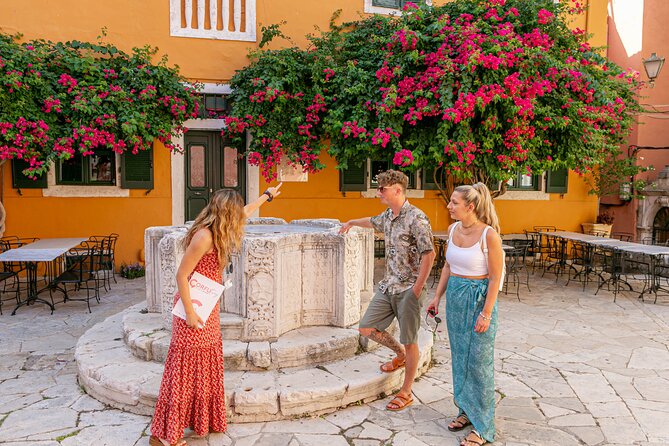
The Jewish quarter is among the most important parts of the route. Here, World War II remains visible in the shape of the neighborhood and in the Jewish Holocaust Memorial of Corfu.
The guide points out half-demolished buildings that still wait for owners who never returned from concentration camps. That detail is painful, but it prevents the history from becoming distant or abstract. You see how war affected families, buildings, and an entire community.
At the same time, the quarter is not presented as a frozen memorial. The district continues with everyday activity around it. That contrast is valuable. You can acknowledge the loss while also seeing that the neighborhood remains part of present-day Corfu.
I consider this section essential for anyone who wants a serious understanding of the old town. It adds a difficult but necessary chapter to the city’s story. The tour does not limit Corfu’s identity to Venetian walls or picturesque streets.
Ending at the New Fortress
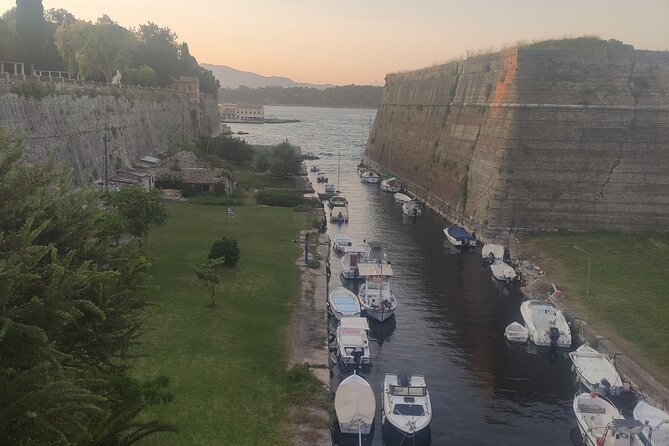
The walk finishes at the gate of the New Venetian Fortress, then returns to the statue of Count Von Der Schulenburg. Seeing the second fortress from the outside helps complete the defensive picture introduced at the Old Fortress.
The two forts were not decorative landmarks. They formed a major part of Corfu’s military protection, and their presence shaped the old city’s boundaries and development. Ending at the New Fortress gives you a clear sense of how the city was defended from more than one direction.
This is also a good point to stop and continue exploring independently. The tour gives you a framework for the old town, but it does not attempt to show every street, shop, or church. Its purpose is to give you a guided taste of the fortifications and key historical sites.
Is $88 a fair price?
At $88 per person, this is not the cheapest way to see Corfu Old Town. The Old Fortress entrance fee is also extra, and the route is short enough that you could walk between many of the city stops without a guide.
The price makes more sense if you value interpretation. A local English-speaking guide explains how the Venetian defenses functioned, why St. Spyridon matters, what happened to Corfu’s Jewish community, and how Vido Island fits into the island’s story. Those connections are the real product.
The strong rating of 4.8 from six reviews supports the idea that the guide can make a real difference. Sofia is specifically praised for showing the entire city and sharing many interesting details. That is the kind of guide you want on a route with several different subjects.
I would consider the price reasonable for a first visit if you want a structured introduction and prefer not to piece the history together yourself. If you already know Corfu well, or mainly want free time for cafés and shopping, the cost may feel high.
Who will enjoy this walking tour?
This experience suits you best if you want a focused introduction to Corfu’s history in one morning or afternoon. It is especially useful for first-time visitors, cruise passengers with limited time, and anyone interested in military architecture, Orthodox traditions, Jewish heritage, and civic history.
You should be comfortable walking for 2.5 hours. The Old Fortress includes defensive paths and an optional walk to the top, while the old-town portion continues on foot through several locations. The tour is not suitable for wheelchair users or people with a low level of fitness.
The English-only format works well if you want a clear, direct explanation without managing a multilingual group. The tour includes a licensed English-speaking guide, but no transport is listed, so plan to walk from the meeting point through the old town and back.
You can cancel up to 24 hours ahead for a full refund, and you can reserve without paying immediately. Those policies are useful if your Corfu plans depend on weather or port timing, though the tour’s panoramic viewpoint is also weather dependent.
Should you book the Old Fortress and Old Town tour?
Book it if you want Corfu’s major stories tied together by a local guide. The fortress defenses, Agios Georgios Church, St. Spyridon, the Jewish quarter, and the New Fortress create a thoughtful route rather than a quick monument checklist.
Skip it if you want a slow, independent day or if steep and uneven fortress walking would be difficult. Also remember to add the Old Fortress entrance fee to the advertised $88.
For a first visit, I like the balance: serious history, famous sights, and a few less obvious stops. Sofia’s warm, detailed guiding is a strong reason to choose this experience when available. Just bring comfortable shoes, allow for the extra entrance charge, and hope for clear weather at the top of the fortress.
FAQ
How long does the tour last?
The tour lasts 2.5 hours.
What language is the tour conducted in?
The tour is conducted in English by a live, licensed English-speaking guide.
Where does the tour begin?
It begins at the statue of Count Von Der Schulenburg, next to the entrance of the Old Fortress in Corfu Town.
Where does the tour finish?
The route returns to the statue of Count Von Der Schulenburg after reaching the gate of the New Venetian Fortress.
Is the Old Fortress entrance fee included?
No. The entrance fee to the Old Fortress is not included in the tour price.
What is included in the price?
A licensed English-speaking tourist guide is included.
Is the tour suitable for wheelchair users?
No. The tour is listed as not suitable for wheelchair users.
Is the tour suitable for people with low fitness levels?
No. The activity is not recommended for people with a low level of fitness.
Can I cancel for a full refund?
Yes. You can cancel up to 24 hours in advance for a full refund.
More History Tours in the world
- Edinburgh: Edinburgh Castle Guided History Tour with Tickets
★ 4.8 · 9,933 reviews - Charleston historical walking tour with a Professor of History at The Citadel
★ 5.0 · 1,284 reviews - Buda Castle District Dark History, Legends and Vampire Night Tour
★ 4.5 · 1,240 reviews - Luxembourg: Nature, History and Castles Full-Day Tour
★ 4.5 · 529 reviews
Just added around the world
- Standing Stones, Inveraray and Kilchurn Castle & Highlands Tour starting Balloch★ 5.0 · 35 reviews
- Cardiff: South Wales Cliffs, Beaches & Castles Day Tour★ 5.0 · 36 reviews
- West Coast Lochs & Castles Tour – from Glasgow★ 5.0 · 20 reviews
- Private Day Tour of South Wales, including Cardiff & Caerphilly Castle.★ 5.0 · 15 reviews
- Private Tour – Edinburgh to St Andrews, Dunnottar Castle & Dundee★ 5.0 · 9 reviews
- From Cardiff: 3 Amazing Castles, Tintern Abbey & Roman Caerleon★ 5.0 · 12 reviews
- Private Day Tour of Cardiff, including Cardiff Castle, St Fagans, & Cardiff Bay★ 5.0 · 5 reviews
- Carcassonne: Secrets of the Castle’s Defense Self-Guided Tour★ 4.5 · 8 reviews
Fortress & Citadel Tours, compared.

Carcassonne: Castle and Ramparts Entry Ticket
Read our review →

From Cairo Alexandria Catacombs, Citadel Day Trip with Lunch
Read our review →
Charleston historical walking tour with a Professor of History at The Citadel
Read our review →
Hue Customizable Tour with Imperial Citadel & Forbidden City
Read our review →
Desert Safari: Luxury Fortress Dinner, Camel Ride & Dune Bashing
Read our review →
Egyptian Museum, Citadel, and Old Cairo Guided Tour
Read our review →Browse the lists this tour appears in