
Review · VIETNAM
Hue Customizable Tour with Imperial Citadel & Forbidden City
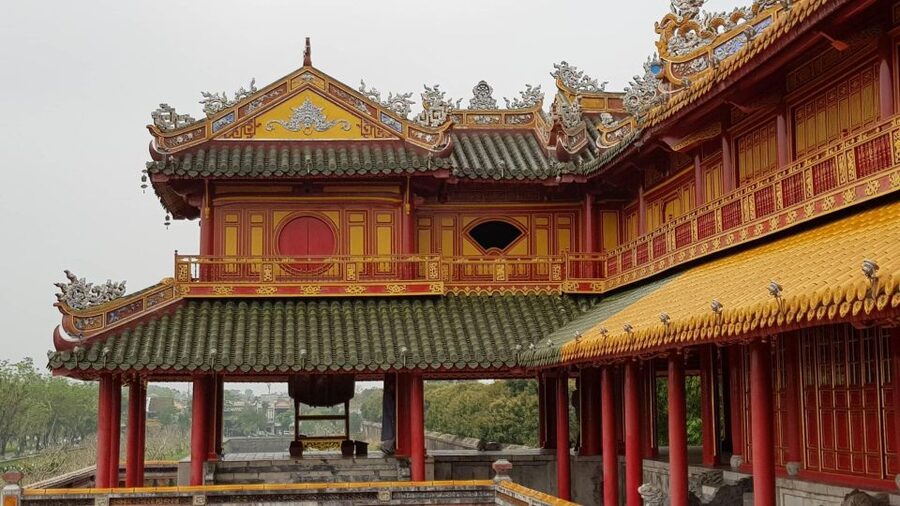
Hue’s royal story comes alive here. I like the choice between a focused 150-minute walking tour and a longer private-car outing, and I like that local guides explain people and customs, not just buildings. The main consideration is that entrance tickets are extra, and the car option includes a driver rather than a licensed guide.
The walking route is especially good value at $12 per person. Guides such as Misa, Nhi, Ha, Nhien, Linh, and Duy have been praised for clear English, warm conversation, and lively explanations. You should also expect a fair amount of walking in the sun, so an early start, water, and sensible shoes will make the visit much better.
Key Points Before You Book
- Two very different tour styles: Choose a guided walk inside the Imperial Citadel, or a private car with an English-speaking driver for several Hue sights.
- A strong focus on royal life: Learn about Nguyen emperors, queens, minor wives, concubines, eunuchs, ceremonies, and court customs.
- Meeting point matters: Walking-tour participants meet at the four bronze cannons near Ngan Gate, not at their hotel.
- Good small-group value: The walking option is private or in a small group, with time for questions, photographs, and independent looking.
- Entrance fees are separate: The Imperial City ticket costs 200,000 Vietnamese dong for an adult, with combo tickets available for the city and tombs.
- Private-car routes are flexible: You can combine the Imperial City with Thien Mu Pagoda, royal tombs, or Thuy Tien Abandoned Water Park.
Why the Walking Tour Is the Best Starting Point
Hue’s Imperial City is large enough to feel confusing when you first enter it. Walls, gates, courtyards, temples, gardens, and restored halls spread across a broad compound. Without context, it is easy to admire the colors and rooflines while missing the meaning behind them.
The walking option gives you about two and a half hours with an English-speaking local guide. That is enough time to cover the main royal sights without turning the morning into an endurance test. The guides also leave room for questions and photographs, which matters more here than a rigid march from gate to gate.
The strongest part is the human story. You are not only looking at palaces. You are learning how the Nguyen court worked, where the emperor held ceremonies, where ancestors were honored, and how the Forbidden Purple City served as the private world of the royal household.
Several guides have been praised for making the subject easy to follow. Misa is often described as warm, funny, and good at explaining symbolism. Nhi has been praised for her detailed account of the Nguyen dynasty and her infectious laugh. Ha is noted for calm, clear explanations, while Linh has a gift for storytelling and for finding shady places to rest.
That consistency matters. Hue’s history includes unfamiliar names, changing royal titles, and many buildings with similar-looking roofs. A good guide turns all those details into a story you can remember.
More Fortress and Citadel Tours in the world:
- Carcassonne: Castle and Ramparts Entry Ticket
★ 4.6 · 2,884 reviews - Salzburg: Hohensalzburg Fortress Admission Ticket
★ 4.6 · 2,236 reviews - Salzburg: Best of Mozart Fortress Concert and Dinner
★ 4.5 · 1,424 reviews
Meeting at the Four Cannons Near Ngan Gate
The walking tour does not include hotel pickup. You meet the guide at the four bronze cannons near Ngan Gate, also called Cua Ngan, on the Citadel’s outer side.
Look for a guide holding an A4 sheet with your name. There are five cannons on the opposite side, so this is one place where a quick check of the meeting instructions saves time. Arrive with enough margin to find the correct group.
The nine Holy Cannons were cast by Hue artisans in 1803 during the second year of Emperor Gia Long’s reign. They are considered important bronze artworks and were later moved to their present position during the reign of Emperor Khai Dinh.
This is a useful first stop because the cannons introduce the power of the Nguyen state. They are not simply old weapons. They reflect royal authority, skilled local metalwork, and the way Hue’s public spaces were arranged to announce imperial control.
From the Flag Tower to Noon Gate
The Flag Tower rises near the middle of the Citadel’s southern side. It was connected with the royal court’s flag and remains one of the most recognizable structures in Hue.
The guide uses this area to explain the Citadel’s layout and ceremonial role. The stop is short, around five minutes in the supplied plan, so think of it as an orientation point and photo stop rather than a long visit.
From here, the route continues toward Noon Gate, or Ngo Mon. Built in 1833 under Emperor Minh Mang, this was the formal southern entrance to the Imperial City. It was used for troop movements and royal ceremonies.
Ngo Mon is an impressive place to pause, but it can also be busy and exposed. You will want photographs, yet the sun can be strong. A guide who gives explanations in a shaded position, as Misa has done for groups in hot weather, makes a real difference.
The route does not treat the gate as a standalone monument. It shows you how the gate worked as part of a royal procession, with the Flag Tower, courtyards, palace buildings, and inner court arranged in sequence.
Thai Hoa Palace and the Meaning of Ceremony
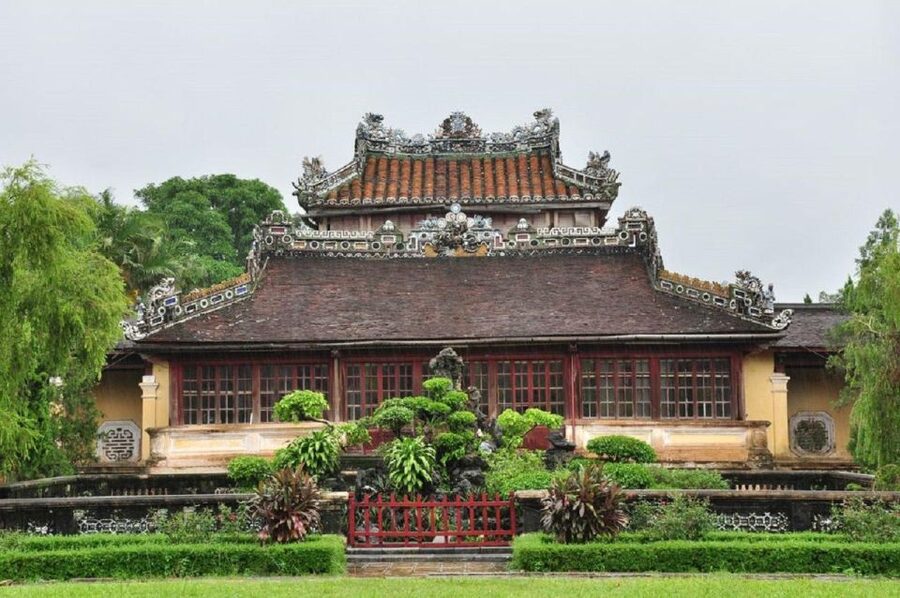
Thai Hoa Palace, also called the Palace of Supreme Harmony, is one of the essential stops. Thirteen Nguyen emperors, from Gia Long to Bao Dai, were crowned here.
This was not a private residence. It was a political and ceremonial center, a place where the emperor’s public role was displayed. Your guide can help you read the architecture through Confucian ideas, court ritual, and the symbolism attached to numbers and animals.
One particularly useful detail from the guided visits is the attention to symbolism. Families with children have found this part engaging because the guide explains why certain numbers, animals, and design features appear in the royal buildings.
The palace is also a reminder that much of Hue suffered severe wartime damage. Some buildings have been restored, while other areas remain incomplete or show the effects of destruction. The beauty is real, but so is the sense of loss. A guide helps you understand both instead of presenting the Citadel as a perfectly preserved palace complex.
A few more castle visits around the world worth a look
- Seville: Royal Alcázar Entry Ticket
★ 4.6 · 28,378 reviews - Stonehenge, Windsor Castle, and Bath from London
★ 4.5 · 18,662 reviews - Bucharest: Dracula’s Castle, Peles Castle, & Brasov Old Town
★ 4.5 · 17,858 reviews - From Munich: Neuschwanstein & Linderhof Castle Full-Day Trip
★ 4.6 · 14,646 reviews
Hien Lam Pavilion, Dynastic Urns, and Ancestral Temples
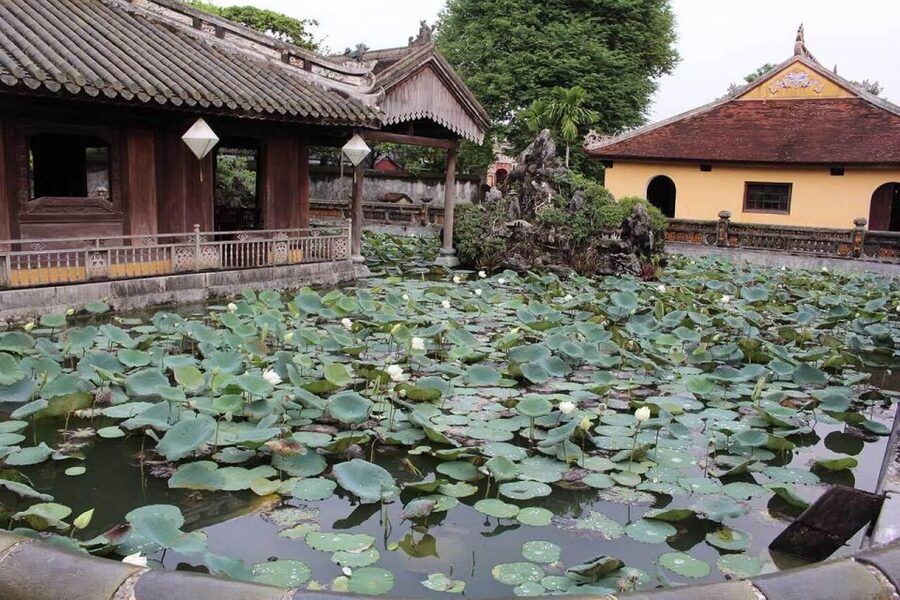
Hien Lam Pavilion and the Nine Dynastic Urns shift the focus from imperial ceremony to royal memory.
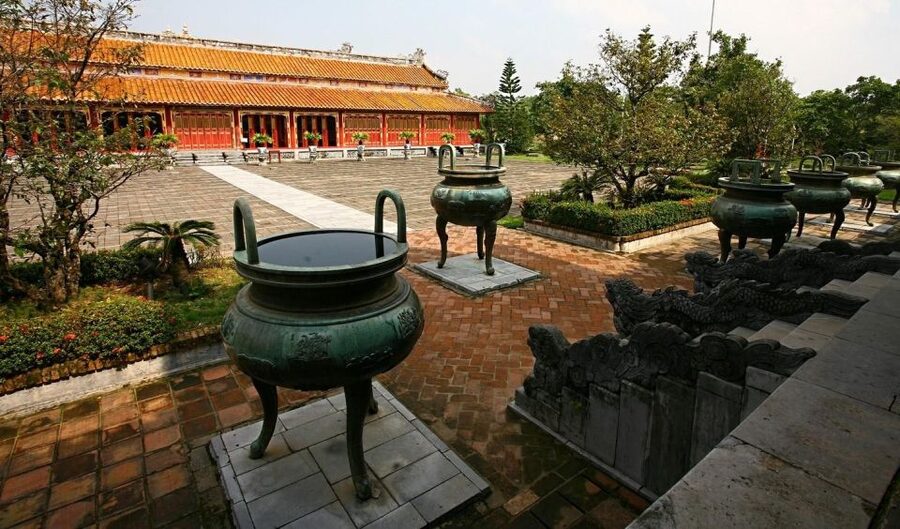
The Nine Dynastic Urns stand in front of The Mieu Temple. Emperor Minh Mang commissioned them in 1835, and they were completed in 1837. Each urn carries symbolic importance, and the group represents the Nguyen dynasty’s view of the empire, its natural world, and its rulers.
The nearby The Mieu Temple was built in 1821 by Emperor Minh Mang. It honors ten Nguyen emperors. This is one of the best places to understand the dynasty’s ancestor worship and the importance of continuity in the royal court.
The route also includes Hung To Mieu and Hung Mieu. These temple stops may receive less attention from casual visitors than the grand gates and palaces, but they help fill in the family structure behind the dynasty.
If you enjoy architecture alone, these temples may feel quieter and less immediately dramatic than Noon Gate or Thai Hoa Palace. If you want to understand how the Nguyen court remembered its rulers, they are important stops.
Entering the Forbidden Purple City
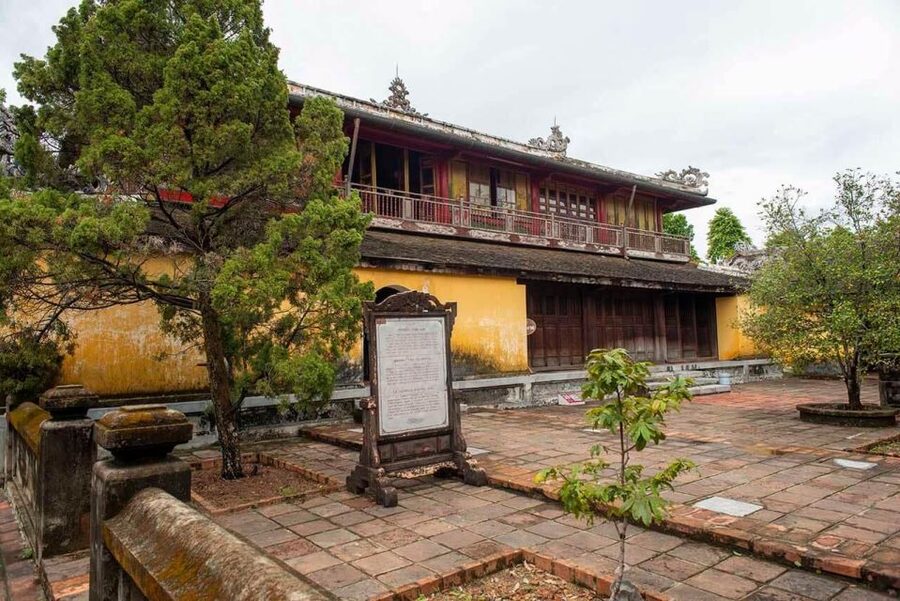
Behind Thai Hoa Palace lies the Forbidden Purple City, known in Vietnamese as Tu Cam Thanh. It was first built under Emperor Gia Long in 1804 and received its later name during the third year of Minh Mang’s reign in 1822.
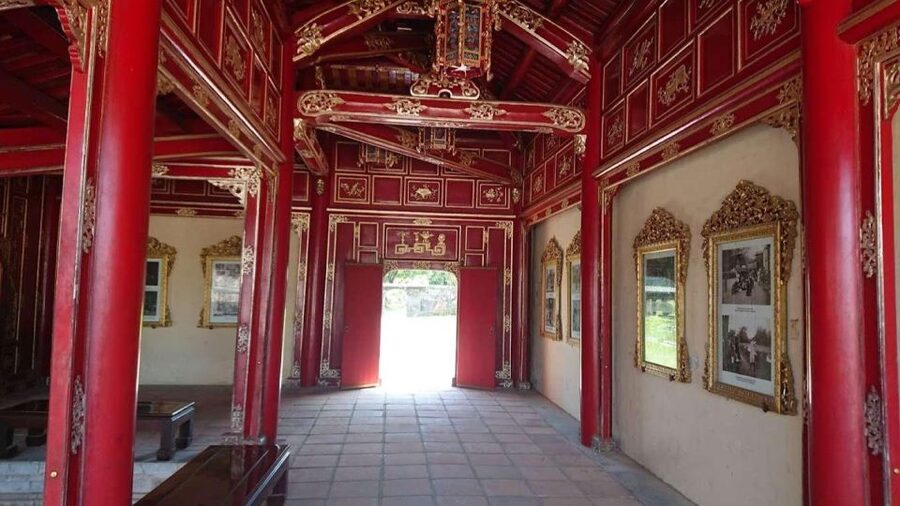
This was the private center of royal life. The emperor, queens, minor wives, concubines, eunuchs, and court staff lived and worked within this protected area.
That detail makes the site more than a collection of damaged walls and restored structures. You begin to picture the strict rules of access and the crowded human world behind the official palace ceremonies.
The walking route spends about two hours within the wider Imperial City, with time devoted to the Forbidden City and its surrounding buildings. The exact balance can depend on the guide, group size, weather, and the condition of individual areas.
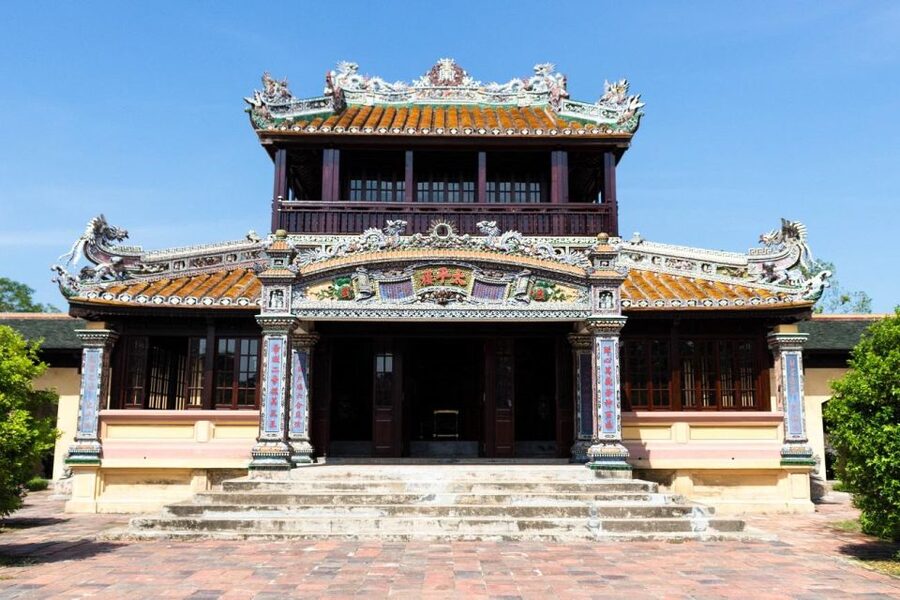
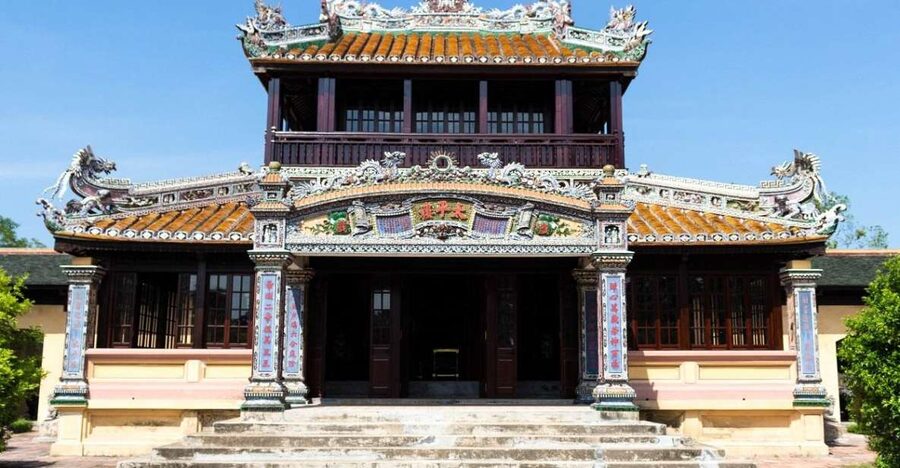
You may see or pass by Kiến Trung Palace, Thai Binh Pavilion, Thieu Phuong Garden, Duyet Thi Duong Royal Theater, and Trieu To Mieu. Some are short photo stops. Others invite a longer explanation about royal leisure, theater, gardens, worship, or reconstruction.
The site is not fully intact, so do not expect an untouched palace town. You will get more from it if you treat the gaps as part of the story. The guide’s job is to explain what stood here, what survived, and how the space functioned.
The Private-Car Option: More Ground, Less Guiding
The private-car choice works best if you want to see more than the Citadel. An English-speaking driver can collect you from a central Hue hotel, Hue Railway Station, Phu Bai Airport, or a central hotel in Hoi An, depending on the arrangement.
You can build a route around the Imperial City, Thien Mu Pagoda, Minh Mang Tomb, Tu Duc Tomb, Khai Dinh Tomb, and Thuy Tien Abandoned Water Park. The total outing can last from roughly two and a half hours to eight hours, depending on the selected plan.
This is useful for couples, families, or small groups that want their own pace. You can spend more time at a tomb, add several major sights, or avoid arranging separate taxis between distant locations.
The tradeoff is important: the driver is for transport and communication, not a licensed professional guide. If you want detailed explanations inside the Citadel, choose the walking-tour option or confirm exactly what guiding is included before booking.
The car route is also the more practical choice in heavy rain or intense heat. Hue can be wet and hot, and the royal tombs are spread outside the city center. A private vehicle saves energy and lets you cover more ground.
What the Tombs and Pagoda Add
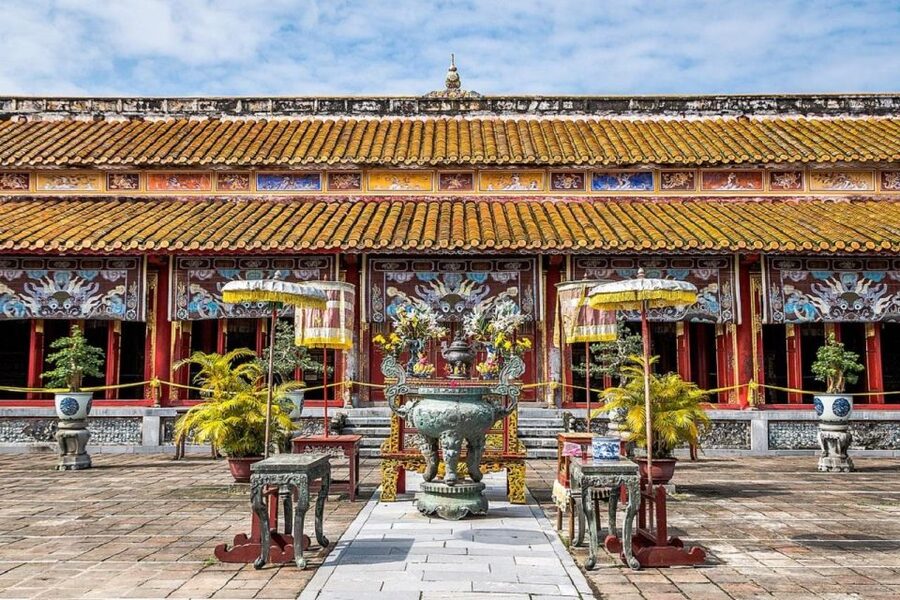
Thien Mu Pagoda gives the wider day a spiritual and scenic contrast to the formal Citadel. It is one of the listed choices, but the supplied information does not promise a guided explanation at every site, so you should treat the driver option mainly as transport between attractions.
The three royal tombs offer different settings and royal personalities. Minh Mang Tomb, Tu Duc Tomb, and Khai Dinh Tomb are all available choices, but your exact combination depends on the route you select.
Khai Dinh is especially useful if you like elaborate decoration and a more compact visit. Tu Duc and Minh Mang help show how imperial burial complexes could be tied to gardens, ceremony, and the emperor’s personal preferences. The private-car plan lets you compare them, though entrance tickets remain your responsibility.
Thuy Tien Abandoned Water Park is the most unusual choice. It is not a standard royal monument, so it appeals to people looking for something visually different from temples and tombs. Confirm that this stop is included in your chosen route before departure.
Price, Tickets, and Overall Value
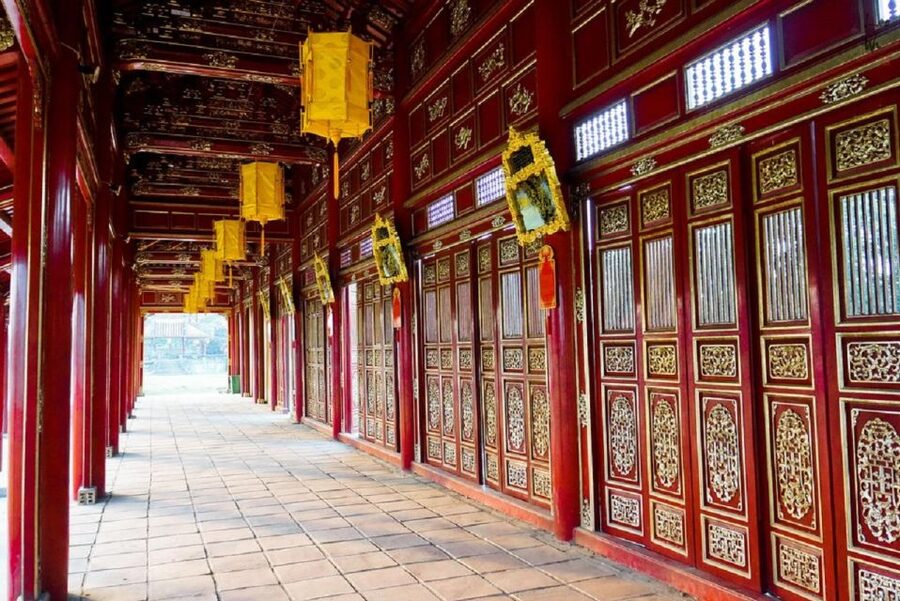
At $12 per person, the walking option offers very good value if you want the Imperial City explained rather than simply photographed. The price covers the local guide and the Imperial City walking tour, but not admission.
An adult ticket to the Imperial City costs 200,000 Vietnamese dong. Combo tickets cost 420,000 dong for the Imperial City plus two tombs, or 530,000 dong for the Imperial City plus three tombs, and are valid for two days.
That makes the private-car option harder to compare directly with the walking tour. You pay for the vehicle and driver, then add entry fees for the places you choose. Still, the value can be strong for a small group, especially if you are visiting several sites that would otherwise require separate transport.
Food and drinks are not included. They can be purchased during the day, but the walking route is short enough that many people will simply eat before or after.
The cancellation policy is flexible, with full refunds available when you cancel at least 24 hours ahead. You can also reserve and pay later, which helps if your Hue plans are still moving around.
Heat, Rain, and Walking Pace
The Citadel route involves outdoor walking, open courtyards, and stretches without much shade. Several guides have adjusted the pace during hot weather, allowed cooling breaks, and chosen shaded places for explanations.
I would book an early start when possible. One morning visit beginning at 8:30 was praised for avoiding the worst heat, and that is practical advice. Rain is also possible. Linh completed a tour in wet weather, but you should still bring protection and wear shoes that can handle slick paths.
The route is manageable for people who can walk for a couple of hours, but it is not a vehicle-based sightseeing tour. You will get more from it if you are comfortable standing, walking, pausing, and moving between large courtyards.
Who Will Get the Most From This Tour
Choose the walking tour if you:
- Want a clear introduction to Hue’s royal history
- Prefer a small group or private guide
- Enjoy asking questions
- Want to understand the symbolism and court culture
- Have only a few hours in Hue
- Do not mind walking outdoors
Choose the private car if you:
- Want to combine the Citadel with tombs or Thien Mu Pagoda
- Are traveling as a family or small private group
- Need pickup from a hotel, station, or airport
- Prefer to set your own pace
- Want to reduce walking between distant sights
The walking tour is also a good fit for families. Children may respond well to the stories about emperors, court life, symbols, and forbidden access. Solo visitors can benefit from the personal attention, since guides have adapted routes and conversations to individual interests.
Should You Book the Hue Customizable Tour?
Yes, if your priority is understanding the Imperial Citadel rather than just checking it off your list. The walking option is the strongest choice for history, local conversation, and value, especially with guides such as Misa, Nhi, Ha, Nhien, Linh, or Duy.
Book the private car instead if you want a full day linking Hue’s major sights. Just remember that you are paying for transport and an English-speaking driver, not the same detailed guiding offered on the walking route.
I would choose the early walking tour for a first visit, then use a private car on another day for the tombs and pagoda. The extra ticket cost is reasonable, the tour is flexible, and the guides appear to be its main strength. Go prepared for heat, confirm your meeting point, and you will get much more from Hue’s royal buildings than you would by wandering alone.
FAQ
How long does the walking tour last?
The Hue walking tour lasts about 150 minutes, or two and a half hours.
Where does the walking tour meet?
You meet the guide at the four bronze cannons near Ngan Gate, also called Cua Ngan, at the Hue Citadel. The guide will hold an A4 sheet with your name.
Is hotel pickup included with the walking tour?
No. Walking-tour participants meet at the cannons near Ngan Gate. Pickup and drop-off are included with the private-car option for eligible central locations.
Are Imperial City entrance tickets included?
No. Adult admission to the Imperial City costs 200,000 Vietnamese dong. Combo tickets are available for the Imperial City with two or three tombs.
Does the private-car option include a tour guide?
No. The private-car option includes an English-speaking driver for transport and communication. It does not include a licensed tour guide.
Which sights can I visit by private car?
Possible stops include the Imperial City, Thien Mu Pagoda, Minh Mang Tomb, Tu Duc Tomb, Khai Dinh Tomb, and Thuy Tien Abandoned Water Park.
Can I choose a private or small-group experience?
Yes. Private and small-group options are available, depending on the selected tour type.
Can I cancel for a refund?
You can cancel up to 24 hours in advance for a full refund. You can also reserve now and pay later.
Just added around the world
- Standing Stones, Inveraray and Kilchurn Castle & Highlands Tour starting Balloch★ 5.0 · 35 reviews
- Cardiff: South Wales Cliffs, Beaches & Castles Day Tour★ 5.0 · 36 reviews
- West Coast Lochs & Castles Tour – from Glasgow★ 5.0 · 20 reviews
- Private Day Tour of South Wales, including Cardiff & Caerphilly Castle.★ 5.0 · 15 reviews
- Private Tour – Edinburgh to St Andrews, Dunnottar Castle & Dundee★ 5.0 · 9 reviews
- From Cardiff: 3 Amazing Castles, Tintern Abbey & Roman Caerleon★ 5.0 · 12 reviews
- Private Day Tour of Cardiff, including Cardiff Castle, St Fagans, & Cardiff Bay★ 5.0 · 5 reviews
- Carcassonne: Secrets of the Castle’s Defense Self-Guided Tour★ 4.5 · 8 reviews
Fortress & Citadel Tours, compared.

Carcassonne: Castle and Ramparts Entry Ticket
Read our review →

From Cairo Alexandria Catacombs, Citadel Day Trip with Lunch
Read our review →
Charleston historical walking tour with a Professor of History at The Citadel
Read our review →
Desert Safari: Luxury Fortress Dinner, Camel Ride & Dune Bashing
Read our review →
Egyptian Museum, Citadel, and Old Cairo Guided Tour
Read our review →
Browse the lists this tour appears in