
Review · LUNCH EXPERIENCES
Small Group Tours to Baalbek, Anjar & Chateau Ksara with lunch and Tickets
Baalbek alone is worth leaving Beirut for. This small-group day tour adds Anjar and Château Ksara, giving you Roman temples, Umayyad ruins, Lebanese food, and wine in one long but useful outing. I especially like the hotel pickup and air-conditioned minivan, plus the chance to ask questions in a group capped at 15 people.
I also like the mix of major sights and local flavor. Baalbek supplies the drama, Anjar provides a different period of Lebanese history, and Ksara brings the day down to earth with wine and a look inside its cave. The main drawback is the pace: with three stops packed into about nine hours, Baalbek receives only around 90 minutes, and Ksara admission is not included.
Five things to know before booking
- Baalbek is the main event: You see the Roman sanctuary of Jupiter, Venus, and Bacchus, with admission included.
- The Stone of the Pregnant Woman adds scale: This massive Roman monolith helps explain how astonishing Baalbek’s construction was.
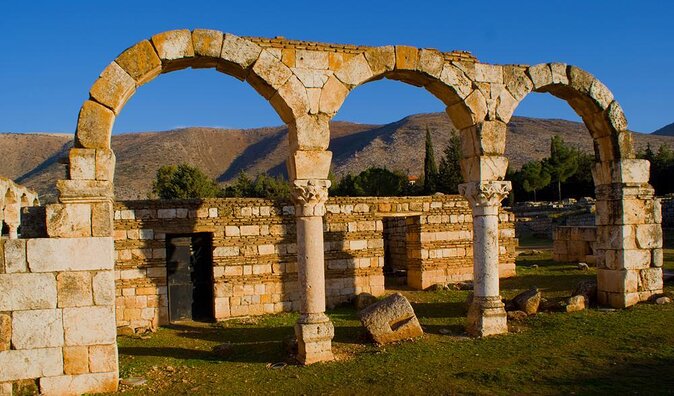
- Anjar changes the historical focus: The Umayyad ruins include palace remains, a mosque, baths, harems, and Roman-style columns.
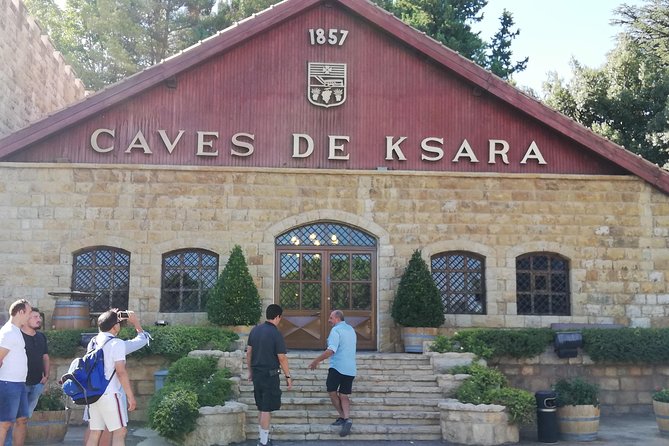
- Ksara includes wine and a cave visit: The winery dates to 1857 and produces about three million bottles each year.
- Lunch is part of the price: A local Lebanese restaurant meal is included, along with hotel transfers and a guide.
- The group stays fairly small: A maximum of 15 people is listed, which should leave room for questions without the cost of a private tour.
Why this Beirut day trip works
Beirut is a good base for seeing central Lebanon, but arranging Baalbek, Anjar, transport, lunch, and a winery visit on your own takes planning. This tour handles the long day in one package. The $75 price includes pickup and drop-off at your hotel, an air-conditioned vehicle, a local guide, a tour leader, lunch, and admission at Baalbek and Anjar.
That is solid value if you want to see all three places in one day. The price is especially reasonable for solo visitors or couples who do not want to hire a private car. You are paying for convenience as much as for entrance tickets. The trade-off is less control over how long you stay at each site.
The departure is at 8:00 am, and the full experience lasts about nine hours. The early start matters because Baalbek and Anjar are outside Beirut, and the day has several moving parts. You should expect a full sightseeing day rather than a relaxed outing with long breaks.
The minivan is described as private and climate-controlled, with hotel transfers. That makes a real difference in Lebanon’s warmer months and keeps the group together between stops. The maximum group size is 15, so this is not an intimate private tour, but it is much more personal than a large coach excursion.
A few more castle visits around the world worth a look
- Stonehenge, Windsor Castle and Bath with Pub Lunch in Lacock
★ 4.5 · 7,402 reviews - Madrid: Toledo & Segovia Tour w/ Cathedral, Alcazar & Lunch
★ 4.6 · 5,846 reviews - Toledo & Segovia Tour with Cathedral and Alcazar Tickets & Lunch
★ 4.5 · 4,046 reviews
Baalbek’s Roman temples in 90 minutes
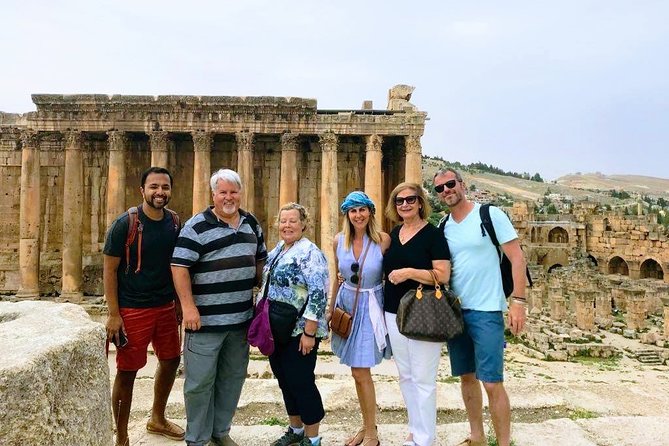
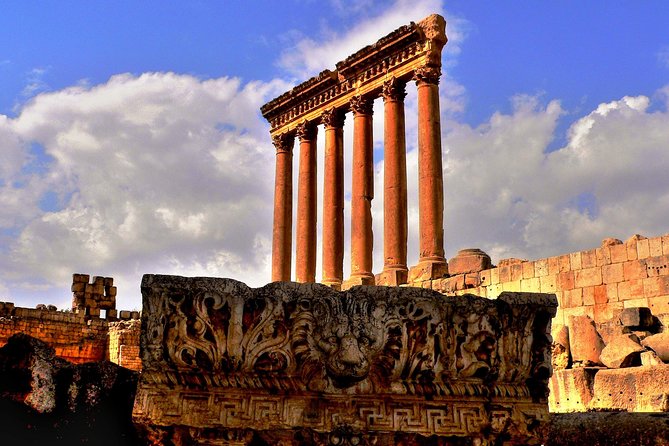
Baalbek is the reason to choose this trip. The site sits at the foot of the Anti-Lebanon range, beside the Bekaa Valley, at an altitude of about 1,150 meters. Its Roman sanctuary grew over more than two centuries and became one of the ancient Roman world’s great religious centers.
The complex honored a Romanized version of a Phoenician religious triad: Jupiter, Venus, and Bacchus. That blend of local traditions and Roman imperial design gives the site more depth than a simple collection of old columns. You are looking at a place where local worship was reshaped under Roman rule.
The scale is the first thing that catches your eye. Huge columns, broad stone platforms, and monumental temple remains make Baalbek feel almost too large for its setting. The ruins are among the best-preserved Roman remains in the region, and the guide’s explanation helps connect the surviving stones to the city that once stood here.
You have about 90 minutes at the temple complex, with admission included. That is enough for a guided overview and the major sights, but it is not enough for a slow archaeological study. If you enjoy photographing details, reading every sign, or lingering at each temple, you may wish for more time.
One useful detail from the guiding team is that Natasha is an archaeologist. If she leads your group, her background can add useful context to the masonry, temple design, and changing religious traditions. The tour does not guarantee a particular guide, but her expertise is worth noting when you consider the quality of interpretation on offer.
The Mosque of Sayeda Khawla
The Baalbek portion also includes the Mosque of Sayeda Khawla. It marks the place where local tradition holds that Sayyida Khawla, the daughter of Imam al-Hussein, was buried after the caravan of captives from Karbala passed through Baalbek.
This stop adds a religious and living dimension to the ancient Roman site. Baalbek is not only an archaeological attraction. It is also part of the region’s Islamic memory and present-day identity. That contrast makes the visit more meaningful than simply walking from one classical column to another.
The supplied schedule does not give a separate duration for the mosque, so expect it to fit within the Baalbek visit rather than function as a long independent stop. Dress and behave respectfully at a religious site, and follow your guide’s instructions about where the group may go.
The Stone of the Pregnant Woman
A short 15-minute stop brings you to the Stone of the Pregnant Woman, also known as a worked Roman monolith. It is one of two enormous ancient blocks in the area, and both were probably intended for the nearby temple complex.
The stone is useful because it makes the engineering challenge visible. At the temples, you see the finished monument. Here, you see the raw scale of the blocks that builders planned to move and use. The name is memorable, but the real point is the astonishing size and weight.
Admission is free, and 15 minutes is enough to see the stone, hear the explanation, and take photographs. Do not expect a full second archaeological site. This is a brief, well-chosen addition that helps explain how Baalbek was built.
Same region, a different set of walls:
- Seville: Royal Alcázar Entry Ticket
★ 4.6 · 28,378 reviews - Stonehenge, Windsor Castle, and Bath from London
★ 4.5 · 18,662 reviews - Bucharest: Dracula’s Castle, Peles Castle, & Brasov Old Town
★ 4.5 · 17,858 reviews - From Munich: Neuschwanstein & Linderhof Castle Full-Day Trip
★ 4.6 · 14,646 reviews
Anjar and the Umayyad city
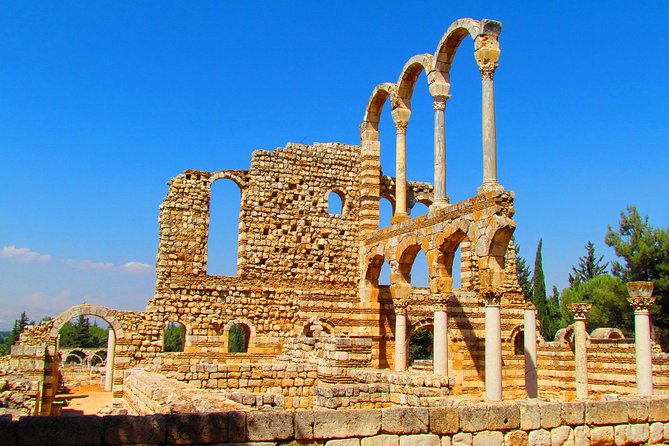
Anjar shifts the clock forward to the Umayyad period. The site was an inland commercial center at the meeting point of routes between Beirut and Damascus, and between Homs and Tiberias across the Bekaa Valley. Archaeologists identified the ancient city only in the late 1940s, so its rediscovery is part of the story too.
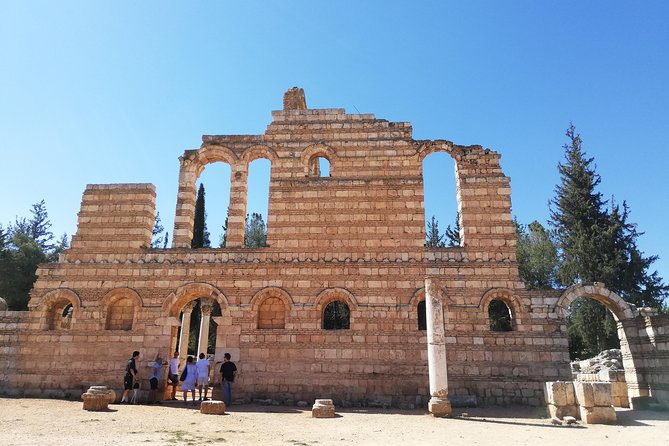
You have about 45 minutes here, with admission included. The ruins include walls from the Umayyad palace, harems, a mosque, the caliph’s great palace, thermal baths, and rows of pillars influenced by Roman architectural forms.
That Roman influence is worth watching for. Anjar is not a Roman city, yet its builders used classical ideas in an Umayyad setting. The site shows how later rulers reused and adapted older architectural language rather than starting from nothing.
Anjar is smaller in emotional impact than Baalbek, but it gives the day a needed change of period and style. The shorter visit also suits the schedule. You get a clear introduction without spending hours on a site that some people may find less immediately dramatic than Baalbek.
If you are deeply interested in early Islamic history, 45 minutes may feel brief. For a first look, it is enough to understand the city plan, identify the principal buildings, and compare the Umayyad remains with the Roman monuments visited earlier.
Lunch with Lebanese food
Lunch at a local Lebanese restaurant is included, and this is one of the strongest practical features of the tour. A full sightseeing day needs a proper meal, not just a quick stop for snacks. The food also gives you a chance to experience part of Lebanon beyond ruins and formal commentary.
The exact restaurant and menu are not specified, so I would not book this expecting a particular dish. Still, the meal is repeatedly praised as generous and excellent, and one account specifically describes it as sumptuous. Ziad, one of the drivers, was also noted for taking care that lunch was served well.
That detail matters. A good tour is not only about reaching the sights. It is also about how the day is managed between them. Having lunch arranged removes another decision from a busy schedule, and the local setting should make the break feel more connected to the country than an international fast-food stop.
Château Ksara and Lebanese wine
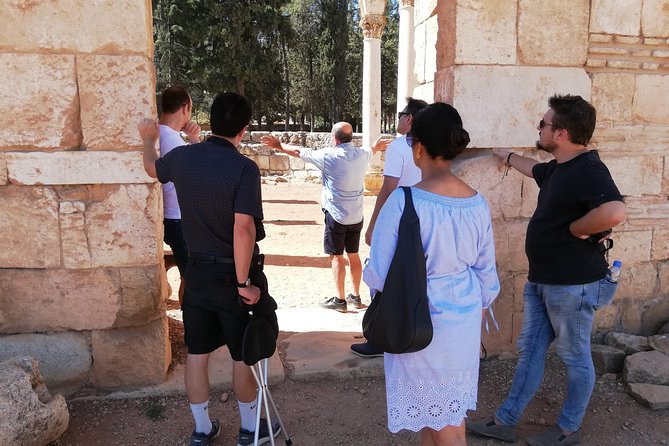
The final major stop is Château Ksara in the Bekaa Valley. Jesuit priests founded the winery in 1857, and it developed Lebanon’s first dry wine. Today, the winery produces about three million bottles a year, with its wine sold in many countries.
The tour includes a behind-the-scenes look at how Lebanese wine is made and a peek inside the on-site cave. Multiple wine samples are part of the experience described, giving you a chance to taste several styles rather than simply seeing bottles on a shelf.
Ksara is a good counterpoint to Baalbek and Anjar. The earlier stops focus on ancient stone and political power. Here, you see a continuing Lebanese craft and a working producer tied to the region’s agricultural traditions.
There is one cost detail to watch closely: admission at Château Ksara is not included. The tour price covers the winery visit in its advertised form, but the listed admission status means you should confirm exactly what is covered, especially if tasting fees or entry charges change.
The one-hour stop is long enough for an introduction, the cave, and wine tasting, but probably not for a leisurely winery tour. You should also remember that this comes after a full day of sightseeing. If you prefer wine tourism above archaeology, you may find the Ksara portion too short. If you want a balanced day, its position at the end works well.
Guides, drivers, and the small-group feel
The tour includes both a local guide and a tour leader, and the group limit is 15 people. That combination should provide a useful division of duties: one person can focus on the sites while the other helps keep transport and timing on track.
The strongest praise is directed at the explanations, organization, and care throughout the day. Natasha’s archaeological background is a particular advantage if she leads your group. Khalil is also singled out as an engaging on-site guide at Baalbek, while Ziad is praised for looking after the group and lunch arrangements.
Those names are not a promise that you will receive the same team. They do show what to value: clear interpretation, good timing, and a driver who treats the long day as more than a simple transfer between locations.
A group of 15 is a reasonable middle ground. You get the lower cost of a shared tour, but you should still be able to ask questions. If you want to stop whenever you like or set your own pace inside Baalbek, a private arrangement would offer more freedom.
Who should book this tour?
I would choose this tour if you have limited time in Beirut and want a broad introduction to Lebanon’s central Bekaa Valley sights. It suits first-time visitors who want ancient Roman remains, early Islamic architecture, food, and wine without arranging separate transport.
It is also a good fit for people who value interpretation. Baalbek can be impressive on its own, but the details about the Phoenician roots of the Roman triad, the engineering of the monoliths, and Anjar’s trade routes make the sites easier to understand.
You may want another option if your main goal is slow photography, extended archaeological study, or an unhurried winery visit. The schedule is full, and the 90-minute Baalbek visit is the clearest limit.
The tour requires good weather. If poor weather forces cancellation, you can receive a different date or a full refund. You can also cancel for a full refund up to 24 hours before the start time. The activity says most people can participate, but no detailed accessibility information is provided.
The final call on value
At $75 per person, this is a strong deal for a nine-hour outing that includes hotel transfers, an air-conditioned minivan, lunch, a guide, a tour leader, and two major admission tickets. The included meal and transport remove many of the costs and hassles that can make a long day trip expensive.
I would book it if you want the efficient version of Baalbek, Anjar, and Ksara, especially during a short stay in Beirut. Go in knowing that this is a well-packed introduction, not a slow scholarly tour. The best reason to choose it is the combination: monumental Baalbek, distinctive Anjar, Lebanese wine, and a local lunch all fit into one manageable day.
FAQ
What time does the tour start?
The tour starts at 8:00 am.
How long does the full experience last?
The tour lasts approximately nine hours.
Does the tour offer hotel pickup and drop-off?
Yes. Hotel pickup and drop-off are included.
What sites are visited?
The tour visits the Temples of Baalbek, the Mosque of Sayeda Khawla, the Stone of the Pregnant Woman, the Umayyad Ruins of Anjar, and Château Ksara.
Is lunch included?
Yes. Lunch at a local Lebanese restaurant is included.
Are entrance tickets included?
Admission to the Temples of Baalbek and the Umayyad Ruins of Anjar is included. Admission at Château Ksara is not included.
How large is the group?
The group has a maximum of 15 people.
Can I cancel for a full refund?
Yes, if you cancel at least 24 hours before the experience starts. Cancellations made less than 24 hours before the start time are not refunded.
Just added around the world
- Standing Stones, Inveraray and Kilchurn Castle & Highlands Tour starting Balloch★ 5.0 · 35 reviews
- Cardiff: South Wales Cliffs, Beaches & Castles Day Tour★ 5.0 · 36 reviews
- West Coast Lochs & Castles Tour – from Glasgow★ 5.0 · 20 reviews
- Private Day Tour of South Wales, including Cardiff & Caerphilly Castle.★ 5.0 · 15 reviews
- Private Tour – Edinburgh to St Andrews, Dunnottar Castle & Dundee★ 5.0 · 9 reviews
- Private Day Tour of Cardiff, including Cardiff Castle, St Fagans, & Cardiff Bay★ 5.0 · 5 reviews
- From Cardiff: 3 Amazing Castles, Tintern Abbey & Roman Caerleon★ 5.0 · 12 reviews
- Carcassonne: Secrets of the Castle’s Defense Self-Guided Tour★ 4.5 · 8 reviews
Lunch Experiences, compared.
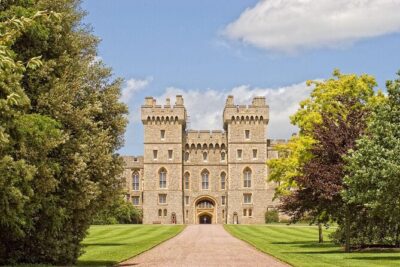
Stonehenge, Windsor Castle and Bath with Pub Lunch in Lacock
Read our review →
Toledo & Segovia Tour w/ Cathedral, Alcazar & Lunch
Read our review →
Toledo & Segovia Tour with Cathedral and Alcazar Tickets & Lunch
Read our review →
From Cairo Alexandria Catacombs, Citadel Day Trip with Lunch
Read our review →
Full-Day Prague Tour with Prague Castle, Lunch and Vltava Cruise
Read our review →
Stonehenge, Windsor Castle, Bath, Lacock & Pub Lunch
Read our review →
Durres/Golem: Kruja Castle & Bazaar with Traditional Lunch
Read our review →
St-Emilion & Médoc Wine Day Tour: Chateaus, Tastings and Lunch
Read our review →Browse the lists this tour appears in