
Review · PORTUGAL
Schist Villages and medieval castles tour
Stone villages reward curious visitors. This 4.5-hour private outing from Coimbra takes you into Portugal’s Schist Villages, where dark stone homes, forest roads, river valleys, and old customs offer a sharp change from city sightseeing. I especially like the personal guiding by Mónica and the chance to pair village life with two medieval castles. The main consideration is the walking: steep, uneven village paths and winding mountain roads make this a poor fit for anyone with limited mobility.
The tour also leaves room for simple pleasures, including a swim in natural waters and a meal at a local restaurant if you request it. At $129 per person, the price makes the most sense for visitors who value private transport, local conversation, and a flexible day beyond Coimbra’s usual sights.
Key things to know before you go
- Mónica gives the tour its personal feel: She speaks English, Portuguese, and Spanish, and brings local knowledge, family memories, and a warm sense of humor to the drive.
- You see two sides of the region: Schist homes show rural life, while two medieval castles bring in the stories of earldoms, kings, and Knights Templar.
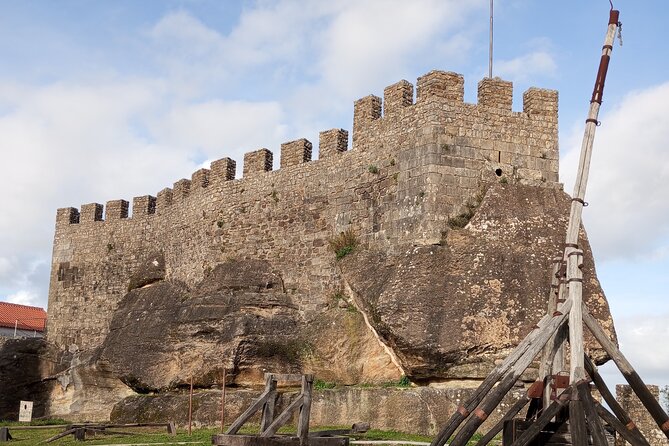
- Penela Castle is one confirmed stop: The castle adds a strong historical contrast to the small stone villages.
- Natural swimming is part of the appeal: Bring swimwear and a towel if you want time in the river or a natural pool.
- Lunch is optional: A traditional meal can be arranged at a local restaurant, but it is not included in the listed price.
- This is a private tour, not a bus outing: The small scale allows more questions, easier photo stops, and a calmer pace.
Leaving Coimbra for Portugal’s stone villages
The tour begins with pickup from your Coimbra hotel or another agreed meeting point. That simple start matters. You do not need to work out a rural bus connection or find your way along winding roads into the hills.
The advertised duration is 4.5 hours, although the outing is also described as a full-day trip in the tour details. Confirm the exact departure time and route when booking, especially if you want lunch or a swim. The day includes several rural stops, two castles, and time outdoors, so the schedule may feel full even if the official duration is less than a typical full day.
Transport is included, and this is one of the tour’s real advantages. The roads through the hills can be narrow and winding. Mónica received repeated praise for driving carefully, which is useful if you would rather look out at the forest and villages than concentrate on every bend.
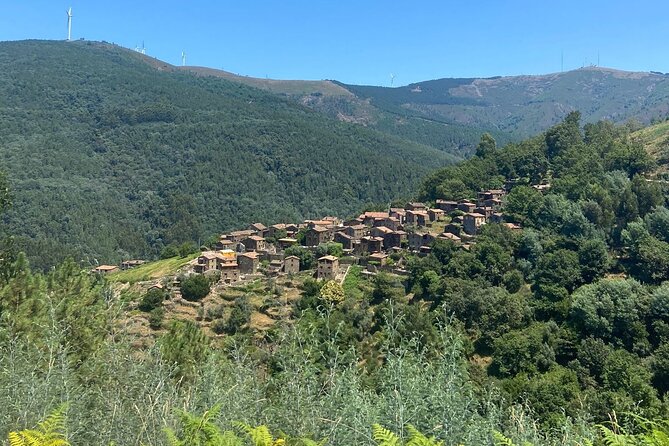
The countryside changes as you leave the city. You pass through hills, streams, and small rivers before reaching the stone settlements. In places affected by recent wildfires, the hills may look less green than usual, but the villages themselves remain attractive and intact. That contrast is part of the present-day story of the region, not something to hide from you.
More Medieval Old Town Tours in Portugal
- Sintra: Walking Tour with Palace, Castle, and Old Town Visit
★ 4.9 · 66 reviews - Schist Villages and Medieval Castles Tour
★ 5.0 · 30 reviews - From Albufeira: Benagil Tour, Bones & Medieval Silves Castle
★ 4.5 · 29 reviews
What makes a Schist Village different
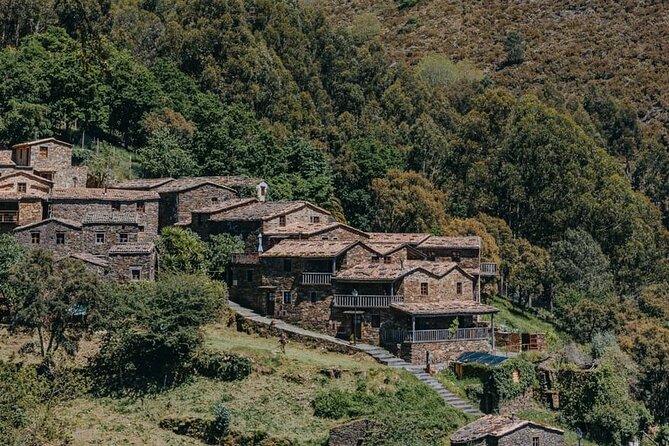
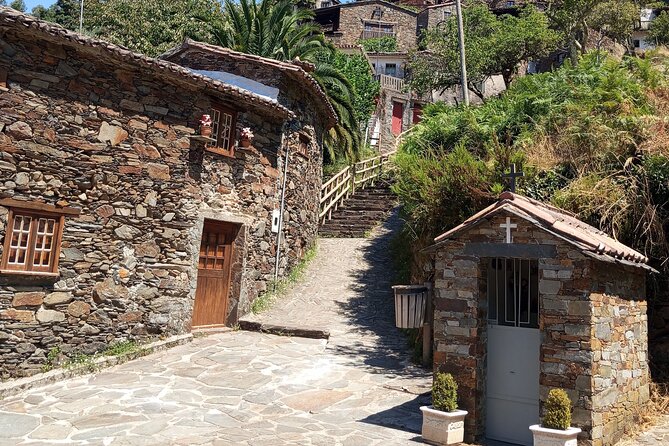
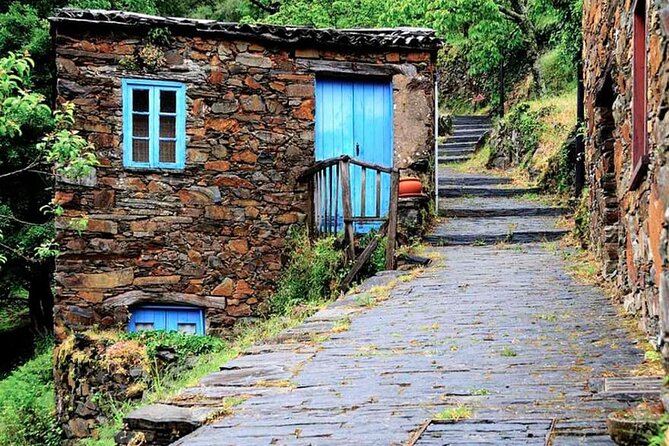
Portugal’s Schist Villages are built from schist, a dark, layered stone that gives the homes a weathered gray and brown appearance. The material is practical, local, and closely tied to the hills around the settlements.
You are not simply stopping for photographs. The guide explains how people lived in these villages, how local customs continued over time, and how the buildings fit into daily life. That context helps you see why a small doorway, stone wall, or narrow lane matters.
The villages vary in condition and character. Some have been repaired and prepared for visitors. Others feel more natural and less polished. Seeing both types is useful because it gives you a clearer sense of the difference between a preserved historic settlement and a village still shaped by ordinary life.
The best part of this section is the scale. These are not grand monuments designed to impress from a distance. They are compact places where the details are close at hand. You can walk between stone houses, look at the surrounding hills, and imagine how isolated life once was.
Mónica adds another layer by talking about Portuguese customs and her own childhood in the region. Her stories help prevent the tour from becoming a string of dates and building materials. You get history, but you also get a sense of how people relate to the countryside today.
You should wear proper walking shoes. Paths can be uneven, and the tour is not suitable for wheelchair users or people with mobility impairments. Comfortable clothing will make the village walks easier, especially if the weather turns cool or wet.
Two castles and a wider chapter of Portuguese history
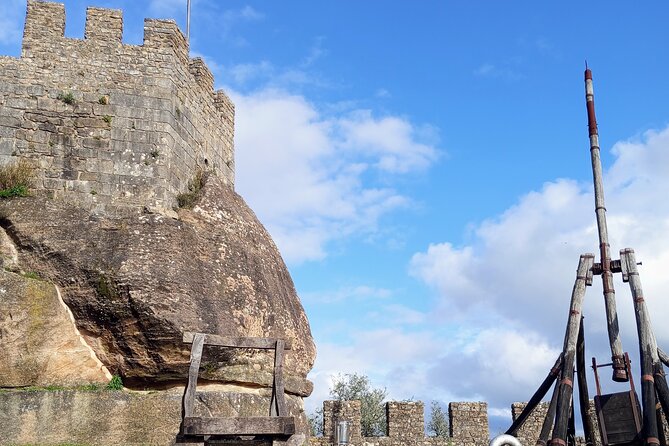
The castles give the tour a useful change of pace. After the small scale of the villages, medieval fortifications bring you into a bigger story involving rulers, local power, earldoms, and military orders.
Penela Castle is specifically mentioned as one of the stops. It provides a strong view into the defensive side of the region and makes a natural contrast with the modest stone homes. The villages show how ordinary people lived, while the castles point to the authorities and conflicts that shaped the wider area.
The tour includes two medieval castles, though the exact second castle is not specified in the available details. For that reason, I would ask for the confirmed route before booking if a particular fortress is important to you.
The historical explanation is one of the strongest parts of the outing. Mónica connects local sites with Portuguese kings and the Knights Templar, rather than treating each castle as an isolated ruin. You get a better sense of how the region fits into Portugal’s past.
Do not expect a long archaeological visit at every stop. This is a mixed countryside tour, not a dedicated castle study day. The castles add historical depth to the villages, while the villages provide the human scale that castle tours sometimes lack.
River time, natural pools, and a slower pause
The opportunity to swim in natural waters gives the tour a relaxed middle or closing section. After walking through villages and visiting historic sites, a river stop lets you slow down and enjoy the setting without another lecture or timetable pressure.
Bring swimwear and a towel if you want to enter the water. Swimming is an opportunity rather than a required part of the tour, so you can stay beside the river if you prefer. You should also bring water and snacks, as meals are not automatically provided.
The natural setting is quiet and simple. Do not expect a managed resort, a large pool complex, or a long beach-style stop. The appeal is the calm of the river and the chance to spend time outdoors in a less developed setting.
This is also where the tour feels most different from a standard city excursion. You are not just moving from one indoor attraction to the next. You are spending part of the day among hills, streams, stone houses, and open air.
Weather can change the feel of this stop. On a warm day, swimming may be the highlight. On a rainy or cool day, you may prefer a short walk and more time in the villages or castles. Pack sensibly and treat the swim as a welcome option, not the sole reason to book.
Same region, a different set of walls:
- Sintra: Castle of the Moors Skip-the-Line Ticket
★ 4.6 · 2,893 reviews - Lisbon: São Jorge Castle E-Ticket and Audio Guide
★ 4.3 · 2,182 reviews - Lisbon: Sao Jorge Castle Skip-the-Line Ticket with Guide
★ 4.6 · 1,191 reviews - Templar Tour Convent of Christ & Almourol Castle from Lisbon
★ 5.0 · 704 reviews
Lunch at a local restaurant, if arranged
A traditional lunch is available upon request at a local restaurant, but it is not included in the $129 price. If food matters to you, arrange it before the day rather than assuming it will be added automatically.
This option can improve the outing because it gives you a chance to try local cooking in a village setting instead of grabbing food between stops. One visitor described a delicious lunch in a Schist Village, which suggests the meal can become a meaningful part of the experience when planned in advance.
Still, keep the wording clear when booking. Meals and personal expenses are separate, and the tour details do not specify the menu, cost, or restaurant. Ask about the additional price, timing, and dietary needs.
If you prefer to keep the tour moving, bring snacks. The practical advice is simple: carry water, carry something small to eat, and do not depend on an included meal.
Why the private format matters
This is a private group experience, and that changes the pace. With only your party in the vehicle, you can ask more questions about local life, request a specific pickup point by agreement, and spend more time at a place that interests you.
Mónica is the guide most closely associated with the experience. Her strongest qualities are warmth, clear English, patience, and a strong grasp of local culture and history. She has been praised for keeping small groups engaged, answering many questions, and sharing personal stories from growing up in the region.
That personal approach is especially valuable on a rural route. A large group often limits conversation to short announcements. Here, you can ask about Portuguese life, village customs, the castles, the effects of wildfires, or the differences between restored and less renovated settlements.
The private format does not mean every part is fully customizable. The experience still has a set focus: Schist Villages, castles, nature, and local traditions. Transportation from a specific point can be arranged only by agreement, and the value may change.
For solo visitors and couples, the format can feel particularly appealing. Several outings have effectively operated as a one-guide, one-party experience, creating a relaxed day with plenty of conversation. Families and small groups may also like the freedom from a packed coach.
Is $129 a fair price?
At $129 per person, this is not the cheapest way to see the countryside. You are paying for private transport, a live guide, a rural route that is difficult to manage without a car, and a mix of villages, castles, and nature.
The value is strongest if you are traveling without a rental car or do not want to drive on hilly roads. It is also good value for a small party that wants direct conversation instead of a standard group tour.
The price is less attractive if you only want to see one village, avoid walking, or plan to skip the castles and swimming stop. Lunch is extra, and personal spending is not covered, so set aside more than the headline price if you want a restaurant meal.
The tour’s near-perfect 4.9 rating from 41 bookings supports the idea that the guiding is a major strength. The praise is remarkably consistent around Mónica’s warmth, historical explanations, careful driving, and ability to make the day feel personal.
What to bring and how to prepare
Keep your packing light, but bring the useful basics:
- Comfortable walking shoes with a firm sole
- Water and snacks
- Swimwear and a towel if you want to swim
- Comfortable clothing suited to changing weather
- A phone or camera for village and countryside photos
The route is not suitable for wheelchair users or people with mobility impairments. If you have trouble on uneven paths, ask about the walking involved before paying.
The tour is offered in English, Portuguese, and Spanish. If you want the optional lunch, confirm it in advance. Transportation from a particular address can also be arranged upon request, but the price and details must be agreed with the provider.
Free cancellation is available up to 24 hours before departure for a full refund. You can also reserve now and pay later, which helps if your Coimbra plans are still shifting.
Who should book this Coimbra day trip?
You should book this tour if you want to see a quieter side of central Portugal and prefer a guide who can explain local life as well as major historical events. It suits couples, solo visitors, families with older children, and small groups who value conversation and flexibility.
It is especially good for you if you have already seen Coimbra’s main urban sights and want forest roads, old stone homes, castles, and time beside a river. The tour also works well if you are nervous about driving in rural hills.
You may want another activity if you need step-free access, dislike winding roads, or want a long, leisurely castle visit with no swimming or village walking. The 4.5-hour format also means you should confirm the exact schedule if you expect a full-day outing.
Should you book the Schist Villages and medieval castles tour?
Yes, if your idea of a good day includes local stories, quiet villages, and a guide who treats the region as home rather than a backdrop. The combination of Schist Villages and castles gives you both ordinary rural life and the larger story of Portuguese power and defense.
I would book it with Mónica if you want a warm, highly personal guide and a safe driver for the hill roads. I would also request the traditional lunch ahead of time and confirm the two castle stops, the pickup point, and the exact duration.
Skip it only if mobility is a concern or if you want a short, self-guided photo stop. For most active visitors staying in Coimbra, this is a worthwhile way to reach a part of Portugal that is easy to miss without local transport.
FAQ
Where does the Schist Villages and medieval castles tour begin?
Pickup is available from your hotel in Coimbra. Transportation from another specific point may be arranged in advance, with the location and any price change agreed beforehand.
How long does the tour last?
The listed duration is 4.5 hours. The experience is also described as a full-day trip, so confirm the departure time and final schedule when booking.
What languages does the guide speak?
The tour is available in English, Portuguese, and Spanish.
Is this a private tour?
Yes. The experience is for a private group rather than a large shared coach group.
Is lunch included?
No. A traditional lunch can be arranged at a local restaurant upon request, but meals and personal expenses are not included in the listed price.
Can I swim during the tour?
Yes. You have the opportunity to swim in natural waters. Bring swimwear and a towel if you want to use this option.
What should I bring?
Bring comfortable shoes, comfortable clothing, water, and snacks. Add swimwear and a towel if you plan to swim.
Is the tour suitable for wheelchair users?
No. The tour is not suitable for wheelchair users or people with mobility impairments.
Just added around Portugal
- Private Tour to Silves Castle Old Town stop at Chapel of Bones★ 4.5 · 2 reviews
- Albufeira Safari Tour with Waterfall*, Castle and Villages★ 5.0 · 29 reviews
- Enjoy Silves Castle & Lagos and Ponta Da Piedade Private Tour★ 5.0 · 2 reviews
- Tomar: Convent of Christ and Templar Castle Tour Ticket★ 4.2 · 43 reviews
- Tomar Walking Tour : Templar, Castle, Food, Ceramics, Fun!★ 5.0 · 25 reviews
- Tomar and Almourol Castle: Knights Templar Private Tour★ 4.9 · 8 reviews
- Tomar: Knight’s Templar Castle and Convent of Christ Tour★ 4.9 · 84 reviews
- From Lisbon: Tomar, Christ Convent & Almourol Castle Tour★ 5.0 · 64 reviews
Medieval Old Town Tours, compared.
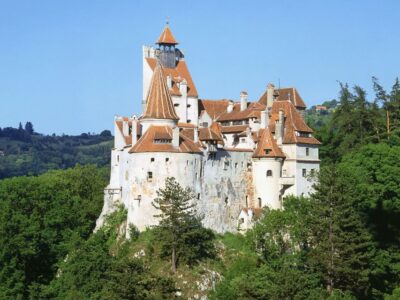
Dracula’s Castle, Peles Castle, & Brasov Old Town
Read our review →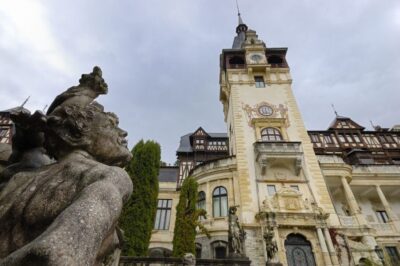
Dracula Castle, Peles Castle & Brasov Old Town
Read our review →
3-Hour Walking Tour of Old Town & Prague Castle
Read our review →
3-Hour Old Town and Prague Castle Tour in German
Read our review →
Peles Castle, Bran Castle, & Brasov Old Town Tour
Read our review →
Nice Old Town and Castle Hill: Guided Cultural Walking Tour
Read our review →
Colmar, Medieval Village & Castle Small Group from Strasbourg
Read our review →Browse the lists this tour appears in