
Review · GERMANY
Premiumstadtführung (historische Altstadt und Schlossberg)
Quedlinburg rewards a slower look. This two-hour walk links the UNESCO World Heritage old town with the Schlossberg, giving you a clear introduction to more than 1,100 years of local history. I like the route’s variety: one moment you are studying crooked half-timbered houses, and the next you are climbing toward the collegiate church. I also like the practical restaurant recommendations at the end. The main concern is the steep, cobbled Schlossberg section, which can be slippery in poor weather.
The tour costs about $10 per person, and children and adolescents up to age 16 go free. That is strong value for a guided look at Quedlinburg’s major sights, though the German-only format matters. The tour does not include entry to St. Servatii collegiate church, so you should treat the inside visit as a separate stop.
Key points to know before booking
- A two-part Quedlinburg route: The walk covers the market square and old town first, then climbs the Schlossberg.
- More than 1,100 years of history: The guide connects buildings, churches, streets, and local personalities rather than showing them as isolated sights.
- Half-timbered architecture everywhere: Medieval lanes and carefully varied timber patterns are a major reason to take the tour.
- Klopstock and Lyonel Feininger: The route introduces Quedlinburg figures through Klopstock-Haus and the Museum Lyonel-Feininger.
- A real hill, not just a name: The Schlossberg includes a steeper section and cobblestones, with extra caution needed after rain, snow, or ice.
- German-language guiding: The guide speaks German, and the tour is best for German speakers or visitors comfortable following a live explanation in German.
Starting at Quedlinburg’s market square
The tour begins at the Quedlinburg city information office on the market square. Look for the green sign, then arrive at the agreed time with your ticket ready for the guide.
This is a useful meeting point because the market square immediately gives you a sense of Quedlinburg’s character. The town hall and surrounding historic buildings create a strong opening scene, and you do not waste time finding a bus, walking to a distant neighborhood, or waiting for transport. The tour begins on foot and stays in the old town and Schlossberg area.
I like this arrangement for a first visit. You start in the town’s public heart, then move outward through streets that are easy to miss if you follow only a map. A guide also helps explain how the buildings fit together, which is important in Quedlinburg. The town is not one isolated monument. Its appeal comes from the large number of old houses, lanes, religious buildings, and civic sites gathered within a walkable area.
The guide speaks German. That is not a small detail. If you understand German, you should get much more from the stories and explanations than you would from simply walking the same route alone. If you do not speak German, you can still appreciate the buildings, but the historical side of the tour will be harder to follow.
Other castles and palaces people visit around Germany:
- From Munich: Neuschwanstein & Linderhof Castle Full-Day Trip
★ 4.6 · 14,646 reviews - Neuschwanstein & Linderhof Castle-Fairytale Day Tour from Munich
★ 4.5 · 7,275 reviews - Neuschwanstein Castle Tour from Munich
★ 4.5 · 5,117 reviews
Town hall and the market church of St. Benedikti
The first portion focuses on the historic center, beginning with the town hall and the market church of St. Benedikti. These stops help frame Quedlinburg as both a political center and a religious town.
The town hall gives the route a civic starting point. Instead of seeing the market square as a pretty photo stop, you get a chance to understand its role in town life. The market church adds another layer, showing how public and religious buildings occupied the same compact center.
The value here is context. Quedlinburg’s buildings can look like a collection of attractive façades, especially if you are rushing through with a camera. A guide can point out what you are seeing and connect the buildings to the town’s long development. That makes the first half more than a stroll through old streets.
You should expect to pause often. This is a walking tour built around explanation, not a fast circuit of photo stops. Wear shoes that handle uneven paving, since cobblestones are part of the route.
Schuhhof, Hölle, and Quedlinburg’s small lanes
The route then moves through Schuhhof and Hölle, two names that help show how memorable Quedlinburg’s old town can be. These narrow lanes are part of the pleasure of walking here. They offer a closer look at the town’s scale than the larger market square does.
Schuhhof is particularly useful for seeing how tightly packed the historic town can feel. Hölle adds a touch of local character through its unusual name and medieval street setting. You are not simply crossing from one major monument to another. The route uses the spaces between them, where the old town’s personality often comes through most clearly.
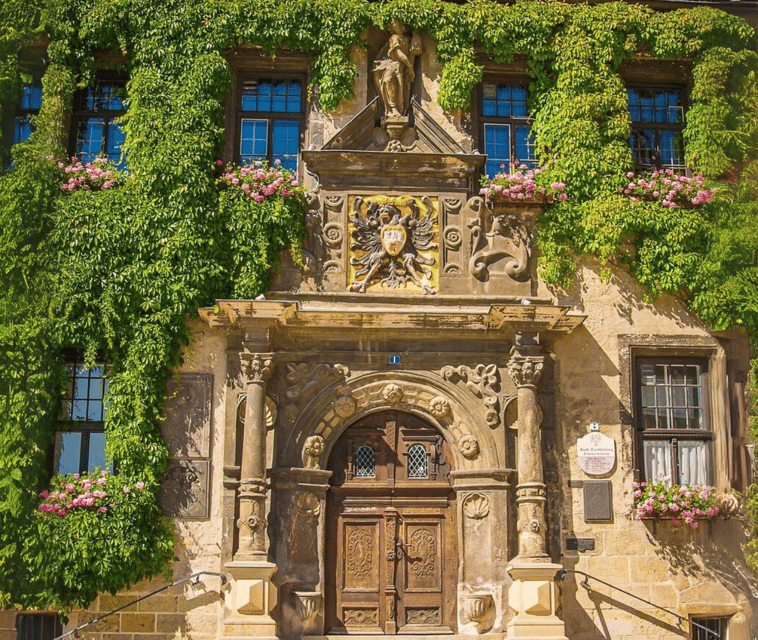
This part may be the most rewarding section for people who enjoy urban details. Look at doorways, rooflines, timber patterns, and the way houses meet the street. The tour promises a look at the variety of half-timbered art, and these smaller lanes are where that promise becomes most visible.
The drawback is that narrow historic streets can be uneven and less comfortable for anyone who has trouble with cobblestones. The supplied information specifically warns about cobbled paths, so plan on sensible footwear rather than stylish but slippery soles.
Blasii Church and the Half-Timber Museum
The old town section also includes Blasii Church and the Half-Timber Museum. These stops broaden the tour beyond exterior views and help explain the building tradition that gives Quedlinburg much of its visual appeal.
The Half-Timber Museum is especially useful if you want more than a general statement that the houses are old. Half-timbered construction can look similar at first glance, but patterns, materials, and decorative details vary. A stop devoted to the subject gives you a better way to read the façades you see later.
Blasii Church adds another religious landmark to the route. Together with St. Benedikti and the collegiate church on the Schlossberg, it shows that Quedlinburg’s story is spread across several sacred sites rather than concentrated in one building.
I would pay close attention here if architecture interests you. You may arrive expecting a simple old-town walk, but the timber framing becomes one of the tour’s main subjects. This is also where a guide’s explanation can save you from walking past details that would otherwise seem decorative but unexplained.
Same region, a different set of walls:
- From Munich: Neuschwanstein Castle Full-Day Trip
★ 4.7 · 3,977 reviews - Potsdam: City and Castles Tour
★ 4.7 · 3,721 reviews - Premium Neuschwanstein Castle and Linderhof VIP Tour from Munich
★ 5.0 · 2,480 reviews - Dresden: Elbe River Cruise to Pillnitz Castle
★ 4.5 · 2,411 reviews
The people behind Quedlinburg’s cultural story
The Schlossberg portion includes Klopstock-Haus and the Museum Lyonel-Feininger. These stops introduce famous personalities linked to Quedlinburg and add a cultural side to the town’s architectural story.
Klopstock-Haus connects the route with literary history. The supplied information does not promise an interior visit, so you should think of this as a stop along the guided route rather than a guaranteed museum admission. Its value comes from learning why Klopstock matters to Quedlinburg and how local history includes writers as well as rulers, churches, and merchants.
The Museum Lyonel-Feininger brings a different artistic name into the walk. Again, the tour includes the location as part of the Schlossberg route, but it does not state that admission is included. If you want to see the museum’s interior, check separately before planning your day.
I like this pairing because it prevents the tour from becoming only an architecture lesson. Quedlinburg’s appeal includes people who shaped its cultural identity. You get a broader picture of the town by moving from civic buildings and churches to literature and art.
Climbing the Schlossberg to St. Servatii
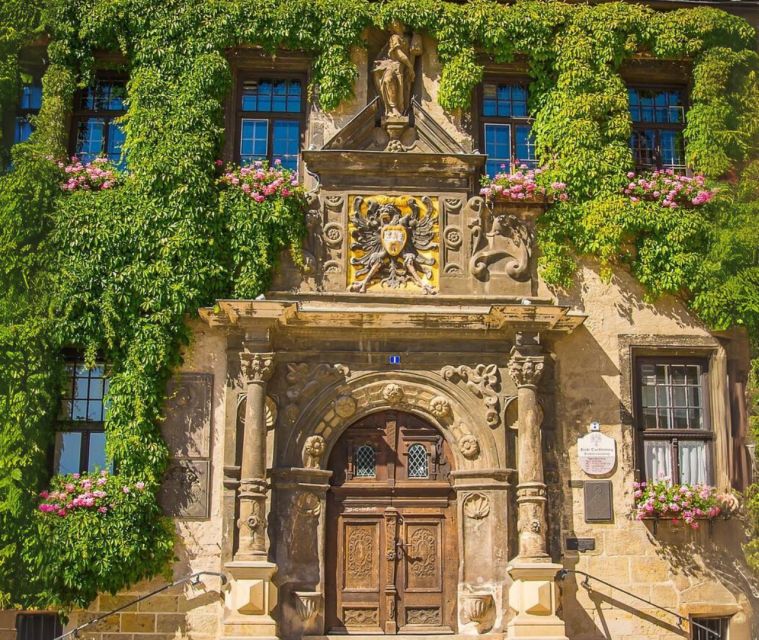
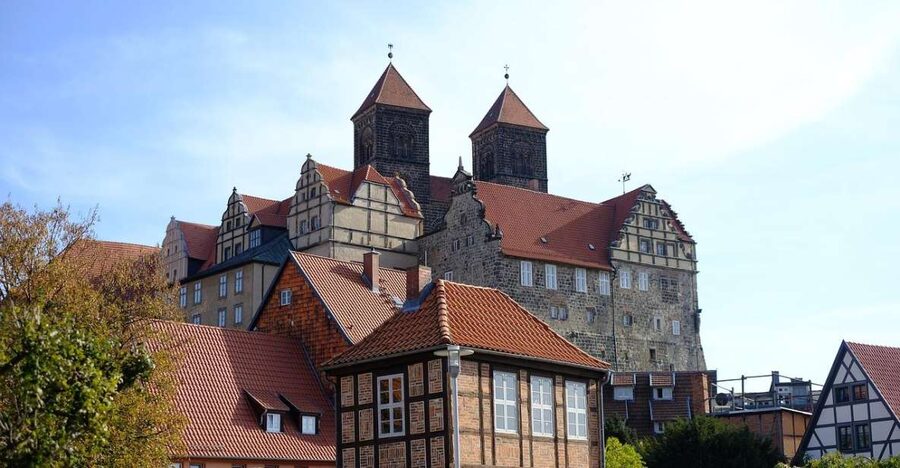
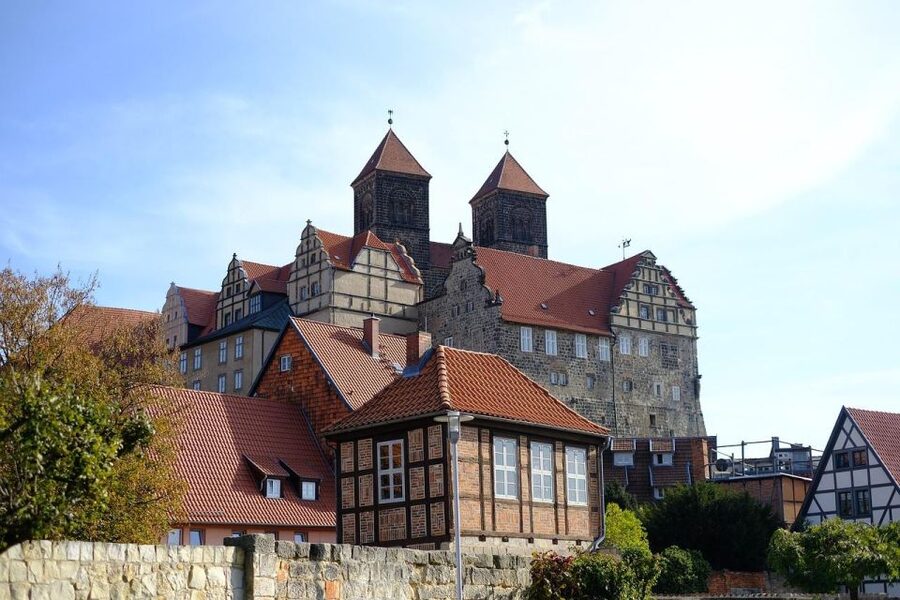
The route’s high point is the Schlossberg, home to St. Servatii collegiate church. This is the section that gives the tour its strongest sense of place, but it is also the part that requires the most care.
The Schlossberg includes a steeper section, and the path is cobbled. In dry conditions, most visitors who are comfortable walking uphill should manage it. After rain, snow, or ice, conditions can change quickly. One scheduled tour was canceled because the hill was considered too slippery, and an alternative time was offered after the path was expected to be treated.
That cancellation detail is worth taking seriously. The tour operates in rain or sunshine, but that does not mean unsafe conditions will be ignored. If you are visiting in winter, allow some flexibility and do not assume every departure will run exactly as planned during icy weather.
At the top, the collegiate church gives the route a strong finish. You can admire the exterior and hear about its importance, but entry inside is not included. If seeing the interior is a priority, set aside separate time and check admission arrangements rather than assuming the guide’s ticket covers it.
The climb also changes the rhythm of the tour. The old town section is about lanes, façades, and close-up details. The Schlossberg section feels more like a destination, with the church and Schlossgarten giving the route a clear upper point.
Schlossgarten and the view from above
The Schlossgarten is included in the Schlossberg portion. The information provided does not promise a specific panoramic viewpoint, so I would not book the tour solely for a famous vista. Still, the garden helps make the hilltop visit more than a church stop.
The garden provides a different setting after the tighter streets below. It gives you space to consider how the Schlossberg relates to the old town and why the hill has such a strong visual presence in Quedlinburg. The route’s appeal comes from this change in setting, from market square to narrow lane to hilltop grounds.
You should expect the walk to remain focused on history and place rather than garden design. The Schlossgarten is one part of a connected route, not a separate garden tour. Its value is the setting and the transition between the collegiate church, the museum area, and the old town below.
Food advice that helps after the walking tour
The guide presents culinary hotspots and recommendations during the tour. That small addition is practical, especially because a two-hour walk can leave you ready for lunch or coffee.
The advice is not the same as a meal included in the booking. You pay for food separately, and no specific restaurant is guaranteed. Still, local suggestions can help you make better use of the rest of your day, particularly if Quedlinburg is only one stop on a larger trip.
January requires extra planning. Several restaurants may be closed at the same time during the quiet winter period, leaving fewer lunch options. A café may be one of the few open choices. If you visit in January, ask about current food options during the tour and keep a backup plan.
This is a good example of the tour’s practical value. You are not only receiving dates and names. You are also getting a little help with how to handle the town during your visit.
Is $10 a fair price for two hours?
At about $10 per person, the tour offers good value if you want live historical explanation in German. You receive two hours of guiding, a route through the main old-town sights, the Schlossberg climb, and food suggestions. Children and adolescents up to age 16 are free, which makes it especially appealing for families.
The price is less compelling if you want interior admissions included. St. Servatii collegiate church is specifically excluded, and the tour information does not say that the museums are entered. You are paying for the guided walk and the interpretation, not an all-inclusive sightseeing pass.
For a first visit, I would consider the fee reasonable. Quedlinburg’s old town has enough detail to reward explanation, and the route covers a lot in two hours without requiring transport. If you already know the town well or prefer to read at your own pace, you may find a self-guided walk sufficient.
The overall rating is 4.4 out of 5 from 627 ratings, which points to a generally dependable experience but not a flawless one. The strongest praise centers on the tour being interesting, detailed, and friendly, with a group size that allows questions. That is exactly what I would want from a local walking tour.
Group size, questions, and the German format
One recent assessment praised the detailed presentation, friendly female guide, and a group size that felt right for asking questions. No guide names are provided, so I cannot promise a particular guide or personality on a given departure.
That group-size point matters. A very large group can turn a historic walk into a series of distant glances at the guide. A manageable group makes it easier to hear explanations and ask about a house, church, or local figure when something catches your attention.
The language remains the key filter. The tour is offered in German only. German speakers should find the format direct and useful, while visitors without German will need to decide if the visual experience alone justifies booking.
Weather, winter conditions, and what to bring
The tour runs in rain or sunshine, so pack for the forecast rather than waiting for perfect weather. A waterproof layer can help in wet conditions, and firm shoes are the most important item because of the cobbled paths and Schlossberg incline.
Winter deserves special care. Ice on the hill can lead to cancellation, and one affected departure resulted in a proposed alternative date and a partial refund issue that the booking party questioned. The practical lesson is simple: check the status of the tour if the weather turns hazardous, and keep your schedule flexible.
The activity allows free cancellation up to 24 hours before the start for a full refund. You can also reserve now and pay later, which helps if your route through northern Germany is still changing. These policies are useful, but they do not remove the need to prepare for the terrain.
Who should book this Quedlinburg walk?
I would recommend this tour to first-time visitors who want a quick but substantial orientation. It is also a good match for families because children up to age 16 are free, provided everyone is comfortable with cobblestones and the hill.
History fans, architecture enthusiasts, and German-speaking visitors will get the most from it. The combination of town hall, churches, timber houses, local figures, museum stops, and the collegiate church gives you a broad introduction without spreading the route across the whole region.
I would be more cautious if you have difficulty walking uphill or on uneven surfaces. The Schlossberg is not a minor detail. It is the tour’s high point and one of its physical challenges.
Should you book it?
Book this tour if you want a German-language introduction to Quedlinburg that combines famous sights with smaller lanes and local context. At about $10, it is an efficient way to organize your first two hours, and the free child places improve the value for families.
Skip it if you need English guiding, guaranteed museum interiors, or a completely level route. Also think twice about a winter departure during icy weather. For most German-speaking visitors who can handle the hill, this is a practical, fairly priced introduction to Quedlinburg’s old town and Schlossberg.
FAQ
How long does the Quedlinburg tour last?
The tour lasts two hours.
What language is the tour conducted in?
The live guide speaks German.
How much does the tour cost?
The listed price is $10 per person. Children and adolescents up to age 16 are free.
Where does the tour begin?
It begins at the Quedlinburg city information office on Quedlinburger Marktplatz. Look for the green sign.
Which old-town sights are included?
The old-town route includes the town hall, the market church of St. Benedikti, Schuhhof, Hölle, Blasii Church, and the Half-Timber Museum.
Which Schlossberg sights are included?
The Schlossberg route includes Klopstock-Haus, the Museum Lyonel-Feininger, Schlossgarten, and St. Servatii collegiate church.
Is entry to St. Servatii collegiate church included?
No. The inside of St. Servatii collegiate church is not included.
Does the tour operate in bad weather?
The tour takes place in rain or sunshine, but slippery conditions on the Schlossberg can affect departures.
Can I cancel the booking for a refund?
You can cancel up to 24 hours in advance for a full refund. Reserve-now, pay-later booking is also available.
Just added around Germany
- Sightseeing flight Zugspitze Neuschwanstein Castle Alps Munich Augsburg★ 5.0 · 7 reviews
- Stuttgart: Landesmuseum Württemberg Old Castle Entry Ticket★ 4.6 · 21 reviews
- Stuttgart: 4-Castle Winter Hike with Costume Tour★ 4.5 · 2 reviews
- Stein: Guided tour of Count von Faber-Castell’s castle★ 4.9 · 27 reviews
- Sigmaringen: Hohenzollern Castle Admission & Audio Guide★ 4.9 · 15 reviews
- Segway Tour: Gerberbach, Schlosspark & Castle Weinheim★ 4.9 · 14 reviews
- Dresden: Scavenger Hunt to Elbe River & Castles★ 4.7 · 15 reviews
- Private tour to Neuschwanstein castle from Munich★ 5.0 · 23 reviews
Germany Castle Tours, compared.

Neuschwanstein & Linderhof Castle Full-Day Trip
Read our review →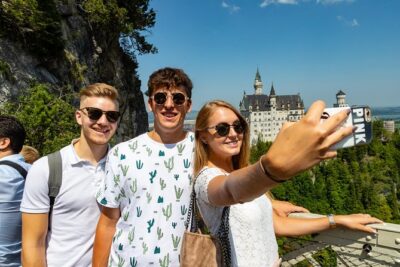
Neuschwanstein & Linderhof Castle-Fairytale Day Tour from Munich
Read our review →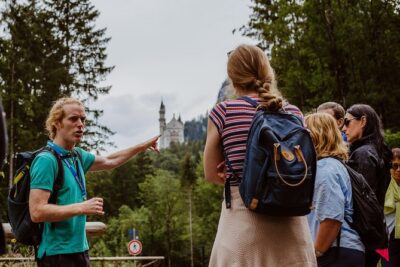

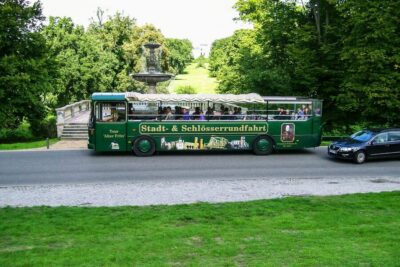
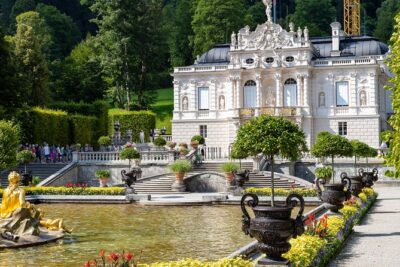
Premium Neuschwanstein Castle and Linderhof VIP Tour from Munich
Read our review →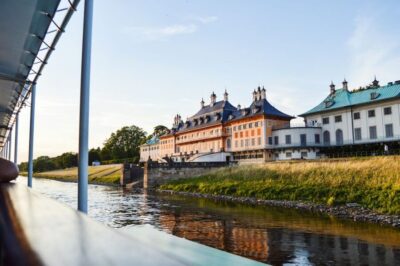
Browse the lists this tour appears in