
Review · PRAGUE
Prague Castle: Small-Group Tour with a local guide
Prague Castle rewards a guided visit. This 150-minute tour gives you small-group access for up to 10 people, and I like that the guide handles the admission tickets while you focus on the buildings, stories, and views. I also like the strong local storytelling from guides such as Inna, Marta, and Kamil, who bring the castle’s politics, legends, and personal Czech memories to life. The main drawback is that the castle can still be crowded, and the shared entry line means skip the ticket line does not always mean walking straight indoors.
The route covers the castle’s essential interiors: St. Vitus Cathedral, the Old Royal Palace, St. George’s Basilica, Golden Lane, and Daliborka Tower. You get a useful first look at Prague’s most important monument for $55, but the pace is purposeful rather than leisurely. If you want every room, artwork, and courtyard explored slowly, you may need extra time on your own afterward.
Key points to know before you book
- A 10-person limit keeps the tour personal: You can hear the guide, ask questions, and stay connected indoors.
- The guide adds what signs cannot: Inna and Marta are often praised for clear English, humor, stories, and strong command of Czech history.
- The castle ticket covers the major interiors: St. Vitus Cathedral, the Old Royal Palace, St. George’s Basilica, and Golden Lane are included.
- The ticket line can still exist: Guides have no private interior entrance, but they use waiting time for facts and legends.
- Golden Lane is the finishing point: The tour ends there, near the tiny historic houses and Daliborka Tower.
- Go early if you can: Crowds can build during the tour, even outside the busiest season.
Why Prague Castle works better with a guide
Prague Castle is not one tidy building. It is a large complex shaped by centuries of rebuilding, changing rulers, religious power, and political upheaval. You can walk through its courtyards alone, but the place makes more sense when someone explains how a hill fort from the ninth century became one of the world’s largest castle complexes.
That context is the main reason I see value in this tour. A self-guided visit can show you stone, stained glass, chapels, and narrow lanes. A good guide explains why those places mattered and connects them to Bohemian kings, Christian tradition, royal politics, and the modern Czech past.
The small group matters, too. With no more than 10 people, you are less likely to lose the guide in a courtyard or miss a detail inside the cathedral. The format also makes questions practical. You can ask for clarification instead of trying to follow a large crowd around a guide holding up a flag.
The experience has earned a 4.7 rating from 505 reviews, with repeated praise for Inna and Marta. I would not book expecting the exact same guide every time, but the consistent pattern is clear: the strongest part of the tour is the person leading it.
A few more castle visits around Prague worth a look
- Prague: Castle Tour with Local Guide and Entry Ticket
★ 4.6 · 10,422 reviews - Prague Castle 2.5-Hour Tour Including Admission Ticket
★ 4.7 · 8,927 reviews - Prague: 3-Hour Walking Tour of Old Town & Prague Castle
★ 4.7 · 5,696 reviews
Meeting at Hradcany Square
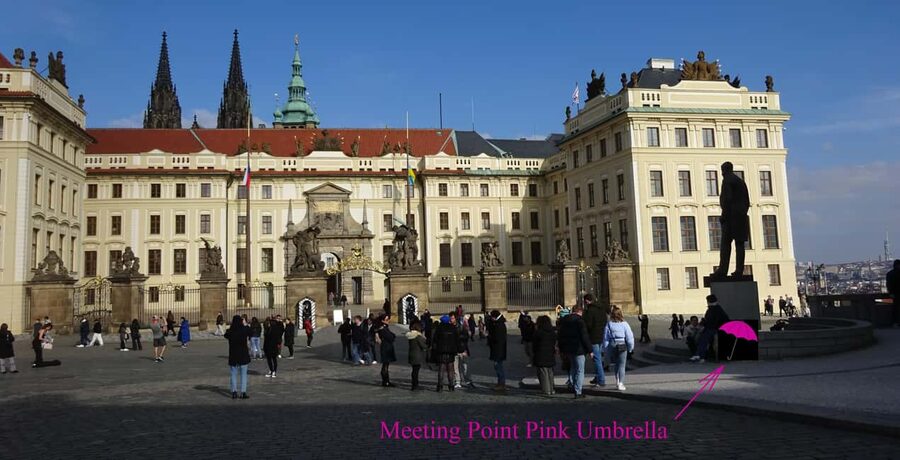
The tour begins at the statue of Tomáš Garrigue Masaryk on Hradcany Square, in front of Prague Castle’s main gate. Look for the guide holding a pink umbrella.
That meeting point is useful because it puts you right at the castle entrance rather than starting somewhere down in the city. Still, allow time to find the statue and identify the correct guide, especially in wet weather when several pink umbrellas may appear. One participant even noted that the umbrella was not unique enough on a rainy day.
The square also gives you a quick sense of the castle’s scale before you enter. I like this kind of start because the guide can establish the basic story before the interiors begin. You are not simply being marched from one ticket checkpoint to the next.
Hotel pickup and drop-off are not included, so you make your own way to the square. Food, drinks, souvenirs, and personal expenses are also yours to cover. Wear comfortable shoes. The route includes courtyards, interior floors, and the Golden Lane area, so this is not a sit-down museum visit.
St. Vitus Cathedral in about 50 minutes
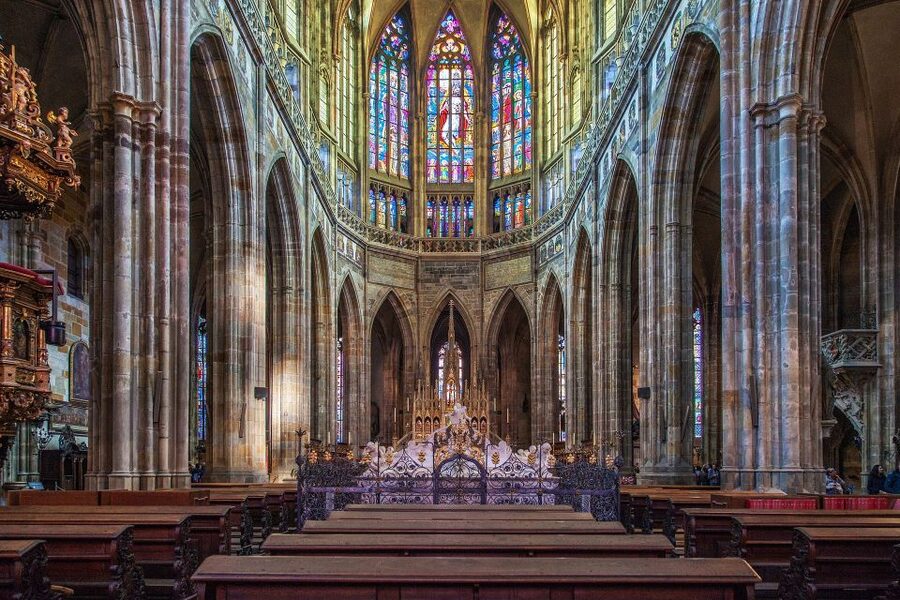
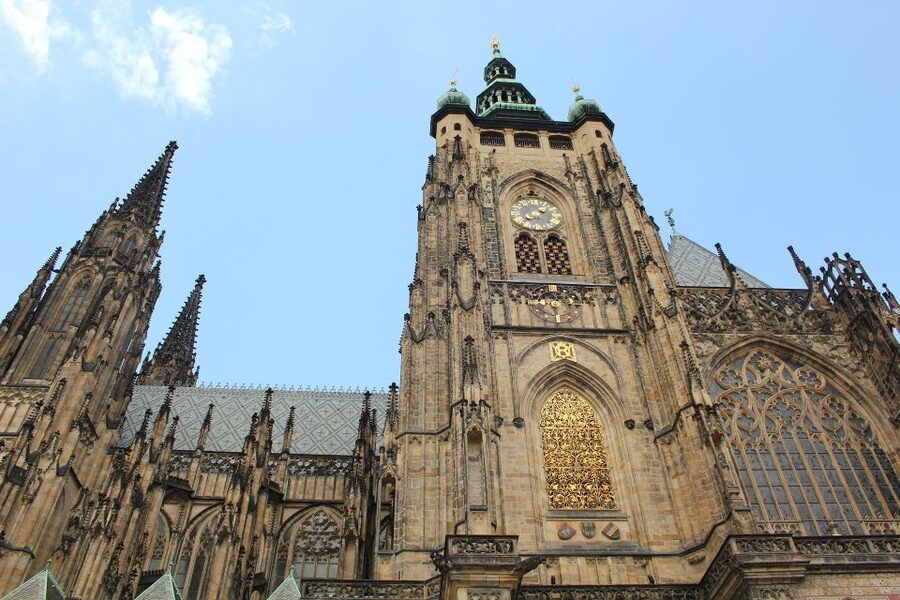
St. Vitus Cathedral is the tour’s grand centerpiece. The visit lasts about 50 minutes, making it the longest stop on the route, and that is sensible. The building is too important and too visually packed to rush through in a few minutes.
This is the coronation church of the Bohemian kings, and the guide helps you read it as more than a dramatic Gothic interior. You can expect explanations of its role in royal ceremonies, its place within the castle, and the details that are easy to miss when you are looking upward at the architecture.
A guide also helps with orientation. Large cathedrals can blur together when you are visiting several European cities in one trip. Clear explanations and specific stories give the building a stronger identity. Inna is often praised for pointing out small features that other guides pass by, while Marta is praised for making complicated subjects easy to follow.
There is a practical warning here. The cathedral can become crowded, and entry may involve a shared line. The tour description is clear that skip the ticket line means the guide obtains or provides the admission ticket, not that the group has a private doorway. On a busy day, you may still wait.
That wait is less frustrating when the guide keeps talking. Guides on this tour use the line to explain legends, answer questions, and add details not found in a standard audio guide. One useful advantage is that you may have a moment to use the bathroom or look at the gift shop while the guide manages part of the ticket process, though the exact arrangement can vary.
In winter, bring warm clothing. One December visit was described as especially cold inside the cathedral and castle. The stone interiors do not offer much comfort if you arrive dressed only for a mild afternoon in town.
The Old Royal Palace and Prague’s defenestrations
The Old Royal Palace receives about 30 minutes. This is where the tour moves from sacred architecture to royal government and political drama.
The main historical hook is the third Defenestration of Prague. That event is tied to the palace and helps explain the fierce religious and political conflicts that shaped Bohemia. The guide’s job here is not just to name the event, but to explain why people were angry, who held power, and how a seemingly shocking act fit into a wider struggle.
This is one of the places where a local guide can earn the admission price. The name defenestration may sound like an odd bit of vocabulary, but the story behind it is central to Prague’s political identity. A guide can give it sequence and human detail rather than leaving you with a label on a wall.
The Old Royal Palace is also a good test of pacing. Some people love long historical explanations, while others prefer a quicker walk through. One participant felt there was almost too much information, while another appreciated the depth. If you enjoy history, you will likely appreciate the detail. If you prefer a light sightseeing stroll, you may find the explanations dense.
Same region, a different set of walls:
- Prague: 3-Hour Old Town and Prague Castle Tour in German
★ 4.8 · 5,671 reviews - Prague: Prague Castle and Lobkowicz Palace Entry Tickets
★ 4.4 · 5,066 reviews - Prague: Big Bus Hop-on Hop-off, Castle Tour and River Cruise
★ 4.0 · 3,733 reviews - Prague 3-hour Afternoon Walking Tour including Prague Castle
★ 5.0 · 1,899 reviews
St. George’s Basilica, the oldest surviving castle building
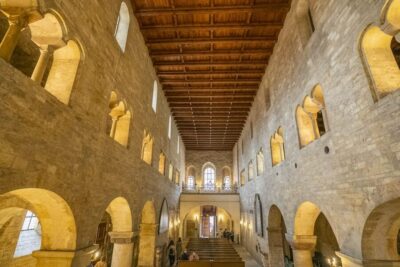
The next 30-minute stop is St. George’s Basilica, described as the oldest surviving building in Prague Castle. Its age gives the visit a different mood from the cathedral. Instead of the cathedral’s grand scale, you get a more compact setting where the early story of the castle becomes easier to grasp.
I like having this stop after the Old Royal Palace. The route shifts between royal power and religious foundations, giving you a clearer picture of how closely those forces were linked in medieval Bohemia.
The guide can also point out details that might seem plain at first glance. Without context, an older church may appear less immediately impressive than the cathedral. With context, its survival and place within the castle complex become the attraction.
The 30-minute visit should give you enough time to listen and look around without making the tour feel stuck in one room. Still, this is a guided overview, not an extended architectural study. If you are especially interested in Romanesque buildings, you may want to return later and spend more time examining the structure at your own pace.
Golden Lane and Daliborka Tower
Golden Lane is the final major stop and the point where the tour ends. The visit lasts about 30 minutes, followed by a visit to Daliborka Tower of roughly 15 minutes.
The lane is known for its picturesque small houses, and the compact scale makes it a welcome change after the cathedral and palace. The colorful façades and narrow setting are highly photogenic, but the guide gives the lane more meaning than a quick photo stop. You learn how this tucked-away part of the castle functioned and why its tiny homes became part of Prague’s popular image.
Daliborka Tower adds a darker note. Towers within castle complexes often served practical and defensive purposes, and this stop helps you picture the less polished side of castle life. The tour description specifically includes the tower, so you get more than the prettiest section of the castle grounds.
Because Golden Lane is the finish, you have flexibility afterward. You can linger nearby, take photographs, revisit a detail, or continue exploring the castle area without needing to return to the starting point. The tour does not include hotel transport, so plan your next move from Golden Lane.
How the 150-minute pace feels
The stated duration is 150 minutes, and the listed stops add up to a brisk sequence. You spend approximately 50 minutes in St. Vitus Cathedral, 30 minutes in the Old Royal Palace, 30 minutes in St. George’s Basilica, 30 minutes on Golden Lane, and 15 minutes at Daliborka Tower.
That gives you a strong overview, but not unlimited time at every object. The guide must keep the group together, manage entry, and move between sections of a large complex. You will have opportunities for photographs, but you should not expect to linger wherever you wish.
Several useful details come from the way the best guides handle the pace. Marta is praised for giving people time to take photographs and for not rushing through the buildings. Inna is praised for explaining a complicated past in an easy-to-follow way. Both approaches matter. Fast walking is not the same as efficient guiding.
I would book the earliest available start if your schedule allows. Crowds can build as the day goes on, and one visit found the castle uncomfortably crowded by the end, even in the off-season. An early start also gives you more freedom to explore other parts of Prague afterward.
The guides make the biggest difference
The guide names most often praised are Inna and Marta, with additional positive comments about Kamil and Irene. Inna is repeatedly described as friendly, clear, patient, and engaging. Her explanations include Prague and Bohemian history, along with smaller details that can disappear in a standard group visit.
Marta receives similar praise for humor, careful pacing, and broad knowledge. One particularly appealing quality is her use of personal anecdotes, including family stories connected to the Czech past. Another participant appreciated her explanations of the communist era in former Czechoslovakia, showing that the tour can reach beyond medieval kings and Gothic stone.
Kamil is praised for using humor respectfully while explaining small details about Prague. Irene is described as attentive and professional. You cannot choose your guide in advance from the information provided, so it is best to see these names as examples of the experience rather than a promise.
The shared strength is communication. English is the tour language, and several participants specifically praised clear pronunciation, good volume, and patience with questions. That matters in a cathedral or courtyard where sound can scatter quickly.
Is $55 a fair price?
At $55 per person, the tour is not the cheapest way to enter Prague Castle. You are paying for the guide, the small group, and admission to four major sites: St. Vitus Cathedral, the Old Royal Palace, St. George’s Basilica, and Golden Lane.
I see the price as fair if you want context and an efficient first visit. The castle is large, and a guide saves you from piecing together the route and meaning on your own. The value is strongest for first-time visitors, people with limited time, and anyone who wants the political stories behind the buildings.
The price is less attractive if you prefer silence, long photo stops, or independent wandering. You will be tied to the group for 150 minutes, and the guide’s level of detail may feel heavy if you mainly want attractive views and quick interiors.
The small group improves the value. Ten people is far easier to manage than a large coach group, especially inside the cathedral and older buildings. You also receive the benefit of a live English-speaking guide rather than relying on an audio recording.
Free cancellation up to 24 hours before the start and the option to reserve now and pay later add useful flexibility. Wheelchair accessibility is listed, though it is still sensible to confirm the exact route and access needs before booking.
Who should book this castle tour?
I would choose this tour if you are visiting Prague for the first time and want the castle to make sense rather than simply look impressive. It is also a good fit if you enjoy political history, church architecture, royal stories, and local anecdotes.
Families with older children may appreciate the Defenestration story and the tower, especially when the guide keeps the material lively. English-speaking visitors who prefer direct explanations will find the language arrangement simple.
You may want to skip it if you already know Prague Castle well, need a very slow pace, or dislike group schedules. Independent visitors can still see the complex, but they will need to handle their own route, tickets, and interpretation.
Bring comfortable shoes and avoid large bags or luggage, which are not allowed. The castle can be cold inside during winter, so warm layers matter. For the smoothest visit, meet early, listen for the pink umbrella, and expect a short shared line rather than a guaranteed private entrance.
My recommendation
I would book this tour for a first visit to Prague Castle, especially at the beginning of your Prague stay. The guide’s stories can help you understand later walks through the city, from Bohemian royal history to the country’s more recent political past.
The main caution is simple: this is an overview with depth, not a private museum study. You may encounter crowds, a ticket queue, and a fair amount of historical explanation. If that sounds useful rather than burdensome, $55 buys a well-organized introduction to the castle’s most important interiors, with the small-group setting making the experience more personal.
FAQ
How long does the Prague Castle tour last?
The tour lasts 150 minutes, or two and a half hours.
Where does the tour begin?
It begins at the statue of Tomáš Garrigue Masaryk on Hradcany Square, in front of Prague Castle’s main gate. The guide holds a pink umbrella.
Which Prague Castle sites are included?
Admission is included for St. Vitus Cathedral, the Old Royal Palace, St. George’s Basilica, and Golden Lane. The tour also visits Daliborka Tower.
Is the tour available in English?
Yes. The tour has a live English-speaking guide.
Does skip the ticket line mean there is no waiting?
Not always. The guide obtains or provides the admission ticket, but guides and their groups use a common line for entry to the interiors. The line is described as moving quickly, and the guide provides facts and stories while you wait.
What should I bring to the tour?
Bring comfortable shoes. Pets, luggage, and large bags are not allowed.
Just added around Prague
- Tour of Prague Castle in italian language ticket included★ 4.9 · 25 reviews
- Tour around Prague Castle and Lesser Town in Spanish★ 5.0 · 2 reviews
- Prague Castle: Admission Ticket With Transfer And Audioguide★ 4.5 · 111 reviews
- Private Walking tour: From Charles Bridge to Prague Castle★ 4.7 · 13 reviews
- Prague: Castle and Jewish Quarter Tour★ 4.8 · 45 reviews
- Prague: Tour to Prague Castle with tickets included. Spanish★ 4.8 · 4 reviews
- Prague Royal Castle, St Vitus, Golden Lane Tour with Tickets★ 4.8 · 5 reviews
- Prague: Private Tour of the Prague Castle Grounds★ 4.4 · 7 reviews
Prague Castle Tours, compared.
Castle Tour with Local Guide and Entry Ticket
Read our review →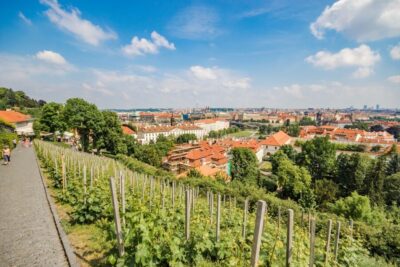
Prague Castle 2.5-Hour Tour Including Admission Ticket
Read our review →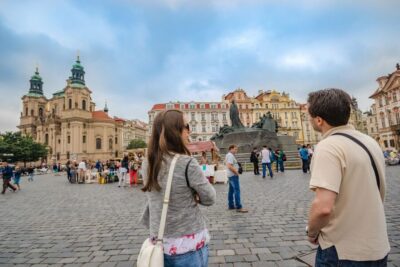
3-Hour Walking Tour of Old Town & Prague Castle
Read our review →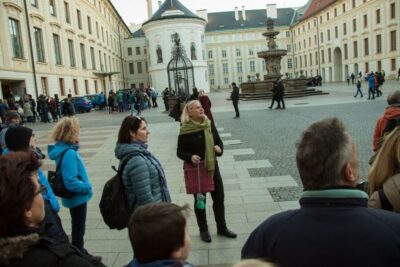
3-Hour Old Town and Prague Castle Tour in German
Read our review →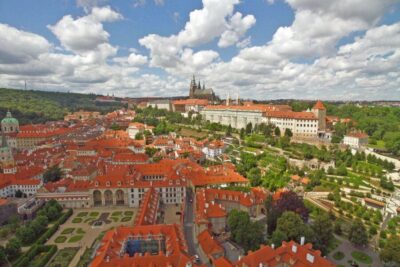
Prague Castle and Lobkowicz Palace Entry Tickets
Read our review →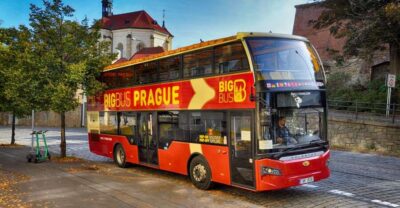
Big Bus Hop-on Hop-off, Castle Tour and River Cruise
Read our review →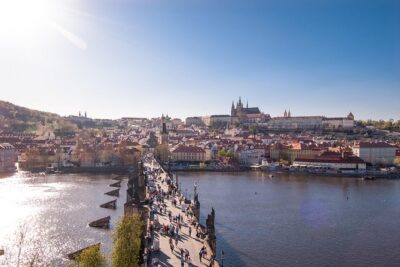
Prague 3-hour Afternoon Walking Tour including Prague Castle
Read our review →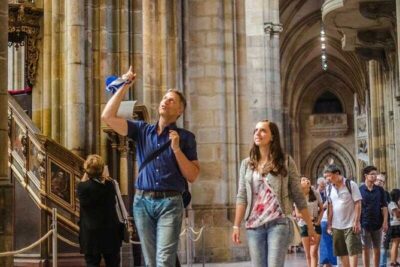
Prague Castle Tour Including Admission Ticket – 2.5 Hour
Read our review →Browse the lists this tour appears in