
Review · FRANCE
Paris: Château de Vincennes Entry Ticket
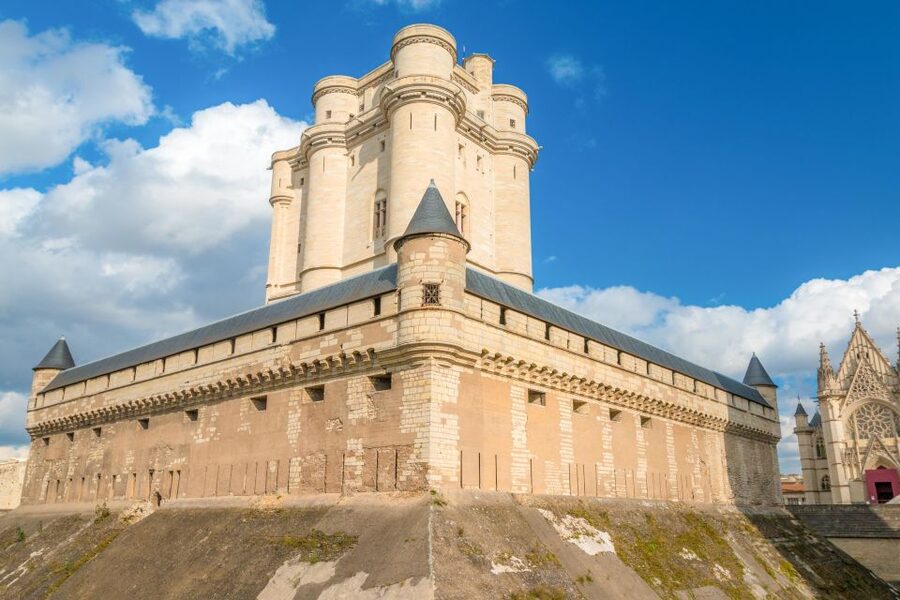
The tallest medieval keep in Europe awaits just east of Paris. I like this ticket for two clear reasons: the 52-meter keep gives the visit a strong physical focus, and the château connects royal power, prison life, Napoleon’s army, wartime damage, and modern France in one place. You get much more than a quick look at old stone walls.
I also like the flexible 365-day validity, which makes it easier to fit around a Paris schedule. The main drawback is that the ticket is non-refundable, and the regular guided visits are in French, so you may prefer the self-guided route if you do not understand French.
Key things to know before visiting
- The keep rises 52 meters: Climbing into this fortified tower is the main event, with a strong sense of the château’s defensive purpose.
- Royal power shifted here before Versailles: Château de Vincennes served the French monarchy until Louis XIV moved the court to Versailles in 1682.
- Famous prisoners were held inside: You can see rooms linked with Fouquet, the Marquis de Sade, and Mirabeau.
- A king died here: The keep includes the room where King Henry V died, adding a personal and dramatic detail to the visit.
- French tours run daily: Guided visits take place at 2:15 PM and 3 PM without advance reservation, while self-guided visits are also available.
- The ticket lasts 365 days: This is useful if your Paris plans change, though the purchase cannot be canceled.
Reaching Château de Vincennes from Paris
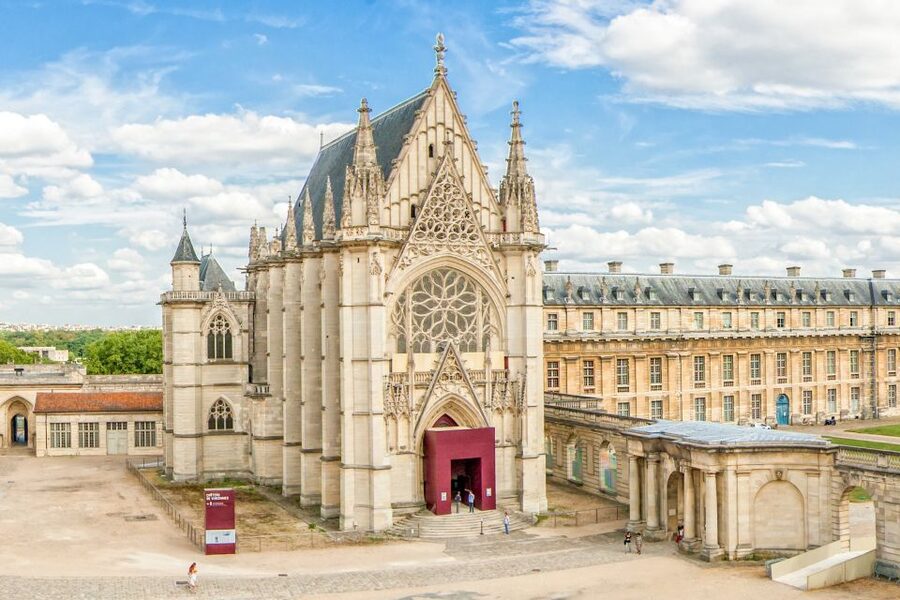
Château de Vincennes sits on Avenue de Paris in Vincennes, just outside the central Paris sightseeing zone. The short journey east makes this a manageable half-day addition to a city visit, especially if you want a break from crowded central monuments.
I like the setting because the château feels connected to Paris without being in the middle of the usual tourist circuit. You are still close to the capital, but the visit focuses on a fortress and its long military role rather than grand royal interiors filled with decorative furniture.
The experience begins at the château itself. Transport is not included, so you need to arrange your own way there. Since no transport details are provided with the ticket, check your route and allow enough time to reach the entrance on Avenue de Paris.
Bring a passport or identity card. This matters especially if you qualify for free admission as a visitor under 18 or as a citizen of the European Union under 26. You must first show photo identification at the ticketing station before going to the monument entrance.
More Castle Entry Tickets in France
- Carcassonne: Castle and Ramparts Entry Ticket
★ 4.6 · 2,884 reviews - Chambord: Entry Ticket to the Castle
★ 4.6 · 1,841 reviews - Chenonceau Castle Admission Ticket
★ 4.7 · 1,515 reviews
A fortress built to protect the monarchy
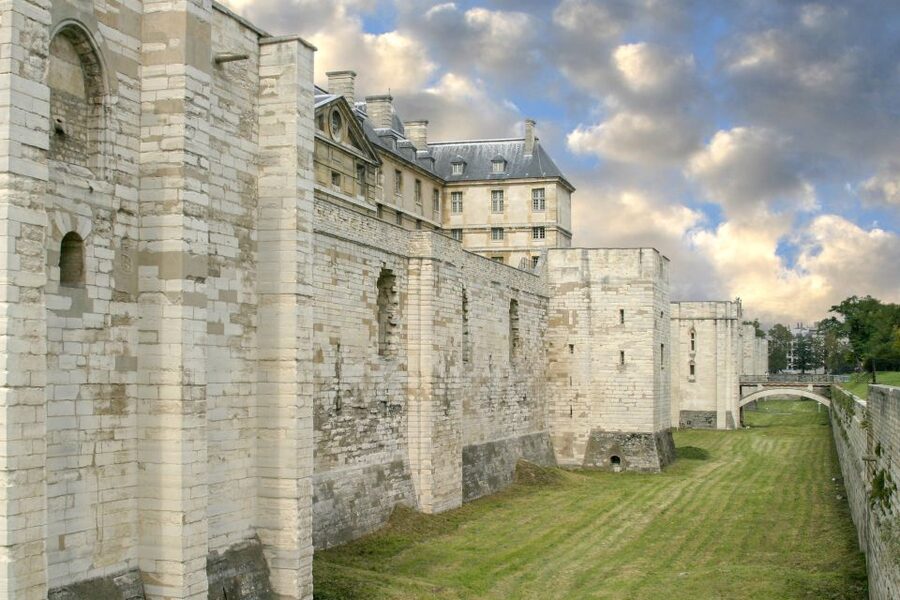
The château was built in the 14th century to show royal power and protect the capital. Its purpose was not simply to provide a comfortable residence. It was also meant to guard Paris and shelter the kings from uprisings.
That background changes the way you read the building. The thick defensive design, fortified tower, and imposing scale make more sense when you remember that the crown wanted both security and authority. This was a royal residence with a military job.
The château remained at the heart of the French monarchy until 1682, when Louis XIV moved the court to Versailles. That shift gives the visit a useful comparison point. Versailles is associated with ceremony, gardens, and court spectacle. Vincennes presents an earlier and harder-edged form of royal power, where defense was part of daily planning.
I would not expect the polished interiors or theatrical decoration found at Versailles. The appeal here is the building’s structure and the changing role it played over several centuries.
Climbing the 52-meter medieval keep
The keep is the clearest highlight. At 52 meters, it is the tallest fortified tower of its kind in Europe, and the climb helps you understand the scale of medieval defense better than a ground-level walk ever could.
You should expect stairs, so wear comfortable shoes and take your time. The climb is not a small detail added to the visit. It is the part that makes the fortress feel real. You move upward through a structure designed for protection, surveillance, confinement, and royal use.
As you climb, pay attention to the difference between the tower’s massive form and its human stories. A keep can look like an abstract military monument from outside. Inside, its rooms connect the stonework with people who lived, ruled, or suffered there.
The height also helps explain why the tower mattered. A fortress needed a strong defensive point, and a tall keep provided a commanding position over the surrounding area. The ticket description does not promise a specific panorama, so I would focus less on guaranteed views and more on the experience of moving through the tower itself.
Prison rooms linked to famous names
From the 16th through the 19th century, the keep was used as a prison. That is a long second life for a royal fortress, and it gives the visit a different tone from the earlier monarchy story.
You can see rooms where Fouquet, the Marquis de Sade, and Mirabeau were held. These names carry very different associations, but together they show how the keep became a place for political, social, and notorious prisoners over time.
The prison history is one of the strongest reasons to visit with a little patience. Instead of seeing only a grand royal monument, you begin to notice the practical spaces where people were confined. The rooms bring the history down to a human scale.
You can also see the room where King Henry V died. This detail gives the visit a direct link to a royal death, rather than only a broad account of kings and armies. It is the kind of small, specific fact that tends to stay with you after a monument visit.
Same region, a different set of walls:
- Loire Valley Castles Day Trip from Paris with Complementary Wine
★ 4.5 · 3,907 reviews - From Paris: Loire Valley Castles Day Trip With Wine Tasting
★ 4.6 · 1,727 reviews - ★ Walking Tour of Old Nice and Castle Hill
★ 5.0 · 1,318 reviews - From Paris: Full-Day Loire Valley Chateaux Tour
★ 4.4 · 1,269 reviews
From Napoleon’s barracks to a defense arsenal
The château changed again under Napoleon I. It was transformed into a barracks and arsenal, showing how old royal buildings were reused for the needs of a modern state.
This change is important because it prevents the visit from becoming a simple medieval story. The fortress was not frozen in the century when it was built. It was adapted for military purposes as France’s government and defense systems changed.
During invasions in the 19th century, the fortress helped protect Paris. That role connects the château to the city’s wider security, not just to the monarchy that first commissioned it.
I like this part of the story because it explains why the building survived as a useful military site. Its value came from its location and strength, not only from its age. You can read the château as a working piece of French defense, adjusted over time for new threats.
War damage and the château today
The building suffered extensive damage during the Second World War and was later restored. That fact adds a modern layer to the visit. You are not looking at an untouched medieval monument, but at a place that endured serious destruction and was repaired for future generations.
Today, Château de Vincennes is considered a place of national remembrance. It also houses the historical services of France’s three armed forces.
That present-day role gives the visit a more serious purpose. The château is not only preserved because it is old or visually impressive. It remains tied to the country’s military memory and national story.
The transition from royal residence to prison, barracks, arsenal, wartime survivor, and military archive is the real subject of the visit. If you enjoy buildings that show several eras at once, this ticket offers strong value.
Choosing a guided or self-guided visit
A guided tour in French is offered every day at 2:15 PM and 3 PM, with no reservation required. If you understand French, this may help you connect the rooms and historical events in a clear order.
The ticket also includes self-guided visits, which give you more control over your pace. This is likely the better choice if you prefer to pause in the prison rooms, spend extra time in the keep, or read at your own speed.
A visitors guide is available in several languages. There is also an augmented reality terminal in Charles V’s study, adding a more visual way to approach one part of the château.
The listing also mentions a small group limited to 10 participants. That size can make a scheduled visit feel more manageable than a large group, though the French language remains an important consideration.
Do not confuse the included French tour with a private guide in your own language. The general guide service is not included beyond the stated French visits, so read the language information carefully before booking.
What the $15 ticket is worth
At $15 per person, the ticket is fairly priced if you want a substantial historical site rather than a short photo stop. You are paying for access to the château, the 52-meter keep, the former prison rooms, the self-guided material, and the multilingual guide resources.
The value improves if you use the 365-day validity. A ticket with that long a period can help if weather, fatigue, or a crowded Paris schedule forces you to change plans. It does not mean you should treat the ticket as a casual purchase, since the activity is non-refundable, but it gives you flexibility after booking.
The ticket may be less useful if you only have a few hours in Paris and want to stay near the central monuments. The château requires a short trip to the eastern suburbs, and the experience works best when you allow enough time to climb, read, and follow the building’s changing roles.
Free admission may apply to visitors under 18 and EU citizens under 26. The eligible visitor must show a photo ID at the ticketing station first. Free entry is also offered on the first Sunday of January, February, March, November, and December, plus European Heritage Days on the third weekend of September each year.
Those options can change the value calculation. If you qualify for free admission or happen to visit on one of the listed dates, check the entry requirements before paying for a ticket.
Timing, closures, and practical planning
Last entry is 45 minutes before the stated closing time. That rule matters because the keep and historical rooms need more than a quick walk-through, so arriving near the cutoff could leave you rushing.
The château is closed on January 1, May 1, and December 25. Check the available starting times before setting out, even though the ticket remains valid for 365 days.
The daily French visits at 2:15 PM and 3 PM give you a useful anchor if you want a guided explanation. If you plan to use one, arrive with enough time to handle ticketing and reach the meeting point without hurrying.
The visit is best for people who enjoy military buildings, French political history, famous prisoners, and royal sites with a practical edge. Families with older children may also find the keep and prison stories more engaging than a long sequence of decorative rooms.
If stairs are difficult for you, take that seriously before booking. The climb into the keep is one of the central parts of the experience, and the available information does not provide detailed accessibility guidance.
Who should book Château de Vincennes?
I would choose this experience if you have already seen some of Paris’s famous central monuments and want a site with a different mood. It gives you a clearer sense of defense, confinement, and national memory than a standard palace visit.
It is also a good fit if you enjoy linking famous names to actual rooms. Fouquet, the Marquis de Sade, Mirabeau, and King Henry V are not just names in a history book here. They are tied to particular spaces within the keep.
I would be more cautious if you want a fully guided tour in English or another language. The available guided visits are in French, although the self-guided materials come in several languages and include an augmented reality terminal.
The short trip outside central Paris is another factor. For some people, that distance is part of the pleasure. For others, it may not be worth leaving the city center for a fortress visit, especially during a very short stay.
The strongest praise attached to this experience is simple: the château is considered beautiful, interesting, and engaging. Those comments fit the site’s main strengths, but the appeal comes from substance as much as appearance. You are visiting a place where royal authority, prison life, military adaptation, invasion, wartime damage, and modern remembrance all meet.
Should you book this ticket?
Book it if you want a serious historical visit with one memorable physical feature: the climb through a 52-meter medieval keep. The $15 price is reasonable, especially with self-guided material, multilingual support, and a 365-day validity period.
Skip it if your time in Paris is extremely tight, you dislike stairs, or you need a guided tour in a language other than French. For everyone else, Château de Vincennes offers a useful change of pace from the city’s grand palaces and art museums. It shows France through its defenses, prisons, armies, and memories, not only through royal luxury.
FAQ
Where is Château de Vincennes?
The château is on Avenue de Paris in Vincennes, in the Île-de-France region just east of Paris.
How long is the ticket valid?
The ticket is valid for 365 days. Check the available starting times before visiting.
Are guided tours included?
A guided tour in French is offered every day at 2:15 PM and 3 PM, with no reservation required. Self-guided visits are also available.
Is a guide in English included?
The provided guided visits are in French. A visitors guide in several languages is included, along with an augmented reality terminal in Charles V’s study.
Who can enter for free?
Visitors under 18 and citizens of the European Union under 26 can enter free by showing a photo ID at the ticketing station before going to the monument entrance. Free entry is also offered on the first Sunday of January, February, March, November, and December, and during European Heritage Days on the third weekend of September.
When is Château de Vincennes closed?
The château is closed on January 1, May 1, and December 25. Last entry is 45 minutes before the indicated closing time.
Just added around France
- Carcassonne: Secrets of the Castle’s Defense Self-Guided Tour★ 4.5 · 8 reviews
- Complete Private Tour City and Castle of Carcassonne★ 5.0 · 12 reviews
- Saint Emilion Castle and Village Wine Tour★ 4.5 · 23 reviews
- Château de Fieuzal, Pessac-Léognan: Visit and Tasting★ 5.0 · 18 reviews
- Wine Tour of Mèdoc : Châteaux, Tastings and WSET Guide★ 5.0 · 21 reviews
- Full-day Saint-Emilion: Village, Undergrounds and Châteaux★ 4.5 · 55 reviews
- Private Wine Lovers – Super St Emilion – behind the scenes visits top chateaux and medieval town★ 5.0 · 25 reviews
- Bordeaux Médoc Region Private Wine Lovers Tour with Chateau Visits & Tastings★ 5.0 · 40 reviews
Castle Entry Tickets, compared.


Edinburgh Castle: Guided Walking Tour with Entry Ticket
Read our review →
Castle Tour with Local Guide and Entry Ticket
Read our review →
Prague Castle 2.5-Hour Tour Including Admission Ticket
Read our review →
Edinburgh Castle: Guided Walking Tour with Entry Ticket
Read our review →
Prague Castle and Lobkowicz Palace Entry Tickets
Read our review →
Alcázar and Cathedral Entry Ticket and Guided Tour
Read our review →Browse the lists this tour appears in