
Review · UK
Isle of Wight: Carisbrooke Castle Entry Ticket
History gets wonderfully awkward here. Carisbrooke Castle combines a serious medieval fortress with the room where Charles I became stuck trying to escape, a royal garden, and donkeys that still turn the old water wheel. I especially like the castle’s broad mix of stories and the excellent views from the Norman keep.
The main drawback is the steep, uneven stone steps. The battlements and mound are rewarding, but this is not a comfortable site for wheelchair users or anyone who finds stairs difficult. Wear proper walking shoes, and allow more time than you might expect for a one-day ticket.
Key points to know before you go

- Charles I’s failed escape: See the room where the imprisoned king tried to get through a window and became stuck in the bars.
- Donkeys at the water wheel: The castle’s donkeys work for about six minutes each day, showing how water was once lifted from the well.
- Norman keep views: Climbing the steep steps leads to wide views over the Isle of Wight.
- Nine centuries of defense: The fortress began around 1100 and protected the island for more than 900 years.
- Princess Beatrice Garden: This Edwardian-style garden adds a calm, carefully planted corner to the stone fortress.
- Warrior the war horse: A statue commemorates the famous First World War horse and adds a modern layer to the site.
Why Carisbrooke Castle is worth your Isle of Wight time
Carisbrooke Castle is not just a set of walls with a nice view. It is a compact lesson in how one place can change roles over time. It began as a defensive stronghold, later held a king as a prisoner, and eventually became a royal home connected with Queen Victoria’s youngest daughter.
That mixture gives the visit unusual range. You can climb a Norman fortification, inspect domestic rooms, look at royal garden design, and then watch donkeys perform a task linked to the castle’s daily survival. I like sites that allow you to move between large national events and small human details, and Carisbrooke does that particularly well.
The castle has a 4.5 rating from 86 reviews, with especially strong praise for the views, museum, grounds, donkeys, friendly staff, and general upkeep. That praise matches the shape of the experience: there is enough to occupy history fans, but also plenty for families who simply want room to walk, climb, explore, and stop for food.
More Castle Entry Tickets in the UK
- Edinburgh Castle: Guided Walking Tour with Entry Ticket
★ 4.7 · 11,699 reviews - Windsor Castle Admission Ticket
★ 4.7 · 7,032 reviews - Edinburgh Castle: Guided Walking Tour with Entry Ticket
★ 5.0 · 5,540 reviews
Begin with the introductory film
Start at the main entrance, where you exchange your e-voucher for an entrance ticket. An introductory film gives you an overview of the people and events connected with the castle. This is worth watching rather than rushing past, since the site contains several periods and characters.
Without that introduction, Carisbrooke can feel like a collection of walls, gardens, rooms, and ruins. The film helps you place each part. You will have a better sense of why the castle mattered to the Isle of Wight, why Charles I was held here, and how later royal residents adapted the site.
A full day is allowed, although many visitors will spend less time. I would not treat the ticket as a quick stop, especially if you want to watch the donkeys, inspect the museum, climb the battlements, and sit in the garden or café. The grounds invite a slow pace.
Patrol the battlements and climb the castle mound
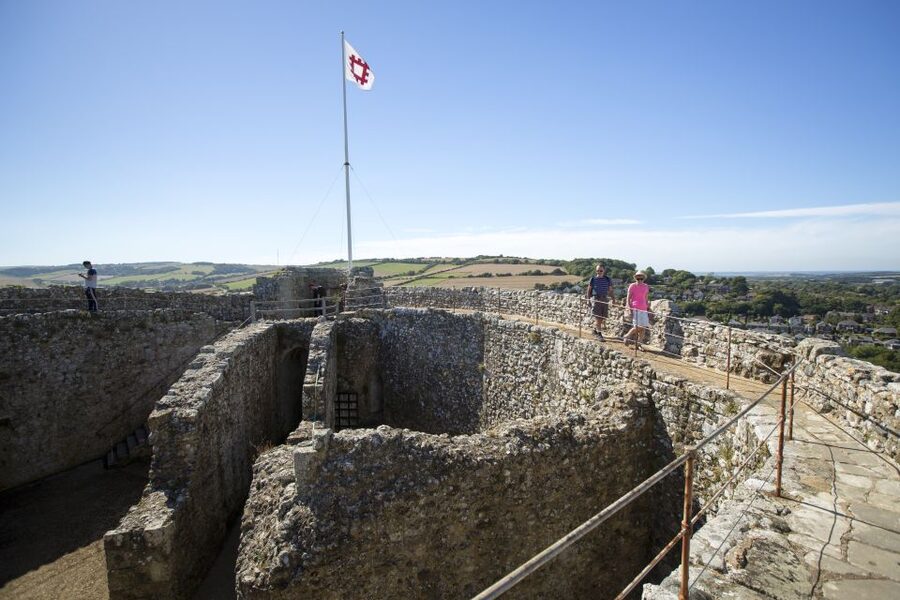
The battlements are the physical heart of the visit. Walking along them gives you a clear idea of the castle as a working military site rather than a decorative ruin. You can look across the grassy center, study the walls, and picture guards watching for danger from the island’s defensive position.
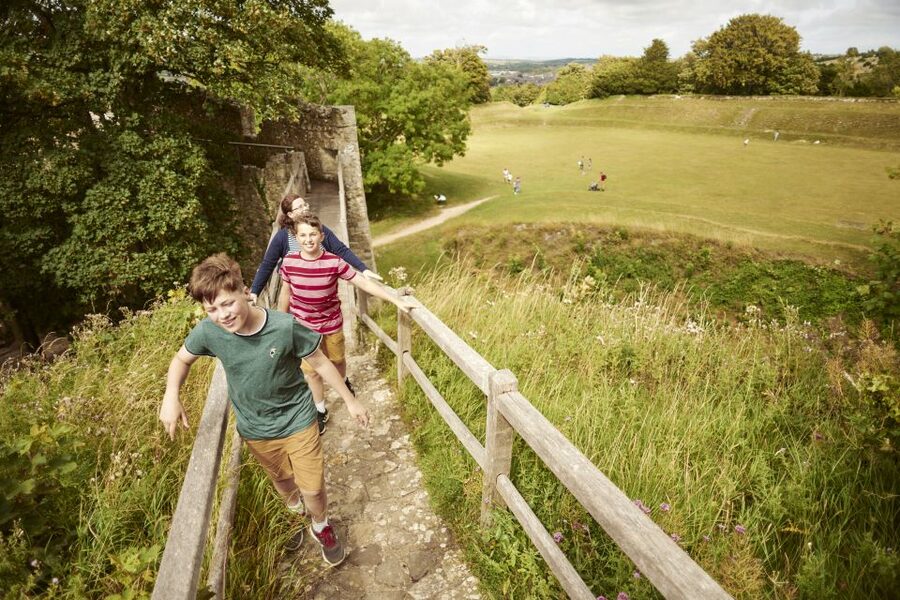
The climb to the castle mound is steep. The stone steps are uneven, and you will need a reasonable level of balance and stamina. The effort pays off at the Norman keep, where the views are one of the site’s main rewards.
A sturdy pair of trainers or walking boots is sensible. One review specifically described the wall walk as unsuitable for older people who have difficulty with steps, and that is useful advice. Take your time going up and down. The castle is not a place where you need to rush from one point to the next.
For children, the walls offer a clear sense of play and discovery. There is room to imagine defending the castle or taking part in a medieval battle. For adults, the climb provides context: you see how height, walls, and visibility worked together in a real fortress.
The Norman keep delivers the best view
The Norman keep is the high point of the visit in both senses. From here, you get broad views around the Isle of Wight, and the castle’s defensive purpose becomes easier to understand.
The view is also a good reason to plan your visit around the weather. On a clear day, the experience feels open and expansive. In poor weather, the steps may be less pleasant, and the view may not offer the same reward. The castle remains worthwhile, but conditions make a practical difference.
You do not need special equipment, but comfortable shoes matter. If one member of your party struggles with steep stairs, plan around the fact that the best viewpoint requires the hardest climb. The site is not suitable for wheelchair users or people with mobility impairments.
Same region, a different set of walls:
- Stonehenge, Windsor Castle, and Bath from London
★ 4.5 · 18,662 reviews - Edinburgh: Edinburgh Castle Guided History Tour with Tickets
★ 4.8 · 9,933 reviews - Stonehenge, Windsor Castle and Bath with Pub Lunch in Lacock
★ 4.5 · 7,402 reviews - Stonehenge, Windsor Castle and Bath Full Day Guided Tour
★ 4.5 · 5,346 reviews
Meet the Carisbrooke donkeys at the well house
The donkeys are one of Carisbrooke’s most memorable details. Each day, they spend about six minutes treading the water wheel, demonstrating how the mechanism was used for centuries to draw water from the castle well.
This is a small presentation, not a long show, so timing matters. Ask staff about the daily schedule when you arrive, or check the day’s information before settling into another part of the castle. Missing it would be easy if you arrive at the wrong moment.
The working wheel helps turn an abstract medieval task into something you can understand immediately. A well inside a fortress was not just a historic feature. It was part of the practical system that kept people and animals supplied during ordinary life and periods of danger.
Children tend to enjoy the donkeys, but the display works for adults too. It is direct, visual, and easy to grasp. You can see the animal, the wheel, and the purpose all at once.
Explore Charles I’s prison story
Carisbrooke’s connection with Charles I gives the castle its strongest human story. The king was held here, and one room preserves the detail of his attempted escape. He tried to get through the window but became stuck in the bars.
It is an almost comic moment within a tragic political story. That contrast makes the room memorable. You are not only learning that Charles I was imprisoned at Carisbrooke. You are seeing the physical setting of a failed attempt to regain freedom.
The museum includes personal items connected with Charles I. One visit specifically praised the collection of his belongings, and this part of the castle will appeal most to anyone interested in the English Civil War and royal history.
The castle’s story is strongest when you move between the grand and the ordinary. Charles I was a king involved in a national crisis, yet the surviving detail is a man trying to squeeze through a window. Carisbrooke gives you both scales.
See the gatehouse and Carey’s Mansion ruins
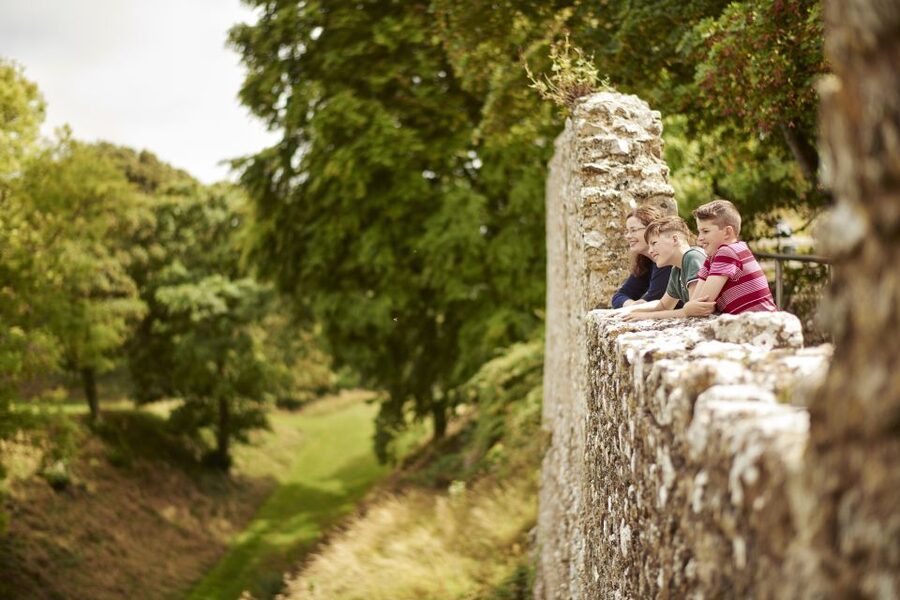
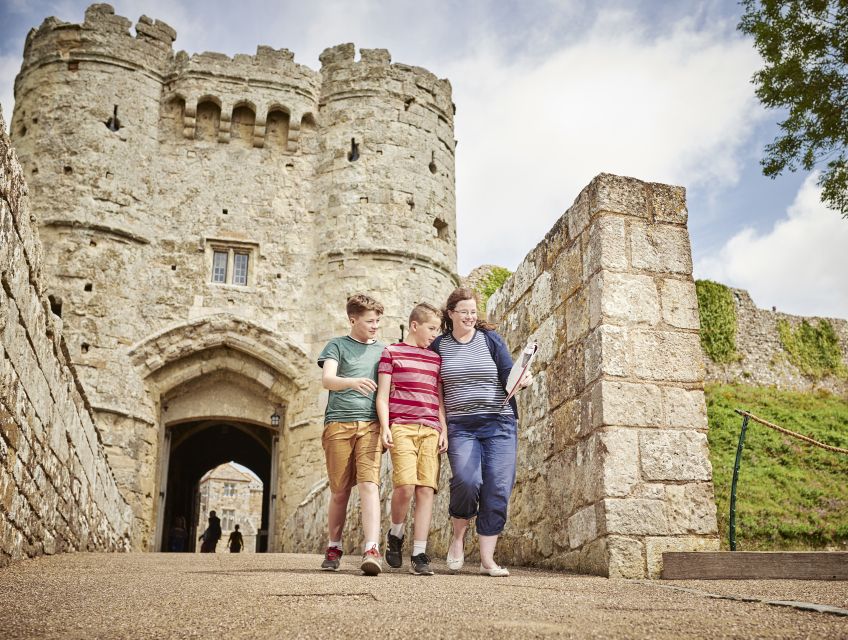
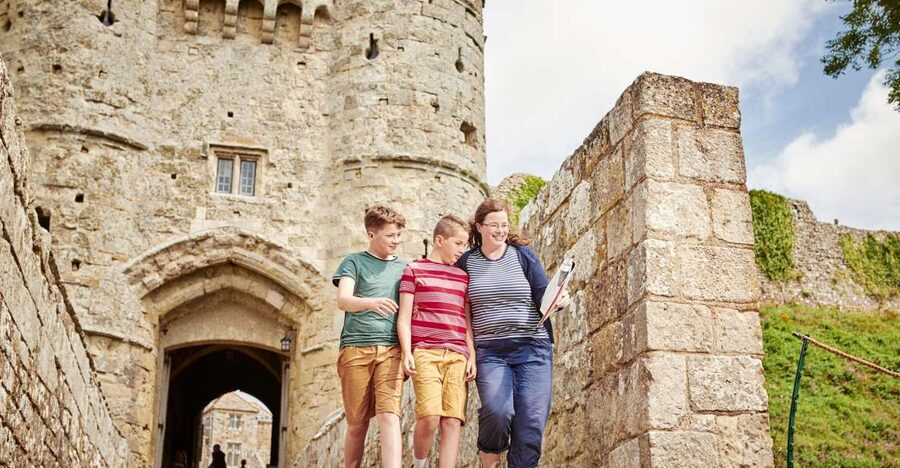
The powerful medieval gatehouse shows how visitors and potential attackers would have encountered the fortress. Gatehouses were practical barriers, but they also carried a strong message: entry was controlled, and the castle was built to resist pressure.
The ruins of Carey’s Mansion offer a different view of the site. Here, you see evidence of domestic life and later occupation rather than only military defense. The castle’s original living areas were adapted by later residents, so the buildings reflect changing needs over time.
I find this part valuable because it prevents the visit from becoming too focused on battles and kings. A fortress had to function as a home as well as a defensive position. Rooms, gardens, water, food, and daily routines all mattered.
Some areas are ruins, while others are more complete or arranged for interpretation. Expect a site with different levels of preservation rather than one perfectly restored medieval building.
Slow down in Princess Beatrice Garden
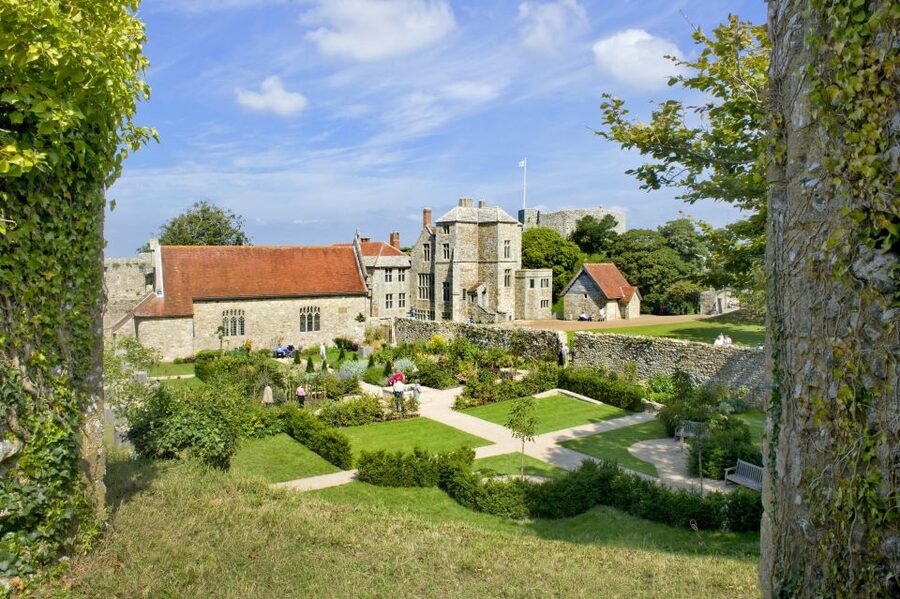
Princess Beatrice Garden is a welcome change after the walls and stairs. It follows an Edwardian style, with a fountain and plantings in the colors of the royal arms.
The garden gives you a quieter way to understand the castle’s later royal connection. It is not simply an attractive patch of greenery beside the ruins. It shows how the site was shaped for domestic and ceremonial life after its main military role had faded.
This is also a useful rest point. The castle’s climbs can be tiring, especially on a warm day, and the garden lets you pause without leaving the experience. The grounds are well kept, and the open grassy center is suitable for a relaxed wander or a picnic.
Families should find a good balance here. Children can burn off energy outside, while adults get a calmer pause between the more demanding sections. One family visit included people from age one to seventy, which says something about the site’s broad appeal, though the steep walls remain a limitation for anyone with mobility problems.
Look for Warrior, the First World War horse
Near the other historic displays, look for the statue of Warrior, the war horse connected with the commemoration of the First World War. The statue was loaned to English Heritage, giving the castle a link to a much later chapter of British military history.
Warrior adds a reminder that the castle’s military associations did not end with the medieval period. It also offers a useful change of scale. The keep and walls speak of armies and defense, while the statue draws attention to the animals that served alongside people in wartime.
You do not need a long time here, but it is worth including in your route. It is an unusual detail that many visitors might otherwise miss while concentrating on the fortress itself.
Museum, café, and time to wander
The museum helps tie the visit together, especially if you want more detail about Charles I and the castle’s residents. The displays are presented clearly, and the museum is a good place to spend time when the weather makes the outdoor sections less comfortable.
There is also a café with indoor and outdoor seating. Food mentioned positively includes a cheese roll, and the café provides a convenient break during a longer visit. I would treat it as part of the day’s rhythm rather than a reason to visit on its own.
The castle grounds are broad enough for a relaxed walk. On quieter days, you can meander without feeling pushed along. One visit described a peaceful atmosphere with few people, sunny weather, and time to take in the surroundings slowly. Busy periods may feel different, but the open site gives you room to spread out.
Staff are described as friendly and willing to share information. That matters at a historic site with several buildings and stories, since a brief explanation can make an otherwise puzzling ruin much easier to read.
Is the $28 group price good value?
At about $28 per group of up to four, the price can work well for a small family or group. You get a full day of access to the castle, walls, museum, garden, grounds, keep, and well house. The value is strongest if you stay for several hours and use the site as a main Isle of Wight stop.
Check the exact ticket category when booking. The information also describes a family ticket for up to two adults and three children aged five to seventeen, so the group size and family rules do not appear identical in every case. Confirm the current terms before paying.
The price is less attractive if you only plan a brief look at the gatehouse. The site rewards time, and the climb to the keep, the museum, garden, well house, and café all help make the admission worthwhile.
You can cancel up to 24 hours before the visit for a full refund, and reserve now while paying later. Those options are useful if your Isle of Wight plans depend on weather, ferry arrangements, or a changing family schedule.
Who should visit Carisbrooke Castle?
I would recommend Carisbrooke Castle to:
- Families who want history with open space and a memorable animal display
- Anyone interested in Charles I and English royal history
- Visitors who enjoy castles with ruins, museums, gardens, and viewpoints in one site
- Walkers who are comfortable with steep stone steps
- People looking for a relaxed half-day or full-day stop on the Isle of Wight
I would be cautious if you have limited mobility, use a wheelchair, or dislike uneven steps. The castle’s best views require climbing, and the walls are not an easy stroll.
Arrive with comfortable shoes and enough time. Last admission is two hours before closing, so a late arrival may cut short the visit. On dates marked as closed, the site may still open, so check directly with English Heritage before setting out.
Should you book Carisbrooke Castle?
Book it if you want more than a quick photo of an old castle. The combination of battlement walks, royal history, a working water wheel, donkeys, gardens, museum displays, and wide views gives the visit real variety.
I would especially choose it for a family day or for anyone who enjoys seeing how a historic building worked in everyday life. The steep climbs are the main qualification. If you can manage them, the Norman keep and battlements provide the payoff. If you cannot, much of the castle’s most rewarding access will be difficult.
For the price of a small group ticket, it is good value when you give the site several hours. Plan around the weather, wear sturdy shoes, ask about the donkey demonstration, and save time for the museum and garden. That approach lets Carisbrooke’s many stories build naturally, instead of reducing the castle to a single royal episode.
FAQ
Where is Carisbrooke Castle?
Carisbrooke Castle is on the Isle of Wight in South East England, United Kingdom.
How long is the Carisbrooke Castle ticket valid?
The ticket is valid for one day.
How much does entry cost?
The listed price is $28 per group of up to four people. Check the exact ticket category, since a family ticket is also described for up to two adults and three children aged five to seventeen.
What is the main highlight of the castle?
The main highlights include the battlements, the steep climb to the Norman keep, the room where Charles I attempted to escape, and the views from the keep.
Can I see the Carisbrooke donkeys?
Yes. The donkeys tread the water wheel for about six minutes each day, demonstrating how water was drawn from the castle well.
Is Carisbrooke Castle suitable for wheelchair users?
No. The experience is not suitable for wheelchair users or people with mobility impairments.
What should I wear?
Wear comfortable, sturdy shoes. The site has steep and uneven stone steps, especially around the battlements and castle mound.
Is there a café at the castle?
Yes. The castle has a café with indoor and outdoor seating.
Can I cancel my booking?
Yes. You can cancel up to 24 hours in advance for a full refund. You can also reserve now and pay later.
Just added around the UK
- Standing Stones, Inveraray and Kilchurn Castle & Highlands Tour starting Balloch★ 5.0 · 35 reviews
- Cardiff: South Wales Cliffs, Beaches & Castles Day Tour★ 5.0 · 36 reviews
- West Coast Lochs & Castles Tour – from Glasgow★ 5.0 · 20 reviews
- Private Day Tour of South Wales, including Cardiff & Caerphilly Castle.★ 5.0 · 15 reviews
- Private Tour – Edinburgh to St Andrews, Dunnottar Castle & Dundee★ 5.0 · 9 reviews
- From Cardiff: 3 Amazing Castles, Tintern Abbey & Roman Caerleon★ 5.0 · 12 reviews
- Private Day Tour of Cardiff, including Cardiff Castle, St Fagans, & Cardiff Bay★ 5.0 · 5 reviews
- Cardiff: Welsh Castles, Mountains & Steam Railway Day Tour★ 4.5 · 25 reviews
Castle Entry Tickets, compared.


Edinburgh Castle: Guided Walking Tour with Entry Ticket
Read our review →
Castle Tour with Local Guide and Entry Ticket
Read our review →
Prague Castle 2.5-Hour Tour Including Admission Ticket
Read our review →
Edinburgh Castle: Guided Walking Tour with Entry Ticket
Read our review →
Prague Castle and Lobkowicz Palace Entry Tickets
Read our review →
Alcázar and Cathedral Entry Ticket and Guided Tour
Read our review →Browse the lists this tour appears in