
Review · FRANCE
Amboise: Clos Lucé Castle, Da Vinci Park and Museum Ticket
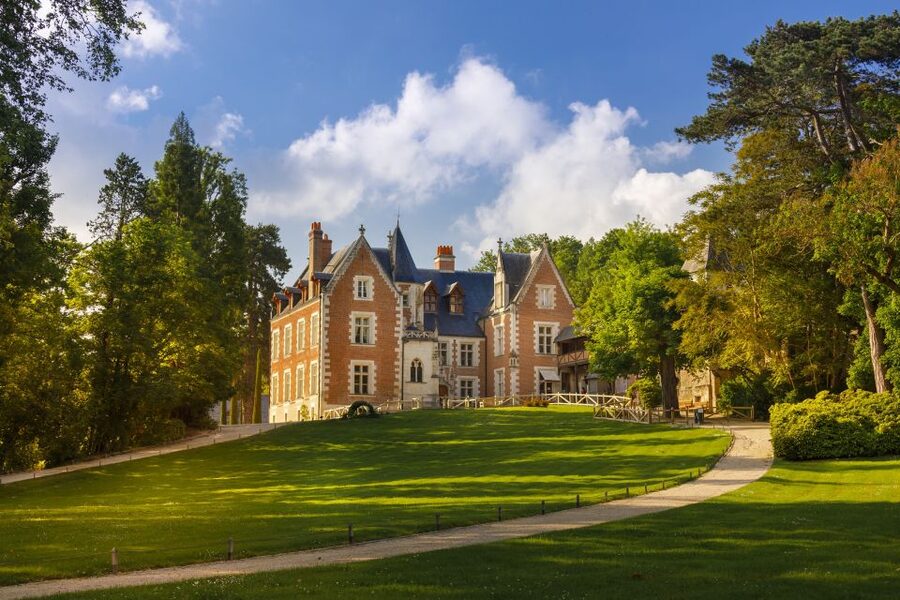
Leonardo’s final French home is full of surprises. At Château du Clos Lucé, you can enter the rooms where Leonardo da Vinci spent his last three years, then wander through a park filled with working ideas from his notebooks. I especially like the life-size invention models and the peaceful gardens, which make his science easier to grasp. The main drawback is that the grounds are spread out, with some slopes and too few benches for visitors who need frequent rests.
This is more than a small château visit. You get a home, museum, open-air science display, art presentation, and garden walk in one ticket for about $23. I also like that you can set your own pace, although a guided tour is not included and the site can take much longer than the two hours some people need.
Five things to know before visiting Clos Lucé
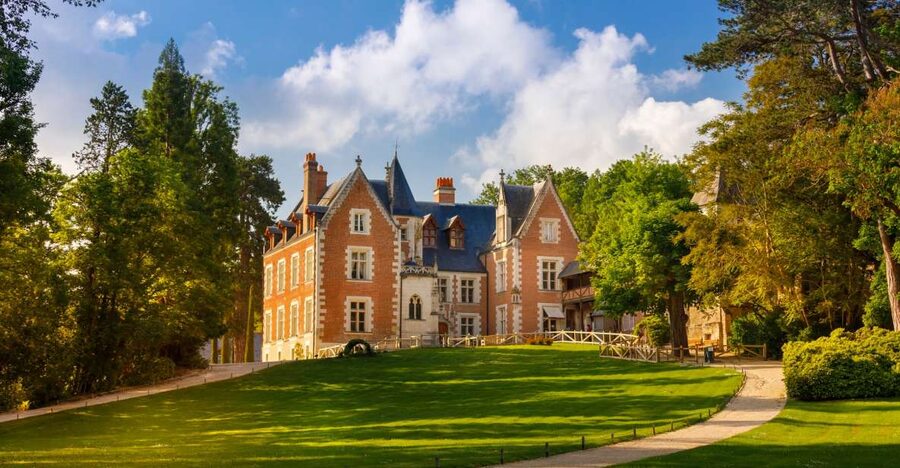
- Leonardo’s final home: Explore the rooms, workshops, and Renaissance interiors where he lived in France from 1516 until his death on May 2, 1519.
- Forty invention models: See recreations linked to military engineering, mechanics, hydraulics, flight, and urban planning.
- A hands-on park: Twenty large interactive machines, eight audio stations, and 40 translucent panels spread Leonardo’s ideas through the gardens.
- A useful full-day ticket: Your admission covers the château, park, exhibitions, and interactive installations for one booked day.
- A self-guided visit: No guide is included, but the layout and displays make it easy to explore independently.
- A practical access note: The site is wheelchair accessible, but the uphill approach, long paths, and limited benches may matter if you have reduced mobility.
Why Leonardo’s last home matters
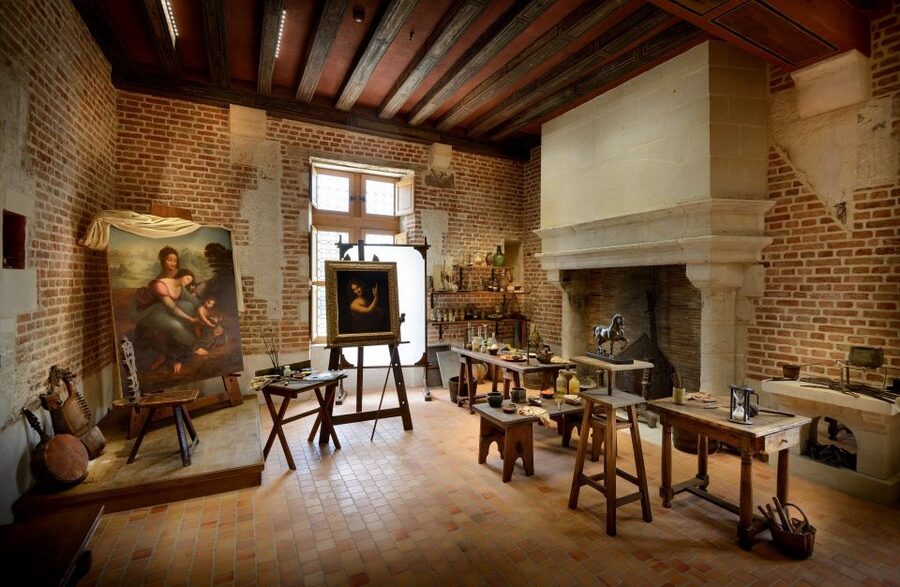
Leonardo da Vinci arrived in France at the invitation of King Francis I in 1516. He moved into Clos Lucé near Amboise and spent the final three years of his life working on paintings, inventions, and large projects for the king.
That detail gives the visit its focus. This is not simply a museum about a famous Italian artist. It is the place linked to the final chapter of his life, when painting was only one part of his work. Leonardo was also an architect, engineer, anatomist, military planner, and student of nature.
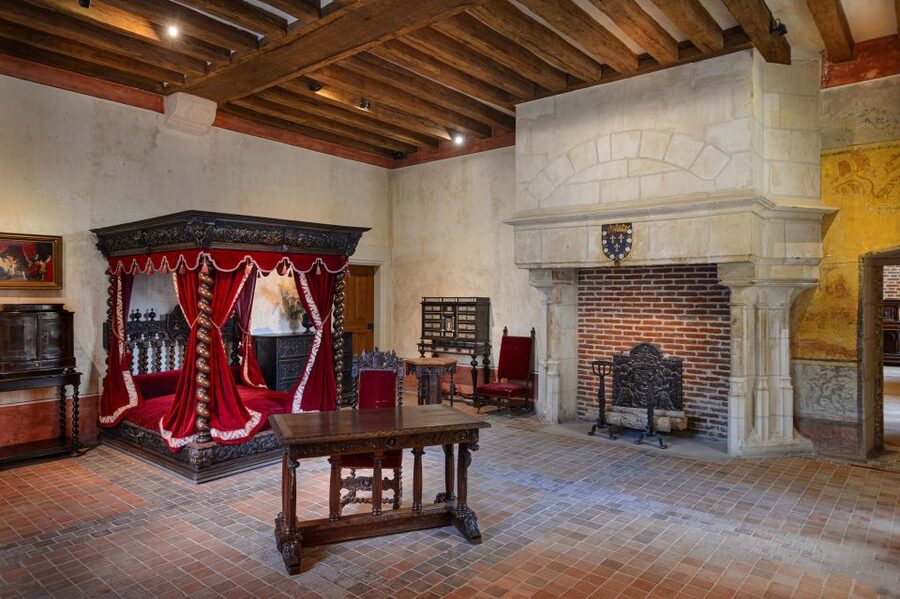
Inside, you get a sense of the private man behind the famous name. The château includes his apartments, Renaissance rooms, and restored workshops. The rooms help explain how he lived and worked, while the surrounding park shows how his sketches can be translated into physical objects.
You should not expect every object to be an original Leonardo machine. The displays are recreations based on his designs. That is not a weakness if you arrive with the right expectation. The value is seeing an idea move from a drawing into a model you can look at, touch, or operate in some parts of the park.
More Loire Valley Chateau Tours in France:
- Loire Valley Castles Day Trip from Paris with Complementary Wine
★ 4.5 · 3,907 reviews - Chambord: Entry Ticket to the Castle
★ 4.6 · 1,841 reviews - From Paris: Loire Valley Castles Day Trip With Wine Tasting
★ 4.6 · 1,727 reviews
Starting inside the château
Begin with the château itself. This gives you the historical setting before you head into the gardens and larger displays.
The house lets you walk through Leonardo’s apartments and the Renaissance rooms. The restored workshops add another layer, showing the practical side of his life rather than presenting him only as a celebrated painter. The scale is personal. You are moving through a residence, not a grand royal palace built to impress a court.
That smaller scale is one of Clos Lucé’s strengths. The château feels approachable, and the story is easier to follow than it might be in a huge museum with dozens of unrelated rooms. You can connect the rooms to Leonardo’s final years in France, then see how his ideas appear in the park outside.
The indoor displays cover several fields:
- Military engineering
- Urban planning
- Mechanical design
- Flying machines
- Hydraulics
These subjects show why Leonardo still feels modern. He was not working inside separate academic boxes. A study of water could lead to a machine. An observation of birds could lead to a flying design. A concern with city planning could connect to engineering and public life.
The house is also useful on a hot or rainy day. Several people have found the indoor presentation well organized, and one visitor completed the whole site in about two hours. That is possible if you move briskly, but I would not plan around two hours unless your schedule is tight.
The park turns sketches into machines
The park is the heart of the experience for many people. It works as an open-air museum, with 20 large interactive machines, eight audio stations, and 40 translucent canvases placed along a landscaped trail.
This is where Leonardo’s range becomes clear. Instead of reading a label about a bridge, water system, or flying device, you can see a larger recreation set among trees and paths. Some displays are built at life size, which makes the ideas easier to picture.
The machines are especially effective for families. Children can approach the displays as puzzles and constructions, while adults can read the explanations and think about the original drawings behind them. The park does not require a background in science. You can enjoy the forms and movement first, then stop for more information when a particular design catches your attention.
The park also slows the visit down. You can walk, sit in shaded areas, take photographs from the bridges, and treat the grounds as a break from indoor sightseeing. One useful point raised by the visit experience is that there are not as many benches as some people need. If you use sticks, have joint pain, or tire easily, plan your route carefully and allow extra time.
The gardens are not just decoration around the house. They are part of the lesson. Leonardo studied nature closely, and the trail connects plants, water, engineering, and observation. The park makes that connection without requiring a lecture.
The 40 models and what they explain
The invention models are the main reason to choose this site over a standard château visit. You can see designs linked to Leonardo’s work in engineering, flight, warfare, water, and city planning.
Some displays are small models. Others are large enough to make the design feel physical. That scale matters. A sketch of a machine can seem mysterious on a page, but a recreated structure gives you a better sense of weight, balance, and purpose.
The models also correct the narrow image of Leonardo as only the painter of the Mona Lisa. If you have mainly encountered his paintings, the machines may be the most surprising part of your visit. You leave with a clearer idea of how widely he observed the world.
The displays are not all interactive in the same way. One practical criticism is that the inventions are not generally movable and available for visitors to operate as they are in the Florence museum devoted to his inventions. That means you should expect a well-presented viewing experience, not a hands-on engineering workshop at every stop.
Still, the combination of models, labels, audio stations, and the park setting works well. You can take in the broad story without reading every panel, or spend more time on the machines that interest you most.
More Museum Visits in France:
- Check out the Château de Savigny museums: planes, cars, motorcycles…
★ 4.7 · 46 reviews - Osaka Castle: Museum and Tower Entry Ticket
★ 4.5 · 2,380 reviews - Chapultepec Castle & Anthropology Museum Tour
★ 4.5 · 1,348 reviews - Cairo: Egyptian Museum, Citadel, and Old Cairo Guided Tour
★ 4.7 · 853 reviews
The new art and architecture presentation
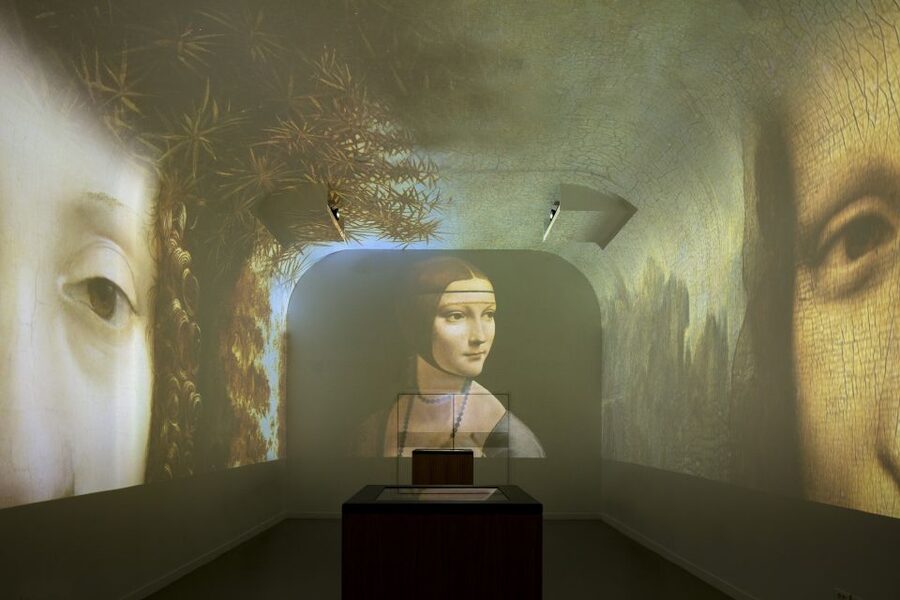
Clos Lucé also presents Leonardo through painting and architecture in a newer cultural and museum space. The goal is to show two important parts of his work through an interactive and visual presentation.
This helps balance the engineering displays. If you only walk through the park, you may come away thinking of Leonardo mainly as an inventor. The indoor presentation brings you back to his artistic work and his interest in buildings and large projects.
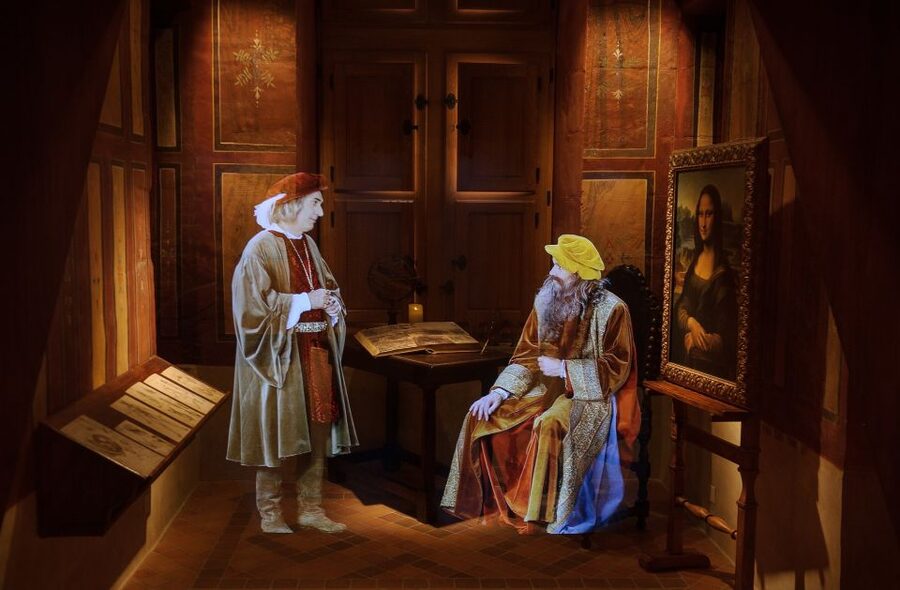
A virtual or immersive show is included among the experience’s attractions. The format gives the paintings and designs a more dramatic setting than a standard wall label. It is a useful addition for people who already know the major paintings and want to see them presented in a different way.
The art section may appeal most to visitors who enjoy visual effects and modern museum presentation. If you prefer original paintings, quiet galleries, and traditional labels, keep your expectations measured. The strength here is interpretation and atmosphere rather than a major collection of original masterpieces.
The balance between old rooms and newer presentation is part of what makes the ticket feel varied. You move from a historic home to recreated machines, then to a modern presentation of Leonardo’s art and architecture.
How much time should you allow?
The ticket is valid for one day, so you do not need to rush. A quick visit can take around two hours, but a half-day is more sensible if you want to read the displays, explore the park, and pause in the gardens.
In good weather, you could spend longer. The grounds invite a slower pace, and there are cafés and food options on site. A Renaissance-style restaurant has also been available within the château and park area, giving you the option of making the visit part of a relaxed day rather than a short stop between other sights.
A practical plan looks like this:
- Start inside the château and see the apartments, Renaissance rooms, and workshops.
- Continue to the invention displays and indoor exhibitions.
- Walk the park trail, stopping at the machines and audio stations.
- Allow time for the newer art and architecture presentation.
- Take a break at a café or restaurant if you are staying for several hours.
The castle and park are open all year except December 25 and January 1. From July through August, the château closes at 8:00 PM, one hour before the park, so do not leave the indoor rooms until the end of the evening.
Getting there and handling the approach
The meeting point is Château du Clos Lucé in Amboise. Paid private parking is available on Rue du Clos Lucé, about 300 meters from the visitor entrance.
Finding the site can take attention, especially if you are driving. SatNav is useful, and the walk uphill to the château can feel demanding. This is worth noting for anyone with mobility concerns, even though the site is listed as wheelchair accessible.
If you arrive by train from Paris, the château can be reached from Amboise station on foot. One visitor described the walk as scenic and about 25 minutes in good weather, though taxis were not easy to find. That makes the site workable without a car, but you should be prepared for a walk rather than assuming a taxi will be waiting.
Inside the grounds, the long paths and slopes matter more than the short distance from the parking area. There are some benches, but not enough for every visitor who needs regular stops. Staff members use small buggies for garden work, and a staff member kindly gave one visitor a lift toward the exit. You should not count on that as a regular shuttle service, but it shows that asking for help may be worthwhile.
Is $23 good value?
At about $23 per person, this is not the cheapest short stop in the Loire Valley. Some people may find the price high if they only spend two hours on site or mainly want to see the house.
The value improves when you use the full ticket. You are paying for the château, park, invention displays, interactive installations, and art presentation rather than a single room or short tour. The gardens alone can occupy a substantial part of the visit, especially in warm weather.
I think the price is fair for a half-day visit. It is also easier to justify for families because the park gives children something to do beyond reading historical labels. Adults interested in science, art, architecture, or the history of ideas will find several different ways into the subject.
A guided tour is not included. That keeps the ticket flexible and suits people who prefer to move at their own speed, but you will need to read the displays and follow the route yourself. An English booklet guide has been available, which can help visitors who want more structure.
Temporary exhibitions may cost extra. Check before you arrive if a special show is important to you, since the standard admission does not necessarily include every temporary display.
Who will enjoy Clos Lucé most?
I would recommend this visit to:
- People interested in Leonardo beyond his paintings
- Families looking for a museum with outdoor activity
- Visitors who enjoy science, engineering, and design
- Art lovers who want historical context around Leonardo’s final years
- Anyone spending a day in Amboise and wanting more than one château interior
- Visitors who like self-guided sightseeing
It may be less satisfying if you want original masterpieces, a formal guided tour, or a compact attraction that can be completed quickly. The recreated machines are the point, but they are not original Leonardo artifacts. The park is also much better in pleasant weather than in rain, even though the indoor rooms provide shelter.
The mix of school groups, families, and independent visitors can give the site an active feel. That is not necessarily a problem, but the garden machines may attract more people than the quieter rooms.
My verdict on the experience
Clos Lucé succeeds because it makes Leonardo’s ideas physical. The château gives you the personal story, the workshops show his working world, and the park lets you see how drawings can become machines and structures.
I especially value the contrast between the intimate house and the broad outdoor displays. You can stand in a historic room, then walk outside and see a full-size recreation of an invention. That shift gives the visit energy and helps prevent the story from becoming a list of dates and famous paintings.
The weak points are practical rather than historical. The grounds can require a fair amount of walking, seating is limited in places, and the price feels high if you rush. Some inventions are for viewing rather than operation, and the lack of a guide means you must create your own route.
Should you book the Clos Lucé ticket?
Book it if you have at least half a day in Amboise and want an experience that combines history, art, science, and gardens. It is one of the better choices for families and for anyone curious about Leonardo’s work outside painting.
If you have only two hours, the ticket can still work, but focus on the château, the major invention displays, and a short park walk. If you have mobility concerns, plan for the uphill approach, limited benches, and long paths before booking.
For about $23, I think the admission earns its place in a Loire Valley itinerary, especially when you give the park time. Clos Lucé is not just where Leonardo died in France. It is a carefully presented look at the wide reach of his imagination.
FAQ
Where is Château du Clos Lucé?
Château du Clos Lucé is in Amboise in France’s Loire Valley.
What does the ticket include?
The ticket includes entry to Château du Clos Lucé, the park, exhibitions, and interactive installations.
How long is the ticket valid?
The ticket is valid for one day on the booked date.
Is a guided tour included?
No. A guided tour is not included, so you explore the château and park independently.
How many Leonardo invention models can I see?
The experience includes 40 models of Leonardo da Vinci’s inventions, covering subjects such as military engineering, mechanics, flight, hydraulics, and urban planning.
Is Château du Clos Lucé wheelchair accessible?
Yes, the site is wheelchair accessible. However, the grounds include slopes and long paths, and seating is limited in some areas.
Is parking available?
Paid private parking is available on Rue du Clos Lucé, about 300 meters from the visitor entrance.
Just added around France
- Carcassonne: Secrets of the Castle’s Defense Self-Guided Tour★ 4.5 · 8 reviews
- Complete Private Tour City and Castle of Carcassonne★ 5.0 · 12 reviews
- Saint Emilion Castle and Village Wine Tour★ 4.5 · 23 reviews
- Château de Fieuzal, Pessac-Léognan: Visit and Tasting★ 5.0 · 18 reviews
- Wine Tour of Mèdoc : Châteaux, Tastings and WSET Guide★ 5.0 · 21 reviews
- Full-day Saint-Emilion: Village, Undergrounds and Châteaux★ 4.5 · 55 reviews
- Bordeaux Médoc Region Private Wine Lovers Tour with Chateau Visits & Tastings★ 5.0 · 40 reviews
- On the Medoc Castle Route on a full day private tour (Premium Sedan)★ 3.0 · 2 reviews
Loire Valley Chateaux, compared.
Loire Valley Castles Day Trip from Paris with Complementary Wine
Read our review →
Loire Valley Castles Day Trip With Wine Tasting
Read our review →

Loire Valley Castles Trip with Chenonceau and Chambord from Paris
Read our review →
Loire Valley Wine and Castles Small-Group Day Trip from Paris
Read our review →
Loire Valley: Château Royal d’Amboise Entrance Ticket
Read our review →Browse the lists this tour appears in