
Review · PRAGUE
Small-Group Tour of Prague Castle with a local guide
Prague Castle rewards a closer look. This small-group tour takes you through the castle courtyards, St. Vitus Cathedral, royal rooms, St. George’s Basilica, and Golden Lane, with a guide explaining the people, symbols, and power struggles behind the stonework. I especially like the group limit of 10 and the strong focus on St. Vitus Cathedral.
The tour also gives you useful context fast, which matters when you have only a few days in Prague. Guides such as Marta, Inna, Ena, and Mina receive repeated praise for clear English, humor, and lively storytelling. The main drawback is the pace: you spend much of the 2.5 hours standing or walking, with little time for a proper rest.
Key points to know before booking
- A true small-group setting: With no more than 10 people, you can hear the guide and ask questions without fighting through a crowd.
- St. Vitus Cathedral gets the fullest treatment: About 45 minutes are devoted to the cathedral interior, the artistic heart of the visit.
- Skip the ticket purchase, not every queue: Your admission is arranged before or during the tour, but everyone still uses a shared entrance line.
- The route ends at Golden Lane: You finish near the northern fortifications rather than returning to the starting point.
- Allow about three hours in real life: The stated duration is approximately 2 hours 30 minutes, though one afternoon visit lasted closer to three hours.
- Best for history-minded visitors: The guide-led format adds much more context than simply walking through the complex with an audio guide.
Why Prague Castle works better with a guide
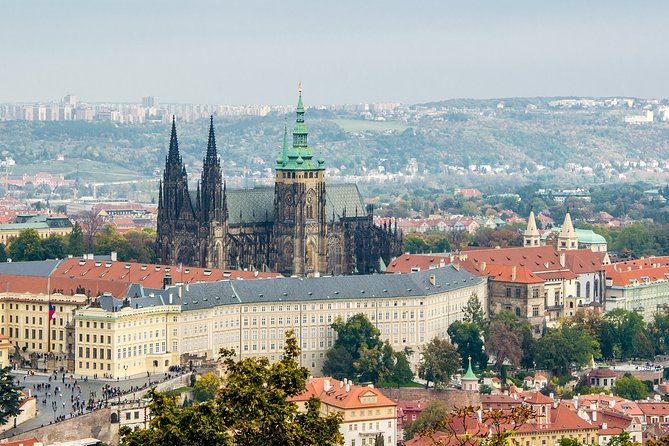
Prague Castle is not one tidy medieval building. It is a large complex shaped by more than a thousand years of Czech religious and political life. You move from ceremonial courtyards to a cathedral, royal halls, a Romanesque basilica, and a lane of tiny houses built into the fortifications.
That variety is exciting, but it can also leave you wondering what you are looking at. A guide gives the buildings a timeline and explains why one courtyard feels imperial, another feels medieval, and the cathedral dominates the whole complex.
I like the small format here because the castle is full of details that are easy to miss. A group of six, for example, can stay together without the guide having to shout. You also have a better chance to ask about architecture, Czech rulers, church symbolism, or the many people connected with the castle.
The quality depends heavily on the guide. The best guides on this tour, including Marta, Inna, Ena, and Mina, are praised for making the past easy to follow and adding personal anecdotes or humor. One guide was described as direct and precise, while another kept the pace comfortable and made room for photographs and questions.
There is one clear caution. One dissatisfied participant found the explanation too thin and spent too long standing in one place. That appears to be an exception among the feedback provided, but it is worth remembering that a guided historical tour is only as good as the person leading it.
A few more castle visits around Prague worth a look
- Prague: Castle Tour with Local Guide and Entry Ticket
★ 4.6 · 10,422 reviews - Prague Castle 2.5-Hour Tour Including Admission Ticket
★ 4.7 · 8,927 reviews - Prague: 3-Hour Walking Tour of Old Town & Prague Castle
★ 4.7 · 5,696 reviews
Starting at Hradčanské náměstí
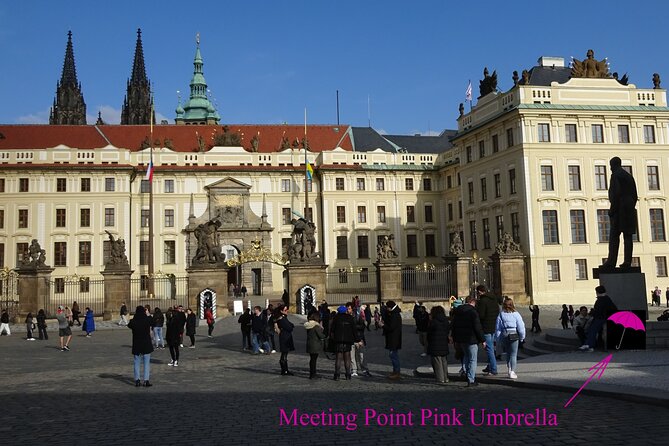
The meeting point is at the statue of Tomáš Garrigue Masaryk on Hradčanské náměstí, the Castle District square. From there, you begin in front of the First Courtyard, the formal western entrance to Prague Castle.
This opening courtyard has a ceremonial feel. It was designed as an honorary court, so the wide approach makes sense once you understand that this was not simply a private residence. It was a place for official arrivals and state business.
The first stop is short, about 10 minutes, and admission is free. Do not expect a long explanation of every building at this stage. Instead, the guide gets you oriented before leading you farther into the complex.
Starting here also makes the route easy to understand. You enter through the castle’s formal west side, pass through successive courtyards, visit the key interiors, and finish at Golden Lane. The route feels like a progression through different chapters of Prague Castle rather than a random walk between sights.
The Second Courtyard and the Habsburg imprint
The Second Courtyard takes about 10 minutes. Its present appearance dates largely from the reign of Maria Theresa of the Habsburg family, after the middle of the 18th century.
This is a useful reminder that Prague Castle was repeatedly altered to suit new rulers and new political needs. The complex is not frozen in one medieval moment. It carries layers from different periods, and the guide helps you see those changes instead of treating every wall as part of one era.
You will see the Prague Castle Picture Gallery, the Chapel of the Holy Cross, the Imperial Stables, and the Office of the President of the Czech Republic. The courtyard itself has a formal, administrative character, which contrasts nicely with the older religious and residential buildings ahead.
Admission is free for this part of the route, but the stop is important for orientation. You begin to see Prague Castle as a working political center as well as a historic monument.
St. Vitus Cathedral deserves the extra time
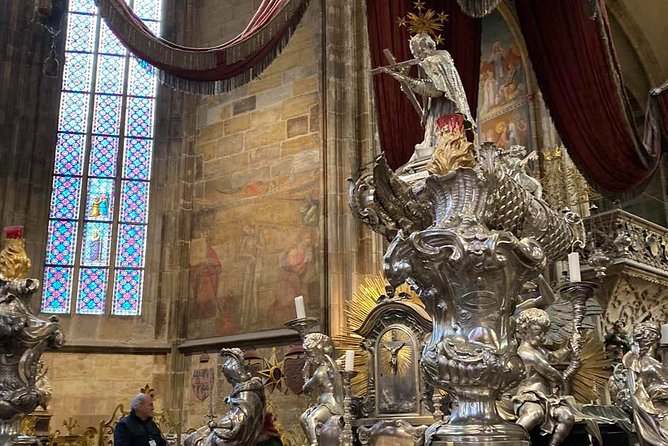
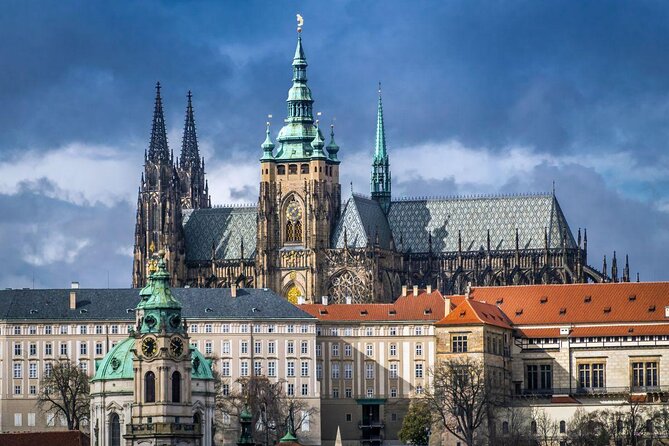
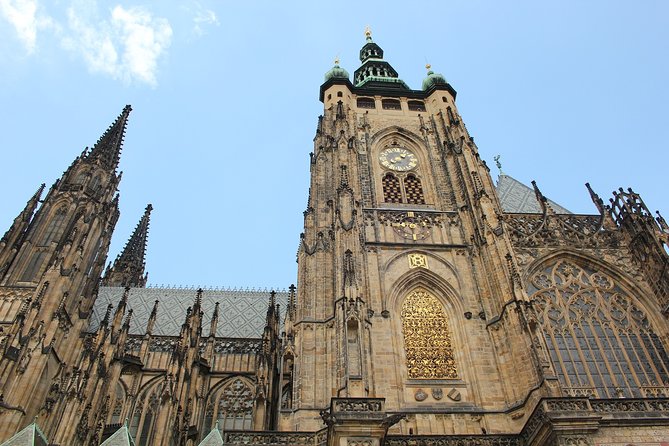
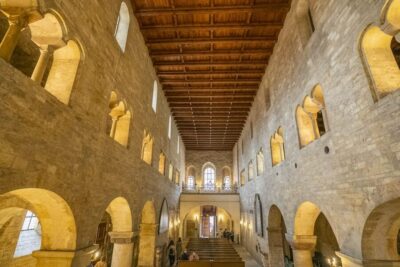
The third courtyard is the oldest part of Prague Castle, and St. Vitus Cathedral dominates it. The full name is the Cathedral of St. Vitus, Wenceslas, and Adalbert, connecting the building to several major figures in Czech religious and national history.
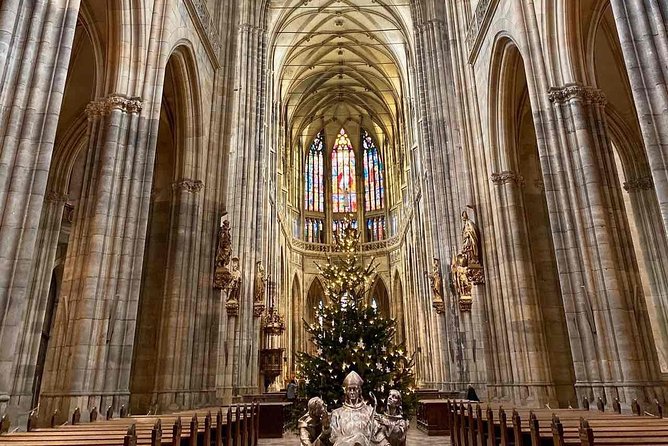
About 45 minutes are devoted to the cathedral interior, making it the longest single stop. That is good planning. The exterior is impressive, but the inside is where the tour earns much of its price.
You can expect the guide to explain the architecture, religious imagery, royal connections, and symbolism worked into the building. Several guides were praised for describing these details clearly, and the cathedral repeatedly emerges as the most memorable part of the experience.
The amount of time also gives you a chance to look rather than simply pass through. You can admire the stained glass, stonework, chapels, and monumental scale while still following the explanation. The guide generally allows time for photographs and questions, although you should not expect a long period of quiet independent exploration during the main tour.
St. Vitus is especially valuable if you do not know much about Czech history. Names such as Wenceslas and Adalbert can otherwise blur together, while the cathedral’s symbols can seem decorative rather than meaningful. A good guide connects the art to the people and events behind it.
This is also where the tour’s standing time can become tiring. If you are in your 70s, have limited stamina, or dislike long periods on your feet, consider the heat, rain, and crowd levels on your chosen day. One guide made a point of helping people find places to sit and keeping the group out of the rain when possible, but conditions still affect comfort.
Same region, a different set of walls:
- Prague: 3-Hour Old Town and Prague Castle Tour in German
★ 4.8 · 5,671 reviews - Prague: Prague Castle and Lobkowicz Palace Entry Tickets
★ 4.4 · 5,066 reviews - Prague: Big Bus Hop-on Hop-off, Castle Tour and River Cruise
★ 4.0 · 3,733 reviews - Prague 3-hour Afternoon Walking Tour including Prague Castle
★ 5.0 · 1,899 reviews
The Old Royal Palace and the story of power
Next comes the Old Royal Palace, with about 35 minutes inside. It served as the seat of Czech princes and kings from the 10th through the 16th century.
This stop adds a political counterpoint to the cathedral. St. Vitus shows the religious and ceremonial side of the castle, while the Old Royal Palace brings you into the world of rulers, administration, and royal life.
The guide-led format helps here because the rooms are easier to appreciate when you understand their purpose. The palace is not presented as a single lavish residence in the modern sense. It reflects the changing needs of rulers over several centuries.
Some people arrive at Prague Castle expecting one grand fairy-tale palace. That is not quite what you find. It is better understood as a collection of medieval and later buildings, with St. Vitus at its center. If you adjust your expectations, the palace becomes more interesting because its value lies in the layers of use and history.
The tour keeps moving, so you will not get unlimited time in each room. That is a fair trade for having a guide explain the main points in a compact visit.
St. George’s Basilica and an older Prague
The 35-minute visit to St. George’s Basilica offers a change of mood. This is one of the oldest Czech churches and a burial place of the Premyslid dynasty, the first ruling family of Bohemia.
The church also connects to the first Czech monastery of St. George. That makes it more than another pretty interior. It gives you a glimpse of Prague Castle before the later imperial renovations and grand political additions.
Compared with St. Vitus Cathedral, the basilica is smaller and more restrained. I find that contrast useful. After the scale and ornament of St. Vitus, St. George’s feels more intimate and helps you understand that Prague Castle contains several distinct periods of religious architecture.
Again, the guide is central to the experience. Without context, you might spend only a few minutes admiring the walls and move on. With a clear explanation of the dynasty, monastery, and age of the building, the stop gains weight.
Golden Lane, tiny houses, and the tour’s final stop
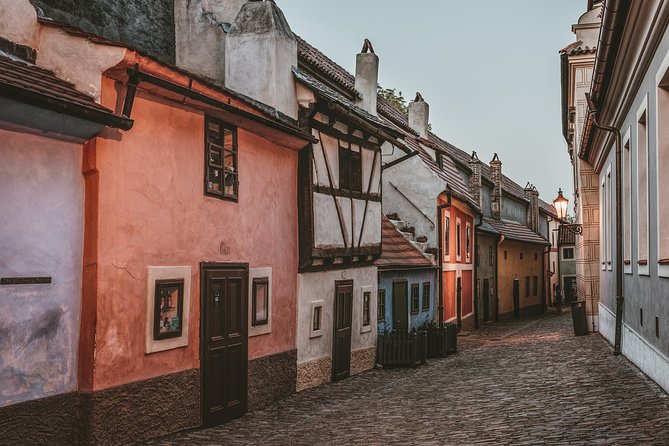
Golden Lane occupies the northern fortifications of Prague Castle. The small houses were built into niches in the wall from the end of the 16th century. Today, the lane contains galleries, gift shops, and exhibitions.
The stop lasts about 15 minutes and marks the end of the guided route. The narrow houses are visually different from the grand courtyards and large churches, so they provide a pleasant final change of scale.
The route ends at Golden Lane near Daliborka Tower rather than taking you back to Hradčanské náměstí. That is convenient if you want to continue exploring the castle grounds, but you need to plan your next move from the northern side of the complex.
The Old Castle Stairs are another highlight associated with the visit, offering wide views over Prague. You should also keep time for the gardens and other parts of the castle if your schedule allows. A morning tour is particularly useful because it leaves more of the day for independent sightseeing.
An afternoon tour can work well too, especially if you like the idea of finishing later in the day. But do not arrive at the last minute and expect to see every remaining corner afterward. Some parts of the complex may be closing soon after the tour ends.
The ticket line, explained honestly
This is described as a skip-the-ticket-line tour, and that wording needs a little translation. You receive your admission ticket before the tour starts or during the tour, so you avoid the separate task of buying it yourself.
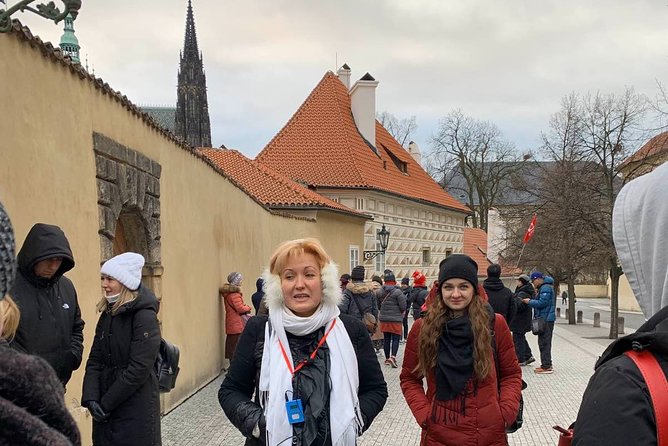
You do not get a private entrance straight into the interiors. Guides and their groups must use a common line, and there is no special entrance for them. The useful news is that the line is said to move quickly.
The guide uses the waiting time to share facts, legends, and answers to questions. That makes the queue less wasteful, but you should still expect some waiting, especially at a popular site.
This arrangement remains worthwhile because the larger benefit is not only faster entry. You are also getting a planned route through several important buildings, with admission included for St. Vitus Cathedral, the Old Royal Palace, St. George’s Basilica, and Golden Lane.
Is $56.86 good value?
At $56.86 per person, this is not the cheapest way to see Prague Castle. But the price includes a small group, an English or Russian-speaking guide, and admission to the main interior sights on the route.
I consider it good value if you have limited time or do not want to spend half a day piecing together the castle’s story on your own. The guide gives you a working framework in about 2.5 hours, and you can continue exploring afterward.
The value is strongest when you care about context. If you only want to stroll through courtyards and take photographs, you could prefer a more independent visit. If you want to understand how the cathedral, royal palace, basilica, and fortifications fit together, the added cost makes more sense.
The small size matters too. Other large groups may be harder to hear and harder to keep together. A group capped at 10 makes it easier to follow the route, see what the guide is pointing out, and ask a question without interrupting the whole experience.
Pace, weather, and practical comfort
You need moderate physical fitness for this tour. It involves walking, standing, courtyards, and interior visits, with no promise of regular seated breaks.
Wear shoes suited to a historic complex and expect the weather to affect your comfort. One account describes a hot afternoon that made the tour feel closer to three hours, while another took place in rain. Guides may adapt the pace, but they cannot change the distance or the amount of time spent at the sights.
The tour is offered in English and Russian. Confirmation arrives at booking, and the meeting point is near public transportation. The mobile ticket is convenient, but keep your phone ready and make sure you can identify the Masaryk statue at Hradčanské náměstí.
Free cancellation is available up to 24 hours before the start time. Cancellations or changes made within 24 hours are not refunded or accepted, and the tour requires a minimum number of participants. If that minimum is not reached, you are offered another date or experience, or a full refund.
Who should book this Prague Castle tour?
I would recommend this tour to a first-time visitor who wants the main sights explained without committing to a full day. It also suits anyone who enjoys royal history, church architecture, dynasties, and small details that are easy to miss alone.
It is a good fit for couples, families with older children, and small groups who want a personal feel. The maximum of 10 people makes it easier to stay together and ask questions.
I would be more cautious if you dislike historical explanation, need frequent breaks, or prefer to set your own pace. One person found the amount of historical information overwhelming, and the route can feel long on a hot day.
Final verdict: book it if context matters to you
I would book this tour if Prague Castle is high on your list and you have only a few days in the city. The strongest reasons are the small group, the detailed St. Vitus visit, the broad range of buildings, and guides such as Marta and Inna, who are praised for making the past lively and approachable.
The main limitation is not the route. It is the time spent standing and the unavoidable shared entrance line. If you can handle that, $56.86 buys a focused introduction to one of Prague’s most important sights, followed by the freedom to explore more on your own.
FAQ
How long does the Prague Castle tour last?
The advertised duration is approximately 2 hours 30 minutes. Depending on conditions and the pace of the group, it may run closer to three hours.
What language is the tour offered in?
The experience is offered in English and Russian.
How many people can join the tour?
The group has a maximum of 10 participants.
Where does the tour begin?
It begins at the statue of Tomáš Garrigue Masaryk on Hradčanské náměstí in Prague’s Castle District.
Where does the tour end?
The tour ends at Golden Lane, near Daliborka Tower.
Is admission included?
Admission is included for the interiors of St. Vitus Cathedral, the Old Royal Palace, St. George’s Basilica, and Golden Lane. The first two courtyards have free admission.
Does skip-the-ticket-line mean there is no queue?
No. You receive your admission ticket before or during the tour, but guides and participants still use a shared entrance line for the interiors. There is no special guide entrance.
What sights are visited?
The route includes the First Courtyard, Second Courtyard, St. Vitus Cathedral, the Old Royal Palace, St. George’s Basilica, and Golden Lane. The experience also highlights views from the Old Castle Stairs.
Is the tour suitable for someone with limited stamina?
The tour requires a moderate level of physical fitness and includes walking and standing. It may be tiring for anyone who needs frequent breaks, especially in hot or wet weather.
Can I cancel for a full refund?
Yes. You can cancel for a full refund up to 24 hours before the experience begins. Cancellations or changes made less than 24 hours before the start time are not refunded.
Just added around Prague
- Tour of Prague Castle in italian language ticket included★ 4.9 · 25 reviews
- Tour around Prague Castle and Lesser Town in Spanish★ 5.0 · 2 reviews
- Prague Castle: Admission Ticket With Transfer And Audioguide★ 4.5 · 111 reviews
- Private Walking tour: From Charles Bridge to Prague Castle★ 4.7 · 13 reviews
- Prague: Castle and Jewish Quarter Tour★ 4.8 · 45 reviews
- Prague: Tour to Prague Castle with tickets included. Spanish★ 4.8 · 4 reviews
- Prague Royal Castle, St Vitus, Golden Lane Tour with Tickets★ 4.8 · 5 reviews
- Prague: Private Tour of the Prague Castle Grounds★ 4.4 · 7 reviews
Prague Castle Tours, compared.
Castle Tour with Local Guide and Entry Ticket
Read our review →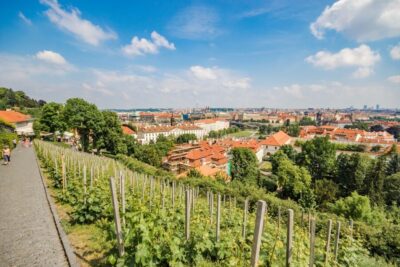
Prague Castle 2.5-Hour Tour Including Admission Ticket
Read our review →
3-Hour Walking Tour of Old Town & Prague Castle
Read our review →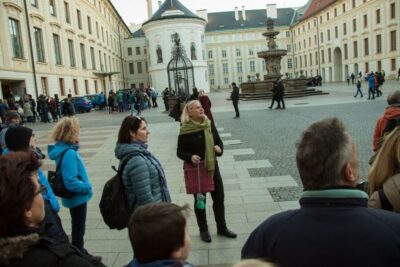
3-Hour Old Town and Prague Castle Tour in German
Read our review →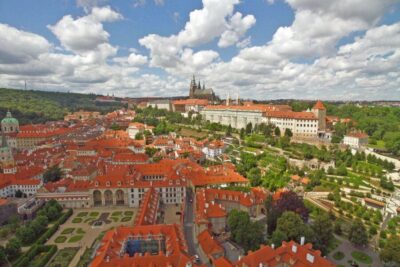
Prague Castle and Lobkowicz Palace Entry Tickets
Read our review →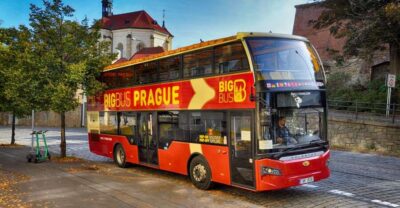
Big Bus Hop-on Hop-off, Castle Tour and River Cruise
Read our review →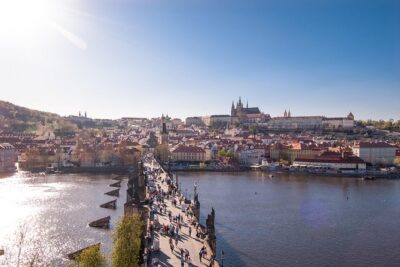
Prague 3-hour Afternoon Walking Tour including Prague Castle
Read our review →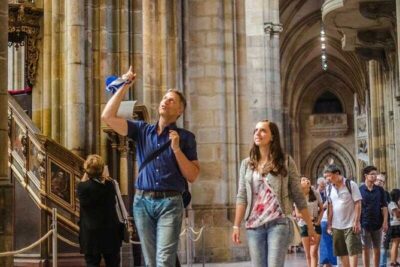
Prague Castle Tour Including Admission Ticket – 2.5 Hour
Read our review →Browse the lists this tour appears in