
Review · FRANCE
Château-Thierry: Belleau Wood & the 2nd Battle of the Marne
This battlefield rewards a guide. I like the way this private tour links Belleau Wood’s foxholes and trenches with the villages, cemeteries, and monuments that explain the fighting. I also like the personal focus, from Lieutenant Osborne’s grave to Joyce Kilmer’s final resting place, and the chance to hear the story from Frederick, a former French army colonel with years of experience at Belleau Wood.
The main drawback is its demanding subject and packed seven-hour route. You will spend much of the day walking outdoors, moving between several sites, and following a difficult battle across fields and villages rather than seeing one compact memorial. It is not suitable for children under 11 or wheelchair users, and food is not included.
Key points to know before you go
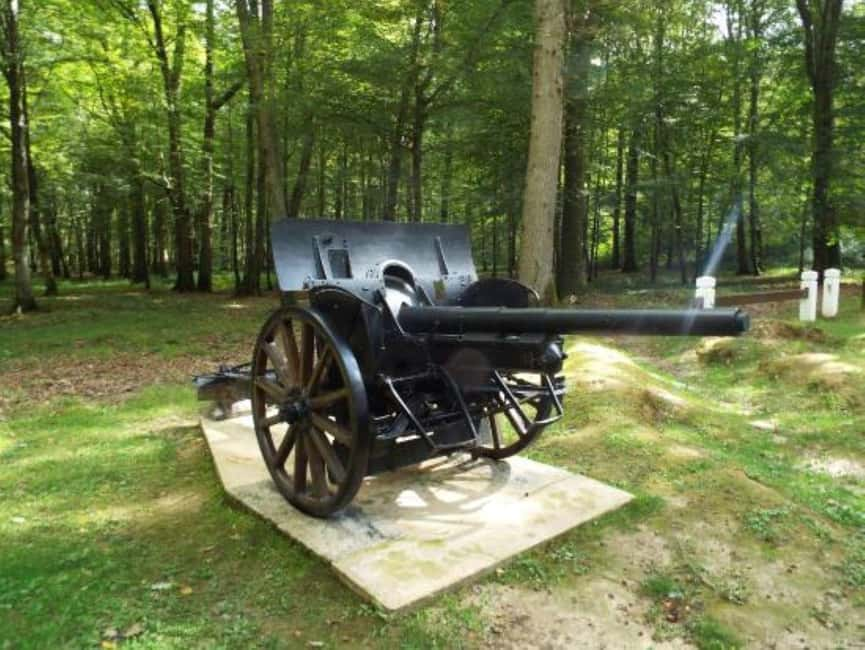
- Belleau Wood still shows the battle: Walk among foxholes and trenches rather than viewing the fighting only through plaques and maps.
- The route follows Marine history closely: Lucy-le-Bocage, Bouresches, Belleau, and the wood help explain the actions of the 2nd Division and 6th Marine Regiment.
- The cemeteries add a quiet human focus: Visit Lieutenant Osborne’s grave, the names of the missing, and poet Joyce Kilmer’s grave.
- Hill 204 explains the military picture: Its monument, viewpoint, and interpretive center show why the height mattered to both sides.
- You see more than American sites: A German cemetery and the remains of Croix Rouge Farm broaden the story beyond one army.
- The price works best for a full group: At $759 for up to four people, the cost is far easier to justify when shared by three or four.
Why Belleau Wood needs a full-day-style visit
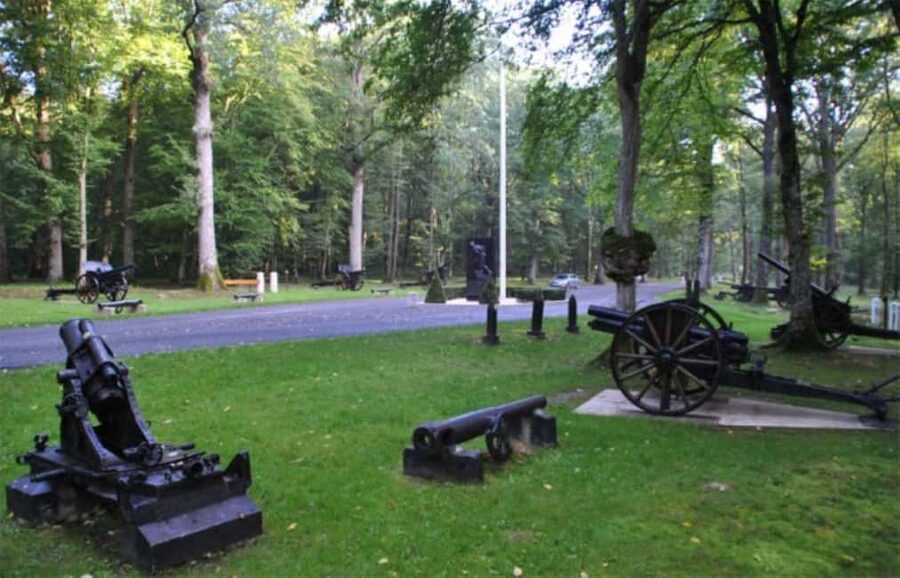
Belleau Wood can look simple on a map. It is not. The fighting spread through villages, farm fields, woods, ridges, and fortified positions around Château-Thierry. A quick stop at the famous wood gives you only one piece of the story.
This tour uses seven hours to connect those pieces. You move from Lucy-le-Bocage and Bouresches to Belleau Wood, then on to American and German cemeteries, Hill 204, Croix Rouge Farm, and the Oise Aisne American Cemetery. The result is less a single memorial visit and more a guided study of how the battle unfolded across the countryside.
I especially like this approach for anyone with a family connection to the 2nd Division, the Marines, the 42nd Division, or the 165th Infantry Regiment. It also suits anyone who wants to understand the ground before standing in the woods. The tour gives you military context first, then lets you see the physical remains for yourself.
Frederick is a major reason to consider this experience. He is described as a former French army colonel and a Belleau Wood specialist who has led the tour for years. His military background is useful here because the route depends on understanding movement, defensive positions, and high ground. His humor and punctuality also help keep a serious day from becoming stiff or overly formal.
A few more castle visits around France worth a look
- Loire Valley Castles Day Trip from Paris with Complementary Wine
★ 4.5 · 3,907 reviews - Carcassonne: Castle and Ramparts Entry Ticket
★ 4.6 · 2,884 reviews - Chambord: Entry Ticket to the Castle
★ 4.6 · 1,841 reviews
Lucy-le-Bocage and the 2nd Division story
The tour begins in the center of Lucy-le-Bocage, where you see the monument to the 2nd Division. You then walk across the village and view the main place associated with the 6th Marine Regiment.
This is a good first stop because it places the Marines in a real village setting. Rather than beginning with a broad lecture, you start with streets and buildings connected to the battle. The scale helps you picture how close the fighting was to civilian homes and local communities.
The village walk also sets up an important point: Belleau Wood was not an isolated clash in a forest. The surrounding villages mattered. Control of roads, buildings, and approaches shaped what the American forces could do next.
You should expect the tone here to be respectful rather than theatrical. The strength of the tour is its attention to specific units and actions, not grand claims about war in general.
Bouresches and the actions of Osborne and Duncan
At Bouresches, Frederick discusses the Marine attack on the village and the heroic action of Captain Duncan. You also learn about Lieutenant Osborne of the US Navy, who received the Medal of Honor and is buried later in the tour at Aisne-Marne American Cemetery.
This stop gives the battle a human scale. Military movements can become a blur of dates and regimental names, but a village attack and the actions of named officers make the story easier to follow. You can connect the place to individual decisions made under extreme pressure.
The stop is also useful for anyone studying Marine history. The route does not treat Belleau Wood as a general World War I site only. It pays attention to the Marines who fought there and to the specific actions that shaped the battle’s memory.
The best way to prepare is to bring your own family details if you have them. One couple came with a family connection to a Marine in 2/5 who survived the Wheatfield and the full battle. Details like that can make the guide’s explanations much more meaningful.
Walking through Belleau Wood’s surviving trenches
The walk through Belleau Wood is the heart of the day. You see remains of the battle, including foxholes and trenches, rather than just a cleared park with a monument.
That physical evidence changes the experience. A map can show where units moved, but a foxhole shows how little shelter soldiers had. Trenches help you understand the effort required to attack and hold ground through repeated assaults.
You should wear practical shoes and be ready for outdoor walking. The information provided does not give a precise distance or trail condition, so you should not assume a smooth or fully accessible path. The tour is specifically not suitable for wheelchair users, and anyone with limited mobility should ask about the walking conditions before booking.
The wood is also where the battle’s complexity becomes clear. It is not simply a place to admire trees. You are looking for traces of defensive positions and trying to connect those traces with the actions described in the villages. That makes a guide especially valuable. Without context, some remains can be easy to miss or misunderstand.
Same region, a different set of walls:
- From Paris: Loire Valley Castles Day Trip With Wine Tasting
★ 4.6 · 1,727 reviews - Chenonceau Castle Admission Ticket
★ 4.7 · 1,515 reviews - ★ Walking Tour of Old Nice and Castle Hill
★ 5.0 · 1,318 reviews - From Paris: Full-Day Loire Valley Chateaux Tour
★ 4.4 · 1,269 reviews
Belleau village and Aisne-Marne American Cemetery
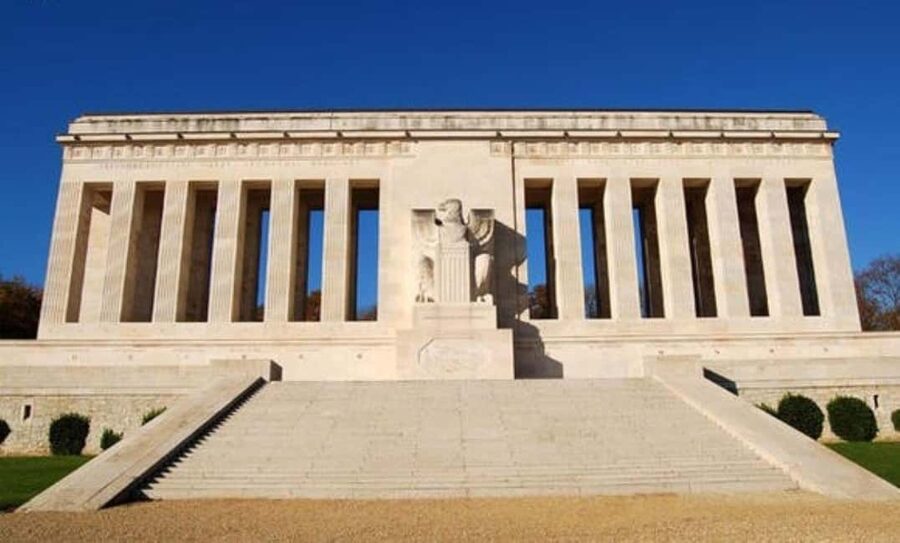
After the wood, the route continues to Belleau village and the Aisne-Marne American Cemetery. Here, you visit Lieutenant Osborne’s grave and the chapel. The chapel wall lists the names of missing Marines and soldiers.
The cemetery brings a quiet change of pace after the field walking. It is a place for names, dates, and individual lives rather than troop movements. Osborne’s grave also ties directly back to the Bouresches section, giving the day a clear thread from battlefield action to final resting place.
The chapel and the wall of names make the cost of the battle visible in a different way. You are not only looking at the remains of trenches. You are seeing how many people were never brought home or never received an identified grave.
This is one of the tour’s strongest features for families and former service members. It gives you time to pause without losing the wider military story. The guide’s respectful manner matters here. One former Marine praised Frederick for understanding the importance of the grounds to past and present Marines, and that sensitivity is central to a good visit.
The German cemetery and a wider view of the battle
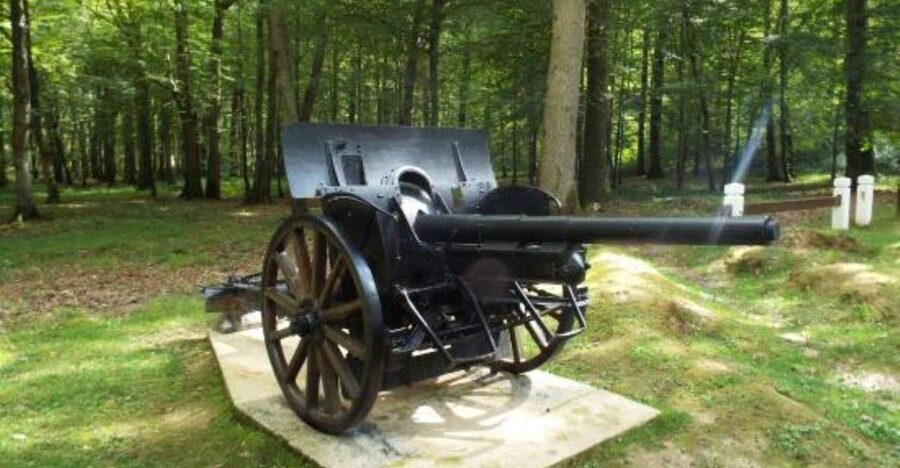
The German cemetery adds an important counterpoint. You do not see the fighting only through the American memory of Belleau Wood. You also visit a German burial ground and take in a panoramic view of the battlefield.
That viewpoint helps you read the area as a military position. You can begin to see why roads, villages, woods, and elevations mattered. It also keeps the day from becoming a one-sided memorial tour. The German soldiers were part of the same battle, and their cemetery acknowledges that reality.
The panoramic stop is especially useful after walking through the wood. From inside the trees, your view is limited. From a higher or more open point, you can connect the separate sites and understand the wider area.
Do not expect every viewpoint to feel dramatic in a scenic sense. The value is historical clarity. You are looking at ground that shaped military choices, not searching for a postcard view.
Hill 204 and the reason high ground mattered
Hill 204 offers one of the clearest military explanations on the route. You see a monument, take in a panorama, and visit the interpretive center. The height helps explain why the position mattered to both German and Allied forces.
This is where the tour’s geography lesson pays off. A commanding hill can affect observation, movement, and defense. Seeing the area from Hill 204 gives you a better sense of why armies fought over positions that might otherwise look like ordinary countryside.
The interpretive center adds another layer to the outdoor stops. After several villages, cemeteries, and woodland remains, it gives you a place to organize what you have seen. If you enjoy maps, military planning, and battlefield interpretation, this may be one of the most useful parts of the route.
The pace can feel full by this point. Seven hours is enough to cover a great deal, but it does not leave unlimited time at every location. If you want long periods for private reflection or detailed photography, tell Frederick early in the day and keep your expectations realistic.
Croix Rouge Farm and the 42nd Division
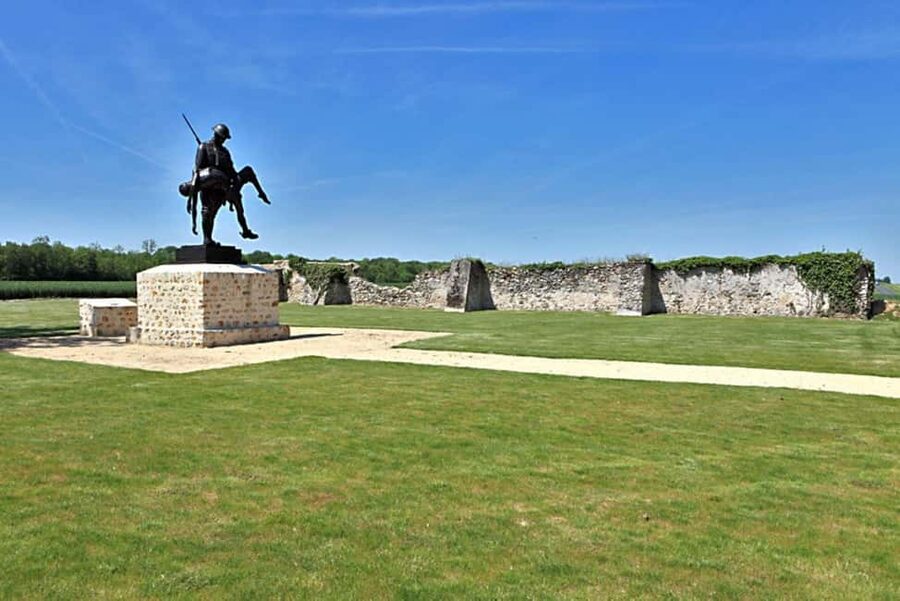
At Croix Rouge Farm, you see the remains of a fortified position occupied by German forces. The tour explains the action of the 42nd Division and the attack by the 167th Infantry Regiment from Alabama, which suffered heavy losses.
The surviving fortification helps you picture why the attack was so costly. This is not just a discussion of a unit moving across a map. You are looking at a defensive position and hearing how the terrain and fortifications affected the assault.
A monument at the farm honors the soldiers who died. Its focus on sacrifice broadens the story beyond the Marine action at Belleau Wood. The tour makes room for the 42nd Division and the Alabama regiment, showing that the surrounding battle involved several American formations with their own difficult tasks.
This stop will appeal to anyone researching American military units or family service records. It also gives the day a useful balance. Belleau Wood is the best-known name, but the fighting around Château-Thierry included many other units and positions.
Joyce Kilmer’s grave at Oise Aisne American Cemetery
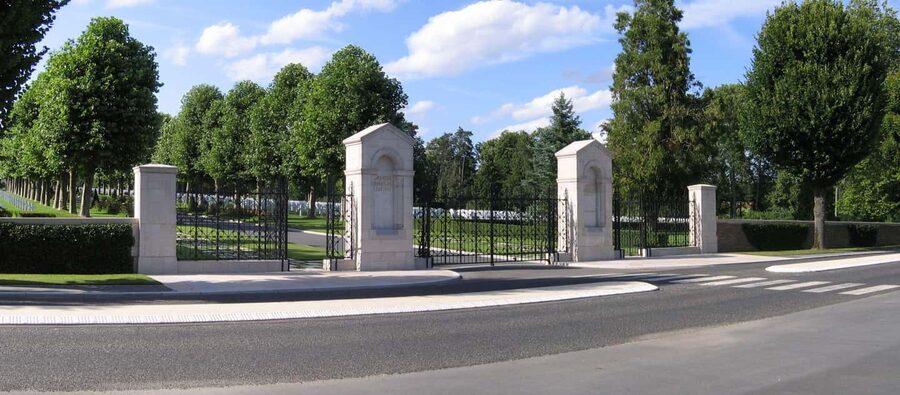
The final cemetery visit takes you to Oise Aisne American Cemetery, where you stop at the grave of Joyce Kilmer. Kilmer was a poet serving with the 165th Infantry Regiment of the 42nd Division. He was killed in action on July 30, 1918.
His grave adds a literary thread to an otherwise military route. You do not need to know his poetry to understand why the stop matters. His service shows how the war touched people whose public lives were connected to writing, art, and culture as well as military duty.
The stop also reinforces the earlier discussion of Croix Rouge Farm and the 42nd Division. It is not a disconnected celebrity visit. It connects a named individual to the unit and campaign covered earlier in the day.
As with the Aisne-Marne cemetery, the setting encourages a slower pace. You may want to allow time for the name, regiment, and date to sink in rather than treating it as one more scheduled stop.
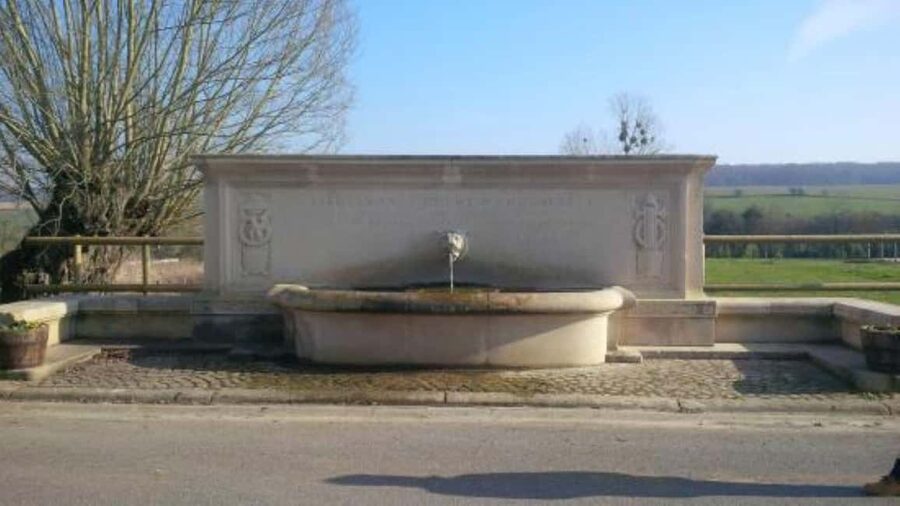
The Quentin Roosevelt Fountain
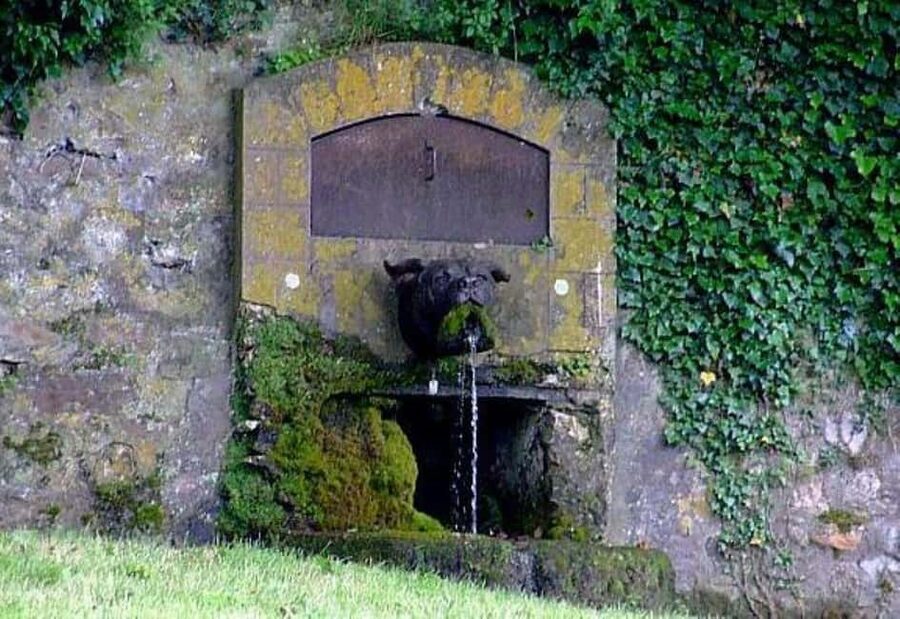
The last stop is the Quentin Roosevelt Fountain, given to the village by the Roosevelt family in memory of their son.
This is a small but memorable ending because it shifts the focus from military positions to a family’s act of remembrance. It also gives you one more link between American history and a French village.
The fountain works best as a final note after the larger cemeteries and battlefield sites. You have spent the day seeing national monuments and military remains. Here, memory becomes more local and personal.
The supplied details do not state how long you stay at the fountain, so treat it as a brief stop rather than a separate major attraction. Its value comes from the story attached to it.
Price, transport, and the right group size
The private tour costs $759 for a group of up to four. That sounds high at first, but the math changes when you fill the vehicle. Four people pay about $190 each. Two people pay about $380 each, so the value is much better for a family or small group than for a solo visitor.
Private transport is a real advantage on this route. The sites are spread across villages, woods, cemeteries, farms, and viewpoints. You avoid trying to connect them on your own, and you can focus on the explanations rather than driving between scattered locations.
The cost includes an English-speaking French guide, private transportation, and bottled water. It does not include food, drinks beyond the water provided, snacks, or personal expenses. Bring something to eat and drink for the day unless you have confirmed a meal stop.
The tour is offered in English or French. It is a private group experience, so you are not sharing the day with a large coach party. That matters at cemeteries and small village sites, where a smaller group can keep the visit calm and focused.
You can cancel up to 24 hours in advance for a full refund, and you can reserve now and pay later. Those terms make it easier to hold a date, especially since Frederick’s schedule may be difficult to match with your own.
Who should book this battlefield tour?
I would choose this tour if you have a Marine connection, a family member who served in World War I, or a strong interest in battlefield geography. It is also a good fit if you tried to plan Belleau Wood independently and found the scattered locations confusing.
The tour is not aimed at young children. Anyone under 11 cannot join, and the day’s subject matter may be too serious for children even beyond that age limit. It also is not suitable for wheelchair users, and the woodland and battlefield walking require care.
You should also be comfortable with a full schedule. The route covers a lot of ground, and some stops will be emotionally heavy. The reward is a far clearer understanding of how the battle spread through the region and why Belleau Wood still matters to Marine history.
Should you book the Belleau Wood tour?
Book it if you want the military story tied to the actual ground. The strongest parts are Frederick’s battlefield expertise, the surviving foxholes and trenches, the named graves, and the way the route connects villages, farms, cemeteries, and high ground.
I would hesitate only if you want a light sightseeing day, dislike walking outdoors, or are traveling alone and find $759 too much for a private group. For three or four people with a serious interest in the First World War, the price becomes more reasonable.
For former Marines and families tracing service history, this is an especially strong choice. The tour treats Belleau Wood with respect, gives the battle a clear structure, and adds the smaller details that can turn a distant military episode into a place you understand.
FAQ
Where does this tour take place?
The tour takes place in the Hauts-de-France region of France, around Château-Thierry, Belleau Wood, nearby villages, battle sites, and American and German cemeteries.
How long does the experience last?
The tour lasts seven hours.
How much does the private tour cost?
The price is $759 for a private group of up to four people.
What languages can the guide speak?
The guide can provide the tour in English or French.
Is transportation included?
Yes. Private transportation is included, along with bottles of water in the vehicle.
Is food included?
No. Personal expenses, food, drinks, and snacks are not included. Bottled water is provided in the vehicle.
Can children join the tour?
Children under 11 cannot join this experience.
Is the tour suitable for wheelchair users?
No. The experience is not suitable for wheelchair users.
Can I cancel the booking?
Yes. You can cancel up to 24 hours in advance for a full refund. You can also reserve now and pay later.
Just added around France
- Carcassonne: Secrets of the Castle’s Defense Self-Guided Tour★ 4.5 · 8 reviews
- Complete Private Tour City and Castle of Carcassonne★ 5.0 · 12 reviews
- Château de Fieuzal, Pessac-Léognan: Visit and Tasting★ 5.0 · 18 reviews
- Saint Emilion Castle and Village Wine Tour★ 4.5 · 23 reviews
- Wine Tour of Mèdoc : Châteaux, Tastings and WSET Guide★ 5.0 · 21 reviews
- Full-day Saint-Emilion: Village, Undergrounds and Châteaux★ 4.5 · 55 reviews
- Private Wine Lovers – Super St Emilion – behind the scenes visits top chateaux and medieval town★ 5.0 · 25 reviews
- Bordeaux Médoc Region Private Wine Lovers Tour with Chateau Visits & Tastings★ 5.0 · 40 reviews
France Castle Tours, compared.
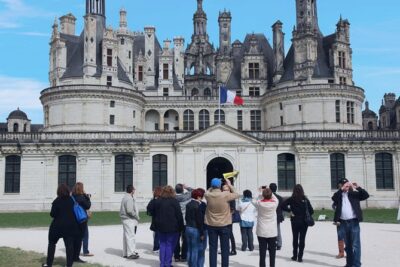
Loire Valley Castles Day Trip from Paris with Complementary Wine
Read our review →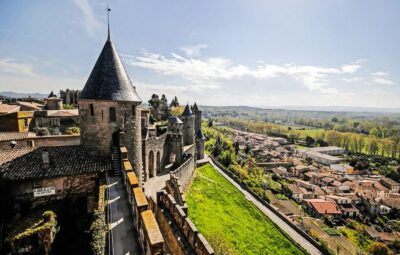
Carcassonne: Castle and Ramparts Entry Ticket
Read our review →
Loire Valley Castles Day Trip With Wine Tasting
Read our review →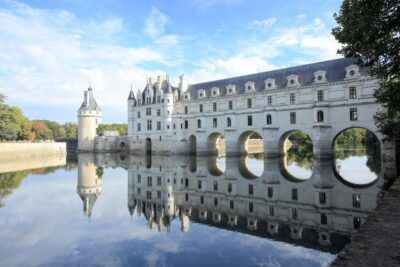



Loire Valley Castles Trip with Chenonceau and Chambord from Paris
Read our review →Browse the lists this tour appears in