
Review · FRANCE
Chateau of Rambouillet Entrance Ticket
Presidents left fingerprints on these old rooms. The Château de Rambouillet offers a rare look at a French residence shaped by the Old Regime, the Empire, and the Republic, all in one peaceful setting. I like the way the visit connects grand royal history with more recent political life, and I especially like that former presidential spaces are now opening to the public.
The presidential history gives the château a sharper sense of purpose than many French castles. I also enjoy the setting between the town and the forest, where the gardens and park can make the visit feel worthwhile even when the indoor route is short. The main drawback is that the interior visit may take only about 30 minutes if part of the château, including the second floor, is closed.
This is a self-guided admission ticket, not a guided tour. At $12 per person, it can be good value for anyone interested in French history, but you should allow extra time for the grounds rather than expecting a full-day indoor attraction. Admission is valid for one day, with last entry 30 minutes before closing.
Key points to know before visiting
- Presidential retreat since 1895: Félix Faure made Rambouillet a summer residence for the president of the Third Republic.
- A castle of three political eras: The site links the Old Regime, the Empire, and the Republic in one visit.
- Diplomacy happened here: Eisenhower, Kennedy, Khrushchev, Gorbachev, the Emperor of Japan, and Queen Elizabeth II were among the distinguished visitors.
- The first G6 meeting took place here: President Valéry Giscard d’Estaing hosted the first gathering in 1975.
- The park adds real value: Gardens, woodland, and quiet open space help fill out a visit that may be brief inside.
- No live guide is included: You explore at your own pace, so this suits independent visitors more than people seeking a narrated tour.
Why Rambouillet feels different from larger French castles
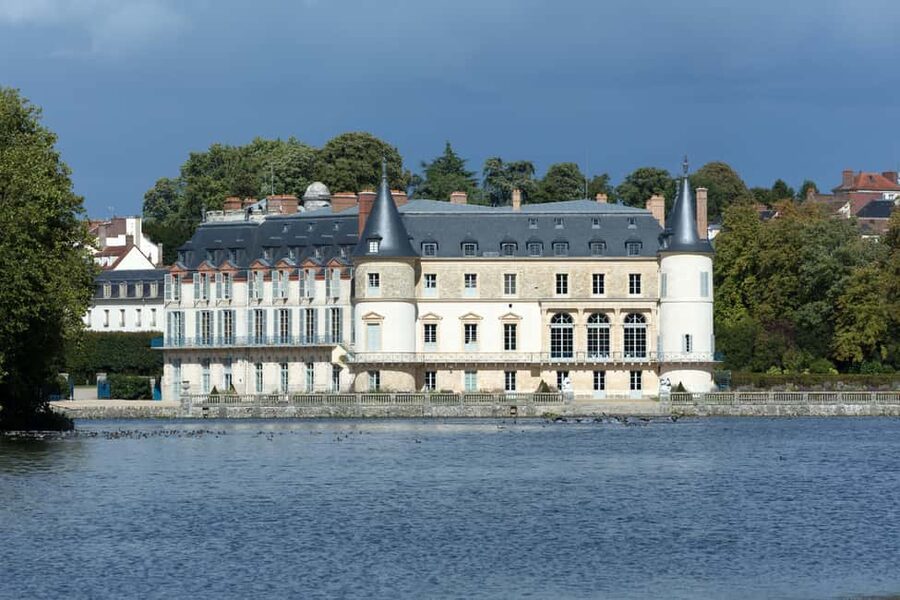
Rambouillet is not trying to compete with Versailles room for room. Its appeal is more personal and political. The château was used by princes and kings, then by emperors and presidents, so its story changes as you move through time.
I like that this is not only a monument to royal display. It also shows how a residence could serve practical government. Félix Faure chose Rambouillet in 1895 as a summer home for the president, a place where family life and important meetings could take place away from Paris.
That balance is central to the visit. You get formal rooms and old furnishings, but you also get the sense of a working retreat. Foreign leaders and crowned heads came here for discussions that were less public than a ceremony in the capital. The château’s quieter setting made it useful for private talks and relaxed diplomacy.
The location helps explain its appeal. Rambouillet has attracted people since the Middle Ages, partly because it sits between town and forest. You are not looking at an isolated pile of stone with nothing around it. The grounds give the site room to breathe and make it easier to picture the château as a country residence.
More Castle Entry Tickets in France
- Carcassonne: Castle and Ramparts Entry Ticket
★ 4.6 · 2,884 reviews - Chambord: Entry Ticket to the Castle
★ 4.6 · 1,841 reviews - Chenonceau Castle Admission Ticket
★ 4.7 · 1,515 reviews
Entering a residence used by presidents and kings
The visit begins with the long line of people who occupied or stayed at Rambouillet. You are not simply walking through a sequence of decorated rooms. You are following nearly six centuries of changing power.
The Old Regime is present in the château’s royal associations. Later, the Empire brought another layer of political use. Finally, the Republic gave Rambouillet a modern role as a presidential residence. That mixture is one of the strongest reasons to come here.
I find the Republic period especially interesting because it is easy to think of French castles as places frozen before the Revolution. Rambouillet does not fit that pattern. It continued to matter after the monarchy and became part of the country’s modern political life.
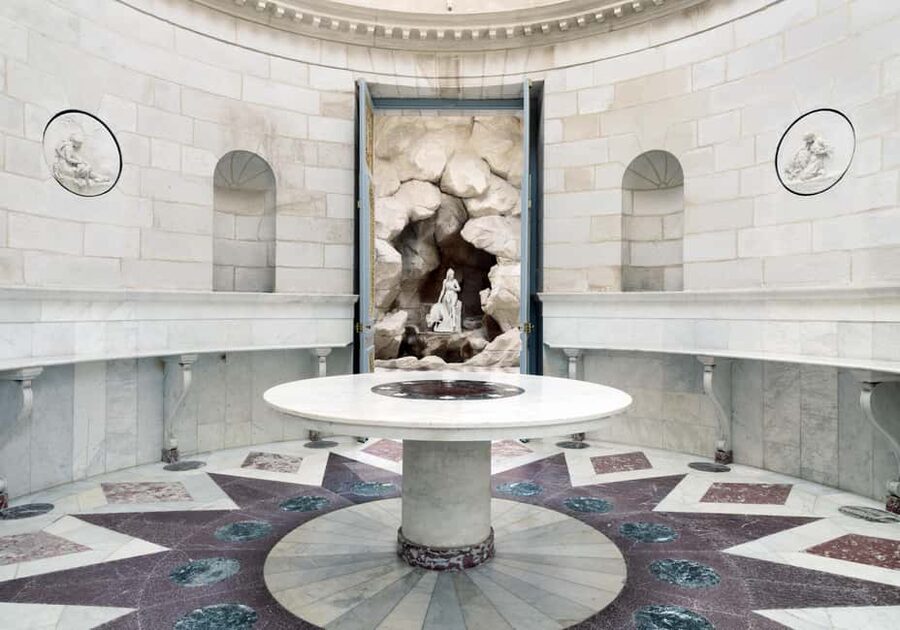
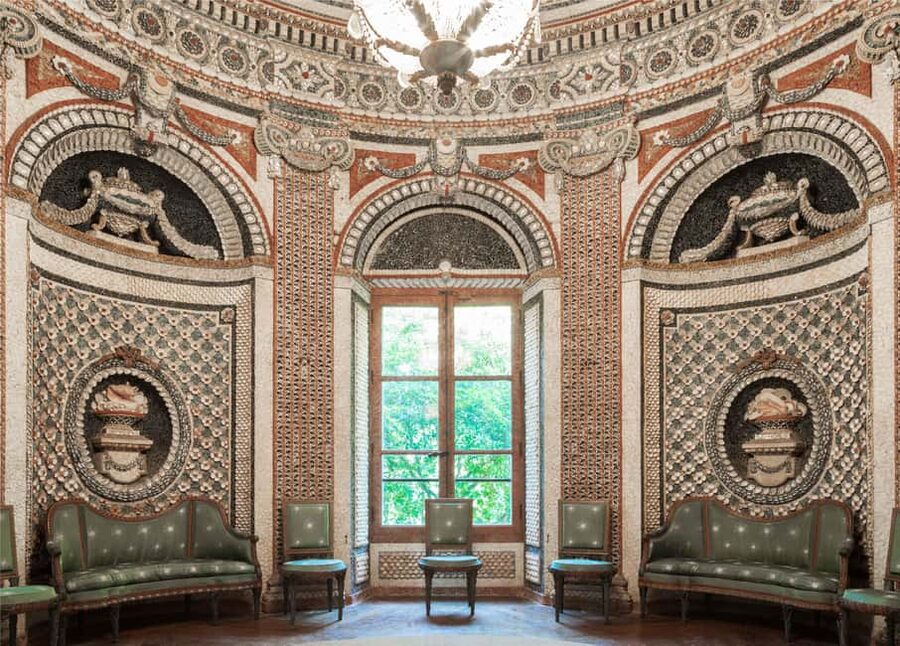
Some private spaces that were kept from public view for years are now being opened gradually. That gives the visit a sense of discovery, but it also means the exact route may not always be identical. A room or floor can be unavailable on a particular day, so keep your expectations flexible.
The presidential story, from Félix Faure to Giscard d’Estaing
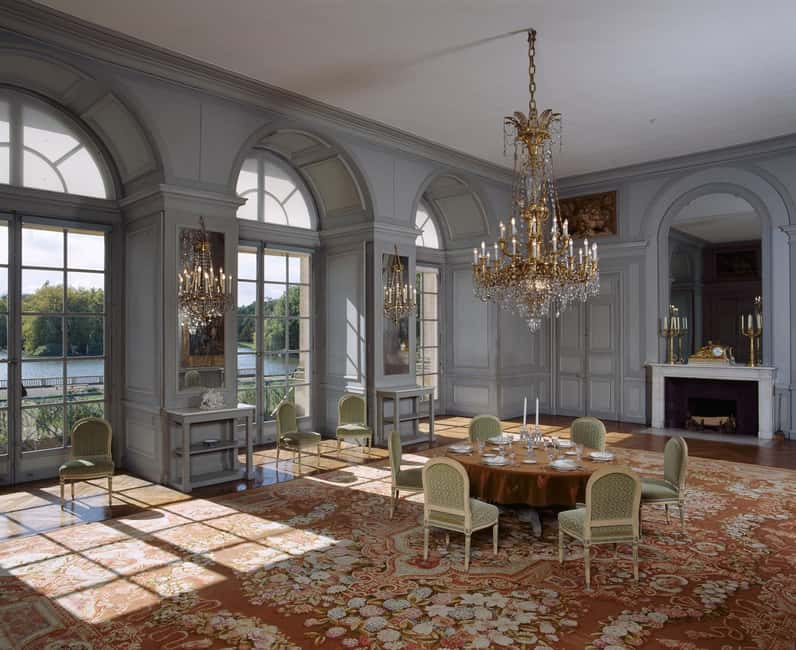
The presidential chapter begins in 1895, when Félix Faure selected Rambouillet as a summer residence. This choice was practical as well as attractive. The château offered a peaceful setting for the president and family, while still providing a suitable place for important official meetings.
More than half of France’s presidents have stayed at Rambouillet. That figure gives the château a direct connection to the country’s political past, not just a general association with famous names.
The site also hosted major international figures. David D. Eisenhower and John F. Kennedy came here, as did Nikita Khrushchev and Mikhail Gorbachev. The Emperor of Japan and Queen Elizabeth II were also received at Rambouillet.
These names make the rooms easier to picture as working spaces. I find that more engaging than simply reading dates on a wall. A room used for a diplomatic meeting can look quiet and ordinary, yet its importance comes from what was discussed there and who sat around the table.
The most notable political event was held in 1975. Valéry Giscard d’Estaing organized the first G6 meeting at Rambouillet, bringing together the leaders of the six most industrialized countries. That gathering later became part of the wider G7 tradition.
For a small château visit, this is an unusually strong modern story. You are not only seeing where rulers lived. You are also seeing a place connected to international politics in the 20th century.
What the indoor visit is actually like
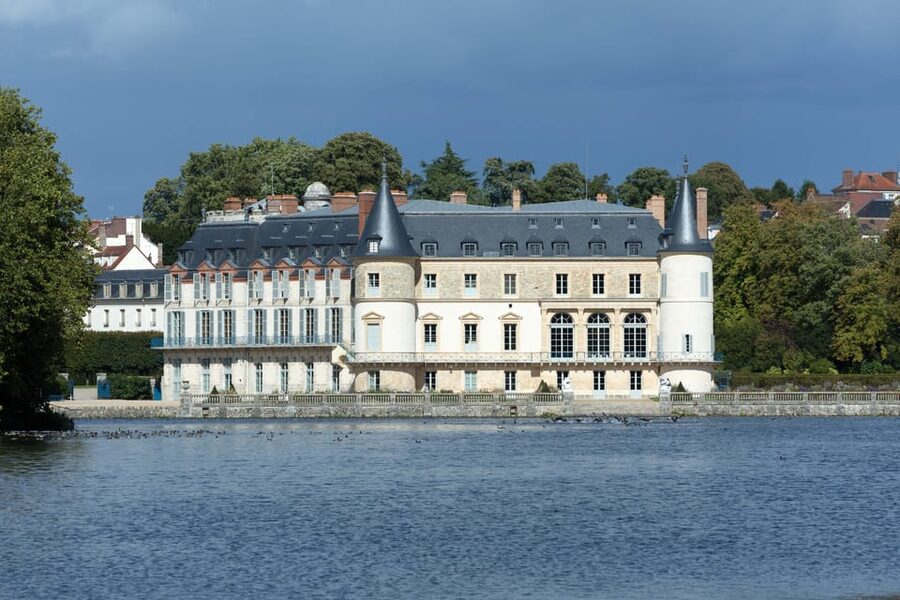
The admission includes a self-guided tour, so you can move at your own pace rather than follow a fixed group. That works well if you prefer to stop over a particular room or read at leisure.
At the same time, a self-guided visit requires you to supply your own context. There is no live guide included to explain why a room matters, point out a detail, or connect the royal and presidential chapters as you go. If you want a detailed spoken account, this ticket may feel limited.
The indoor route can be shorter than you expect. One recent visit took about 30 minutes because the second floor was closed. The open rooms were elegant and atmospheric, but the reduced route made the château feel smaller than other major castles in the region.
That is an important planning point. Do not book Rambouillet expecting a grand, several-hour palace tour based only on the $12 price. The indoor portion may be compact, especially if areas are closed.
Still, a short route is not automatically a poor visit. The rooms that are open preserve the character of the residence, and the smaller scale can make the presidential story easier to grasp. I would rather spend 30 focused minutes in rooms with a clear purpose than rush through a huge palace with little sense of how it was used.
Check the current opening details before you go, especially if the indoor rooms are the main reason for your visit. The supplied information does not promise that every floor will be open on every date.
Same region, a different set of walls:
- Loire Valley Castles Day Trip from Paris with Complementary Wine
★ 4.5 · 3,907 reviews - From Paris: Loire Valley Castles Day Trip With Wine Tasting
★ 4.6 · 1,727 reviews - ★ Walking Tour of Old Nice and Castle Hill
★ 5.0 · 1,318 reviews - From Paris: Full-Day Loire Valley Chateaux Tour
★ 4.4 · 1,269 reviews
Why the gardens and park matter
The grounds are not an optional extra here. They are part of the reason Rambouillet works as a destination even when the château interior is brief.
The site’s position between town and forest gives it a calm character. After seeing the rooms, you can spend time outside and let the scale of the property balance the compact indoor route. The gardens and park also help explain why the château suited presidents looking for a retreat from Paris.
I like this combination of culture and open space. You get a historic building, then a chance to slow down rather than immediately move on to another crowded attraction. The setting offers a more relaxed kind of sightseeing.
The information provided does not specify the exact garden route, walking distance, or opening arrangements for every part of the grounds. You should therefore avoid planning around a particular path or feature unless you confirm it for your date.
Even so, the basic advice is clear: allow time outside. If you rush in, spend half an hour indoors, and leave at once, you may miss much of the value built into the $12 admission.
Is $12 good value for a one-day ticket?
At $12 per person, the ticket is reasonably priced if you care about political history and can use the surrounding grounds. The cost is less compelling if you want only a long interior tour and discover that part of the château is closed.
The ticket is valid for one day, which gives you flexibility within the opening hours. That matters because Rambouillet is better treated as a relaxed visit than a quick photo stop. You can see the interior, pause over the presidential story, and spend additional time in the gardens and park.
I would judge the value in three parts:
- The château itself: Worth it for the unusual mix of royal, imperial, and republican history.
- The presidential connection: Particularly worthwhile if you enjoy diplomacy, modern French history, or famous political figures.
- The grounds: Important for making the visit feel complete when the indoor route is short.
There is no live guide included, so you are paying for access rather than personal interpretation. That keeps the price manageable, but it places more responsibility on you to read, observe, and set your own pace.
Visitors under 18 and EU citizens under 26 can enter free, but they must first show photo identification at the ticketing station before going to the monument entrance. That can make Rambouillet a particularly good choice for eligible younger visitors.
Free admission is also available on the first Sunday of January, February, March, November, and December, as well as during European Heritage Days on the third weekend of September. Since those dates can be busier, check the arrangements before setting out.
Who will enjoy Rambouillet most?
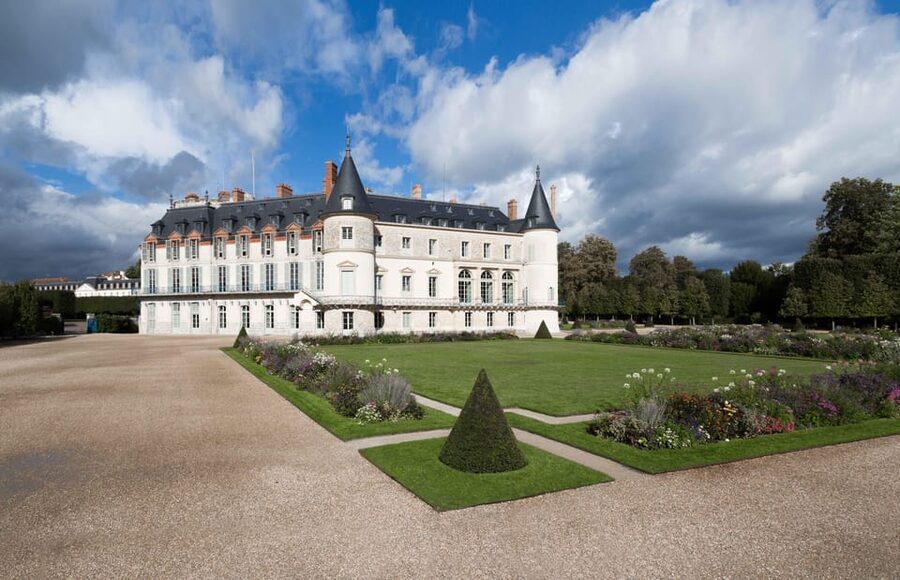
I would recommend this visit to people who like places with layered political stories. If you enjoy learning how a building changed from royal residence to presidential retreat, Rambouillet offers more than its modest size suggests.
It also suits anyone who prefers a quieter setting. The park and forest surroundings give you a break from the pressure of larger palace sites. Families may appreciate the manageable indoor route, though the lack of a live guide means children may need help connecting the rooms to the larger story.
This is a good choice for repeat visitors to the Paris region who have already seen the headline attractions. The castle does not try to overwhelm you. Instead, it offers a narrower story, with diplomacy and presidential life at its center.
I would be more cautious if your main goal is a vast palace interior, a large collection of rooms, or a long guided lecture. Rambouillet may feel too small, especially if the second floor or other sections are closed.
The experience also suits independent visitors who are comfortable setting their own pace. You can pause where you like, but you will not have a guide filling in every gap.
Practical details that can shape your visit
The ticket is non-refundable, so choose your date carefully. It is valid for one day, and the last access is 30 minutes before closing.
The château closes every Tuesday, as well as on January 1, May 1, and December 25. Plan around those dates rather than arriving without checking.
Large bags and luggage are not allowed. If you are carrying a suitcase, arrange your day so you are not relying on bringing it into the monument.
The experience is sold through GetYourGuide Tours & Tickets GmbH. The important point for your planning is that the product is admission with a self-guided tour, not a hosted excursion.
The available information does not give transport instructions, parking details, a full timetable, or a fixed visit length. I would check the official opening information for your chosen date and allow enough time for both the château and outdoor areas.
Should you book the Château de Rambouillet ticket?
Book it if you want a reasonably priced, independent visit to a former presidential retreat with unusual links to French and international politics. The strongest parts are the story of Félix Faure, the presidential spaces, the famous diplomatic visitors, and the first G6 meeting in 1975.
Go with realistic expectations. The interior may take around 30 minutes, and some sections may be closed. The gardens, park, and peaceful setting are not filler, they are what help turn a short château visit into a satisfying outing.
If you want a large palace with a long indoor route, choose another major French castle. If you want a smaller site where royal tradition meets modern government, Rambouillet is a smart $12 choice.
FAQ
How much does the Château de Rambouillet ticket cost?
The listed price is $12 per person.
How long is the ticket valid?
The ticket is valid for one day.
Is the visit guided?
No. The ticket includes a self-guided tour and admission, but no live guide.
Can I enter with a large bag or luggage?
No. Luggage and large bags are not allowed.
Do visitors under 18 pay admission?
Visitors under 18 can enter free, but they must show photo identification at the ticketing station before going to the monument entrance.
Can EU citizens under 26 enter free?
Yes. EU citizens under 26 can enter free with photo identification shown at the ticketing station.
When is admission free for everyone?
Admission is free on the first Sunday of January, February, March, November, and December, and during European Heritage Days on the third weekend of September.
What time is the last admission?
Last access is 30 minutes before closing time.
When is the château closed?
The château is closed every Tuesday, January 1, May 1, and December 25.
Is the ticket refundable?
No. This activity is non-refundable.
Just added around France
- Carcassonne: Secrets of the Castle’s Defense Self-Guided Tour★ 4.5 · 8 reviews
- Complete Private Tour City and Castle of Carcassonne★ 5.0 · 12 reviews
- Saint Emilion Castle and Village Wine Tour★ 4.5 · 23 reviews
- Château de Fieuzal, Pessac-Léognan: Visit and Tasting★ 5.0 · 18 reviews
- Full-day Saint-Emilion: Village, Undergrounds and Châteaux★ 4.5 · 55 reviews
- Wine Tour of Mèdoc : Châteaux, Tastings and WSET Guide★ 5.0 · 21 reviews
- Private Wine Lovers – Super St Emilion – behind the scenes visits top chateaux and medieval town★ 5.0 · 25 reviews
- Bordeaux Médoc Region Private Wine Lovers Tour with Chateau Visits & Tastings★ 5.0 · 40 reviews
Castle Entry Tickets, compared.

Edinburgh Castle: Guided Walking Tour with Entry Ticket
Read our review →
Castle Tour with Local Guide and Entry Ticket
Read our review →
Prague Castle 2.5-Hour Tour Including Admission Ticket
Read our review →
Edinburgh Castle: Guided Walking Tour with Entry Ticket
Read our review →
Prague Castle and Lobkowicz Palace Entry Tickets
Read our review →
Alcázar and Cathedral Entry Ticket and Guided Tour
Read our review →Browse the lists this tour appears in